
South Korea Hepatocellular Carcinoma Treatment Market Size & Forecast:
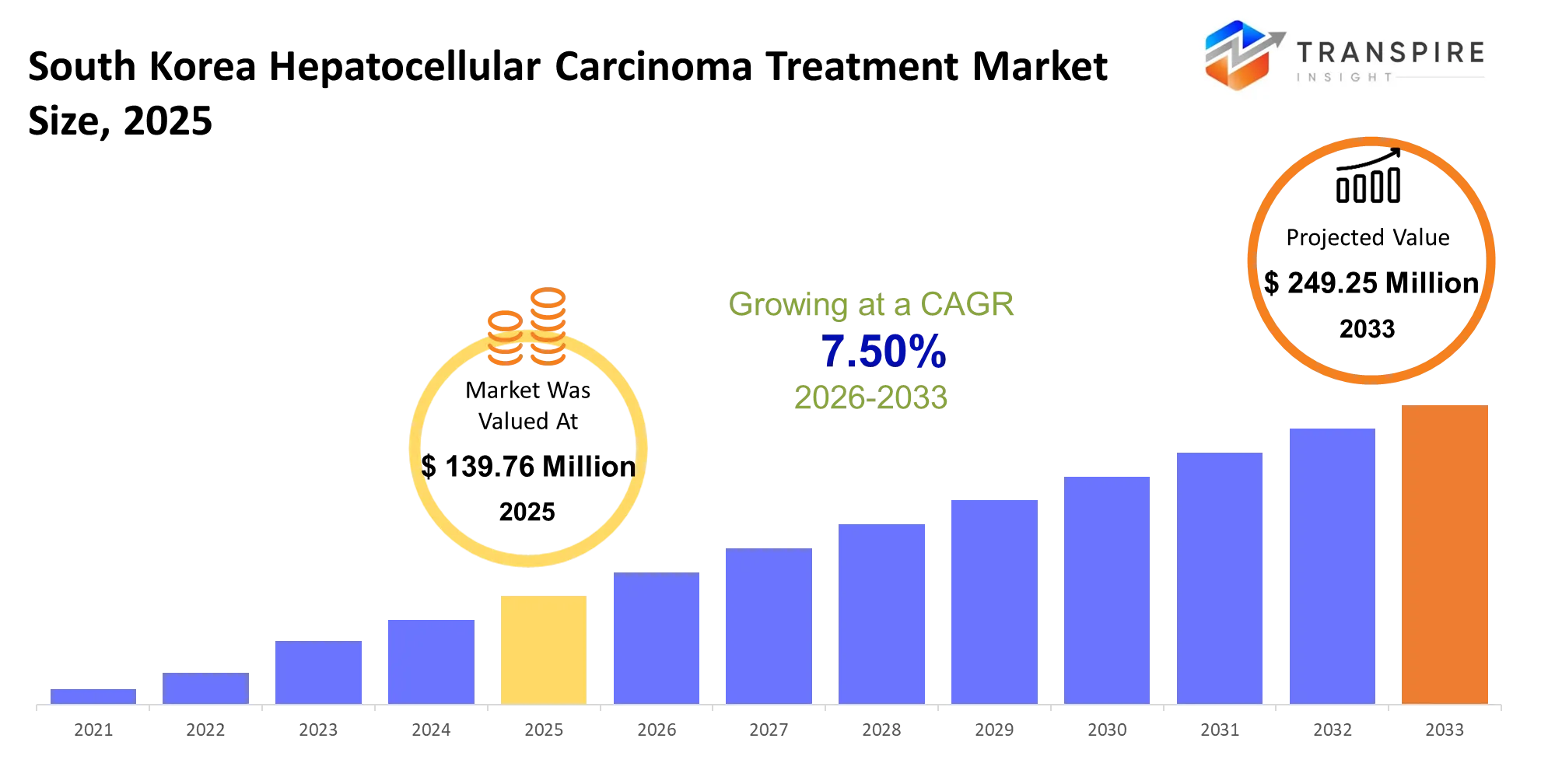
- South Korea Hepatocellular Carcinoma Treatment Market Size 2025: USD 139.76 Million
- South Korea Hepatocellular Carcinoma Treatment Market Size 2033: USD 249.25 Million
- South Korea Hepatocellular Carcinoma Treatment Market CAGR: 7.50%
- South Korea Hepatocellular Carcinoma Treatment Market Segments: By Treatment Type (Targeted Therapy, Immunotherapy, Chemotherapy, Radiation Therapy, Others); By Drug Type (PD-1 Inhibitors, Tyrosine Kinase Inhibitors, Monoclonal Antibodies, Combination Therapies, Others); By Application (Early-stage HCC, Advanced-stage HCC, Recurrent HCC, Others); By End User (Hospitals, Cancer Treatment Centers, Specialty Clinics, Others); By Distribution Channel (Hospital Pharmacies, Specialty Pharmacies, Online Pharmacies, Others)
To learn more about this report,  Download Free Sample Report
South Korea Hepatocellular Carcinoma Treatment Market Summary
The South Korea Hepatocellular Carcinoma Treatment Market was valued at USD 139.76 Million in 2025. It is forecast to reach USD 249.25 Million by 2033. That is a CAGR of 7.50% over the period.
The South Korea Hepatocellular Carcinoma Treatment Market has this kinda big role in managing one of the country’s most lethal cancers, by making earlier intervention possible, helping people live longer in advanced liver cancer situations, and also easing some of the workload on tertiary oncology centers. In real practice the market kinda hangs on immunotherapies, targeted therapies, locoregional treatments, plus hospital based oncology services that end up supporting patients dealing with chronic hepatitis, cirrhosis, and late stage liver disease… it’s a whole connected chain. Over the last five years, you can see the market moved away from conventional chemotherapy and toward immune checkpoint inhibitors and combination regimens that generally produce more durable progression-free survival results. That shift sort of took off after expanded reimbursement backing for oncology biologics, and when precision medicine became more widely used across South Korea’s tertiary hospitals. At the same time, the rising burden from metabolic liver disease and hepatitis related complications has changed how treatment is requested, and when it’s requested. Since survival expectations are improving, hospitals are putting more money into biomarker driven diagnostics, building combination immunotherapy capacity, and strengthening clinical trial infrastructure. All of that, ends up increasing treatment penetration and supporting steadier long-term pharmaceutical revenue streams.
Key Market Insights
- In 2025, Seoul metropolitan hospitals were responsible for almost 48% of the South Korea Hepatocellular Carcinoma Treatment Market revenue, mostly because the oncology setup is kept pretty concentrated, so resources kind of cluster there, not everywhere equally.
- Combination immunotherapy regimens took the largest slice of the market, while clinicians sort of shifted away from stand alone tyrosine kinase inhibitor therapies after 2022, slowly but surely.
- Still, targeted therapy keeps sitting as the second-largest treatment segment, mostly because multi line liver cancer management is still leaning on kinase inhibitor sequencing, and in real practice it is honestly the backbone.
- The PD-1 and PD-L1 inhibitor therapies are also the fastest growing slice through 2033, supported by reimbursement expansion and survival results that look stronger across multiple datasets, so it gives the momentum.
- For application demand, advanced-stage hepatocellular carcinoma stayed out front, hitting more than 55% of total therapy utilization at tertiary hospitals during 2025.
- Early-stage adjuvant treatment protocols then ramped up quickly after AI-assisted imaging improved detection rates within South Korea liver screening programs , which makes it easier to catch cases earlier.
- For end-users , specialty oncology hospitals currently lead the share, partly because liver cancer management needs multidisciplinary work, plus interventional radiology, and ongoing immunotherapy monitoring skills.
- Meanwhile regional cancer centers are becoming the quickest-growing end-user group , as government investment decentralizes access to advanced oncology beyond Seoul, and patients can reach care closer to home.
- Competition is getting tighter too, Roche, Bristol Myers Squibb, Merck & Co., AstraZeneca, and Bayer really stepped up their moves, by leaning harder on combination therapy trials and biomarker-linked treatment approaches.
- At the same time, pharmaceutical companies are pairing more frequently with South Korean research hospitals, hoping to speed up immuno-oncology trials, and also go deeper in regional markets penetration.
What are the Key Drivers, Restraints, and Opportunities in the South Korea Hepatocellular Carcinoma Treatment Market?
The most powerful driver that is shaping the South Korea Hepatocellular Carcinoma Treatment Market is the rapid, kind of steady integration of immunotherapy into national oncology practice. South Korea keeps seeing a heavy burden from hepatitis B–related liver disease, while metabolic dysfunction–associated liver disease is also bringing in a different kind of patient population into the pipeline. That kind of dual burden made many healthcare providers lean toward therapies that aim for better long-term survival, not just “okay” slowing of the tumor progression. On top of that, reimbursement expansion for immune checkpoint inhibitors, plus more physician involvement in multinational oncology trials, has boosted confidence in combination regimens. When tertiary hospitals start using biomarker-based selection more often, pharmaceutical companies end up with better pricing power and wider utilization, especially among advanced stage patients.
For the restraints, the biggest one is still the structural cost weight tied to biologic oncology therapies. Immunotherapies and targeted agents generally lead to longer treatment cycles, they also need advanced monitoring systems, and the presence of specialized oncology personnel. Together these factors produce real cost pressure for both hospitals and public reimbursement programs. Smaller regional facilities often have trouble with the infrastructure required to administer complex liver cancer regimens in a safe way. So adoption tends to lag, particularly outside major urban centers. As a result the market can lose revenue potential from patients who are either undertreated or diagnosed late.
A clear opportunity is starting to show up via AI-assisted liver cancer diagnostics and companion biomarker platforms. South Korea has a strong digital healthcare infrastructure, and that makes it easier to connect imaging analytics, genomic profiling, and oncology treatment selection, in a more coordinated way.
What Has the Impact of Artificial Intelligence Been on the South Korea Hepatocellular Carcinoma Treatment Market?
Artificial intelligence is sort of reshaping liver cancer treatment routes in South Korea, in part by boosting diagnostic correctness , speeding up the choice of therapy and also tuning oncology workflows across tertiary hospitals. AI assisted imaging platforms are now helping radiologists spot tiny hepatic lesions on CT and MRI exams, which can cut down on overlooked findings , especially for people with high-risk cirrhosis. More and more facilities are also merging machine learning approaches with biomarker libraries to estimate recurrence chances and gauge how patients might respond to immunotherapy combinations.
Alongside that, advanced analytics platforms improve day to day operational efficiency inside oncology centers. AI supported scheduling systems try to make infusion center use more efficient, while predictive monitoring tools flag patients with a greater likelihood of immune related adverse events. In practice these functions help keep treatment on track and can reduce those unplanned hospital returns. On the other hand pharmaceutical organizations are using AI driven clinical trial matching systems too, so they can speed enrollment for hepatocellular carcinoma studies and compress development timelines. Bristol Myers Squibb’s broader rollout of AI enabled drug development environments also signals the industry moving toward data centered oncology innovation.
Digital pathology plus genomic interpretation tools are likewise pushing precision medicine forward, because clinicians can stratify patients in a more meaningful way for targeted approaches. Still, AI integration has a big constraint in South Korea’s liver cancer ecosystem. A lot of predictive models rely on very standardized clinical datasets, but real world hospital data often stays scattered between institutions .
Key Market Trends
- Since 2023, South Korean oncologists have been, sort of, more likely to use dual immunotherapy combinations after improved survival outcomes began to tilt first-line preferences, just like that, without much hesitation.
- Hospital procurement also started, sort of drifting toward biomarker linked oncology platforms , because precision medicine initiatives kept expanding across the Seoul National University and the Asian Medical Center networks, and in day to day terms it basically meant more alignment with companion testing not just words.
- Between 2024 and 2026, pharmaceutical companies pushed localized clinical trials more aggressively, trying to secure faster reimbursement approval routes , especially for liver cancer biologics, which sounds simple enough but honestly took quite a bit of real operational effort to keep steady.
- AI-assisted radiology systems started gaining traction after tertiary hospitals reported better detection rates for small hepatocellular carcinoma lesions, particularly in cirrhosis patients where imaging can be, well, tricky sometimes, and yeah the details matter.
- Then regional cancer centers expanded immunotherapy infusion infrastructure, because patient overflow increased the pressure on Seoul-based oncology hospitals throughout 2025, and everyone was planning for capacity earlier rather than later, even if it felt rushed at times.
- At the same time, multinational drug manufacturers strengthened partnerships with South Korean research institutions, to tap high-quality liver cancer genomic datasets, plus a steadier stream of trial candidates coming in.
- Oral targeted therapies, meanwhile, lost some relative prescribing share as physicians leaned into checkpoint inhibitor combinations, mainly because the progression-free survival evidence was more convincing this time around.
- Since 2025, digital pathology adoption has been rising across liver oncology departments, to support faster molecular profiling and more tailored treatment personalization, almost like a workflow upgrade, not exactly a brand new concept.
- Finally, Takeda Pharmaceutical and BeiGene broadened their Asia-focused oncology collaboration strategies, to reinforce regional immunotherapy presence and improve trial matchmaking, across the board.
- Reimbursement policy modernization after 2024 also improved patient access to high-cost oncology biologics, and it reduced reliance on conventional chemotherapy, which changed how clinicians discuss options during decision-making meetings.
South Korea Hepatocellular Carcinoma Treatment Market Segmentation
By Treatment Type
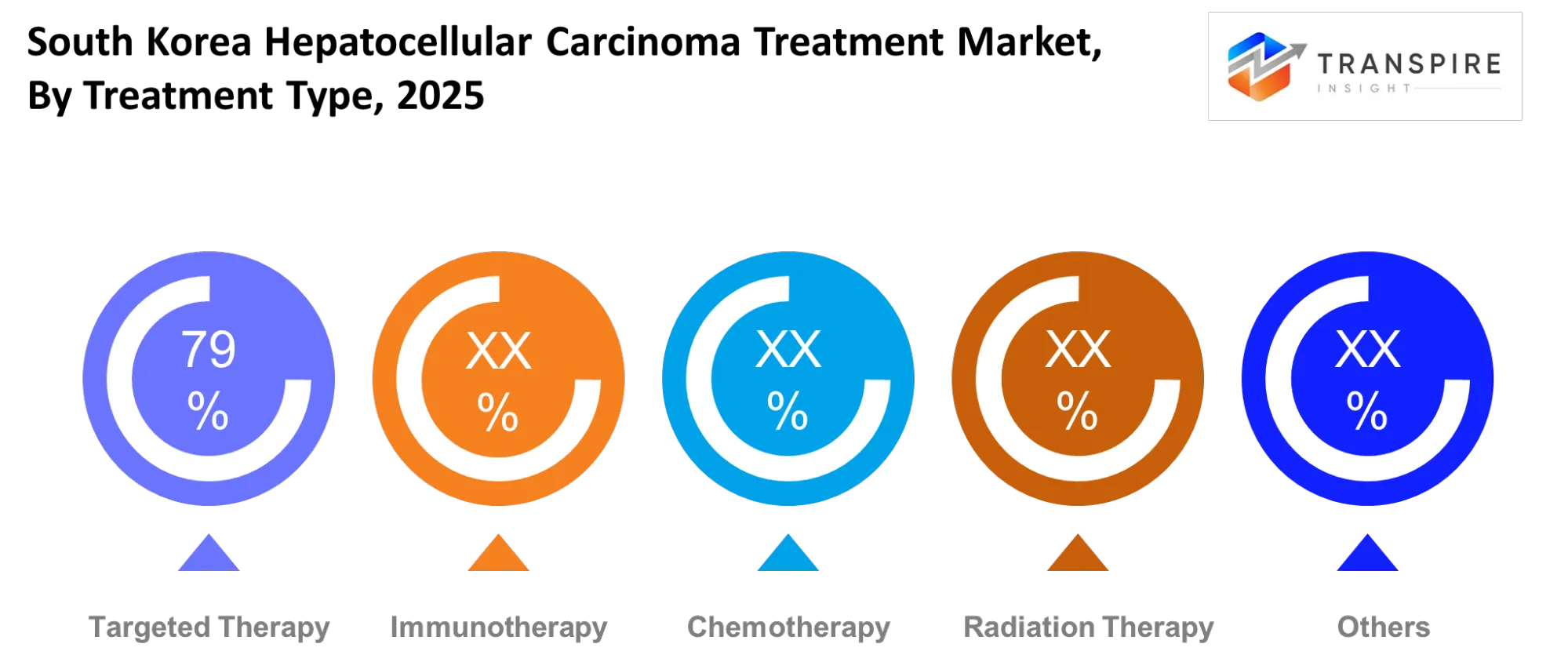
Targeted Therapy currently has a fairly strong market share, because liver cancer care protocols in South Korea still lean quite a bit on tyrosine kinase inhibitors for first line and second line management of disease. There is also strong physician familiarity, plus wider reimbursement availability, and a lot of established clinical evidence , so adoption keeps looking steady across tertiary hospitals that handle advanced hepatocellular carcinoma patients. Immunotherapy, on the other hand, has been gaining ground quickly, after checkpoint inhibitor combinations showed better progression-free survival and improved overall outcomes in multiple recent studies. Chemotherapy keeps a smaller slice, mainly because newer biologic therapies are gradually replacing the older cytotoxic approaches in advanced oncology settings.
Targeted Therapy is expected to stay commercially relevant at a similar level, since stepwise treatment strategies remain tied to kinase inhibitor use during multi line cancer management. Immunotherapy should expand the fastest, as combination regimens keep receiving broader reimbursement approval, and biomarker based patient selection becomes more reliable so treatment precision increases. Radiation Therapy may grow in a moderate way, because advanced imaging tools and more refined localized planning continue to improve clinical results for tumors that can’t be resected. Others, include ablation therapies, locoregional interventions and even experimental oncology platforms, entering clinical evaluation across South Korean research hospitals.
To learn more about this report, Download Free Sample Report
By Drug Type
PD-1 Inhibitors basically are still the main drug set, since immune checkpoint treatments now take over more of the first-line game for people with advanced liver cancer. Real-world results from clinical trials have been quite strong, and with reimbursement support also getting broader, plus these therapies getting mixed into combination regimens, adoption keeps widening across academic oncology centers. Tyrosine Kinase Inhibitors also hold a big piece of the market, partly because a lot of protocols still lean on oral targeted therapies for stabilization and for that step-by-step, sequential patient management. Monoclonal Antibodies keep moving upward too, you know, as pharmaceutical companies invest more in immuno-oncology work and in biomarker guided therapy development.
PD-1 Inhibitors are expected to stay commercially dominant, hospitals are progressively emphasizing long-term survival advantages and more personalized immunotherapy plans. Combination Therapies may show the most noticeable growth push during the forecast window, because oncologists start using multi-mechanism approaches meant to boost response rates, and also lower the risk of disease progression, at least in theory and in early practice. Tyrosine Kinase Inhibitors should keep fairly steady usage, since they’re still relevant for recurrent disease and for advanced-stage management. “Others” then covers emerging cell-based therapies, newer biologics, and experimental targeted agents being evaluated within local clinical research programs, these are things that could matter later on.
By Application
Advanced-stage HCC keeps that top market standing, mostly because in South Korea, quite a lot of liver cancer diagnoses still show up after tumor progression already starts or when chronic liver disease complications finally appear. Big tertiary hospitals keep turning out high treatment volumes too, especially for advanced cases that need immunotherapy pairings, targeted therapies, and that sort of multidisciplinary oncology management. On top of that, Recurrent HCC hangs onto a major market share since recurrence levels stay pretty clinically high among people who go through surgical resection, or locoregional intervention procedures.
Meanwhile early-stage HCC demand keeps getting stronger , mainly as screening programs plus AI-supported imaging allow earlier discovery and earlier intervention. Advanced-stage HCC is likely to keep the revenue leadership because long-running biologic therapies, and combination treatment regimens, tend to push higher per-patient treatment spending. Early-stage HCC might actually grow faster through the forecast period, since hospitals increasingly add surveillance systems for hepatitis B and cirrhosis patient groups. Recurrent HCC still opens doors for pharmaceutical developers, particularly those working on second-line therapy upgrades and recurrence prevention approaches. Other areas also matter, like palliative oncology care , and experimental treatment applications meant for rare liver cancer situations, or cases that resist treatment already.
By End User
Hospitals basically show up as the leading end user segment because hepatocellular carcinoma treatment needs a sort of integrated oncology setup, plus surgical know how, advanced imaging systems,and reliable biologic infusion capabilities. Bigger academic hospitals, and tertiary care institutions, keep dealing with most of the tough liver cancer cases, mostly since multidisciplinary treatment is non-negotiable and clinical trial programs are more accessible there. Cancer Treatment Centers still hold a notable market footing too, since these specialized oncology facilities are, more and more, pushing immunotherapy administration alongside precision medicine services. Meanwhile Specialty Clinics are getting more momentum in follow up monitoring, outpatient care, and that supportive oncology management.
Hospitals should keep their long term dominance because advanced liver cancer care continues to rely on centralized expertise and expensive clinical infrastructure. Cancer Treatment Centers could grow more quickly as regional oncology investment spreads, which helps patients reach biologic therapies beyond Seoul based institutions. Specialty Clinics also tend to benefit because many patients now prefer decentralized monitoring, and lower cost outpatient treatment support services. Other contributors, include research institutes, ambulatory infusion centers, and palliative care facilities, that help sustain longer term oncology management across aging patient populations.
By Distribution Channel
Hospital Pharmacies sit in the leading market role, mostly because expensive biologic medications, plus immunotherapy schedules, need controlled delivery in tightly regulated oncology spaces. In practice most advanced liver cancer patients are handled in tertiary hospitals where pharmacy workflows are pretty much connected, directly, to oncology teams, and the reimbursement cycle too. Specialty Pharmacies are also picking up, share wise, because targeted therapies often turn into long-term oral treatment routines, which means specialized dispensing, plus patient observation services.
Online Pharmacies still look smaller right now, not because the idea is bad, but due to strict regulatory oversight for oncology drug distribution. Still, Hospital Pharmacies are expected to keep their position, since biologic administrations and infusion-based treatments keep needing in-hospital supervision, along with the clinical monitoring setup. Specialty Pharmacies could see quicker momentum, as oral targeted options and personalized oncology programs roll out more in outpatient venues. Online Pharmacies might gradually grow their market presence later, if digital health rules, and prescription authentication systems get smoother during the forecast window.Other contributors are things like direct supplier links from manufacturers, and independent pharmaceutical distributors that help back regional oncology care networks.
What are the Key Use Cases Driving the South Korea Hepatocellular Carcinoma Treatment Market?
The real thing driving market demand is basically advanced-stage liver cancer care happening in tertiary oncology hospitals , not just a generic need. Combination immunotherapy and targeted biologics usually see the most clinical use, simply because many South Korean patients get the diagnosis only after cirrhosis has already moved along or after chronic hepatitis related liver damage has progressed. Large academic hospitals end up leading this whole treatment track, partly because their multidisciplinary oncology teams can coordinate everything.
There are also expanding applications like adjuvant therapy after tumor resection, and additional locoregional treatment support for people who are going through transarterial chemoembolization . In practice these scenarios are starting to pick up momentum across specialty cancer centers and regional hospitals , since they want to lower recurrence rates after surgery, or after those interventional procedures. On the side, precision diagnostics are improving how efficiently treatments get matched to the individual.
Newer use cases are showing up too, such as AI enabled recurrence monitoring and genomic guided personalized oncology programs. Hospitals are starting to fold in digital pathology plus biomarker platforms into how they manage liver cancer, especially for high risk hepatitis B patient groups and for clinical trial candidates.
|
Report Metrics |
Details |
|
Market size value in 2025 |
USD 139.76 Million |
|
Market size value in 2026 |
USD 150.24 Million |
|
Revenue forecast in 2033 |
USD 249.25 Million |
|
Growth rate |
CAGR of 7.50% from 2026 to 2033 |
|
Base year |
2025 |
|
Historical data |
2021 - 2024 |
|
Forecast period |
2026 - 2033 |
|
Report coverage |
Revenue forecast, competitive landscape, growth factors, and trends |
|
Regional scope |
South Korea |
|
Key company profiled |
Roche, Bristol Myers Squibb, Merck & Co., AstraZeneca, Bayer, Eisai, Pfizer, Novartis, Eli Lilly, Ono Pharmaceutical, BeiGene, Jiangsu Hengrui Medicine, Exelixis, GSK, Takeda Pharmaceutical |
|
Customization scope |
Free report customization (country, regional & segment scope). Avail customized purchase options to meet your exact research needs. |
|
Report Segmentation |
By Treatment Type (Targeted Therapy, Immunotherapy, Chemotherapy, Radiation Therapy, Others); By Drug Type (PD-1 Inhibitors, Tyrosine Kinase Inhibitors, Monoclonal Antibodies, Combination Therapies, Others); By Application (Early-stage HCC, Advanced-stage HCC, Recurrent HCC, Others); By End User (Hospitals, Cancer Treatment Centers, Specialty Clinics, Others); By Distribution Channel (Hospital Pharmacies, Specialty Pharmacies, Online Pharmacies, Others) |
Which Regions are Driving the South Korea Hepatocellular Carcinoma Treatment Market Growth?
The Seoul Capital Area still seems like the main, dominant regional driver for market revenue, simply because it holds the country’s biggest clump of tertiary oncology hospitals, academic research institutes ,and advanced liver disease centers. In practice hospitals in Seoul and Gyeonggi Province handle a very large portion of high-complexity liver cancer cases that need immunotherapy combinations ,interventional radiology, and surgical oncology know how. Also the strong reimbursement access plus the thick clinical trial setup keep reinforcing that regional lead. On top of that, multinational pharmaceutical collaborations and precision medicine laboratories keep showing up, which sustains long-term dominance in how treatments are adopted and how innovation moves forward.
Then the southeastern region around Busan and Daegu, it lands as the second-largest contributor, but the growth logic isn’t quite the same as Seoul’s more research fueled ecosystem. This area leans on steadier industrial employment, older demographics, and predictable public hospital funding that keeps oncology demand in place. Here the healthcare systems focus a lot on continuity of care, and also widening regional cancer treatment access, rather than leading with the most experimental therapies. Local medical universities and specialty hospitals keep reinforcing oncology service capability, so treatment volumes look dependable and pharmaceutical demand tends to repeat over time.
Meanwhile the fastest-growing segment looks to be the central and southwestern corridor, including Daejeon and Gwangju, where recent healthcare digitization and regional oncology investment programs have been kind of speeding up market expansion. After 2024, government-backed decentralization pushed more money into advanced imaging systems, cancer diagnostics ,and biologic infusion infrastructure.
Who are the Key Players in the South Korea Hepatocellular Carcinoma Treatment Market and How Do They Compete?
Competition in the South Korea Hepatocellular Carcinoma Treatment Market is moderately concentrated, mostly around multinational oncology players with solid immunotherapy portfolios, plus long-term hospital ties. In practice the competitive stance is… kinda tricky, because it leans on clinical efficacy reimbursement success, biomarker integration, and the ability to join South Korean clinical research networks. Larger established pharmaceutical companies still defend share by expanding combination regimens, even when the environment shifts. Meanwhile, several Asian oncology specialists and newer biotech players try to break in via narrower targeted immuno-oncology pockets, sort of incremental entry but persistent.
Roche stands out, in a more integrated way, through diagnostics and precision oncology infrastructure. The approach links biomarker platforms with digital pathology capabilities, then pairs that with oncology therapeutics, so hospitals get a more complete ecosystem, not just a single product. Also it extended its South Korean clinical research involvement with a multibillion-won style investment program, meant to back local biopharmaceutical novelty and trial infrastructure, at the same time.
Bristol Myers Squibb competes pretty aggressively using immune checkpoint inhibitor combinations built around Opdivo and Yervoy. The company leans on survival, as a clear clinical differentiator, and it invests a lot in AI-enabled drug development and precision oncology analytics. AstraZeneca and Merck & Co. keep pushing immunotherapy trial partnerships with Asian oncology institutions, to reinforce regional uptake of treatment pathways. At the same time, BeiGene and Jiangsu Hengrui Medicine pursue more cost-conscious immuno-oncology expansion strategies, aiming to widen access across Asia-Pacific healthcare systems.
Company List
- Roche
- Bristol Myers Squibb
- Merck & Co.
- AstraZeneca
- Bayer
- Eisai
- Pfizer
- Novartis
- Eli Lilly
- Ono Pharmaceutical
- BeiGene
- Jiangsu Hengrui Medicine
- Exelixis
- GSK
- Takeda Pharmaceutical
Recent Development News
“In May 2026, Roche announced an investment of approximately USD 481 million in South Korea’s biotechnology and clinical trials ecosystem. The investment is expected to strengthen oncology research infrastructure and accelerate hepatocellular carcinoma treatment development through expanded global clinical trial activity.http://www.kedglobal.com
“In May 2026, Jiangsu Hengrui Medicine and Bristol Myers Squibb entered global collaboration and licensing agreements worth up to USD 15.2 billion. The partnership covers multiple oncology and immunology drug programs, strengthening next-generation cancer therapy pipelines relevant to hepatocellular carcinoma treatment expansion across Asia-Pacific markets.http://www.reuters.com
“In April 2026,AstraZeneca announced positive late-stage trial results for its Imfinzi-based liver cancer therapy combination. The study demonstrated significantly delayed disease progression in hepatocellular carcinoma patients, reinforcing the company’s competitive position in advanced liver oncology treatment markets including South Korea.http://www.reuters.com
What Strategic Insights Define the Future of the South Korea Hepatocellular Carcinoma Treatment Market?
The South Korea Hepatocellular Carcinoma Treatment Market is kinda moving toward something more integrated like precision oncology, built around immunotherapy combinations, biomarker led treatment choice, and diagnostics enabled by AI. The main reason behind this is basically how high liver disease prevalence meets South Korea’s pretty advanced digital healthcare setup, plus a well developed oncology research environment. In the next five to seven years, the real treatment value will depend more on survival metrics you can measure and on personalized therapy alignment, not only on generic availability of drugs.
One risk that people often don’t notice enough is reimbursement concentration pressure. When expensive biologics start showing up everywhere, public healthcare systems might tighten their reimbursement rules or lean toward only therapies that look clearly more clinically differentiated. That can shrink market entry options for second tier players, even if their products are promising.
A big and still emerging opportunity sits in AI connected companion diagnostics and real world oncology data platforms. Firms that can link diagnostics with genomic profiling, and then connect that to treatment analytics, should see better uptake from physicians and more leverage with payers. Market participants should focus on partnerships with South Korean tertiary hospitals and digital health providers, so they can get early presence in these next generation precision liver oncology ecosystems, sooner rather than later.
South Korea Hepatocellular Carcinoma Treatment Market Report Segmentation
By Treatment Type
- Targeted Therapy
- Immunotherapy
- Chemotherapy
- Radiation Therapy
- Others
By Drug Type
- PD-1 Inhibitors
- Tyrosine Kinase Inhibitors
- Monoclonal Antibodies
- Combination Therapies
- Others
By Application
- Early-stage HCC
- Advanced-stage HCC
- Recurrent HCC
- Others
By End User
- Hospitals
- Cancer Treatment Centers
- Specialty Clinics
- Others
By Distribution Channel
- Hospital Pharmacies
- Specialty Pharmacies
- Online Pharmacies
- Others
Frequently Asked Questions
Find quick answers to common questions.
The expected South Korea Hepatocellular Carcinoma Treatment Market size for the market will be USD 249.25 Million in 2033.
Key segments for the South Korea Hepatocellular Carcinoma Treatment Market are By Treatment Type (Targeted Therapy, Immunotherapy, Chemotherapy, Radiation Therapy, Others); By Drug Type (PD-1 Inhibitors, Tyrosine Kinase Inhibitors, Monoclonal Antibodies, Combination Therapies, Others); By Application (Early-stage HCC, Advanced-stage HCC, Recurrent HCC, Others); By End User (Hospitals, Cancer Treatment Centers, Specialty Clinics, Others); By Distribution Channel (Hospital Pharmacies, Specialty Pharmacies, Online Pharmacies, Others).
Major South Korea Hepatocellular Carcinoma Treatment Market players are Roche, Bristol Myers Squibb, Merck & Co., AstraZeneca, Bayer, Eisai, Pfizer, Novartis, Eli Lilly, Ono Pharmaceutical, BeiGene, Jiangsu Hengrui Medicine, Exelixis, GSK, Takeda Pharmaceutical.
The South Korea Hepatocellular Carcinoma Treatment Market size is USD 139.76 Million in 2025.
The South Korea Hepatocellular Carcinoma Treatment Market CAGR is 7.50% from 2026 to 2033.
- Roche
- Bristol Myers Squibb
- Merck & Co.
- AstraZeneca
- Bayer
- Eisai
- Pfizer
- Novartis
- Eli Lilly
- Ono Pharmaceutical
- BeiGene
- Jiangsu Hengrui Medicine
- Exelixis
- GSK
- Takeda Pharmaceutical
Recently Published Reports
-
May 2026
Biosimilars Market
Biosimilars Market By Product Type (Monoclonal Antibodies, Recombinant Hormones, Erythropoietin, G-CSF, Others), By Indication (Oncology, Autoimmune Diseases, Blood Disorders, Diabetes, Others), By Manufacturing Type (In-House Manufacturing, Contract Manufacturing), By Distribution Channel (Hospital Pharmacies, Retail Pharmacies, Online Pharmacies), By Industry Analysis, Size, Share, Growth, Trends, and Forecasts 2021-2033
-
Apr 2026
Gastrointestinal Endoscopy Market
Gastrointestinal Endoscopy Market By Type (Rigid Gastrointestinal Endoscope, Flexible Gastrointestinal Endoscopes, Disposable Gastrointestinal Endoscope), By Procedure Type (Colonoscopy, Gastroscopy, Duodenoscopy, Enteroscopy, Flexible Sigmoidoscopy, Others), By Application (Diagnosis, Treatment), By End-Users (Hospitals, Ambulatory Surgical Centers, Specialty Clinics, Laboratories, Others), By Industry Analysis, Size, Share, Growth, Trends, and Forecasts 2021-2033
-
Apr 2026
Rare Inherited Metabolic Disorder Drug Market
Rare Inherited Metabolic Disorder Drug Market By Drug Class (Enzyme Replacement Drugs, Gene Therapy Drugs, Substrate Reduction Drugs, Small Module Drugs, Protein Drugs), By Route of Administration(Parenteral, Oral, Intrathecal), By Clinical Development (Marketed Drugs, Late Stage Clinical Phase III, Early Stage Clinical Phase I-II, Preclinical Candidates), By Indication (Lysosomal Storage Disorders, Urea Cycle Disorders, Amino Acid Metabolic Disorders, organic Acidemias, Peroximal Disorders), By Industry Analysis, Size, Share, Growth, Trends, and Forecasts 2021-2033
-
Jan 2026
Pharmaceutical Cleanroom Technology Market
Pharmaceutical Cleanroom Technology Market By Product (Equipment, Consumables, Services); By Cleanroom Type (Standard Cleanrooms, Modular Cleanrooms); By End Use (Pharmaceutical Companies, Biotechnology Companies), By Industry Analysis, Size, Share, Growth, Trends, and Forecasts 2021-2033