
South Korea Basal Cell and Squamous Cell Carcinoma Therapeutics Market Size & Forecast:
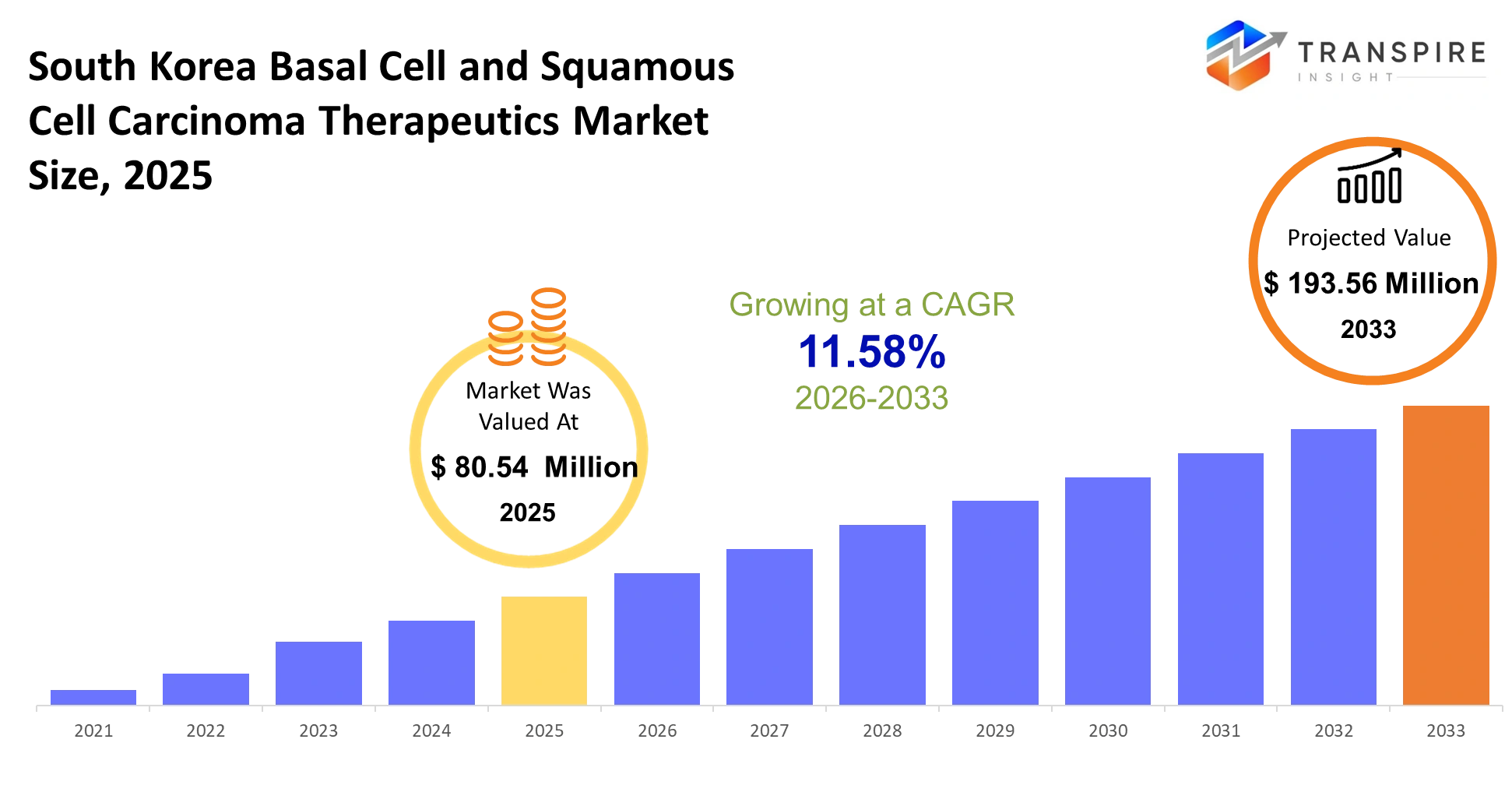
- South Korea Basal Cell and Squamous Cell Carcinoma Therapeutics Market Size 2025: USD 80.54 Million
- South Korea Basal Cell and Squamous Cell Carcinoma Therapeutics Market Size 2033: USD 193.56 Million
- South Korea Basal Cell and Squamous Cell Carcinoma Therapeutics Market CAGR: 11.58%
- South Korea Basal Cell and Squamous Cell Carcinoma Therapeutics Market Segments: By Treatment Type (Immunotherapy, Targeted Therapy, Chemotherapy, Radiation Therapy, Others); By Drug Type (PD-1 Inhibitors, Hedgehog Pathway Inhibitors, EGFR Inhibitors, Cytotoxic Drugs, Others); By Application (Basal Cell Carcinoma, Squamous Cell Carcinoma, Metastatic Skin Cancer, Others); By End User (Hospitals, Oncology Clinics, Cancer Research Institutes, Others); By Distribution Channel (Hospital Pharmacies, Specialty Pharmacies, Online Pharmacies, Others)
To learn more about this report,  Download Free Sample Report
South Korea Basal Cell and Squamous Cell Carcinoma Therapeutics Market Summary
The South Korea Basal Cell and Squamous Cell Carcinoma Therapeutics Market was valued at USD 80.54 Millionin 2025. It is forecast to reach USD 193.56 Million by 2033. That is a CAGR of 11.58% over the period.
The therapeutics in South Korea for basal cell and squamous cell carcinoma emphasize managing the most prevalent cases of non-melanoma skin cancers by targeting the use of medication, immunotherapy, and the delivery of sophisticated oncologic treatments in medical facilities. The current market in South Korea is oriented towards achieving disease management, the prevention of recurrence, and improved survival rates among those who have suffered from higher risks associated with sunburns.
In the past 3-5 years, there has been a shift from the utilization of traditional surgical methods and the introduction of more immunosuppressant drugs alongside precision oncology. In parallel, regulatory convergence that expedites the process of approvals has shortened the time-to-market period for new drugs. One of the triggers of the trend was the growing number of late-stage diagnoses of cancer after the pandemic. Consequently, pharmaceutical companies have expanded their access programs and collaborations with hospitals to enhance their oncological drug portfolio performance.
Key Market Insights
- Nearly 45% hospital concentration in Se ou l, marks the South Korea Basal Cell and Squamous Cell Carcinoma Therapeutics Market, mainly because of strong oncology infrastructure and an increasing biologics adoption trend.
- The Immunotherapy segment accounts for about 38% of the market share in the South Korea Basal Cell and Squamous Cell Carcinoma Therapeutics Market, driven by uptake of PD-1 inhibitors in tertiary cancer hospitals.
- Metastatic skin cancer applications are seeing the fastest adoption, above 12% (2024–2026), driven by more late-stage diagnosis and a growing reliance on systemic therapies.
- Hospital pharmacies are still the biggest channel in the South Korea Basal Cell and Squamous Cell Carcinoma Therapeutics Market (2025), since biologic drugs are typically to be administered in controlled settings.
- The Busan-Ulsan area sees the highest regional growth, partly from ongoing oncology infrastructure build-outs, and it also adds to the South Korea Basal Cell and Squamous Cell Carcinoma Therapeutics Market.
- Collaborations with South Korean hospitals by global pharma companies have gone up roughly 25% across 2023–2025, this helps speed up approval pathways and improves patient access to novel drugs.
- The South Korea Basal Cell and Squamous Cell Carcinoma Therapeutics Market is moving toward AI based oncology management systems , and personalizing immunotherapies within leading cancer hospitals.
What are the Key Drivers, Restraints, and Opportunities in the South Korea Basal Cell and Squamous Cell Carcinoma Therapeutics Market?
This stems from the growing use of immune checkpoint inhibitors for managing basal and squamous cell carcinoma among advanced cases treated using surgical procedures or topical creams. This trend began after clinical research studies showed better success rates for tumor recurrence prevention and remission duration compared with other treatment methods. These treatments were fast adopted by Korean hospitals, particularly tertiary hospitals, where revenue opportunities from drug sales became higher due to biologics' wider applications.
One key limitation in South Korea's market is the expensive nature of biologics and immuno-oncology drugs. These factors prevent their wide adoption among small hospitals and those patients who cannot afford to pay premium rates. This is primarily caused by the long development process, complicated manufacturing, and high patent fees on biological medicines, limiting adoption to affluent cities. Thus, penetration will be slow until these challenges are resolved.
Another important opportunity for oncology drug manufacturers is biosimilar production using local partners in the robust South Korean biopharma industry. Biologics manufacturers working together with innovators to develop and produce inexpensive biosimilars in Korea could benefit from this situation. Currently, there is an increase in biopharma clusters specializing in cancer therapy biologics, such as the Songdo and Osong biopharmaceutical clusters.
What Has the Impact of Artificial Intelligence Been on the South Korea Basal Cell and Squamous Cell Carcinoma Therapeutics Market?
AI technology is significantly changing the processes of diagnosing and managing therapies for the treatment of basal and squamous cell carcinoma in South Korea. The use of advanced AI technologies in imaging and diagnostics of skin lesions has led to higher levels of accuracy in diagnosis and efficient treatment of patients. AI solutions have already been incorporated into hospital dermatology departments to help detect cancerous lesions early using machine vision-based technologies.
The process of prediction and optimization of dosing schemes based on past experience with immunotherapy of different patients has become one of the main applications for machine learning algorithms in hospitals' oncology departments. It allows for more efficient treatment of patients, while avoiding unnecessary costs related to expensive biological drugs. At large clinics, AI-driven systems are actively used in clinical decision-making when comparing treatment strategies for certain groups of patients with skin cancer.
On the operational side, hospitals have noted that adopting these AI solutions has led to more effective workflow management. Still, there are some difficulties related to a lack of high-quality datasets with skin lesions images to train accurate AI models. In addition, integration costs are rather high since hospitals still use outdated legacy information systems.
Key Market Trends
- Shift from surgical procedures to immunotherapies-first therapy became common in South Korea Basal Cell and Squamous Cell Carcinoma Therapeutics Market 2022–2025.
- Oncology departments of hospitals raised their use of PD-1 inhibitors by more than 30% during 2023-2025 due to higher survival rates.
- In dermatology clinics in South Korea, use of AI for better diagnosis of carcinoma patients was observed in 2024.
- Pharmaceutical companies invested in expanding their oncology pipelines in 2025 by licensing technologies from Korean biotechnology startups.
- Reimbursement changes introduced by the government in 2023 made expensive biological drugs more available to tertiary hospitals.
- Significant growth in clinical trials for skin cancer drugs in 2025 due to involvement of multinational pharmaceutical companies.
- Development of biosimilars in 2024 contributed towards cutting costs of immunotherapy drug regimens.
- Concentration of hospitals in the city of Seoul enhanced delivery of oncology care services 2023–2026.
- Collaboration among global players boosted technology transfer in advanced biologic production processes.
South Korea Basal Cell and Squamous Cell Carcinoma Therapeutics Market Segmentation
By Treatment Type
Immunotherapy kind of sits in a leading spot within the overall treatment landscape, mainly because it shows solid clinical results in advanced skin cancer cases where surgery by itself isn’t really enough. In most hospital oncology departments , immune checkpoint inhibitors are often the preferred choice because they support better long-term disease control, and also help lower the chance of recurrence in patients considered high-risk. Widespread take-up across tertiary care centers just makes its overall position feel even more dominant within the therapeutic mix.
Targeted Therapy is also expanding gradually, and it’s mostly fueled by precision medicine approaches, where the drug selection follows tumor-specific molecular routes. Meanwhile, Chemotherapy keeps a limited but fairly steady place in therapy , usually reserved for situations where patients can’t receive advanced biologics or immunotherapies. Radiation Therapy still matters for localized tumor control, particularly when it’s used as part of combined treatment protocols. There are also other options—like emerging biologics , along with supportive therapies.
Over the forecast period, immunotherapy and targeted therapy are expected to continue strengthening, as oncology care continues to move toward precision-based treatment pathways. At the same time, the older or traditional modalities are likely to slowly shift into supportive or secondary, adjunct roles rather than being central choices.
By Drug Type
PD-1 Inhibitors dominate the market because of their superior effectiveness in immune activation and tumor suppression for advanced basal and squamous cell carcinomas. The widespread use in tertiary hospitals can be attributed to their role as first-line systemic treatment in many oncology regimens. Continued robustness in pharmaceutical pipeline activity ensures their dominance going forward.
Hedgehog Pathway Inhibitors occupy an important place in the market, especially for patients with basal cell carcinoma and mutation-driven pathway activity within the tumor cells. EGFR Inhibitors represent narrow indications in the case of squamous cell carcinomas with tumor progression via receptor activity. Cytotoxic Agents are sparingly used on account of their higher level of toxicity and less precise mechanism of action when compared with other drugs. Others may comprise combinations and experimental medicines. PD-1 inhibitors are likely to continue their domination as more combinations emerge; hedgehog inhibitors will maintain their importance for specific genetic subsets of patients.
By Application
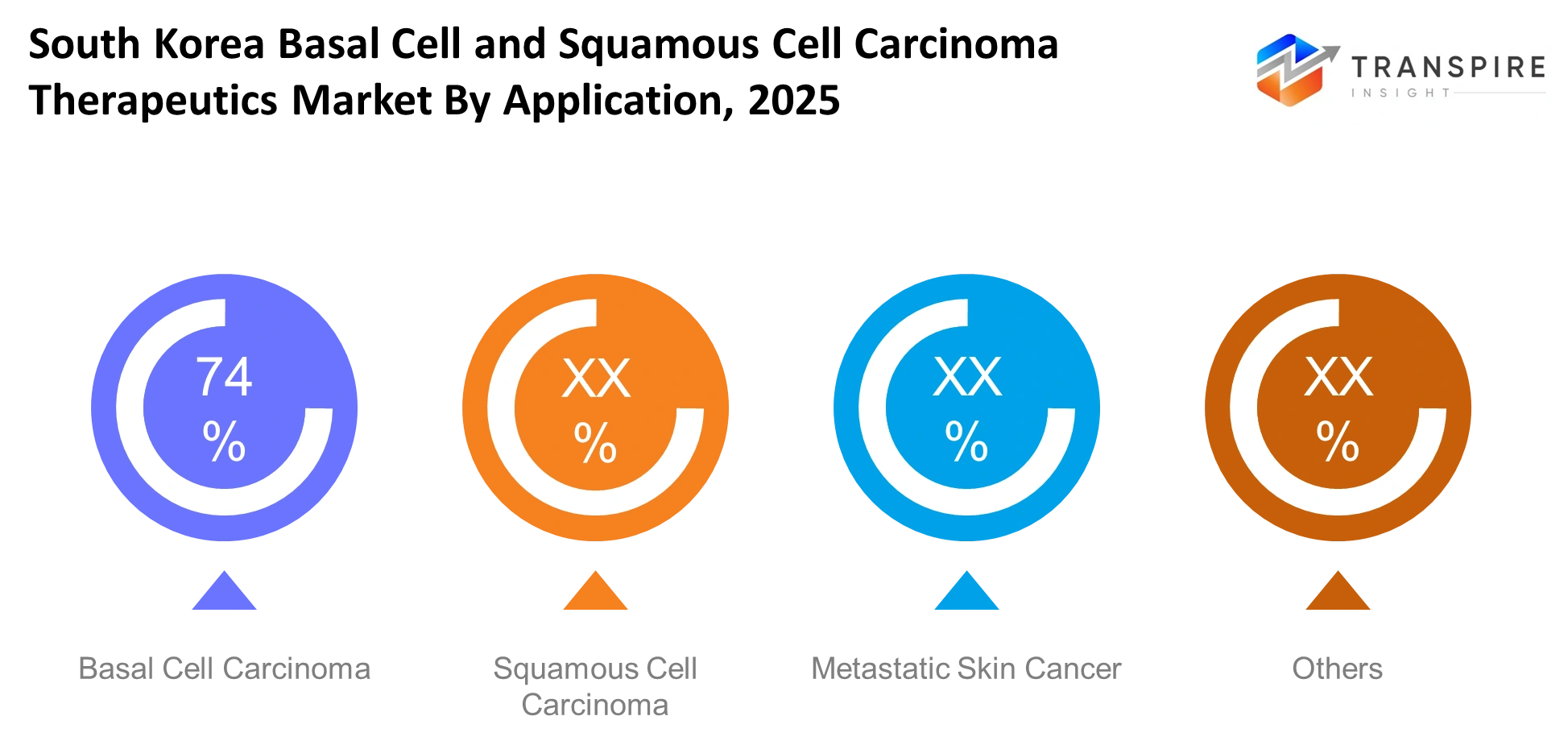
Treatment for Basal Cell Carcinoma constitutes the largest application market share attributed to its high prevalence and high outpatient demand within dermatology and oncology units. Early-stage diagnosis and management of repeat cases ensure regular use of treatments. Proven treatment methods help maintain its strong market position.
The Squamous Cell Carcinoma market is on an upward trend owing to the increasing number of aggressive and metastatic cases that require systemic treatments. Metastatic Skin Cancer is the fastest-growing application area owing to late-stage detection rates and more complex treatment requirements. Some applications include rare skin cancers that are managed in oncology centers. In the coming years, metastatic cases will dominate innovations in combination therapies, while the treatment for Basal Cell Carcinoma will continue to form the bulk of the market.
To learn more about this report, Download Free Sample Report
By End User
The dominance of hospitals is driven by their position as the leading institutions where advanced stages of skin cancers can be treated using immuno-modulation therapies and drugs. Hospitals' strong oncology base and the use of expensive biologics give them an edge in this area. The bulk of the complex therapeutic regimens are undertaken in the tertiary hospitals.
Oncology Clinics have been witnessing rapid growth owing to the growing focus on the outpatient cancer treatment model and treatment at an earlier stage of cancer progression. They are very crucial when it comes to running trials and validating new experimental therapies for their efficacy. The other types of end users of the drug are specialized dermatology clinics providing localized treatment of the condition. The oncology clinics and cancer research institutes will continue to witness strong growth during the forecast period owing to the growing decentralized cancer care system.
By Distribution Channel
Hospital Pharmacies constitute the leading route since most of the latest medicines are delivered directly under clinical supervision in hospital-based oncology units. Well-aligned operations with both inpatient and outpatient care delivery systems ensure consistency and control in drug use and dispensation. This will remain crucial for delivering expensive biologic and immunotherapy drugs.
Specialty Pharmacies are increasing because of increasing patient demand for the proper distribution of complicated oncology medications that need specialized cold chain transportation and monitoring services. Online Pharmacies are still small but slowly coming into prominence for supportive treatments and follow-ups. Other methods of distribution involve procurement routes tied up with research and clinical trials. Specialty pharmacies are likely to increase in importance during the forecast period on account of increasing complexity of oncology medicines, whereas hospital pharmacies are likely to lead primary distribution routes.
What are the Key Use Cases Driving the South Korea Basal Cell and Squamous Cell Carcinoma Therapeutics Market?
Hospital treatment of advanced stage non-melanoma skin cancers with immunotherapies and biologics is the principal use case scenario in South Korea Basal Cell and Squamous Cell Carcinoma Therapeutics Market. This is due to the fact that almost all late-stage cancer patients who need systemic therapy in lieu of simple surgical removal of cancer tumors are handled at tertiary-level hospitals.
Extended use cases involve dermatology oncology clinics for early-stage skin cancers and UV-exposure related cancer prevention in the outdoor workforce. In this environment, early-stage treatment regimens and subsequent biological administration have become common practice.
AI-enabled personalized treatment protocols along with immunotherapy & radiation therapy combinations are some of the emerging use cases in this market. Both these use cases remain in nascent phases currently.
|
Report Metrics |
Details |
|
Market size value in 2025 |
USD 80.54 Million |
|
Market size value in 2026 |
USD 89.87 Million |
|
Revenue forecast in 2033 |
USD 193.56 Million |
|
Growth rate |
CAGR of 11.58% from 2026 to 2033 |
|
Base year |
2025 |
|
Historical data |
2021 - 2024 |
|
Forecast period |
2026 - 2033 |
|
Report coverage |
Revenue forecast, competitive landscape, growth factors, and trends |
|
Regional scope |
South Korea |
|
Key company profiled |
Roche, Merck & Co., Regeneron Pharmaceuticals, Sanofi, Bristol Myers Squibb, Novartis, Pfizer, Eli Lilly, AstraZeneca, Sun Pharmaceutical, GSK, Amgen, AbbVie, BeiGene, Ono Pharmaceutical |
|
Customization scope |
Free report customization (country, regional & segment scope). Avail customized purchase options to meet your exact research needs. |
|
Report Segmentation |
By Treatment Type (Immunotherapy, Targeted Therapy, Chemotherapy, Radiation Therapy, Others); By Drug Type (PD-1 Inhibitors, Hedgehog Pathway Inhibitors, EGFR Inhibitors, Cytotoxic Drugs, Others); By Application (Basal Cell Carcinoma, Squamous Cell Carcinoma, Metastatic Skin Cancer, Others); By End User (Hospitals, Oncology Clinics, Cancer Research Institutes, Others); By Distribution Channel (Hospital Pharmacies, Specialty Pharmacies, Online Pharmacies, Others) |
Which Regions are Driving the South Korea Basal Cell and Squamous Cell Carcinoma Therapeutics Market Growth?
The Seoul Metropolitan Region is the leading market for basal cell and squamous cell carcinoma therapeutics in South Korea because of the presence of tertiary hospitals and developed oncology infrastructure. Key cancer centers located within the area carry out an unusually large amount of immunotherapy procedures and conduct studies. High levels of reimbursement and early adaptation of biological products also contribute to the leadership.
The second largest market in the country is represented by the Busan-Ulsan region, which features stable demand for oncology treatments among the industrial workforce due to established health programs. As in the Seoul area, its development depends not on innovation but on the regular construction of hospitals and the slow adoption of novel medications. Predictable economic and healthcare situations create demand for drugs among the population.
The area with the highest growth rate is Daegu-Gyeongbuk, thanks to investments into cancer centers in the region as well as the healthcare decentralization policy promoted by the government. The introduction of additional oncology facilities and improvement of referral processes resulted in increased accessibility of biologics in non-Seoul territories. Recent infrastructure improvements led to a spike in demand among patients from secondary cities.
Who are the Key Players in the South Korea Basal Cell and Squamous Cell Carcinoma Therapeutics Market and How Do They Compete?
The South Korea Basal Cell and Squamous Cell Carcinoma Therapeutics Market features moderate consolidation levels, with global pharmaceutical companies dominating premium market segments of immunotherapy products, whereas domestic firms specialize in generics along with complementary oncology support. The primary basis of competition within the space is product efficacy, regulatory compliance, and hospital affiliations, not merely pricing power, particularly within advanced biologics.
PD-1 and oncology-focused products from Roche and Merck & Co. are highly competitive through ongoing development and combination trials to keep their products entrenched among hospitals. Bristol Myers Squibb competes via immuno-oncology pipelines and physician marketing initiatives in tertiary cancer centers.
Novartis emphasizes precision and dermatology-related oncology products, enhancing their positions through hospital partnerships to conduct real-world evidence research. AstraZeneca seeks growth via partnerships and novel biologics that target resistant cancer pathways. Pfizer competes by developing diverse oncology products and conducting clinical trials in South Korea.
Company List
- Roche
- Merck & Co.
- Regeneron Pharmaceuticals
- Sanofi
- Bristol Myers Squibb
- Novartis
- Pfizer
- Eli Lilly
- AstraZeneca
- Sun Pharmaceutical
- GSK
- Amgen
- AbbVie
- BeiGene
- Ono Pharmaceutical
Recent Development News
In March 2025, Sun Pharmaceutical Industries Ltd. announced the acquisition of Checkpoint Therapeutics, Inc. This acquisition strengthened Sun Pharma’s oncology portfolio, particularly in targeted cancer therapies and immune-oncology assets relevant to skin cancer treatment pipelines, including basal and squamous cell carcinoma therapeutics.https://www.facebook.com/
In January 2026, Merck & Co. highlighted expanded oncology pipeline data across multiple tumor types, reinforcing its strategic focus on immunotherapy-based cancer treatments. The development strengthens its clinical positioning in immune checkpoint inhibitors widely used in non-melanoma skin cancer treatment pathways, including basal and squamous cell carcinoma cases.https://www.pharmiweb.com
What Strategic Insights Define the Future of the South Korea Basal Cell and Squamous Cell Carcinoma Therapeutics Market?
South Korea Basal Cell and Squamous Cell Carcinoma Therapeutics Market will undergo structural changes that will lead to biologic-dominated, outpatient-aided oncology with the support of precision diagnostics and digitalization in hospitals over 5-7 years ahead with an increasing preference shifting away from late-stage treatments to early detection together with immunotherapies.
An implicit threat exists in the form of price competition by biosimilars upon the expiry of patents. The opportunity lies in the emergence of oncology treatment planning systems integrated with AI that utilize patient data from Korean cancer clinics to provide personalized immunotherapy regimes.
Pharmaceutical companies must conduct evidence-based clinical trials from South Korean hospitals, as formulary inclusion will depend on such validation to gain market share over the long run.
South Korea Basal Cell and Squamous Cell Carcinoma Therapeutics Market Report Segmentation
By Treatment Type
- Immunotherapy
- Targeted Therapy
- Chemotherapy
- Radiation Therapy
- Others
By Drug Type
- PD-1 Inhibitors
- Hedgehog Pathway Inhibitors
- EGFR Inhibitors
- Cytotoxic Drugs
- Others
By Application
- Basal Cell Carcinoma
- Squamous Cell Carcinoma
- Metastatic Skin Cancer
- Others
By End User
- Hospitals
- Oncology Clinics
- Cancer Research Institutes
- Others
By Distribution Channel
- Hospital Pharmacies
- Specialty Pharmacies
- Online Pharmacies
- Others
Frequently Asked Questions
Find quick answers to common questions.
The estimated South Korea Basal Cell and Squamous Cell Carcinoma Therapeutics Market size for the market will be USD 193.56 Million in 2033.
Key segments for the South Korea Basal Cell and Squamous Cell Carcinoma Therapeutics Market are By Treatment Type (Immunotherapy, Targeted Therapy, Chemotherapy, Radiation Therapy, Others); By Drug Type (PD-1 Inhibitors, Hedgehog Pathway Inhibitors, EGFR Inhibitors, Cytotoxic Drugs, Others); By Application (Basal Cell Carcinoma, Squamous Cell Carcinoma, Metastatic Skin Cancer, Others); By End User (Hospitals, Oncology Clinics, Cancer Research Institutes, Others); By Distribution Channel (Hospital Pharmacies, Specialty Pharmacies, Online Pharmacies, Others).
Major South Korea Basal Cell and Squamous Cell Carcinoma Therapeutics Market players are Roche, Merck & Co., Regeneron Pharmaceuticals, Sanofi, Bristol Myers Squibb, Novartis, Pfizer, Eli Lilly, AstraZeneca, Sun Pharmaceutical, GSK, Amgen, AbbVie, BeiGene, Ono Pharmaceutical.
The South Korea Basal Cell and Squamous Cell Carcinoma Therapeutics Market size is USD 80.54 Million in 2025.
The South Korea Basal Cell and Squamous Cell Carcinoma Therapeutics Market CAGR is 11.58% from 2026 to 2033.
- Roche
- Merck & Co.
- Regeneron Pharmaceuticals
- Sanofi
- Bristol Myers Squibb
- Novartis
- Pfizer
- Eli Lilly
- AstraZeneca
- Sun Pharmaceutical
- GSK
- Amgen
- AbbVie
- BeiGene
- Ono Pharmaceutical
Recently Published Reports
-
May 2026
Biosimilars Market
Biosimilars Market By Product Type (Monoclonal Antibodies, Recombinant Hormones, Erythropoietin, G-CSF, Others), By Indication (Oncology, Autoimmune Diseases, Blood Disorders, Diabetes, Others), By Manufacturing Type (In-House Manufacturing, Contract Manufacturing), By Distribution Channel (Hospital Pharmacies, Retail Pharmacies, Online Pharmacies), By Industry Analysis, Size, Share, Growth, Trends, and Forecasts 2021-2033
-
Apr 2026
Gastrointestinal Endoscopy Market
Gastrointestinal Endoscopy Market By Type (Rigid Gastrointestinal Endoscope, Flexible Gastrointestinal Endoscopes, Disposable Gastrointestinal Endoscope), By Procedure Type (Colonoscopy, Gastroscopy, Duodenoscopy, Enteroscopy, Flexible Sigmoidoscopy, Others), By Application (Diagnosis, Treatment), By End-Users (Hospitals, Ambulatory Surgical Centers, Specialty Clinics, Laboratories, Others), By Industry Analysis, Size, Share, Growth, Trends, and Forecasts 2021-2033
-
Apr 2026
Rare Inherited Metabolic Disorder Drug Market
Rare Inherited Metabolic Disorder Drug Market By Drug Class (Enzyme Replacement Drugs, Gene Therapy Drugs, Substrate Reduction Drugs, Small Module Drugs, Protein Drugs), By Route of Administration(Parenteral, Oral, Intrathecal), By Clinical Development (Marketed Drugs, Late Stage Clinical Phase III, Early Stage Clinical Phase I-II, Preclinical Candidates), By Indication (Lysosomal Storage Disorders, Urea Cycle Disorders, Amino Acid Metabolic Disorders, organic Acidemias, Peroximal Disorders), By Industry Analysis, Size, Share, Growth, Trends, and Forecasts 2021-2033
-
Jan 2026
Pharmaceutical Cleanroom Technology Market
Pharmaceutical Cleanroom Technology Market By Product (Equipment, Consumables, Services); By Cleanroom Type (Standard Cleanrooms, Modular Cleanrooms); By End Use (Pharmaceutical Companies, Biotechnology Companies), By Industry Analysis, Size, Share, Growth, Trends, and Forecasts 2021-2033