United States Radiology Positioning Aids Market Size & Forecast:
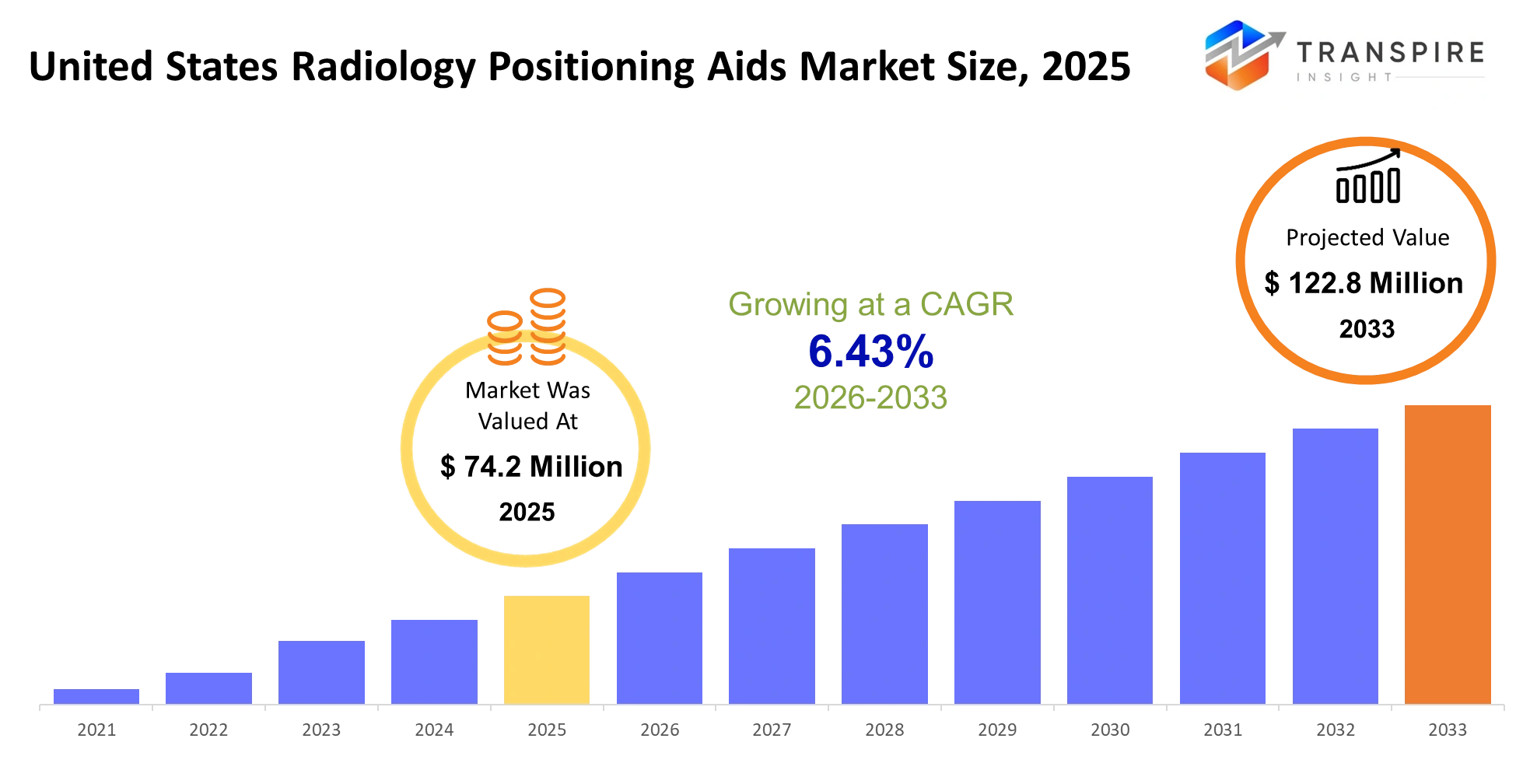
- United States Radiology Positioning Aids Market Size 2025: USD 74.2 Million
- United States Radiology Positioning Aids Market Size 2033: USD 122.8 Million
- United States Radiology Positioning Aids Market CAGR: 6.43%
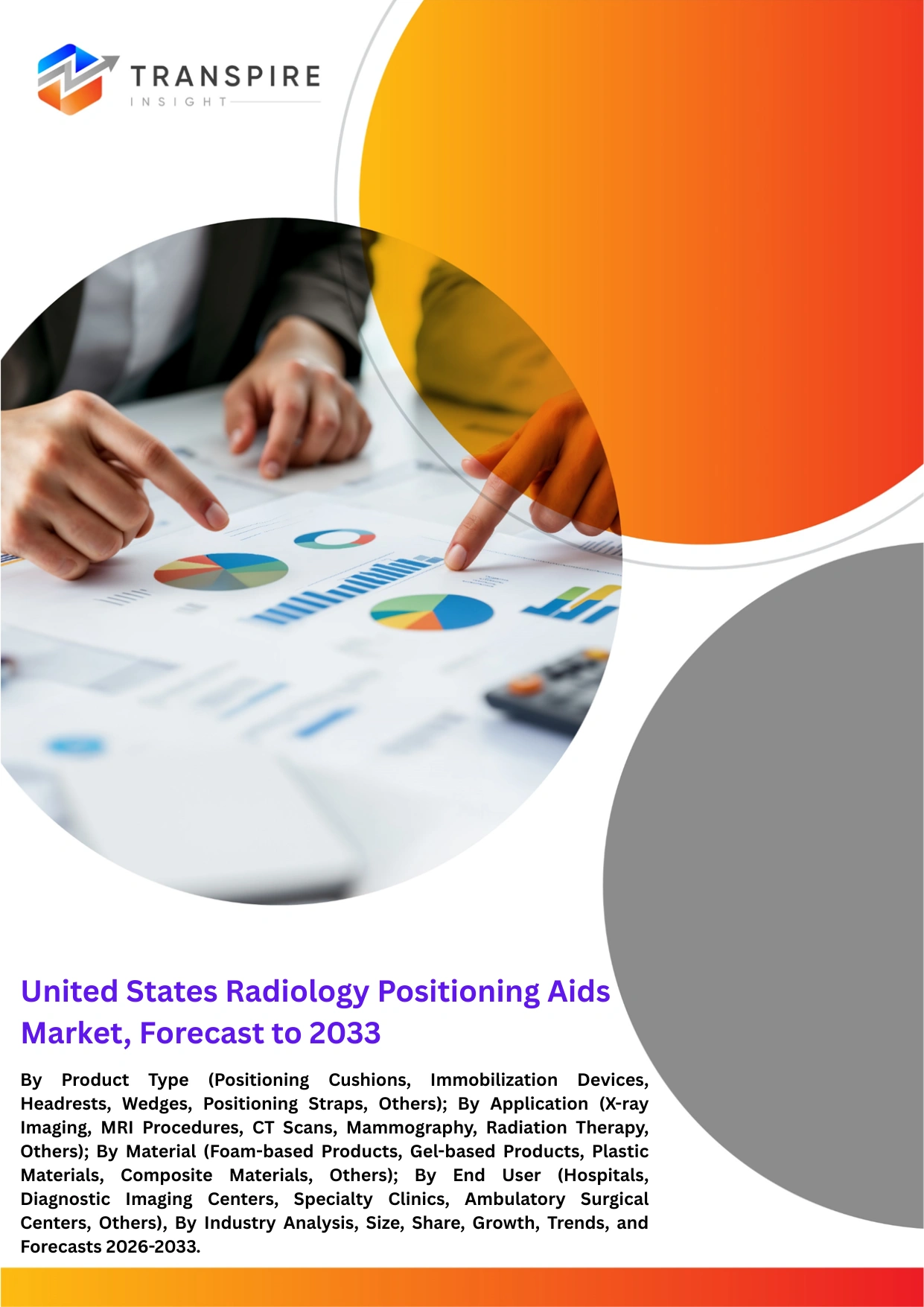
- United States Radiology Positioning Aids Market Segments: By Product Type (Positioning Cushions, Immobilization Devices, Headrests, Wedges, Positioning Straps, Others); By Application (X-ray Imaging, MRI Procedures, CT Scans, Mammography, Radiation Therapy, Others); By Material (Foam-based Products, Gel-based Products, Plastic Materials, Composite Materials, Others); By End User (Hospitals, Diagnostic Imaging Centers, Specialty Clinics, Ambulatory Surgical Centers, Others).
To learn more about this report,  Download Free Sample Report
United States Radiology Positioning Aids Market Summary
The United States Radiology Positioning Aids Market was valued at USD 74.2 Million in 2025. It is forecast to reach USD 122.8 Million by 2033. That is a CAGR of 6.43% over the period.
The United States radiology positioning aids market helps power the everyday workflow of diagnostic imaging centers and hospitals, kind of like a silent helper, because it supports clinicians in keeping patients steady, lined up , and relaxed during X-rays , CT scans , MRI procedures and interventional imaging. These aids cut down on repeat scans that happen when someone shifts or when positioning isn’t ideal, and that matters a lot for imaging accuracy , overall scan time, radiation exposure, and even department throughput.
Over the last few years, the market has moved away from plain foam supports and hand done positioning tools toward infection resistant, ergonomic, and modality specific setups. You see more systems made for bariatric care, pediatric imaging and those high throughput radiology environments. That change sped up during the COVID-19 era, when hospitals wanted quicker patient handling, stronger infection control, and fewer technician patient interactions. In parallel, staffing shortages at imaging departments made it harder for technologists to manage everything the usual way, so providers leaned into positioning aids that make workflow feel more repeatable and also lessen physical strain on the technologists.
And as outpatient imaging volumes keep rising across the United States, facilities are putting more money into positioning systems that shrink the time needed for scan setup and help raise image quality. So the demand keeps coming back, not just in hospitals, but across imaging chains, and ambulatory care centers too.
Key Market Insights
- The Northeast United States basically dominated the United States Radiology Positioning Aids Market with about 34% market share in 2025, because there are dense hospital networks there, kind of nonstop.
- California and Texas are still bringing in notable industry revenue, driven by big outpatient imaging chains and the ongoing rise in MRI and CT scan utilization.
- Foam-based positioning aids took more than 38% market share in 2025, mainly for affordability, adaptability, and just general everyday adoption across radiology departments.
- Vacuum positioning devices showed up as the second-largest segment since trauma imaging centers are increasingly needing patient stabilization during those more complicated scan procedures.
- MRI-compatible positioning systems are expected to be the fastest-growing segment from 2026 to 2030, as more advanced MRI platforms keep getting installed.
- Diagnostic X-ray procedures are kinda driving the application demand, with something like 41% of the revenue share in 2025 , mainly because hospitals keep running lots of these scans pretty often.
- CT imaging applications meanwhile, are seeing the quickest growth rate, since emergency departments want rapid plus dependable imaging workflows not later on.
- In 2025 hospitals also held close to 52% of the United States Radiology Positioning Aids Market share, which is mostly tied to higher volume imaging procedures overall.
- Outpatient imaging centers are the fastest-growing end-user group, as ambulatory care models keep expanding across the U.S. healthcare landscape.
- Specialty diagnostic centers are also upping their investment in ergonomic radiology accessories, in order to boost technician productivity and speed up patient throughput, a bit at a time but consistently.
What are the Key Drivers, Restraints, and Opportunities in the United States Radiology Positioning Aids Market?
The main factor that is shaping the United States Radiology Positioning Aids Market is the rapid expansion of outpatient diagnostic imaging across hospital-owned clinics, and also independent imaging centers. In the last five years , many healthcare systems pushed a large part of MRI, CT, and X-ray procedures away from inpatient departments toward lower-cost outpatient settings. They did it mainly because of reimbursement pressure and a general need for operational efficiency goals. That shift raised scan volumes per imaging room and it also made providers try to cut patient turnaround times, while still keeping the image quality in check. So radiology departments started buying more advanced positioning aids, which help minimize repeat scans, improve patient stabilization and reduce physical strain on technologists. These workflow improvements end up supporting more daily imaging capacity and stronger utilization of the equipment, and that then becomes a measurable revenue uplift for providers.
The biggest holdback though is still the fragmented purchasing structure of the United States healthcare system. Smaller imaging centers, and even rural hospitals, sometimes postpone replacement cycles for positioning accessories because their capital budgets have to favor larger imaging equipment like MRI and CT systems. This really is a structural problem, because reimbursement models usually do not include dedicated money for positioning tools. Even if those tools improve procedural efficiency. The outcome is slower uptake of premium ergonomic, and MRI compatible systems, especially beyond large metropolitan healthcare networks.
A big opportunity is sorta showing up with AI-assisted imaging plus very precise patient alignment tech. On the equipment side, companies that make imaging gear and the accessory suppliers are building sensor-enabled positioning systems, and they’re meant to slot right into modern radiology workflows, so scan results stay more consistent and less time goes to manual re-adjusting. A number of large academic hospitals in places like California and Massachusetts are already running trials of integrated imaging suites, where positioning aids work together with automated workflow software. This is making a clear path toward higher-value product adoption across the larger market.
What Has the Impact of Artificial Intelligence Been on the United States Radiology Positioning Aids Market?
Artificial intelligence and some advanced digital technologies are starting to shift the United States radiology positioning aids market , not just by a little bit but sort of in a real way , because imaging workflow precision gets better, patient handling efficiency improves, and scan consistency becomes more steady even in high volume diagnostic centers. Hospitals, plus imaging networks , are leaning more and more toward AI enabled positioning software that works together with CT and MRI systems , so patient alignment can get automated and the manual setup time is cut down. Also, a few newer imaging platforms are using camera based body mapping along with real time motion detection , which basically nudges technologists toward the right placement before the scanning even starts. The overall result is fewer repeat images that happen due to positioning errors, and that then boosts equipment throughput , especially in busy radiology departments where time is tight.
Machine learning is not only doing the positioning side either, it is also showing up in predictive maintenance , and in workflow optimization inside imaging suites. Imaging centers are using sensor driven analytics to track positioning accessories, patient tables, and automated movement mechanisms, looking for wear patterns and usage intensity. With this, providers can schedule maintenance early, before equipment issues turn into failures that disrupt daily operations , so uptime stays higher and service costs stay lower. In bigger hospital networks , the digital workflow platforms additionally make compliance documentation easier and improve patient handling consistency across many imaging sites, even when the teams are not exactly the same from location to location.
One measurable operational improvement has been the downshift in repeat scans, especially in MRI and pediatric imaging contexts where patient movement kind of messes up the image quality. Faster positioning workflows also mean imaging departments can take on more daily procedures, without automatically bumping up headcount. Still, AI adoption kind of runs into friction, because rolling out smart positioning systems alongside older imaging infrastructure takes a hefty capital commitment. A lot of smaller outpatient imaging centers keep using legacy radiology systems that aren’t really compatible with advanced automation platforms, and that slows wider market penetration across the United States healthcare sector.
Key Market Trends
- Since 2021, outpatient imaging networks have started ramping up procurement of lightweight positioning aids, kind of to get patients out sooner, and also push higher daily scan capacity like faster turnaround.
- MRI-compatible positioning systems got noticeably more traction after hospitals leaned harder into advanced 3T MRI installations between 2022 and 2025, not just a little either.
- Pediatric imaging departments moved toward immobilization-forward positioning products once repeat scan rates started climbing, because operational expenses grew fast during post-pandemic staffing shortages.
- Manufacturers such as AliMed and CIVCO Radiotherapy expanded antimicrobial product lines after infection-control purchasing rules got tougher, those standards were introduced following 2020 and it changed the ordering habits.
- Imaging centers increasingly swapped disposable positioning accessories for reusable, pressure-distribution systems, with the goal to cut longer term procurement costs and the whole waste-management headache.
- AI-assisted patient positioning software began appearing in premium CT and MRI environments, after radiology groups tried to reduce setup inconsistencies across multi-site operations, you know when one site is doing it “slightly differently”.
- From 2022 to 2025, bariatric imaging demand pressured manufacturers to redesign positioning supports for higher weight capacities, and to build more reinforced ergonomic structures.
- Supply chain disruptions during 2021 highlighted dependence on imported foam and polymer materials, so several United States suppliers regionalized their sourcing strategies, instead of relying on the same lanes.
- Radiology departments also started prioritizing technician injury reduction programs, so vacuum stabilization systems and automated patient support accessories saw stronger adoption.
United States Radiology Positioning Aids Market Segmentation
By Product Type:
Positioning cushions take up a big chunk in the United States Radiology Positioning Aids Market , mostly because imaging centers and hospitals keep zeroing in on patient comfort during these long diagnostic stretches. Foam and gel cushions, for example, help keep body alignment, and they also cut down on pointless shifting while the procedure is happening . At the same time, wedges and headrests are seeing more traction , since healthcare facilities want better imaging precision and fewer repeat scans. When patients are positioned in a more careful way, the scans come out clearer, which matters a lot in radiology departments that are nonstop and constantly serving high patient numbers each day.
Immobilization devices are also getting broader adoption in MRI sessions , CT scanning routines , and even radiation therapy , where a tiny movement can mess with image quality. Positioning straps support stable placement too, especially for elderly patients and kids. The ongoing roll out of advanced imaging systems across healthcare organizations keeps pushing overall product demand. Manufacturers are additionally rolling out lightweight options and simple-to-clean designs , aiming to speed up day to day workflow and keep hygiene standards solid in clinics throughout the country.
By Application:
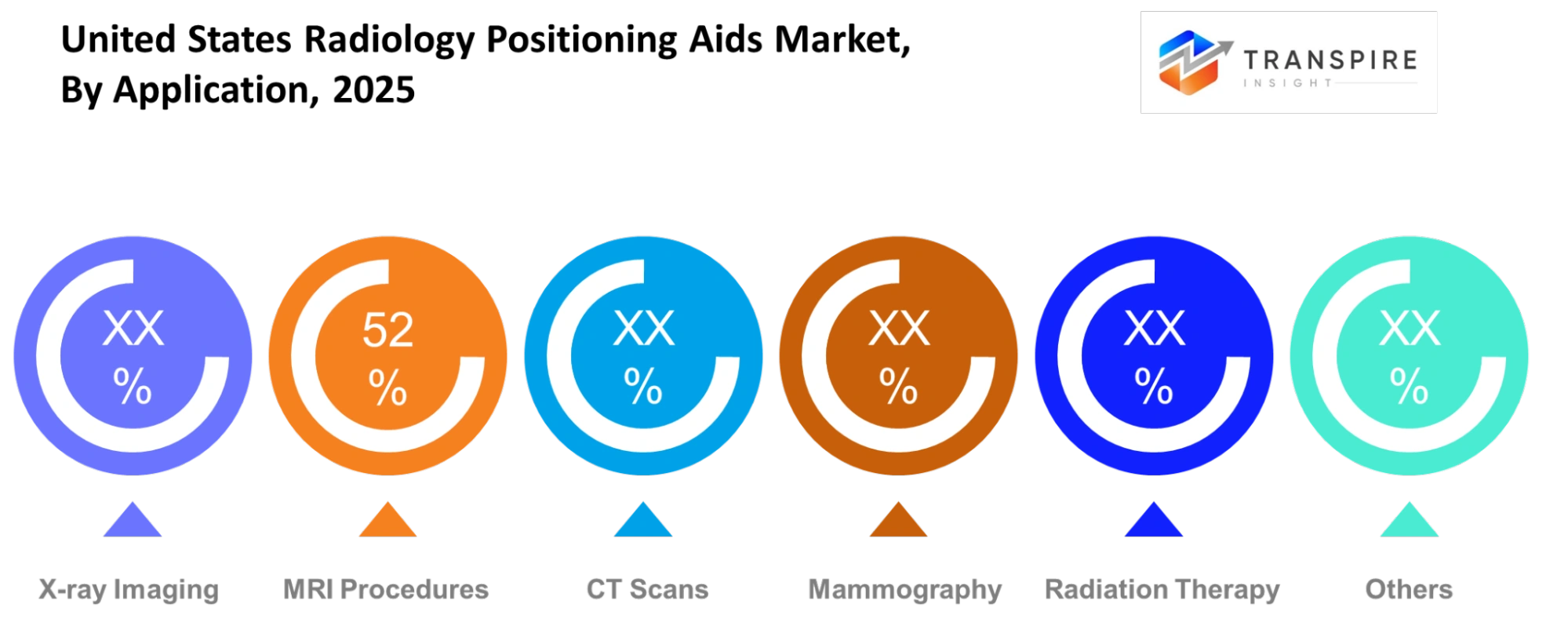
X-ray imaging still sits as one of the most reliable application areas in the United States Radiology Positioning Aids Market, mainly because so many diagnostic examinations get done every single day. Positioning aids help with precise body placement, so radiology professionals can snag clearer images, and in the same moment reduce the chances of having to redo the scan which lowers exposure. For that reason hospitals, and imaging centers keep relying on cushions , wedges and straps, to improve patient stability during both routine checkups and urgent, emergency imaging moments. Because orthopedic studies and chest imaging stay consistently in demand, this segment keeps seeing steady product uptake.
At the same time MRI procedures plus CT scans are pushing demand too, since those imaging sessions usually take longer and motion control becomes extra important. On top of that, radiation therapy applications demand accurate patient positioning, so the treatment lands exactly where planned and exposure to nearby tissues stays as low as possible. Mammography procedures also lean on proper positioning support, not only to keep the patient comfortable but also to improve imaging quality. Overall, the continued emphasis on diagnostic precision, and patient centered care keeps fueling growth across a wide range of imaging use cases in healthcare.
To learn more about this report, Download Free Sample Report
By Material:
Foam-based products keep a pretty solid share in the United States Radiology Positioning Aids Market, mostly due to affordability, flexibility, and that extra patient comfort. In practice, healthcare providers lean toward foam materials for routine imaging jobs, since they’re light to carry and they store easily, without too much trouble. It also helps that these aids can suit different patient body types while staying stable enough during diagnostic sessions. So even now, the demand stays strong in hospitals and outpatient imaging centers, where there are so many imaging procedures and teams really need positioning support that is practical and cost-effective.
Gel-based products are also seeing more and more adoption, mainly because they reduce pressure and feel more comfortable during long imaging appointments. Meanwhile, composite materials and plastic options are getting extra attention too, largely for durability, plus the straightforward sanitation routines. A lot of healthcare facilities are choosing reusable and infection-resistant materials, in order to match hygiene expectations and improve day to day operational efficiency. And looking ahead, ongoing work on newer medical-grade materials will probably improve product quality, and in turn broaden use across diagnostic imaging and even radiation therapy environments over the next few years.
By End User:
Hospitals are a major end user group in the United States Radiology Positioning Aids Market , mainly because they see a lot of patients and they hold an extensive diagnostic imaging setup. Big healthcare organizations regularly run MRI scans , CT scans, radiation therapy, and X-ray imaging, so they keep needing positioning aids. At the same time, rising spending on imaging technologies plus patient safety programs helps push hospitals to select more advanced positioning solutions that speed up workflow and also help keep diagnostic results steady across multiple departments, kind of a continuous cycle.
Diagnostic imaging centers and specialty clinics contribute to growth too , especially as outpatient procedures climb. Ambulatory surgical centers increasingly rely on positioning aids during image-guided actions and during preoperative imaging checks. The reason is pretty straightforward: patients need comfort, the exam has to move fast, and the imaging precision needs to stay reliable. As outpatient care keeps expanding across the United States, manufacturers that offer positioning cushions, immobilization devices, wedges and adjacent support products keep finding better chances to serve that demand.
What are the Key Use Cases Driving the United States Radiology Positioning Aids Market?
Diagnostic X-ray plus CT scanning is still basically what really drives demand for radiology positioning aids across hospitals in the United States and most outpatient imaging places. In these locations patient volume is high,like every day, so getting the positioning right matters a lot for cutting down repeat scans, speeding up the workflow, and keeping images more consistent with less variability.
A secondary layer is also growing, mainly in pediatric imaging and bariatric radiology. This is happening especially in niche diagnostic centers and bigger academic hospitals. Many clinicians are now reaching for immobilization supports and reinforced positioning frameworks to help patient stability, during MRI sessions and trauma imaging, and at the same time reduce the amount of physical strain on the technologists, sometimes that reduction is the whole point.
More emerging use cases are showing up too, things like AI-driven positioning processes and adaptive patient support systems that plug into newer imaging platforms. A few health systems are even testing sensor-enabled positioning aids, which can track patient movement throughout the scan. This shows up a lot in neurological imaging and precision oncology, where accuracy is not just a nice-to-have, it directly impacts treatment planning decisions.
|
Report Metrics |
Details |
|
Market size value in 2025 |
USD 74.2 Million |
|
Market size value in 2026 |
USD 79.4 Million |
|
Revenue forecast in 2033 |
USD 122.8 Million |
|
Growth rate |
CAGR of 6.43% from 2026 to 2033 |
|
Base year |
2025 |
|
Historical data |
2021 - 2024 |
|
Forecast period |
2026 - 2033 |
|
Report coverage |
Revenue forecast, competitive landscape, growth factors, and trends |
|
Geographic scope |
United States of America |
|
Key company profiled |
CIVCO Medical Solutions, AliMed, Clear Image Devices, Elekta, Qfix, Bionix Radiation Therapy, Orfit Industries, Medline Industries, Philips Healthcare, Siemens Healthineers, GE HealthCare, Varian Medical Systems, Klarity Medical, SchureMed, Sun Nuclear. |
|
Customization scope |
Free report customization (country, regional & segment scope). Avail customized purchase options to meet your exact research needs. |
|
Report Segmentation |
By Product Type (Positioning Cushions, Immobilization Devices, Headrests, Wedges, Positioning Straps, Others); By Application (X-ray Imaging, MRI Procedures, CT Scans, Mammography, Radiation Therapy, Others); By Material (Foam-based Products, Gel-based Products, Plastic Materials, Composite Materials, Others); By End User (Hospitals, Diagnostic Imaging Centers, Specialty Clinics, Ambulatory Surgical Centers, Others). |
Which Regions are Driving the United States Radiology Positioning Aids Market Growth?
The Northeast United States keeps showing up as the leading regional market for radiology positioning aids, mostly because it kind of merges dense healthcare infrastructure with really high imaging procedure volumes , and then adds decent capital spending capacity too. In big cities like New York, Boston , and Philadelphia you have major academic medical centers that keep upgrading MRI, CT, plus their interventional imaging units. At the same time these hospitals tend to stick with established procurement relationships with specialized medical equipment suppliers so there is a pretty steady replacement cycle for more advanced positioning systems. The region also has a mature healthcare ecosystem where you’ll find medical device distributors, radiology research institutions and integrated hospital networks that genuinely care about workflow efficiency , and patient safety standards.
The Midwest United States on the other hand looks more stable and a bit more operationally conservative compared with the Northeast. Here the movement forward is less about fast or aggressive technology adoption and more about steady investment from regional hospital systems and community healthcare providers. Across states like Illinois, Ohio, and Minnesota the healthcare networks keep modernizing diagnostic imaging departments using phased procurement strategies, spreading the capital costs over a longer time window. That way of buying—measured and deliberate — helps form reliable recurring demand for ergonomic and durable positioning aids, especially in hospital owned outpatient imaging centers that serve older patient populations.
The Southern United States seems to be emerging as the fastest-growing regional market, mostly because healthcare infrastructure is expanding quickly, and the population is pushing growth for diagnostic imaging demand ,or something like that. Since 2022, states like Texas, Florida and Georgia have been putting more money into ambulatory imaging facilities, and also into specialty diagnostic centers . Private healthcare operators are also scaling their imaging capacity in suburban zones and secondary city areas where patient volumes are rising faster than hospital infrastructure can keep up. This kind of regional change is basically opening up real chances for manufacturers and distributors between 2026 and 2033, especially the ones that deliver cost-efficient positioning systems made for high-throughput outpatient imaging settings.
Who are the Key Players in the United States Radiology Positioning Aids Market and How Do They Compete?
The United States radiology positioning aids market still looks moderately fragmented, not really something that i s easily consolidated, and the competition is shaped more by product specialization and clinical workflow fit than by huge mergers. Most established manufacturers keep defending their share via long-term hospital procurement ties, while the smaller niche suppliers tend to go after specific needs, like modality-focused positioning systems, plus they often claim quicker customization. Technology differentiation is getting more important too, since imaging providers ask for MRI-friendly materials, infection resistant surfaces , and more ergonomic options that ease technician strain. On top of that, service responsiveness is starting to matter a lot, because hospital networks increasingly want a vendor that can deliver integrated positioning solutions across multiple imaging modalities and across several facility locations, not just one building.
AliMed competes by leaning into broad customization, and by holding steady relationships with rehab hospitals and diagnostic imaging centers. It differentiates itself with specialized positioning accessories tuned for bariatric studies, pediatric radiology, and orthopedic cases, so providers can manage the trickier patient handling situations with fewer workflow disruptions. CIVCO Radiotherapy , meanwhile , focuses heavily on precision imaging and immobilization technologies for oncology and other advanced radiology settings. Its strength is in combining positioning systems with radiation therapy and image guided treatment workflows, which tends to raise the switching friction for clinical customers.
Sontek Medical has kinda strengthened its position by stressing infection control materials and also those lightweight ergonomic products made for high-throughput imaging departments. The company has expanded distribution partnerships with outpatient imaging providers, who are looking for lower-maintenance positioning systems that boost patient turnover efficiency ,or something like that. Meanwhile MRIequip differentiates itself with MRI-safe accessories engineered right for high-field MRI environments, where non compatible materials can mess with imaging quality and patient safety. On the other side Clear Image Devices competes via niche imaging accessories and quick-response manufacturing abilities, supporting custom orders for trauma imaging and specialty radiology applications.
Company List
- CIVCO Medical Solutions
- AliMed
- Clear Image Devices
- Elekta
- Qfix
- Bionix Radiation Therapy
- Orfit Industries
- Medline Industries
- Philips Healthcare
- Siemens Healthineers
- GE HealthCare
- Varian Medical Systems
- Klarity Medical
- SchureMed
- Sun Nuclear
Recent Development News
In April 2026, Sectra completed the acquisition of Oxipit. The acquisition added CE-certified autonomous chest X-ray AI technology to Sectra’s radiology portfolio, strengthening its position in AI-driven diagnostic imaging and workflow automation for healthcare providers.
Source: https://medical.sectra.com/
In March 2026, Mosaic Clinical Technologies secured FDA Breakthrough Device Designation for Cognita CXR, its generative AI radiology model. The designation accelerated the company’s development of AI-assisted chest X-ray interpretation technology aimed at improving radiologist efficiency and diagnostic workflow integration.
Source: https://www.afp.com/
What Strategic Insights Define the Future of the United States Radiology Positioning Aids Market?
The United States radiology positioning aids market is kinda moving, structurally speaking, toward more integrated , workflow driven imaging support systems rather than those standalone accessories. Over the next five to seven years, growth will increasingly be pulled by outpatient imaging expansion , AI assisted radiology workflows, plus hospital initiatives that push imaging throughput higher without also ramping up staffing in the same way. Positioning tools that help reduce repeat scans, automate patient alignment, and tie into more advanced MRI plus CT platforms seem set to grab a bigger chunk of procurement spending. Imaging departments are basically weighing operational efficiency together with patient safety.
One underrecognized risk is the growing reliance on a small circle of specialized material suppliers, for things like MRI compatible foams, antimicrobial coatings, and lighter composite components. If there is any prolonged disruption in those supply chains, it could delay product availability and also nudge procurement costs higher for imaging providers. At the same time, adaptive positioning technologies meant for bariatric and mobility limited patients are starting to look like a real opportunity, especially as aging demographics shape imaging utilization patterns across the Southern United States. Companies should probably invest early into smart, modality specific positioning platforms that mix ergonomic design with digital workflow compatibility. Future buying decisions will, more often than not , favor integrated clinical performance rather than those low cost commodity products.
United States Radiology Positioning Aids Market Report Segmentation
By Product Type
- Positioning Cushions
- Immobilization Devices
- Headrests
- Wedges
- Positioning Straps
By Application
- X-ray Imaging
- MRI Procedures
- CT Scans
- Mammography
- Radiation Therapy
By Material
- Foam-based Products
- Gel-based Products
- Plastic Materials
- Composite Materials
By End User
- Hospitals
- Diagnostic Imaging Centers
- Specialty Clinics
- Ambulatory Surgical Centers
Frequently Asked Questions
Find quick answers to common questions.
The United States Radiology Positioning Aids Market size is USD 122.8 Million in 2033.
Key segments for the United States Radiology Positioning Aids Market are By Product Type (Positioning Cushions, Immobilization Devices, Headrests, Wedges, Positioning Straps, Others); By Application (X-ray Imaging, MRI Procedures, CT Scans, Mammography, Radiation Therapy, Others); By Material (Foam-based Products, Gel-based Products, Plastic Materials, Composite Materials, Others); By End User (Hospitals, Diagnostic Imaging Centers, Specialty Clinics, Ambulatory Surgical Centers, Others).
Major United States Radiology Positioning Aids Market players are CIVCO Medical Solutions, AliMed, Clear Image Devices, Elekta, Qfix, Bionix Radiation Therapy, Orfit Industries, Medline Industries, Philips Healthcare, Siemens Healthineers, GE HealthCare, Varian Medical Systems, Klarity Medical, SchureMed, Sun Nuclear.
The United States Radiology Positioning Aids Market size is USD 74.2 Million in 2025.
The United States Radiology Positioning Aids Market CAGR is 6.43% from 2026 to 2033.
- CIVCO Medical Solutions
- AliMed
- Clear Image Devices
- Elekta
- Qfix
- Bionix Radiation Therapy
- Orfit Industries
- Medline Industries
- Philips Healthcare
- Siemens Healthineers
- GE HealthCare
- Varian Medical Systems
- Klarity Medical
- SchureMed
- Sun Nuclear
Recently Published Reports
-
Apr 2026
AI in Diabetic Retinopathy Market
AI in Diabetic Retinopathy Market Size, Share & Analysis Report By Type (Screening AI Systems, Diagnostic AI Systems, and Predictive AI Models), By Application Segment (Hospitals, Ophthalmology Clinics, Diagnostic Centers, and Research and Development), and Geography (North America, Europe, Asia-Pacific, Middle East and Africa, South and Central America), 2021 - 2031
-
Apr 2026
Psychometric Tests Market
Psychometric Tests Market Size, Share & Analysis Report By Type (Personality Tests, Ability/Aptitude Tests, Skill/Knowledge Tests, and Others), By Application (Talent Acquisition and Talent Management), and Geography (North America, Europe, Asia-Pacific, Middle East and Africa, South and Central America), 2021 – 2031
-
Apr 2026
Rare Biological Sample Collection Market
Rare Biological Sample Collection Market Size, Share & Analysis Report By Type (Isolation Kits & Reagent, Blood Collection Tubes, and Others), By Application (Oncology, Transcriptomics, Pharmacogenomics, and Others), and Geography (North America, Europe, Asia-Pacific, Middle East and Africa, South and Central America), 2021 – 2031
-
May 2026
Patient Lift Pendant Market
Patient Lift Pendant Market By Product Type (Wired Pendants, Wireless, Programmable), By Operation Type(Manual, Electric), By End-Users (Healthcare Professionals, Patients), By Application (Hospitals, Homecare, Rehabilitation Centers, Others), By Industry Analysis, Size, Share, Growth, Trends, and Forecasts 2021-2033
Our Clients
.jpg)