
Jan 02, 2026
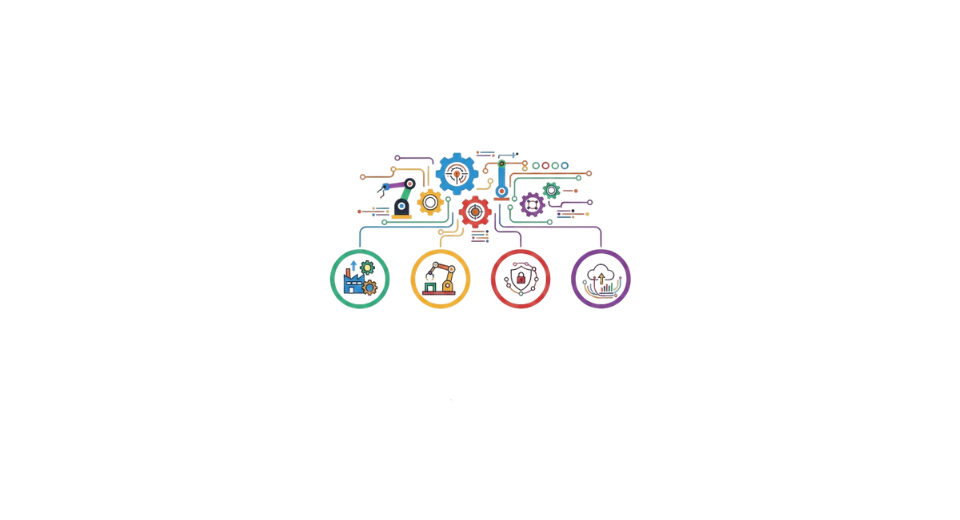
The report “Industrial Automation Market By Component Type (Controllers, Sensory and Transmitters, Robotics &Machine Vision Systems, Industrial Software, Drives & Motors), By Automation Type (Fixed Automation, Programmable Automation, Flexible Automation), By End-Users (Automotive, Electronics and Semiconductors, Food & Beverages, Pharmaceutical & Healthcare, Oil & Gas, Others)” is expected to reach USD 569.62 billion by 2033, registering a CAGR of 9.30% from 2026 to 2033, according to a new report by Transpire Insight.
More factories are turning to smart tech just to keep things running smoothly. Machines that once needed hands now respond to signals, eyes, and coded logic. Instead of guessing, systems watch every move with sensors and adjust on their own. You see these changes where cars come together, where pills get packed, even in places making snacks. Controllers talk to robots. Those robots hand off work to motors guided by software. Not long ago, fixes came too late. Now alerts show up before problems grow. From touchscreens showing live data to programs managing entire lines, the tools help avoid waste. Precision is not just nice; it is built into each step. Efficiency shows up not as a goal but as an outcome. Growth follows when machines do more without slowing down.
Mainly cars, gadgets, and what we eat and drink, all needing fast, precise making and packing. Machines step in where people might slip up, keeping things safer while ticking strict rules boxes. Paying workers more overtime pushes firms to rethink how they operate. A lack of trained hands adds pressure. Smarter, adaptable machines become less an option, more a necessity just to keep pace.
North America, along with Europe, stays ahead because factories there are well developed, tech spreads fast, yet governments push hard for Industry 4.0 changes. On the flip side, Asia-Pacific grows quickly, industries rise quickly, factory networks stretch wider, while spending on intelligent plants climbs in places like China, India, and Japan. New steps in robots, thinking machines, internet-connected gear, plus cloud tools for industry reshape how things work, letting data flow live, machines get fixed before breaking, and production lines link up smoothly no matter where they sit.
The Controllers segment is projected to witness the highest CAGR in the Industrial Automation market during the forecast period.
According to Transpire Insight, they handle exact, live adjustments in tough production tasks. Not just that, devices like PLCs, DCS, and PACs link machines, sensors, and programs into one smooth system. Because more factories are going intelligent and adopting Industry 4.0, stronger controllers are pulled into focus. These units must connect easily and compute faster than before. Expect this trend to keep pushing their use further ahead.
More companies are using smart systems that link up through the internet and include artificial intelligence, pushing this area forward fast. Because of a need for better tracking, early problem detection, and adaptable setups, factories are turning to these tools more often. These devices show up everywhere car production lines, gadget makers, food plants, and medicine labs, all aiming to keep things running smoothly and safely while meeting legal rules. Upgrades to old factory tech, especially in developing regions, add momentum too. It looks steady for controller demand worldwide.
The Flexible Automation segment is projected to witness the highest CAGR in the Industrial Automation market during the forecast period.
Fueled by a need for nimble production setups, the Flexible Automation sector looks set to grow fast in the coming years. Shifting quickly between different products becomes easier for factories using these systems. Because of this flexibility, companies can handle frequent design changes without long delays. Industries like car making, gadgets, and household items rely on this adaptability more than ever. Meeting customer-specific needs swiftly gives firms an edge when trends shift rapidly.
Fueled by new tech like robots and artificial intelligence, factories adapt faster than before. Machines talk to each other now through networks, making production smoother without constant oversight. Systems adjust on the fly instead of needing full reconfigurations. Investment climbs as companies aim to use materials more wisely and halt costly pauses in output. Custom orders roll off lines just as easily as bulk runs, due to smarter setups. With digital upgrades spreading worldwide, these agile methods fit right into modern plant designs. Expect wider use wherever real-time data guides machinery choices.
The Automotive segment is projected to witness the highest CAGR in the Industrial Automation market during the forecast period.
According to Transpire Insight, growth looks likely in automotive when it comes to factory automation over the coming years. Pushed forward by a constant need for fast output, tight accuracy, and lower expenses. Car makers rely heavily on tools like robotic arms, control units, visual inspection tech, and self-running assembly setups. These handle tasks including joining metal parts, applying paint, moving components around, and putting together finished vehicles. As cars become more intricate in design, especially with the move to electric models, demand rises for smarter, more capable machines.
On top of that, tough rules on quality and keeping workers safe, along with pressure to keep factories running without delays, are leading carmakers and their parts makers to pour money into smarter automated setups. Thanks to artificial intelligence, virtual models of equipment, and tools that predict breakdowns, operations can now be watched nonstop while output gets fine-tuned on the fly. With vehicle manufacturing worldwide shifting toward newer tech and electric vehicles, this corner of the industry will likely keep feeding strong gains in automation spending for years ahead.
The North America region is projected to witness the highest CAGR in the Industrial Automation market during the forecast period.
Ahead of most others, North America pushes forward in industrial automation due to modern factories and a quick move toward new tech tools. Driven by sectors like car making, aviation, gadgets, food production, and medicine, companies there rely more on automated systems to get work done faster and with fewer errors. Key suppliers setting up shop nearby, plus heavy funding into intelligent factory setups, help keep that momentum going. Growth picks up speed where innovation meets steady support.
Higher wages, not enough workers, tough rules on safety and quality, all these factors are speeding things up. Backed by government support for modernizing industry, bringing production closer to home, and upgrading tech, companies now need more control units, robots, software tools, and adaptable machines. With factories getting smarter using forecasts, real-time data, and fewer surprises, the region will keep shaping how automation grows worldwide.
Key Players
Top companies include ABB Ltd, Siemens AG, Rockwell Automation Inc., Schneider Electric, Honeywell International Inc., Emerson Electric Co., Mitsubishi Electric Corporation, Omron Corporation, Fanuc Corporation, Kuka AG, Molex, KEBA, Pennar Industries, Messung Industrial Automation, Delta Electronics, Frugalhacks, and others.
Drop us an email at:
Call us on:
+91 7666513636

 inquiry@transpireinsight.com
 APAC:+91 7666513636
 Address





