

North America Penicillin G Sodium Market Size & Forecast:
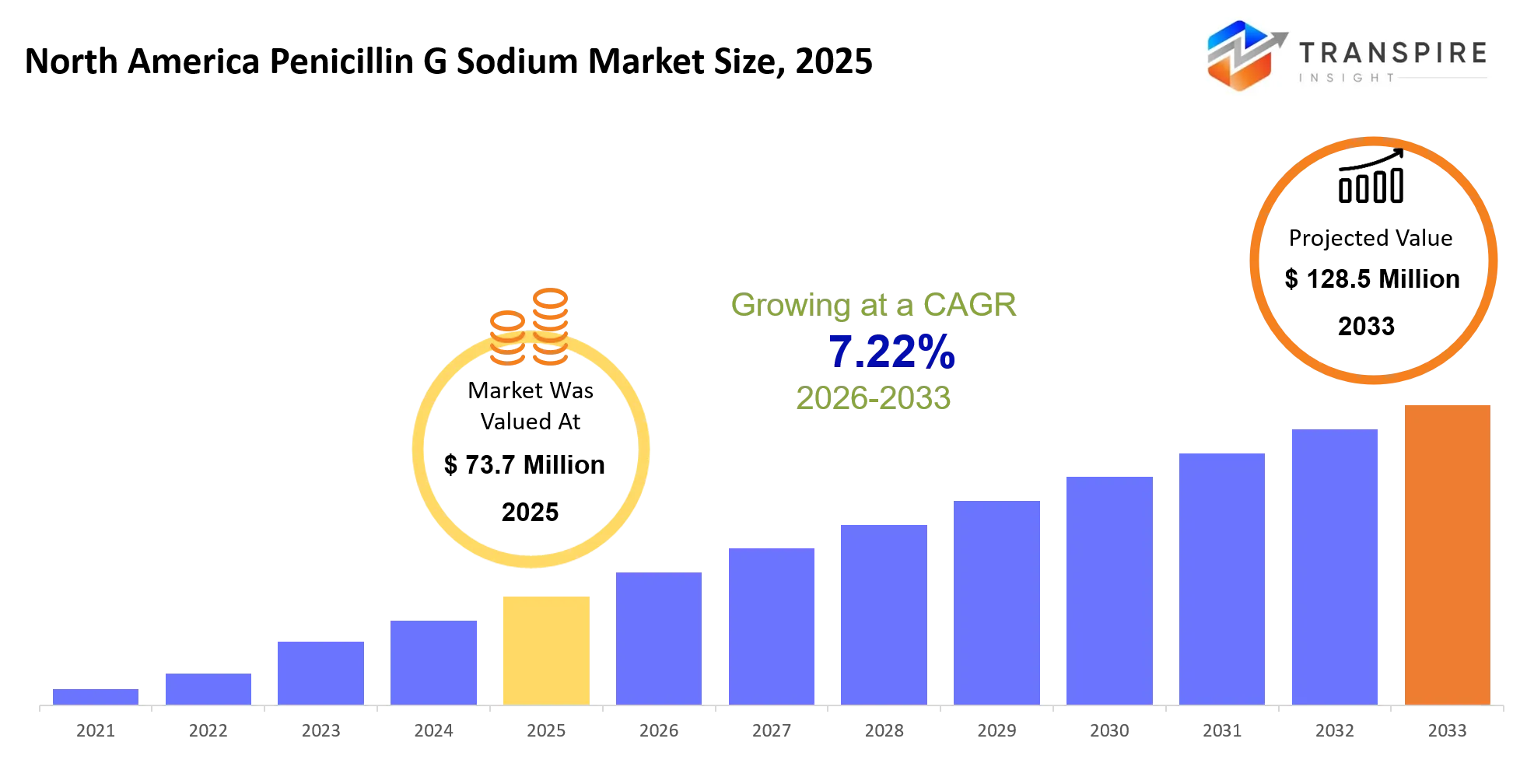
- North America Penicillin G Sodium Market Size 2025: USD 73.7 Million
- North America Penicillin G Sodium Market Size 2033: USD 128.5 Million
- North America Penicillin G Sodium Market CAGR: 7.22%
- North America Penicillin G Sodium Market Segments: By Form (Powder, Injectable Solutions, Crystalline Form, Others), By Application (Bacterial Infections, Syphilis Treatment, Pneumonia Treatment, Veterinary Use, Others), By End User (Hospitals, Clinics, Veterinary Hospitals, Others), By Distribution Channel (Hospital Pharmacies, Retail Pharmacies, Online Pharmacies, Others).
To learn more about this report,  Download Free Sample Report
North America Penicillin G Sodium Market Summary:
The North America Penicillin G Sodium Market size is estimated at USD 73.7 Million in 2025 and is anticipated to reach USD 128.5 Million by 2033, growing at a CAGR of 7.22% from 2026 to 2033. In hospital and clinic environments, the North America Penicillin G Sodium market has become essential as an accepted, effective, and economical treatment option against many serious bacterial pathogens (such as Streptococcal organisms and Syphilis among others), and situations where a prompt antibiotic is necessary. Its existence is still largely based upon an established need for effective, available, and consistently sensitive injectable antibiotic options within clinical algorithms of care.
Within the last 3 to 5 years, structural changes within antimicrobial stewardship have lead to more regimented utilization of antimicrobials in the setting, where providers opt for narrow-spectrum antibiotic therapy when possible versus broad-spectrum alternatives. Similarly, global and active pharmaceutical ingredient production disruptions of many antibiotics have highlighted weaknesses in antibiotic supply chain security, thereby driving many purchasing patterns of antibiotic providers. The impact has been a increased reliance on trusted domestic and regional antibiotic supply chains, and the Penicillin G Sodium Market has benefited as health care networks and providers focus on guaranteed availability of certain essential medications, managing costs associated with their administration, and ensuring its place in essential antimicrobial treatment protocols.
Key Market Insights
- The United States basically takes the lead in the North America Penicillin G Sodium market, and in 2025 it holds over 80% of the regional market share, pretty much there’s no doubt about it.
- Canada ends up as the second largest market too, helped along by steady healthcare spending and decent access to injectable antibiotic treatments, nothing too shaky there.
- Mexico is also the fastest-growing regional market across the forecast years, mostly because of healthcare infrastructure upgrades , and more hospitals are being expanded so demand keeps moving up.
- Ongoing government pushes on essential medicine availability keep reinforcing regional pharmaceutical supply chains and related distribution networks.
- Injectable Penicillin G Sodium is the main format, it grabs more than 70% of total revenue, mainly due to broad hospital use, which is what counts in practice.
- Sterile powder formulations sit with the second biggest share, supported by a longer shelf life and those more flexible dosing needs that clinicians often want.
- Ready-to-use injectable formulations are, somehow, the quickest growing segment through 2032, which helps healthcare facilities run things with better operational efficiency.
- Product innovation is turning more toward manufacturing reliability, quality assurance, and uninterrupted supply continuity, not just anything random.
- For applications, bacterial infection treatment remains the dominant one, representing around 65% of market demand in 2025, and it stays that way for a reason.
- Syphilis treatment continues to hold a major share, because clinical guidelines are already established, plus therapeutic effectiveness has been proven over time.
- Hospital-acquired infection management is showing up as the fastest-growing application during the forecast period, at least that’s how things are trending.
- There’s also growing emphasis on targeted antimicrobial therapies which supports continued use in specialized care environments, not only general settings.
- Hospitals dominate the North America Penicillin G Sodium market too, they account for nearly 60% of total consumption, with clinics and other buyers following behind.
What are the Key Drivers, Restraints, and Opportunities in the North America Penicillin G Sodium Market?
The most important driver that supports the North America Penicillin G Sodium Market growth is the increasing emphasis of healthcare institutions on targeted antimicrobial therapy. The implementation of antimicrobial stewardship programs at hospitals and in healthcare networks is now prompting providers to select narrow-spectrum agents whenever clinically relevant over broad-spectrum ones, following regulatory directives and concerns regarding antimicrobial resistance. Penicillin G Sodium is now a viable choice in current treatment guidelines for syphilis, streptococcal infections, and other responsive bacteria. Consistent purchasing volumes, more stable hospital purchase orders and, ultimately, steady revenue for manufacturers would follow such trend.
The most impactful restraint is the reliance of the North America Penicillin G Sodium Market on a narrow global base of API suppliers and specialized sterile production facilities. This is a structural barrier since capital investment, lengthy regulatory approval process and technical expertise are necessary to scale antibiotic manufacturing to meet compliant standards. Supply disruption cannot therefore be remediated quickly. Shortage increases unpredictability in procurement, delays in treatment access and limited sales even in the context of consistent demand.
The most important opportunity for market growth lies with North America's push for pharmaceutical supply chain resilience and the investment to expand domestic manufacturing. Government and healthcare organizations will actively seek to improve the security of supply of crucial medicines by expanding local antibiotic production capacity. Companies that invest to establish regional manufacturing facilities equipped with up-to-date sterile production units, can ensure consistent procurement agreements, reliable supply chains and gain incremental market share as healthcare providers are more likely to favor those solutions over existing treatments, provided efficacy is guaranteed.
What Has the Impact of Artificial Intelligence Been on the North America Penicillin G Sodium Market?
Artificial intelligence along with advanced digital tools are starting to reshape the North America Penicillin G Sodium Market sort of indirectly, mainly because pharmaceutical manufacturing is getting faster and steadier. At the same time supply chain visibility is improving, and quality control is getting more precise, you know. More manufacturers are putting AI-based process monitoring systems in place to handle production oversight with less hassle, while also keeping an eye on key variables during fermentation and in sterile manufacturing rooms. When something drifts out of range, these tools can spot deviations early, before they turn into real batch quality problems. So overall, it reduces too much manual meddling, it cuts production losses down, and it pushes facility utilization rates upward.
Then there’s machine learning models being used for predictive maintenance programs across multiple plants. These models look through equipment performance data vibration signatures, and maintenance records, and from that they try to forecast failures before they trigger those expensive shutdown events. On top of that, predictive analytics also helps with demand forecasting, and it supports inventory tuning in a way that can be a bit more, “ real life ” , than you might expect. This lets manufacturers line up production levels with what hospitals are really purchasing, and it also shrinks the risk of stockouts happening in the first place. In many facilities, digital optimization projects have led to less downtime, quicker batch release cycles, and better regulatory compliance too.
AI-driven quality assurance tools are also helping with product consistency. They can catch anomalies that older inspection approaches might miss, especially if the issue is subtle. Still there is a big snag, the integration costs. The price to bring AI into legacy pharmaceutical manufacturing infrastructure can be high, and for many sites the existing equipment is dated enough that upgrades are needed first. Without those updates, advanced analytics platforms often can’t deliver reliable scalable improvements, so the rollout gets slowed, sometimes quite a bit.
Key Market Trends
- Starting in 2020, hospitals have been slowly ramping up antimicrobial stewardship programs, and in practice they’re showing a bigger inclination toward narrower spectrum treatments when the clinical guidance says it’s ok
- During 2020 to 2023, supply disruptions sort of laid bare how much systems were leaning on only a handful of API providers, so healthcare organizations started diversifying where they buy from
- At the same time, manufacturers have sped up investments in domestic and regional production sites, trying to cut down the risk tied to overseas manufacturing logjams
- After 2021, digital quality control systems got adopted more broadly, which has let manufacturers tighten up batch consistency, and stay more on track with regulatory expectations too
- In parallel, healthcare purchasers began looking at supplier reliability in addition to pricing, so the competitive landscape is shifting away from purely cost based buying decisions
- Firms like Pfizer, Sandoz, Hikma Pharmaceuticals and Xellia Pharmaceuticals have also put extra attention on keeping essential antibiotic supply steady and uninterrupted
- Inventory management moved from just in time procurement toward a kind of deliberate strategic stockpiling for critical anti infective medicines, mainly after shortages during the pandemic
- More recently, AI driven predictive maintenance tools have shown up across pharmaceutical manufacturing facilities, helping reduce unplanned downtime, and avoiding production interruptions
- Regulatory focus on antimicrobial resistance has nudged clinicians toward more targeted prescribing approaches, and that tends to strengthen demand for well established penicillin based therapies
- Between 2022 and 2025, longer term supply commitments became more common as healthcare providers wanted better insulation against future shortages
North America Penicillin G Sodium Market Segmentation
By Form
Powder form remains the primary focus of the segment due to enhanced stability, better shelf-life, and integration with existing hospital compounding environment. Powders are the most appropriate for ease of dosage adjustments, and easy inventory control in healthcare institutions treating varied bacterial pathogens. Injectable solutions is second largest form, with increasing emphasis on its use in critical care situations where quick administration is required.
Crystalline forms and other forms currently hold minority market shares, but are used due to manufacturing and formulation specificity. The market is moving towards forms which can combine long storage life with ease of use and handling at hospitals. This can push for innovations in packaging, sterility and supply chain of the product, where future growth will rely on ready-to-use or advanced dosage forms for injecting solutions which significantly cut on the preparation time and reduces risks of cross-contamination.
By Application
Application trends show bacterial infection care as the leading part, mostly because Penicillin G Sodium has broad clinical use against susceptible pathogens, both in hospital wards and regular outpatient care. Syphilis care keeps a solid market spot, largely since long standing clinical guidance still points to penicillin based treatment as a routine option. Pneumonia management adds a noticeable slice when pathogen susceptibility lines up with antibiotic choice, and veterinary use is still important too, but it stays a smaller segment since livestock needs and animal healthcare requirements drive demand.
The growth pattern kinda varies by application, with infectious disease management benefiting from antimicrobial stewardship programs , which nudge clinicians toward targeted therapy rather than broad spectrum alternatives. On the veterinary side demand is shaped by regulatory attention and responsible antibiotic practices. Looking ahead, market progress will hinge on scaling more precision treatment approaches, and manufacturers will create more value when product availability matches changing clinical protocols, and overall disease management directions.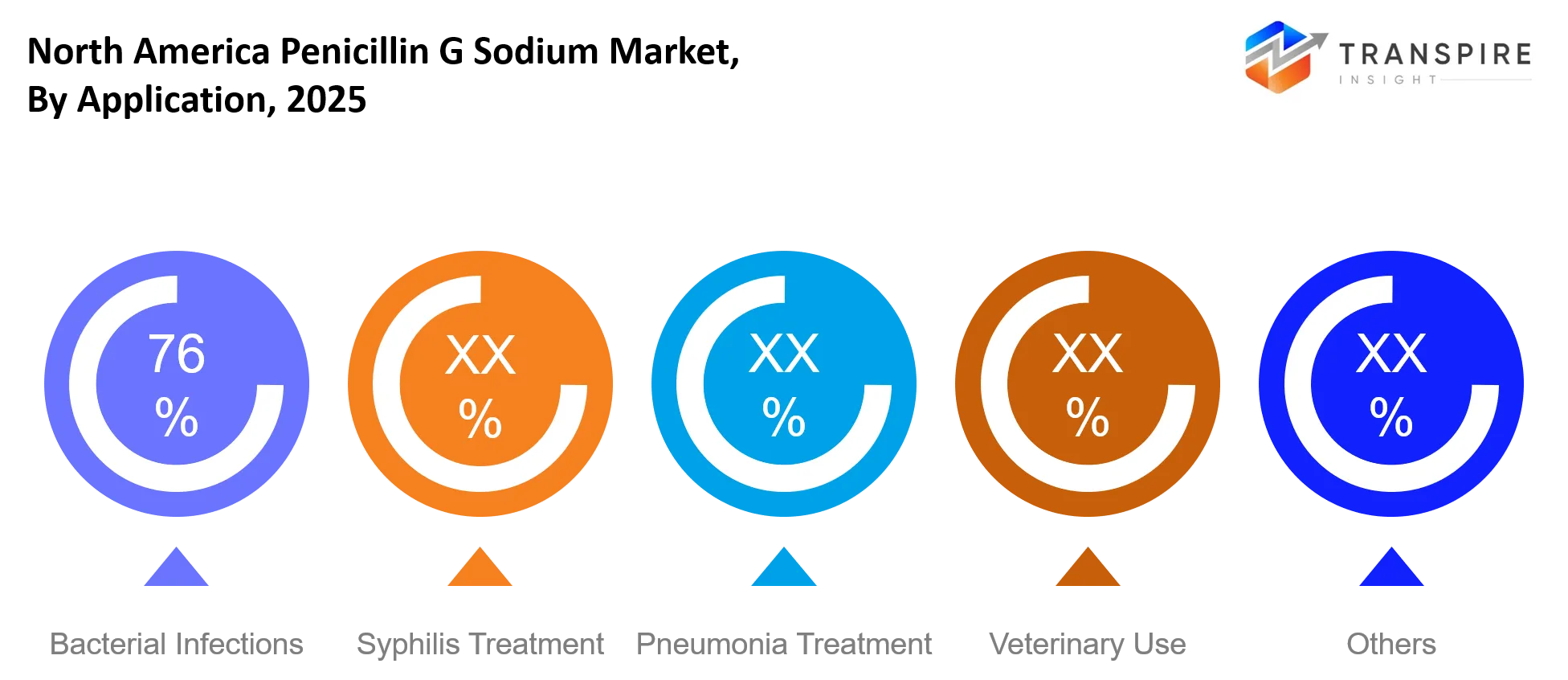
To learn more about this report, Download Free Sample Report
By End-User
Hospitals account for the largest end-market segment, as serious infections tend to necessitate intravenous administration, physician supervision, and ongoing patient observation. Major hospital systems are also large buyers by means of large group purchasing organizations, which further position hospitals at the helm of this market. Clinics represent the second largest end-market segment due to their continued use of injectable agents in the treatment of infections and follow-up. Veterinary hospitals make up a smaller but stable market share due to health care uses in animals and therapeutic niche applications.
Each market segment possesses different demand drivers, with hospitals focusing on uninterrupted supply chains and compliance, while clinics prioritize on ease of access and efficient application of therapies. Veterinary facilities tend to emphasize availability of drugs at an affordable price. A growing shift towards out-patient procedures and integrated care will likely boost the demand in clinics and ambulatory care, and benefit any manufacturer which is equipped to supply the market with reliable inventory management and adaptable product supply.
By Distribution Channel
Distribution channel dynamics still seem to be held firmly by hospital pharmacies , mostly because a lot of Penicillin G Sodium purchases get routed through institutional healthcare environments that handle large antibiotic stockpiles. The big purchasing strength, plus longtime supplier connections, and centralized procurement routines just keep this channel in front , in a way that feels pretty persistent. Retail pharmacies take up a smaller slice , mainly since injectable antibiotic administration is pretty specialized, still, retail involvement stays relevant for some specific care routes. Online pharmacies and other alternative routes are slowly growing too, especially as healthcare organizations begin to lean on digital procurement systems and inventory management platforms.
The push for digital channels seems tied to practical efficiency, clearer pricing, and better order monitoring features. Looking ahead, channel development will probably lean toward more integrated supply networks that link manufacturers distributors and healthcare providers more smoothly. With those shifts, supply chain resilience may improve, stockout exposure could drop, and organizations that put money into advanced logistics and digital distribution infrastructure might gain a real competitive edge.
What are the Key Use Cases Driving the North America Penicillin G Sodium Market?
The primary use case for Penicillin G Sodium is still, mainly the treatment of serious bacterial infections in hospitals . This is also why it tends to have the highest demand , because clinicians often depend on injectable penicillin therapies for quick action in susceptible infections where an immediate, and controlled antibiotic administration is needed.
After the acute infection phase, syphilis treatment keeps expanding, along with specialized infectious disease care in clinics and outpatient healthcare networks. These scenarios do well with established treatment guidelines, plus ongoing public health work thats focused on better diagnosis, improved treatment access , and stronger disease control results.
At the same time, new openings are showing up in veterinary medicine, and in more precision antimicrobial treatment programs. Veterinary hospitals are rolling out targeted antibiotic protocols to help support responsible antimicrobial use, while healthcare systems are also increasingly weaving in pathogen-specific treatment strategies , that tend to prefer established narrow-spectrum therapies when the clinical evidence supports those choices.
|
Report Metrics |
Details |
|
Market size value in 2025 |
USD 73.7 Million |
|
Market size value in 2026 |
USD 78.9 Million |
|
Revenue forecast in 2033 |
USD 128.5 Million |
|
Growth rate |
CAGR of 7.22% from 2026 to 2033 |
|
Base year |
2025 |
|
Historical data |
2021 - 2024 |
|
Forecast period |
2026 - 2033 |
|
Report coverage |
Revenue forecast, competitive landscape, growth factors, and trends |
|
Country scope |
North America (Canada, The United States, and Mexico) |
|
Key company profiled |
Pfizer, Sandoz, Hikma Pharmaceuticals, Fresenius Kabi, Viatris, Teva Pharmaceuticals, Aurobindo Pharma, Lupin, Dr. Reddy’s Laboratories, Cipla, Sun Pharmaceutical, Baxter International, Xellia Pharmaceuticals, Merck & Co., GSK |
|
Customization scope |
Free report customization (country, regional & segment scope). Avail customized purchase options to meet your exact research needs. |
|
Report Segmentation |
By Form (Powder, Injectable Solutions, Crystalline Form, Others), By Application (Bacterial Infections, Syphilis Treatment, Pneumonia Treatment, Veterinary Use, Others), By End User (Hospitals, Clinics, Veterinary Hospitals, Others), By Distribution Channel (Hospital Pharmacies, Retail Pharmacies, Online Pharmacies, Others) |
Which Regions are Driving the North America Penicillin G Sodium Market Growth?
The United States kinda represents the dominant regional market for Penicillin G Sodium , mainly because it has a big hospital network , a large pharmaceutical manufacturing base and a pretty well established infectious disease treatment infrastructure. There’s also strong regulatory oversight, plus national antimicrobial stewardship initiatives, which basically back up consistent clinical use of targeted antibiotic therapies. Big healthcare systems keep running substantial procurement programs for essential injectable antibiotics, so the purchasing patterns tend to stay predictable. And overall, a mature ecosystem of manufacturers, distributors , healthcare providers , and research institutions kind of cements the country’s leadership position.
Canada shows up as the second largest regional market, but the way it grows is not the same as the United States. With universal healthcare coverage, stable public healthcare funding, and centralized procurement, demand becomes extremely predictable. Healthcare authorities focus a lot on long range supply security, and also evidence based prescribing, which leads to steadier utilization instead of any sudden rapid volume expansion. That sort of continuity means Canada can be counted on as a reliable contributor to regional revenue and it also looks attractive for suppliers who want consistent contract opportunities.
Mexico seems to be the fastest-growing market in the region, mostly due to upgrades in healthcare infrastructure and also because access to treatments inside hospitals is expanding, sort of across the board. Lately, investments in healthcare capacity plus pharmaceutical distribution networks have made essential medicines easier to find in more treatment centers. With economic development moving ahead and broader access to infectious disease care services, antibiotic procurement has picked up in both public and private healthcare settings, and not just a little. Overall growth across Mexico brings useful openings for manufacturers and investors to build a stronger regional presence, then capture the new demand that keeps showing up through 2033.
Who are the Key Players in the North America Penicillin G Sodium Market and How Do They Compete?
Competition in the North America Penicillin G Sodium Market is sort of moderately consolidated, with only a few pharmaceutical manufacturers basically holding a lot of the supply, largely because there are technical and regulatory hurdles tied to sterile antibiotic production. So most players end up competing mainly around manufacturing reliability, product availability, regulatory compliance, and those longer term supply arrangements, not so much around product differentiation by itself. For new entrants it’s a bit of a wall, since sterile injectable plants need serious upfront capital, specialized know how, and broad regulatory clearances. Because of that, the incumbents tend to put effort into production resilience, and keeping customer relationships steady, instead of trying to counteract big disruptive moves from new emerging competitors.
Pfizer takes a path that is more about supply continuity and getting broad access across hospitals. With extensive manufacturing assets and long standing relationships inside healthcare systems, it can secure larger procurement contracts and keep product availability fairly consistent. Sandoz instead leans on having a well rounded generic medicines portfolio plus a cost efficient production model, which tends to resonate with budget conscious healthcare providers. Hikma Pharmaceuticals leans harder into sterile injectable know how, and it leans on specialized manufacturing capabilities, plus ongoing capacity expansions, to fortify its position in hospital focused antibiotic channels. Overall, these approaches build up competitive edge through operational scale, manufacturing efficiency, and dependable distribution routes, which is… yeah, pretty hard to replicate quickly.
Xellia Pharmaceuticals actually leans into anti-infective specialization, and that is what lets it concentrate investment on antibiotic manufacturing quality as well as on supply reliability. Kinda like, that narrow focus helps the company stand out in a space where continuity of treatment really matters, you know . Fresenius Kabi, on the other hand, taps into its broad portfolio of injectable medicines plus integrated healthcare distribution, so hospitals get more streamlined procurement in practice . Both organizations are still pushing ahead via production upgrades, strategic partnerships and also investments meant to strengthen supply chain resilience. In the end, these moves support longer term customer commitments, while also positioning their operations to catch the momentum from the healthcare system’s growing emphasis on essential medicine availability , and regional supply security too.
Company List
- Pfizer
- Sandoz
- Hikma Pharmaceuticals
- Fresenius Kabi
- Viatris
- Teva Pharmaceuticals
- Aurobindo Pharma
- Lupin
- Dr. Reddy’s Laboratories
- Cipla
- Sun Pharmaceutical
- Baxter International
- Xellia Pharmaceuticals
- Merck & Co.
- GSK
Recent Development News
In January 2026, Pfizer Provides 2026 Availability Update for Bicillin L-A Penicillin Products: Pfizer issued an official update stating that its Bicillin L-A (penicillin G benzathine injectable suspension) prefilled syringes remained on allocation in the U.S. supply chain. The company outlined expected delivery and recovery timelines extending through 2026, reflecting ongoing efforts to stabilize supply of a key penicillin therapy used across North America. This development is directly relevant to the North American penicillin market because Bicillin L-A remains a critical branded penicillin product.
Source: https://www.pfizerhospitalus.com
In April 2026, Merck Announced First-Quarter 2026 Financial Results and Business Updates: Merck reported its Q1 2026 financial results, highlighting revenue growth, regulatory progress, and continued investment in pharmaceutical manufacturing and supply capabilities. Such investments can indirectly influence the broader North American antibiotic and injectable-drug ecosystem.
Source: https://www.msd.com
What Strategic Insights Define the Future of the North America Penicillin G Sodium Market?
The North America Penicillin G Sodium Market is kinda shifting, you know, toward a supply security type of model where manufacturing resilience starts to matter as much as clinical efficacy. In the next five to seven years, growth is probably going to be driven less by brand new therapeutic discoveries, and more by healthcare systems that are really prioritizing dependable access to essential antibiotics. This change tends to reward the manufacturers that already have regional production capacity, solid quality systems in place, and close procurement ties.
There’s also a less obvious risk that’s easy to overlook. Market concentration across active pharmaceutical ingredient sourcing, and sterile manufacturing infrastructure, can become a real problem. Even relatively small disruptions at just a few facilities could lead to supply shortages that feel way bigger than expected, and then revenue realization can get hit even if clinical demand stays steady. On top of that, there’s a further challenge coming from the gradual expansion of alternative antimicrobial therapies, plus more precision treatment approaches that may reduce usage in certain indications.
Still, there’s a noteworthy opportunity as well. AI enabled manufacturing together with predictive supply chain management looks like a strong direction. Early adopters can enhance production efficiency and inventory reliability, while also lowering shortage exposure. Market participants should focus on investments that pair regional manufacturing capacity with digital production monitoring. That combination could turn into a competitive advantage because healthcare providers are increasingly judging suppliers on supply continuity, not only on price, or at least not price first.
North America Penicillin G Sodium Market Report Segmentation
By Form
- Powder
- Injectable Solutions
- Crystalline Form
- Others
By Application
- Bacterial Infections
- Syphilis Treatment
- Pneumonia Treatment
- Veterinary Use
- Others
By End User
- Hospitals
- Clinics
- Veterinary Hospitals
- Others
By Distribution Channel
- Hospital Pharmacies
- Retail Pharmacies
- Online Pharmacies
- Others
Frequently Asked Questions
Find quick answers to common questions.
The Approximate North America Penicillin G Sodium Market size for the Market will be USD 128.5 Million in 2033.
The key Segments of the North America Penicillin G Sodium Market are By Form (Powder, Injectable Solutions, Crystalline Form, Others), By Application (Bacterial Infections, Syphilis Treatment, Pneumonia Treatment, Veterinary Use, Others), By End User (Hospitals, Clinics, Veterinary Hospitals, Others), By Distribution Channel (Hospital Pharmacies, Retail Pharmacies, Online Pharmacies, Others).
Major Players in the North America Penicillin G Sodium Market are Pfizer, Sandoz, Hikma Pharmaceuticals, Fresenius Kabi, Viatris, Teva Pharmaceuticals, Aurobindo Pharma, Lupin, Dr. Reddy’s Laboratories, Cipla, Sun Pharmaceutical, Baxter International, Xellia Pharmaceuticals, Merck & Co., GSK.
The Current Market size of the North America Penicillin G Sodium Market is USD 73.7 Million in 2025.
The North America Penicillin G Sodium Market CAGR is 7.22%.
- Pfizer
- Sandoz
- Hikma Pharmaceuticals
- Fresenius Kabi
- Viatris
- Teva Pharmaceuticals
- Aurobindo Pharma
- Lupin
- Dr. Reddy’s Laboratories
- Cipla
- Sun Pharmaceutical
- Baxter International
- Xellia Pharmaceuticals
- Merck & Co.
- GSK
About the Authors

Pankaj Ghogare Patil
I am Pankaj Ghogare Patil, a Senior Research Analyst at Transpire Insight, specializing in the Pharmaceutical, Chemicals & Materials, Healthcare IT, and Biotechnology industry. My expertise lies in conducting comprehensive market research, analyzing industry trends, evaluating competitive landscapes, and translating complex data into actionable insights. At Transpire Insight, I closely follow emerging technologies, regulatory developments, and market innovations to create accurate, well-researched, and informative content that helps businesses and professionals make informed decisions. I am committed to producing credible, evidence-based articles that reflect industry best practices while making technical topics accessible and valuable for a broad audience.

Chakradhar Khansole
Chakradhar serves as the Research Director at Transpire Insight, bringing over 8 years of experience in technology, innovation, and strategic market intelligence. He specializes in transforming complex market data into actionable business insights that enable organizations to make informed, growth-oriented decisions. Recognized for his strategic vision and analytical expertise, Chakradhar leads high-impact research initiatives, delivering comprehensive market assessments, competitive intelligence, and forward-looking industry analysis.
Recently Published Reports
-
Jul 2026
Alopecia Treatment Market
Alopecia Treatment Market Size, Share & Analysis Report By Disease Type (Alopecia Areata, Cicatricial Alopecia, Traction Alopecia, Alopecia Totalis, Androgenetic Alopecia, Alopecia Universalis, and Other Disease Types), By Treatment Type (Topical Treatments, Oral Medications, Injectable Therapies, and Hair Transplantation), By Gender (Male, and Female), By Distribution Channel (Hospitals and Clinics, Retail Pharmacies, and Online Retailers), and Geography (North America, Europe, Asia-Pacific, Middle East and Africa, South and Central America), 2021 - 2031
-
Jul 2026
Medical Ultrasound Probe Market
Medical Ultrasound Probe Market Size, Share & Analysis Report By Type (Linear Type, Convex Type, Endocavitary Probe, Phased Array/Cardiac Probe, Transesophageal (TEE) Probe, and Others), By Application (Ophthalmology, Cardiology, Musculoskeletal, Oncology, Obstetrics & Gynecology, General Imaging, and Others), By End User (Hospitals & Clinics, Diagnostic Centers, Ambulatory Surgical Centers, and Others), and Geography (North America, Europe, Asia-Pacific, Middle East and Africa, South and Central America), 2021 – 2031
-
May 2026
Biosimilars Market
Biosimilars Market By Product Type (Monoclonal Antibodies, Recombinant Hormones, Erythropoietin, G-CSF, Others), By Indication (Oncology, Autoimmune Diseases, Blood Disorders, Diabetes, Others), By Manufacturing Type (In-House Manufacturing, Contract Manufacturing), By Distribution Channel (Hospital Pharmacies, Retail Pharmacies, Online Pharmacies), By Industry Analysis, Size, Share, Growth, Trends, and Forecasts 2021-2033
-
Apr 2026
Gastrointestinal Endoscopy Market
Gastrointestinal Endoscopy Market By Type (Rigid Gastrointestinal Endoscope, Flexible Gastrointestinal Endoscopes, Disposable Gastrointestinal Endoscope), By Procedure Type (Colonoscopy, Gastroscopy, Duodenoscopy, Enteroscopy, Flexible Sigmoidoscopy, Others), By Application (Diagnosis, Treatment), By End-Users (Hospitals, Ambulatory Surgical Centers, Specialty Clinics, Laboratories, Others), By Industry Analysis, Size, Share, Growth, Trends, and Forecasts 2021-2033