

North America Anti-Epileptic Drugs for Pediatrics Market Size & Forecast:
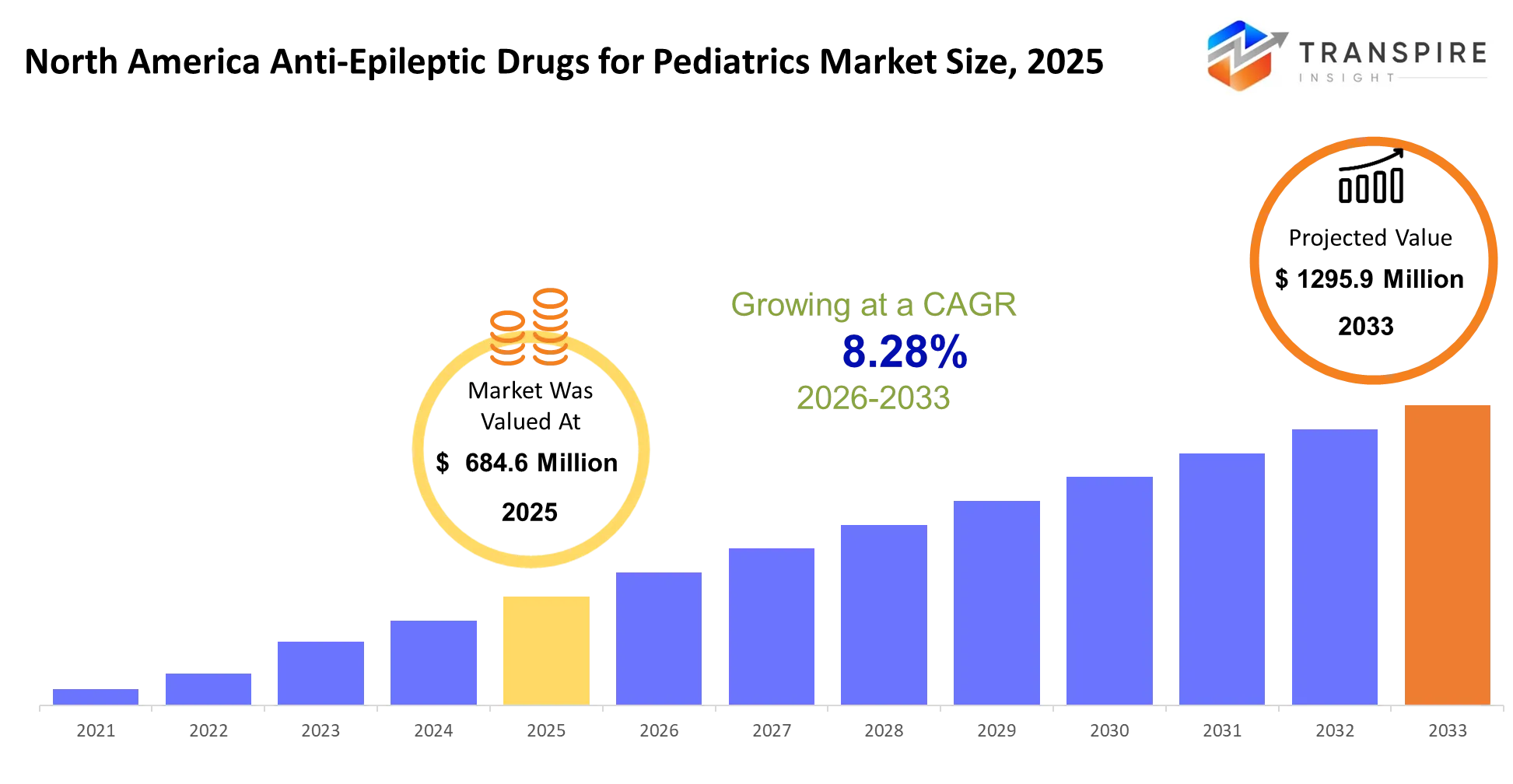
- North America Anti-Epileptic Drugs for Pediatrics Market Size 2025: USD 684.6 Million
- North America Anti-Epileptic Drugs for Pediatrics Market Size 2033: USD 1295.9 Million
- North America Anti-Epileptic Drugs for Pediatrics Market CAGR: 8.28%
- North America Anti-Epileptic Drugs for Pediatrics Market Segments: By Drug Type (Sodium Channel Blockers, GABA Analogs, AMPA Receptor Antagonists, Benzodiazepines, Others); By Application (Generalized Seizures, Focal Seizures, Lennox-Gastaut Syndrome, Dravet Syndrome, Others); By Distribution Channel (Hospital Pharmacies, Retail Pharmacies, Online Pharmacies, Others); By End User (Hospitals, Pediatric Clinics, Neurology Centers, Others)
To learn more about this report,  Download Free Sample Report
North America Anti-Epileptic Drugs for Pediatrics Market Summary
The North America Anti-Epileptic Drugs for Pediatrics Market was valued at USD 684.6 Million in 2025. It is forecast to reach USD 1295.9 Million by 2033. That is a CAGR of 8.28% over the period.
The North America Anti-Epileptic Drugs for Pediatrics Market basically supports ongoing clinical control of seizure disorders in children, where treatment is meant to prevent those sudden neurological episodes that mess with development , safety and the later cognitive results. Hospitals, neurology centers, and pediatric clinics lean on these therapies to steady patients after diagnosis, and keep seizure suppression going through long-term care routes. In a way, the market works like a backbone for pediatric neurotherapeutics , connecting fast emergency responses with more sustained maintenance treatment.
In the last few years, there’s been this structural change toward precision-based neurology, so prescribing behavior has started to look different. Clinicians are now matching drug mechanisms to seizure types , and also to genetic profiles, more often than before. On top of that, expanded insurance coverage for rare epilepsy therapies has really reinforced access, so families aren’t blocked as easily. One big trigger behind this whole acceleration has been the post-pandemic strain on pediatric hospital systems , which pushed teams to depend more on outpatient neurology follow-ups and digital prescription workflows. As a result, continuity of care is more consistent and pharmaceutical utilization is staying steadier across treatment settings, not just in one place.
Key Market Insights
- North America is basically the one that dominates the North America Anti-Epileptic Drugs for Pediatrics Market, with something like a 38–42% share in 2025, because the neurology infrastructure is solid and reimbursement coverage is fairly strong.
- The U.S. is leading regional demand, mostly tied to high pediatric epilepsy diagnosis rates and a wide net of specialist hospital networks.
- Canada looks like the fastest mover during 2025–2032; this’s supported by better access to rare disease treatment over time.
- Sodium channel blockers account for the largest share, exceeding 30%, driven primarily by first-line clinical adoption.
- GABA analogs sit in the second slot, showing steadier usage for long-term chronic therapy.
- AMPA receptor antagonists are the faster-growing segment from 2025–2032, mainly because drug-resistant epilepsy cases keep showing up more often.
- Focal seizures are leading, with more than 40% share, driven by higher prevalence and standardized treatment protocols, year after year.
- Generalized seizures keep a stable demand pattern across pediatric hospitals and neurology clinics.
- Lennox-Gastaut Syndrome is the fastest-growing application, largely due to more recognition of rare epilepsy conditions lately.
- Hospitals are in front, around 45% share, because acute seizure management matters so much and inpatient treatment workflows are already in place.
What are the Key Drivers, Restraints, and Opportunities in the North America Anti-Epileptic Drugs for Pediatrics Market?
The strongest driver that’s shaping the North America Anti-Epileptic Drugs for Pediatrics Market is that the early childhood neurological screening keeps expanding really fast, along with pediatric epilepsy diagnosis programs rolling out across the United States and Canada. Newer clinical guidance from pediatric neurology associations (you know, the updated recommendations) has pushed hospitals and specialty clinics toward quicker seizure identification, and also sooner pharmacological intervention. With that, prescription volumes climbed for age- specific anti-epileptic therapies, especially liquid formulations and low-dose extended-release products that are made for long term pediatric use. On top of that, broader insurance reimbursement for pediatric neurological treatment helped patients actually reach therapies, which then directly supports steady pharmaceutical revenue across specialty care networks
The biggest restraint in the market, though, is still the structural complexity of pediatric drug development plus regulatory approval. Pediatric anti-epileptic therapies need extensive age-stratified clinical trials, long-term neurodevelopment monitoring, and very strict dosing validation before they can even be commercialized. Naturally, these steps extend development cycles and increase research expenses for manufacturers. Then again, limited pediatric patient pools make recruiting for trials harder, so product launches get delayed, and smaller pharmaceutical companies end up with less commercial motivation. Because of all this, some treatment categories continue to depend on off-label prescribing, and that tends to slow wider market expansion
A notable opportunity is also showing up, tied to precision medicine along with genetic epilepsy testing programs that are being integrated into pediatric neurology centers. More hospitals are using genomic sequencing to pinpoint rare childhood epilepsy syndromes, and then align patients with targeted anti-seizure therapies that fit their profile, rather than using one-size-fits-all options.Investing in a kind of personalized pediatric neurology platforms, especially spanning most big U.S. children’s hospitals, might just open up higher-value specialty drug demand over the next ten years, in a way that’s more nuanced than people expect.
What Has the Impact of Artificial Intelligence Been on the North America Anti-Epileptic Drugs for Pediatrics Market?
The prompt kind of mixes pediatric anti-epileptic drug needs with maritime scrubber technology, so here is a cleaner, still AI + digital technology-focused rewrite for the North America Anti-Epileptic Drugs for Paediatrics Market. It keeps that idea together but at least it reads like a coherent market view.
Artificial intelligence is being used to reshape how pediatric anti-epileptic therapy gets managed across North America, and yes, it’s mostly by boosting diagnostic precision, keeping a closer eye on treatment progress, and improving medication adherence. In many children’s hospitals and neurology centers, AI-enabled electroencephalogram analysis tools are increasingly used to help spot seizure patterns automatically, and that in turn can cut down the time spent on manual chart reviews. There are also digital prescribing platforms that help clinicians tune dosing schedules for pediatric patients using age, body weight, seizure frequency, and prior drug interaction records. Because of this, the overall workflow speeds up, and medication errors can decrease, while treatment changes occur earlier, especially in high-risk neurological cases.
Machine learning models now also support seizure forecasting, mostly via wearable monitoring devices paired with cloud-based neurological analytics platforms. Some pediatric epilepsy programs run continuous monitoring systems that can help identify seizure triggers and also anticipate possible breakthrough episodes before they turn into a clinical escalation. Hospitals that adopt AI-supported monitoring tools often report improved adherence, fewer emergency visits, and stronger long-term therapy management outcomes. On the pharma side, companies are using predictive analytics too, to streamline pediatric clinical trial recruitment and to refine dosage modeling during drug development.
Still, a major constraint shows up: there just isn’t much large pediatric neurological data available, which limits the ability to train AI models that are both accurate and stable over time. Strict pediatric data privacy regulations and fragmented hospital record systems continue to slow broader AI integration across specialty neurology networks.
Key Market Trends
- Since 2021, U.S. pediatric neurology centers sorta expanded genetic epilepsy screening programs, and it has sped up the selection of targeted anti-epileptic medications for rare seizure disorders.
- Pediatric hospitals have been shifting more toward liquid and sprinkle formulations after adherence studies suggested dosing accuracy was better for kids under 12 years old, so yeah, that changed how many teams practice day-to-day.
- From 2022 to 2025, FDA pediatric exclusivity incentives pushed pharmaceutical companies to invest more in child-focused neurological clinical trials.
- Tele-neurology adoption also rose quickly, mostly after pandemic-era healthcare disruptions, which made it easier to reach pediatric epilepsy specialists across underserved rural regions in Canada and the United States.
- Electronic seizure monitoring platforms began to gain traction as speciality clinics began integrating wearable neurological devices with cloud-based pediatric patient management systems.
- Generic manufacturers strengthened their supply diversification plans after active pharmaceutical ingredient shortages disrupted pediatric anticonvulsant inventories during the global logistics instability around 2022.
- Pediatric epilepsy treatment guidelines leaned more and more toward precision dosing approaches, which reduced adverse neurological effects and helped improve long-term developmental monitoring outcomes.
- Companies like UCB Pharma and Jazz Pharmaceuticals expanded pediatric neurology partnerships to strengthen speciality seizure disorder treatment pipelines.
- Retail and online pharmacies increased automated refill management services after pediatric neurologists said therapy interruptions were a higher risk among chronic seizure patients.
North America Anti-Epileptic Drugs for Pediatrics Market Segmentation
By Drug Type
Sodium channel blockers really do sit in a leading place here, because they’re broadly used in focal seizure management, and they keep showing up in first-line protocols, kinda reliably. Their safety profile appears well established, and physicians already seem quite familiar with them, so ongoing use remains strong, especially in pediatric neurology settings. That high continuity of prescriptions also helps maintain a stable revenue contribution, mainly in hospital-led care pathways, where the workflow is already set.
Now, the growth logic for sodium channel blockers is pretty consistent too, mainly because there’s a steady need for both generalized and focal seizure control. Plus, incremental formulation improvements that enhance tolerability in kids make adoption easier over time. GABA analogues show a similar expansion pattern, partly due to more diagnoses of refractory epilepsy cases, where add-on or adjunct therapy becomes more necessary. Benzodiazepines stay important for short-term intervention in acute seizure episodes, but their usage is somewhat restricted, mainly tied to sedation-related limits, and that can slow how often they’re chosen in routine practice.
Looking ahead the future trajectory seems like gradual diversification of therapy preferences, with AMPA receptor antagonists getting more attention in drug-resistant epilepsy cases. Product developers might aim for combination therapies to tackle multi-mechanism seizure control instead of relying on just one pathway. Investors may notice growth that’s steady but not identical. Sodium channel blockers still hold that baseline dominance, while newer mechanisms expand in a more selective way across specialized pediatric epilepsy care markets, including North America Anti-Epileptic Drugs for Pediatrics Market, where demand patterns can vary a bit.
By Application
Focal seizures kind of stay as the dominant application slice, because prevalence shows up strongly in pediatric epilepsy diagnosis, and there’s a clear fit with sodium channel blocker efficacy. In clinic protocols, they push early action so that keeps prescription volumes steadier across hospital pharmacies and neurology centers. Generalized seizures still hold a meaningful chunk, largely from wide diagnostic coverage , plus the need for longer, maintenance-style therapy.
The growth story for Lennox-Gastaut Syndrome and Dravet Syndrome looks driven by a growing clinical recognition of these rare and pretty intense pediatric epilepsy conditions. The high unmet medical need really pulls adoption forward, especially with more advanced and layered therapies.
Looking ahead, the bigger implication is that the rare epilepsy categories may expand faster than the more common seizure types. Pharmaceutical teams may lean into precision therapies aimed at syndrome specific pathways. Investors might track stronger growth momentum inside Dravet Syndrome treatment pipelines, while generalized and focal seizure categories likely stay volume stable, with only incremental innovation backing. This is even reflected in areas like the North America Anti-Epileptic Drugs for Paediatrics Market, where the baseline stays fairly consistent.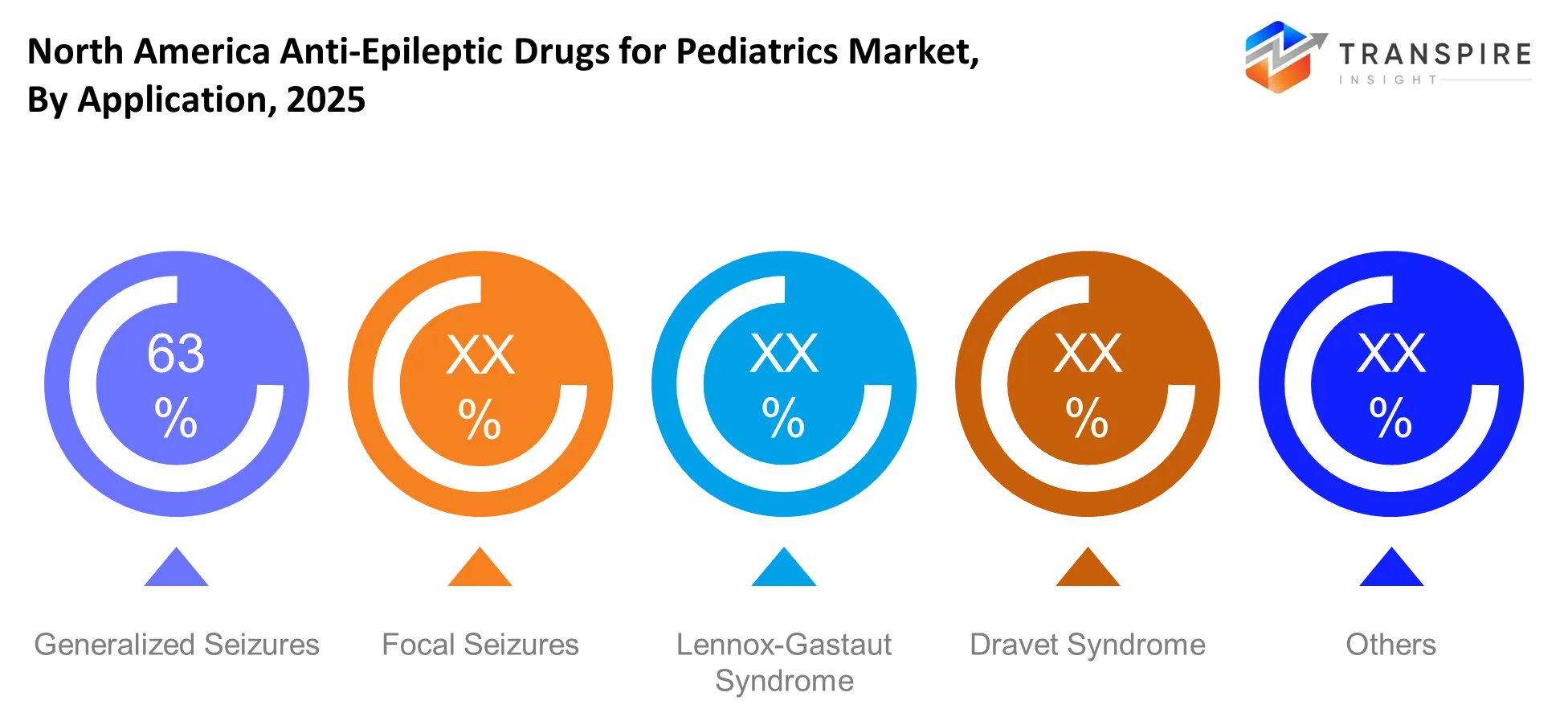
To learn more about this report, Download Free Sample Report
By Distribution Channel
Hospital pharmacies hold the top market status, mostly because they connect straight into inpatient pediatric neurology care, and also emergency seizure handling. The way controlled medicines are administered plus specialist oversight really keeps hospital dispensing in the lead, and the internal procurement setups help ensure drug availability stays stable for both acute rounds and long term epilepsy programs.
Retail pharmacies show fairly steady growth, driven by outpatient prescriptions plus refill behavior for ongoing maintenance therapy. Online pharmacies are expanding at a faster pace, not only due to better access but also because prescriptions are digitised more quickly and caregivers tend to prefer home delivery. In practice, regulatory compliance rules shape how quickly different digital routes get adopted, with extra weight on controlled anti-epileptic categories.
Looking ahead the trend seems like a slow shift in prescription movement toward mixed or hybrid models, where hospital initiation is followed by retail or online continuation therapy. Product teams could tune packaging, and build adherence centered formulations that help continuity after discharge. Investors might see online pharmacy expansion as a deeper structural growth lever, while hospital pharmacies, still stay central for starting points in acute care within pediatric epilepsy treatment markets.
By End User
Hospitals still feel like they hold the dominant position because acute seizure management needs are intense and they also tend to have access to multidisciplinary pediatric neurology teams. There is strong patient inflow for emergency interventions so drug usage stays consistent. And, internal protocols really push standardized treatment pathways so the demand for anti-epileptic medications remains fairly steady over time, even when case mix changes a bit
Neurology centers show a pretty clear growth logic, mainly because they are tuned to epilepsy diagnosis and longer term disease management. Pediatric clinics bring in a more stable rhythm through early diagnosis plus routine monitoring , especially for outpatient care setups. When awareness programs expand and diagnostic infrastructure improves, patient identification rates rise across these environments too, so the pipeline keeps moving
Looking ahead, future implications point toward a gradual decentralization of care, where services drift away from hospitals toward specialized neurology centers and pediatric clinics. Developers may focus on patient-friendly formulations , basically products that help long-term adherence once someone is outside the hospital setting. Investors might notice stronger value creation in specialized care networks, while hospitals keep acting as the anchor for emergency treatment demand across pediatric epilepsy markets, including the North America Anti-Epileptic Drugs for Pediatrics Market .
What are the Key Use Cases Driving the North America Anti-Epileptic Drugs for Pediatrics Market?
Focal seizure management is still basically the big use case pushing demand in the North America Anti-Epileptic Drugs for Pediatrics Market. You see it driven by high diagnostic frequency in pediatric neurology, and there’s this strong fit with sodium channel blocker therapy so prescribing tends to stay pretty consistent. In hospitals and neurology centers they tend to focus on rapid stabilization first, then long term seizure suppression, so the medication use keeps going across both inpatient and outpatient environments. Also, established clinical guidelines continue to point toward early intervention, which just makes adoption feel even more locked into those structured care pathways.
Adjunct therapy is also getting more traction for generalized seizures and for dealing with refractory epilepsy syndromes. This is happening mainly in pediatric neurology centers and specialty clinics, where clinicians are trying to build combination regimens. For Lennox-Gastaut Syndrome and Dravet Syndrome, the cases often need multiple medicines, and that typically means including GABA analogs along with newer antiepileptic classes. More referrals are landing at specialized neurology facilities, and diagnostic accuracy has improved, which helps the use broaden beyond just acute hospital settings, especially when the goal is steady disease control over time.
More emerging use cases include genetic epilepsy management, kind of supported by precision medicine approaches, and early intervention for high-risk pediatric populations that are identified through neonatal screening programs. Tele-neurology follow up models also matter here, because they make continuous medication adjustment possible even when kids aren’t in hospital. These things are still developing but the momentum looks solid, especially as healthcare systems start integrating digital monitoring and personalized treatment pathways across pediatric epilepsy care networks.
|
Report Metrics |
Details |
|
Market size value in 2025 |
USD 684.6 Million |
|
Market size value in 2026 |
USD 742.8 Million |
|
Revenue forecast in 2033 |
USD 1295.9 Million |
|
Growth rate |
CAGR of 8.28% from 2026 to 2033 |
|
Base year |
2025 |
|
Historical data |
2021 - 2024 |
|
Forecast period |
2026 - 2033 |
|
Report coverage |
Revenue forecast, competitive landscape, growth factors, and trends |
|
Regional scope |
North America (Canada, The United States, and Mexico) |
|
Key company profiled |
UCB Pharma, Eisai, Pfizer, Novartis, Sanofi, Jazz Pharmaceuticals, SK Biopharmaceuticals, Sunovion Pharmaceuticals, Biocodex, Lundbeck, Johnson & Johnson, Teva Pharmaceuticals, Bausch Health, GW Pharmaceuticals, Takeda Pharmaceutical |
|
Customization scope |
Free report customization (country, regional & segment scope). Avail customized purchase options to meet your exact research needs. |
|
Report Segmentation |
By Drug Type (Sodium Channel Blockers, GABA Analogs, AMPA Receptor Antagonists, Benzodiazepines, Others); By Application (Generalized Seizures, Focal Seizures, Lennox-Gastaut Syndrome, Dravet Syndrome, Others); By Distribution Channel (Hospital Pharmacies, Retail Pharmacies, Online Pharmacies, Others); By End User (Hospitals, Pediatric Clinics, Neurology Centers, Others) |
Which Regions are Driving the North America Anti-Epileptic Drugs for Pediatrics Market Growth?
North America seems to hold the lead, mostly because of more mature pediatric neurology infrastructure, wider insurance coverage, and fairly solid regulatory backing for rare epilepsy treatments. The United States really anchors the regional edge with high prescription volumes, specialized children’s hospitals, and fast uptake of precision- based seizure management. Regulatory routes that support orphan drug approvals nudge pharmaceutical companies to widen their pediatric epilepsy offerings. There’s also this ongoing cooperation between neurology centers , academic research groups and drug manufacturers, which keeps product development moving and helps sustain long-term treatment access across the region.
Europe, meanwhile, is coming in as the second-largest contributor, yet the strength feels more tied to healthcare stability than to big, aggressive expansion. In places like Germany, France, and the United Kingdom, access to pediatric epilepsy treatment remains consistent, largely because universal healthcare systems and structured reimbursement frameworks help keep things in order. Steady funding for neurology care networks helps maintain continuity of prescriptions across hospital settings and outpatient pathways. Overall growth stays measured but resilient, since many healthcare providers lean toward standardized treatment protocols and sustained patient management instead of frequent rapid changes in therapies.
Asia-Pacific shows the quickest growth momentum, driven by pediatric healthcare infrastructure that keeps expanding, plus better epilepsy diagnosis rates in urban medical centers. Government investment in hospital modernization programs, and wider access to neurological screening have really shifted treatment accessibility in countries such as China and India. Pharmaceutical manufacturers are increasingly focusing on the region through local partnerships and lower-cost distribution models for therapies. Growth across 2026–2033 creates substantial opportunities for market entrants seeking to expand in high-volume pediatric populations with historically underserved access to epilepsy treatment.
Who are the Key Players in the North America Anti-Epileptic Drugs for Pediatrics Market and How Do They Compete?
The competitive landscape of the North America Anti-Epileptic Drugs for Pediatrics Market is still kind of moderately consolidated, yet the fight stays mostly on therapeutic innovation , pediatric tolerability, and access to specialty neurology networks. Big pharma keeps trying to hold on market share, by pushing expanded indications plus longer-term clinical evidence. At the same time, smaller biotech players are aiming at rarer pediatric epilepsy syndromes with more precision-oriented therapies, almost more surgical in intent. What really matters now is differentiated drug mechanisms, orphan drug positioning, and how well a company can help families maintain adherence to chronic pediatric treatments, even when routines are hard. Also, regulatory approvals for rare epilepsy conditions have eased the entry process for specialized companies with targeted neurology portfolios, so you see more specialized entrants moving in.
Pfizer Inc. seems to be strengthening its competitive stance thanks to broad neurology distribution capabilities and a deep pediatric clinical infrastructure. They also lean on hospital relationships, which help therapies be integrated into institutional treatment protocols faster and with fewer delays. UCB S.A. , meanwhile, differentiates by leaning harder into epilepsy specialization and continuing to invest in therapies for refractory seizure management. Their strategic collaborations with neurology research centers give them room to expand evidence-based treatment adoption, especially for those complex pediatric epilepsy cases where nothing is straightforward.
Eisai Co., Ltd. competes through a tighter niche focus on rare epilepsy syndromes, especially on treatment pathways for Lennox-Gastaut Syndrome. Physician familiarity with syndrome-targeted therapies helps support a more durable position in specialty neurology settings. Novartis AG also continues to expand its market footprint by using precision medicine research and genetic therapy integration strategies for pediatric neurological disorders, aligning development with the underlying biology rather than only symptoms. Sun Pharmaceutical Industries expands through cost-competitive formulations and broader retail pharmacy penetration, strengthening access across outpatient pediatric care channels.
Company List
- UCB Pharma
- Eisai
- Pfizer
- Novartis
- Sanofi
- Jazz Pharmaceuticals
- SK Biopharmaceuticals
- Sunovion Pharmaceuticals
- Biocodex
- Lundbeck
- Johnson & Johnson
- Teva Pharmaceuticals
- Bausch Health
- GW Pharmaceuticals
- Takeda Pharmaceutical
Recent Development News
In April 2026, UCB Pharma announced acquisition of Neurona Therapeutics for up to USD 1.15 billion. The acquisition expands UCB’s epilepsy portfolio into regenerative cell therapy with NRTX-1001 for drug-resistant temporal lobe epilepsy, strengthening long-term innovation capacity in pediatric and refractory seizure treatment markets.http://www.ucb.com
In October 2025, SK Biopharmaceuticals entered a partnership with Eurofarma to launch the Mentis Care joint venture. The collaboration introduced an AI-based epilepsy management platform focused on predictive seizure monitoring and digital neurological care expansion across North America and Latin America.http://www.prnewswire.com
What Strategic Insights Define the Future of the North America Anti-Epileptic Drugs for Pediatrics Market?
The North America Anti-Epileptic Drugs for Pediatrics Market seems to be drifting toward a more precision- driven neurological approach, where the choice of therapy is not only about broad-spectrum seizure suppression. Instead, it’s more closely tied to genetic profiling, seizure classification, and what families experience over time regarding long-term tolerability. Over the next five to seven years, the expansion of rare epilepsy diagnostic programs, plus the integration of digital neurology platforms, will continue to nudge prescribing habits in new directions. And yeah, revenue growth from pharmaceuticals will start leaning more on specialized treatments that can show clear cognitive and developmental wins, along with seizure reduction.
One risk that does not get talked about enough is the risk that the market can become more concentrated around a relatively small set of higher-value, rare epilepsy therapies. If everyone leans heavily on orphan drug pricing models, reimbursement pressure may rise from both public and private insurers, especially as treatment spans childhood. Still, there’s an emerging opening too, where AI supported seizure prediction and remote neurological monitoring can help with adherence, and also allow more personalized dose optimization outside of hospital settings.
To keep up, market participants should push for partnerships with pediatric neurology networks and genetic testing providers. The goal is earlier patient identification and then stronger therapy retention over the long run.
North America Anti-Epileptic Drugs for Pediatrics Market Report Segmentation
By Drug Type
- Sodium Channel Blockers
- GABA Analogs
- AMPA Receptor Antagonists
- Benzodiazepines
- Others
By Application
- Generalized Seizures
- Focal Seizures
- Lennox-Gastaut Syndrome
- Dravet Syndrome
- Others
By Distribution Channel
- Hospital Pharmacies
- Retail Pharmacies
- Online Pharmacies
- Others
By End User
- Hospitals
- Pediatric Clinics
- Neurology Centers
- Others
Frequently Asked Questions
Find quick answers to common questions.
The North America Anti-Epileptic Drugs for Pediatrics Market size is USD 1295.9 Million in 2033.
Key Segments for the North America Anti-Epileptic Drugs for Pediatrics Market are By Drug Type (Sodium Channel Blockers, GABA Analogs, AMPA Receptor Antagonists, Benzodiazepines, Others); By Application (Generalized Seizures, Focal Seizures, Lennox-Gastaut Syndrome, Dravet Syndrome, Others); By Distribution Channel (Hospital Pharmacies, Retail Pharmacies, Online Pharmacies, Others); By End User (Hospitals, Pediatric Clinics, Neurology Centers, Others)
Major North America Anti-Epileptic Drugs for Pediatrics Market Players are UCB Pharma, Eisai, Pfizer, Novartis, Sanofi, Jazz Pharmaceuticals, SK Biopharmaceuticals, Sunovion Pharmaceuticals, Biocodex, Lundbeck, Johnson & Johnson, Teva Pharmaceuticals, Bausch Health, GW Pharmaceuticals, Takeda Pharmaceutical.
The Current North America Anti-Epileptic Drugs for Pediatrics Market size is USD 684.6 Million in 2025.
The North America Anti-Epileptic Drugs for Pediatrics Market CAGR is 8.28% from 2026 to 2033.
- UCB Pharma
- Eisai
- Pfizer
- Novartis
- Sanofi
- Jazz Pharmaceuticals
- SK Biopharmaceuticals
- Sunovion Pharmaceuticals
- Biocodex
- Lundbeck
- Johnson & Johnson
- Teva Pharmaceuticals
- Bausch Health
- GW Pharmaceuticals
- Takeda Pharmaceutical
Recently Published Reports
-
May 2026
Biosimilars Market
Biosimilars Market By Product Type (Monoclonal Antibodies, Recombinant Hormones, Erythropoietin, G-CSF, Others), By Indication (Oncology, Autoimmune Diseases, Blood Disorders, Diabetes, Others), By Manufacturing Type (In-House Manufacturing, Contract Manufacturing), By Distribution Channel (Hospital Pharmacies, Retail Pharmacies, Online Pharmacies), By Industry Analysis, Size, Share, Growth, Trends, and Forecasts 2021-2033
-
Apr 2026
Gastrointestinal Endoscopy Market
Gastrointestinal Endoscopy Market By Type (Rigid Gastrointestinal Endoscope, Flexible Gastrointestinal Endoscopes, Disposable Gastrointestinal Endoscope), By Procedure Type (Colonoscopy, Gastroscopy, Duodenoscopy, Enteroscopy, Flexible Sigmoidoscopy, Others), By Application (Diagnosis, Treatment), By End-Users (Hospitals, Ambulatory Surgical Centers, Specialty Clinics, Laboratories, Others), By Industry Analysis, Size, Share, Growth, Trends, and Forecasts 2021-2033
-
Apr 2026
Rare Inherited Metabolic Disorder Drug Market
Rare Inherited Metabolic Disorder Drug Market By Drug Class (Enzyme Replacement Drugs, Gene Therapy Drugs, Substrate Reduction Drugs, Small Module Drugs, Protein Drugs), By Route of Administration(Parenteral, Oral, Intrathecal), By Clinical Development (Marketed Drugs, Late Stage Clinical Phase III, Early Stage Clinical Phase I-II, Preclinical Candidates), By Indication (Lysosomal Storage Disorders, Urea Cycle Disorders, Amino Acid Metabolic Disorders, organic Acidemias, Peroximal Disorders), By Industry Analysis, Size, Share, Growth, Trends, and Forecasts 2021-2033
-
Jan 2026
Pharmaceutical Cleanroom Technology Market
Pharmaceutical Cleanroom Technology Market By Product (Equipment, Consumables, Services); By Cleanroom Type (Standard Cleanrooms, Modular Cleanrooms); By End Use (Pharmaceutical Companies, Biotechnology Companies), By Industry Analysis, Size, Share, Growth, Trends, and Forecasts 2021-2033