

North America Allergy Rhinitis Drugs Market Size & Forecast:
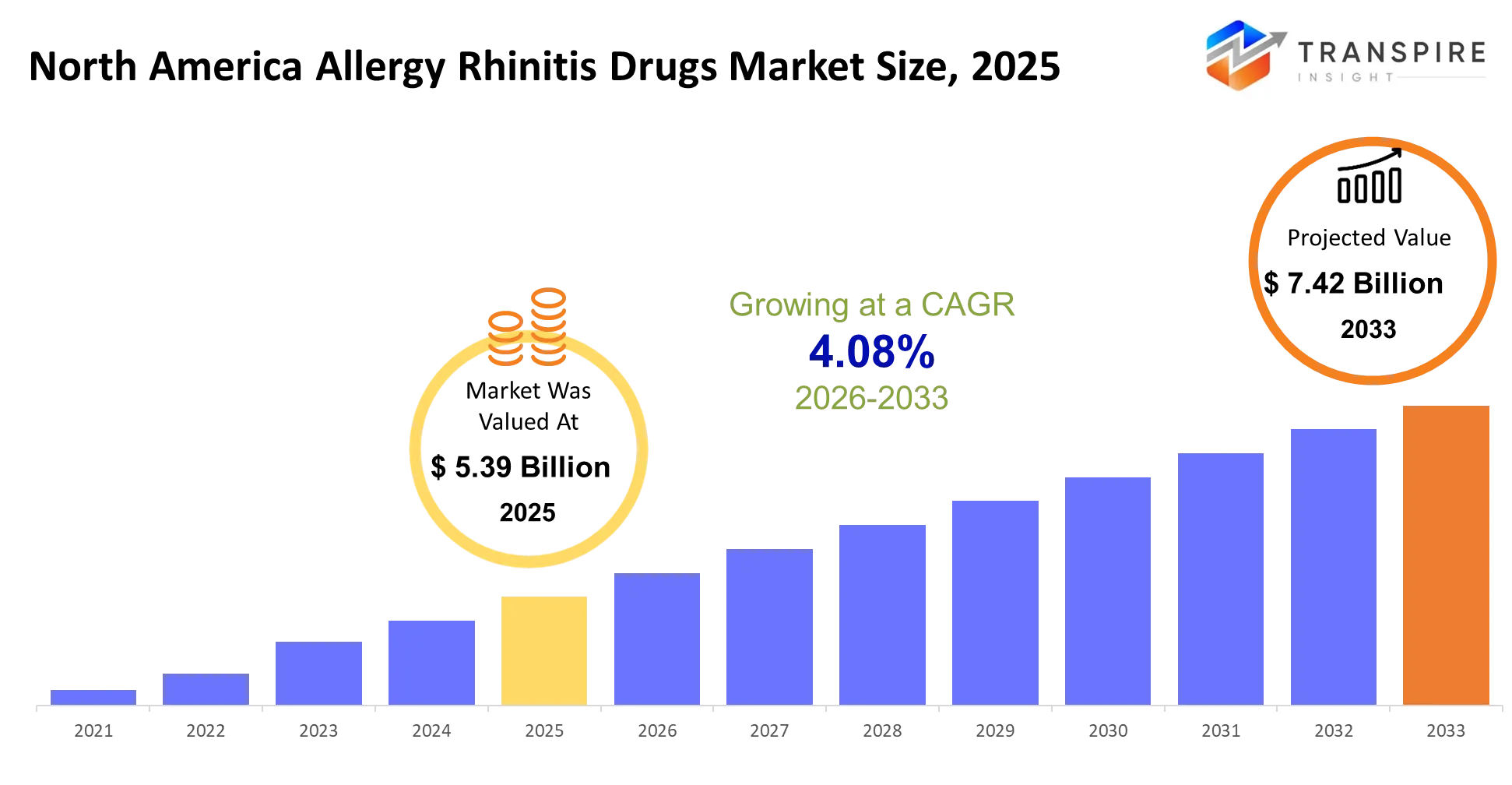
- North America Allergy Rhinitis Drugs Market Size 2025: USD 5.39 Billion
- North America Allergy Rhinitis Drugs Market Size 2033: USD 7.42 Billion
- North America Allergy Rhinitis Drugs Market CAGR: 4.08%
- North America Allergy Rhinitis Drugs Market Segments: By Type (Antihistamines, Corticosteroids, Decongestants, Leukotriene Inhibitors, Immunotherapy, Others), By Application (Seasonal Allergies, Perennial Allergies, Pediatric Allergies, Others), By End-User (Hospitals, Clinics, Pharmacies, Homecare, Others), By Distribution (Retail Pharmacy, Hospital Pharmacy, Online, Others).
To learn more about this report,  Download Free Sample Report
North America Allergy Rhinitis Drugs Market Summary:
The North America Allergy Rhinitis Drugs Market size is estimated at USD 5.39 Billion in 2025 and is anticipated to reach USD 7.42 Billion by 2033, growing at a CAGR of 4.08% from 2026 to 2033.The North America Allergy Rhinitis Drugs Market holds a frontline kind of role, keeping seasonal and chronic allergy symptoms under some control for millions of patients. Those people have their productivity, sleep quality, and respiratory health knocked around by pollen, dust, pet dander, and general environmental irritants, so the whole impact is kinda bigger than just sneezing. Real world, these drugs let healthcare systems cut down repeat physician visits, ease the likelihood of secondary asthma problems, and keep daily functioning steady for both working-age adults and pediatric patients.
Over roughly the last five years, the market has been moving away from broad symptom suppression toward more targeted long duration therapies, plus combination formulations that can boost adherence while also dialing back side effects. Also, the expansion of over the counter access and digital pharmacy distribution has changed how patients actually handle allergy care, treatment decisions end up being made closer to the consumer, rather than only inside clinic rooms. During and after the COVID-19 period one big trigger showed up , mostly because everyone was paying extra attention to respiratory symptoms, and at the same time more patients started looking for preventative and long term allergy care. That behavior change kinda pushed recurring medication use higher, made retail pharmacy sales lift up too, and it also helped manufacturers invest more cash into non drowsy choices pediatric variants , and biologic therapies for the tough allergic conditions.
Key Market Insights
- The United States keeps taking the lead in the North America Allergy Rhinitis Drugs Market, sitting at about 78% market share in 2025 , mainly because prescription volumes stay high.
- Canada looks like the fastest-moving regional scene through 2030 with steady momentum, supported by biologic therapy adoption and a growing allergy treatment buildout.
- Meanwhile, in big North American cities, urban pollution exposure is still climbing, and this is pushing allergic rhinitis incidence up too, which ends up backing long term demand for pharmaceuticals.
- Also, retail pharmacy networks across North America saw big prescription fulfillment gains between 2022 and 2025, helped by e commerce channels and digital refill platforms, pretty directly.
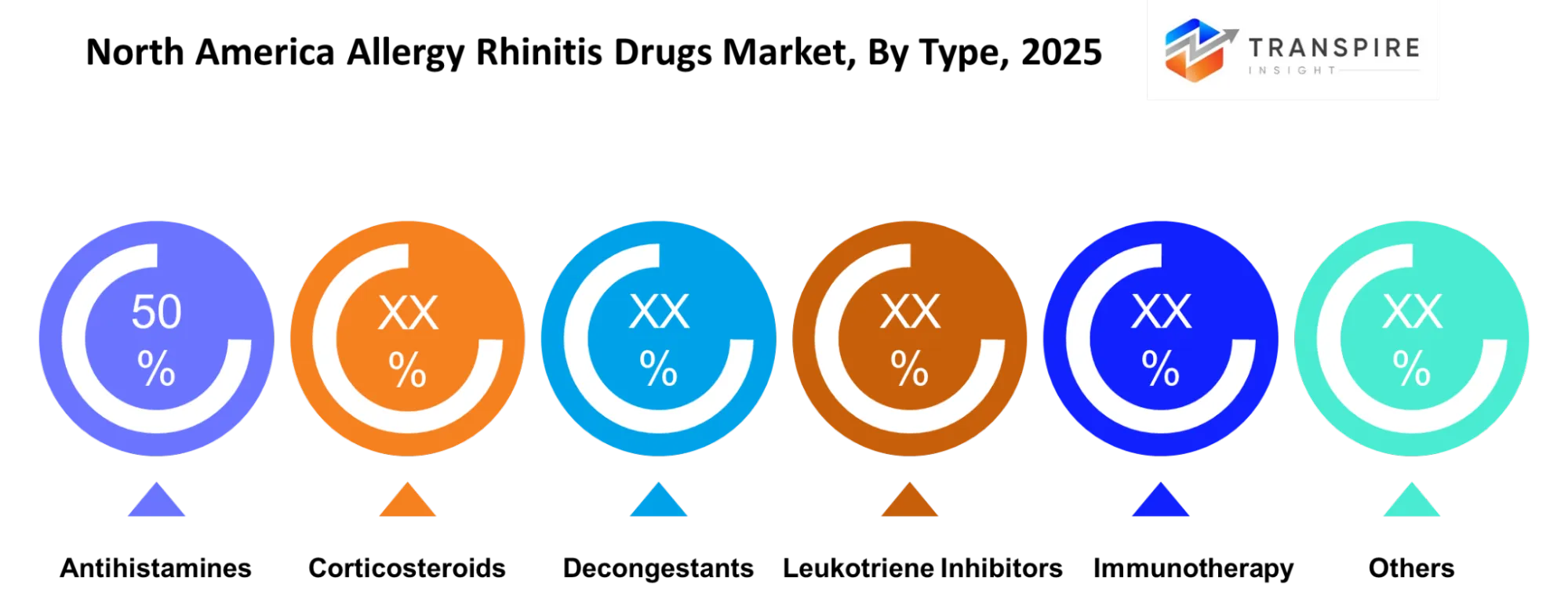
- Antihistamines are still the top product type in the North America Allergy Rhinitis Drugs Market, with roughly 42% industry share in 2025, largely due to the strong OTC accessibility.
- Intranasal corticosteroids stay in the second spot because physicians prefer them for longer lasting symptom control and inflammation management , in other words they’re favored clinically.
- Biologic therapies are expected to be the fastest growing segment during the 2025–2030 forecast window, since demand rises for severe allergy linked and asthma linked treatment pathways.
- Combination drug formulations picked up noticeable traction after 2023, as many patients start favoring one daily multi symptom options , more convenient overall.
- Non drowsy allergy medications keep gaining footing too, especially among working professionals and pediatric patient populations across North America.
- On the application side, seasonal allergic rhinitis uses are leading, at nearly 64% market share in 2025, driven by recurring pollen related treatment needs.
- Perennial allergic rhinitis treatment is the fastest-growing application through 2030, largely because indoor allergen exposure is increasing pretty much the whole year, not just certain months.
What are the Key Drivers, Restraints, and Opportunities in the North America Allergy Rhinitis Drugs Market?
The most powerful push behind the North America Allergy Rhinitis Drugs Market is the move toward constant symptom control using smarter, non drowsy antihistamines corticosteroid sprays and biologic therapies. It really gathered steam after the COVID-19 period, when breathing related problems got more medical focus, and patients started acting more proactively about long term airway wellbeing. Around the same time retail pharmacies grew, telehealth platforms also widened, so prescription renewals and over the counter allergy relief became easier to get. All of that sort of stack effect helps keep people on therapy longer, boosts medication consistency, and it also widens steady revenue cycles for pharmaceutical brands across both Rx channels and consumer oriented healthcare.
That said, the market’s toughest underlying constraint is still the expensive price tag and the reimbursement puzzle tied to biologic therapies for severe allergic rhinitis, and conditions that connect to asthma. Typically insurers ask for thorough diagnostic proof, plus evidence of prior treatment failures before they will approve coverage. This hurdle can’t be fixed fast, because it is tied into the wider North American reimbursement ecosystem and the payers’ cost containment strategies. So, many patients end up leaning on cheaper symptomatic options, and that naturally slows the take up of premium solutions, while it also dampens higher margin growth for drug manufacturers.
A big future opportunity is in precision allergy care, supported by digital diagnostics and a more tailored biologic targeting approach. A lot of companies are putting money into AI-supported allergy tracking platforms that link environmental exposure information with patient treatment plans, kind of in one flow. In the United States, this whole space is starting to look like a prime commercialization hub for these integrated care models, since telehealth adoption, wearable health monitoring, and the specialty pharmacy setup are already pretty established.
What Has the Impact of Artificial Intelligence Been on the North America Allergy Rhinitis Drugs Market?
Artificial intelligence and more advanced digital tech are kinda reshaping the North America Allergy Rhinitis Drugs Market, not just making research quicker but also changing how patient care is managed in practice. Pharma companies are leaning on AI driven molecular modeling platforms to push antihistamine and biologic discovery along, basically spotting candidate compounds faster than older, traditional lab screening routines. On the business side, digital prescription systems plus automated pharmacy platforms help sort refill workflows, insurance confirmation, and even patient adherence visibility. This, in turn, cuts down on the paperwork lag, and helps keep treatment continuity steadier.
And yeah, machine learning is getting used to forecast allergy outbreaks using environmental datasets where pollen counts mix with air pollution metrics, humidity readings, and regional climate direction. Clinicians and digital health platforms then use those forecasts to time prescriptions more strategically, and to tailor preventive treatment plans before peak seasons really hit. A few telehealth providers across North America have said they’re seeing better patient retention, and noticeably improved medication adherence, after pairing AI based symptom monitoring apps with their digital consultation services.
There’s also advanced analytics going into inventory planning and regional distribution, so companies can reduce stock out risk during high demand allergy periods. Still, AI rollout has a big catch, because actual patient response data stays scattered across healthcare systems, pharmacies and insurers. That fragmentation, with no consistent standardized datasets, can lower predictive precision and makes it harder to deploy fully personalized allergy treatment models at scale.
Key Market Trends
- From 2021, to 2025 , retail pharmacy chains seemed to push online allergy medication fulfillment more and more, cutting prescription refill delays a little, and in the same breath boosting recurring treatment buy’s over time.
- Non-drowsy antihistamines got a stronger physician nod after 2022 , especially when employers put productivity front and center, for working-age people, and it kind of changed what “good enough” looked like.
- Sanofi, and Regeneron Pharmaceuticals moved faster on biologic therapy investing as severe allergy-linked asthma cases rose across North America , you know, more visits, more referrals, more urgency.
- Telehealth allergy consultations also jumped a lot after COVID-19, so treatment starts shifted away from specialist clinics and toward digitally integrated primary care platforms.
- Between 2022 and 2025, pharmaceutical companies leaned into pediatric allergy drug launches , tied to higher childhood pollen sensitivity and also more indoor allergen exposure rates, which felt noticeable.
- Combination nasal spray formulations took a bigger prescription slice after 2023 , because patients seemed to prefer the simpler once-daily symptom control approach, rather than multiple steps.
- After 2021, AI powered pollen forecasting platforms started showing up across the United States, helping clinicians line up preventive allergy treatment a bit more precisely, and honestly that timing part, really mattered.
- Then generic manufacturers turned up their pricing rivalry in over the counter allergy medications, which put pressure on premium brands, so they tried to set themselves apart via extended release options, and preservative free formulations too.
- Online pharmacies gained more market pull after 2022 by rolling out subscription based refill systems, plus automated medication adherence reminders for chronic allergy patients , and it made everything feel more seamless.
- In Canada, healthcare providers broadened biologic reimbursement pathways after 2023, improving access to advanced allergic rhinitis therapies for severe and long term cases, especially those that stick around.
North America Allergy Rhinitis Drugs Market Segmentation
By Type
Antihistamines have kept the top slot in the type segment for a while now, mainly because broad over-the-counter availability , quick symptom relief, and cheaper treatment costs kind of reinforce steady customer liking. After 2021, second-generation antihistamines picked up even more momentum ,since “non drowsy” versions became more of a priority for people at work and for students too. Corticosteroids still sit in the second-largest industry place, largely due to doctor preference for long-lasting inflammation control ,in moderate or persistent allergy situations. Decongestants and leukotriene inhibitors cover a more narrow set of needs, especially when respiratory problems show up together, like sinus pressure along with asthma related signs.
Immunotherapy and biologic-based approaches are moving ahead at a quicker pace ,because tough allergic rhinitis situations are starting to demand more targeted long-term care ,instead of only short-term symptom calming. Looking ahead, competition in this segment will probably revolve around extended-release delivery systems, kid-friendly options, and more tailored therapies. Companies putting money into biologics and combination formulations are expected to win higher-margin growth chances over the next few years.
To learn more about this report, Download Free Sample Report
By Application
Seasonal allergies stay the dominant application segment, mostly because pollen exposure patterns across the United States and Canada keep throwing off big annual treatment numbers in spring and fall. There’s also a really solid outpatient treatment pull, plus high retail medication turnover, which basically keeps this segment holding the leading industry share. Perennial allergies are picking up more momentum too, since indoor allergen exposure—like dust, mold, and pet dander—feels more steady, almost like it never really lets up, especially in urban home environments. Pediatric allergies are one of the faster-growing application categories, due to growing childhood respiratory sensitivity, and also because physician screening programs are showing up more often in schools plus pediatric clinics.
Chronic allergy management has expanded after the pandemic stretch as well, because respiratory symptom monitoring became more proactive among both healthcare providers and patients, you know, more hands-on in a sense. Looking ahead, the application trends should lean toward prevention style care approaches, supported by AI based pollen predictions and digital symptom tracking platforms, kinda like an early warning system. At the same time , pharmaceutical companies that are aiming for longer lasting efficacy and fewer unwanted effects will likely keep strengthening their positions across both seasonal and year round allergy treatment lines.
By End-User
Pharmacies still kind of dominate the end-user segment since big patient volumes lean on easy retail access for over the counter antihistamines and nasal sprays , more or less. Chain pharmacy operators seemed to boost their influence after expanding digital refill systems and telehealth-linked prescription fulfillment services between 2022 and 2025, they did. Hospitals keep a notable place here, mainly because specialists manage the toughest allergic rhinitis situations, often using biologics, corticosteroids and then respiratory complications that come along.
Clinics are seeing firmer growth too, because outpatient allergy testing plus immunotherapy programs tend to come in at lower treatment costs compared with hospital based care. Homecare is moving up steadily as digital health applications encourage self managed symptom tracking and longer term medication adherence, gradually. What happens next for segments will likely depend on more integrated care delivery models, blending telemedicine, remote patient monitoring and subscription based prescription handling. Healthcare providers putting money into connected allergy care ecosystems are expected to increase patient retention , and at the same time cut down on administrative treatment delays and those repeated consultation burdens.
By Distribution
Retail pharmacy channels still basically dominate the distribution side of things, mostly because there are these widespread store networks, lots of people buy directly from the shop, and over-the-counter drug penetration stays strong so transaction volumes keep climbing. Hospital pharmacies remain kinda important too, especially for prescription corticosteroids , biologic therapies, and those more involved with allergy care protocols that need physician supervision. Online distribution channels showed the quickest expansion after 2021, since consumers started leaning harder toward home delivery, automated refills, and digital prescription management setups.
E-commerce growth got even faster as pharmacy operators bundled mobile health applications together with allergy symptom tracking, plus medication reminders… distribution strategies are also shifting now because pharmaceutical manufacturers are pursuing direct relationships with digital pharmacy providers and telehealth companies, to keep building recurring revenue streams. What happens next in terms of competition here will likely hinge on logistics efficiency, how well they do digital engagement, and whether they can offer personalized treatment support. Investors are expected to favor distribution platforms that can blend fast fulfillment, adherence monitoring, and data driven consumer targeting without much delay.
What are the Key Use Cases Driving the North America Allergy Rhinitis Drugs Market?
Seasonal allergy management is still the main thing pushing people to buy both prescription and over-the-counter drugs across North America, yeah kinda. When pollen levels are high in urban and suburban areas, there’s this repeat pattern of demand for antihistamines, corticosteroid sprays and even combo therapies through retail pharmacy channels.
But it’s not only the usual stuff anymore. There are wider applications now, like for kids, and also for handling ongoing breathing symptoms in outpatient clinics and specialty care centers. The pediatric options got more traction as schools and healthcare providers started doing more allergy screening programs, mostly after that higher respiratory health monitoring during the post-pandemic period.
On the newer side you can see AI-assisted preventive allergy care showing up, plus biologic therapies being used for severe rhinitis that’s tied to asthma-related inflammation. Telehealth platforms, together with specialty pharmacies, are beginning to blend digital pollen forecasting with personalized treatment planning. That’s creating longer-term opportunities for more precise allergy care, not just the typical seasonal fix.
|
Report Metrics |
Details |
|
Market size value in 2025 |
USD 5.39 Billion |
|
Market size value in 2026 |
USD 5.61 Billion |
|
Revenue forecast in 2033 |
USD 7.42 Billion |
|
Growth rate |
CAGR of 4.08% from 2026 to 2033 |
|
Base year |
2025 |
|
Historical data |
2021 - 2024 |
|
Forecast period |
2026 - 2033 |
|
Report coverage |
Revenue forecast, competitive landscape, growth factors, and trends |
|
Country scope |
North America (Canada, The United States, and Mexico) |
|
Key company profiled |
GlaxoSmithKline, Pfizer, Sanofi, Bayer, Johnson & Johnson, Novartis, Merck, AstraZeneca, Teva, Cipla, Sun Pharma, Boehringer Ingelheim, AbbVie, Amgen, Roche |
|
Customization scope |
Free report customization (country, regional & segment scope). Avail customized purchase options to meet your exact research needs. |
|
Report Segmentation |
By Type (Antihistamines, Corticosteroids, Decongestants, Leukotriene Inhibitors, Immunotherapy, Others), By Application (Seasonal Allergies, Perennial Allergies, Pediatric Allergies, Others), By End-User (Hospitals, Clinics, Pharmacies, Homecare, Others), By Distribution (Retail Pharmacy, Hospital Pharmacy, Online, Others) |
Which Regions are Driving the North America Allergy Rhinitis Drugs Market Growth?
The United States still shows up as the leading regional market, mainly because it has a big prescription drug ecosystem, a strong retail pharmacy setup, and consumers with serious healthcare spending power. Coverage that is fairly broad for allergy diagnostics plus specialist check ins , helps treatments land more often for both the seasonal stuff and the longer term , chronic allergy situations. On top of that, major pharma companies keep pushing direct-to-consumer advertising, teaming up with telehealth providers, and expanding biologic therapies across the country. There is also a pretty mature mix of specialty clinics, outpatient care facilities , and digital pharmacy platforms which just helps lock in long term market control, and the usual recurring medicine use.
Canada comes in as the second largest regional contributor, though the growth story is a bit different. In Canada, healthcare delivery leans more on publicly supported reimbursement frameworks and more structured treatment pathways, so the momentum doesn’t always mirror the U.S. Stable health expenditures , along with consistent regulatory oversight , make it feel like a more predictable commercial space for manufacturers and for pharmacy operators too. Canadian healthcare teams increasingly favor long duration allergy management, especially for chronic respiratory issues that connect back to environmental allergens and urban pollution exposure. Strong physician buy-in to evidence driven protocols also keeps demand steady for advanced corticosteroids, pediatric formulations, and biologic therapies.
Mexico is kinda emerging as the fastest-growing regional market, mainly from the expanding urban healthcare infrastructure , plus more people getting exposed to rising air pollution levels, and also because access to retail pharmaceutical services is getting better. In the last few years, and especially after 2022, investments in private healthcare networks and digital pharmacy distribution platforms helped a lot with allergy care access , it’s a noticeable shift. On top of that, international pharmaceutical companies are leaning harder into local partnerships and distribution agreements, to strengthen their footprint in underserved metropolitan zones. This regional momentum should keep building, and between 2026 and 2033 it could bring really attractive chances for generic drug manufacturers, telehealth providers, and specialty respiratory care firms.
Who are the Key Players in the North America Allergy Rhinitis Drugs Market and How Do They Compete?
The North America Allergy Rhinitis Drugs Market has a kind of moderately consolidated competitive landscape, where multinational pharma players often hold the better priced prescription options, while generic makers push hard on over-the-counter lines. Lately the fight is not so much about price by itself, more on stuff like formulation upgrades, longer treatment timelines, digital patient engagement, and easier reach through retail pharmacies. Meanwhile older incumbents try to keep their share with extended release options, kid-friendly variants, and biologic medicines that are aimed at the toughest allergy -linked breathing issues. At the same time, digital health groups and online pharmacy platforms are quietly shifting the distribution rules, by making prescriptions easier to get and keeping patients on therapy for longer, with better follow-up.
Sanofi seems to stand out via biologic centered respiratory treatments , plus partnerships that reach deeply into specialty care networks across the United States and Canada. Their collaboration with Regeneron Pharmaceuticals helped widen access to more targeted therapies for intense allergic inflammation, and also for rhinitis cases that show up alongside asthma. Johnson & Johnson competes with a wide retail footprint and well recognized brands in non drowsy over the counter antihistamines. They use wide pharmacy distribution agreements along with direct to consumer marketing pushes, to help keep prescription conversion strong and repeat purchases coming back.
GlaxoSmithKline seems really into long-duration nasal spray formulations, and also pushes physician led respiratory care approaches that are backed by clinical evidence programs. they keep extending digital patient support services so people can stick with treatment better across chronic allergy populations, sort of more sustainably. AstraZeneca on the other hand is beefing up its footing in severe respiratory allergy care via biologic innovation and precision medicine investments that connect right back to asthma management. Pfizer continues with a competitive edge by leaning on big scale manufacturing capacity, lots of pharmacy relationships and investing in AI aided drug development platforms. these tools speed up formulation optimization ,and help commercial rollout timelines move faster.
Company List
- GlaxoSmithKline
- Pfizer
- Sanofi
- Bayer
- Johnson & Johnson
- Novartis
- Merc
- AstraZeneca
- Teva
- Cipla
- Sun Pharma
- Boehringer Ingelheim
- AbbVie
- Amgen
- Roche
Recent Development News
In February 2026, Sanofi and Regeneron Secure U.S. Approval for Dupixent in Allergic Fungal Rhinosinusitis: Sanofi and Regeneron announced that the U.S. FDA approved Dupixent as the first and only targeted medicine for allergic fungal rhinosinusitis, expanding the biologic’s respiratory and allergy portfolio in North America. The approval strengthens both companies’ positions in the allergy and rhinitis-related therapeutics segment and broadens treatment options for chronic inflammatory sinus diseases.
Source: https://www.sanofi.com
In February 2026, ARS Pharmaceuticals Highlights New Clinical Data for neffy at AAAAI 2026: ARS Pharmaceuticals presented new clinical and usability data for neffy®, its needle-free epinephrine nasal spray, during the 2026 AAAAI Annual Meeting in the U.S. The company emphasized real-world adoption and expanded allergy-treatment innovation, reinforcing its growing role in North America’s allergy therapeutics market.
Source: https://medicalupdateonline.com
What Strategic Insights Define the Future of the North America Allergy Rhinitis Drugs Market?
The North America Allergy Rhinitis Drugs Market is kinda moving, structurally, toward precision respiratory care backed by biologics, AI-assisted diagnostics, and digitally merged treatment management. In the next five to seven years, competitive edge will more and more hinge on how well companies can mix pharmaceutical products with predictive care platforms that personalize when therapy starts, keep tabs on adherence, and help prevent longer term symptom buildup. Also, climate shifts related to pollen intensity, plus allergy seasons that seem to run longer, are likely to push this change even harder, because more people will need year-round management. Not just that seasonal, “on-off” symptom relief idea.
There is a hidden snag though, namely increasing market concentration around higher-end biologic treatments and specialty pharmacy distribution networks. If reimbursement rules get tighter, or if payers keep consolidating, smaller manufacturers can end up having trouble getting formulary placement, and that can curb the variety of innovation plus slow down adoption of the premium therapies. Still, there’s an emerging window of opportunity: AI-based environmental allergy forecasting, when paired with telehealth prescribing workflows. This could really matter in less served urban pockets, in Mexico and also in some secondary metropolitan areas across the United States. In practice, companies should put money in early connected care ecosystems that blend digital monitoring, pharmacy collaborations, and personalized treatment pathways. Rather than trying to win only through drug pricing, or even by tweaking formulations.
North America Allergy Rhinitis Drugs Market Report Segmentation
By Type
- Antihistamines
- Corticosteroids
- Decongestants
- Leukotriene Inhibitors
- Immunotherapy
- Others
By Application Seasonal Allergies
- Perennial Allergies
- Pediatric Allergies
- Others
By End-User
- Hospitals
- Clinics
- Pharmacies
- Homecare
- Others
By Distribution
- Retail Pharmacy
- Hospital Pharmacy
- Online
- Others
Frequently Asked Questions
Find quick answers to common questions.
The approximate North America Allergy Rhinitis Drugs Market size for the market will be USD 7.42 Billion in 2033.
The key segments of the North America Allergy Rhinitis Drugs Market are By Type (Antihistamines, Corticosteroids, Decongestants, Leukotriene Inhibitors, Immunotherapy, Others), By Application (Seasonal Allergies, Perennial Allergies, Pediatric Allergies, Others), By End-User (Hospitals, Clinics, Pharmacies, Homecare, Others), By Distribution (Retail Pharmacy, Hospital Pharmacy, Online, Others).
Major players in the North America Allergy Rhinitis Drugs Market are GlaxoSmithKline, Pfizer, Sanofi, Bayer, Johnson & Johnson, Novartis, Merck, AstraZeneca, Teva, Cipla, Sun Pharma, Boehringer Ingelheim, AbbVie, Amgen, Roche.
The current market size of the North America Allergy Rhinitis Drugs Market is USD 5.39 Billion in 2025.
The North America Allergy Rhinitis Drugs Market CAGR is 4.08%.
- GlaxoSmithKline
- Pfizer
- Sanofi
- Bayer
- Johnson & Johnson
- Novartis
- Merc
- AstraZeneca
- Teva
- Cipla
- Sun Pharma
- Boehringer Ingelheim
- AbbVie
- Amgen
- Roche
Recently Published Reports
-
May 2026
Biosimilars Market
Biosimilars Market By Product Type (Monoclonal Antibodies, Recombinant Hormones, Erythropoietin, G-CSF, Others), By Indication (Oncology, Autoimmune Diseases, Blood Disorders, Diabetes, Others), By Manufacturing Type (In-House Manufacturing, Contract Manufacturing), By Distribution Channel (Hospital Pharmacies, Retail Pharmacies, Online Pharmacies), By Industry Analysis, Size, Share, Growth, Trends, and Forecasts 2021-2033
-
Apr 2026
Gastrointestinal Endoscopy Market
Gastrointestinal Endoscopy Market By Type (Rigid Gastrointestinal Endoscope, Flexible Gastrointestinal Endoscopes, Disposable Gastrointestinal Endoscope), By Procedure Type (Colonoscopy, Gastroscopy, Duodenoscopy, Enteroscopy, Flexible Sigmoidoscopy, Others), By Application (Diagnosis, Treatment), By End-Users (Hospitals, Ambulatory Surgical Centers, Specialty Clinics, Laboratories, Others), By Industry Analysis, Size, Share, Growth, Trends, and Forecasts 2021-2033
-
Apr 2026
Rare Inherited Metabolic Disorder Drug Market
Rare Inherited Metabolic Disorder Drug Market By Drug Class (Enzyme Replacement Drugs, Gene Therapy Drugs, Substrate Reduction Drugs, Small Module Drugs, Protein Drugs), By Route of Administration(Parenteral, Oral, Intrathecal), By Clinical Development (Marketed Drugs, Late Stage Clinical Phase III, Early Stage Clinical Phase I-II, Preclinical Candidates), By Indication (Lysosomal Storage Disorders, Urea Cycle Disorders, Amino Acid Metabolic Disorders, organic Acidemias, Peroximal Disorders), By Industry Analysis, Size, Share, Growth, Trends, and Forecasts 2021-2033
-
Jan 2026
Pharmaceutical Cleanroom Technology Market
Pharmaceutical Cleanroom Technology Market By Product (Equipment, Consumables, Services); By Cleanroom Type (Standard Cleanrooms, Modular Cleanrooms); By End Use (Pharmaceutical Companies, Biotechnology Companies), By Industry Analysis, Size, Share, Growth, Trends, and Forecasts 2021-2033