

Japan Topical Corticosteroids Market Size & Forecast:
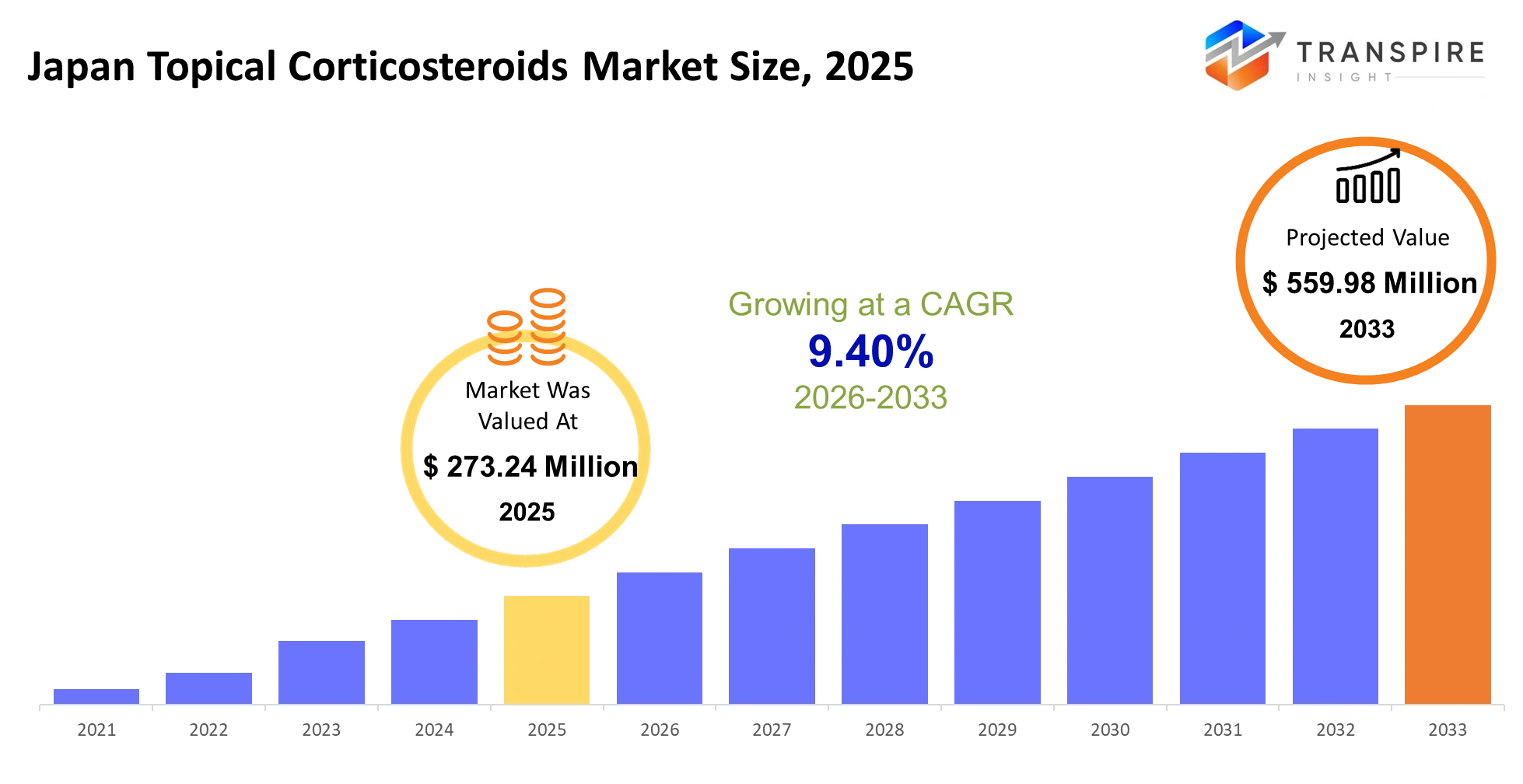
- Japan Topical Corticosteroids Market Size 2025: USD 273.24 Million
- Japan Topical Corticosteroids Market Size 2033: USD 559.98 Million
- Japan Topical Corticosteroids Market CAGR: 9.40%
- Japan Topical Corticosteroids Market Segments: By Type (Creams, Ointments, Lotions, Gels, Sprays, Others); By Application (Dermatitis, Psoriasis, Eczema, Allergies, Skin Infections, Inflammatory Skin Disorders, Others); By End-User (Hospitals, Clinics, Homecare, Dermatology Centers, Specialty Clinics, Others); By Distribution (Hospital Pharmacies, Retail Pharmacies, Online Pharmacies, Drug Stores, Others).
To learn more about this report,  Download Free Sample Report
Japan Topical Corticosteroids Market Summary
The Japan Static Random Access Memory (SRAM) Market was valued at USD 273.24 Million in 2025. It is forecast to reach USD 559.98 Million by 2033. That is a CAGR of 9.40% over the period.
Doctors in Japan use topical corticosteroids as a standard treatment method which helps them to manage inflammatory skin conditions that include atopic dermatitis and eczema and psoriasis. The market has evolved during the last three to five years from allowing doctors to prescribe based on their experience to requiring them to follow treatment guidelines which classify patient severity and implement diagnostic procedures that use established medical standards and guidelines for treatment.
The COVID-19 pandemic created a major force that drove this trend because it decreased the number of dermatology patients who visited doctors in person while hospitals adopted teledermatology and online prescription methods. The global API supply chain disruptions created a new requirement to establish reliable domestic sourcing methods which increased operational demands. The new regulations established a structured system which required doctors to prescribe medications needed for patients with chronic dermatological conditions who belong to Japan's elderly population.
Key Market Insights
- The Japan Topical Corticosteroids Market shows high demand from urban prefectures which include Tokyo, Osaka, and Kanagawa because they have many dermatology clinics.
- The western region of Japan develops its dermatology facilities through hospital network growth which enables outpatient services until 2033.
- Japan currently has widespread usage of low-potency formulations which serve as the second most common treatment option for both pediatric patients and individuals with sensitive skin.
- The psoriasis treatment market has developed into the most rapidly expanding sector which receives support from dermatology care models that use biologics.
- Contact dermatitis maintains steady demand because industrial areas experience both occupational and environmental exposure cases.
- The Japan Topical Corticosteroids Market receives its highest market share from hospitals and dermatology clinics which operate structured prescription control systems.
- The retail pharmacy sector experiences its most rapid growth because of two factors which include expanded over-the-counter access and increased ability to fulfill prescription needs.
- The field of homecare dermatology treatment shows growth because of two developments which include telemedicine systems and chronic disease assessment programs.
- The main businesses in this sector are Maruho Co., Ltd. Taisho Pharmaceutical Torii Pharmaceutical Kaken Pharmaceutical and Shionogi & Co.
- Global companies such as Pfizer and Leo Pharma increase their market presence by expanding their dermatology product lines and entering license agreements.
What are the Key Drivers, Restraints, and Opportunities in the Japan Topical Corticosteroids Market?
The Japan Topical Corticosteroids Market experiences its main growth driver through the increasing occurrence of chronic inflammatory skin disorders which most frequently affect people who have atopic dermatitis and who live in urban areas with environmental pollution and experience stress and possess aging skin. The implementation of standardized dermatology treatment guidelines in Japan has created a framework that recommends doctors to treat patients with topical corticosteroids during their initial treatment phase before they require more advanced systemic treatments. Hospitals and dermatology clinics now display consistent prescription patterns which result in steady revenue growth while patients continue to use both branded and generic products at increasing rates.
The primary structural limitation exists because healthcare professionals need to address the long-term safety issues which develop from extended corticosteroid treatments that result in skin thinning and tachyphylaxis development. The prescribing habits of doctors show strong resistance because existing clinical restrictions prevent them from using new treatment options which have recently emerged. The existing restraining factor remains difficult to solve because it connects with established medical standards and how patients view treatment in Japan's strictly controlled medical environment. The medical system uses short treatment lengths which decrease potential earnings from each patient while obstructing access to high-end products.
The combination of corticosteroid use with advanced drug delivery systems that include liposomal and foam-based formulations creates a significant opportunity for development in dermatology combination treatment methods. Japanese pharmaceutical firms, including Maruho Co., Ltd., are investing in next-generation topical platforms designed to improve absorption while reducing side effects. Urban prefectures like Tokyo and Osaka are becoming early adoption hubs, where dermatology clinics increasingly adopt these advanced formulations, signaling the next growth phase for the Japan Topical Corticosteroids Market.
What Has the Impact of Artificial Intelligence Been on the Japan Topical Corticosteroids Market?
AI-driven dermatology platforms now help doctors in their diagnostic work by studying skin lesion photos to determine treatment plans. The system enables doctors to select proper corticosteroid strength which results in more precise medication prescriptions and protects patient health. Automated systems for dispensing and electronic prescription processes enhance inventory management while decreasing prescription mistakes in hospital pharmacies which leads to better operational performance for all dermatology departments.
Machine learning models use historical treatment data to forecast patient response patterns which enables healthcare providers to create customized dosage plans that decrease the need for experimental medication administration. The system helps patients stay committed to their treatment plans which results in fewer required follow-up appointments that enhance treatment results for patients with chronic conditions such as atopic dermatitis.
The absence of standardized high-quality dermatology imaging datasets in Japan constitutes a major obstacle because it prevents medical professionals from achieving accurate model performance assessment in actual hospital settings. The drive to develop artificial intelligence systems for corticosteroid treatment pathways faces two obstacles which include high integration costs and difficulties caused by the uncoordinated IT systems found in hospitals.
Key Market Trends
- The establishment of dermatology guidelines in Japan during 2022 brought about complete changes to prescription methods which resulted in decreased use of unsupervised steroid treatments and improved outcomes through structured medical approaches.
- The period from 2023 to 2025 saw digital dermatology platforms grow as clinics implemented electronic prescribing systems to protect patients from excessive corticosteroid use.
- The two companies Maruho Co Ltd and Kaken Pharmaceutical dedicated their research and development resources to creating low-irritation products between 2024 and 2026 which led to better long-term patient treatment compliance.
- After 2023 medical professionals started using combination therapies that combined antifungal medications with corticosteroids to treat chronic dermatitis instead of prescribing separate treatments.
- Hospitals began to purchase generic corticosteroid medications because Japan's healthcare system needed to cut costs after 2022.
- Teledermatology services gained popularity after the pandemic as they allowed doctors to prescribe topical corticosteroids through online medical consultations which connected them with patients in urban areas of Japan.
- After 2024 AI-powered dermatology diagnostic tools started determining treatment strength through their capacity to identify early eczema signs which helped clinics treat patients more effectively.
- Following 2023 patients chose to use low-potency products because they learned about the risks of steroid-related skin thinning.
- The period from 2022 to 2024 saw supply chain changes lead to higher domestic active pharmaceutical ingredient production which decreased the need for imported pharmaceutical materials used in drug stability testing.
- Pharmaceutical companies in 2025 increased their partnership efforts with hospitals to create better systems for medicine distribution and patient prescription adherence.
Japan Topical Corticosteroids Market Segmentation
By Type
Japanese consumers prefer cream formulations for topical corticosteroid creams because their absorption rates match their effectiveness in treating common skin conditions which include eczema and dermatitis. The company maintains its leading market position because doctors prefer its product which enables them to treat patients with wet and swollen skin conditions in outpatient facilities where patient adherence to treatment is essential. Ointments occupy a strong secondary market position because they deliver better skin barrier protection yet they are typically prescribed for patients who need extended treatment of severe or chronic conditions.
The segment experiences growth through clinical preferences that depend on specific product formulations instead of volume growth. Gels and lotions are gaining attention in humid urban regions of Japan, where patients prefer non-greasy and fast-absorbing alternatives that improve adherence. Hospitals are beginning to use sprays together with new delivery methods which enable doctors to give exact doses while reducing the need for patients to touch the medicine.
The competition battle will change during the prediction period because product development creates new market opportunities which enable mild creams and combination creams to gain popularity. Hospitals will choose products from manufacturers who prioritize patient comfort and deliver better safety results while dermatology clinics will increasingly adopt premium formulations.
By Application
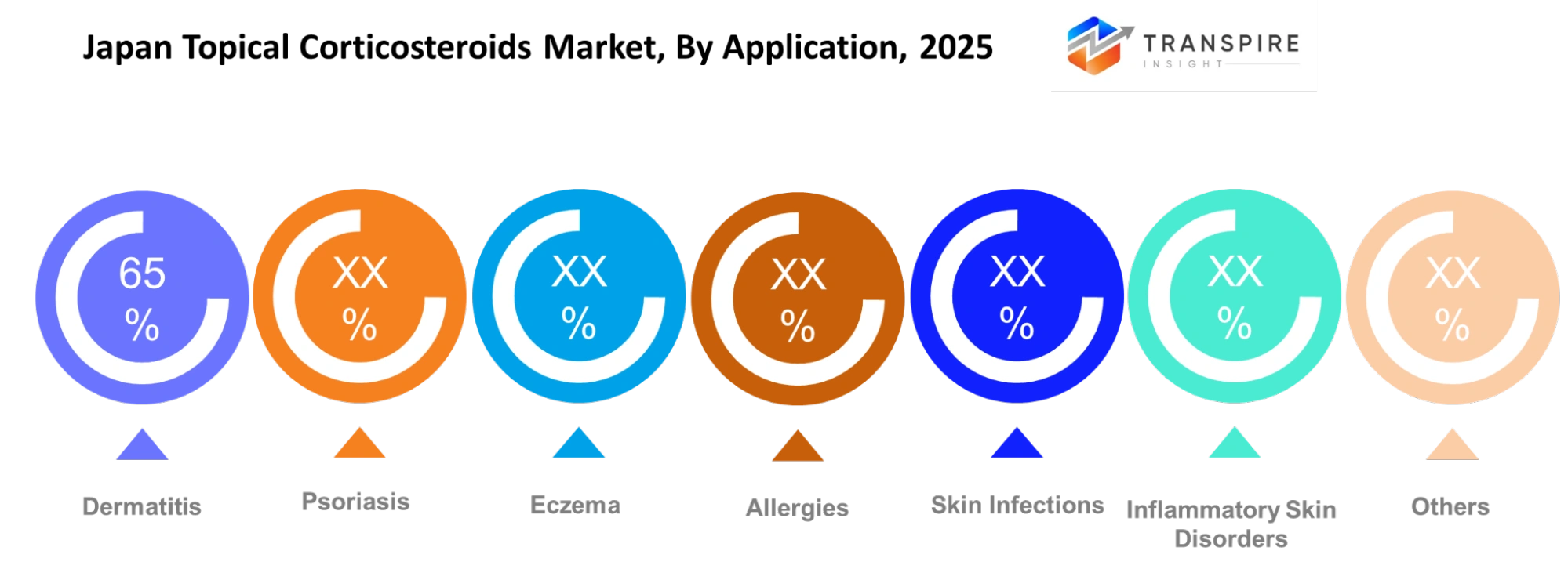
The Japan Topical Corticosteroids Market uses dermatological treatments for its primary application because atopic dermatitis reaches high rates throughout the country based on environmental and genetic factors. Eczema-related cases closely follow, supported by recurring outpatient visits and chronic treatment requirements. The medical facilities continue to experience ongoing needs for prescription drugs which dermatology clinics and hospitals require to treat these medical conditions.
Urban stress levels increase while teledermatology platforms enable better diagnosis rates to drive growth in this market segment. Psoriasis and inflammatory skin disorders are expanding at a faster rate as biologics and corticosteroid combination therapies become more widely integrated into treatment pathways. Healthcare providers maintain constant but reduced rates of treating skin infections and allergy-related conditions.
Future demand will shift toward early intervention therapies and combination treatment protocols that reduce recurrence rates. The growing clinical trend toward integrated treatment methods will assist pharmaceutical developers who work on creating dual-action formulations which reduce long-term steroid use.
To learn more about this report, Download Free Sample Report
By End-User
The Japanese Topical Corticosteroid Market shows its highest market share through hospitals and dermatology centers which operate structured prescription control systems and maintain high patient flow for treating chronic skin disorders. Medical clinics make a major contribution through their services which include both dermatology consultations and prescription refills. The treatment facilities maintain their market dominance because they provide patients with direct access to certified dermatology specialists who operate according to established treatment procedures.
The growth of dermatology services now benefits from decentralized treatment systems as specialty clinics continue to establish new locations throughout urban prefectures. The use of homecare services has increased because telemedicine is now used together with chronic disease management programs which permit patients to renew their prescriptions from home. The healthcare industry now experiences a trend which moves dermatology services into outpatient facilities.
The forecast period will see homecare services and specialty clinics grow at a faster rate than traditional hospital facilities. The combination of distribution systems and patient support programs which healthcare companies establish will help them succeed in treating patients who need outpatient and remote care throughout their treatment process.
By Distribution
The Japan Topical Corticosteroids Market distribution system operates primarily through hospital pharmacies which partner with both inpatient treatment and outpatient prescription systems. Retail pharmacies represent the second-largest channel, driven by high accessibility and frequent prescription refills for chronic dermatological conditions. The demand for drug stores remains constant because customers seek low-potency formulations throughout the year.
The electronic prescription system expansion together with regulatory frameworks that enable standardized drug dispensing procedures has become the main factor driving segment development. Teledermatology consultations together with digital healthcare adoption have created online pharmacies as the fastest-growing distribution channel which shows particular growth in urban areas that prioritize convenient shopping.
The future distribution system will operate through hybrid models which combine hospital-based prescription systems with online delivery methods. Pharmaceutical companies that strengthen online pharmacy partnerships and integrated prescription networks will gain competitive advantage through improved patient retention and faster product accessibility across the Japan Topical Corticosteroids Market.
What are the Key Use Cases Driving the Japan Topical Corticosteroids Market?
The main application of the Japan Topical Corticosteroids Market exists to treat atopic dermatitis and eczema in outpatient dermatology clinics. These medical conditions create the highest product demand because they need multiple prescriptions for extended period treatment and instant anti-inflammatory results during medical procedures. Topical corticosteroids serve as the primary treatment option which hospitals and dermatology clinics use to handle patient flare-ups and protect against disease progression.
Psoriasis management and allergic skin reaction treatment have become additional applications which specialty clinics and hospital outpatient departments now implement. The applications are becoming more popular because combination therapies now permit clinicians to treat both inflammation and simultaneous infections within one treatment system. Retail pharmacies also support this expansion by ensuring continuity of care through repeat dispensing.
The new applications of corticosteroids in dermatology begin to treat skin conditions which occur after patients undergo cosmetic and laser procedures. Teledermatology-guided self-management represents a new field which enables patients to receive digital consultations for remote prescription of low-potency medications used to treat mild chronic conditions throughout urban Japan.
|
Report Metrics |
Details |
|
Market size value in 2025 |
USD 273.24 Million |
|
Market size value in 2026 |
USD 298.66 Million |
|
Revenue forecast in 2033 |
USD 559.98 Million |
|
Growth rate |
CAGR of 9.40% from 2026 to 2033 |
|
Base year |
2025 |
|
Historical data |
2021 - 2024 |
|
Forecast period |
2026 - 2033 |
|
Report coverage |
Revenue forecast, competitive landscape, growth factors, and trends |
|
Country scope |
Japan |
|
Key company profiled |
GSK, Pfizer, Johnson & Johnson, Sanofi, Bayer, Novartis, Roche, AstraZeneca, Teva, Cipla, Sun Pharma, Dr Reddy’s, Lupin, Aurobindo Pharma, AbbVie. |
|
Customization scope |
Free report customization (country, regional & segment scope). Avail customized purchase options to meet your exact research needs. |
|
Report Segmentation |
By Type (Creams, Ointments, Lotions, Gels, Sprays, Others); By Application (Dermatitis, Psoriasis, Eczema, Allergies, Skin Infections, Inflammatory Skin Disorders, Others); By End-User (Hospitals, Clinics, Homecare, Dermatology Centers, Specialty Clinics, Others); By Distribution (Hospital Pharmacies, Retail Pharmacies, Online Pharmacies, Drug Stores, Others). |
Which Regions are Driving the Japan Topical Corticosteroids Market Growth?
The Japanese market operates as a concentrated system which sees the Kanto region emerge as the main area that includes Tokyo and its neighboring prefectures. The area maintains its leading position because it contains numerous hospitals and advanced dermatology facilities, along with regulatory bodies that mandate doctors to follow established prescription protocols. The medical field experiences continuous demand because patients with chronic skin diseases visit healthcare facilities for treatment. The presence of leading pharmaceutical distributors and academic medical centers further strengthens clinical adoption and formulary inclusion.
The Kansai region, centered around Osaka and Kyoto, represents a stable secondary contributor with a different growth profile focused on long-term healthcare resilience rather than scale concentration. The public health system in Kansai allows hospitals to operate independently while maintaining consistent pharmaceutical supply through its established procurement system. Mid-sized domestic pharmaceutical companies provide funding, which enables continuous product supply to market. The system delivers consistent prescription patterns to dermatology clinics because it maintains stability through its normal operational processes, which operate independently of urban patient density from Tokyo.
Kyushu experiences its fastest development because hospitals have updated their infrastructure and expanded their dermatology sections, which creates better access to medical services. Healthcare decentralization, which the government started, and the growth of telemedicine after 2023 have increased specialist access to patients who live in rural and semi-urban locations. Pharmaceutical companies are now expanding their distribution networks to reach areas that exist outside of their standard urban markets. The demand for Kyushu provides an opportunity towards structural expansion because the market, which currently shows low penetration, will experience constant growth from now on.
Who are the Key Players in the Japan Topical Corticosteroids Market and How Do They Compete?
The Japan Topical Corticosteroids Market shows a moderate level of competition because domestic pharmaceutical companies hold major market share while generic companies battle through price competition. The existing companies protect their market position by establishing strong relationships with hospital networks and dermatology physicians and by obtaining product approvals through Japan's stringent regulatory system. The primary factors that drive competition between companies include the quality of their formulations and the unique safety features of their products and the terms of their procurement agreements with hospitals. New companies encounter significant entry barriers because reimbursement systems control costs and existing prescribing patterns are entrenched in dermatology clinics and hospital networks.
Maruho Co., Ltd. develops specialized dermatological products through its research on low-irritation topical treatments which target long-term management of atopic dermatitis to boost its hospital formulary presence. Taisho Pharmaceutical uses its extensive generic corticosteroid product range to create cost-effective solutions which enable both retail pharmacies and rural areas to access their products. Torii Pharmaceutical creates its business model around specialized dermatology knowledge which it develops through academic partnerships that help doctors use their products in specialized medical facilities.
Kaken Pharmaceutical uses its advanced delivery systems which include improved absorption ointments to help patients stick to their treatment plans for chronic illnesses. Shionogi & Co. uses clinical research and healthcare institution partnerships to develop prescription dermatological products. The combined strategies create a competitive environment where companies achieve success by developing safer products and better distribution systems instead of relying on their company size.
Company List
- GSK
- Pfizer
- Johnson & Johnson
- Sanofi
- Bayer
- Novartis
- Roche
- AstraZeneca
- Teva
- Cipla
- Sun Pharma
- Dr Reddy’s
- Lupin
- Aurobindo Pharma
- AbbVie
Recent Development News
In February 2026, Torii Pharmaceutical Co., Ltd. (Shionogi group) announced the launch of YCANTH® (cantharidin) topical solution 0.71% in Japan. The product’s commercialization for molluscum contagiosum marked a significant expansion in Japan’s topical dermatology treatment landscape, reinforcing Torii’s dermatology-focused portfolio and strengthening competitive dynamics in physician-administered topical therapies that overlap with corticosteroid-based treatment pathways.
Source: https://www.shionogi.com/
In February 2026, Verrica Pharmaceuticals Inc. and its partner Torii Pharmaceutical Co., Ltd. launched YCANTH® in Japan following Ministry of Health, Labour and Welfare approval. The launch, based on Phase 3 clinical data conducted in Japan, introduced a new dermatologic topical treatment option, increasing competitive pressure on established topical anti-inflammatory and corticosteroid therapies used in pediatric and infectious skin conditions.
Source: https://www.mychesco.com/
What Strategic Insights Define the Future of the Japan Topical Corticosteroids Market?
The Japan Topical Corticosteroids Market The Japan Topical Corticosteroids Market will develop from its current base toward precision medicine which delivers safer dermatology treatment solutions during the next five to seven years because medical guidelines have tightened and digital prescription systems continue to grow. The growth of the industry will depend on manufacturers' ability to develop products which match the requirements of doctors who treat patients with chronic conditions through controlled medication delivery systems and minimal adverse effects.
The less apparent danger from therapeutic substitution occurs when patients choose non-steroidal drugs which include biologics and calcineurin inhibitors while these treatments become more common in dermatology practices which treat moderate-to-severe cases. The healthcare system will continue to use corticosteroids in present volumes although they will experience a decline because the shift will target high-value prescription areas which exist within hospitals that possess comprehensive treatment funds. The Japanese regions which currently face diagnostic difficulties now present an AI-based dermatology triage system that telemedicine platforms, which will deliver better diagnostic results and standardized treatment.
The development of earlier-stage corticosteroid intervention protocols will proceed through this approach which targets, at present, healthcare areas with insufficient medical services throughout the specific prefectures. Market participants should focus their efforts on creating unique low-potency and combination products which medical professionals will prescribe through digital prescription systems. Before healthcare facilities adopt alternative treatments, the products must first achieve medical acceptance through hospital AI treatment pathways
Japan Topical Corticosteroids Market Report Segmentation
By Type
- Creams
- Ointments
- Lotions
- Gels
- Sprays
By Application
- Dermatitis
- Psoriasis
- Eczema
- Allergies
- Skin Infections
- Inflammatory Skin Disorders
By End-User
- Hospitals
- Clinics
- Homecare
- Dermatology Centers
- Specialty Clinics
By Distribution
- Hospital Pharmacies
- Retail Pharmacies
- Online Pharmacies
- Drug Stores
Frequently Asked Questions
Find quick answers to common questions.
The Japan Topical Corticosteroids Market size is USD 559.98 Million in 2033.
Key segments for the Japan Topical Corticosteroids Market are By Type (Creams, Ointments, Lotions, Gels, Sprays, Others); By Application (Dermatitis, Psoriasis, Eczema, Allergies, Skin Infections, Inflammatory Skin Disorders, Others); By End-User (Hospitals, Clinics, Homecare, Dermatology Centers, Specialty Clinics, Others); By Distribution (Hospital Pharmacies, Retail Pharmacies, Online Pharmacies, Drug Stores, Others).
Major Japan Topical Corticosteroids Market players are GSK, Pfizer, Johnson & Johnson, Sanofi, Bayer, Novartis, Roche, AstraZeneca, Teva, Cipla, Sun Pharma, Dr Reddy’s, Lupin, Aurobindo Pharma, AbbVie.
The Japan Topical Corticosteroids Market size is USD 273.24 Million in 2025.
The Japan Topical Corticosteroids Market CAGR is 9.40% from 2026 to 2033.
- GSK
- Pfizer
- Johnson & Johnson
- Sanofi
- Bayer
- Novartis
- Roche
- AstraZeneca
- Teva
- Cipla
- Sun Pharma
- Dr Reddy’s
- Lupin
- Aurobindo Pharma
- AbbVie
Recently Published Reports
-
Apr 2026
Biosimilars Market
Biosimilars Market By Product Type (Monoclonal Antibodies, Recombinant Hormones, Erythropoietin, G-CSF, Others), By Indication (Oncology, Autoimmune Diseases, Blood Disorders, Diabetes, Others), By Manufacturing Type (In-House Manufacturing, Contract Manufacturing), By Distribution Channel (Hospital Pharmacies, Retail Pharmacies, Online Pharmacies), By Industry Analysis, Size, Share, Growth, Trends, and Forecasts 2021-2033
-
Apr 2026
Gastrointestinal Endoscopy Market
Gastrointestinal Endoscopy Market By Type (Rigid Gastrointestinal Endoscope, Flexible Gastrointestinal Endoscopes, Disposable Gastrointestinal Endoscope), By Procedure Type (Colonoscopy, Gastroscopy, Duodenoscopy, Enteroscopy, Flexible Sigmoidoscopy, Others), By Application (Diagnosis, Treatment), By End-Users (Hospitals, Ambulatory Surgical Centers, Specialty Clinics, Laboratories, Others), By Industry Analysis, Size, Share, Growth, Trends, and Forecasts 2021-2033
-
Apr 2026
Rare Inherited Metabolic Disorder Drug Market
Rare Inherited Metabolic Disorder Drug Market By Drug Class (Enzyme Replacement Drugs, Gene Therapy Drugs, Substrate Reduction Drugs, Small Module Drugs, Protein Drugs), By Route of Administration(Parenteral, Oral, Intrathecal), By Clinical Development (Marketed Drugs, Late Stage Clinical Phase III, Early Stage Clinical Phase I-II, Preclinical Candidates), By Indication (Lysosomal Storage Disorders, Urea Cycle Disorders, Amino Acid Metabolic Disorders, organic Acidemias, Peroximal Disorders), By Industry Analysis, Size, Share, Growth, Trends, and Forecasts 2021-2033
-
Jan 2026
Pharmaceutical Cleanroom Technology Market
Pharmaceutical Cleanroom Technology Market By Product (Equipment, Consumables, Services); By Cleanroom Type (Standard Cleanrooms, Modular Cleanrooms); By End Use (Pharmaceutical Companies, Biotechnology Companies), By Industry Analysis, Size, Share, Growth, Trends, and Forecasts 2021-2033