
Japan Iodine Deficiency Therapeutics Market Size & Forecast:
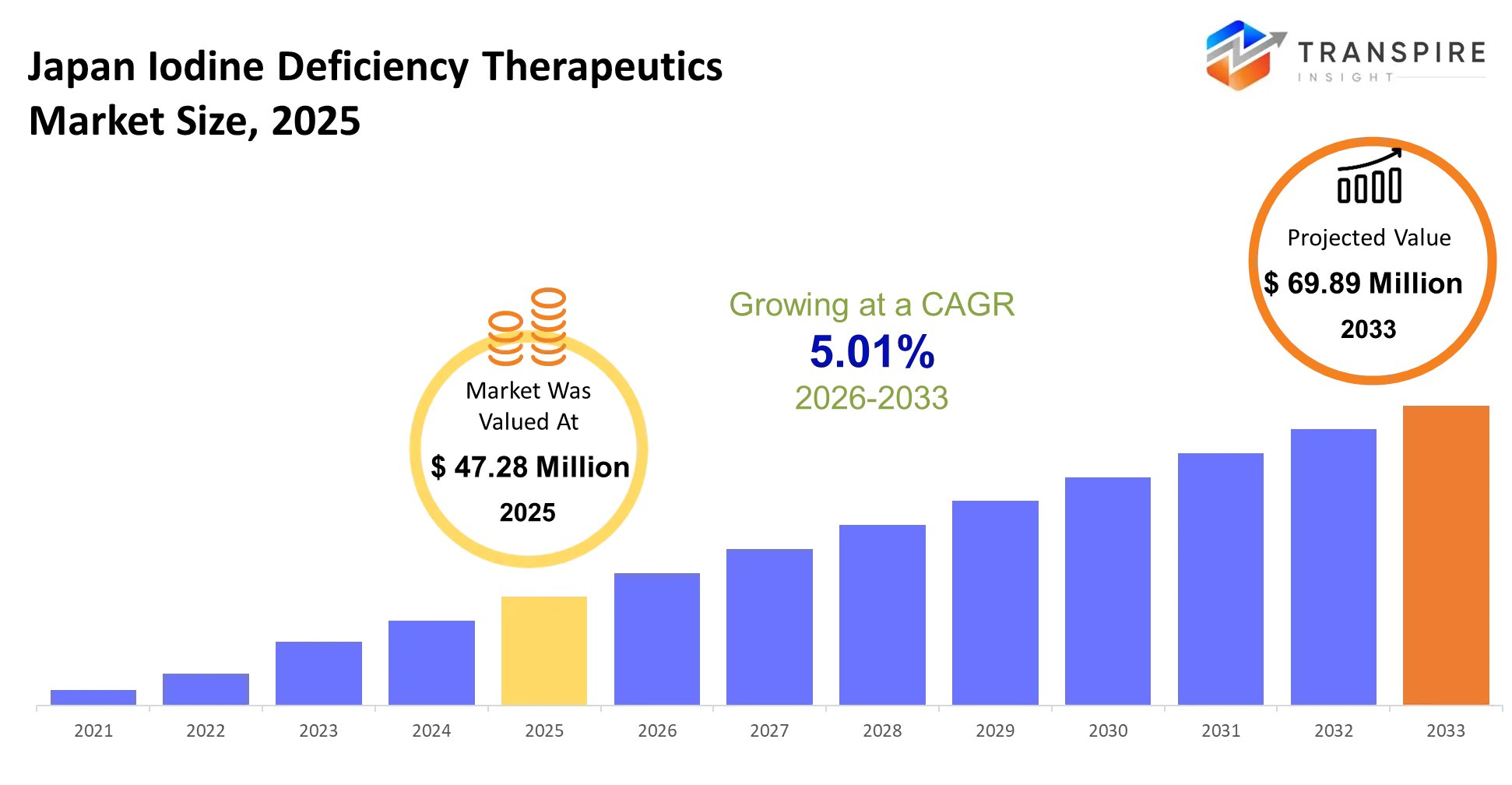
- Japan Iodine Deficiency Therapeutics Market Size 2025: USD 47.28 Million
- Japan Iodine Deficiency Therapeutics Market Size 2033: USD 69.89 Million
- Japan Iodine Deficiency Therapeutics Market CAGR: 5.01%
- Japan Iodine Deficiency Therapeutics Market Segments: By Type (Iodine Supplements, Hormone Therapy, Fortified Foods, Injectable Solutions, Others); By Application (Hypothyroidism, Goiter Treatment, Nutritional Deficiency, Pediatric Care, Preventive Healthcare, Others); By End-User (Hospitals, Clinics, Homecare, Public Health Programs, Pharmacies, Others); By Distribution (Hospital Pharmacies, Retail Pharmacies, Online Pharmacies, Government Supply, Others)
To learn more about this report,  Download Free Sample Report
Japan Iodine Deficiency Therapeutics Market Summary
The Japan Iodine Deficiency Therapeutics Market was valued at USD 47.28 Million in 2025. It is forecast to reach USD 69.89 Million by 2033. That is a CAGR of 5.01% over the period.
The Japan iodine deficiency therapeutics market establishes its essential function to control thyroid disorders through its ability to fix iodine deficits which result in hypothyroidism and developmental complications and metabolic dysfunction. The system delivers support to public health organizations and medical facilities and preventive health services through its distribution of iodine supplements and oral medicines and medical products which protect pregnant women and children and senior citizens from health risks.
The market has moved away from general nutritional supplements during the last three to five years to focus on specific medical treatments which use precision diagnostic tests and routine thyroid screening as their foundation. Japan has shifted its healthcare system toward preventive medicine and personalized treatment systems which have reinforced this transition.
The healthcare system faced a major disruption during the COVID-19 pandemic which revealed weaknesses in standard nutritional tracking methods and pushed organizations to develop telehealth solutions for endocrine medical exams. The improved diagnostic capabilities allowed doctors to discover more cases of subclinical thyroid dysfunction which resulted in as early as possible medical treatment. The process leads to broader usage of treatments which establishes more effective income sources through both medical prescriptions and specialized dietary products.
Key Market Insights
- Kanto controls the Japan Iodine Deficiency Therapeutics Market because it advanced healthcare facilities and its specialized endocrinology centers which enable the company to hold 38% market share for the 2025 period.
- Kansai emerges as the most rapidly expanding regional market which will experience strong growth until 2032 because of improved diagnostic testing access across the area.
- Hokkaido and Kyushu experience growing needs which result from increased access to preventive healthcare services and wider implementation of thyroid screening programs.
- The industry reaches its 2025 size through oral iodine supplement therapeutics which make up about 46% of the market because doctors prefer to treat patients at their first stage of illness.
- The market for prescription thyroid-support formulations stands as the second largest segment because these products help doctors manage patients with diagnosed deficiency disorders over extended time periods.
- The fastest-growing segment in digital prescription monitoring solutions will continue until 2032 because these solutions enhance patient adherence and optimize treatment outcomes.
- The demand for Iodine Deficiency Therapeutics in Japan will reach its highest point through 2025 because of the treatment requirements for hypothyroidism.
- The fastest-growing therapeutic application for maternal nutritional deficiency management exists because prenatal screening protocols have become more effective.
- The market distribution shows hospitals control about 49% of the market because they provide specialized diagnosis and complete endocrine treatment solutions.
- The end-user category of specialty endocrine clinics shows the highest growth rate because of increasing adoption of personalized thyroid care.
What are the Key Drivers, Restraints, and Opportunities in the Japan Iodine Deficiency Therapeutics Market?
The primary force accelerating the Japan iodine deficiency therapeutics market is the expansion of nationwide thyroid screening and preventive maternal health monitoring. The shift gained momentum after Japan established new endocrine testing requirements for prenatal and elderly patients who receive healthcare through its post-pandemic medical system. Physicians now have broader diagnostic tools which enable them to identify subclinical iodine-related thyroid disorders at earlier stages, thus allowing them to take action before patients reach severe hypothyroidism. The practice of starting treatment earlier has resulted in higher prescription rates which drive repeat purchases of medical treatments while creating consistent revenue streams for both hospital pharmacies and specialty endocrine clinics.
The most significant structural barrier is Japan’s uneven clinical identification of mild iodine deficiency due to inconsistent testing standards across primary care settings. The diagnosis process for iodine deficiency requires special biochemical assessments because patients present symptoms that develop over time and share similarities with various metabolic disorders. The process of fixing this diagnostic inconsistency requires multiple components which include training doctors to use proper testing methods and establishing standard laboratory practices for all testing facilities. The result is delayed therapeutic intervention, underreported patient volumes, and suppressed market revenue that would otherwise emerge from earlier treatment initiation.
The main opportunity for future growth exists through the development of digital endocrine monitoring systems which will work together with customized supplement programs. Japan's telehealth system development creates better opportunities to conduct remote thyroid function assessments while using artificial intelligence for dosage optimization. The digital follow-up systems which pilot in Tokyo and Osaka urban prefectures demonstrate their ability to boost patient adherence while creating ongoing treatment needs.
What Has the Impact of Artificial Intelligence Been on the Japan Iodine Deficiency Therapeutics Market?
The combination of artificial intelligence and digital health technologies in Japan presents new possibilities for iodine deficiency treatment because these technologies enhance diagnostic accuracy and enable customized patient care and effective management of patients throughout their treatment journey. Hospitals use AI-powered clinical decision support systems to streamline thyroid function testing by their endocrinology departments which automatically detect abnormal iodine-related biomarker results and provide quick treatment solutions. The systems automatically process laboratory data which leads to faster results while operating specialist care networks more effectively.
The predictive abilities of machine learning models increase when they study thyroid hormone patterns and food consumption records and patient medication compliance data to forecast medicine needs before patients experience health issues. The digital endocrine management systems that multiple urban healthcare networks use show quantifiable results which include reduced time for medical interventions and better patient compliance with medications and decreased instances of treatment cessation. Telehealth platforms use remote patient monitoring systems to help doctors maintain ongoing care for their patients, especially older adults who need constant monitoring of their iodine supplementation.
The technologies provide operational benefits because they enable earlier intervention and precise prescription optimization, which results in reduced hospital readmissions and improved resource management. The healthcare data systems of Japan face a fundamental challenge because their integration across clinical networks remains incomplete. The healthcare industry continues to use outdated systems, which restrict the amount of reliable real-world patient data needed to develop accurate predictive algorithms. The development of AI-powered endocrine treatment solutions remains delayed because their full market potential remains restricted.
Key Market Trends
- Hospital networks have increased their thyroid screening programs by almost 18% since 2022 which enables them to start treating patients at an earlier stage of their medical journey.
- Obstetric care providers across the country adopted standardized supplementation regimens after 2021 because of the improved protocols for prenatal iodine monitoring.
- Between 2023 and 2025 Takeda and Otsuka Pharmaceutical developed personalized endocrine formulations as their primary research focus to achieve better patient adherence during extended treatment periods.
- Tele-endocrinology consultations experienced significant growth after the pandemic because urban clinics achieved more than 25% better follow-up rates when compared to normal appointment procedures.
- The demand for medical treatments in Japan now focuses on ongoing maintenance therapy because of its aging population which previously needed immediate treatment for acute deficiencies.
- The implementation of AI-assisted thyroid biomarker interpretation in clinical laboratories started in 2024. This technology enabled faster diagnostic review processes while delivering more accurate treatment results.
- The pharmaceutical supply chain strategies underwent fundamental changes after the global disruptions which occurred in 2022.
- The pharmaceutical industry now prioritizes domestic sourcing agreements as its main strategy for iodine-based formulation production.
- Companies now compete through complete care systems which combine their product offerings with digital health tracking and doctor-supported patient compliance programs.
- The healthcare systems from Kansai and Chubu regions started increasing their investments in endocrine specialist clinics after 2023.
- This expansion effort helped reduce diagnostic access limitations which existed between their facilities and those of Tokyo-based institutions.
Japan Iodine Deficiency Therapeutics Market Segmentation
By Type :
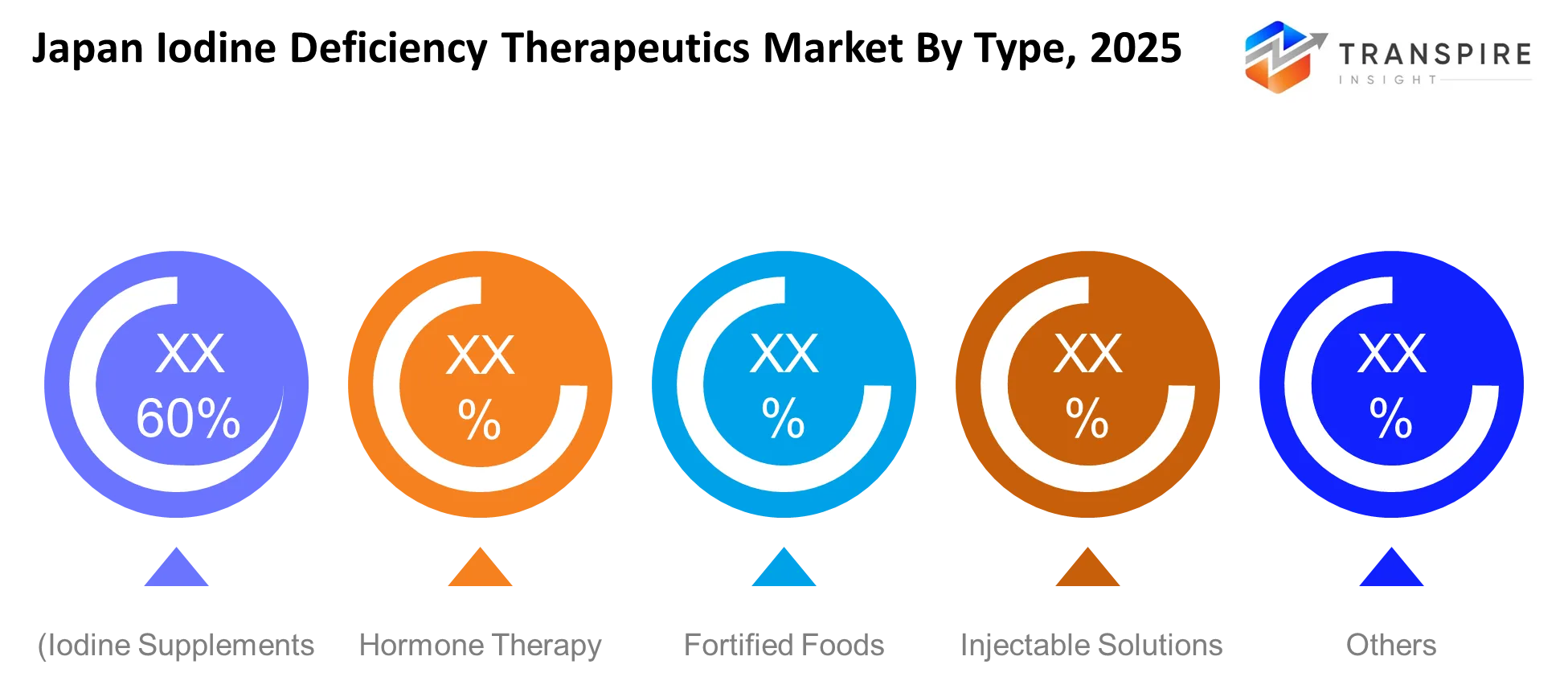
Iodine supplements stand as the main method to treat iodine deficiency problems which currently exist in Japan. The supplements serve as a daily intake solution which doctors recommend to patients who show early signs of iodine deficiency. Patients with severe thyroid problems require hormone therapy for their treatment because this method helps control their hormone production while preventing problems that occur from continuous hormone disruptions.
Fortified foods receive increasing attention as a preventive measure which addresses low iodine intake found in common dietary patterns. Hospitals use injectable solutions for their critical situations which require immediate medical intervention to treat patients. The treatment options include combination products which provide both preventive and therapeutic solutions that adapt to the patient's situation and the doctor's recommendations.
To learn more about this report, Download Free Sample Report
By Application :
The treatment of hypothyroidism serves as the main application area because iodine deficiency leads to decreased thyroid hormone production. The treatment process aims to achieve normal hormonal levels while decreasing symptoms of fatigue and weight loss and metabolic rate decrease. Goiter treatment also holds importance, as swelling in the thyroid gland is a visible and common effect of prolonged iodine shortage.
Nutritional deficiency applications focus on restoring iodine levels in populations with low dietary intake. Pediatric care is important as iodine supports growth and brain development in children. Preventive healthcare efforts focus on reducing future deficiency risks through early supplementation and awareness. The treatment of mixed thyroid disorders relies on iodine balance for supportive care in other applications.
By End-User :
The primary end-user group for hospitals exists because they require iodine disorder diagnosis and monitoring and treatment methods. Clinics play a vital role in both daily patient care and the identification of thyroid disorders. The two environments facilitate structured medical treatment and ongoing recovery assessment for patients who maintain stable health conditions.
Patients choose homecare because it allows them to handle their extended medical needs while following their healthcare providers' instructions. Public health programs aim to reach more people, particularly in regions where residents experience nutritional deficiencies. Pharmacies provide customers with straightforward access to supplementary products and prescription drugs, which helps them maintain their medication schedule. Diagnostic centers and community health facilities serve as additional end-user groups that provide screening services and enable early treatment.
By Distribution :
Hospital pharmacies use their facilities to deliver prescribed iodine-based treatments which are administered to patients during their hospital stays, while maintaining strict controls over treatment distribution. The main purpose of retail pharmacies in urban and semi-urban areas is to provide customers with essential items which they require for their daily activities. Online pharmacies are expanding because they provide users with easy access to home delivery services, which benefits customers who require long-term medication.
The government supply system functions as the primary channel for public health distribution, which secures product availability in both designated health programs and remote rural areas. Last-mile distribution for essential iodine deficiency treatments is supported by community health outlets which function as additional distribution channels.
What are the Key Use Cases Driving the Japan Iodine Deficiency Therapeutics Market?
The main function of the Japan iodine deficiency therapeutics market exists to manage hypothyroidism through hospital-based prescription therapies and iodine supplementation. The hospitals meet this requirement because they handle all diagnosed thyroid dysfunctions which need ongoing observation and established endocrine therapy methods. The growing field of applications now includes maternal nutritional needs and elder thyroid treatment through specialized endocrine clinics and health maintenance initiatives.
Current medical practice in obstetric departments now recommends iodine supplements for pregnant women while elderly care facilities include thyroid screening as standard practice to detect metabolic problems that develop with age and multiple health conditions. The development of new applications now uses digital therapeutic systems for therapy progress tracking and artificial intelligence-based systems for developing dietary modification plans.
Health systems with wearable technology are currently being assessed for their ability to monitor endocrine biomarker levels throughout the day. The Japanese healthcare system currently uses these applications which show potential in both preventive health measures and precision medicine initiatives.
|
Report Metrics |
Details |
|
Market size value in 2025 |
USD 47.28 Million |
|
Market size value in 2026 |
USD 49.65 Million |
|
Revenue forecast in 2033 |
USD 69.89 Million |
|
Growth rate |
CAGR of 5.01% from 2026 to 2033 |
|
Base year |
2025 |
|
Historical data |
2021 - 2024 |
|
Forecast period |
2026 - 2033 |
|
Report coverage |
Revenue forecast, competitive landscape, growth factors, and trends |
|
Country scope |
Japan |
|
Key company profiled |
Abbott, Pfizer, Merck, Novartis, Roche, Bayer, Sanofi, GSK, Takeda, Eli Lilly, Amgen, Johnson & Johnson, Teva, Cipla, Sun Pharma |
|
Customization scope |
Free report customization (country, regional & segment scope). Avail customized purchase options to meet your exact research needs. |
|
Report Segmentation |
By Type (Iodine Supplements, Hormone Therapy, Fortified Foods, Injectable Solutions, Others); By Application (Hypothyroidism, Goiter Treatment, Nutritional Deficiency, Pediatric Care, Preventive Healthcare, Others); By End-User (Hospitals, Clinics, Homecare, Public Health Programs, Pharmacies, Others); By Distribution (Hospital Pharmacies, Retail Pharmacies, Online Pharmacies, Government Supply, Others) |
Which Regions are Driving the Japan Iodine Deficiency Therapeutics Market Growth?
The Kanto region leads the Japanese market for iodine deficiency treatments because it has many tertiary hospitals and specialized endocrine clinics and its hospitals use cutting-edge diagnostic technologies. The healthcare system in Tokyo enables public and private medical facilities to conduct regular screening tests which help identify thyroid disorders at an early stage. The combination of strong government backing for preventive health initiatives and maternal nutrition initiatives results in continuous implementation of therapeutic practices. The combination of major pharmaceutical distributors and research institutions creates a stable supply chain which drives medical advancements through their ongoing research activities.
The second major region of Japan sits in Kansai which uses the healthcare systems of Osaka and Kyoto together with their established medical facilities. The Kanto region develops innovative medical solutions through research but the Kansai region achieves its success through medical professionals who follow clinical guidelines for national endocrine practices. Hospitals throughout the area utilize established treatment methods which create a consistent requirement for iodine-based medicines. Domestic healthcare organizations maintain long-term investments which lead to constant prescription rates that make Kansai a stable contributor to national revenue while it grows at a normal pace.
The recent improvements in medical facilities together with increased public funding for rural healthcare services have made Kyushu the most rapidly developing area in the country. The establishment of new healthcare facilities together with the implementation of digital health systems since 2023 has expanded diagnostic services to reach previously unserved regions. Maternal and elderly healthcare programs have received increased attention which has enabled earlier detection of iodine deficiency problems.The strengthening of healthcare availability between 2026 - 2033 will be brilliant opportunities for investors, for instance, those who wish to venture into the Kyushu market.
Who are the Key Players in the Japan Iodine Deficiency Therapeutics Market and How Do They Compete?
The Japan iodine deficiency therapeutics market shows a moderately consolidated competitive structure, led by global pharmaceutical incumbents and a few strong domestic players. The market competition depends more on clinical trust and hospital distribution access and endocrine diagnostic integration than it depends on pricing. Established firms maintain advantage through long-standing relationships with hospitals and endocrinology networks, while newer entrants attempt disruption through diagnostic-linked supplementation and digital adherence tools.
Takeda Pharmaceutical Company and Otsuka Pharmaceutical control domestic market operations through their extensive hospital network and their products focused on endocrine medicine. The company Takeda improves its market position through its development of medical treatments which match the specific demands of thyroid specialists in urban hospital systems. Otsuka establishes product differentiation through its development of nutrition-based therapeutic solutions which enable people to maintain stable iodine levels. The companies increase their market presence by partnering with hospital networks and research organizations that study metabolic and endocrine disorders.
Abbott Laboratories and Pfizer and Merck KGaA and Bayer AG compete through their diagnostic integration and specialty hormone therapies and maternal nutrition solutions. Abbott uses its diagnostic platforms to link testing procedures with its supplementation workflows, which helps patients follow their treatment plans. Merck KGaA develops thyroid hormone replacement therapies that deliver proven clinical effectiveness to support endocrine medical treatment. Bayer and Pfizer develop their business through maternal health initiatives and their worldwide endocrine treatment programs while they build partnerships with Japanese hospitals and preventive health systems.
Company List
- Abbott
- Pfizer
- Merck
- Novartis
- Roche
- Bayer
- Sanofi
- GSK
- Takeda
- Eli Lilly
- Amgen
- Johnson & Johnson
- Teva
- Cipla
- Sun Pharma
Recent Development News
In March 2026, Pharming Group N.V. announced approval of Joenja® (leniolisib) by Japan’s Ministry of Health, Labour and Welfare (MHLW). The oral PI3Kδ inhibitor was approved for activated PI3K delta syndrome (APDS), a rare immune disorder with metabolic and endocrine implications, reflecting Japan’s continued expansion of ultra-rare disease therapeutics that intersect with immune and thyroid-related pathways.
Source https://www.globenewswire.com/
In February 2026, Clinigen and Prolacta Bioscience secured Japanese regulatory approval for PreemieFort® Enteral Solution. The human milk-based nutritional therapy was approved following Japan’s JASMINE Phase III trial in very low birth weight infants, contributing to improved neonatal nutritional management where iodine and thyroid hormone balance are clinically important in early development.
Source https://www.prnewswire.com/
What Strategic Insights Define the Future of the Japan Iodine Deficiency Therapeutics Market?
The Japan iodine deficiency therapeutics market has started to move away from treating thyroid disorders through specific treatment sessions which follow established diagnosis methods. The upcoming 5–7 years will experience growth through primary care systems which utilize continuous endocrine monitoring together with telehealth services that support Japan's aging population and its increasing preventive maternal health initiatives. The transition will develop stronger prescription patterns which will connect therapeutic solutions directly to diagnostic systems and patient tracking networks.
The dependency on centralized hospital networks for medical diagnosis and prescription management creates a hidden risk. If reimbursement policies become more strict and patient volumes continue to move towards digital care, traditional hospital-based systems which generate revenue through patient services will experience a more rapid decline than people expect.
The regional healthcare systems of underserved prefectures in Kyushu and Tohoku can create new possibilities through the implementation of AI-assisted nutritional therapy platforms. These systems enable users to optimize their iodine intake through real-time monitoring which connects to their wearable health devices. Market participants should invest early in diagnostic-therapeutic integration partnerships with telehealth providers to secure long-term patient engagement and data-driven treatment continuity.
Japan Iodine Deficiency Therapeutics Market Report Segmentation
By Type
- Iodine Supplements
- Hormone Therapy
- Fortified Foods
- Injectable Solutions
By Application
- Hypothyroidism
- Goiter Treatment
- Nutritional Deficiency
- Pediatric Care
- Preventive Healthcare
By End-User
- Hospitals
- Clinics
- Homecare
- Public Health Programs
- Pharmacies
By Distribution
- Hospital Pharmacies
- Retail Pharmacies
- Online Pharmacies
- Government Supply
Frequently Asked Questions
Find quick answers to common questions.
The Japan Iodine Deficiency Therapeutics Market size is USD 69.89 Million in 2033.
Key segments for the Japan Iodine Deficiency Therapeutics Market are By Type (Iodine Supplements, Hormone Therapy, Fortified Foods, Injectable Solutions, Others); By Application (Hypothyroidism, Goiter Treatment, Nutritional Deficiency, Pediatric Care, Preventive Healthcare, Others); By End-User (Hospitals, Clinics, Homecare, Public Health Programs, Pharmacies, Others); By Distribution (Hospital Pharmacies, Retail Pharmacies, Online Pharmacies, Government Supply, Others).
Major Japan Iodine Deficiency Therapeutics Market players are Abbott, Pfizer, Merck, Novartis, Roche, Bayer, Sanofi, GSK, Takeda, Eli Lilly, Amgen, Johnson & Johnson, Teva, Cipla, Sun Pharma.
The Japan Iodine Deficiency Therapeutics Market size is USD 47.28 Million in 2025.
The Japan Iodine Deficiency Therapeutics Market CAGR is 5.01% from 2026 to 2033.
- Abbott
- Pfizer
- Merck
- Novartis
- Roche
- Bayer
- Sanofi
- GSK
- Takeda
- Eli Lilly
- Amgen
- Johnson & Johnson
- Teva
- Cipla
- Sun Pharma
Recently Published Reports
-
Apr 2026
Alopecia Treatment Market
Alopecia Treatment Market Size, Share & Analysis Report By Disease Type (Alopecia Areata, Cicatricial Alopecia, Traction Alopecia, Alopecia Totalis, Androgenetic Alopecia, Alopecia Universalis, and Other Disease Types), By Treatment Type (Topical Treatments, Oral Medications, Injectable Therapies, and Hair Transplantation), By Gender (Male, and Female), By Distribution Channel (Hospitals and Clinics, Retail Pharmacies, and Online Retailers), and Geography (North America, Europe, Asia-Pacific, Middle East and Africa, South and Central America), 2021 - 2031
-
Apr 2026
Diabetic Retinopathy Market
Diabetic Retinopathy Market Size, Share & Analysis Report By Type (Proliferative Diabetic Retinopathy, and Diabetic Macular Edema (DME)), By Treatment Type (Anti VEGF Drug, Steroid Implants, Laser Surgeries, and Vitrectomy), and Geography (North America, Europe, Asia-Pacific, Middle East and Africa, South and Central America), 2021 – 2031
-
Apr 2026
Electron Beam Accelerator Market
Electron Beam Accelerator Market Size, Share & Analysis Report By Power Range (Low and Mid Energy, High-Energy), By Technology (Medical & Food Industry, Industrial, and Scientific Research), By Application (Sterilization, Material Modification, Radiation Therapy, Research and Development, and Other), By End User (Medical and Healthcare, Food and Beverage, Packaging, Manufacturing, Research and Academia, and Other Industries), and Geography (North America, Europe, Asia-Pacific, Middle East and Africa, South and Central America), 2021 – 2031
-
Apr 2026
Electron Multiplying Charge-Coupled Device (EMCCD) Cameras Market
Electron Multiplying Charge-Coupled Device (EMCCD) Cameras Market Size, Share & Analysis Report By Type (Black and White Camera, and Color Camera), By Application (Laboratory, Industrial, and Other), and Geography (North America, Europe, Asia-Pacific, Middle East and Africa, South and Central America), 2021 – 2031