
Feb 06, 2026
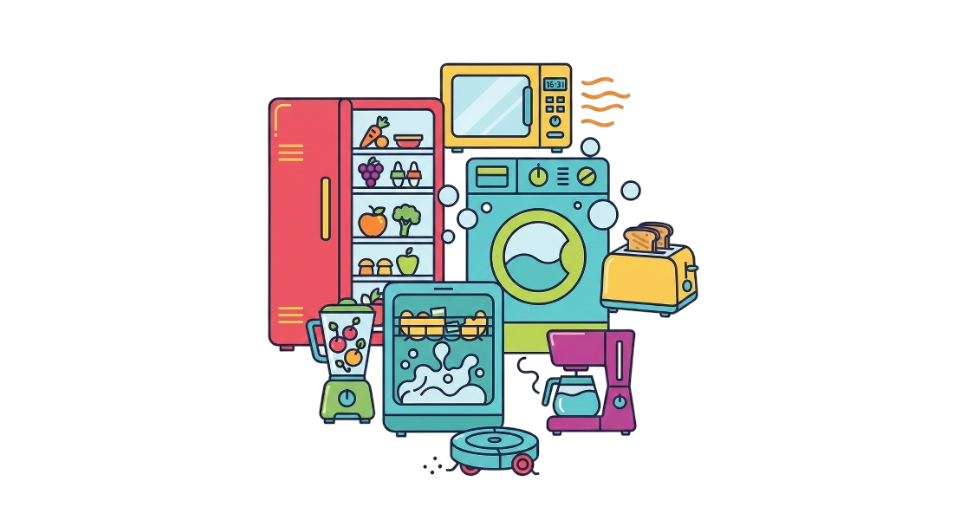
The report “Household Appliances Market By Appliance Category (Refrigerators, Washing Machines, Dishwashers, Air Conditioners, Cooking Ranges, Small Appliances, Small Kitchen Appliances, Cleaning Appliances, Personal Care Appliances), By Technology (Smart Appliances, Conventional Appliances), By Distribution Channel (Supermarkets & Hypermarkets, Specialty Stores, E-commerce / Online Retail, Others) and By End User (Residential, Commercial)” is expected to reach USD 900.00 billion by 2033, registering a CAGR of 6.70% from 2026 to 2033, according to a new report by Transpire Insight.
The market for home appliances is still growing steadily due to shifting customer preferences, increased urbanization, and the growing uptake of convenience-focused goods. Through automation, energy optimization, and multipurpose features, household appliances both large and small play a vital part in increasing home efficiency. Consumer preference for technologically improved products that improve overall living conditions and minimize physical labor is increasingly driving demand. In both developed and emerging nations, increasing electrification and easier access to contemporary retail channels are further boosting market penetration. Rapid technical improvements, especially in smart and linked products, are also helping the market. Traditional appliances have become sophisticated systems with remote monitoring and automatic operation thanks to the integration of IoT, artificial intelligence, and energy-efficient components. In order to satisfy consumer demands for performance and durability as well as regulatory requirements pertaining to energy consumption and sustainability, manufacturers are concentrating on innovation and product differentiation. These advancements are promoting the adoption of premium products and stimulating replacement demand in developed markets.
Demand patterns are being greatly impacted by growing middle-class populations and rising disposable incomes in Asia Pacific and other developing regions. For appliance makers, growing urban housing developments and residential building are generating steady prospects. Additionally, the desire for integrated and small appliances is being supported by the rising popularity of modular kitchens and contemporary house designs, especially in urban settings where space optimization is a crucial factor. Additionally, the growth of e-commerce platforms has changed consumer behavior by facilitating price comparison between businesses and increasing product accessibility. Global distribution networks are being strengthened by the expansion of organized retail and online platforms. As manufacturers continue to engage in digital integration, energy-efficient technologies, and localized manufacturing techniques to meet changing consumer demands and regional demand variances, the market outlook is still favorable.
The Refrigerators segment is projected to witness the highest CAGR in the Household Appliances during the forecast period.
According to Transpire Insight, Refrigerators continue to represent the leading segment within the appliance category due to their essential role in daily household operations and consistent replacement demand. Continuous technological developments that improve product performance while consuming less energy, like multi-door setups, inverter compressors, and improved cooling efficiency, boost this industry. Demand in both developed and emerging countries is further strengthened by growing consumption of packaged and perishable food products and growing awareness of food preservation. To meet changing customer demands, manufacturers are increasingly releasing models with sophisticated storage options and clever communication features.
Long-term expansion in the refrigeration sector is also being supported by urbanization and shifting eating patterns. First-time purchases are being encouraged by growing residential infrastructure and rising household incomes in emerging nations, whilst product upgrades and premiumization tendencies are the main drivers in mature markets. The use of modern refrigeration systems is also being accelerated by energy efficiency rules in several locations. It is anticipated that refrigerators will continue to hold their leading market share in the home appliance industry as consumers place a higher priority on convenience, sustainability, and long-term operating savings.
The Smart Appliances segment is projected to witness the highest CAGR in the Household Appliances during the forecast period.
As more people embrace automation-driven solutions and linked home ecosystems, smart appliances are becoming the most popular technological category. Appliances may maximize energy use and boost operational efficiency by integrating IoT connectivity, artificial intelligence, and remote monitoring features. Appliances that provide convenience through mobile control, predictive maintenance, and customized consumption settings are drawing in more and more customers. As a way to differentiate themselves from competitors, manufacturers are being encouraged by this technological transition to broaden their portfolios of smart products and improve software-driven features.
Adoption in both established and emerging nations is being aided by the expanding availability of high-speed internet infrastructure and the growing penetration of smart homes. Smart appliances are becoming more affordable for people of all income levels due to falling component costs and increased consumer familiarity with digital technologies. Long-term demand is further strengthened by regulatory emphasis on energy-efficient products, which is consistent with smart appliance capabilities. Smart appliances are anticipated to continue to be a major market development driver as connection becomes a regular feature rather than a premium offering.
The E-commerce / Online Retail segment is projected to witness the highest CAGR in the Household Appliances during the forecast period.
According to Transpire Insight, E-commerce and online retail have emerged as the leading distribution channel due to shifting consumer purchasing behavior and increasing digital adoption. Online platforms give customers access to comprehensive product details, affordable prices, and practical home delivery choices, all of which have a big impact on purchasing decisions. Purchasing trust is increased when product comparisons and user reviews are available, especially for minor appliances and replacement purchases. In order to improve direct-to-consumer interaction and broaden their geographic reach outside conventional retail networks, manufacturers are increasingly utilizing digital platforms.
Improvements in logistics infrastructure and flexible financing alternatives made possible by digital platforms contribute to the quick expansion of online shopping. Online sales volumes are still driven by seasonal discounts, bundled offers, and promotional efforts. The competitive landscape is changing due to the ease and accessibility of e-commerce channels, even while physical retail is still important for expensive purchases that need demonstrations. Online retail is anticipated to continue gaining traction in the household appliance distribution ecosystem as digital penetration rises internationally.
The Residential segment is projected to witness the highest CAGR in the Household Appliances during the forecast period.
The market for household appliances is dominated by the residential segment because appliances are necessary for everyday household tasks. Adoption of major and small appliance categories is still being driven by rising household formation, urban migration, and growing desire for convenience-oriented living solutions. Customers are spending more money on time-saving and efficient appliances, especially in dual-income households where automation is essential. Sustained growth in residential applications is also greatly influenced by product upgrades and replacement demand.
The adoption of contemporary appliances with cutting-edge features is also being aided by growing consumer awareness of sustainability and energy efficiency. Purchase decisions are increasingly influenced by smart home integration and aesthetic criteria, particularly in urban house complexes. Volume expansion is still supported by the expansion of residential building and remodeling projects in emerging economies. The residential segment is anticipated to continue to be the key source of income for the home appliances market as lifestyle modernization advances internationally.
The North America region is projected to witness the highest CAGR in the Household Appliances during the forecast period.
North America represents a mature yet highly influential region in the household appliances market, supported by high appliance penetration rates, strong consumer purchasing power, and consistent replacement demand. Because of its early adoption of energy-efficient and technologically advanced appliances, the United States continues to be the largest contributor to regional revenue. Demand for high-end items is being driven by the region's consumers' growing preference for smart and connected appliances that work with larger home automation ecosystems. Furthermore, despite market maturity, stringent energy efficiency laws and sustainability programs continue to promote product updates, ensuring consistent market expansion.
Additionally, robust e-commerce penetration and a well-established retail infrastructure support effective product distribution throughout the region. Manufacturers profit from steady demand brought about by modernization of existing houses and home improvement projects. The market's competitive dynamics are strengthened by the existence of top international appliance manufacturers and continuous investment in product innovation. By increasing residential building and enhancing consumer access to contemporary appliances, Canada and Mexico also support regional growth, solidifying North America's standing as a major source of income in the worldwide market for household appliances.
Key Players
The top 15 players in the Household Appliances market include Haier Smart Home Co., Ltd., Whirlpool Corporation, LG Electronics Inc., Samsung Electronics Co., Ltd., BSH Hausgeräte GmbH, Electrolux AB, Midea Group Co., Ltd., Panasonic Holdings Corporation, Hitachi Global Life Solutions, Inc., Arçelik A.?., Miele & Cie. KG, GE Appliances (Haier Group), Daikin Industries, Ltd., Sharp Corporation, and Godrej Appliances.
Drop us an email at:
Call us on:
+91 7666513636

 inquiry@transpireinsight.com
 APAC:+91 7666513636
 Address





