
Feb 06, 2026
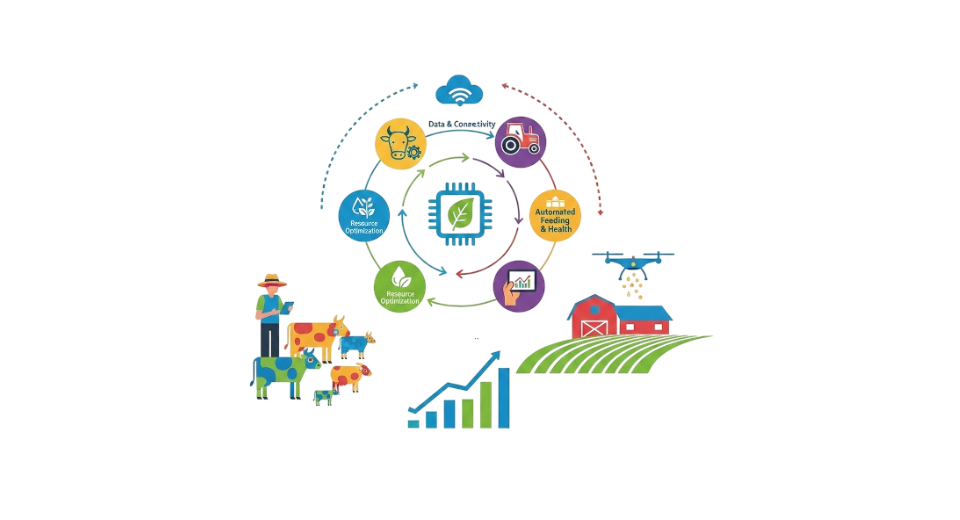
The report “Precision Livestock Farming Market By Technology (Identification & Tracking Systems, Milking Automation Systems, Precision Feeding Systems, Sensors & Monitoring Devices, Software Platforms), By Application (Feeding Management, Milking / Milk Harvesting, Animal Health & Behavior Monitoring, Reproduction / Breeding Management, Environmental Monitoring, Other Support Functions), By Animal Type (Dairy Cattle, Beef Cattle, Swine, Poultry, Others) and By End-Use (Dairy Farms, Swine Farms, Poultry Farms, Other Farm Types)” is expected to reach USD 14.90 billion by 2033, registering a CAGR of 14.40% from 2026 to 2033, according to a new report by Transpire Insight.
The market for precision livestock farming is an example of how cutting-edge digital technologies are being incorporated into livestock management to improve animal welfare, production, and operational effectiveness. Automated systems, sensors, analytics platforms, and software solutions that facilitate ongoing monitoring and data-driven decision-making throughout livestock operations are all included in this industry. The need to increase output efficiency in the face of growing herd sizes, labor limitations, and rising feed costs has a significant impact on market demand. Precision technology are being used by livestock farmers more and more to monitor animal health, optimize feeding schedules, and lower production variability while adhering to traceability and animal welfare regulations.
Real-time insights and predictive management are made possible by the rapid adoption of IoT, AI, and cloud computing technologies. These skills have a direct impact on profitability and sustainability outcomes by enabling farms to detect diseases early, lower death rates, and increase reproductive efficiency. Furthermore, market expansion is being supported by regulatory pressure pertaining to food safety, emissions reduction, and cattle welfare. The market is positioned for sustainable growth in both developed and emerging agricultural countries as precision livestock farming technologies are increasingly seen as crucial infrastructure investments.
The Milking Automation Systems segment is projected to witness the highest CAGR in the Precision Livestock Farming during the forecast period.
According to Transpire Insight, Milking automation systems represent the most prominent technological segment due to its immediate effect on productivity, labor efficiency, and milk quality consistency. These techniques lessen reliance on physical labor, which has grown more expensive and scarce, especially in large-scale dairy farms. Improved animal welfare, real-time yield tracking, and optimal milking frequency are all made possible by automated milking, which raises farm productivity overall. The incorporation of sensors and analytics that track cow behavior during milking, milk content, and udder health further supports adoption. This data-driven strategy enhances hygiene compliance, reduces downtime, and promotes preventive health management. Milking automation technologies continue to provide a high return on investment as dairy farms grow in size.
Additionally, the segment benefits from ongoing innovation, such as adaptive milking controls, AI-enabled teat recognition, and robotic arms. These developments strengthen milking automation's position as a key technology in precision livestock farming ecosystems by improving scalability and reliability.
The Animal Health & Behavior Monitoring segment is projected to witness the highest CAGR in the Precision Livestock Farming during the forecast period.
Due to its vital significance in lowering disease-related losses and enhancing animal welfare, animal health and behavior monitoring ranks as the top application area. Constant observation of movement, activity, temperature, and rumination allows for the early identification of health abnormalities and prompt intervention before situations worsen. In high-density cattle areas, where disease propagation can have a major impact on productivity, this application is very beneficial. These technologies are crucial for commercial operations because they enable predictive health management, which lowers mortality rates, lowers veterinarian expenses, and increases herd longevity overall.
Adoption is additionally supported by a growing regulatory concern on animal welfare. Health monitoring systems are becoming a crucial part of contemporary livestock management practices as producers depend more on them to show compliance and keep traceability records.
The Dairy Cattle segment is projected to witness the highest CAGR in the Precision Livestock Farming during the forecast period.
According to Transpire Insight, The adoption of precision livestock farming is dominated by dairy cattle because of their continuous production cycles and demanding management needs. Dairy operations are especially well-suited to automation and precision monitoring systems due to their high sensitivity to environmental, nutritional, and health factors. By reducing calving intervals, increasing feeding efficiency, and improving milk yield consistency, technology investments in dairy cattle result in quantifiable productivity improvements. Higher capital expenditures are justified by these advantages, particularly in big commercial farms that prioritize long-term operational improvement.
Adoption of automated and sensor-based solutions is also prompted by the strict quality and cleanliness requirements that dairy cattle operations must meet. Precision technologies continue to promote cost control and competitive differentiation as long as the demand for dairy products worldwide stays steady.
The Dairy Farms segment is projected to witness the highest CAGR in the Precision Livestock Farming during the forecast period.
Due to their early adoption of automation and analytics, dairy farms are the most sophisticated end-use segment. Precision livestock farming methods are extremely beneficial because continuous milk production necessitates accurate monitoring of animal health, feeding, and milking efficiency. Adoption on dairy farms is further accelerated by labor dependency and operational complexity. Farms can expand operations without experiencing a corresponding rise in labor expenses thanks to automated technology that decrease manual intervention while enhancing process consistency.
Precision livestock farming technologies are becoming essential to operational planning, compliance management, and long-term sustainability programs as dairy farms move more and more toward integrated digital ecosystems.
The North America region is projected to witness the highest CAGR in the Precision Livestock Farming during the forecast period.
North America leads the Precision Livestock Farming market due to high levels of farm mechanization and early technology adoption. With the help of huge commercial dairy, swine, and poultry businesses that place a high value on automation and data-driven decision-making, the US leads the region in demand. Advanced livestock solutions may be quickly integrated because to a solid digital infrastructure, finance availability, and a well-established technology ecosystem. The region's market maturity is further supported by regulations that place a strong emphasis on animal care and traceability.
By gradually modernizing cattle methods, Canada and Mexico support regional development. Precision livestock farming technologies are in high demand throughout North America due to growing export-oriented production and efficiency demands, even if adoption rates vary.
Key Players
The top 15 players in the Precision Livestock Farming market include DeLaval, GEA Group, Lely International, Afimilk Ltd., Allflex Livestock Intelligence, BouMatic, Dairymaster, Fancom BV, Fullwood Packo, Connecterra, Cainthus, Zoetis Inc., Merck & Co., Inc., CowManager, and HerdDogg.
Drop us an email at:
Call us on:
+91 7666513636

 inquiry@transpireinsight.com
 APAC:+91 7666513636
 Address





