
Feb 06, 2026
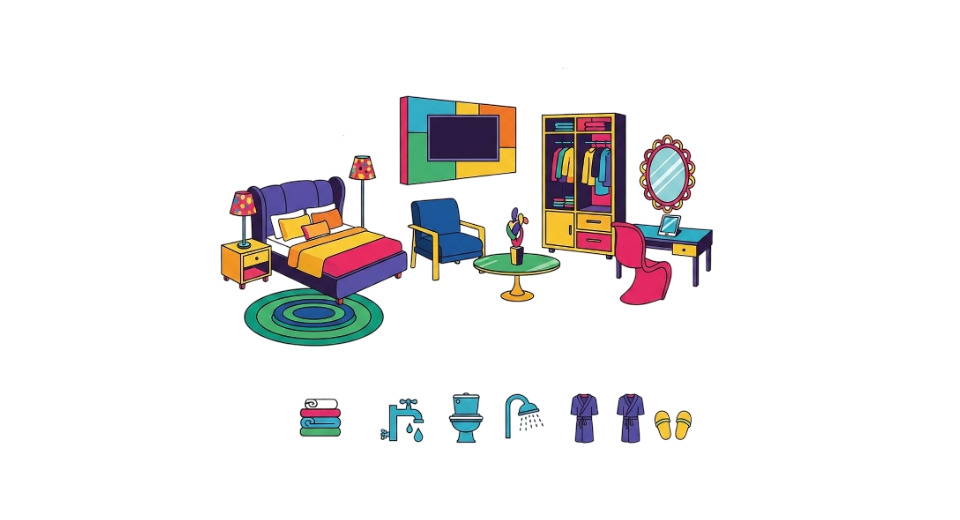
The report “Hotel Furniture, Fixtures and Equipment Market By Product Type (Furniture, Fixtures, Equipment, Soft Goods, Others), By Material (Wood, Metal, Glass, Plastic, Upholstery, Composite Materials), By Functional Area (Guest Rooms, Lobbies & Reception, Restaurants & Bars, Outdoor Areas, Back-of-House / Service Areas, Conference & Banquet Spaces) and By End-Use Industry (Luxury Hotels, Premium Hotels, Mid-scale Hotels, Budget Hotels, Boutique Hotels, Resorts & Spas)” is expected to reach USD 12.30 billion by 2033, registering a CAGR of 9.50% from 2026 to 2033, according to a new report by Transpire Insight.
The market for hotel furniture, fixtures, and equipment, which includes all moveable and fixed assets needed to outfit, equip, and run hotel buildings, is an essential part of the worldwide hospitality infrastructure. Globally, the market supports both new hotel construction and continuous renovations at luxury, premium, mid-scale and low-cost establishments. Demand is still closely correlated with brand-driven renovation cycles, hotel occupancy rates, and tourism growth. The growth of international hotel chains in emerging nations, rising investments in experiential hospitality, and the revival of international tourism are the main drivers of industry expansion. Hotels are spending more on long-lasting, design focused and multipurpose FF&E solutions as a result of their increased emphasis on interior distinction, guest comfort and operational efficiency. As operators update interiors to satisfy changing customer expectations, renovation initiatives continue to make a significant contribution. Procurement practices are increasingly being influenced by sustainability and regulatory compliance. Materials that comply with safety and fire regulations have a longer lifespan, and have less of an impact on the environment are being given priority by hotel operators. In response, manufacturers are supporting long-term value development through innovation in eco-certified products, modular designs, and engineered materials.
All things considered, the market exhibits steady growth prospects, bolstered by recurrent replacement demand, growing construction activity in the Middle East and Asia Pacific, and steady renovation investments in developed countries like North America and Europe.
The Furniture segment is projected to witness the highest CAGR in the Hotel Furniture, Fixtures and Equipment during the forecast period.
According to Transpire Insight, Due to its widespread use in conference rooms, restaurants, lobbies, and guest rooms, furniture makes up the largest and most expensive section of the hotel furniture, fixtures, and equipment market. Furniture is positioned as the main source of market revenue because to high unit volumes per property, regular replacement cycles caused by wear, brand standards and design changes. Furniture that strikes a mix between comfort, durability, and aesthetic appeal is becoming more and more important to hotel operators. The increasing focus on customisation and adaptability increases demand for hotel furnishings. Companies look for adaptable furniture options that preserve local design characteristics while being standardized across facilities. Sustainability factors, such as recyclable materials and certified wood sourcing are also affecting procurement choices, especially for owners of upscale and luxury hotels.
Strategically speaking, furniture suppliers gain from long-term agreements linked to brand launches and renovation initiatives. The dominance of furniture in the FF&E market as a whole is being strengthened by characteristics including simplicity of maintenance, alignment with brand aesthetics, and optimization of lifecycle costs.
The Wood segment is projected to witness the highest CAGR in the Hotel Furniture, Fixtures and Equipment during the forecast period.
Wood remains the most widely adopted material in hotel FF&E applications due to its versatility, aesthetic appeal, and compatibility with diverse interior design concepts. It is often utilized in chairs, casegoods, storage units and decorative fixtures, especially in public areas and guest rooms. The material's prominent presence in the luxury and mid-scale hotel segments is supported by its capacity to communicate warmth and superior quality. The market is changing as more engineered and composite wood products that improve durability while lowering cost and environmental effect are adopted. Particularly for global hotel chains operating under stringent ESG guidelines, sustainability certifications and ethical sourcing have become essential prerequisites. Strategies for material innovation and supplier selection are changing as a result of these issues.
Wood's capacity to respond to the needs of refurbishing and modification further solidifies its dominance. Wood-based FF&E solutions continue to offer design flexibility, cost effectiveness, and long-term value, sustaining strong demand across global markets as hotels regularly upgrade interiors to stay competitive.
The Guest Rooms segment is projected to witness the highest CAGR in the Hotel Furniture, Fixtures and Equipment during the forecast period.
According to Transpire Insight, Guest rooms account for the highest share of FF&E demand due to the sheer scale of deployment and the central role they play in guest experience. This functional sector is the main source of procurement cost since every hotel property needs a significant amount of furniture, fittings, soft goods, and equipment per room. In comparison to other locations, replacement cycles are likewise shorter. In order to improve comfort, usefulness, and space efficiency, hotels are putting more and more emphasis on guest room layout optimization. This has increased demand for integrated storage solutions, ergonomic designs, and smart furniture. As hotels look for ways to stand out, technology-enabled FF&E such as smart lighting and furniture that can be charged is becoming more popular.
From a market perspective, guest room FF&E demand, which is bolstered by both new building and refurbishment activity, provides providers with steady revenue visibility. Guest rooms continue to be the most prominent functional segment, with brand standards, durability requirements, and lifetime performance remaining crucial decision drivers.
The Luxury Hotels segment is projected to witness the highest CAGR in the Hotel Furniture, Fixtures and Equipment during the forecast period.
Luxury hotels represent the highest value segment within the Hotel Furniture, Fixtures, and Equipment market due to elevated per-room spending and a strong focus on bespoke design. In order to provide unique visitor experiences and strengthen brand positioning, these facilities place a strong emphasis on high-end fittings, custom-built furnishings and luxury materials. As premium businesses constantly update interiors to match changing design trends and guest expectations, frequent refurbishment cycles further encourage continued demand. Average order values are rising as premium FF&E criteria increasingly incorporate sustainability, workmanship and technological integration.
Despite making up a smaller part of all hotels, luxury hotels are strategically important due to their disproportionate spending influence. Higher margins, enduring relationships, and exposure to flagship projects are advantages for suppliers catering to this market sector, which enhances the luxury category's impact on general market dynamics.
The North America region is projected to witness the highest CAGR in the Hotel Furniture, Fixtures and Equipment during the forecast period.
North America remains a leading regional market for hotel FF&E, supported by a large installed base of hotels and high refurbishment frequency. Because of its strong brand recognition, uniform renovation cycles, and steady investment in interior modifications, the United States leads regional demand. One of the biggest growth drivers is still replacement demand.
The demand for cutting-edge FF&E solutions is being driven by the region's hotels' growing emphasis on sustainability, smart room integration, and experiential design. Brand-led procurement strategies reinforce steady long-term demand patterns by favoring suppliers who provide scalability, compliance, and lifecycle efficiency.
From a regional standpoint, North America's frequent remodeling activity offers manufacturers steady cash streams. Through targeted upmarket development, Canada and Mexico provide modest growth, enhancing the region's standing in the international marketplace.
Key Players
The top 15 players in the Hotel Furniture, Fixtures and Equipment market include Kimball International, Steelcase Inc., Herman Miller, Ashley Furniture Industries, HNI Corporation, Haworth Inc., Knoll Inc., Andreu World, Godrej Interio, Groupe Lacasse, Bernhardt Furniture Company, Artitalia Group, Durian Industries, Elcasa Group, and IKEA.
Drop us an email at:
Call us on:
+91 7666513636

 inquiry@transpireinsight.com
 APAC:+91 7666513636
 Address





