

United States Fluvoxamine Market Size & Forecast:
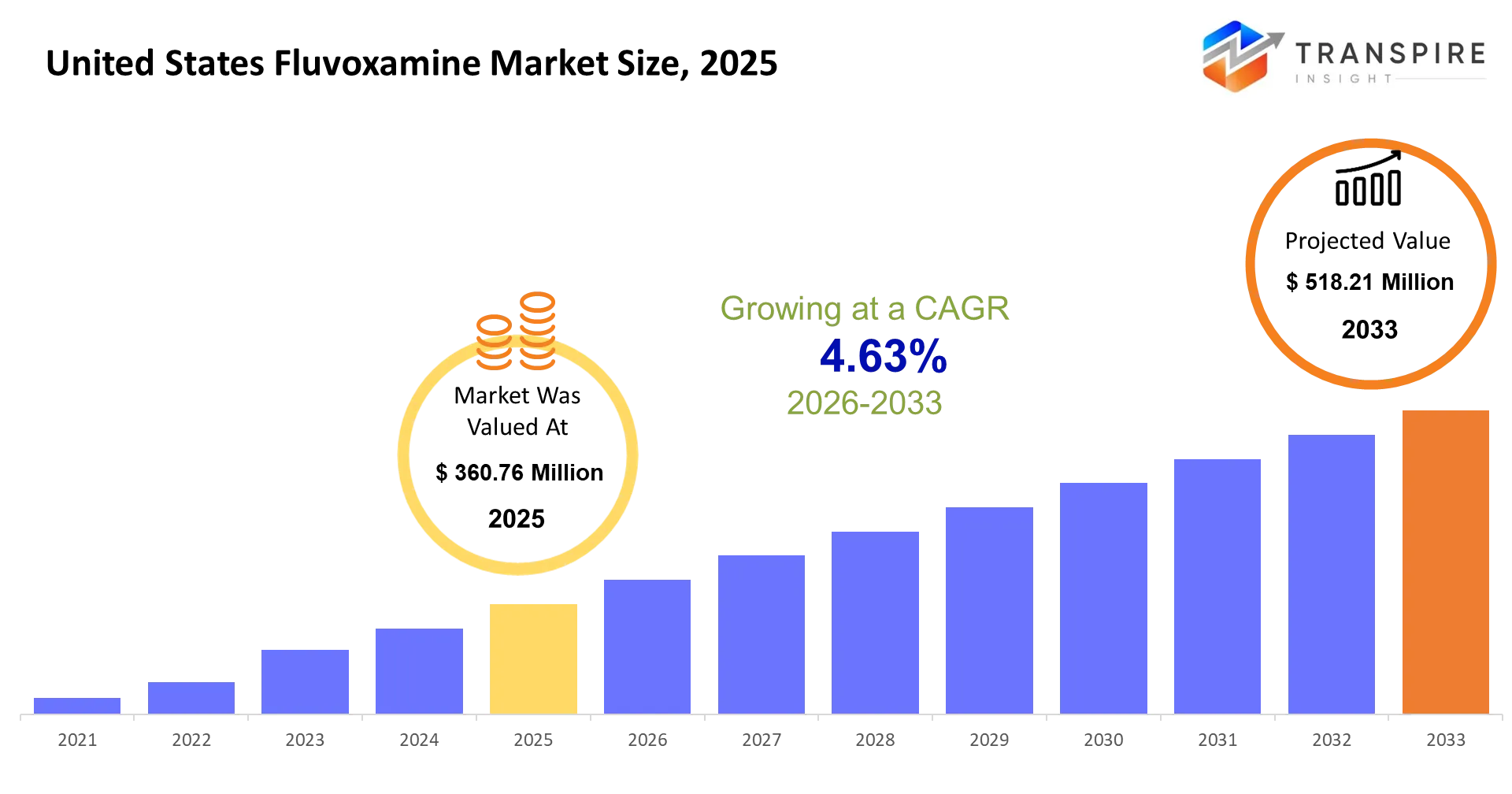
- United States Fluvoxamine Market Size 2025: USD 360.76 Million
- United States Fluvoxamine Market Size 2033: USD 518.21 MillionÂ
- United States Fluvoxamine Market CAGR: 4.63%
- United States Fluvoxamine Market Segments:Â By Type (Immediate Release, Extended Release, Tablets, Capsules, Generic, Others), By Application (Depression, OCD, Anxiety Disorders, PTSD, Insomnia, Others), By End-User (Hospitals, Clinics, Pharmacies, Homecare, Others), By Distribution (Hospital Pharmacy, Retail Pharmacy, Online Pharmacy, Specialty Stores, Others).
To learn more about this report,  Download Free Sample Report
United States Fluvoxamine Market Summary:Â
The United States Fluvoxamine Market size is estimated at USD 360.76 Million in 2025 and is anticipated to reach USD 518.21 Million by 2033, growing at a CAGR of 4.63% from 2026 to 2033. The United States Fluvoxamine market seems to play a practical role in keeping treatment pathways kinda stable for obsessive-compulsive disorder, anxiety related conditions, and depressive symptoms , across outpatient psychiatric care and also primary care settings. Hospitals, telepsychiatry providers, and retail pharmacy networks tend to use fluvoxamine as a cost-effective selective serotonin reuptake inhibitor, that helps support longer-term mental health management while also lowering relapse driven healthcare use, and the whole cycle feels more predictable.
Over the last 3–5 years, the market moved away from only normal prescription growth and leaned more into digitally enabled behavioral health integration. More telehealth access and insurer backing for remote psychiatric consultations opened new patient entry points, especially among adolescents and working age adults . One big trigger happened in the COVID-19 stretch , when the numbers for mental health cases climbed, and clinicians kind of rechecked the antidepressant stock they already had, mostly so continuity of care stays intact, even with supply ups and downs. That disruption led providers to diversify sourcing and lean toward established generic molecules with steadier reimbursement profiles. So, the revenue growth story is increasingly about prescription persistence, wider care accessibility, and improved adherence to treatment , not just raw volume expansion.
Key Market Insights
- The Northeast region sort of dominated the United States Fluvoxamine Market with around 34% market share in 2025, mainly because there’s a dense psychiatric care setup and a steady clinician base.
- The Southern United States is showing the fastest pace through 2032, fueled by telepsychiatry network expansion, plus better insurance penetration— that part matters.
- Urban healthcare systems keep pulling in notable prescription volumes because integrated behavioral health programs end up boosting long-term antidepressant adherence. which is kinda the goal for sustained outcomes.
- Generic fluvoxamine tablets were the main driver, they held roughly 72% of industry share in 2025 due to cost-efficient prescribing patterns.
- Immediate-release formulations still held the second-largest market share, since clinicians tend to prefer flexible dosage adjustments for outpatient psychiatric management.
- Extended prescription refill programs are now becoming the quickest-growing segment through 2030, supporting patient staying power and also helping steady pharmacy revenue.
- Retail pharmacy distribution channels grabbed a significant chunk of market share because chronic psychiatric therapies depend on accessible nationwide dispensing infrastructure.
- For applications, obsessive-compulsive disorder treatment led the demand, taking nearly 46% share in 2025 because established clinical prescribing guidelines are already in place.
- Anxiety disorder management is the fastest-growing application track too, since telehealth consultations are expanding mental healthcare accessibility for people in underserved regions.
- Off-label psychiatric treatment use cases are also picking up, especially in specialized behavioral health clinics where complex mood disorder management is common.
- On the end-user side, retail pharmacies dominated with over 48% market share in 2025, largely driven by repeating monthly prescription refill cycles.
What are the Key Drivers, Restraints, and Opportunities in the United States Fluvoxamine Market?
The strongest growth driver in the United States Fluvoxamine Market is, honestly, the fast integration of telepsychiatry into mainstream behavioral healthcare delivery. That shift really took off after COVID-19 emergency reimbursement rules expanded insurance coverage for remote psychiatric consults , and also for digital prescription management. As virtual mental health platforms scaled across the country physicians gained quicker access to patients who needed ongoing anxiety and obsessive compulsive disorder treatment. So yeah, that change ended up boosting prescription continuity and making refills happen more often , which then supported recurring pharmacy revenue and helped patients stay longer in outpatient treatment programs. Big retail pharmacy chains together with digital care providers also streamlined medication fulfillment workflows, which lowered treatment interruptions and backed higher prescription conversion volumes.
Meanwhile, the market’s biggest structural obstacle is pretty much intense generic pricing pressure along with fragmented patterns of psychiatric adherence. Fluvoxamine sits inside a mature antidepressant category, where pharmacy benefit managers and insurers push aggressively for low reimbursement rates. Manufacturers get stuck with limited pricing flexibility, even as production , compliance , and distribution costs keep climbing. At the same time psychiatric therapies are frequently stopped— sometimes because of side effects, sometimes because dosage adjustments are needed, and sometimes simply due to inconsistent follow up care. Put together, this mix suppresses long term revenue growth and it also discourages meaningful branded investment aimed at product differentiation.
A big future chance is in AI-powered behavioral health platforms, that kind of stitch together digital screening, prescription surveillance, and customized treatment tuning. Health systems across places like California and Texas are putting serious money into an integrated virtual mental health setup, even if it sometimes feels a bit experimental at first. With these platforms, medication adherence can get better via automatic check ins, ongoing symptom loging, and early relapse forecasting. In turn that can build more dependable, long term prescription steadiness for fluvoxamine prescribers and the pharmacy networks that support them, which is where a lot of the real value ends up showing up.
What Has the Impact of Artificial Intelligence Been on the United States Fluvoxamine Market?
Artificial intelligence and newer digital technologies are kinda reshaping the United States Fluvoxamine Market, mainly by making psychiatric treatment management more “tight†and trackable. They also support prescription adherence monitoring, and even nudge pharmacy workflow automation along. In practice, healthcare providers are using AI powered clinical decision support systems more often, so they can look through patient histories, symptom movement, and medication response signals, before any antidepressant plan gets adjusted. Digital behavioral health platforms go further by automating refill nudges, patient engagement workflows and remote monitoring routines, which in the end cuts down on missed follow ups and helps keep treatment continuity steadier across outpatient care networks.
Machine learning models are now getting built into telepsychiatry platforms too, and they are used to forecast relapse risk, spot early hints of medication nonadherence, and fine tune dosing guidance based on patient specific behavioral data. Some healthcare systems say they see better appointment retention and lower discontinuation rates once they deploy predictive analytics inside mental health programs, not just in theory but in day to day operations. Then there are automated pharmacy fulfillment tools and AI assisted inventory forecasting that help retail chains reduce stock gaps, and speed up prescription turnaround, especially for high volume generic antidepressants.
Still, AI adoption has a key hiccup. A lot of psychiatric data remains fragmented across hospitals, pharmacies, and telehealth providers, and that makes model accuracy uneven, plus interoperability becomes harder. On top of that, high integration expenses and strict patient privacy regulations slow down broader rollout, particularly for smaller behavioral healthcare providers that don’t have the same level of digital infrastructure investment.
Key Market TrendsÂ
- Since 2021, the telepsychiatry platforms sort of ramped up fluvoxamine prescription access, by more than 30¬ross rural outpatient mental health networks in the Southern United States.
- Around the same time, Retail pharmacy chains started leaning into automated refill systems after COVID-19 disruptions made it really clear that the manual psychiatric prescription management workflows had some weak spots.
- Generic manufacturers like Teva Pharmaceutical Industries and Viatris started bolstering domestic inventory buffers between 2022 and 2025, basically to prevent antidepressant supply interruptions from turning into full on shortages.
- Behavioral health providers meanwhile, increasingly moved toward AI-assisted adherence monitoring tools, which cut down missed psychiatric follow ups and helped improve longer-term prescription persistence rates.
- Since 2020, insurers expanded reimbursement for virtual psychiatric consultations which sped up antidepressant treatment adoption for working age patient groups, pretty quickly.
- Hospital-affiliated psychiatric programs also shifted, toward integrated digital treatment tracking systems, improving medication compliance while reducing emergency mental health readmissions.
- In California and Texas, regional healthcare systems increased their investments in AI-enabled behavioral health infrastructure to optimize antidepressant treatment planning ,and also patient retention.
- Finally, independent pharmacies lost prescription share between 2021 and 2025, mostly because national retail chains strengthened digital fulfillment and built out nationwide delivery capabilities, which made it harder to compete.
United States Fluvoxamine Market Segmentation
By Type
Immediate-release tablets kind of take the lead within that segment , because psychiatric providers (it seems) like being able to tweak dosage in real life, especially during long-term management of anxiety and obsessive-compulsive disorder. Generic formulations end up with the biggest slice of the market, mainly because insurance coverage is broad, reimbursement pressure stays lower, and you can usually find them reliably across retail pharmacy networks. Capsules plus extended-release formats still sit in smaller positions , since many physicians keep leaning toward cost-efficient prescribing rather than these more premium delivery-style options in usual behavioral healthcare settings.
Demand trends are shifting toward high-volume generic production too , as pharmacy benefit managers negotiate tighter pricing agreements with manufacturers. At the same time production cost inflation, and even active pharmaceutical ingredient sourcing risks, keep making it harder to pursue aggressive product diversification . Looking ahead, the direction of market movement seems to point toward digitally integrated prescription management, along with adherence-focused packaging solutions . Manufacturers that invest in automated manufacturing systems and stable domestic supply chains are expected to improve their competitive stance. Meanwhile buyers continue putting affordability, continuity of care, and nationwide product accessibility ahead of branded distinction , more or less.
By Application
Obsessive compulsive disorder is still kinda the leading use case, mainly because fluvoxamine keeps that long standing place in evidence based psychiatric care procedures. Anxiety disorder management looks like the quickest growing spot, partly due to telepsychiatry getting more popular and because insurance coverage is getting broader for remote behavioral healthcare meetings. Depression treatment keeps putting out fairly steady prescription numbers, though the usual selective serotonin reuptake inhibitor competition makes it harder to grow share too fast in that area. Post traumatic stress disorder and insomnia sort of sit in the smaller portion, since prescribing habits are more selective and they lean heavily on specialist supervision.
Overall demand is starting to mirror more connected behavioral health approaches, where medication oversight is paired with digital therapy check-ins and long term outpatient programs that keep people engaged. Clinicians now seem to focus less on quick symptom relief over a short span, and more on prescription persistence plus relapse prevention. Going forward, growth in these application areas will likely hinge on AI supported psychiatric screening tools, predictive adherence tracking, and personalized treatment optimization systems. Those systems should help improve retention and reduce drop offs across mental healthcare networks.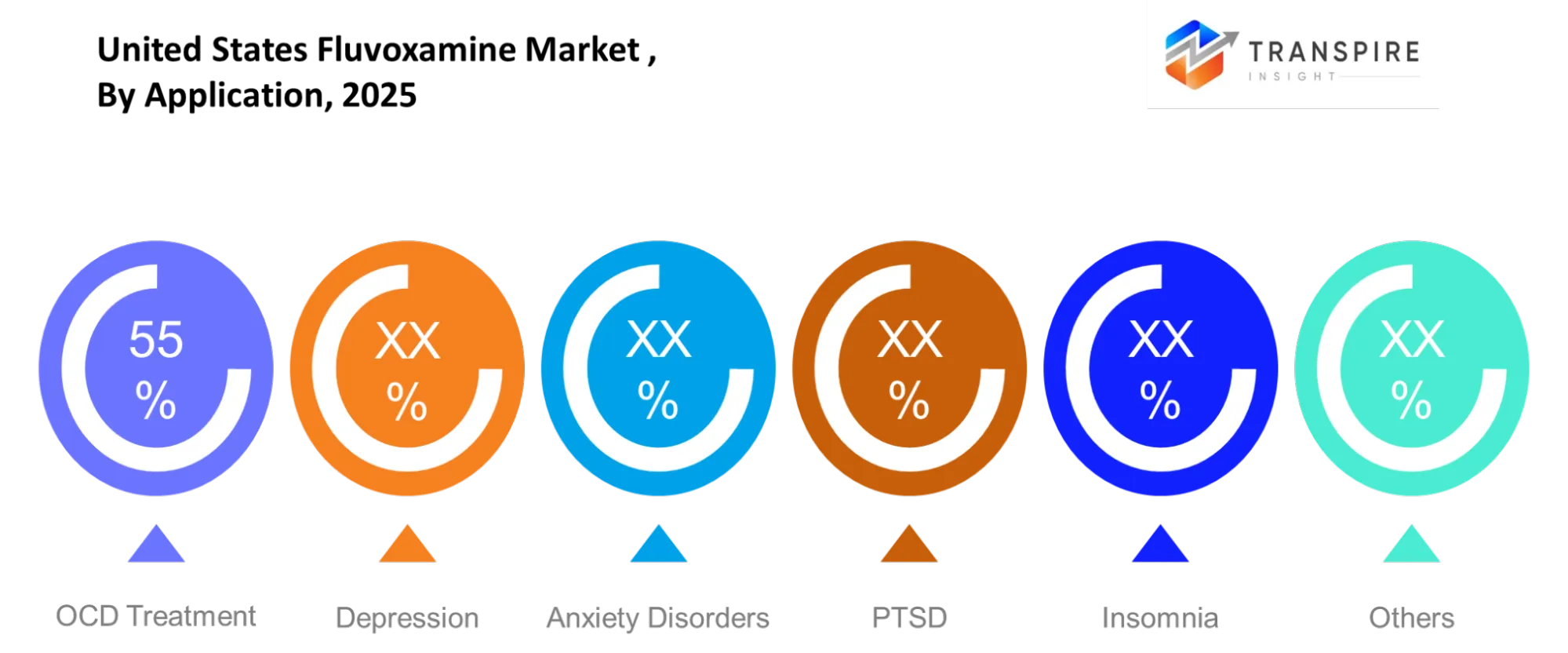
To learn more about this report, Download Free Sample Report
By End-User
Retail pharmacies pretty much dominate the end user slice, mostly because chronic mental health treatments need recurring prescription refills, plus wide geographic reach, and those long-standing insurer reimbursement tie-ins that make everything keep moving. Meanwhile hospital systems still hold a large chunk via inpatient psychiatric stabilization, and then discharge medication planning too, like the whole handoff is treated as part of the service. Clinics and telepsychiatry providers are growing quickly, you can see it as healthcare networks move toward a more decentralized behavioral care delivery approach, with virtual consultations and remote patient monitoring platforms doing the heavy lifting, or at least a lot of it. Homecare use is climbing gradually as well, especially for older adults, and for long term anxiety disorder groups who still need ongoing medication oversight outside of institutional walls.
At the same time end user demand seems to lean more toward integrated digital engagement systems, where refill prompts are automated, appointments are tracked, and adherence signals are monitored, all in one flow. Staffing shortages in behavioral health networks keep adding operational stress, which ends up pushing hospitals and specialty psychiatric centers to adjust, sometimes fast. Looking ahead, the next wave of spending will likely be concentrated around AI enabled care coordination, centralized prescription analytics, and a hybrid virtual treatment setup that’s meant to strengthen continuity of care while also trimming the long term costs of psychiatric management.
By DistributionÂ
Retail pharmacy channels still keep the top distribution footing, mostly because national pharmacy chains bring solid inventory management, wide consumer reach, and those linked digital prescription fulfillment systems that just fit well together. Hospital pharmacies keep moving meaningful volume too, especially with inpatient psychiatric care programs and emergency behavioral health pathways , even when schedules get tight. Online pharmacies are the fastest-growing distribution slice, sort of because telehealth consults and home delivery are getting more and more folded into mainstream antidepressant treatment workflows. Specialty distribution networks show up less often, partly because fluvoxamine tends to do most of its work within routine psychiatric prescribing channels , rather than stepping into some narrow therapeutic programs.
Distribution planning is also getting more automated, with emphasis on inventory forecasting, real time prescription monitoring, and regional supply chain resilience after those pandemic related pharmaceutical disruptions. And honestly competition between distributors is heating up, since pharmacy benefit managers are pushing for lower fulfillment costs and quicker delivery results. Going forward, distribution models will probably lean harder on digital prescription ecosystems, centralized warehouse automation, and predictive analytics platforms, which should help medication availability and cut down operational inefficiencies across national pharmacy networks, at the same time.
What are the Key Use Cases Driving the United States Fluvoxamine Market?
Obsessive compulsive disorder care is still the main reason prescription volumes stay up, because mental health prescribers depend on fluvoxamine to keep symptoms more stable over time, plus help stop relapses from popping up later. In practice, outpatient behavioral health clinics and the big retail pharmacy networks see the most demand, mostly from the steady refill rhythm and this ongoing check-ins thing patients kinda need, or at least the monitoring requirements do.
Meanwhile anxiety disorder handling and depression treatment are also getting bigger traction, especially through telepsychiatry arrangements and integrated primary care setups. A lot of hospital linked behavioral health centers now add fluvoxamine while patients also use digital therapy programs. The goal is better sticking with the plan, and fewer psychiatric readmissions, which does seem to matter.
Looking ahead, some newer use cases are starting to show up too, like AI assisted personalized psychiatric treatment, and remote medication adherence management inside virtual behavioral health networks. Also, certain specialized mental health providers are weighing fluvoxamine for more complicated mood disorder programs, supported by predictive analytics, and digital patient engagement features, kind of together as a bundle.
|
Report Metrics |
Details |
|
Market size value in 2025 |
USD 360.76 Million |
|
Market size value in 2026 |
USD 377.45 Million |
|
Revenue forecast in 2033 |
USD 518.21 Million |
|
Growth rate |
CAGR of 4.63% from 2026 to 2033 |
|
Base year |
2025 |
|
Historical data |
2021 - 2024 |
|
Forecast period |
2026 - 2033 |
|
Report coverage |
Revenue forecast, competitive landscape, growth factors, and trends |
|
Geographic scope |
United States of America |
|
Key company profiled |
AbbVie, Pfizer, Teva, Sun Pharma, Lupin, Cipla, Aurobindo Pharma, Dr. Reddy’s, Glenmark, Mylan, Hikma, Zydus, Torrent Pharma, Amneal, Endo International |
|
Customization scope |
Free report customization (country, regional & segment scope). Avail customized purchase options to meet your exact research needs. |
|
Report Segmentation |
By Type (Immediate Release, Extended Release, Tablets, Capsules, Generic, Others), By Application (Depression, OCD, Anxiety Disorders, PTSD, Insomnia, Others), By End-User (Hospitals, Clinics, Pharmacies, Homecare, Others), By Distribution (Hospital Pharmacy, Retail Pharmacy, Online Pharmacy, Specialty Stores, Others) |
Which Regions are Driving the United States Fluvoxamine Market Growth?
The Northeast region kind of leads the market I mean because it has this dense cluster of psychiatric hospitals, academic medical centers, and big commercial insurance networks. States like New York and Massachusetts keep up strong behavioral healthcare reimbursement systems, they actually support long-term antidepressant treatment staying power and continuity. A lot of major healthcare providers in the area also rolled out telepsychiatry infrastructure earlier than most other places, which helps patients reach care faster, and it seems to boost prescription retention rates too. And then there’s a mature pharmacy distribution ecosystem, plus solid specialist availability, that keeps prescription volumes high and pharmaceutical revenue generation pretty steady.
Meanwhile the Midwest region stays a dependable contributor because healthcare systems there focus a lot on cost-efficient psychiatric treatment and stable generic drug procurement strategies. Compared with the Northeast, the Midwest’s growth comes less from having lots of specialists nearby, and more from integrated community healthcare networks and consistent payer participation. Big hospital systems across Illinois, Ohio, and Minnesota keep expanding outpatient behavioral care programs, while still holding the line on disciplined pharmaceutical spending practices. Plus strong relationships between regional pharmacies, insurers, and providers help keep prescription demand predictable, and they also lower the chance of supply chain disruption.
The Southern United States kind a represents the fastest-growing regional market, mostly because telehealth is expanding quickly and behavioral healthcare access is getting broader across underserved groups. In recent years, multiple state-level investments into digital mental health infrastructure and Medicaid-supported psychiatric care programs seemed to speed up treatment adoption after 2021, and in practice it looks like that shift stuck. Texas and Florida, in particular , have seen strong growth in virtual psychiatric consultations and that in turn created higher antidepressant prescription volumes flowing through retail and online pharmacy channels. So this regional momentum is expected to open up real opportunities for pharmaceutical distributors, telepsychiatry providers, and AI-enabled behavioral health platforms somewhere between 2026 and 2033, as these services keep gaining ground.
Who are the Key Players in the United States Fluvoxamine Market and How Do They Compete?
The United States Fluvoxamine Market sits in this pretty competitive generic pharmaceutical world, where a bunch of things like pricing efficiency , supply reliability , and actual pharmacy network access seem to decide who gets the bigger market slice. Competition is still somewhat scattered, but it’s not fully, because several manufacturers make therapeutically similar formulations . Still, only a smaller set keeps solid national distribution and consistent production scale , so the rest kind of hover around the edges. The older players keep defending their positions using long-term pharmacy benefit agreements , automated manufacturing setups and also inventory resilience after those pandemic era supply disruptions . New companies however run into more structural roadblocks, like regulatory compliance costs , retailer purchasing contracts, and operating margins that are kinda thin. So in the end , the competitive edge shifts toward operational efficiency, reliable nationwide fulfillment , and some digital linkages with major retail pharmacy and telehealth ecosystems.
Teva Pharmaceutical Industries basically competes with large-scale generic manufacturing plus vertically integrated distribution systems that help push high prescription volumes through national retail chains. Their strong production scale means Teva can hold more aggressive pricing, and also lower the odds of supply interruptions when demand swings. Viatris plays a slightly different game by leaning on broad insurer relationships and a wider psychiatric drug portfolio . That broader set helps them negotiate better with pharmacy benefit managers. Moving forward, more expansion efforts are landing on digital pharmacy partnerships and data-driven inventory forecasting , aiming to keep prescriptions steady and cut down those fulfillment delays .
Aurobindo Pharma kind of emphasizes cost leadership via high-efficiency manufacturing infrastructure and global active pharmaceutical ingredient sourcing abilities, and in practice it keeps the pricing competitive in those big-volume generic antidepressant contracts. Sun Pharmaceutical Industries leans more on strengthening specialty psychiatric distribution relationships and then expands product penetration across hospital affiliated behavioral health systems. Apotex differentiates by keeping a stable North American supply chain running smoothly, plus consistent regulatory compliance performance, which tends to appeal to pharmacies that really want uninterrupted generic antidepressant availability, without interruption or delays.
Company List
- AbbVie
- Pfizer
- TevaÂ
- Sun Pharma
- Lupin
- Cipla
- Aurobindo Pharma
- Dr. Reddy’s
- Glenmark
- Mylan
- Hikma
- Zydus
- Torrent Pharma
- Amneal
- Endo International
Recent Development News
In May 2026, Persistent U.S. Fluvoxamine Supply Constraints Continue Into 2026: The U.S. fluvoxamine extended-release market continues to experience intermittent shortages in 2026, driven by inconsistent manufacturing output from key generic suppliers. Demand remains steady, but supply instability persists across multiple dosage strengths.
Source: https://www.medfinder.com
In May 2026, Generic CNS Drug Portfolio Expansion Indirectly Impacts SSRI Market: Â Reviva Pharmaceuticals reported continued advancement of CNS-focused drug candidates in 2026, reflecting broader investment activity in psychiatric and neurological therapeutics. While not fluvoxamine-specific, it signals ongoing pipeline competition in the SSRI-adjacent CNS segment.
Source: https://www.globenewswire.com
What Strategic Insights Define the Future of the United States Fluvoxamine Market?
The United States Fluvoxamine Market is kind of structurally moving toward digitally coordinated psychiatric care ecosystems where prescription continuity, telehealth integration, and AI-supported treatment optimization matter more than the old-school push for traditional prescription volume growth. Over the next 5–7 years, competitive edge will depend more and more on how manufacturers, pharmacies and behavioral healthcare providers combine predictive analytics, automated adherence monitoring, and virtual care infrastructure into long-term mental health management, so yeah not just selling more but managing better.
One hidden risk is how concentrated the active pharmaceutical ingredient sourcing can be, across a small number of international manufacturing hubs, which is kinda something people dont always look at. Even if geopolitical disruptions are modest, or there are regulatory inspections that show up suddenly, the supply availability can get squeezed and pharmacies might end up with recurring inventory instability. This can happen even if patient demand stays mostly stable, and honestly that part is what makes it sneaky. Another emerging pressure could be next generation psychiatric therapies plus digital therapeutics, those slowly reduce reliance on conventional antidepressant prescribing models.
A notable opportunity is showing up inside AI-enabled behavioral health platforms in Southern and Western states, where Medicaid-supported telepsychiatry expansion is speeding up. Market players should focus on partnerships with digital mental health providers and invest in domestic supply resilience, because operational reliability and integrated patient engagement capabilities will probably end up being what defines who leads later on.
United States Fluvoxamine Market Report Segmentation
By TypeÂ
- Immediate Release
- Extended Release
- Tablets
- Capsules
- Generic
- Others
By ApplicationÂ
- Depression
- OCD
- Anxiety Disorders
- PTSD
- Insomnia
- Others
By End-UserÂ
- Hospitals
- Clinics
- Pharmacies
- Homecare
- Others
By DistributionÂ
- Hospital Pharmacy
- Retail Pharmacy
- Online Pharmacy
- Specialty Stores
- Others
Frequently Asked Questions
Find quick answers to common questions.
The Approximate United States Fluvoxamine Market size for the Market will be USD 518.21 Million in 2033.
The key Segments of the United States Fluvoxamine Market are By Type (Immediate Release, Extended Release, Tablets, Capsules, Generic, Others), By Application (Depression, OCD, Anxiety Disorders, PTSD, Insomnia, Others), By End-User (Hospitals, Clinics, Pharmacies, Homecare, Others), By Distribution (Hospital Pharmacy, Retail Pharmacy, Online Pharmacy, Specialty Stores, Others).
Major Players in the United States Fluvoxamine Market are AbbVie, Pfizer, Teva, Sun Pharma, Lupin, Cipla, Aurobindo Pharma, Dr. Reddy’s, Glenmark, Mylan, Hikma, Zydus, Torrent Pharma, Amneal, Endo International.
The Current Market size of the United States Fluvoxamine Market is USD 360.76 Million in 2025.
The United States Fluvoxamine Market CAGR is 4.63%.
- AbbVie
- Pfizer
- Teva
- Sun Pharma
- Lupin
- Cipla
- Aurobindo Pharma
- Dr. Reddy’s
- Glenmark
- Mylan
- Hikma
- Zydus
- Torrent Pharma
- Amneal
- Endo International
Recently Published Reports
-
Apr 2026
Biosimilars Market
Biosimilars Market By Product Type (Monoclonal Antibodies, Recombinant Hormones, Erythropoietin, G-CSF, Others), By Indication (Oncology, Autoimmune Diseases, Blood Disorders, Diabetes, Others), By Manufacturing Type (In-House Manufacturing, Contract Manufacturing), By Distribution Channel (Hospital Pharmacies, Retail Pharmacies, Online Pharmacies), By Industry Analysis, Size, Share, Growth, Trends, and Forecasts 2021-2033
-
Apr 2026
Gastrointestinal Endoscopy Market
Gastrointestinal Endoscopy Market By Type (Rigid Gastrointestinal Endoscope, Flexible Gastrointestinal Endoscopes, Disposable Gastrointestinal Endoscope), By Procedure Type (Colonoscopy, Gastroscopy, Duodenoscopy, Enteroscopy, Flexible Sigmoidoscopy, Others), By Application (Diagnosis, Treatment), By End-Users (Hospitals, Ambulatory Surgical Centers, Specialty Clinics, Laboratories, Others), By Industry Analysis, Size, Share, Growth, Trends, and Forecasts 2021-2033
-
Apr 2026
Rare Inherited Metabolic Disorder Drug Market
Rare Inherited Metabolic Disorder Drug Market By Drug Class (Enzyme Replacement Drugs, Gene Therapy Drugs, Substrate Reduction Drugs, Small Module Drugs, Protein Drugs), By Route of Administration(Parenteral, Oral, Intrathecal), By Clinical Development (Marketed Drugs, Late Stage Clinical Phase III, Early Stage Clinical Phase I-II, Preclinical Candidates), By Indication (Lysosomal Storage Disorders, Urea Cycle Disorders, Amino Acid Metabolic Disorders, organic Acidemias, Peroximal Disorders), By Industry Analysis, Size, Share, Growth, Trends, and Forecasts 2021-2033
-
Jan 2026
Pharmaceutical Cleanroom Technology Market
Pharmaceutical Cleanroom Technology Market By Product (Equipment, Consumables, Services); By Cleanroom Type (Standard Cleanrooms, Modular Cleanrooms); By End Use (Pharmaceutical Companies, Biotechnology Companies), By Industry Analysis, Size, Share, Growth, Trends, and Forecasts 2021-2033