Europe Healthcare Discount Plan Market Size & Forecast:
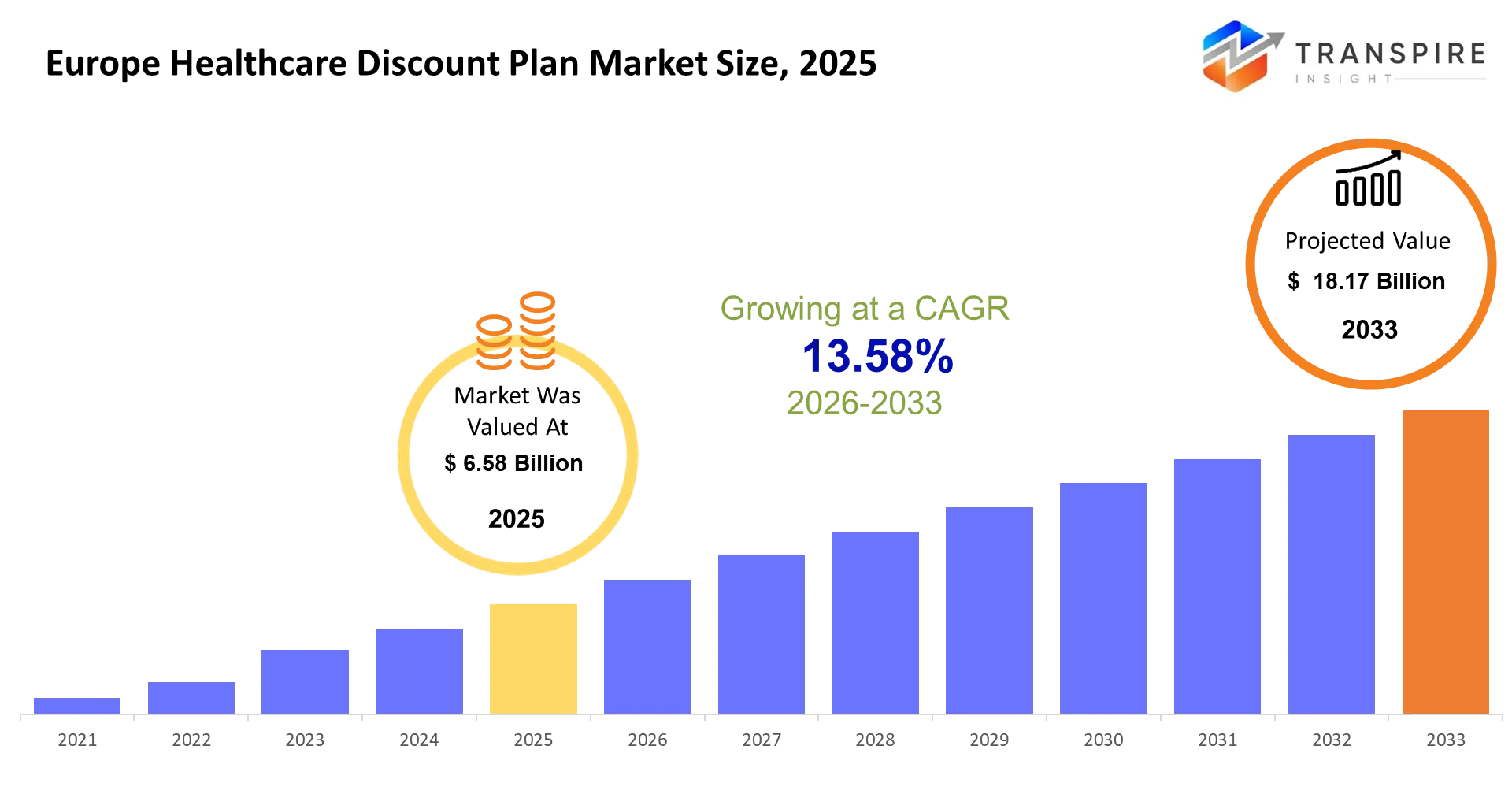
- Europe Healthcare Discount Plan Market Size 2025: USD 6.58 Billion
- Europe Healthcare Discount Plan Market Size 2033: USD 18.17 Billion
- Europe Healthcare Discount Plan Market CAGR: 13.58%
- Europe Healthcare Discount Plan Market Segments: By Type (Dental Plans, Vision Plans, Pharmacy Plans, Wellness Plans, Others), By Application (Preventive Care, Treatment, Wellness, Chronic Care, Others), By End-User (Individuals, Families, Employers, Senior Citizens, Others), By Distribution (Online, Direct Sales, Brokers, Others).
To learn more about this report,  Download Free Sample Report
Europe Healthcare Discount Plan Market Summary:
The Europe Healthcare Discount Plan Market size is estimated at USD 6.58 Billion in 2025 and is anticipated to reach USD 18.17 Billion by 2033, growing at a CAGR of 13.58% from 2026 to 2033. The Europe Healthcare Discount Plan Market operates as a critical financial management tool which links together patients with their employers and healthcare providers from pharmacies and dental clinics to outpatient facilities. The plans provide financial relief to households by delivering discounted rates for their standard medical and dental care and vision care and prescription needs which public reimbursement systems typically do not cover. Employers and insurers use discount platforms to manage their non-essential healthcare expenses while preserving their complete insurance obligations.
The market has transitioned from traditional membership systems that used physical documentation to modern digital healthcare savings systems which operate through pharmacy networks and telehealth services and mobile wellness applications. The COVID-19 pandemic created a significant opening because it demonstrated the limitations of public healthcare systems while it increased patient demand for inexpensive medical services which delivered quicker treatment. The market area has experienced revenue changes that resulted from this development. Providers currently utilize discount plans as methods to acquire new customers while consumers perceive these plans as essential tools for managing their healthcare expenses instead of loyalty programs that offer secondary benefits.
Key Market Insights
- The Germany market for Europe Healthcare Discount Plans reached 24% market share in 2025 through its strong private healthcare system and extensive pharmacy network access.
- The Central and Eastern European market shows the fastest growth rate until 2031 because of its developing private healthcare system and rising digital membership usage.
- Prescription discount plans held more than 38% market share in 2025 because consumers wanted cheaper ways to obtain both branded and generic drugs.
- Dental and vision discount programs emerged as the second-largest segment, benefiting from long public healthcare waiting periods across several European countries.
- The telehealth-linked healthcare savings plans will experience their highest growth rate from 2026 until 2031 because virtual consultations become standard practice in healthcare.
- The individual membership plans held 57% market share in 2025 because freelancers and retirees and uninsured people preferred this option.
- The demand for corporate-sponsored healthcare discount programs increased because employers wanted to control employee healthcare costs while avoiding additional insurance responsibilities.
- The small and medium-sized enterprise sector showed the fastest growth in end-user markets across the UK and Spain and Italy because workers needed more comprehensive healthcare benefits.
- Large enterprise employers retained their substantial market share because healthcare savings programs which use subscription models enhanced employee retention and increased preventive care usage.
- The Europe Healthcare Discount Plan Market transitioned to new technology when providers stopped using paper membership systems and adopted AI-powered digital healthcare access systems.
What are the Key Drivers, Restraints, and Opportunities in the Europe Healthcare Discount Plan Market?
The public healthcare system becomes financially unmanageable which creates the main obstacle that prevents the European Healthcare Discount Plan Market from expanding. The past five years showed that patients used private dental care services which charged lower fees because they had to wait longer for dental appointments and diagnostic tests and specialist medical appointments. The healthcare system capacity restrictions which the COVID-19 pandemic revealed created an urgent healthcare access demand which has continued to grow. Employers experienced increased healthcare expenses which led them to implement discount benefit systems because they did not want to expand their conventional insurance plans. The development of healthcare discount plans progressed from basic savings programs to subscription-based services which produce continuous member income and increased usage by partner providers.
The fragmented European healthcare reimbursement system represents the main structural obstacle which restricts market operations. Each country operates under different insurance frameworks, pharmacy pricing systems, and consumer protection regulations, making cross-border plan standardization difficult. Providers must establish distinct partnerships with every clinic, pharmacy chain, and telehealth provider which operates withineach specific market. The business needs to spend more money because of this situation while its ability to expand needs to take more time. The absence of standardized healthcare payment systems stops people from trusting healthcare services particularly in nations where the government pays for most of the medical expenses.
The healthcare industry will achieve its most significant growth through digital healthcare integration. Companies now use discount programs to their telemedicine services and mobile health apps and AI-powered pharmacy comparison tools.
What Has the Impact of Artificial Intelligence Been on the Europe Healthcare Discount Plan Market?
Artificial intelligence and advanced digital technologies are transforming the Europe Healthcare Discount Plan Market through their ability to automate pricing verification and claims coordination and pharmacy discount matching and member eligibility management. Healthcare savings platforms increasingly use AI-driven recommendation engines to match patients with lower-cost providers and pharmacies and diagnostic centers based on their treatment history and location and pricing patterns. The organization achieves better member retention through automated systems which deliver health savings information to members through mobile applications and digital portals resulting in faster administrative processing.
Machine learning models are also strengthening predictive capabilities across healthcare discount ecosystems. Providers use historical claims data and prescription refill patterns and appointment patterns to predict service demand and optimize provider network capacity and identify high-risk healthcare spending categories. European healthcare platforms predict pharmacy price changes through predictive analytics which suggest alternative treatment options to employers and consumers for lowering unneeded medical costs. The technologies enhance operational efficiency through reduced customer acquisition expenses and higher customer renewal rates and decreased need for manual assistance throughout extensive membership systems.
The European healthcare system encounters a significant barrier to AI implementation because it lacks a unified healthcare data system. The collection of standardized training data becomes impossible because each country maintains distinct reimbursement methods and privacy laws and electronic health record systems which do not work together.
Key Market Trends
- European employers started exchanging their partial reimbursement programs for subscription healthcare savings plans during 2022 to manage their employee healthcare costs which did not relate to essential business operations.
- Pharmacy-linked discount memberships expanded across Germany, France, and Spain after prescription inflation increased consumer price sensitivity for chronic disease medications.
- Healthcare providers established telehealth services in 2021 by developing virtual consultation options which became available through their healthcare savings programs to decrease clinic traffic and retain their members.
- Digital enrollment platforms entirely replaced paper-based membership processes in major markets which resulted in a 40% reduction of onboarding time that occurred between 2020 and 2025.
- AXA and Bupa expanded their preventive care partnerships because they wanted to boost their subscription revenue and maintain customer relationships over time.
- After the pandemic, consumers chose flexible monthly healthcare memberships because they experienced extended waiting times which exceeded reasonable treatment periods in public healthcare systems.
- After 2023, AI-driven healthcare recommendation engines began supporting providers to enhance their pharmacy pricing and appointment scheduling and treatment cost evaluation for individual members.
- Southern and Eastern European markets experienced stronger private healthcare participation as middle-income households sought faster specialist consultations outside public reimbursement channels.
- Healthcare providers developed their competitive strategy through integrated wellness ecosystems which offer diagnostics and telemedicine and pharmacy benefits on a single platform.
Europe Healthcare Discount Plan Market Segmentation
By Type
Pharmacy plans hold the leading position within the type segment because prescription expenses continue to place financial pressure on households across Europe. The membership renewal process remains stable because people with chronic diseases need their medications and they continue to purchase their medicines from pharmacies. Dental plans follow closely because people experience long public healthcare system waiting times and their need for dental cosmetic and preventive treatments increases. The aging population shows consistent adoption of vision plans, while wellness plans grow in popularity through their combined fitness and mental health and preventive care features.
To boost customer retention and create new revenue streams, market participants now offer all-inclusive healthcare savings subscriptions that combine multiple services. The segment's competitive landscape is undergoing changes because digital pharmacy partnerships and AI-driven provider matching systems are now being used by businesses. The market will expand through integrated healthcare packages which will become more popular than discount products and this development will lead investors and providers to invest in digital systems that support multiple services.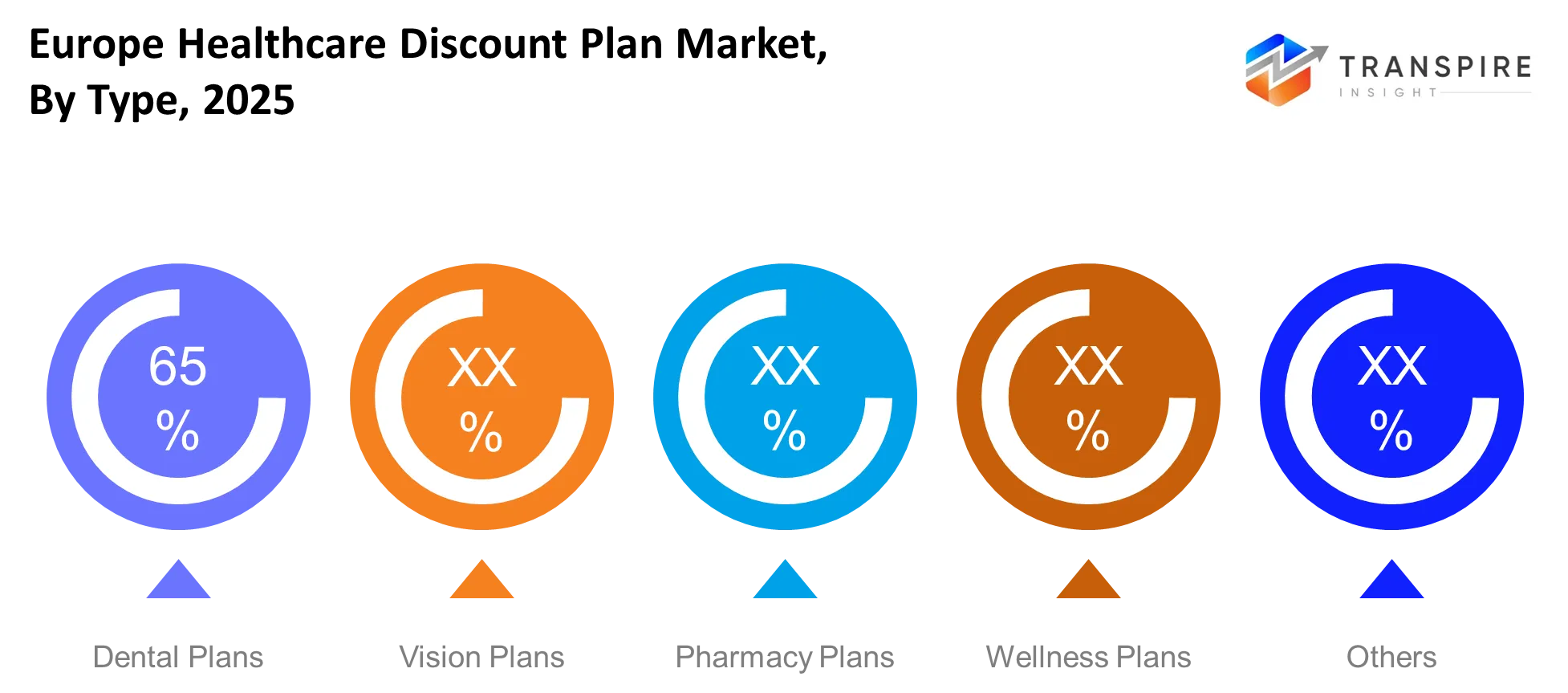
To learn more about this report, Download Free Sample Report
By Application
The market for preventive care applications exists in its current state because healthcare systems and employers require methods to decrease their extended treatment expenses through early disease detection. The subscription service usage sees its most substantial portion from users who access routine diagnostics and dental checkups and pharmacy discounts. The healthcare sector uses treatment-related applications to handle outpatient consultations and specialist access which exists outside of public reimbursement systems.
The healthcare industry shows constant growth in chronic care management applications because aging populations need ongoing access to affordable healthcare services and continuous medication support. After 2021, consumers who wanted mental health assistance and nutritional advice and online fitness training saw increased adoption of wellness applications. Consumers now prefer subscription models which provide all three services of preventive care, medical treatment, and wellness programs through a single membership package. Healthcare providers and insurers are responding by expanding telehealth integration and personalized care recommendations. The upcoming investment period will focus on developing predictive analytics platforms which can detect healthcare spending risks before expensive medical procedures become necessary.
By End-User
The largest share of end users belongs to individual users because independent workers and retirees and partially insured people need cost-effective solutions that replace traditional private insurance. Families represent the second-largest segment because healthcare savings subscriptions enable them to budget their expenses for pharmacy and dental and pediatric needs. Employer-sponsored healthcare discount programs expanded rapidly after the pandemic as companies attempted to manage rising workforce healthcare costs without increasing full insurance liabilities.
Senior citizens represent an important growth category because they need more prescription drugs and specialist consultations. End-user groups show behavior changes that increasingly support digital healthcare access and flexible monthly payment systems and mobile appointment scheduling. Corporate buyers now evaluate healthcare savings programs as employee retention tools rather than optional benefits. The future of growth depends on personalized healthcare ecosystems which deliver pharmacy savings and preventive monitoring and telemedicine access through unified membership platforms designed for specific demographic needs.
By Distribution
Healthcare providers together with insurers now maintain their most important focus on digital onboarding and mobile applications and automated membership management systems which result in their online distribution channels controlling all market access. Consumers increasingly prefer app-based enrollment and real-time healthcare savings tracking instead of traditional paper-based memberships. Direct sales channels remain relevant among large employers and institutional buyers who require custom healthcare benefit solutions to support their multi-site workforces. Brokers continue to play a supporting role in countries with fragmented insurance systems and complex healthcare reimbursement systems.
After 2020 competitive behavior underwent major changes because digital healthcare platforms used personalized recommendations and AI-based pricing analysis to lower their customer acquisition expenses while boosting their subscription renewal rates. Telemedicine providers, pharmacies, and healthcare technology companies increasingly form distribution partnerships to create their operational networks. The upcoming market development will create digital ecosystems that provide all healthcare services through a single mobile platform which enables users to access healthcare, receive prescription discounts, schedule appointments, and monitor their wellness activities.
What are the Key Use Cases Driving the Europe Healthcare Discount Plan Market?
The primary application of prescription savings programs exists because middle-income households and European seniors face ongoing financial challenges from their recurring medication costs. Patients who need chronic disease treatments display the highest engagement with pharmacy discount memberships because these programs offer them two benefits.
The small and medium-sized enterprise sector shows increasing interest in employer-sponsored healthcare savings programs and preventive dental care applications which help control their workforce health costs. The telehealth membership sector experienced rapid growth after 2021 because people started using remote consultations in urban and semi-urban areas.
AI-powered healthcare budgeting solutions and wellness ecosystems that connect nutrition, mental health, and pharmacy discounts through mobile platforms represent new application areas. The digital-first healthcare subscription model for freelancers and gig economy workers shows promising future growth potential which will expand as flexible employment patterns become more common in European countries.
|
Report Metrics |
Details |
|
Market size value in 2025 |
USD 6.58 Billion |
|
Market size value in 2026 |
USD 7.45 Billion |
|
Revenue forecast in 2033 |
USD 18.17 Billion |
|
Growth rate |
CAGR of 13.58% from 2026 to 2033 |
|
Base year |
2025 |
|
Historical data |
2021 - 2024 |
|
Forecast period |
2026 - 2033 |
|
Report coverage |
Revenue forecast, competitive landscape, growth factors, and trends |
|
Regional scope |
Europe (Germany, United Kingdom, France, Italy, Spain and Rest of Europe) |
|
Key company profiled |
Careington, Aetna, Cigna, UnitedHealth, Humana, CVS Health, MetLife, Guardian Life, AmeriPlan, Access One Consumer Health, Solstice Benefits, HealthEquity, Allianz, AXA, Bupa |
|
Customization scope |
Free report customization (country, regional & segment scope). Avail customized purchase options to meet your exact research needs. |
|
Report Segmentation |
By Type (Dental Plans, Vision Plans, Pharmacy Plans, Wellness Plans, Others), By Application (Preventive Care, Treatment, Wellness, Chronic Care, Others), By End-User (Individuals, Families, Employers, Senior Citizens, Others), By Distribution (Online, Direct Sales, Brokers, Others) |
Which Regions are Driving the Europe Healthcare Discount Plan Market Growth?
Western European countries lead the market today because their strong private healthcare systems and established digital health infrastructure and their high public spending on outpatient medical services. The healthcare systems of Germany, France, and the United Kingdom operate through extensive pharmacy networks together with telehealth services that provide ongoing discounts for medical care. The healthcare providers developed secure digital enrollment systems which included AI-based member management solutions because they needed to meet strict healthcare data protection standards.
The second-largest regional contributor to Northern Europe exists because Western Europe shows different growth patterns through its dependence on preventive healthcare practices and steady reimbursement system development. Strong digital literacy levels enable Sweden Denmark and the Netherlands to establish effective public-private healthcare partnerships which create advantages for these countries. The healthcare discount providers in this region direct their services toward wellness and mental health services and preventive diagnostics instead of providing emergency access through cost-based programs. The combination of stable economic conditions and employer commitment to their workforce wellness initiatives leads to predictable subscription renewals which generate consistent market revenue streams.
Central and Eastern Europe develops its maximum growth potential through rapid private healthcare system expansion while consumer behavior changes after the pandemic. The period between 2021 and 2024 saw Poland, Romania, and Hungary experience higher adoption rates because the healthcare system faced significant backlogs and patients had to wait extended periods for specialist services.
Who are the Key Players in the Europe Healthcare Discount Plan Market and How Do They Compete?
The market for healthcare discount plans in Europe maintains its moderate market share because digital platforms and pharmacy networks and employer healthcare savings programs create competitive advantages. The market for traditional insurance companies maintains its operation through wellness programs which combined with their medical services and assessment tools their integrated wellness systems enable them to compete. The current market competition focuses on companies that provide personalized healthcare solutions through technology and telehealth services and instant access to medical expenses unlike businesses which only deliver discount cards. Companies that establish strong health system collaborations and develop flexible digital systems gain benefits because customers prefer using mobile applications for health services which include subscription-based treatment options.
AXA provides its unique value through complete healthcare systems which deliver insurance coverage and preventive medical services and telehealth solutions and wellness monitoring through their single online system. The company strengthens competitive positioning through partnerships with private clinics and pharmacy networks across France, Germany, and Spain. Bupa uses digital medical services and personalized health monitoring systems to enhance customer retention through its primary focus on employer-sponsored membership programs and preventive healthcare services. Business expansion efforts now concentrate on smaller companies and mid-sized businesses that need affordable options instead of standard employee benefits packages.
Multinational employers and mobile workers throughout Europe benefit from Allianz Partners healthcare services which enable cross-border patient treatment. The combination of advanced claims automation with AI-powered member support systems leads to decreased operational expenses while enhancing customer service efficiency.
Company List
- Careington
- Aetna
- Cigna
- UnitedHealth
- Humana
- CVS Health
- MetLife
- Guardian Life
- AmeriPlan
- Access One Consumer Health
- Solstice Benefits
- HealthEquity
- Allianz
- AXA
- Bupa
Recent Development News
In April 2026, TPG acquires UnitedHealth’s Optum UK business: Private equity firm TPG acquired Optum UK, including EMIS—one of the UK’s largest electronic patient record providers. The move strengthens TPG’s position in Europe’s digital healthcare infrastructure, which is increasingly linked to insurance claims processing and healthcare benefit optimization systems.
Source: https://candesic.com
In April 2026, Optima Health raises £35M after PAM Healthcare acquisition: UK-based Optima Health launched a £35 million capital raise following its acquisition of PAM Healthcare. The deal supports expansion in occupational health and employee healthcare services across the UK and Ireland—key components of corporate healthcare discount and wellness plan ecosystems.
Source: https://www.investegate.co.uk
What Strategic Insights Define the Future of the Europe Healthcare Discount Plan Market?
The Europe Healthcare Discount Plan Market is becoming more integrated through its development of healthcare access systems which unify pharmacy savings and telemedicine and preventive monitoring and AI-based healthcare financial planning services into single subscription services. Public healthcare system pressure combined with rising outpatient treatment costs and employer needs for flexible insurance solutions have created a need for new solutions in the healthcare system. Data integration capabilities will become the primary source of competitive advantage during the next five to seven years which will make pricing less relevant for businesses.
The market concentration risk exists because digital ecosystems led by large insurers create systems that remain unrecognized. The consolidation of pharmacy partnerships and telehealth networks and healthcare data infrastructure will create challenges for smaller providers who need to negotiate with customers. The company will experience decreased ability to set prices which will result in slower innovation development across all of its regional markets.
The Central and Eastern European region presents a major business opportunity because mobile-based healthcare subscription services which offer digital pharmacy access and virtual doctor visits have not yet achieved their full market potential. Market participants should prioritize interoperable digital platforms and localized healthcare partnerships now before regional regulatory frameworks and consumer ecosystems become more consolidated.
Europe Healthcare Discount Plan Market Report Segmentation
By Type
- Dental Plans
- Vision Plans
- Pharmacy Plans
- Wellness Plans
- Others
By Application
- Preventive Care
- Treatment
- Wellness
- Chronic Care
- Others
By End-User
- Individuals
- Families
- Employers
- Senior Citizens
- Others
By Distribution
- Online
- Direct Sales
- Brokers
- Others
Frequently Asked Questions
Find quick answers to common questions.
The Approximate Europe Healthcare Discount Plan Market size for the Market will be USD 18.17 Billion in 2033.
The key Segments of the Europe Healthcare Discount Plan Market are By Type (Dental Plans, Vision Plans, Pharmacy Plans, Wellness Plans, Others), By Application (Preventive Care, Treatment, Wellness, Chronic Care, Others), By End-User (Individuals, Families, Employers, Senior Citizens, Others), By Distribution (Online, Direct Sales, Brokers, Others).
Major Players in the Europe Healthcare Discount Plan Market are Careington, Aetna, Cigna, UnitedHealth, Humana, CVS Health, MetLife, Guardian Life, AmeriPlan, Access One Consumer Health, Solstice Benefits, HealthEquity, Allianz, AXA, Bupa.
The Current Market size of the Europe Healthcare Discount Plan Market is USD 6.58 Billion in 2025.
The Europe Healthcare Discount Plan Market CAGR is 13.58%.
- Careington
- Aetna
- Cigna
- UnitedHealth
- Humana
- CVS Health
- MetLife
- Guardian Life
- AmeriPlan
- Access One Consumer Health
- Solstice Benefits
- HealthEquity
- Allianz
- AXA
- Bupa
Recently Published Reports
-
Apr 2026
AI in Diabetic Retinopathy Market
AI in Diabetic Retinopathy Market Size, Share & Analysis Report By Type (Screening AI Systems, Diagnostic AI Systems, and Predictive AI Models), By Application Segment (Hospitals, Ophthalmology Clinics, Diagnostic Centers, and Research and Development), and Geography (North America, Europe, Asia-Pacific, Middle East and Africa, South and Central America), 2021 - 2031
-
Apr 2026
Psychometric Tests Market
Psychometric Tests Market Size, Share & Analysis Report By Type (Personality Tests, Ability/Aptitude Tests, Skill/Knowledge Tests, and Others), By Application (Talent Acquisition and Talent Management), and Geography (North America, Europe, Asia-Pacific, Middle East and Africa, South and Central America), 2021 – 2031
-
Apr 2026
Rare Biological Sample Collection Market
Rare Biological Sample Collection Market Size, Share & Analysis Report By Type (Isolation Kits & Reagent, Blood Collection Tubes, and Others), By Application (Oncology, Transcriptomics, Pharmacogenomics, and Others), and Geography (North America, Europe, Asia-Pacific, Middle East and Africa, South and Central America), 2021 – 2031
-
Apr 2026
Patient Lift Pendant Market
Patient Lift Pendant Market By Product Type (Wired Pendants, Wireless, Programmable), By Operation Type(Manual, Electric), By End-Users (Healthcare Professionals, Patients), By Application (Hospitals, Homecare, Rehabilitation Centers, Others), By Industry Analysis, Size, Share, Growth, Trends, and Forecasts 2021-2033
Our Clients
.jpg)