
Europe Wellness Technology Market Size & Forecast:
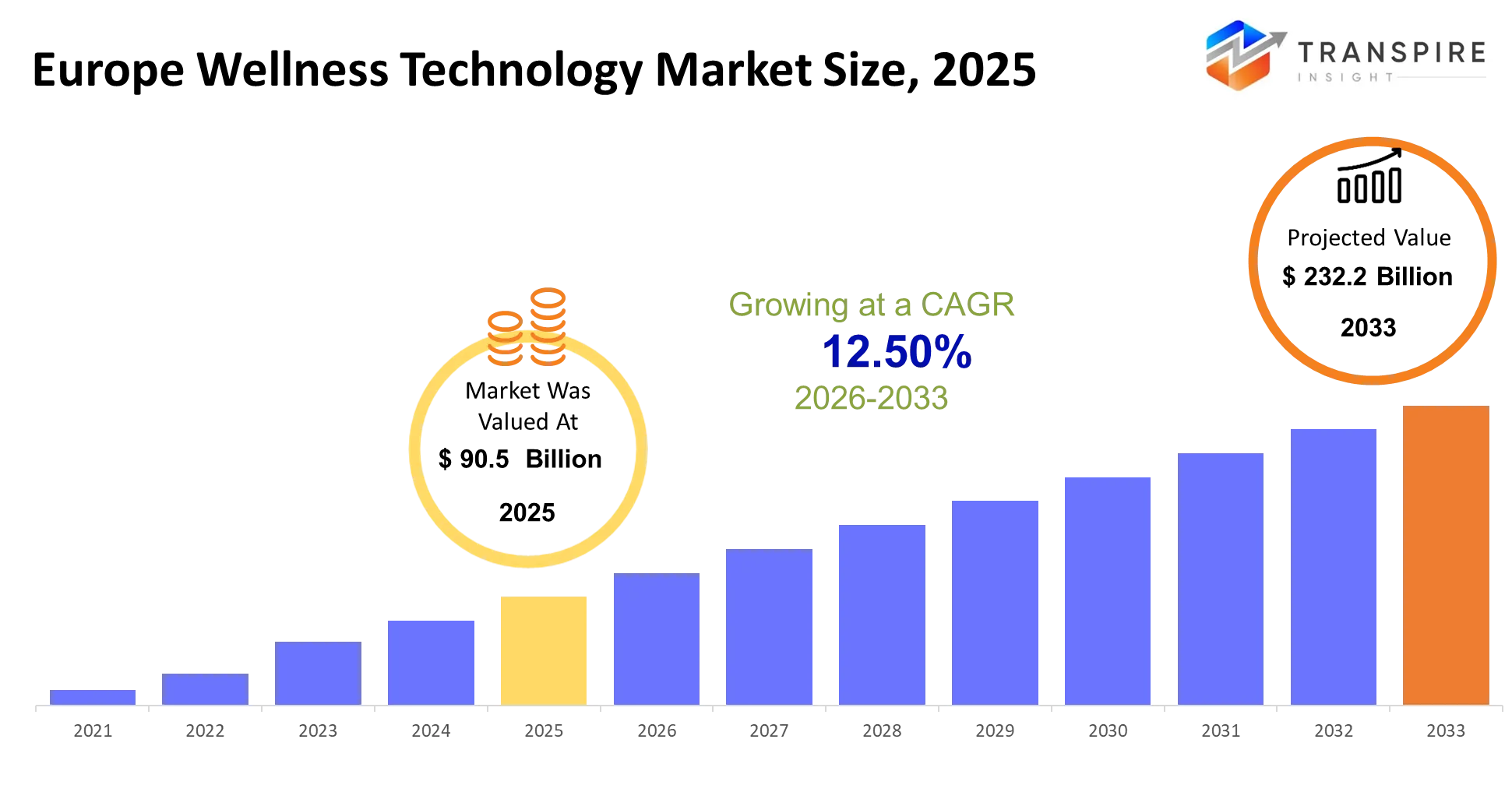
- Europe Wellness Technology Market Size 2025: USD 90.5 Billion
- Europe Wellness Technology Market Size 2033: USD 232.2 Billion
- Europe Wellness Technology Market CAGR: 12.50%
- Europe Wellness Technology Market Segments: By Type (Wearables, Mobile Apps, Smart Devices, Software Platforms, Others); By Application (Fitness Tracking, Mental Health, Sleep Monitoring, Nutrition, Chronic Disease Management, Others); By End-User (Individuals, Fitness Enthusiasts, Healthcare Providers, Employers, Wellness Centers, Others); By Platform (iOS, Android, Web-based, Wearables Integration, Others)
To learn more about this report,  Download Free Sample Report
Europe Wellness Technology Market Summary:
The Europe Wellness Technology Market size is estimated at USD 90.5 Billion in 2025 and is anticipated to reach USD 232.2 Billion by 2033, growing at a CAGR of 12.50% from 2026 to 2033. The European wellness technology market functions as part of the digital health and consumer wellness industry to create new methods for people to handle their health throughout the entire region. The market will develop according to preventive care trends because customers will demand immediate health information through wearable devices and fitness systems and AI-powered mental health tools. Companies will develop their secure systems through data privacy regulations which include the General Data Protection Regulation. The demand for complete well-being solutions will drive new developments in biosensing and personalized analytics and remote monitoring technologies which will result in the integration of healthcare and fitness and lifestyle services.
What Has the Impact of Artificial Intelligence Been on the Europe Wellness Technology Market?
The European wellness technology market will experience operational and strategic transformations through artificial intelligence which will establish data as the primary element for decision-making. The European wellness technology market's AI system will improve market analysis by analyzing extensive data from wearable devices and applications and digital platforms to create practical business solutions from disorganized data. Machine learning models will improve demand forecasting accuracy and trend prediction capabilities which will help companies forecast upcoming changes in consumer preferences for mental wellness and preventive health and personalized fitness solutions. Brands will achieve better offering precision through predictive analytics which will enable them to create specific customer segments that match the requirements of General Data Protection Regulation compliance.
Artificial intelligence will enhance operational efficiency in European wellness technology market systems through automated production processes which require less human participation for manufacturing devices and updating software. AI-powered supply chain optimization will reduce operational expenses through better inventory management and transportation planning and supplier relationship management. The efficiencies created through these processes will enable companies to launch products more quickly and achieve better market expansion results throughout European regions. The implementation of AI technology will create personalized experiences through adaptive systems which will provide users with tailored wellness guidance and immediate health monitoring and personalized user interactions. The adoption of AI technology will create a competitive advantage because companies that use AI will achieve superior results than their competitors in developing new products and reacting to market changes and building continuous business value in the European wellness technology sector.
Key Market Trends & Insights:
- The europe wellness technology market is led by western Europe, which accounts for about 45% market share in 2025, attributed to the well-developed healthcare facilities.
- The Northern Europe will be considered as the most lucrative market till 2030 because of their advanced digital infrastructure and focus on well-being from the government side. The wearables category will occupy a major share of 38% and above during 2025, because of increasing demand for health monitoring systems.
- Digital wellness technologies come second in terms of share size, owing to their growing popularity among users through subscription packages.
- AI-driven health analytics would be the fastest-growing segment during the forecast period from 2025 to 2030, owing to their predictive capabilities.
- Applications in preventive healthcare would account for about 42%, driven by growing concerns on health risk detection solutions.
- Mental wellness and stress management solutions would be the fastest-growing application, owing to increasing workplace pressure scenarios.
- The consumers make up more than half of the market share due to the increasing demand for personalized wellness applications.
- Organizational wellness products would witness exponential growth since firms incorporate applications that promote well-being and enhance efficiency.
Europe Wellness Technology Market Segmentation
By Type
Wearing gadgets will stay popular because they will help track one's fitness, heartbeat, and sleeping habits. The apps for this purpose will make it possible to create individual training programs, perform exercises, and engage in activities that promote psychological well-being. High-tech devices such as smart scales and exercise machines for home workouts will provide increased convenience in monitoring one's health status. The information systems will allow collecting data from various sources to help the consumer track his progress and alter his behaviors correspondingly.
Special applications addressing particular health-related issues will also be available, allowing consumers to diversify existing products. Compatibility between these two types of products will gradually become widespread. Innovation efforts will mainly focus on reducing weight, increasing speed and precision of products.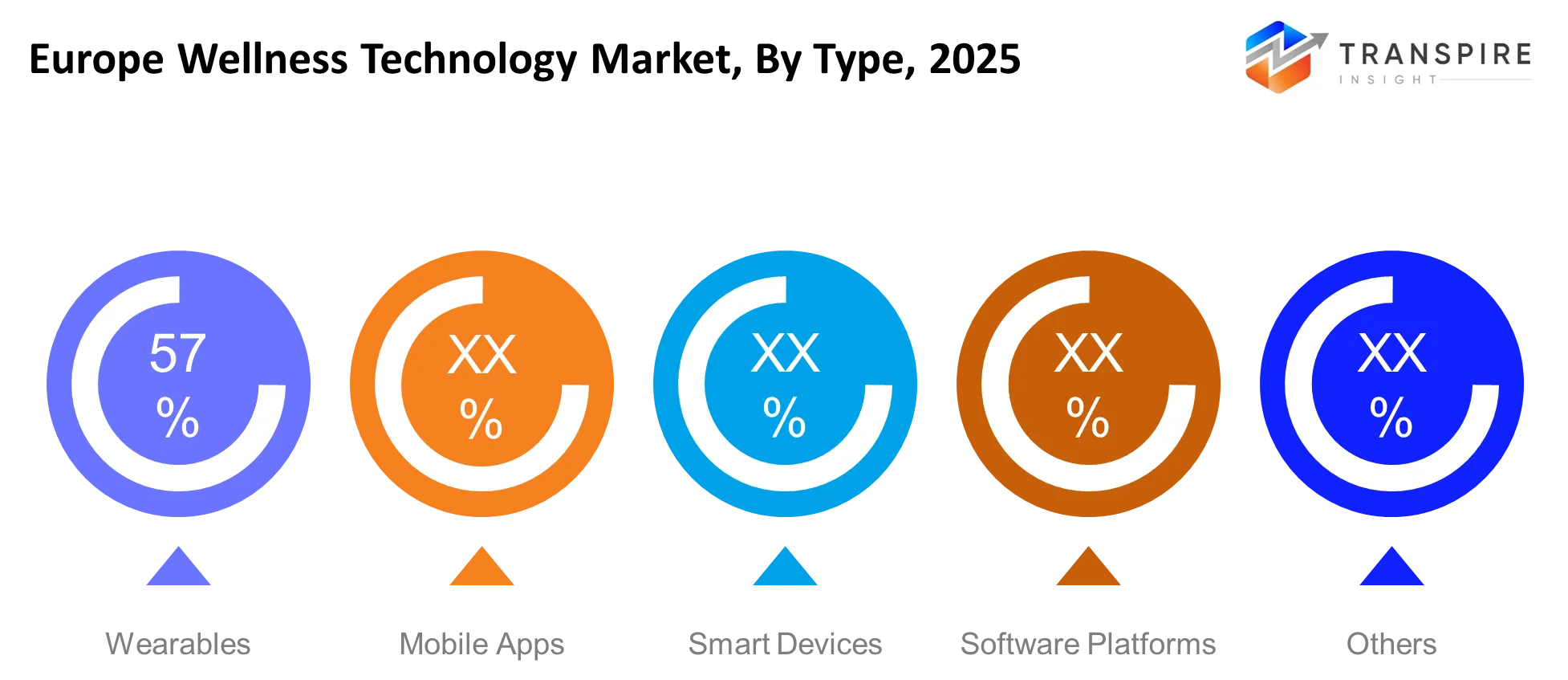
To learn more about this report, Download Free Sample Report
By Application
Fitness applications would lay the ground for adoption, whereby users would adopt technology to monitor their activity levels, calorie counts, and workout. Wellness applications centered on the wellbeing of the mind would be designed to have features like meditation, stress, and mood monitoring. Sleep monitoring tools would help users monitor their sleeping behaviors and recover from ailments. Nutritional monitoring applications would help individuals monitor their nutritional intake and calorie counts.
Health applications designed to solve the problems of individuals suffering from chronic illnesses would help the health conditions of the patients. The last set of applications would cater to new wellness problems. This class of applications represents the evolution to holistic wellness and not just wellness health problems.
By End-User
The individual consumer will make up the majority of the target market, fueled by increasing health consciousness and fitness targets. Health and fitness buffs will need the most sophisticated tracking capabilities and performance analysis for their exercise regimes. The healthcare industry will embrace the technology for remote patient monitoring and timely guidance. Companies will incorporate wellness applications into their work environment for improved efficiency and employee satisfaction.
Wellness centers will employ these technologies to deliver more effective services and communicate better with their consumers. Other niche markets will also be considered for certain wellness technology needs. The benefits of this emerging technology will be discussed with increasing adoption rates as more and more people realize its potential.
By Platform
The iOS platforms will be popular among those who require efficiency and security in their apps used to promote well-being. The Android platforms will prevail in numbers because there will be many diverse and cheap devices available. Web platform apps will give people access regardless of the gadget used. The wearables integration will synchronize various gadgets and let people sync their health information all in one place.
Other platforms will include cutting-edge technology and special applications. Cross-platform functionality will be increasingly demanded as people will expect easy switching from one device to another. Developers will make efforts to enhance usability. This category will determine the use of the wellness technology through various platforms.
What are the Main Challenges for the Europe Wellness Technology Market Growth?
Challenges that will still exist in the europe wellness technology market will be related to technical and operational constraints, which will hinder progress with technological advancements in wearables, sensors, and other technologies, making them more sophisticated. Technical problems related to performance inconsistency, energy consumption of batteries in wearables, and data inaccuracy will contribute to poor trust and engagement with the technologies. Data integration among different platforms and applications will still be complicated by fragmented systems that would not allow a smooth exchange of data between applications, devices, and healthcare institutions. Barriers of scale will also emerge, as small companies would find it hard to provide high levels of services consistently in different geographic markets.
Other limitations that could appear in the europe wellness technology market would include manufacturing and commercialization constraints caused by regulatory measures, including general data protection regulation. The cost of manufacturing and delivering products to different markets would hinder their affordability and thus their wide adoption. Inconsistencies and delays in regulatory clearance will result in delayed commercialization of innovations in the europe wellness technology market.
Adoption issues are expected to be among the main growth barriers for the europe wellness technology market in areas that lack adequate digital infrastructure and information about wellness technology. There is also expected to be a deficiency of experienced professionals who can operate artificial intelligence-based tools and analyze data generated by them. Financial constraints will limit innovations in product development as well, with startups facing the highest challenges in this regard.
Competitive pressures and potential threats to europe wellness technology market will include alternative products and solutions, which are more affordable, as well as the emergence of cheaper devices. Competitive pricing may constrain innovation in order for the firms to be able to offer more attractive prices. The pace of innovations will lead to greater product obsolescence risks due to the high speed of technological advancements.
Regional Insights
The europe wellness technology market is expected to grow due to the integration of health apps into people's daily lives in Europe. The demand for the product will increase because of the shift in priorities towards preventive care, physical activity monitoring, and mental wellness management. Innovations in connectivity and big data will determine the way services will be provided. The introduction of new policies like GDPR will affect the information safety issues and will influence the production process.
The growing demands of the customers will encourage businesses to provide easy and accessible solutions. The interoperability of the platforms will become better, which will lead to more comfortable usage of both gadgets and apps. Innovation is the priority of the business that will help satisfy the increasing demands while meeting the requirements of regulations.
The western part of Europe will continue to maintain a dominant position, owing to their well-developed healthcare facilities as well as their significant usage and adaptation to digital technologies. Such countries as Germany, France, and the United Kingdom will take the lead in adopting and investing in the use of digital technologies.
In comparison, northern Europe will witness higher rates of adoption and growth, as a result of the widespread access to the Internet, as well as government support for their initiative in the sphere. The southern and eastern parts of Europe will observe moderate growth, since their digital infrastructure is gradually being developed and improved.
Recent Development News
In March 2026, Oura announced acquisition of Doublepoint. The deal will integrate gesture-recognition technology into Oura’s wearable ecosystem, enabling device control through biometric-driven hand movements.https://www.vestbee.com
In March 2026, Vitalist Inc. announced acquisition of Somatix. The acquisition will expand Vitalist’s wearable portfolio by adding AI-powered remote patient monitoring and medical-grade analytics capabilities.https://finance.yahoo.com
|
Report Metrics |
Details |
|
Market size value in 2025 |
USD 90.5 Billion |
|
Market size value in 2026 |
USD 101.8 Billion |
|
Revenue forecast in 2033 |
USD 232.2 Billion |
|
Growth rate |
CAGR of 12.50% from 2026 to 2033 |
|
Base year |
2025 |
|
Historical data |
2021 - 2024 |
|
Forecast period |
2026 - 2033 |
|
Report coverage |
Revenue forecast, competitive landscape, growth factors, and trends |
|
Regional scope |
Europe (Germany, United Kingdom, France, Italy, Spain, Rest of Europe) |
|
Key company profiled |
Apple, Fitbit, Garmin, Samsung, Google, Philips, Huawei, Xiaomi, WHOOP, Oura, Peloton, Calm, Headspace, Noom, MyFitnessPal |
|
Customization scope |
Free report customization (country, regional & segment scope). Avail customized purchase options to meet your exact research needs. |
|
Report Segmentation |
By Type (Wearables, Mobile Apps, Smart Devices, Software Platforms, Others); By Application (Fitness Tracking, Mental Health, Sleep Monitoring, Nutrition, Chronic Disease Management, Others); By End-User (Individuals, Fitness Enthusiasts, Healthcare Providers, Employers, Wellness Centers, Others); By Platform (iOS, Android, Web-based, Wearables Integration, Others) |
How Can New Companies Establish a Strong Foothold in the Europe Wellness Technology Market?
The new players in the europe wellness technology market would establish a strong position within the market by focusing on under-served markets where large competitors have little attention directed toward them. By targeting areas such as elder care monitoring, workplace mental well-being, or chronic illness management, companies will be able to gain a foothold in the market through meeting the needs of customers. In this manner, it is predicted that future innovation within the market will continue to support the increasing demand for personalized and preventive care.
Competitive strategies that could be used by firms include utilizing artificial intelligence technology using health analytics, bio-sensing innovation, and health monitoring technology. Innovation can also be used by firms to develop user-friendly devices that are light to attract more users. Building strategic partnerships with health institutions, fitness centers, and insurance firms can help to improve a firm’s reputation. The company Oura Health and Withings have been quite successful due to their innovative approach of using wearables and connected devices with a medical grade.
Addressing industry challenges would make market entry even stronger, especially in the segments such as remote patient monitoring and corporate wellness programs. Smart companies who adopt the concepts of smart automation and predictive analysis would solve inefficiencies in the health care sector and increase productivity in organizations. Players who invest in innovation and adopt a mindset that emphasizes device integration would have a competitive edge. Technology development and following compliance measures such as the General Data Protection Regulation would create sustained growth in the europe wellness technology market.
Key Europe Wellness Technology Market Company Insights
The Europe wellness technology market is expected to grow with an adoption of health apps and devices in daily life of Europeans. Increasing demand will come from a growing awareness about preventive healthcare, fitness, and wellness solutions. Development of digital technology will affect the nature of services offered.
Shifts in consumer attitudes will lead businesses to develop user-friendly products. Interconnectivity within platforms will be improved by offering seamless integration between applications and devices. Such regulations as the General Data Protection Regulation will determine the nature of information processing and storage. The direction of the market will be guided by compliance with such regulations.
Competition is expected to remain strong considering the participation of new and established firms. Investments in artificial intelligence, machine learning, and automation would give an opportunity for innovations. Regular software updates would ensure that firms stay competitive.
Firms are going to engage in partnerships and development in regions to strengthen their market positions. Personalization, better user experience, and pricing strategies will most likely be the focus of firms. An innovative approach will provide room for new entrants.
Company List
- Apple
- Fitbit
- Garmin
- Samsung
- Philips
- Huawei
- Xiaomi
- WHOOP
- Oura
- Peloton
- Calm
- Headspace
- Noom
- MyFitnessPal
What are the Key Use-Cases Driving the Growth of the Europe Wellness Technology Market?
Use cases for the europe wellness technology market are being developed based on their tangible benefits to health management and prevention in people's daily lives. The first major driver of growth is the use case of remote patient monitoring, in which connected technologies enable doctors to keep an eye on their patients' vital signs from afar. Remote monitoring results in fewer hospital visits and better diagnoses, making it a significant use case supporting the europe wellness technology market.
Corporate wellness represents another important use case in the europe wellness technology market. Indeed, many companies nowadays are opting for wellness programs to enhance productivity among staff members, reduce stress levels, and improve the overall well-being of their personnel. Activity trackers, sleep sensors, and brain wave monitors have become very popular among executives, because they represent tools that allow for increasing team efficiency to the maximum possible extent.
Applications aimed at consumers like health and fitness monitoring, nutrition management, and sleep improvement are growing fast in the europe wellness technology market as well. With the help of AI and predictive analysis, personalized recommendations are assisting consumers in making better choices regarding their lifestyles. In addition, by connecting with smart home devices, scalability of ecosystems is possible.
Europe Wellness Technology Market Report Segmentation
By Type
- Wearables
- Mobile Apps
- Smart Devices
- Software Platforms
- Others
By Application
- Fitness Tracking
- Mental Health
- Sleep Monitoring
- Nutrition
- Chronic Disease Management
- Others
By End-User
- Individuals
- Fitness Enthusiasts
- Healthcare Providers
- Employers
- Wellness Centers
- Others
By Platform
- iOS
- Android
- Web-based
- Wearables Integration
- Others
Frequently Asked Questions
Find quick answers to common questions.
The Approximate Europe Wellness Technology Market size for the Market will be USD 232.2 Billion in 2033.
Key Segments for the Europe Wellness Technology Market are By Type (Wearables, Mobile Apps, Smart Devices, Software Platforms, Others); By Application (Fitness Tracking, Mental Health, Sleep Monitoring, Nutrition, Chronic Disease Management, Others); By End-User (Individuals, Fitness Enthusiasts, Healthcare Providers, Employers, Wellness Centers, Others); By Platform (iOS, Android, Web-based, Wearables Integration, Others).
Major Europe Wellness Technology Market Players are Apple, Fitbit, Garmin, Samsung, Google, Philips, Huawei, Xiaomi, WHOOP, Oura, Peloton, Calm, Headspace, Noom, MyFitnessPal.
The Current Europe Wellness Technology Market size is USD 90.5 Billion in 2025.
The Europe Wellness Technology Market CAGR is 12.50%.
- Apple
- Fitbit
- Garmin
- Samsung
- Philips
- Huawei
- Xiaomi
- WHOOP
- Oura
- Peloton
- Calm
- Headspace
- Noom
- MyFitnessPal
Recently Published Reports
-
Apr 2026
3D Optical Profiler Market
3D Optical Profiler Market Size, Share & Analysis Report By Type (Desktop 3D Optical Profiler, and Portable 3D Optical Profiler), By Technology (Confocal Technology, and White Light Interference), By End-Use Industry (Manufacturing, Research Institutions, Automotive, Aerospace and Defense, Medical Devices, and Other), and Geography (North America, Europe, Asia-Pacific, Middle East and Africa, South and Central America), 2021 - 2031
-
Apr 2026
Depth Sensor Market
Depth Sensor Market Size, Share & Analysis Report By Type (Infrared Depth Sensors, Time-of-Flight (ToF) Sensors, Stereo Vision Sensors, Structured Light Sensors, Ultrasonic Depth Sensors), By Application (Automotive, Robotics, Gaming, Consumer Electronics, Industrial Automation, Healthcare, Security & Surveillance, Others), By End Users (Automotive Manufacturers, Consumer Electronics Companies, Healthcare Providers, Industrial Companies, Security Agencies, Gaming Companies, Robotics Companies, Others), and Geography (North America, Europe, Asia-Pacific, Middle East and Africa, South and Central America), 2021 – 2031
-
Apr 2026
Digital Manufacturing Market
Digital Manufacturing Market Size, Share & Analysis Report By Component (Hardware, Software, and Services), By Technology (Robotics, 3D Printing, Internet of Things (IoT), and Others), By Application (Automotive and Transportation, Aerospace and Defense, Consumer Electronics, Industrial Machinery, and Others), By Process Type (Computer-Based Designing, Computer-Based Simulation, Computer 3D Visualization, Analytics, and Others), and Geography (North America, Europe, Asia-Pacific, Middle East and Africa, South and Central America), 2021 – 2031
-
Apr 2026
Digital Visa Services Market
Digital Visa Services Market Size, Share & Analysis Report By Type (Individual Travelers, Group Travelers), By Application (Tourism, Business Travel, Others), and Geography (North America, Europe, Asia-Pacific, Middle East and Africa, South and Central America), 2021 – 2031