
Market Summary
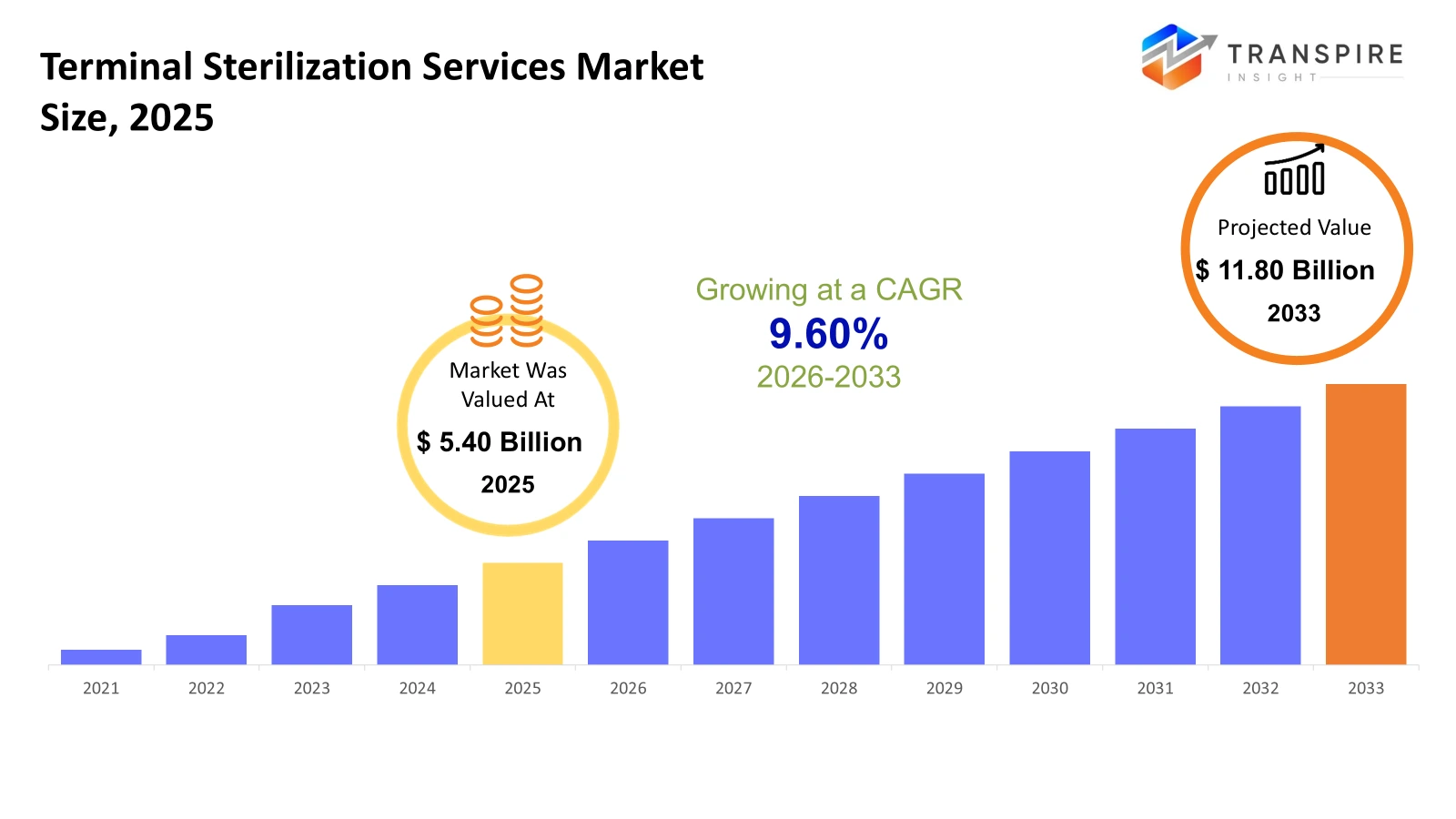
The global Terminal Sterilization Services market size was valued at USD 5.40 billion in 2025 and is projected to reach USD 11.80 billion by 2033, growing at a CAGR of 9.60% from 2026 to 2033. The global market for terminal sterilization services is growing because more complicated, single-use medical devices are being made. These devices need sterilization that's been checked and done by someone else. Tougher rules and higher standards for making things sterile are pushing makers to use sterilization services. Also, the continuous growth in making medications and biologics, along with better healthcare in growing countries, is helping the market grow for the long haul. New tech in radiation sterilization is also making things more efficient and scalable everywhere.
Market Size & Forecast
- 2025 Market Size: USD 5.40 Billion
- 2033 Projected Market Size: USD 11.80 Billion
- CAGR (2026-2033): 9.60%
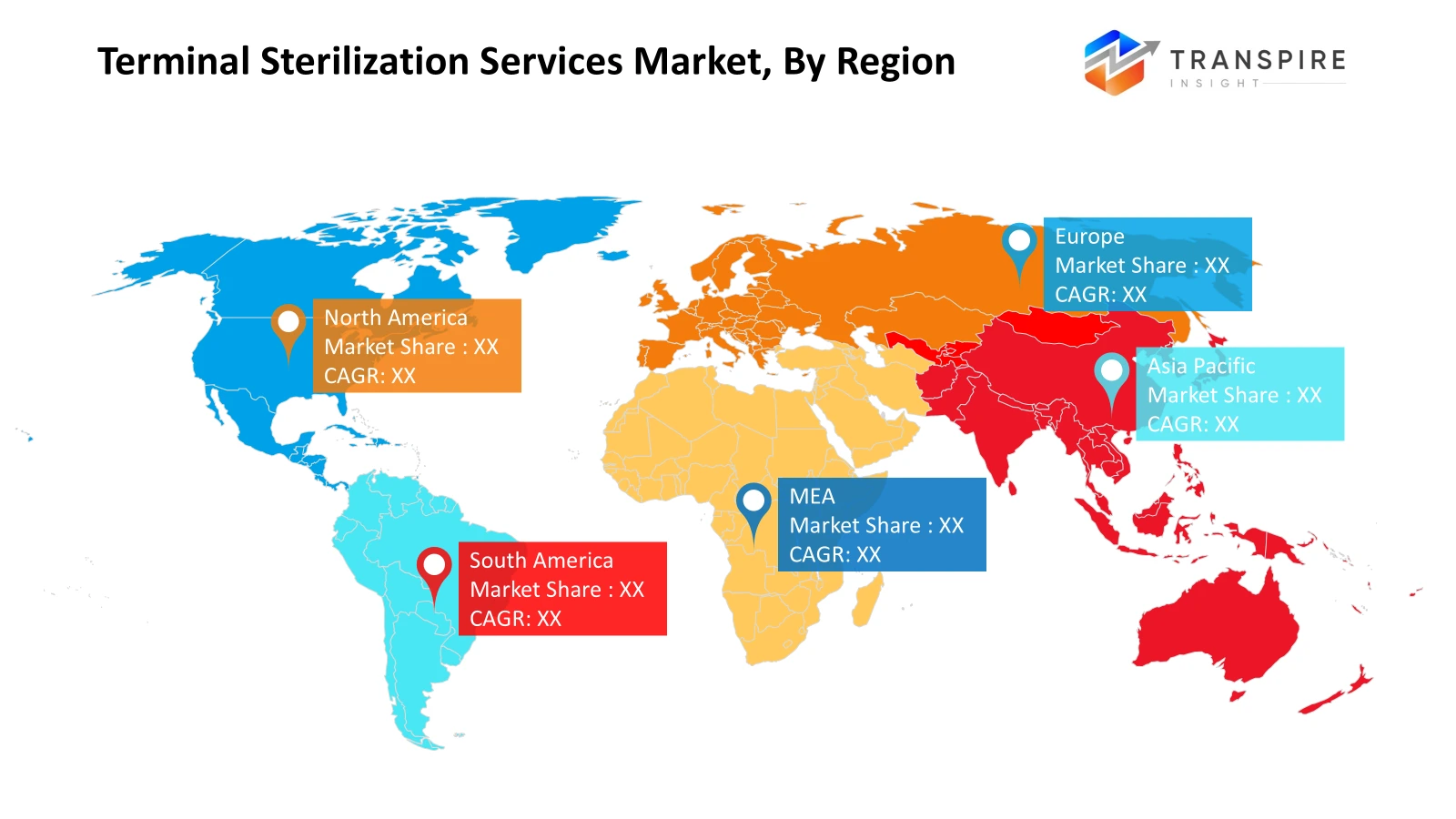
- North America: Largest Market in 2026
- Asia Pacific: Fastest Growing Market
To learn more about this report,  Download Free Sample Report
Key Market Trends Analysis
- North America is seeing a lot of growth in sterilization services. This is because there is a demand for single-use medical devices. Also companies have to follow rules and regulations now. Many manufacturers are looking for ways to save money and make things easier. So they are using sterilization services that are cost-effective and can be scaled up. These services have to meet the standards of the FDA and the ISO, for terminal sterilization services and terminal sterilization services.
- The United States is the leader when it comes to using Ethylene Oxide sterilization. This is because Ethylene Oxide sterilization is very good at handling medical devices. The United States has a lot of places that make medicine and medical devices. These places have been around, for a time. The United States is also always putting money into new and better sterilization facilities. This means that medical devices can be sterilized and ready to use very quickly. The United States really likes Ethylene Oxide sterilization.
- In the United States medical devices are used a lot. This is because people are using disposable surgical instruments and diagnostic equipment. They are also using implants. All of these devices need to be sterilized properly. This shows that the United States has a healthcare system. There are a lot of procedures done in the United States. The government also makes sure that medical devices are safe, for patients and that they are sterile. Medical devices are a part of this. The United States medical devices are very important.
- Companies that make pharmaceutical and bio products, in the United States are using contract sterilization services more and more. This is because pharmaceutical and bio product companies want to follow the rules of cGMP standards. Pharmaceutical and bio product companies also want to make their work simpler and make their production of biologics and drugs more efficient. This is why pharmaceutical and bio product companies are driving growth in this area.
- The Asia Pacific region is seeing an increase in the market because of the growing number of medical devices and medicines being made in China, India and Japan. This is also happening because people, in these countries are spending money on healthcare. Many companies are now using services to sterilize their products. The Asia Pacific region is also building infrastructure to support big sterilization projects. The Asia Pacific is really. This is because of all these things happening in the Asia Pacific.
- In the Asia Pacific region Gamma Radiation is becoming really popular for sterilization. This is because Gamma Radiation can handle a lot of work at one time and it is easy to scale up. It is also very good for sterilizing batches of medical devices and pharmaceutical products. The governments, in this region are also helping by supporting companies that want to export their products and by investing in facilities that use radiation for sterilization. This is why Gamma Radiation is gaining traction in the Asia Pacific region for sterilization of devices and pharmaceutical products.
- Medical devices are really popular in the Asia Pacific region. They are the product type here. This is because of instruments, things that you use once and throw away and devices that doctors put inside your body. More and more of these things are being made in the Asia Pacific region. This is happening because more people can get healthcare now. Also more people have money to spend on things so they are going to the doctor and getting operations. This means that medical devices like instruments and implantable devices are being used a lot. Medical devices are, in demand.
- In Asia Pacific, more and more pharma and bioproduct companies are hiring experts to handle terminal sterilization. This helps them keep up with rules, make production smoother, and get better results for drugs you inject, biologics, and combination products.
The terminal sterilization services market involves outsourcing sterilization solutions for medical tools, medicines, and biologics. This makes sure products are safe, sterile, and meet strict rules. Terminal sterilization is the last step in making products. Here, products are sterilized in their final packaging, which cuts down on the risk of contamination and keeps them safe for users. The market is fueled by more complicated medical tools, the rise in demand for single-use and implantable products, and more reliance on service providers to meet international sterility standards like ISO 11135, ISO 11137, and cGMP rules.
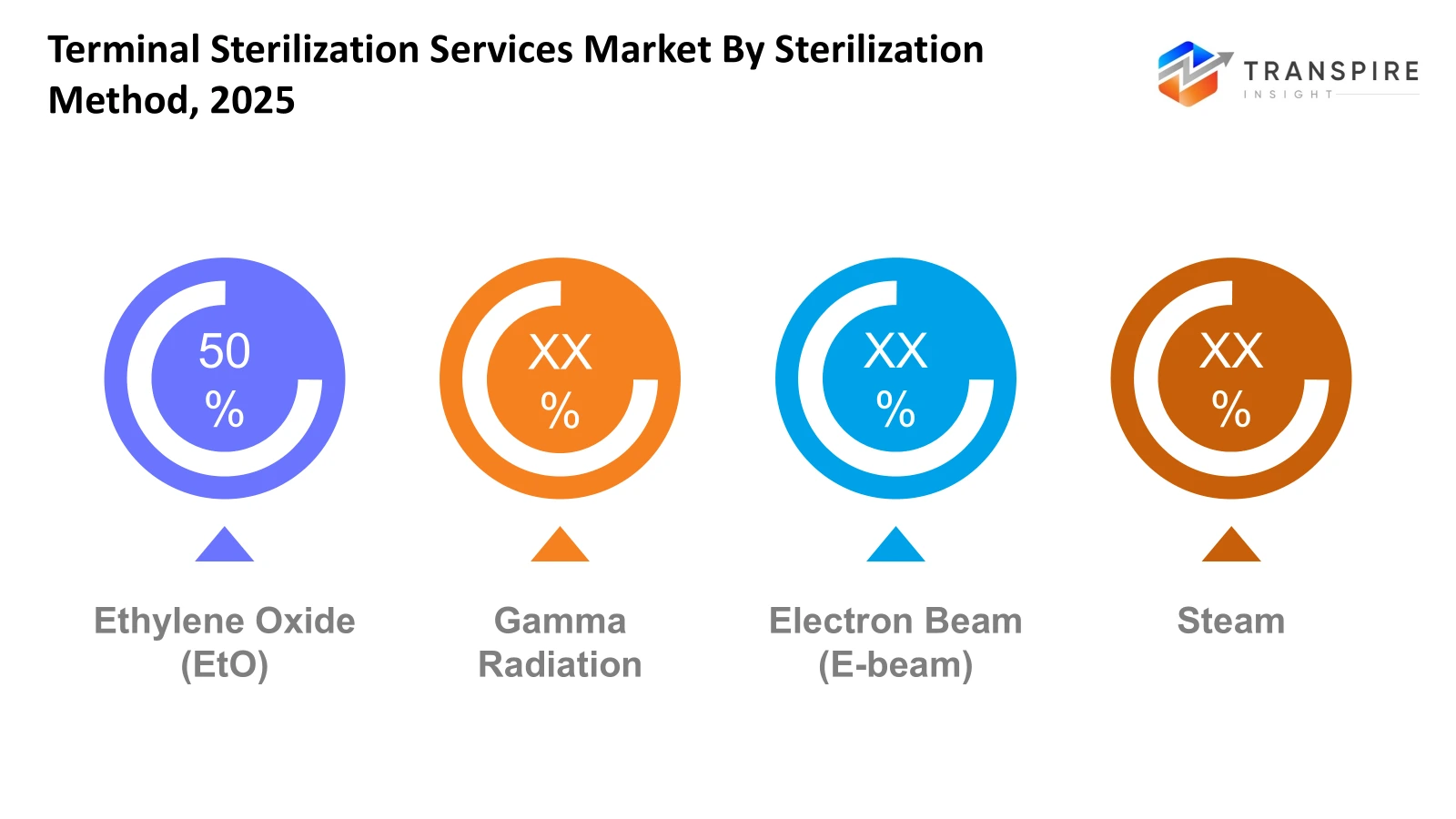
Major sterilization methods are Ethylene Oxide (EtO), Gamma Radiation, Electron Beam (E-beam), and Steam sterilization. Each has its own benefits based on the product, material, and rules. Ethylene Oxide is still the main method for sensitive and complex medical tools, while gamma and electron beam sterilization are better for big quantities of radiation-stable products. Outsourcing sterilization lets manufacturers cut costs, be more efficient, and lower risks tied to doing sterilization themselves. The main users are medical tool makers and drug companies that want trustworthy sterilization to help with product releases, following rules, and selling worldwide.
North America is the top region in the market because of its good healthcare, rules, and strong medical tool making. Asia Pacific is growing the fastest because of expanding manufacturing, better healthcare access, and more outsourced sterilization. Market growth is also helped by new tech, higher demand for sterile products, and more investments in contract sterilization places worldwide. This shows how important terminal sterilization is in healthcare and drug manufacturing.
Terminal Sterilization Services Market Segmentation
By Sterilization Method
- Ethylene Oxide (EtO)
Ethylene Oxide is the choice for sterilizing medical devices. This is because Ethylene Oxide can handle devices that're sensitive to heat and moisture. It can also sterilize devices with shapes and packaged products. Ethylene Oxide is really good at getting into spaces and it is allowed by regulations. That is why Ethylene Oxide is the method for sterilizing large quantities of medical devices. Even though it can be hard to comply with rules Ethylene Oxide is still the best option, for large-scale sterilization of medical devices.
- Gamma Radiation
Gamma Radiation is often used for things that we throw away because it can go really deep and it is reliable. Gamma Radiation helps us treat a lot of things at the time and makes sure they are completely clean which is great, for medical products that are made to be cleaned with Gamma Radiation and can handle it.
- Electron Beam (E-beam)
People are starting to use Electron Beam sterilization more. This is because Electron Beam sterilization is really fast and it does not leave much stuff behind as EtO does. Electron Beam sterilization is good for things that're not too thick. It also lets us sterilize things when we need to which means we can get them back in use a lot quicker. Electron Beam sterilization is really helpful, for this reason.
- Steam
Steam sterilization is mostly used for heat- and moisture-resistant products, providing cost-effectiveness and validated protocols. The use of steam sterilization is still limited to compatible materials but remains effective for pharmaceutical and certain device sterilizations.
To learn more about this report, Download Free Sample Report
By Product Type
- Medical Devices
The market is dominated by medical devices, owing to the rise in the production of disposable, implantable, and minimally invasive devices that require validated terminal sterilization. The regulatory focus on patient safety and infection control further drives the market in this segment.
- Pharmaceuticals
Pharmaceuticals must have a high level of sterility assurance, especially for injectables and parenteral products. Growth is encouraged by the increasing need for drug manufacturing and regulation that requires validated terminal sterilization prior to commercialization.
- Biologics
Because vaccines and complicated biological treatments are being developed more and more, biologics are becoming more important. Since these delicate products need really good sterilization, many companies are choosing to hire experts to handle it.
By End User
- Medical Device Manufacturers
Medical device makers are the biggest users because they sterilize a lot. Plus, they're outsourcing more to cut costs and meet rules everywhere.
- Pharmaceutical & BioProduct Type Companies
Pharma and bioproduct companies use terminal sterilization to meet cGMP standards, make production easier, and keep their expensive injectable and biologic products sterile.
Regional Insights
Terminal sterilization services are growing differently in different parts of the world. This is because of things like healthcare, rules, and how much stuff they can make. North America is still the biggest market. The US is in charge over there because they have really good medical devices and make a lot of medicines. Plus, the FDA has strict rules, and they use sterilization services from other companies a lot. Canada and Mexico are also helping out by spending cash on healthcare and growing their manufacturing areas.
Europe is expanding at a steady rate. Germany, the UK, France, Spain, and Italy are key markets because they have robust healthcare and regulations, and they are good at developing medical devices. The rest of Europe is slowly getting there as they start following international rules and making healthcare more available.
The Asia Pacific region is growing at a super-fast rate due to the growth of industries in countries such as China, Japan, India, South Korea, Australia, and New Zealand. They are producing more healthcare products and medicines, investing more in healthcare, and utilizing sterilization services, hence contributing to the growth of the region. Other countries in Asia Pacific are coming up as they start using better manufacturing and healthcare stuff.
South America's economy is doing okay right now. Brazil and Argentina are really helping things along by making healthcare easier to get, making their own drugs, and fixing rules that were a pain. The rest of South America is pitching in a bit too. The Middle East and Africa aren't growing as fast. Saudi Arabia, the UAE, and South Africa are trying to help by making healthcare better, buying in more medical stuff and gradually getting their own medicine factories going. The rest of the Middle East and Africa might do better down the road.
To learn more about this report, Download Free Sample Report
Recent Development News
- August 2024, Sotera Health announced an expansion of its Ethylene Oxide sterilization facilities in the U.S. to meet growing demand from medical device and pharmaceutical manufacturers. This investment supports faster turnaround and compliance with FDA standards.
(Source: Business Wire – Sotera Health News)
- March 2023, Steris expanded its gamma and electron beam sterilization capacity in Asia-Pacific, aiming to serve increasing medical device production and biologics manufacturing in emerging economies. The expansion aligns with growing demand for outsourced terminal sterilization.
(Source: GlobeNewswire – Steris Expansion)
|
Report Metrics |
Details |
|
Market size value in 2025 |
USD 5.40 Billion |
|
Market size value in 2026 |
USD 6.20 Billion |
|
Revenue forecast in 2033 |
USD 11.80 Billion |
|
Growth rate |
CAGR of 9.60% from 2026 to 2033 |
|
Base year |
2025 |
|
Historical data |
2021 – 2024 |
|
Forecast period |
2026 – 2033 |
|
Report coverage |
Revenue forecast, competitive landscape, growth factors, and trends |
|
Regional scope |
North America; Europe; Asia Pacific; Latin America; Middle East & Africa |
|
Country scope |
United States; Canada; Mexico; United Kingdom; Germany; France; Italy; Spain; Denmark; Sweden; Norway; China; Japan; India; Australia; South Korea; Thailand; Brazil; Argentina; South Africa; Saudi Arabia; United Arab Emirates |
|
Key company profiled |
Steris plc, Sotera Health Company, Sterigenics U.S., LLC, Nordion, Inc., E-BEAM Services, Inc., BGS Beta-Gamma-Service GmbH & Co. KG, Synergy Health plc, Cantel Medical Corp., Cosmed Group, Inc., Scapa Healthcare, Noxilizer, Inc., Steri-Tek, Life Science Outsourcing, Inc., Medistri SA, and Sterilmed, Inc. |
|
Customization scope |
Free report customization (country, regional & segment scope). Avail customized purchase options to meet your exact research needs. |
|
Report Segmentation |
By Sterilization Method (Ethylene Oxide (EtO), Gamma Radiation, Electron Beam (E-beam), Steam); By Product Type (Medical Devices, Pharmaceuticals, Biologics); By End User (Medical Device Manufacturers, Pharmaceutical & BioProduct Type Companies) |
Key Terminal Sterilization Services Company Insights
Steris plc is a big deal in the global terminal sterilization services market because they do a lot of stuff like Ethylene Oxide, Gamma Radiation, Electron Beam, and Steam sterilization. They've got facilities all over the world and really know their stuff when it comes to regulations and preventing infections. Plus, they do more than just sterilization. They've bought some other companies to get bigger and offer even more services, which makes them more efficient. Steris plc stays ahead of the game by following all the rules, having long-term deals with medical device makers, and always putting money into expanding so they can keep up with the increasing need for sterilization.
Key Terminal Sterilization Services Companies:
- Steris plc
- Sotera Health Company
- Sterigenics U.S., LLC
- Nordion, Inc.
- E-BEAM Services, Inc.
- BGS Beta-Gamma-Service GmbH & Co. KG
- Synergy Health plc
- Cantel Medical Corp.
- Cosmed Group, Inc.
- Scapa Healthcare
- Noxilizer, Inc.
- Steri-Tek
- Life Science Outsourcing, Inc.
- Medistri SA
- Sterilmed, Inc.
Global Terminal Sterilization Services Market Report Segmentation
By Sterilization Method
- Ethylene Oxide (EtO)
- Gamma Radiation
- Electron Beam (E-beam)
- Steam
By Product Type
- Medical Devices
- Pharmaceuticals
- Biologics
By End User
- Medical Device Manufacturers
- Pharmaceutical & BioProduct Type Companies
Regional Outlook
- North America
- United States
- Canada
- Mexico
- Europe
- Germany
- United Kingdom
- France
- Spain
- Italy
- Rest of Europe
- Asia Pacific
- Japan
- China
- Australia & New Zealand
- South Korea
- India
- Rest of Asia Pacific
- South America
- Brazil
- Argentina
- Rest of South America
- Middle East & Africa
- Saudi Arabia
- United Arab Emirates
- South Africa
- Rest of the Middle East & Africa
Frequently Asked Questions
Find quick answers to common questions.
The approximate Terminal Sterilization Services Market size for the market will be USD 11.80 billion in 2033.
Key segments for the Terminal Sterilization Services Market are By Sterilization Method (Ethylene Oxide (EtO), Gamma Radiation, Electron Beam (E-beam), Steam); By Product Type (Medical Devices, Pharmaceuticals, Biologics); By End User (Medical Device Manufacturers, Pharmaceutical & BioProduct Type Companies).
Major Terminal Sterilization Services Market players are Steris plc, Sotera Health Company, Sterigenics U.S., LLC, Nordion, Inc., E-BEAM Services.
The North America region is leading the Terminal Sterilization Services Market.
The CAGR of the Terminal Sterilization Services Market is 9.60%.
- Steris plc
- Sotera Health Company
- Sterigenics U.S., LLC
- Nordion, Inc.
- E-BEAM Services, Inc.
- BGS Beta-Gamma-Service GmbH & Co. KG
- Synergy Health plc
- Cantel Medical Corp.
- Cosmed Group, Inc.
- Scapa Healthcare
- Noxilizer, Inc.
- Steri-Tek
- Life Science Outsourcing, Inc.
- Medistri SA
- Sterilmed, Inc.
Recently Published Reports
-
May 2026
Biosimilars Market
Biosimilars Market By Product Type (Monoclonal Antibodies, Recombinant Hormones, Erythropoietin, G-CSF, Others), By Indication (Oncology, Autoimmune Diseases, Blood Disorders, Diabetes, Others), By Manufacturing Type (In-House Manufacturing, Contract Manufacturing), By Distribution Channel (Hospital Pharmacies, Retail Pharmacies, Online Pharmacies), By Industry Analysis, Size, Share, Growth, Trends, and Forecasts 2021-2033
-
Apr 2026
Gastrointestinal Endoscopy Market
Gastrointestinal Endoscopy Market By Type (Rigid Gastrointestinal Endoscope, Flexible Gastrointestinal Endoscopes, Disposable Gastrointestinal Endoscope), By Procedure Type (Colonoscopy, Gastroscopy, Duodenoscopy, Enteroscopy, Flexible Sigmoidoscopy, Others), By Application (Diagnosis, Treatment), By End-Users (Hospitals, Ambulatory Surgical Centers, Specialty Clinics, Laboratories, Others), By Industry Analysis, Size, Share, Growth, Trends, and Forecasts 2021-2033
-
Apr 2026
Rare Inherited Metabolic Disorder Drug Market
Rare Inherited Metabolic Disorder Drug Market By Drug Class (Enzyme Replacement Drugs, Gene Therapy Drugs, Substrate Reduction Drugs, Small Module Drugs, Protein Drugs), By Route of Administration(Parenteral, Oral, Intrathecal), By Clinical Development (Marketed Drugs, Late Stage Clinical Phase III, Early Stage Clinical Phase I-II, Preclinical Candidates), By Indication (Lysosomal Storage Disorders, Urea Cycle Disorders, Amino Acid Metabolic Disorders, organic Acidemias, Peroximal Disorders), By Industry Analysis, Size, Share, Growth, Trends, and Forecasts 2021-2033
-
Jan 2026
Pharmaceutical Cleanroom Technology Market
Pharmaceutical Cleanroom Technology Market By Product (Equipment, Consumables, Services); By Cleanroom Type (Standard Cleanrooms, Modular Cleanrooms); By End Use (Pharmaceutical Companies, Biotechnology Companies), By Industry Analysis, Size, Share, Growth, Trends, and Forecasts 2021-2033