

South Korea Mucopolysaccharidosis Treatment Market Size & Forecast:
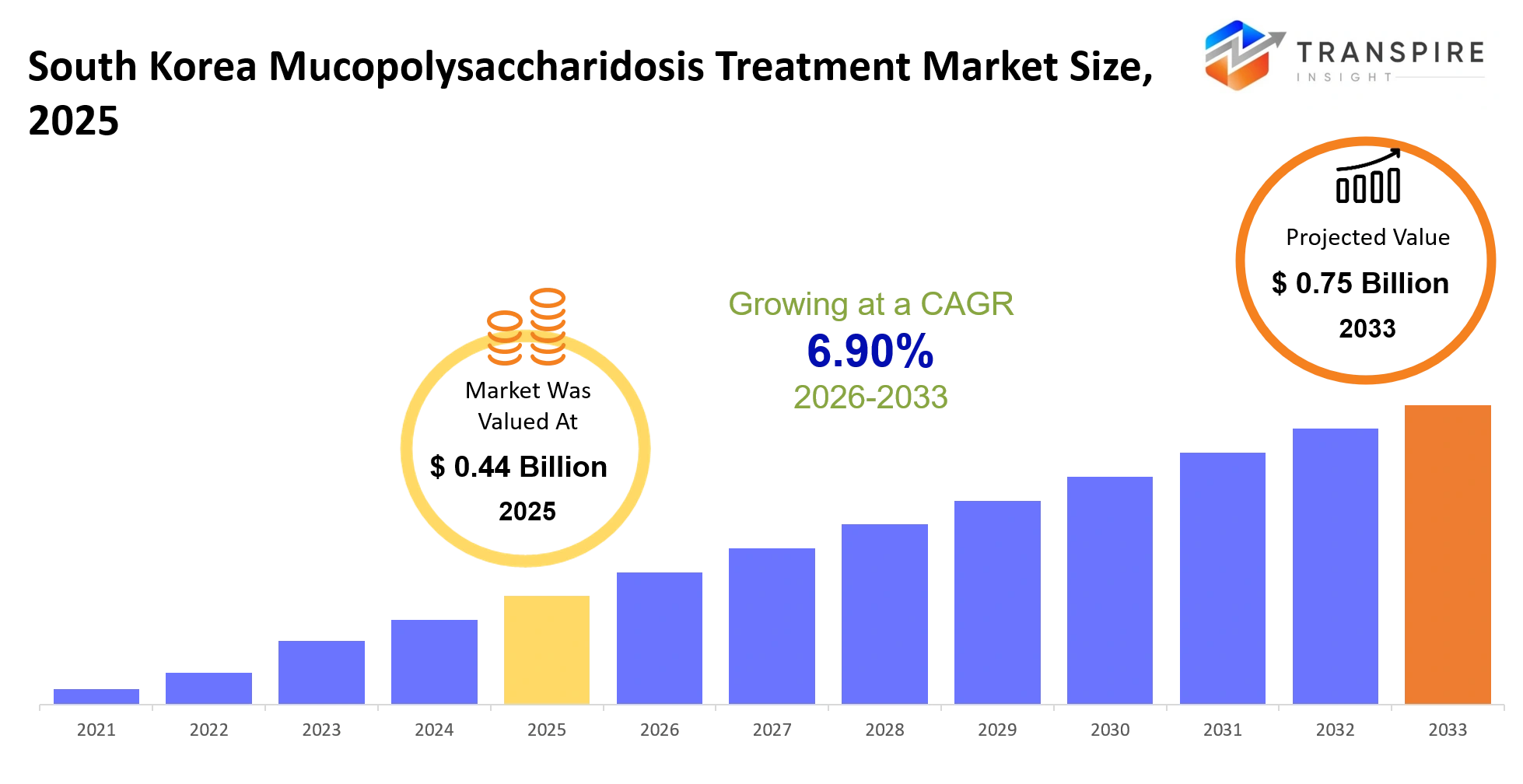
- South Korea Mucopolysaccharidosis Treatment Market Size 2025: USD 0.44 Billion
- South Korea Mucopolysaccharidosis Treatment Market Size 2033: USD 0.75 Billion
- South Korea Mucopolysaccharidosis Treatment Market CAGR: 6.90%
- South Korea Mucopolysaccharidosis Treatment Market Segments: By Treatment Type (Enzyme Replacement Therapy, Stem Cell Transplantation, Supportive Care, Gene Therapy, Others); By Disease Type (MPS I, MPS II, MPS III, MPS IV, Others).
To learn more about this report,  Download Free Sample Report
South Korea Mucopolysaccharidosis Treatment Market Summary
The South Korea Mucopolysaccharidosis Treatment Market was valued at USD 0.44 Billion in 2025. It is forecast to reach USD 0.75 Billion by 2033. That is a CAGR of 6.90% over the period.
In South Korea, treatment for mucopolysaccharidosis tends to revolve around long-haul enzyme replacement therapies, some hematopoietic stem cell transplants, and newer gene based interventions that help people cope with the ongoing, progressive multi organ damage tied to lysosomal enzyme deficits. In everyday care this approach can lower the chances of irreversible neurological harm and skeletal complications, while also supporting a longer functional lifespan,so honestly the model is moving away from only symptom control and into disease modifying pathways through specialist hospitals.
Over the past five years, the market has changed a lot in structure, from what used to be pretty isolated hospital led choices toward coordinated rare disease networks that link genetic testing with early diagnosis and more standardized therapy protocols. One big reason for speeding all of this up was the expanded government support for rare disease reimbursements, plus ongoing global momentum around enzyme therapies and gene therapy approvals. This kind of momentum then made access to treatment better, and it seemed to help clinical adoption as well, overall. So, we’re seeing broader uptake of high cost biologics because earlier identification brings a larger eligible patient pool, and providers are increasingly choosing longer term result improvement over only short term symptom relief, which is kind of a shift in mindset.
Key Market Insights
- The Seoul Capital Area kind of takes over the South Korea Mucopolysaccharidosis Treatment Market, with an estimated 40%+ share in 2025, mostly because the hospital infrastructure is more advanced.
- Meanwhile the Southeastern provinces are moving the quickest through 2032, sort of fueled by expanded rare disease screening, and also better referral networks, that keep patients from getting stuck.
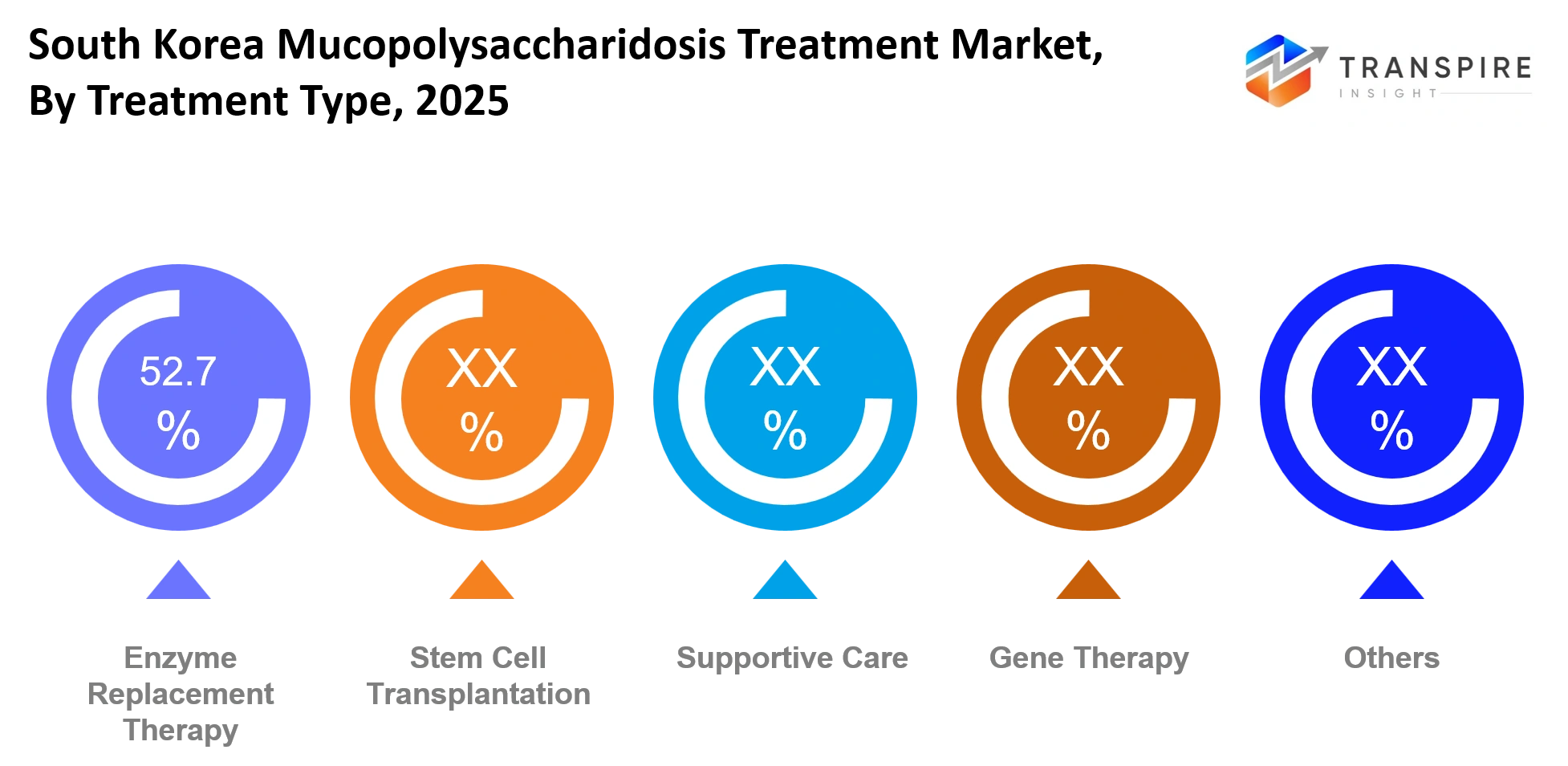
- Enzyme Replacement Therapy is still leading the South Korea Mucopolysaccharidosis Treatment Market, it will bring the largest revenue share in 2025, largely due to established clinical adoption and real-world usage.
- Gene therapy ends up as the second-largest segment, and it’s gaining momentum via clinical trials, plus the next generation rare disease treatment pipelines that are gradually getting attention.
- Stem cell transplantation becomes the fastest-growing segment from 2025–2032, supported by improving transplant safety and more solid outcomes data.
- For MPS Types, MPS Type I treatment dominates the South Korea Mucopolysaccharidosis Treatment Market with more than 35% share, because diagnosis rates are higher, and therapy availability feels stronger.
- MPS II and IV applications are the fastest-growing categories, helped by expanding newborn screening, and early intervention strategies that are actually getting implemented sooner.
- Hospitals along with specialized genetic centers hold the leading share, close to 70% in 2025, mainly due to centralized rare disease care delivery, which reduces delays.
- Research institutes are the fastest-growing end-user segment, driven by clinical trial activity, and gene therapy development programs that are ramping up.
What are the Key Drivers, Restraints, and Opportunities in the South Korea Mucopolysaccharidosis Treatment Market?
The South Korea Mucopolysaccharidosis Treatment Market is largely driven by the rapid rollout of early genetic screening, along with broader reimbursement support for rare-disease biologics. It kind of started when South Korea sharpened its national rare disease policy framework, and at the same time upgraded insurance coverage for enzyme replacement therapies, which reduces the patient out-of-pocket burden for ongoing, long term care. So, hospitals can recognize people sooner, and start therapy earlier, this basically widens the patient eligibility pool,and keeps recurring revenue more stable from biologics based regimens. Plus, the uptake of enzyme therapy and newer gene therapies has become more consistent across tertiary care centers, helping solidify clearer treatment roadmaps, even if each center still moves at its own tempo.
Still, there’s this structural restraint that the market can’t really dodge, which is extremely high treatment costs paired with lifelong therapy dependence. Enzyme replacement therapies plus newer biologics tend to require continuous administration across many years, so the financial pressure stays on the public reimbursement systems. That level of spending intensity narrows patient penetration, especially for the ultra rare MPS subtypes, and it also slows uptake in smaller regional hospitals because specialized funding and infrastructure are often thin or simply missing. And the reason it’s structural is pretty blunt, treatment discontinuation isn’t clinically realistic, which leaves healthcare systems with very little room to reduce long term expenditure.
A key opportunity lives in growing gene therapy clinical pipelines, driven by institutions like Seoul National University Hospital and also wider biotech collaborations. As one time or long duration curative methods move through trials, they could meaningfully lower lifetime treatment expenses while simultaneously improving outcomes, and that kind of ripple effect is pretty hard to ignore.
What Has the Impact of Artificial Intelligence Been on the South Korea Mucopolysaccharidosis Treatment Market?
The South Korea Mucopolysaccharidosis Treatment Market is being reshaped, bit by bit, by artificial intelligence that’s showing up in rare disease diagnosis, genomic interpretation, and the optimization of care pathways. More and more hospitals are using AI-enabled genetic analysis tools to speed up the identification of mucopolysaccharidosis subtypes from sequencing data, and that cuts down the diagnostic delays that used to take multiple years. As a result, patients are entering enzyme replacement therapy programs sooner, and clinicians across tertiary care networks seem to follow a steadier clinical logic. Besides that, advanced clinical decision support systems are starting to be deployed in major Korean hospitals using AI to sort of optimize the dosing cycles, and also to watch long-term response rhythms. That ends up improving compliance, and overall efficiency in how resources are shifted around.
At the same time, predictive analytics are being applied to anticipate how the illness might progress and even to foresee complications such as cardiac strain or skeletal deterioration, so clinicians can modulate treatment intensity in advance. On the ground level, AI driven hospital management systems also support appointment routing, infusion center utilization, and the cold chain management for biologics. This brings clearer benefits for therapy continuity, with fewer administrative bottlenecks, than before.
But AI adoption in this rare-disease segment still feels kind of blocked by limited patient datasets, which lowers model training accuracy and makes scaling across different mucopolysaccharidosis subtypes harder. On top of that, the integration costs with old hospital information systems keep slowing deployment down, especially in the smaller regional medical centers . Still, despite all those obstacles, the ongoing collaboration between Korean biotech companies and global AI health platforms is slowly improving data standardization, and it is starting to unlock more precise, personalized treatment frameworks too.
Key Market Trends
- Newborn screening initiatives expanded from Seoul hospital into regional centers from 2022 through 2025. These led to an improvement of early detection rates of MPS throughout South Korea.
- The cost barrier to enzyme therapy was reduced following rare disease reimbursement changes from 2021 and this contributed to hospitals picking up mucopolysaccharidosis treatments within South Korea and fairly rapidly adopting them.
- Takeda's and JCR Pharmaceuticals' gene therapy trials of 2023 fueled growth for experimental treatments at South Korean tertiary hospitals, almost in a cascading manner.
- Between 2020-2024 enzyme replacement therapy infusion centers in South Korea increased capacity, and this led to a relatively large increase in adherence rates while also reducing missed treatment cycles.
- The use of AI based genomic analysis tools that have been introduced since after 2022 reduced delays in diagnosis of Mucopolysaccharidosis types in large Seoul university hospitals.
- Since 2021 treatment has begun to be concentrated in rare disease centers in the meaning of accumulating expertise at Seoul National University Hospital and few other tertiary institutions.
- Sanofi Genzyme, BioMarin, Ultragenyx, Takeda increased cooperation with Korean hospitals from 2022 to 2025 for wider market penetration in biologics.
- Cold chain logistics improved stability of biologics, reducing interruption of treatment throughout the hospital network across the nation between 2021 and 2024.
South Korea Mucopolysaccharidosis Treatment Market Segmentation
By Treatment Type :
Enzyme Replacement Therapy is still going to be the most widely used path, mainly because hospitals keep adopting it steadily, and the infusion programs are getting more structured across tertiary care centers. Access to treatment keeps getting better too, since reimbursement support is expanding, so patients can get in earlier and, in general, live longer. At the same time, stem cell transplantation and supportive care still act like a stabilizing net, helping with advanced cases and symptom control in different clinical environments, even if they are not always the first choice.
Gene therapy meanwhile is slowly moving out of the “just trials” phase and into early clinical use, but only in a limited number of hospitals. That shift is helped along by global biotech collaboration and also by stronger regulatory pathways. Because of this change, long term expectations are improving, since one time or long duration interventions can lower the need for lifelong enzyme infusions. Most other emerging therapies are still in development, but continued research funding should keep driving broader clinical evaluation over the next few years.
To learn more about this report, Download Free Sample Report
By Disease Type :
For demand patterns, MPS I and MPS II cases pretty much dominate, mostly from higher diagnosis rates and stronger clinical awareness, especially as genetic screening programs become more common. With early identification improving, more patients are being enrolled into enzyme therapy pathways, which makes treatment initiation more consistent. Hospitals are also zeroing in on structured care models so they can manage these subtypes more effectively across specialized treatment centers, instead of treating them in a fragmented way.
MPS III and MPS IV are expanding slower, but it’s still steady, as diagnostic accuracy keeps improving and referral networks get stronger. These conditions often need long term supportive care, and that means there is continuous pressure on hospital resources and caregiver support systems, not just at diagnosis. Other rare subtypes remain less frequently identified, but the rising coverage of genetic testing should gradually increase detection and improve access to treatment across the broader healthcare system.
What are the Key Use Cases Driving the South Korea Mucopolysaccharidosis Treatment Market?
Enzyme replacement therapy in tertiary hospitals still sits as this main use case that basically drives demand, because it directly handles progressive organ damage in people with mucopolysaccharidosis. Having consistent infusion schedules and stable reimbursement support makes it the main reason hospitals stay busy, for real clinical work, plus long run patient care too.
At the same time, gene therapy trials plus stem cell transplantation are kind of spreading into more use cases, especially across specialized genetic centers and research hospitals. Those efforts are backed by academic medical institutions and biotech partnerships, and that combination helps increase patient enrollment in advanced treatment programs while also improving long-range therapeutic planning.
And then there are the newer angles, newborn screening expansion and AI-assisted genetic diagnostics. They are not fully mature yet, but early detection programs in regional hospitals and precision medicine initiatives should enable quicker intervention. Also the one-time curative gene therapies are expected to reshape future treatment paths, and over time reduce the need for lifelong treatment dependence, or at least that’s the general idea.
|
Report Metrics |
Details |
|
Market size value in 2025 |
USD 0.44 Billion |
|
Market size value in 2026 |
USD 0.47 Billion |
|
Revenue forecast in 2033 |
USD 0.75 Billion |
|
Growth rate |
CAGR of 6.90% from 2026 to 2033 |
|
Base year |
2025 |
|
Historical data |
2021 - 2024 |
|
Forecast period |
2026 - 2033 |
|
Report coverage |
Revenue forecast, competitive landscape, growth factors, and trends |
|
Country scope |
South Korea |
|
Key company profiled |
Sanofi, Takeda, BioMarin, Chiesi, Orchard Therapeutics, Regenxbio, Ultragenyx, JCR Pharmaceuticals, Denali, Amicus, Pfizer, Novartis, Roche, GSK, Sarepta. |
|
Customization scope |
Free report customization (country, regional & segment scope). Avail customized purchase options to meet your exact research needs. |
|
Report Segmentation |
By Treatment Type (Enzyme Replacement Therapy, Stem Cell Transplantation, Supportive Care, Gene Therapy, Others); By Disease Type (MPS I, MPS II, MPS III, MPS IV, Others). |
Which Regions are Driving the South Korea Mucopolysaccharidosis Treatment Market Growth?
Seoul Capital Area is basically leading the South Korea Mucopolysaccharidosis Treatment Market because there’s a really dense web of tertiary hospitals, plus advanced genetic diagnostic facilities that sort of keep things moving. In practice, major places like university hospitals in Seoul gather a lot of rare disease know-how, and that helps with earlier detection, plus better long-term treatment planning too. On top of that, reimbursement frameworks for enzyme replacement therapies are strong, so patient uptake stays high in the area. And then you have ongoing collaboration between hospitals and biotech firms, which keeps a stable little ecosystem for advanced treatment delivery, without too much disruption.
Meanwhile, the Busan, Ulsan,and Gyeongnam regions keep contributing steadily. It’s supported by well established university hospitals and a sizable industrial workforce, so people still need consistent access to specialized care. Unlike Seoul, this area doesn’t really “front-run” clinical innovation, but it does maintain stable treatment adoption through referral systems that are well distributed. There’s also a maritime-linked pattern of population movement, plus regional hospital upgrades, so patients keep flowing into rare disease care programs. That kind of steadiness helps the region hold a reliable share of the country’s treatment demand.
Then there’s Chungcheong, which is showing up as the fastest-growing area. This is mostly tied to recent investments in regional medical infrastructure, and expanded newborn genetic screening programs. Government initiatives have broadened access to specialized diagnostics in secondary hospitals, so there’s less reliance on Seoul-based facilities. Also, telemedicine adoption is increasing, with local clinics connected to expert centers, which improves treatment continuity, even when travel is a hassle. For investors, this shift feels like a real chance to build partnerships with developing hospitals and expand care networks through 2026–2033.
Who are the Key Players in the South Korea Mucopolysaccharidosis Treatment Market and How Do They Compete?
Competition in the South Korea Mucopolysaccharidosis Treatment Market is still kinda moderately consolidated, mostly handled by a small cluster of global rare disease specialists who basically control the enzyme and the newer gene therapy pipelines. The bigger incumbents tend to guard their share via showing up in clinical trials, working through reimbursement talks, and building hospital partnerships, not so much by running around with price competition. In practice, the competitive edge keeps landing on how well companies push biologics delivery and how early diagnosis integration gets handled, that sort of thing really shapes the landscape for the leading players.
Sanofi Genzyme focuses on maintaining consistency with long-term enzyme replacement, relying on hospital infusion programs that support adherence and better align with reimbursement. BioMarin Pharmaceutical leans into next generation enzyme formulations, with an emphasis on improved stability plus wider MPS subtype coverage, so they can broaden the reach without changing the core approach too much. Takeda, in turn, strengthens its standing through a diversified rare disease portfolio and Asia-focused clinical trial collaborations; those partnerships help speed up regulatory engagement, and therapy validation too.
JCR Pharmaceuticals differentiates using a blood brain barrier technology platform, aimed at neurological MPS symptoms and making treatment effectiveness extend beyond only systemic care. Ultragenyx is focused on gene therapy development with a one time treatment approach, they support this through partnerships with academic hospitals and rare disease centers. The overall goal is to lessen dependence on lifelong therapy, while also reinforcing its late stage clinical pipeline going forward.
Company List
- Sanofi
- Takeda
- BioMarin
- Chiesi
- Orchard Therapeutics
- Regenxbio
- Ultragenyx
- JCR Pharmaceuticals
- Denali
- Amicus
- Pfizer
- Novartis
- Roche
- GSK
- Sarepta
Recent Development News
In April 2026, Denali Therapeutics announced continued regulatory progress for its CNS-penetrant enzyme replacement therapy DNL310 (tividenofusp alfa) for MPS II, with PDUFA review scheduled for April 5, 2026. The development represents a potential first-in-class disease-modifying therapy addressing neurological involvement in Hunter syndrome, a key unmet need in mucopolysaccharidosis treatment globally, including South Korea.
Source: https://www.reuters.com/
In January 2025, Hanmi Pharmaceutical and GC Biopharma secured regulatory approval in South Korea to initiate a Phase 1/2 clinical trial for their long-acting enzyme replacement therapy LA-GLA (HM15421/GC1134A) for Fabry disease, with translational relevance to mucopolysaccharidosis platform development due to its extended-interval dosing technology. The program supports Korea’s shift toward long-acting, next-generation lysosomal storage disorder therapies.
Source: https://hanmi.co.kr/
What Strategic Insights Define the Future of the South Korea Mucopolysaccharidosis Treatment Market?
The South Korea Mucopolysaccharidosis Treatment Market is shifting toward earlier action, mostly because genomic screening is getting more common, plus integrated hospital networks are becoming more established, and biologics that modify disease are being used more widely. Over the next 5 to 7 years, market momentum will be driven less by “just” treatment expansion, and more by how fast healthcare systems are able to spot patients before irreversible organ damage happens. This change seems to come from a meeting of rare disease policy support and precision medicine adoption in tertiary hospitals.
One quieter risk is that treatment access could become concentrated in a small set of high capability hospitals in Seoul. If that happens, there’s a risk of regional inequality, and national-scale adoption could lag, even as diagnosis rates keep rising. It can also add pressure to reimbursement frameworks as these high-cost biologics end up clustered in a limited number of care centers.
At the same time, there’s an emerging opportunity in gene therapy delivery approaches that can be scaled. Especially once early clinical programs move into approved one-time treatment pathways. If regional genetic testing hubs expand across provinces like Chungcheong, it should help reveal patient groups that have been untreated. Market players should lean into hospital network integration plans and put resources into early diagnosis partnerships, to protect stable patient flows before therapy commercialization cycles really accelerate.
South Korea Mucopolysaccharidosis Treatment Market Report Segmentation
By Treatment Type
- Enzyme Replacement Therapy
- Stem Cell Transplantation
- Supportive Care
- Gene Therapy
By Disease Type
- MPS I
- MPS II
- MPS III
- MPS IV
Frequently Asked Questions
Find quick answers to common questions.
The expected South Korea Mucopolysaccharidosis Treatment Market size is USD 0.75 Billion in 2033.
Key segments for the South Korea Mucopolysaccharidosis Treatment Market are By Treatment Type (Enzyme Replacement Therapy, Stem Cell Transplantation, Supportive Care, Gene Therapy, Others); By Disease Type (MPS I, MPS II, MPS III, MPS IV, Others).
Major South Korea Mucopolysaccharidosis Treatment Market players are Sanofi, Takeda, BioMarin, Chiesi, Orchard Therapeutics, Regenxbio, Ultragenyx, JCR Pharmaceuticals, Denali, Amicus, Pfizer, Novartis, Roche, GSK, Sarepta.
The South Korea Mucopolysaccharidosis Treatment Market size is USD 0.44 Billion in 2025.
The South Korea Mucopolysaccharidosis Treatment Market CAGR is 6.90% from 2026 to 2033.
- Sanofi
- Takeda
- BioMarin
- Chiesi
- Orchard Therapeutics
- Regenxbio
- Ultragenyx
- JCR Pharmaceuticals
- Denali
- Amicus
- Pfizer
- Novartis
- Roche
- GSK
- Sarepta
About the Authors

Pankaj Ghogare Patil
I am Pankaj Ghogare Patil, a Senior Research Analyst at Transpire Insight, specializing in the Pharmaceutical, Chemicals & Materials, Healthcare IT, and Biotechnology industry. My expertise lies in conducting comprehensive market research, analyzing industry trends, evaluating competitive landscapes, and translating complex data into actionable insights. At Transpire Insight, I closely follow emerging technologies, regulatory developments, and market innovations to create accurate, well-researched, and informative content that helps businesses and professionals make informed decisions. I am committed to producing credible, evidence-based articles that reflect industry best practices while making technical topics accessible and valuable for a broad audience.

Chakradhar Khansole
Chakradhar serves as the Research Director at Transpire Insight, bringing over 8 years of experience in technology, innovation, and strategic market intelligence. He specializes in transforming complex market data into actionable business insights that enable organizations to make informed, growth-oriented decisions. Recognized for his strategic vision and analytical expertise, Chakradhar leads high-impact research initiatives, delivering comprehensive market assessments, competitive intelligence, and forward-looking industry analysis.
Recently Published Reports
-
Jul 2026
Alopecia Treatment Market
Alopecia Treatment Market Size, Share & Analysis Report By Disease Type (Alopecia Areata, Cicatricial Alopecia, Traction Alopecia, Alopecia Totalis, Androgenetic Alopecia, Alopecia Universalis, and Other Disease Types), By Treatment Type (Topical Treatments, Oral Medications, Injectable Therapies, and Hair Transplantation), By Gender (Male, and Female), By Distribution Channel (Hospitals and Clinics, Retail Pharmacies, and Online Retailers), and Geography (North America, Europe, Asia-Pacific, Middle East and Africa, South and Central America), 2021 - 2031
-
Jul 2026
Medical Ultrasound Probe Market
Medical Ultrasound Probe Market Size, Share & Analysis Report By Type (Linear Type, Convex Type, Endocavitary Probe, Phased Array/Cardiac Probe, Transesophageal (TEE) Probe, and Others), By Application (Ophthalmology, Cardiology, Musculoskeletal, Oncology, Obstetrics & Gynecology, General Imaging, and Others), By End User (Hospitals & Clinics, Diagnostic Centers, Ambulatory Surgical Centers, and Others), and Geography (North America, Europe, Asia-Pacific, Middle East and Africa, South and Central America), 2021 – 2031
-
May 2026
Biosimilars Market
Biosimilars Market By Product Type (Monoclonal Antibodies, Recombinant Hormones, Erythropoietin, G-CSF, Others), By Indication (Oncology, Autoimmune Diseases, Blood Disorders, Diabetes, Others), By Manufacturing Type (In-House Manufacturing, Contract Manufacturing), By Distribution Channel (Hospital Pharmacies, Retail Pharmacies, Online Pharmacies), By Industry Analysis, Size, Share, Growth, Trends, and Forecasts 2021-2033
-
Apr 2026
Gastrointestinal Endoscopy Market
Gastrointestinal Endoscopy Market By Type (Rigid Gastrointestinal Endoscope, Flexible Gastrointestinal Endoscopes, Disposable Gastrointestinal Endoscope), By Procedure Type (Colonoscopy, Gastroscopy, Duodenoscopy, Enteroscopy, Flexible Sigmoidoscopy, Others), By Application (Diagnosis, Treatment), By End-Users (Hospitals, Ambulatory Surgical Centers, Specialty Clinics, Laboratories, Others), By Industry Analysis, Size, Share, Growth, Trends, and Forecasts 2021-2033