
South Korea Monoclonal Antibody Therapy Market Size & Forecast:
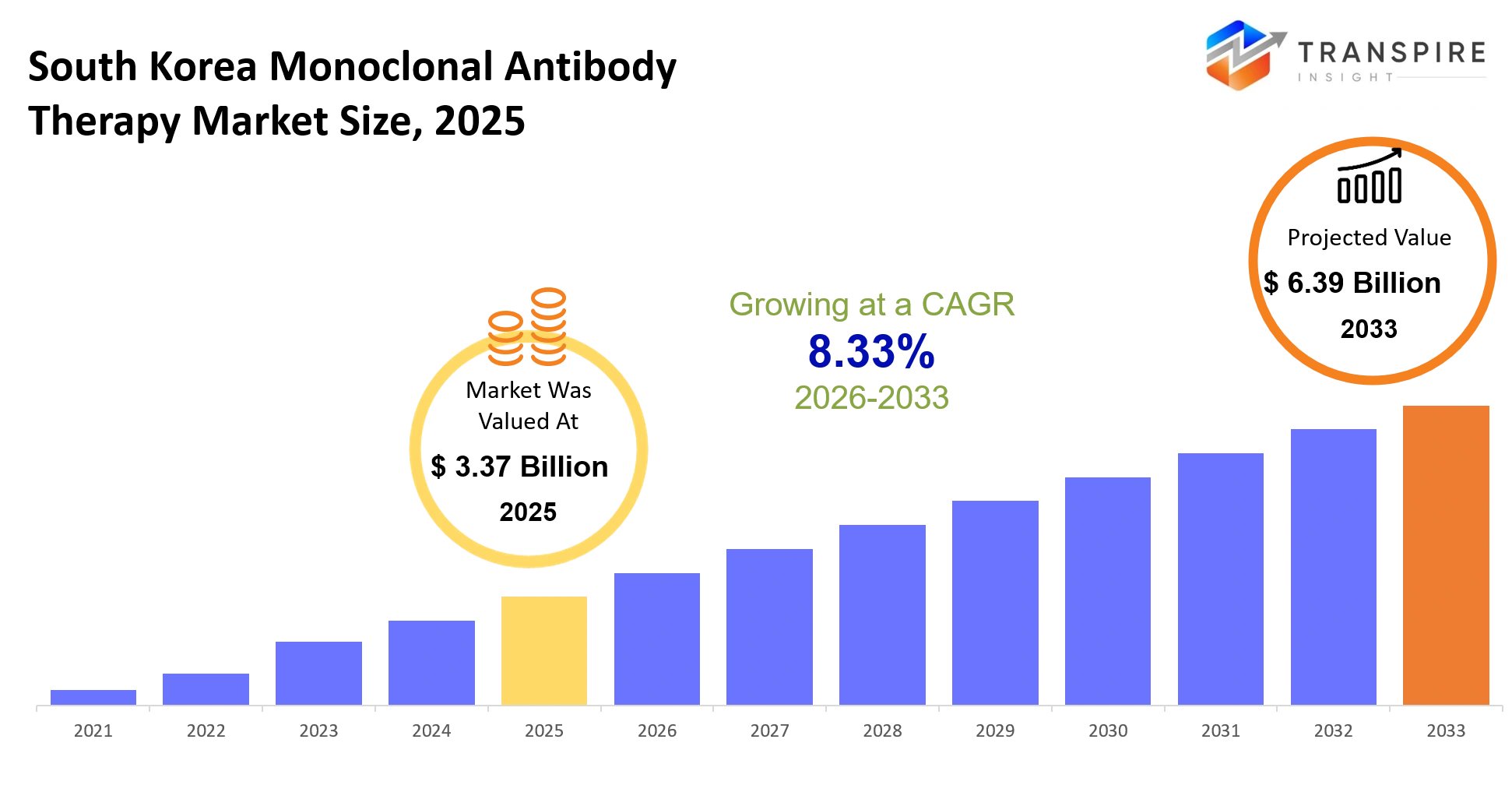
- South Korea Monoclonal Antibody Therapy Market Size 2025: USD 3.37 Billion
- South Korea Monoclonal Antibody Therapy Market Size 2033: USD 6.39 Billion
- South Korea Monoclonal Antibody Therapy Market CAGR: 8.33%
- South Korea Monoclonal Antibody Therapy Market Segments: By Antibody Type (Humanized, Human, Chimeric, Murine, Others); By Application (Cancer, Autoimmune Diseases, Infectious Diseases, Others)
To learn more about this report,  Download Free Sample Report
South Korea Monoclonal Antibody Therapy Market Summary
The South Korea Monoclonal Antibody Therapy Market was valued at USD 3.37 billion in 2025. It is forecast to reach USD 6.39 billion by 2033. That is a CAGR of 8.33% over the period.
The South Korea Monoclonal Antibody Therapy Market kind of plays a big part in modern healthcare because it gives highly targeted treatments for cancer , autoimmune disorders and a lot of complex inflammatory diseases. In practice, these therapies help clinicians dial in treatment precision, lower harm to regular cells, and handle conditions that often need ongoing attention , so it becomes a sort of essential piece of advanced clinical work in many big hospitals and specialty centers.
Over the past 3–5 years, you can see the market moving away from older , more conventional biologics, toward next-generation antibody platforms—like biosimilars, antibody-drug conjugates, and personalized immunotherapies. That shift has been backed by South Korea’s solid biopharmaceutical manufacturing strengths, and also by government-supported innovation programs. One real-world jolt was the COVID-19 pandemic, which bumped up spending on biologics research, production infrastructure , and regulatory routes. And as healthcare providers keep getting wider access to advanced antibody therapies, while domestic manufacturers push forward larger development pipelines, adoption keeps spreading into additional treatment areas, which then supports longer-lasting revenue streams across both new innovative products and biosimilar segments.
Key Market Insights
- The Seoul Capital Area is a part of the South Korea Monoclonal Antibody Therapy Market. It has around 45 to 50 percent of the market in 2025. This is because it has some of the hospitals and places where biotechnology is done.
- Gyeonggi Province also has a share in the market. This is because it has a lot of places where biopharmaceuticals are made and where research is done.
- Incheon is growing fast. It is becoming a hub for biologics production and for sending these products to other countries.
- Monoclonal antibodies that are made to work like antibodies are the most used. They are used around 40 to 45 percent of the time in 2025. This is because they can be used to treat types of cancer and autoimmune diseases.
- Human monoclonal antibodies are the second most used. They are used a lot because they work well and do not cause bad reactions.
- Chimeric monoclonal antibodies are also growing in use. They are used more and more to treat diseases and are being used in clinics.
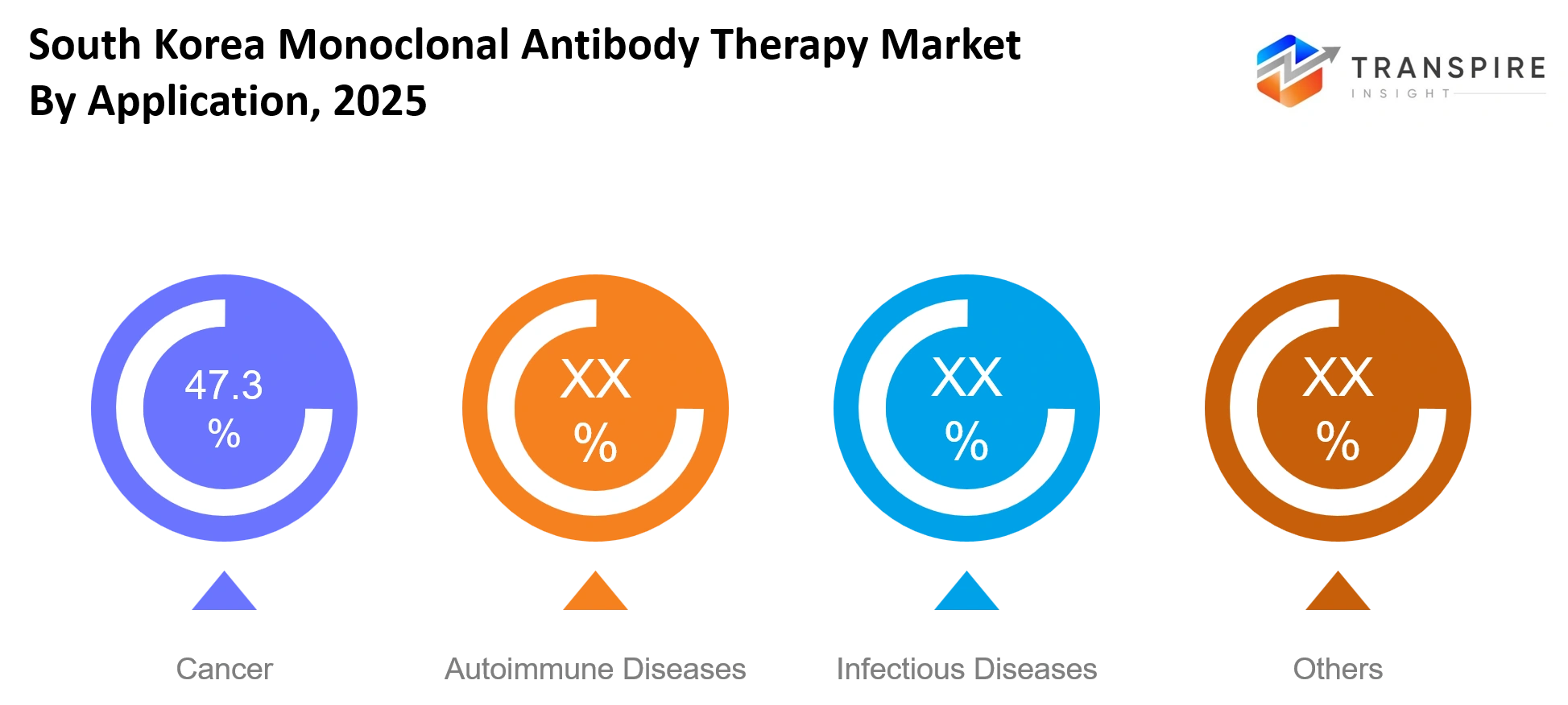
- The biggest use of monoclonal antibodies is to treat cancer. Around 55 to 60 percent of the money made from these antibodies in 2025 is, from treating cancer. This is because these antibodies can target the cells and not hurt the good cells.
- Autoimmune diseases are the biggest use of these antibodies. More and more people are using these antibodies to treat diseases.
- Monoclonal antibodies are also being used to treat diseases. This is an growing area.
- Hospitals and cancer centers use the most monoclonal antibodies. They use around 65 percent of all the antibodies in 2025. This is because they give a lot of biologic therapies to patients.
What are the Key Drivers, Restraints, and Opportunities in the South Korea Monoclonal Antibody Therapy Market?
The main force pushing forward the South Korea Monoclonal Antibody Therapy Market is basically the expansion of precision medicine plus biologics innovation across oncology and autoimmune treatment. It all kinda started or at least gained steam due to steady government backing for biopharmaceutical research , quicker progress in biologic manufacturing infrastructure, and the rising clinical track record of focused antibody therapies. Since many physicians are leaning toward options that give better efficacy but with more selective targeting, monoclonal antibodies are getting slotted in more often as standard parts of treatment protocols. That movement, in turn, boosts therapy use rates quite directly and it also opens up revenue pathways, for both next-gen biologics and biosimilar manufacturers in South Korea.
The biggest roadblock is still the high cost and the overall complexity involved in making and producing monoclonal antibodies. Different from traditional small-molecule drugs, these therapies depend on advanced cell culture systems, strict quality controls and large scale biomanufacturing facilities. This ends up being a structural issue because building manufacturing capacity, along with getting the right regulatory approvals, takes major upfront capital and several years of hands on technical know-how. So in practice, market entry stays rather narrow , the treatment expenses remain high, and uptake can get slowed down in budget conscious healthcare environments , which then limits the market’s full revenue potential.
There’s a big opportunity sitting in the building of next generation antibody platforms, especially antibody-drug conjugates and those advanced biosimilars that are becoming more and more relevant. In South Korea , companies like Celltrion and Samsung Bioepis are pushing hard to strengthen the country’s role as a global biologics manufacturing hub . As these methods start showing up in wider clinical practice, and export markets also keep expanding, manufacturers might open up new revenue channels, while also improving the availability of advanced treatments across a range of disease categories, not just one.
What Has the Impact of Artificial Intelligence Been on the South Korea Monoclonal Antibody Therapy Market?
Artificial intelligence along with advanced digital technologies are, more and more, reshaping the South Korea monoclonal antibody therapy industry , sort of nudging drug discovery forward, accelerating clinical development, and also making biomanufacturing a bit more efficient. In actual practice, pharmaceutical companies are rolling out AI-enabled platforms that help automate antibody screening, scan and interpret huge biological datasets, and find promising therapeutic targets faster than the older research routines . Because of that, these systems can shorten candidate selection timeframes quite a lot, and help research groups home in on molecules with better chances for clinical success, instead of relying on slow trial and error cycles.
At the same time, machine learning models are increasingly used to forecast cell-culture performance, fine-tune bioprocess settings ,and estimate production yields inside biologics manufacturing sites. When manufacturers watch real-time process data, they can flag early drifts before those problems start impacting product quality. This usually means fewer batch failures, and steadier operational consistency , even if conditions slip a little. Add to that, digital twins plus advanced analytics are backing process optimization by simulating manufacturing conditions, which in turn lets companies use their resources in a more sensible way. Taken together, this whole suite of tools is tied to higher facility uptime, lower manufacturing costs, and a quicker scale up for monoclonal antibody production.
In clinical development, AI tools help a lot with patient stratification, biomarker finding, and optimizing trial design , so sponsors can boost recruitment efficiency a bit quicker and maybe improve the odds of successful outcomes. But there is this big catch, the cost can be high, and the overall setup just feels really complex when AI systems have to be stitched into existing research along with manufacturing infrastructure. Also, plenty of organizations deal with scattered data, and then there are regulatory requirements that still need careful handling. That whole mix can bring accuracy down, and it can make it harder to scale AI driven decisions across the whole biologics value chain, you know end to end.
Key Market Trends
- Since 2021 the Korean manufacturers have been trying to make biologics so they do not have to depend on countries for these therapies. This helps to make sure that people in South Korea can get the biologics treatments they need.
- The companies Celltrion and Samsung Bioepis started to focus on things besides biosimilars after 2022. They are now investing money in ways to make antibodies and selling their biologics products around the world.
- Between 2021 and 2025 hospitals started to use biomarkers to choose the biologics treatments for patients. This is especially helpful for people with cancer and autoimmune diseases.
- The rules for getting biologics approved have become simpler over the years. This means that new biologics treatments can be available to people quickly.
- After 2023 doctors started to use antibody-drug conjugates. These are medicines that can target cancer cells precisely.
- The factories that make biologics started to use intelligence to improve their processes between 2022 and 2025. This helps to make sure that the biologics medicines are made consistently and that the production is more efficient.
- Korean biotechnology companies are now working closely with pharmaceutical companies from other countries. This helps to speed up research and the development of biologics treatments.
- South Korea is becoming a player in the biologics market. Many companies are coming to South Korea to make their biologics because of the countrys manufacturing capabilities.
- Doctors are starting to use biologics to treat diseases. They are finding that these biologics treatments can be very effective in the term.
- After 2023 biologics companies started to compete with each other in ways. They are not just competing on price. Also on how innovative their biologics products are how much evidence they have that their biologics products work and how good their biologics manufacturing processes are.
- The biologics made in South Korea are being exported to countries. This is helping to establish South Korea as a hub, for biologics manufacturing and development.
South Korea Monoclonal Antibody Therapy Market Segmentation
By Antibody Type:
Humanized antibodies kinda stay out front, mainly because clinicians have accepted them pretty well for oncology, and also autoimmune disease treatment. Their targeting abilities feel stronger, and the safety profile has generally been pretty favorable so hospitals can use them more often, especially in specialty care situations. And yeah, there’s also continuous research going on, which keeps widening the therapeutic uses, and that ends up giving more room for both manufacturers and healthcare providers.
Human antibodies also keep a noticeable spot, largely due to lower immunogenicity and how well they fit into longer term treatment programs. Chimeric antibodies still back a number of well known therapeutic areas, and they remain relevant in day to day clinical practice. On top of that, ongoing development work has helped product performance improve, and it’s broadened what treatment options are actually available.
Murine antibodies take a smaller share, but they still show up for certain research, and some specific therapeutic purposes. Other formats, like engineered variants, keep pulling in investment too, since pharmaceutical companies are looking for next generation approaches. If there’s more emphasis on innovation, and on growing the pipeline, then the future development should hold up across the different antibody categories.
By Application:
Cancer treatment is still the biggest use case, mainly because targeted therapies have kind of become a core part of today’s oncology care. You can see better clinical results, and more and more clinics are leaning into precision medicine strategies, so adoption keeps widening across major healthcare institutions. As treatment protocols keep getting expanded , demand for advanced biologic therapies in this area also keeps rising.
Autoimmune diseases are another big chunk of therapy utilization, and this is mostly tied to the fact that people need long-term management, plus the goal is better patient outcomes. With more biologic treatment options now available , care standards have improved for several chronic conditions. And honestly , ongoing clinical research keeps pushing the approved therapeutic uses outward, so the range grows over time.
On top of that , infectious diseases look like an emerging application space, with interest increasing around targeted immune based interventions. Meanwhile, additional opportunities are also showing up in other therapeutic fields as research keeps moving and new products arrive. If clinical evidence keeps accumulating, and technology keeps advancing, broader use across multiple disease categories should keep gaining traction over the coming years.
To learn more about this report, Download Free Sample Report
What are the Key Use Cases Driving the South Korea Monoclonal Antibody Therapy Market?
Cancer treatment still feels like the main reason monoclonal antibody therapy gets adopted in South Korea. Big hospitals , and major oncology centers in general depend on these targeted antibody treatments to make care more precise, and also to better support what people call personalized treatment strategies. There’s strong clinical evidence behind it, plus more and more integration into cancer care pathways, and that basically drives the biggest chunk of therapy use and revenue.
On another note, monoclonal antibodies for autoimmune disorders are growing , pretty steadily, in specialty clinics and tertiary healthcare institutions. You can see conditions like rheumatoid arthritis psoriasis and inflammatory bowel disease getting more attention, since providers are looking for long-term disease management approaches with better clinical outcomes. And the wider availability of biosimilars is helping patients actually reach these therapies, not just theoretically but in practice too.
Then there are the newer directions that are starting to surface. Things like antibody-drug conjugates, and more advanced immunotherapies, are being built for cancers that are harder to treat, along with rare diseases. Research organizations and biopharmaceutical companies are also exploring antibody-based approaches for infectious diseases , and for precision medicine programs as well. As the clinical data keeps getting stronger and regulatory pathways get more mature, these emerging uses should create fresh opportunities across the healthcare sector during the forecast period.
|
Report Metrics |
Details |
|
Market size value in 2025 |
USD 3.37 Billion |
|
Market size value in 2026 |
USD 3.65 Billion |
|
Revenue forecast in 2033 |
USD 6.39 Billion |
|
Growth rate |
CAGR of 8.33% from 2026 to 2033 |
|
Base year |
2025 |
|
Historical data |
2021 - 2024 |
|
Forecast period |
2026 - 2033 |
|
Report coverage |
Revenue forecast, competitive landscape, growth factors, and trends |
|
Regional scope |
South Korea |
|
Key company profiled |
Roche, AbbVie, Johnson & Johnson, Bristol Myers Squibb, Merck, Amgen, AstraZeneca, Novartis, Eli Lilly, Pfizer, GSK, Sanofi, Celltrion, Samsung Bioepis, Biogen |
|
Customization scope |
Free report customization (country, regional & segment scope). Avail customized purchase options to meet your exact research needs. |
|
Report Segmentation |
By Antibody Type (Humanized, Human, Chimeric, Murine, Others); By Application (Cancer, Autoimmune Diseases, Infectious Diseases, Others) |
Which Regions are Driving the South Korea Monoclonal Antibody Therapy Market Growth?
The Seoul Capital Area keeps showing up as the leading region in the South Korea monoclonal antibody therapy market, mainly because it piles together the country’s biggest hospitals, research institutes, and biopharmaceutical firms. On top of that, strong government backing for biotechnology innovation, and for clinical research, has made companies keep funding advanced treatments. You also have a lot of major cancer centers and academic medical institutions sitting in the same area, so adoption of new therapies can happen a lot faster. There’s a pretty well-developed system around it too, manufacturers, researchers healthcare providers , and regulators all moving in the same direction, which keeps the region on top.
Then, Gyeonggi Province shows up as the second-largest contributor, but the growth story there feels more about manufacturing muscle and industrial capacity than it is about a dense cluster of healthcare centers. Big biologics production sites and contract development operations give a sturdy base for ongoing market activity, basically long term momentum. Domestic and international pharmaceutical companies still invest steadily which helps maintain reliable expansion, from development through commercialization. This kind of back and forth between production activities, research work, and commercial operations, makes the region a dependable place for industry revenue, even when demand shifts.
Incheon seems to be becoming the fast growing place, largely because the biologics manufacturing infrastructure keeps expanding, and export-focused investments keep getting bigger. Lately, the big biopharmaceutical players have added new capacity,so that has made Incheon play a stronger part in the global supply networks. Alongside that, logistics are getting better, and international collaborations are also growing, which opens up fresh opportunities for big scale monoclonal antibody production. If the momentum keeps going through 2026–2033, it should pull in even more investment, and honestly Incheon becomes a pretty key destination for market entrants that are chasing growth chances.
Who are the Key Players in the South Korea Monoclonal Antibody Therapy Market and How Do They Compete?
Competition in the South Korea monoclonal antibody therapy market is, sort of moderately concentrated. There’s a blend of global pharmaceutical companies and domestic biopharmaceutical manufacturers, all pushing on innovation, production scale , and commercialization know how. Like it’s not only “who has the products”, but also who can execute better over time. In recent years technology innovation became the main footing of competition, since many firms are stepping beyond standard biologics toward next generation antibody platforms and more precision therapies. Bigger players keep trying to protect their market share through heavy clinical backing and wider product lineups, but local companies are also nudging, or even reshaping, the older structures via biosimilar development and extra advanced manufacturing investments. Competitive positioning now leans heavily on research productivity, production efficiency, and how well companies reach international markets.
Celltrion, on its side, is really about large scale biosimilar development along with manufacturing efficiency. Their strength in biologics production supports cost effective commercialization while still meeting regulatory expectations in major global markets. They also keep moving into novel antibody therapeutics, plus they continue with international partnerships, which helps them diversify later, beyond biosimilars alone. Samsung Bioepis differentiates through a research led biosimilar pipeline and collaborations with global pharmaceutical partners. They benefit from broad regulatory approvals across multiple regions, which improves market entry and gives an edge in international commercialization.
Roche kinda moves ahead by keeping up continuous investment in innovative oncology antibodies and precision medicine approaches, backed by a lot of clinical data that’s pretty extensive. Its advanced research skills, and the fact it has a strong oncology portfolio, makes it stand out especially in those high-value therapeutic zones, you know.
Merck on the other hand, expands its position via immuno-oncology development and combination therapy research, all aimed at improving treatment outcomes in a more practical way.
Bristol Myers Squibb puts the spotlight on next-generation immunotherapies and also leans into strategic clinical collaborations. That mix gives it access to emerging treatment opportunities and it also supports expansion across different disease categories, without too much friction.
Company List
- Roche
- AbbVie
- Johnson & Johnson
- Bristol Myers Squibb
- Merck
- Amgen
- AstraZeneca
- Novartis
- Eli Lilly
- Pfizer
- GSK
- Sanofi
- Celltrion
- Samsung Bioepis
- Biogen
Recent Development News
In January 2026, Celltrion announced the expansion of its innovative drug pipeline and global manufacturing strategy. The company highlighted development of antibody-drug conjugates (ADCs) and multispecific antibodies while strengthening production capabilities to support future growth in advanced biologics and monoclonal antibody therapies.https://www.celltrion.com
In March 2026, Samsung Bioepis entered into a global license, development and commercialization agreement with Sandoz for up to five next-generation biosimilar candidates. The partnership expands development and commercialization opportunities for monoclonal antibody biosimilars and strengthens global market access for both companies.https://www.businesswire.com
In March 2026, Sandoz entered a strategic partnership with Samsung Bioepis covering up to five biosimilar assets. The agreement expanded Sandoz's biosimilar pipeline and accelerated development of new biologic therapies, including a vedolizumab biosimilar candidate, supporting broader patient access to monoclonal antibody treatments worldwide.https://www.sandoz.com
What Strategic Insights Define the Future of the South Korea Monoclonal Antibody Therapy Market?
In the next five to seven years, the South Korea monoclonal antibody therapy market is likely to shift out of the old, standard biologics rut and move toward a more innovation led model, kinda centered on antibody drug conjugates, multispecific antibodies, and precision immunotherapies. The whole change is being pushed by more and more funding in advanced biologics research, plus the slow build out of manufacturing capacity, and also by a rising desire for treatments that show real clinical differentiation, not just small, incremental progress. And as competition keeps heating up, value creation will depend less on raw manufacturing scale and more on pipeline strength and technical sophistication.
There’s also a less obvious risk, production capacity is getting more concentrated among a small group of big manufacturers. If anything goes wrong around facility utilization, regulatory inspections, or even supply chain inputs, you could end up with annoying bottlenecks that impact domestic availability as well as export commitments. At the same time, antibody drug conjugates are turning into a real opportunity, since clinical success rates keep improving and commercial adoption keeps broadening across oncology indications.
So market participants should lean into strategic partnerships that blend drug discovery know how with manufacturing that can actually scale, this would speed up commercialization, while cutting development and operational risk in a landscape that’s getting more crowded by the day.
South Korea Monoclonal Antibody Therapy Market Report Segmentation
By Antibody Type
- Humanized Antibodies
- Human Antibodies
- Chimeric Antibodies
- Murine Antibodies
- Others
By Application
- Cancer
- Autoimmune Diseases
- Infectious Diseases
- Others
Frequently Asked Questions
Find quick answers to common questions.
The expected South Korea Monoclonal Antibody Therapy Market size for the market will be USD 6.39 Billion in 2033.
Key segments for the South Korea Monoclonal Antibody Therapy Market are By Antibody Type (Humanized, Human, Chimeric, Murine, Others); By Application (Cancer, Autoimmune Diseases, Infectious Diseases, Others).
Major South Korea Monoclonal Antibody Therapy Market players are Roche, AbbVie, Johnson & Johnson, Bristol Myers Squibb, Merck, Amgen, AstraZeneca, Novartis, Eli Lilly, Pfizer, GSK, Sanofi, Celltrion, Samsung Bioepis, Biogen.
The South Korea Monoclonal Antibody Therapy Market size is USD 3.37 Billion in 2025.
The South Korea Monoclonal Antibody Therapy Market CAGR is 8.33% from 2026 to 2033.
- Roche
- AbbVie
- Johnson & Johnson
- Bristol Myers Squibb
- Merck
- Amgen
- AstraZeneca
- Novartis
- Eli Lilly
- Pfizer
- GSK
- Sanofi
- Celltrion
- Samsung Bioepis
- Biogen
About the Authors

Pankaj Ghogare Patil
I am Pankaj Ghogare Patil, a Senior Research Analyst at Transpire Insight, specializing in the Pharmaceutical, Chemicals & Materials, Healthcare IT, and Biotechnology industry. My expertise lies in conducting comprehensive market research, analyzing industry trends, evaluating competitive landscapes, and translating complex data into actionable insights. At Transpire Insight, I closely follow emerging technologies, regulatory developments, and market innovations to create accurate, well-researched, and informative content that helps businesses and professionals make informed decisions. I am committed to producing credible, evidence-based articles that reflect industry best practices while making technical topics accessible and valuable for a broad audience.

Chakradhar Khansole
Chakradhar serves as the Research Director at Transpire Insight, bringing over 8 years of experience in technology, innovation, and strategic market intelligence. He specializes in transforming complex market data into actionable business insights that enable organizations to make informed, growth-oriented decisions. Recognized for his strategic vision and analytical expertise, Chakradhar leads high-impact research initiatives, delivering comprehensive market assessments, competitive intelligence, and forward-looking industry analysis.
Recently Published Reports
-
Jul 2026
Alopecia Treatment Market
Alopecia Treatment Market Size, Share & Analysis Report By Disease Type (Alopecia Areata, Cicatricial Alopecia, Traction Alopecia, Alopecia Totalis, Androgenetic Alopecia, Alopecia Universalis, and Other Disease Types), By Treatment Type (Topical Treatments, Oral Medications, Injectable Therapies, and Hair Transplantation), By Gender (Male, and Female), By Distribution Channel (Hospitals and Clinics, Retail Pharmacies, and Online Retailers), and Geography (North America, Europe, Asia-Pacific, Middle East and Africa, South and Central America), 2021 - 2031
-
Jul 2026
Medical Ultrasound Probe Market
Medical Ultrasound Probe Market Size, Share & Analysis Report By Type (Linear Type, Convex Type, Endocavitary Probe, Phased Array/Cardiac Probe, Transesophageal (TEE) Probe, and Others), By Application (Ophthalmology, Cardiology, Musculoskeletal, Oncology, Obstetrics & Gynecology, General Imaging, and Others), By End User (Hospitals & Clinics, Diagnostic Centers, Ambulatory Surgical Centers, and Others), and Geography (North America, Europe, Asia-Pacific, Middle East and Africa, South and Central America), 2021 – 2031
-
May 2026
Biosimilars Market
Biosimilars Market By Product Type (Monoclonal Antibodies, Recombinant Hormones, Erythropoietin, G-CSF, Others), By Indication (Oncology, Autoimmune Diseases, Blood Disorders, Diabetes, Others), By Manufacturing Type (In-House Manufacturing, Contract Manufacturing), By Distribution Channel (Hospital Pharmacies, Retail Pharmacies, Online Pharmacies), By Industry Analysis, Size, Share, Growth, Trends, and Forecasts 2021-2033
-
Apr 2026
Gastrointestinal Endoscopy Market
Gastrointestinal Endoscopy Market By Type (Rigid Gastrointestinal Endoscope, Flexible Gastrointestinal Endoscopes, Disposable Gastrointestinal Endoscope), By Procedure Type (Colonoscopy, Gastroscopy, Duodenoscopy, Enteroscopy, Flexible Sigmoidoscopy, Others), By Application (Diagnosis, Treatment), By End-Users (Hospitals, Ambulatory Surgical Centers, Specialty Clinics, Laboratories, Others), By Industry Analysis, Size, Share, Growth, Trends, and Forecasts 2021-2033