
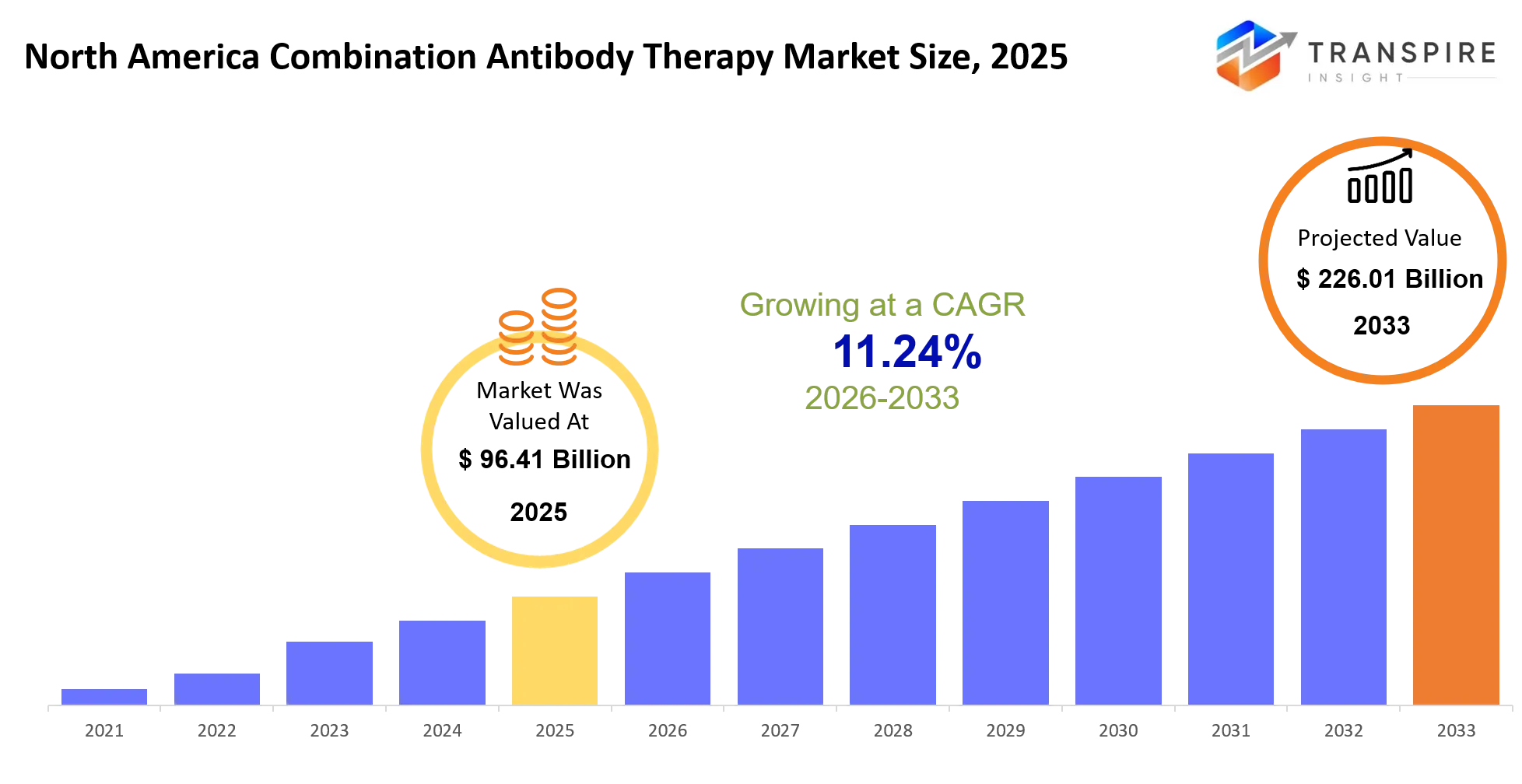
North America Combination Antibody Therapy Market Size & Forecast:
- North America Combination Antibody Therapy Market Size 2025: USD 96.41 Billion
- North America Combination Antibody Therapy Market Size 2033: USD 226.01 Billion
- North America Combination Antibody Therapy Market CAGR: 11.24%
- North America Combination Antibody Therapy Market Segments: By Therapy Type (Monoclonal Antibody Combinations, Bispecific Antibody Therapy, Immunotherapy Combinations, Targeted Therapy Combinations, Others), By Application (Cancer Treatment, Autoimmune Diseases, Infectious Diseases, Others), By End User (Hospitals, Cancer Research Institutes, Specialty Clinics, Others), By Drug Class (Checkpoint Inhibitors, Cytokine Inhibitors, Growth Factor Inhibitors, Others).
To learn more about this report,  Download Free Sample Report
North America Combination Antibody Therapy Market Summary:
The North America Combination Antibody Therapy Market size is estimated at USD 96.41 Billion in 2025 and is anticipated to reach USD 226.01 Billion by 2033, growing at a CAGR of 11.24% from 2026 to 2033. In North America, the Combination Antibody Therapy Market matters a lot for handling complex illnesses where one single treatment, well usually cannot do everything. What happens in real clinical use is that these therapies bring together several antibodies, so they can aim at different disease channels at the same time. That kind of multi-pronged design helps clinicians in oncology, autoimmune conditions, and infectious diseases, and it also lowers the odds of the illness finding a way around therapy, or basically developing resistance.
In the last five years the market sort of re-shaped itself, moving away from only one agent biologics toward multi-target and more precision oriented treatment plans. This shift has been nudged forward by improvements in biomarker profiling. With those tools, physicians can line up combination therapies to the right patient groups, with greater accuracy than before, and yes that’s a real advantage. One big push came from the COVID-19 pandemic, it sped up antibody research, increased manufacturing investments, and made regulators more comfortable with biologics, more quickly than expected. As more clinical data keeps showing stronger results in certain, selected indications, healthcare providers and payers are starting to accept premium combination options without as much hesitation. So demand is rising, commercial avenues are widening, treatment value tends to stay higher, and region wide revenue growth looks more steady and durable.
Key Market Insights
- The United States kind of dominates the North America Combination Antibody Therapy Market, bringing in about 85% of the regional revenue in 2025, mainly because the advanced biologics adoption is way more mature there.
- Canada is projected to be the fastest-growing regional market through 2032, with clinical research investments rising, and with better access to new immunotherapies, more broadly.
- Strong reimbursement frameworks plus high biologics spending keep reinforcing North America’s big position in global antibody therapy development, it stays solid.
- Bispecific antibody combinations are holding the lead market share. They contribute nearly 45% of the total revenue in 2025, since they improve therapeutic efficacy in practical terms.
- Monoclonal antibody combinations still sit as the second-largest segment, largely because there’s been a lot of clinical validation across oncology and inflammatory disease treatment.
- Multi-mechanism antibody platforms are expected to grow the quickest between 2025 and 2032, mostly due to precision-targeting capabilities, the way they aim cells is kind of sharper.
- When it comes to disease areas, oncology leads the North America Combination Antibody Therapy Market with more than 60% share, supported by the increasing approvals for combination immunotherapies.
- Autoimmune disease treatment is emerging as the fastest-growing application area. That’s because biologic therapies are showing improved long-term disease management outcomes.
- Infectious disease applications are also starting to gain real traction, driven by ongoing research into next-generation antibody combinations and immune-response enhancement strategies.
- As for end users, hospitals and specialty cancer centers account for around 55% of market demand, benefiting from advanced infusion infrastructure, and also clinical expertise, on top of that.
What are the Key Drivers, Restraints, and Opportunities in the North America Combination Antibody Therapy Market?
The strongest growth driver in the North America Combination Antibody Therapy Market is basically the move toward precision oncology, and a biomarker guided treatment choice. New genomic profiling tools and companion diagnostics lets clinicians locate patient cohorts that tend to respond better to those multi antibody regimens. This shift got a bit faster thanks to regulatory backing for targeted therapies, and also because there is more clinical evidence showing better outcomes than single agent treatments, in a number of cancer indications. As healthcare providers become more comfortable with these therapies, adoption keeps expanding. That in turn supports higher reimbursement values and it boosts revenue across the biologics ecosystem too.
The biggest market restraint is the cost and also the operational complexity. Developing, manufacturing, and commercializing combination antibody therapies is expensive, and it is not simple either. Firms need to run wide-ranging clinical trials to prove safety and efficacy for multiple biologic agents used together, and it often stretches development schedules while adding extra regulatory attention. This kind of structural problem cannot be fixed in a hurry because it is locked to scientific proof requirements, manufacturing capacity , and payer evaluation routines. So the net effect is delayed product launches restricted patient access , and slower revenue ramp up for the market participants.
A major opportunity shows up in next generation bispecific and multispecific antibodies. The idea is to hit several disease pathways within a single molecule. Investment into these platforms is speeding up because they could deliver combination like effectiveness, yet simplify the way treatment is given , to patients and clinics alike.
What Has the Impact of Artificial Intelligence Been on the North America Combination Antibody Therapy Market?
Artificial intelligence, and advanced digital technologies, are starting to reshape the North America Combination Antibody Therapy Market, in a way that feels kinda continuous, like everything is accelerating at once, improving drug discovery, clinical development, and treatment optimization. Pharmaceutical companies are more and more relying on AI based platforms, not just for analysis but for automating antibody screening, target identification, and molecular design. In practice, these systems can chew through millions of biological data points, and then help researchers spot promising antibody combinations quicker than what conventional laboratory workflows can do. That kind of speed, tends to cut down early stage development timelines and, also boosts overall research productivity.
At the same time, machine learning models add more predictive power across pretty much the whole therapy development cycle. Developers use AI algorithms to estimate treatment response, tease out the patient groups most likely to benefit from these combo regimens, and flag potential safety issues, before big, large-scale clinical trials get underway. For oncology programs in particular, AI assisted biomarker analysis supports better patient selection, which in turn raises trial success rates and limits expensive late stage surprises. Not in a magic way, but in a steady “less guesswork” way.
On the operations side, digital platforms help teams move clinical recruitment along faster, manage trials more efficiently, and even plan manufacturing with better timing. These improvements can translate into lower development costs, shorter commercialization routes, and more careful use of biologics production capacity. Some organizations even mention meaningful reductions in candidate screening time, plus noticeable gains in how quickly clinical decisions get made. Still, AI adoption comes with a serious constraint. High quality clinical and genomic datasets are often fragmented across healthcare systems, and that makes integration a real pain, which then limits model accuracy when the models are pushed across varied real world patient populations.
Key Market Trends
- Since 2020, pharmaceutical developers have been kind of pushing investment away from lone monoclonal antibodies and more toward multi-target combos, that are meant to face treatment resistance in a better way.
- Between 2021 and 2025, biomarker based patient selection broadened quite a bit , which helped clinical trials run with more efficiency and made people more sure about targeted combination therapies.
- After 2022, bispecific antibody development moved faster, and major companies started to prioritize single molecule alternatives, that are supposed to mimic the combination benefits not just in theory but in practice too.
- Regulators too, have been leaning more and more toward accelerated review routes for innovative oncology combinations, which cut approval timelines compared with older development cycles, not a small change either.
- Since 2021 partnerships between biotech firms and big pharmaceutical manufacturers noticeably increased, largely to split development costs and also pool clinical know how.
- AI powered drug discovery platforms have turned into a mainstream research tool, shortening the time it takes to find candidates and also improving how targets get validated.
- Treatment developers have increasingly centered on hematologic cancers first, and then expanded into solid tumors as clinical success rates improved across several indications.
- Manufacturing strategies also shifted, toward flexible biologics production facilities after pandemic related disruptions made the weak points in traditional supply networks a lot more obvious .
- Companies like Roche, Amgen, and Bristol Myers Squibb expanded collaboration agreements, aiming to reinforce their late stage antibody therapy pipelines , with more structure and less guesswork.
- And healthcare providers started using real world evidence programs more often after 2022, partly to check long term outcomes and partly to refine reimbursement negotiation tactics.
North America Combination Antibody Therapy Market Segmentation
By Therapy Type
By therapy type, monoclonal antibody combinations keep on holding the leading market position, mainly because there’s been a lot of clinical validation already, plus established prescribing habits, and a broad regulatory acceptance across many disease areas. Immunotherapy combinations still make up a meaningful share too, since many healthcare providers are getting more interested in treatment approaches that enhance immune response against complicated diseases, especially cancers.
Bispecific antibody therapy is the fastest-growing slice, not just because it can attach to more than one biological target using a single therapeutic construct, but also because it may streamline how treatment is delivered and in that sense, improve overall efficiency. Targeted therapy combinations are starting to gain momentum as biomarker testing becomes more embedded in daily clinical choices , more or less. The growth patterns across these areas seem to show a shift toward precision medicine and outcome based treatment strategies, where results matter more in practice. Looking ahead, future investment should lean toward advanced antibody engineering and multi-target platforms, which opens chances for manufacturers to tell their portfolios apart while giving healthcare systems more effective therapeutic options.
By Application
In application terms, cancer treatment kind of dominates the market because there are so many patients, a lot of research money keeps flowing, and more clinical evidence keeps showing up for combination antibody regimens. Oncology programs still pull in most of the development activity too, maybe because these combination approaches can help with treatment resistance and lead to better long-term results. For autoimmune diseases, it sits as the second-largest application segment, and this is being pushed by the increasing adoption of biologic therapies for long lasting inflammatory conditions.
Infectious diseases are still a smaller piece overall, yet they’re seeing renewed interest after the lessons from recent public health events, plus new progress in immune based interventions. There are also other areas, rare diseases included, which add smaller but real openings for developers focused on specialized therapy. Looking forward, expanding beyond the usual oncology indications is likely to matter more over time. Manufacturers and investors are expected to narrow in on diversified clinical pipelines, while healthcare providers want treatments that actually show measurable improvements in disease management, and better patient outcomes.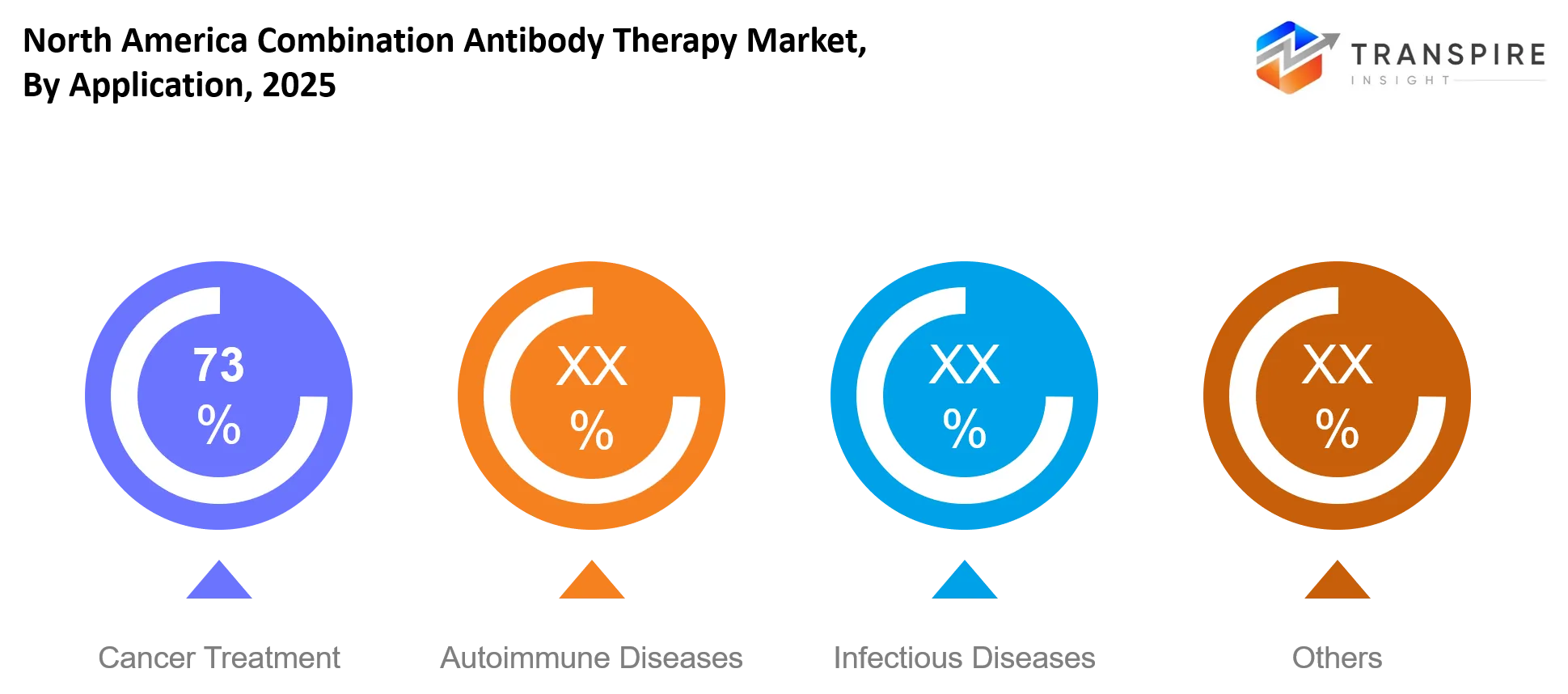
To learn more about this report, Download Free Sample Report
By End-User
End user , hospitals keep the dominant standing because complicated antibody therapies usually need specialized delivery, ongoing surveillance, and multidisciplinary clinical assistance. Big hospital networks also act as main hubs for advanced oncology care , so they become key pathways for commercial acceptance. Cancer research institutes count as a notable slice of the landscape too , mainly due to their role in clinical trials, translational work, and early assessment of new combination regimens.
Specialty clinics are growing quickly, since outpatient care models are getting more acceptance and many healthcare systems are looking for more efficient ways to organize care. Other end users too—like academic medical centers and specific treatment facilities—still help the market move forward through research efforts and patient access programs. In the coming years growth may lean toward decentralized care routes, which will push manufacturers to craft treatments and supportive services that fit both hospital settings and outpatient environments, while also boosting accessibility and operational efficiency.
By Drug Class
In terms of drug class, checkpoint inhibitors sit with the biggest market share, mainly because they’ve shown strong clinical success in oncology and they keep showing up in lots of combination treatment plans, even when the regimen gets complicated. They’re in a leading spot not only because of proven efficacy across several tumor types but also because they keep moving into newer indications. Cytokine inhibitors are another major slice, especially when autoimmune disease is involved, where immune modulation is kinda the whole point of therapy.
Growth factor inhibitors still draw solid demand via targeted intervention approaches, since they aim straight at disease progression through particular biological pathways. Beyond that, the other drug classes bring extra innovation opportunities as research keeps exploring fresh mechanisms of action and different ways to combine therapies. Where the market heads next will depend more and more on how well companies can pair complementary drug classes that boost efficacy while also keeping safety in a reasonable range. This direction should push strategic collaborations, wider pipeline diversification, and continued investment into next-generation biologic development.
What are the Key Use Cases Driving the North America Combination Antibody Therapy Market?
The main use situation for combination antibody therapies is cancer care, especially in advanced, treatment resistant tumors. Most of the pull comes from oncology centers and hospitals because multi antibody approaches can hit a few disease pathways at once, and that in turn boosts response numbers, while also helping extend progression free survival in many patients.
But after that, uptake is also growing in autoimmune disorders like rheumatoid arthritis, and inflammatory bowel disease. Specialty clinics, plus some academic medical centers are now more often checking combination biologics for people who do not respond enough to typical single agent regimens. In practice it becomes a new kind of pathway for long term chronic disease management, not just a one off attempt.
You also see new directions showing up, including infectious disease prevention or therapy, and even rare disorders that are genetically defined. Improvements in biomarker profiling , along with antibody engineering, are making it easier to aim for more personalized therapeutic strategies. As the clinical evidence keeps getting stronger, these applications could end up opening fresh commercial chances and broaden how antibody combinations get used across different specialized healthcare settings.
|
Report Metrics |
Details |
|
Market size value in 2025 |
USD 96.41 Billion |
|
Market size value in 2026 |
USD 107.24 Billion |
|
Revenue forecast in 2033 |
USD 226.01 Billion |
|
Growth rate |
CAGR of 11.24% from 2026 to 2033 |
|
Base year |
2025 |
|
Historical data |
2021 - 2024 |
|
Forecast period |
2026 - 2033 |
|
Report coverage |
Revenue forecast, competitive landscape, growth factors, and trends |
|
Country scope |
North America (Canada, The United States, and Mexico) |
|
Key company profiled |
Roche, Bristol Myers Squibb, Merck & Co., AstraZeneca, Pfizer, Novartis, Eli Lilly, Johnson & Johnson, Amgen, GSK, Sanofi, AbbVie, Regeneron Pharmaceuticals, BeiGene, Genentech |
|
Customization scope |
Free report customization (country, regional & segment scope). Avail customized purchase options to meet your exact research needs. |
|
Report Segmentation |
By Therapy Type (Monoclonal Antibody Combinations, Bispecific Antibody Therapy, Immunotherapy Combinations, Targeted Therapy Combinations, Others), By Application (Cancer Treatment, Autoimmune Diseases, Infectious Diseases, Others), By End User (Hospitals, Cancer Research Institutes, Specialty Clinics, Others), By Drug Class (Checkpoint Inhibitors, Cytokine Inhibitors, Growth Factor Inhibitors, Others) |
Which Regions are Driving the North America Combination Antibody Therapy Market Growth?
The United States kinda represent the main market across North America, mainly because it has a more advanced biopharmaceutical ecosystem, a solid reimbursement framework, and also lots of top biotech companies all clustered in the same broader space. There’s a lot of clinical trial activity, and the country tends to move fast when it comes to precision medicine, so early commercialization of newer combination antibody therapies becomes more realistic. On top of that the regulatory paths for breakthrough and targeted therapies basically make investors more comfortable putting money into complicated biologic development programs. There’s also this fairly strong network of academic medical centers, specialty hospitals, and research institutions, which kinda keeps the leadership role intact.
Canada sits as the second biggest regional market but growth feels more guided by healthcare system stability than by sheer development size alone. Compared with the United States, Canada has advantages from coordinated healthcare delivery, and a pretty consistent uptake of evidence-based biologic therapies. Public funding mechanisms and long-term investment in clinical research help create a dependable setting for manufacturers and clinicians. That steadiness supports continuous revenue generation, and makes the rollout of advanced antibody treatment programs more predictable over time.
Mexico seems to be coming up as the fastest growing market, because healthcare infrastructure modernization and more access to specialty care are slowly but surely expanding what biologic therapies can reach. In the last stretch, new investments in oncology centers, better diagnostic capabilities, and stronger pharmaceutical distribution networks have basically made treatment more reachable. Also, more involvement in international clinical research programs is increasing exposure to inventive antibody combinations, at a steady pace. Between 2026 and 2033, this kind of momentum is expected to turn into real, attractive opportunities for new market entrants, especially those looking to expand beyond already mature healthcare markets.
Who are the Key Players in the North America Combination Antibody Therapy Market and How Do They Compete?
The competitive landscape for the North America Combination Antibody Therapy Market is still kind of moderately consolidated, you know, with a small set of big biopharmaceutical firms basically holding a lot of commercial revenue and late stage development capabilities. Most of the fighting, it seems, happens around scientific novelty, clinical performance, and the capacity to produce genuinely differentiated results in specific patient groups. It is not so much about pricing, more like evidence generation and proof. Larger, established manufacturers keep defending their turf via long research pipelines,plus regulatory know-how. At the same time , the smaller biotechnology players are kinda shaping the direction a lot more, more noticeably, by leaning on specialized antibody platforms and alternative mechanisms of action too. In the end it comes down to winning with strong clinical outcomes, a faster development cadence or two, and then moving into higher value therapeutic domains.
Roche seems to have carved out a competitive edge via deep oncology know-how and a wide suite of targeted therapies that can be blended across different treatment environments, so the combination potential feels practical. Ongoing investment in biomarker-led development also tightens patient selection tactics and helps keep that premium positioning more or less intact. Bristol Myers Squibb stands apart through a long track record in immuno-oncology combinations, and it leans heavily on clinical proof plus strategic collaborations to broaden where their treatments can be used. Merck & Co. meanwhile is trying to expand combination regimens around well-known immunotherapy assets , which opens doors to additional cancer indications and also helps extend lifecycle value over time.
Amgen really leans into advanced biologic engineering and next generation antibody tech, like bispecific platforms that are meant to sharpen therapeutic accuracy. It’s kind of a technology heavy move, that lets them push into those tough disease classes where standard treatments hit walls. AbbVie on the other hand, pushes growth using targeted acquisitions, plus research partnerships, and some portfolio diversification across oncology, immunology. In practice that lets them tap into newer science while still cutting down development risk which gives them a sturdier competitive position. Especially as demand shifts toward more and more personalized treatment approaches, it really matters.
Company List
- Roche
- Bristol Myers Squibb
- Merck & Co.
- AstraZeneca
- Pfizer
- Novartis
- Eli Lilly
- Johnson & Johnson,
- Amgen
- GSK
- Sanofi
- AbbVie
- Regeneron Pharmaceuticals
- BeiGene
- Genentech
Recent Development News
In June 2026, ADC Therapeutics Reports Late-Stage Trial Results for Zynlonta-Rituxan Combination: ADC Therapeutics announced results from a confirmatory Phase III study evaluating Zynlonta in combination with Rituxan for relapsed or refractory diffuse large B-cell lymphoma. While the combination achieved its primary efficacy endpoint, higher mortality rates in the treatment arm prompted regulatory scrutiny and investor concern, making it a significant development in the antibody combination therapy landscape.
Source: https://www.reuters.com
What Strategic Insights Define the Future of the North America Combination Antibody Therapy Market?
The North America Combination Antibody Therapy Market is kind of moving, more structurally toward highly customized, multi-target treatment platforms that merge biomarker intelligence, more advanced antibody engineering,and data based patient targeting. The main push behind this shift is really the growing need to better therapeutic outcomes for conditions where single-agent biologics have hit those efficacy ceilings. In the next five to seven years, competitive advantage will depend more and more on proving better clinical impact in very specific patient groups rather than trying to cover everyone with one broad approach.
There is also a risk that isn’t as easy to see. It has to do with market concentration around a smaller set of therapeutic targets and a handful of dominant biologic platforms. When more companies chase the same mechanisms, it can get harder to stand out, then pricing pressure may creep up, and returns on research investments might soften, even while demand signals still look strong.
A newer opportunity is the building of multispecific antibody platforms aimed at earlier stage disease intervention, especially in oncology and autoimmune disorders. Players in this space should lean into partnerships that bring together biomarker strength, artificial intelligence powered discovery methods, and clinical development know how ,so they can spot high-value patient segments sooner and lock in better long term commercial positioning.
North America Combination Antibody Therapy Market Report Segmentation
By Therapy Type
- Monoclonal Antibody Combinations
- Bispecific Antibody Therapy
- Immunotherapy Combinations
- Targeted Therapy Combinations
- Others
By Application
- Cancer Treatment
- Autoimmune Diseases
- Infectious Diseases
- Others
By End User
- Hospitals
- Cancer Research Institutes
- Specialty Clinics
- Others
By Drug Class
- Checkpoint Inhibitors
- Cytokine Inhibitors
- Growth Factor Inhibitors
- Others
Frequently Asked Questions
Find quick answers to common questions.
The Expected North America Combination Antibody Therapy Market size for the Market will be USD 226.01 Billion in 2033.
The key Segments of the North America Combination Antibody Therapy Market are By Therapy Type (Monoclonal Antibody Combinations, Bispecific Antibody Therapy, Immunotherapy Combinations, Targeted Therapy Combinations, Others), By Application (Cancer Treatment, Autoimmune Diseases, Infectious Diseases, Others), By End User (Hospitals, Cancer Research Institutes, Specialty Clinics, Others), By Drug Class (Checkpoint Inhibitors, Cytokine Inhibitors, Growth Factor Inhibitors, Others).
Major Players in the North America Combination Antibody Therapy Market are Roche, Bristol Myers Squibb, Merck & Co., AstraZeneca, Pfizer, Novartis, Eli Lilly, Johnson & Johnson, Amgen, GSK, Sanofi, AbbVie, Regeneron Pharmaceuticals, BeiGene, Genentech.
The Current Market size of the North America Combination Antibody Therapy Market is USD 96.41 Billion in 2025.
The North America Combination Antibody Therapy Market CAGR is 11.24%.
- Roche
- Bristol Myers Squibb
- Merck & Co.
- AstraZeneca
- Pfizer
- Novartis
- Eli Lilly
- Johnson & Johnson,
- Amgen
- GSK
- Sanofi
- AbbVie
- Regeneron Pharmaceuticals
- BeiGene
- Genentech
About the Authors

Pankaj Ghogare Patil
I am Pankaj Ghogare Patil, a Senior Research Analyst at Transpire Insight, specializing in the Pharmaceutical, Chemicals & Materials, Healthcare IT, and Biotechnology industry. My expertise lies in conducting comprehensive market research, analyzing industry trends, evaluating competitive landscapes, and translating complex data into actionable insights. At Transpire Insight, I closely follow emerging technologies, regulatory developments, and market innovations to create accurate, well-researched, and informative content that helps businesses and professionals make informed decisions. I am committed to producing credible, evidence-based articles that reflect industry best practices while making technical topics accessible and valuable for a broad audience.

Chakradhar Khansole
Chakradhar serves as the Research Director at Transpire Insight, bringing over 8 years of experience in technology, innovation, and strategic market intelligence. He specializes in transforming complex market data into actionable business insights that enable organizations to make informed, growth-oriented decisions. Recognized for his strategic vision and analytical expertise, Chakradhar leads high-impact research initiatives, delivering comprehensive market assessments, competitive intelligence, and forward-looking industry analysis.
Recently Published Reports
-
Jul 2026
Alopecia Treatment Market
Alopecia Treatment Market Size, Share & Analysis Report By Disease Type (Alopecia Areata, Cicatricial Alopecia, Traction Alopecia, Alopecia Totalis, Androgenetic Alopecia, Alopecia Universalis, and Other Disease Types), By Treatment Type (Topical Treatments, Oral Medications, Injectable Therapies, and Hair Transplantation), By Gender (Male, and Female), By Distribution Channel (Hospitals and Clinics, Retail Pharmacies, and Online Retailers), and Geography (North America, Europe, Asia-Pacific, Middle East and Africa, South and Central America), 2021 - 2031
-
Jul 2026
Medical Ultrasound Probe Market
Medical Ultrasound Probe Market Size, Share & Analysis Report By Type (Linear Type, Convex Type, Endocavitary Probe, Phased Array/Cardiac Probe, Transesophageal (TEE) Probe, and Others), By Application (Ophthalmology, Cardiology, Musculoskeletal, Oncology, Obstetrics & Gynecology, General Imaging, and Others), By End User (Hospitals & Clinics, Diagnostic Centers, Ambulatory Surgical Centers, and Others), and Geography (North America, Europe, Asia-Pacific, Middle East and Africa, South and Central America), 2021 – 2031
-
May 2026
Biosimilars Market
Biosimilars Market By Product Type (Monoclonal Antibodies, Recombinant Hormones, Erythropoietin, G-CSF, Others), By Indication (Oncology, Autoimmune Diseases, Blood Disorders, Diabetes, Others), By Manufacturing Type (In-House Manufacturing, Contract Manufacturing), By Distribution Channel (Hospital Pharmacies, Retail Pharmacies, Online Pharmacies), By Industry Analysis, Size, Share, Growth, Trends, and Forecasts 2021-2033
-
Apr 2026
Gastrointestinal Endoscopy Market
Gastrointestinal Endoscopy Market By Type (Rigid Gastrointestinal Endoscope, Flexible Gastrointestinal Endoscopes, Disposable Gastrointestinal Endoscope), By Procedure Type (Colonoscopy, Gastroscopy, Duodenoscopy, Enteroscopy, Flexible Sigmoidoscopy, Others), By Application (Diagnosis, Treatment), By End-Users (Hospitals, Ambulatory Surgical Centers, Specialty Clinics, Laboratories, Others), By Industry Analysis, Size, Share, Growth, Trends, and Forecasts 2021-2033