
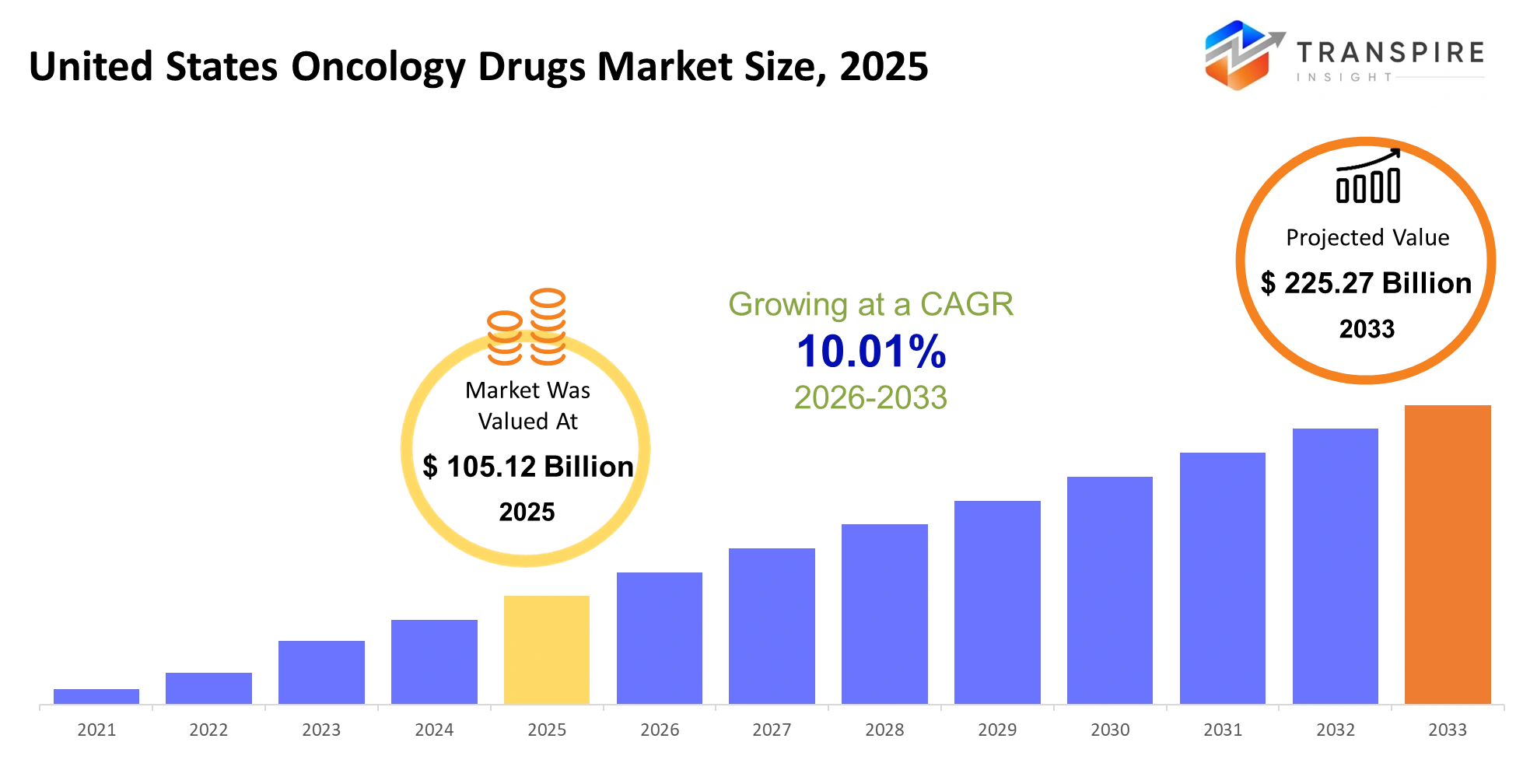
United States Oncology Drugs Market Size & Forecast:
- United States Oncology Drugs Market Size 2025: USD 105.12 Billion
- United States Oncology Drugs Market Size 2033: USD 225.27 Billion
- United States Oncology Drugs Market CAGR: 10.01%
- United States Oncology Drugs Market Segments: By Drug Type (Chemotherapy, Immunotherapy, Targeted Therapy, Hormonal Therapy, Precision Medicine, Biosimilars, Radiopharmaceuticals), By Cancer Type (Breast Cancer, Lung Cancer, Prostate Cancer, Colorectal Cancer, Blood Cancer, Skin Cancer, Others), By Distribution Channel (Hospital Pharmacies, Retail Pharmacies, Online Pharmacies, Specialty Clinics).
To learn more about this report,  Download Free Sample Report
United States Oncology Drugs Market Summary
The United States Oncology Drugs Market size is estimated at USD 105.12 Billion in 2025 and is anticipated to reach USD 225.27 Billion by 2033, growing at a CAGR of 10.01% from 2026 to 2033. The United States oncology drugs market is kind of in the middle of modern cancer care, supplying medicines that assist hospitals and clinicians with slowing tumor growth, pushing survival time further , and more and more turning some cancers into long lasting, manageable situations. In real life, the market also backs a move away from general, harsh chemotherapy, toward precision led treatment plans tuned to tumor genetics plus immune response patterns—more refined, less random.
Over the last five years, the market has gone through a clear sort of structural change from older cytotoxic drugs to targeted biologics, immunotherapies, and cell based options. This change seemed to speed up after the COVID-19 pandemic , because routine cancer screening was disrupted and many diagnoses were postponed, which then created a backlog of patients who showed up with more advanced disease. So providers leaned into treatments that had stronger clinical outcomes and faster response rates.
Meanwhile , the expansion of FDA pathways for breakthrough oncology therapies shortened commercialization windows , and that kind of thing has pushed investors to be a bit more vocal about pipeline development. So, when you combine the scientific advances, the faster approvals, and how increasingly layered treatments are, adoption rates are going up. At the same time , those same factors are also nudging per-patient treatment spending higher across the whole oncology ecosystem , not just in one place.
Key Market Insights
- In 2025, the Northeast region kind of dominated the United States Oncology Drugs Market, showing almost 34% market share because advanced oncology infrastructure keeps getting built out and upgraded.
- Meanwhile, the Western United States is the fastest moving regional market through 2032 , backed by biotechnology innovation hubs plus heavier clinical trial investments.
- The Southern states are seeing a lot of oncology drug demand driven by expanding hospital networks , and also by rising cancer incidence among the aging population.
- Targeted therapy held the largest place in the United States Oncology Drugs Market, taking in more than 38% revenue share in 2025, mainly due to higher treatment specificity, and better overall outcomes.
- Immunotherapy showed up as the second-largest segment too, with strong adoption of checkpoint inhibitors across lung and melanoma cancer treatment pathways.
- Cell and gene therapies are expected to grow the quickest through 2032 , as CAR-T technologies move toward broader commercial adoption in hematologic cancers.
- Biologic oncology drugs keep capturing substantial industry size, supported by premium pricing models, and long-term therapeutic effectiveness that healthcare systems can rely on.
- Lung cancer applications accounted for around 26% market share in 2025, because patient volumes are high, and biomarker based treatment adoption is increasing.
- Breast cancer stays a major revenue generating application segment, supported by the ongoing expansion of HER2 targeted as well as hormone based oncology drug therapies.
- Hematologic malignancies are projected as the fastest-growing application category over the forecast period, largely due to rapid CAR-T therapy commercialization.
- Precision oncology applications are accelerating the market growth rate, as genomic testing is being folded into routine cancer treatment protocols more and more often.
What are the Key Drivers, Restraints, and Opportunities in the United States Oncology Drugs Market?
The strongest force pushing the United States oncology drugs market forward is the fast pivot toward precision oncology and immunotherapy kinds of treatment models. This shift picked up speed after the FDA expanded accelerated approval tracks for breakthrough cancer therapies and companion diagnostic testing. Pharmaceutical companies then moved more budget into biomarker-directed drugs plus cell therapies, with better odds of clinical success, even if results vary. As hospitals started using genomic profiling more often, oncologists were able to match people with specialized options that support longer survival and also cut down on useless treatment cycles. In the end, revenue per patient went up, since targeted biologics and CAR-T approaches usually carry premium pricing, and they also need longer term clinical follow-up management.
The biggest structural hang-up still comes down to the high expense and the involved nature of oncology drug development and reimbursement. These advanced therapies usually need years of clinical proof, plus really quite specific manufacturing capability, and a lot of regulatory review, like lots. Even after the product is cleared , the reimbursement chats with insurers, and with pharmacy benefit managers, can slow the broader adoption. That situation can’t be fixed fast , because it’s kinda tangled up with nationwide healthcare pricing frameworks and with limits on biologics manufacturing. The outcome is slower rollout across community hospitals, along with more limited patient access, especially for therapies that pass the six figure range for annual treatment costs.
A major growth opportunity is kinda unfolding via AI driven oncology drug discovery and real world evidence platforms, and it feels like things are moving faster than before. Companies are more and more using machine learning to detect biomarker patterns and push clinical trial recruitment ahead, sometimes in a very focused way. Investments in decentralized clinical trials, and also cloud based genomic databases, are helping with treatment tailoring, especially for blood related cancers and rare tumor categories.
What Has the Impact of Artificial Intelligence Been on the United States Oncology Drugs Market?
Artificial intelligence and more advanced digital tools are, kind of quietly, reshaping the United States oncology drugs market , by making it faster for scientists to locate new medicines, improving the way clinical choices get made, and turning care more tailored to each patient’s personal setting. Pharmaceutical companies now lean on AI platforms, not just because its fashionable, but because they can comb through genomic data, pull out cancer biomarkers, and shrink the time needed for early-stage drug screening . In practice, machine learning models help teams estimate how specific tumor variations might respond to targeted therapies, so developers can sort the drug candidates that look more viable before they move into expensive clinical trials. Taken together, this reduces the research “drop-off” and quickens the commercialization rhythm for oncology therapeutics.
At the same time , healthcare providers are also rolling in AI-enabled diagnostic systems to support precision oncology goals. Hospitals often integrate digital pathology, imaging analysis, and real-world patient evidence , so they can place patients with immunotherapies or with treatments that match certain biomarkers more precisely. The advantages often show up as enhanced selection efficiency, fewer truly avoidable therapy rounds, and better response rates in difficult cancers, like lung tumors and hematologic malignancies. For day to day trial work, predictive analytics systems can help tune patient recruitment and watch for adverse event patterns in near real-time, which allows companies to avoid development slowdowns and keep operational costs under control , more or less. Still, AI adoption hits a pretty strict boundary because oncology datasets are frequently fragmented, scattered between hospitals, labs, and insurers, in a way that makes everything feel kind of brittle.
Key Market Trends
- Since 2020, hospitals kinda started to lean harder into biomarker testing adoption, by more than 30% , as a way to better align patients with targeted oncology therapies.
- Around 2021 and after, CAR-T therapy commercialization really took off, which sorta compelled manufacturers to pour money into specialized biologics manufacturing infrastructure, and well… more of it.
- Companies such as Merck & Co. and Bristol Myers Squibb moved their oncology pipelines toward combination immunotherapy strategies, between 2021 and 2025, with less patience for single-agent approaches.
- FDA breakthrough therapy designations also helped speed up approvals in oncology, shaving commercialization timelines for several targeted cancer therapies by almost 25% .
- Meanwhile, oncology drug developers are increasingly relying on AI-based molecular screening platforms to curb early-stage research failures and to refine clinical trial design, in a more streamlined way.
- Community hospitals began expanding outpatient infusion services after 2022, mostly to lower inpatient treatment costs , and to make chemotherapy easier to access.
- Biosimilar competition intensified across supportive oncology care, so established pharma companies had to tweak pricing and contracting tactics, pretty quickly in practice.
- After pandemic-era supply disruptions , manufacturers boosted domestic biologics production capacity , since overseas active ingredient sourcing showed some real weak points.
- Real-world evidence platforms became more important from a regulatory angle after 2021 , and that started steering reimbursement decisions for high-cost oncology therapies across several major insurers.
- Precision oncology programs spread fast in hematologic cancers as genomic sequencing costs dropped and personalized treatment protocols became pretty well clinically standardized.
United States Oncology Drugs Market Segmentation
By Drug Type
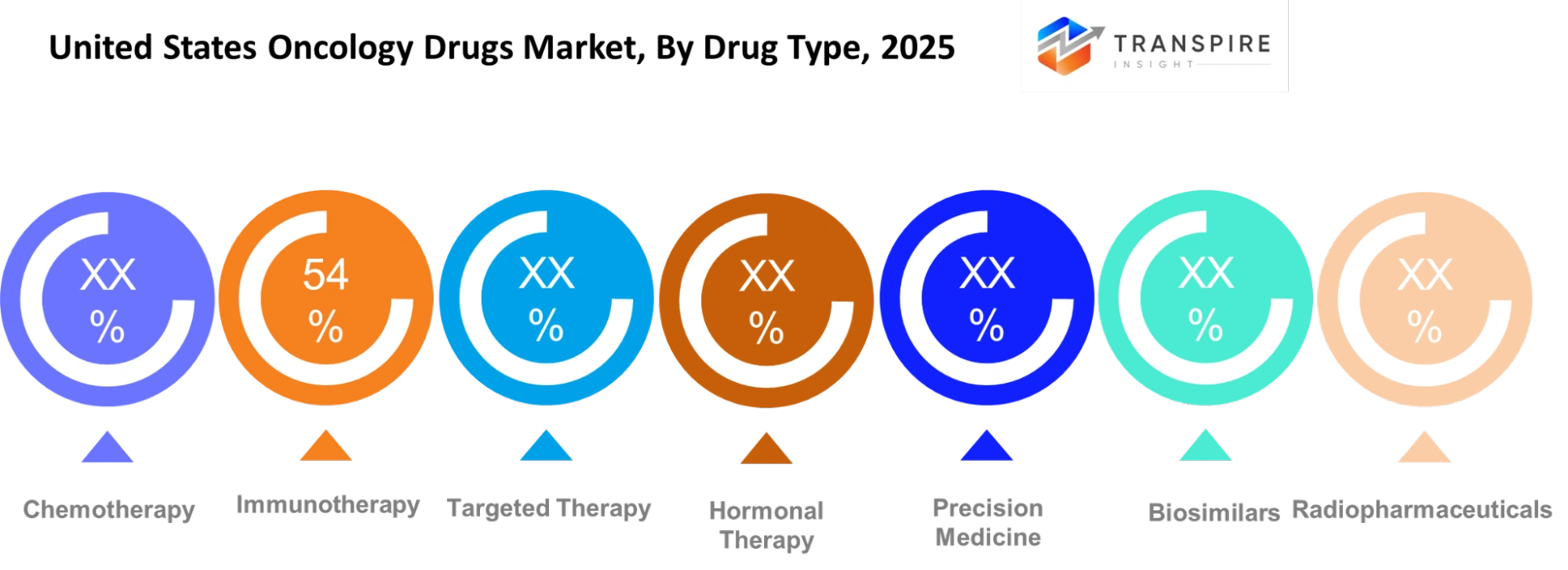
Targeted therapy and immunotherapy, right now , hold the strongest market position inside the drug type category because clinicians are steadily prioritizing treatments with more pinpoint action and less whole body toxicity. Checkpoint inhibitors along with monoclonal antibodies, and kinase inhibitors keep swapping out portions of standard chemotherapy use in major cancer centers. Chemotherapy still keeps a major revenue share because it works across many clinical situations and usually has a lower upfront price , especially when it’s used in combination regimens.
Hormonal therapy is still really crucial for breast and prostate cancer handling, while biosimilars are slowly widening access, by cutting down treatment costs for hospitals and insurers. Precision medicine plus radiopharmaceuticals are showing up as higher value segments, enabled by genomic sequencing and nuclear imaging progress. There is also solid investment in cell based therapies and biomarker guided drug development, which is reshaping research directions across pharmaceutical pipelines in a pretty clear way. Manufacturers increasingly center on combination approaches and personalized treatment platforms to help cement long term differentiation, and support commercial sustainability, overall.
To learn more about this report, Download Free Sample Report
By Cancer Type
Lung cancer stays kind of dominant in the cancer type segment, mainly because the incidence stays high and hospitals keep adopting targeted biologics, which then drives a lot of treatment spending across different network providers. Breast cancer is still near the front too, not just from gradual growth but from continuous innovation in HER2 directed medicines, hormone based regimens, and the way immunotherapy gets layered in. Blood cancers look like the fastest to expand, since CAR-T therapies and more advanced biologic formats are getting broader regulatory green lights for leukemia, lymphoma, and multiple myeloma, treatment.
Prostate and colorectal cancer programs keep gaining traction as diagnostics screening keeps improving and precision oncology protocols get used more often, in clinics. For skin cancer, demand is climbing, largely because immune checkpoint inhibitors show convincing clinical results for advanced melanoma cases. The rest of the categories, like pancreatic as well as ovarian cancers, are drawing greater pharmaceutical investment, because the unmet medical need level is still high. Going forward, market momentum will rely more and more on biomarker discovery, companion diagnostics, and real world evidence platforms—things that help support personalized oncology treatment strategies, without guesswork.
By Distribution Channel
Hospital pharmacies kinda dominate the distribution landscape, mostly because complex oncology regimens usually need controlled storage, infusion delivery, and close specialist monitoring inside integrated healthcare networks. At the same time, specialty clinics hold noticeable market sway , since cancer care is getting more decentralized and outpatient treatment adoption keeps speeding up. Retail pharmacies tend to play a supporting role for oral oncology drugs, hormonal therapies, and supportive care medicines , even if reimbursement limits still block wider uptake for more advanced biologics.
Online pharmacies are slowly but steadily increasing their participation, driven by digital prescription workflows and home delivery for maintenance therapies. Over all, growth across these distribution routes is starting to mirror what patients want , lower cost outpatient access with faster treatment availability.Meanwhile, pharmaceutical manufacturers are tightening direct collaboration with specialty distributors and oncology networks, so that supply stays steadier and patient adherence improves. More advanced cold chain logistics infrastructure, together with digital pharmacy systems should slowly shift the long-term economics of distribution, especially for biologics, cell therapies, and personalized cancer products that require more careful handling and attentive procedures.
What are the Key Use Cases Driving the United States Oncology Drugs Market?
Cancer treatment for lung and breast cases is still the main driver behind oncology drug adoption across big hospital systems, and specialty cancer centers kind of overall. The main reasons are high patient volumes, this nonstop rhythm of recurrence management, plus a very solid appetite for targeted biologics. Together that trio creates most of the spend in oncology treatments , at least in practical terms.
Meanwhile blood cancer treatment is growing fast, because specialty clinics are really ramping up adoption of CAR-T therapies, and newer immunotherapy options for lymphoma and leukemia. A lot of outpatient infusion centers are also turning more often toward oral oncology drugs , partly to cut down inpatient load and partly to support better long-term follow-up care for patients.
Some newer use cases are starting to show up too, like personalized cancer vaccines, and AI guided precision oncology platforms that are built around rarer tumor categories. At the same time pharmaceutical companies, along with academic research hospitals, are pushing radiopharmaceutical therapies for metastatic cancers that are hard to treat, especially when the usual options are limited.
|
Report Metrics |
Details |
|
Market size value in 2025 |
USD 105.12 Billion |
|
Market size value in 2026 |
USD 115.53 Billion |
|
Revenue forecast in 2033 |
USD 225.27 Billion |
|
Growth rate |
CAGR of 10.01% from 2026 to 2033 |
|
Base year |
2025 |
|
Historical data |
2021 - 2024 |
|
Forecast period |
2026 - 2033 |
|
Report coverage |
Revenue forecast, competitive landscape, growth factors, and trends |
|
Geographic scope |
United States of America |
|
Key company profiled |
Pfizer, Roche, Bristol Myers Squibb, Merck & Co., Novartis, AstraZeneca, Eli Lilly. |
|
Customization scope |
Free report customization (country, regional & segment scope). Avail customized purchase options to meet your exact research needs. |
|
Report Segmentation |
By Drug Type (Chemotherapy, Immunotherapy, Targeted Therapy, Hormonal Therapy, Precision Medicine, Biosimilars, Radiopharmaceuticals), By Cancer Type (Breast Cancer, Lung Cancer, Prostate Cancer, Colorectal Cancer, Blood Cancer, Skin Cancer, Others), By Distribution Channel (Hospital Pharmacies, Retail Pharmacies, Online Pharmacies, Specialty Clinics). |
Which Regions are Driving the United States Oncology Drugs Market Growth?
The Northeast region kinda leads the United States oncology drugs market because it sort of merges advanced healthcare infrastructure with a dense focus of pharmaceutical research, but it does feel a little more “ready” than other places. Big cancer institutes, academic hospitals, and biotechnology clusters in Massachusetts and New York help clinical adoption happen quickly, especially for higher value oncology therapies. Also, strong reimbursement access and lots of clinical trial activity push forward commercialization of immunotherapies along with precision medicine platforms. Major pharmaceutical manufacturers keep research partnerships with regional healthcare systems, so you get this ecosystem that steadily backs oncology innovation, and treatment expansion too.
The Midwest works as a steady and dependable contributor to oncology drug revenue, mostly due to its wide hospital network and its fairly consistent healthcare spending. Compared with the Northeast, growth here relies less on biotechnology concentration and more on integrated community oncology systems, plus payer stability, which matters a lot for day to day operations. Large health systems in Illinois, Ohio, and Minnesota keep on expanding outpatient infusion services, and also specialty oncology care access, like it’s still moving forward. Even with stable adoption of biosimilars, and tighter, more cost-managed treatment protocols, hospitals can sort of balance advanced cancer care against reimbursement pressures. And that usually ends up helping the market stay consistent in the long run, not just for a moment or two.
The Western United States is showing the fastest growth momentum because precision oncology is expanding quickly and digital health integration is moving in strong too. California specifically saw accelerated investment in genomic sequencing, AI driven drug discovery, and decentralized cancer trials after 2021.
Who are the Key Players in the United States Oncology Drugs Market and How Do They Compete?
The United States oncology drugs market still looks kind of moderately consolidated, with a small set of global pharmaceutical players keeping a big chunk of the high value biologics and immunotherapies in their hands. What’s interesting is that competition is sliding more and more toward tech leadership, better clinical trial success rates , and biomarker-first treatment differentiation…not just price tags alone. The older manufacturers defend their share by pushing combination therapy programs and speeding up regulatory submissions, while newer biotechnology firms are basically rewriting the usual oncology pipeline using cell therapies and precision medicine platforms. On top of that, competitive pressure feels sharper around access to genomic data, manufacturing scale up, and real world evidence tools that can back reimbursement discussions and negotiations.
Merck & Co. has strengthened its competitive stance by expanding immunotherapy indications for Keytruda in a pretty aggressive way across lung, melanoma , and gastrointestinal cancers. What makes them noticeable is mostly the broad trial coverage, and also the research on combined treatment regimens that broadens how well the therapy can actually fit across many tumor types. At the same time, Bristol Myers Squibb seems to push very hard on dual immunotherapy approaches and keep putting money into cell therapy, in particular for hematologic cancers. And through acquisitions, plus research partnerships, they’ve managed to expand manufacturing capability for CAR-T therapies, which in turn lets them hold their ground in those rapidly growing blood cancer segments.
Roche, for its part, continues to hold an edge with integrated diagnostics and oncology treatment platforms that effectively link biomarker testing directly to targeted therapies. That tight coupling boosts selection efficiency for hospitals and for oncology specialists, sort of reducing the back and forth in clinical decisions.
Company List
- Pfizer
- Roche
- Bristol Myers Squibb
- Merck & Co.
- Novartis
- AstraZeneca
- Eli Lilly
Recent Development News
In May 2026, FDA expands Enhertu approval for HER2-positive early-stage breast cancer: The U.S. FDA expanded approval of Enhertu, strengthening AstraZeneca and Daiichi Sankyo’s oncology portfolio in breast cancer treatment. The decision broadens use into early-stage HER2-positive cases, reinforcing the drug’s position in precision oncology pipelines.
Source: https://www.fda.gov
In May 2026, FDA approves Beqalzi for mantle cell lymphoma treatment: BeOne Medicines received FDA approval for Beqalzi, a BCL-2 inhibitor targeting relapsed or refractory mantle cell lymphoma. The approval highlights growing adoption of precision hematologic oncology drugs in the U.S. market.
Source: https://www.reuters.com
What Strategic Insights Define the Future of the United States Oncology Drugs Market?
The United States oncology drugs market is kind of shifting, structurally speaking, toward more personalized and data centered treatment ecosystems over the next five to seven years. Growth will come more and more from therapies tied to genomic profiling , AI assisted diagnostics, and biomarker specific drug development , not really from the old high volume chemotherapy playbook. In practice this change will reward companies that can blend diagnostics, biologics manufacturing, and real world patient analytics into one integrated oncology platform, even if it feels like a lot to coordinate.
Still, there is a quieter problem starting to show up, mainly around how concentrated advanced biologics manufacturing is, along with the sourcing of active pharmaceutical ingredients. Right now, a smaller set of specialized production facilities supports a bigger slice of cell therapies and antibody drug conjugates. That setup can turn into supply bottlenecks and pricing swings, especially if capacity constraints keep getting tighter .
At the same time , an important emerging opening is radiopharmaceutical oncology treatments. This is especially true for metastatic disease and treatment resistant cancers , where conventional biologics often deliver weaker response rates. Regulatory backing for precision imaging and targeted radiation therapies is steadily improving the commercialization routes. Market players should look to partnerships with genomic testing firms, plus specialty manufacturing partners, so they can lock in long term competitive footing before precision oncology infrastructure runs short on capacity.
United States Oncology Drugs Market Report Segmentation
By Drug Type
- Chemotherapy
- Immunotherapy
- Targeted Therapy
- Hormonal Therapy
- Precision Medicine
- Biosimilars
- Radiopharmaceuticals
By Cancer Type
- Breast Cancer
- Lung Cancer
- Prostate Cancer
- Colorectal Cancer
- Blood Cancer
- Skin Cancer
- Others
By Distribution Channel
- Hospital Pharmacies
- Retail Pharmacies
- Online Pharmacies
- Specialty Clinics
Frequently Asked Questions
Find quick answers to common questions.
The approximate United States Oncology Drugs Market size for the market will be USD 225.27 Billion in 2033.
The key segments of the United States Oncology Drugs Market are By Drug Type (Chemotherapy, Immunotherapy, Targeted Therapy, Hormonal Therapy, Precision Medicine, Biosimilars, Radiopharmaceuticals), By Cancer Type (Breast Cancer, Lung Cancer, Prostate Cancer, Colorectal Cancer, Blood Cancer, Skin Cancer, Others), By Distribution Channel (Hospital Pharmacies, Retail Pharmacies, Online Pharmacies, Specialty Clinics).
Major players in the United States Oncology Drugs Market are Pfizer, Roche, Bristol Myers Squibb, Merck & Co., Novartis, AstraZeneca, Eli Lilly.
The current market size of the United States Oncology Drugs Market is USD 105.12 Billion in 2025.
The United States Oncology Drugs Market CAGR is 10.01%.
- Pfizer
- Roche
- Bristol Myers Squibb
- Merck & Co.
- Novartis
- AstraZeneca
- Eli Lilly
Recently Published Reports
-
May 2026
Biosimilars Market
Biosimilars Market By Product Type (Monoclonal Antibodies, Recombinant Hormones, Erythropoietin, G-CSF, Others), By Indication (Oncology, Autoimmune Diseases, Blood Disorders, Diabetes, Others), By Manufacturing Type (In-House Manufacturing, Contract Manufacturing), By Distribution Channel (Hospital Pharmacies, Retail Pharmacies, Online Pharmacies), By Industry Analysis, Size, Share, Growth, Trends, and Forecasts 2021-2033
-
Apr 2026
Gastrointestinal Endoscopy Market
Gastrointestinal Endoscopy Market By Type (Rigid Gastrointestinal Endoscope, Flexible Gastrointestinal Endoscopes, Disposable Gastrointestinal Endoscope), By Procedure Type (Colonoscopy, Gastroscopy, Duodenoscopy, Enteroscopy, Flexible Sigmoidoscopy, Others), By Application (Diagnosis, Treatment), By End-Users (Hospitals, Ambulatory Surgical Centers, Specialty Clinics, Laboratories, Others), By Industry Analysis, Size, Share, Growth, Trends, and Forecasts 2021-2033
-
Apr 2026
Rare Inherited Metabolic Disorder Drug Market
Rare Inherited Metabolic Disorder Drug Market By Drug Class (Enzyme Replacement Drugs, Gene Therapy Drugs, Substrate Reduction Drugs, Small Module Drugs, Protein Drugs), By Route of Administration(Parenteral, Oral, Intrathecal), By Clinical Development (Marketed Drugs, Late Stage Clinical Phase III, Early Stage Clinical Phase I-II, Preclinical Candidates), By Indication (Lysosomal Storage Disorders, Urea Cycle Disorders, Amino Acid Metabolic Disorders, organic Acidemias, Peroximal Disorders), By Industry Analysis, Size, Share, Growth, Trends, and Forecasts 2021-2033
-
Jan 2026
Pharmaceutical Cleanroom Technology Market
Pharmaceutical Cleanroom Technology Market By Product (Equipment, Consumables, Services); By Cleanroom Type (Standard Cleanrooms, Modular Cleanrooms); By End Use (Pharmaceutical Companies, Biotechnology Companies), By Industry Analysis, Size, Share, Growth, Trends, and Forecasts 2021-2033