Market Summary
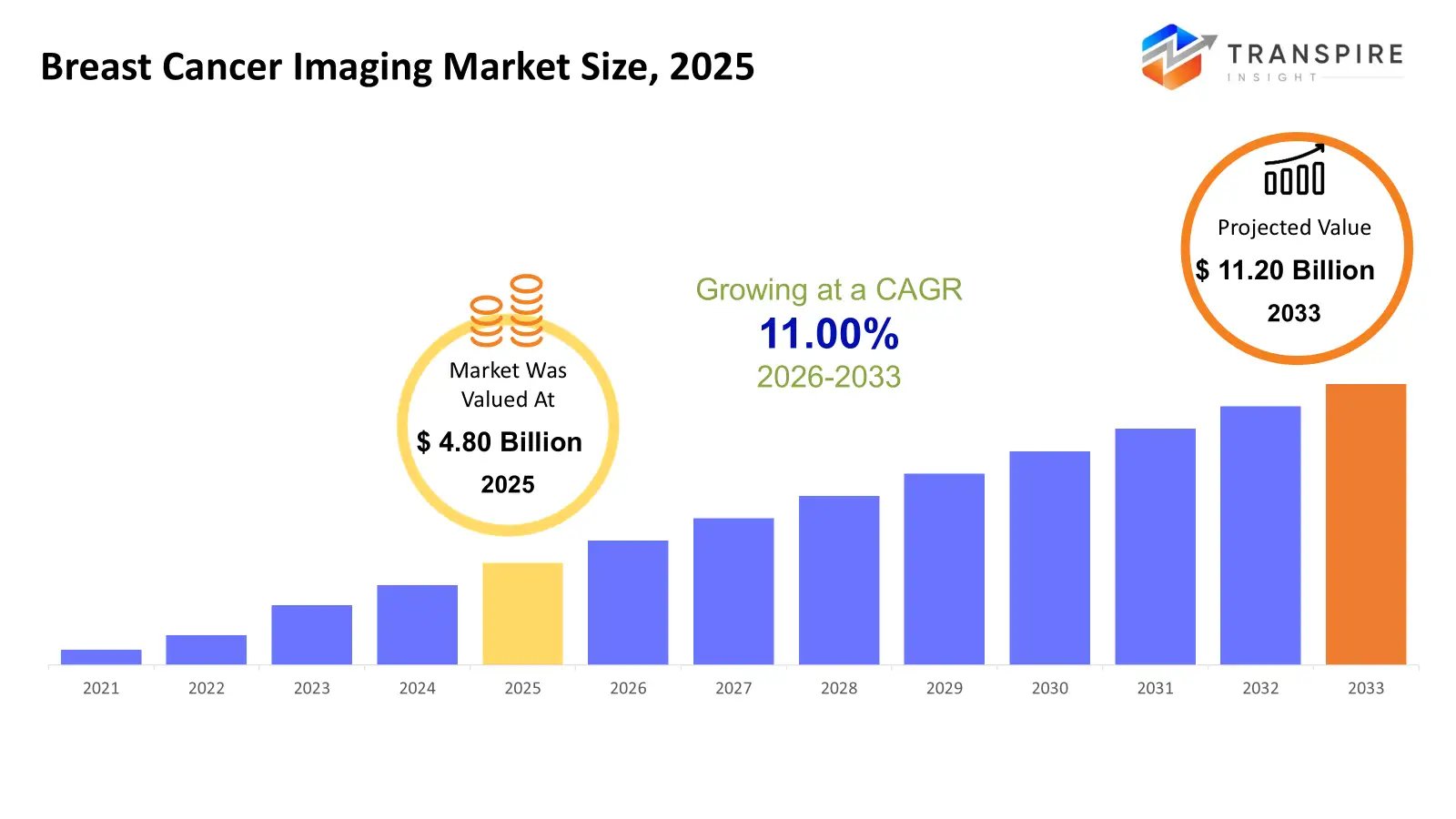
The global Breast Cancer Imaging market size was valued at USD 4.80 billion in 2025 and is projected to reach USD 11.20 billion by 2033, growing at a CAGR of 11.00% from 2026 to 2033. The market for Breast Cancer Imaging is anticipated to grow due to the growing incidence of breast cancer worldwide and growing recognition of the need of early detection. Hospitals and diagnostic facilities are adopting new technologies, such as 3D mammography, MRI-based imaging, and molecular imaging systems, which are improving clinical efficiency and diagnostic accuracy. Sustained market expansion is also supported by rising demand for individualized care, post-treatment monitoring and early detection initiatives.
Market Size & Forecast
- 2025 Market Size: USD 4.80 Billion
- 2033 Projected Market Size: USD 11.20 Billion
- CAGR (2026-2033): 11.00%
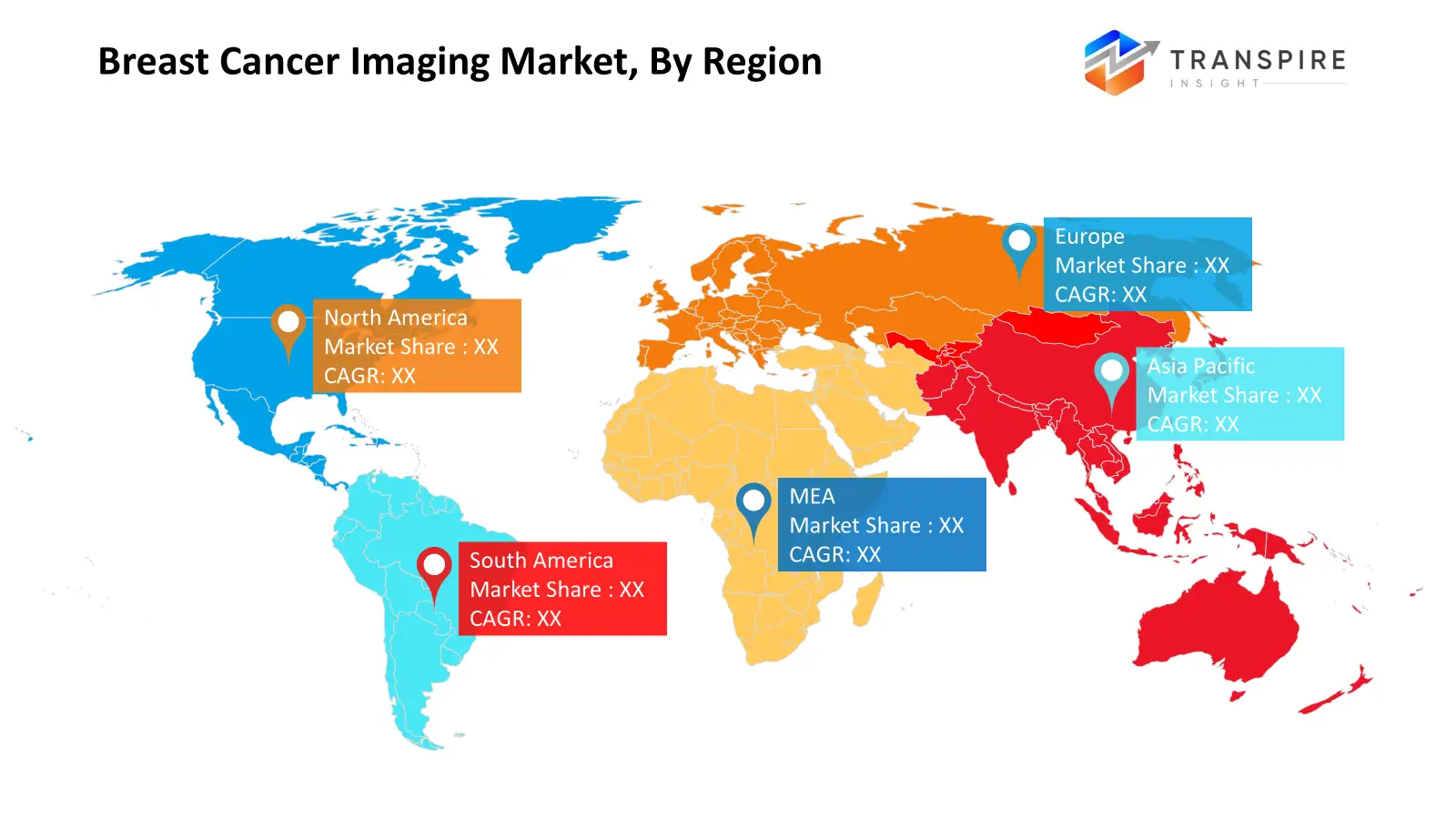
- North America: Largest Market in 2026
- Asia Pacific: Fastest Growing Market
To learn more about this report,  Download Free Sample Report
Key Market Trends Analysis
- With its well-established screening programs and highly developed healthcare infrastructure, North America continues to lead the market in the adoption of sophisticated breast imaging technologies across hospitals and diagnostic centers guaranteeing strong development prospects.
- Because of government funded preventative healthcare initiatives and rising investments in AI-integrated imaging technologies that increase diagnostic speed and accuracy while lowering patient risk exposure, the United States continues to be the top contributor in North America.
- The excellent sensitivity and early detection capabilities of mammography and 3D breast tomosynthesis, which are bolstered by widespread screening programs in developed regions and growing use in emerging markets, continue to make them top-performing technology sectors.
- Due to their excellent diagnostic accuracy and increasing use in pre-treatment planning and high-risk patient screening, MRI-based systems are becoming more popular, especially in North America and Europe where clinical infrastructure has evolved.
- While diagnostic imaging centers increase access to specialist services and drive market expansion in tier-1 and tier-2 regions globally, hospitals and clinics continue to dominate end users with the ability to integrate full imaging solutions.
- Due to increased awareness efforts the frequency of breast cancer and the growing use of affordable imaging techniques like mammography and ultrasound in both urban and semi-urban areas Asia Pacific is expanding quickly.
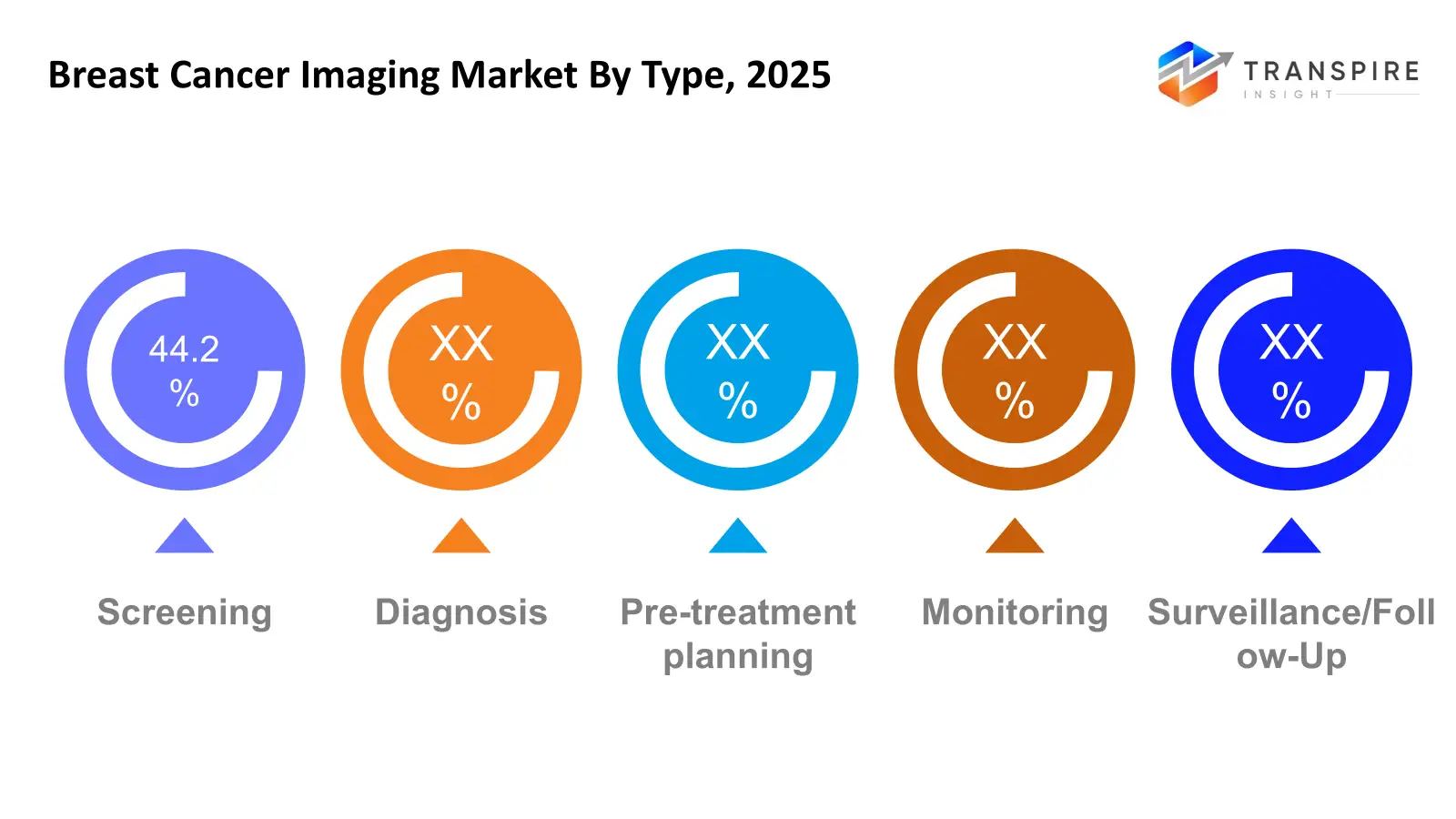
- The main driver segment is the screening stage of care since early detection greatly lowers treatment costs and increases survival rates, which raises the need for sophisticated imaging modalities in regular health programs.
So, The breast cancer imaging market is centered on technologies and solutions developed for the detection, diagnosis and management of breast cancer. Mammography, ultrasound, MRI, nuclear medicine-based systems and image-guided biopsy platforms are just a few of the imaging modalities it includes. Growing awareness of early diagnosis, rising rates of breast cancer globally and government backing for regular screening programs are driving the market. Clinical workflow efficiency and diagnostic accuracy are increasing because to advanced technologies like molecular breast imaging and 3D mammography. The main end consumers of breast imaging technology are healthcare providers, such as hospitals, diagnostic facilities, and breast care centers. These facilities are combining multi-modality imaging equipment to expedite screening, diagnostic, treatment planning, and monitoring processes. While ionizing modalities like tomosynthesis continue to be in great demand for high-resolution structural imaging, the use of non-ionizing modalities like MRI and ultrasound is growing as a result of patient safety concerns. In both developed and developing nations, growing investment in AI-assisted imaging systems is improving clinical decision-making, lowering diagnostic mistakes, and hastening the implementation of novel solutions. The market is also benefiting from the increasing focus on post-treatment monitoring and personalized healthcare with imaging being a crucial component of surveillance and therapy response evaluation. Significant opportunities are being created for market participants by technological innovation, rising healthcare spending, and growing infrastructure in emerging markets. Rising illness prevalence, enhanced screening capabilities and the global expansion of diagnostic and treatment facilities all contribute to the market's overall growth.
Breast Cancer Imaging Market Segmentation
By Technology
- Traditional & Core Imaging Technologies
Mammography, currently the primary modality for breast cancer diagnosis, with 3D breast tomosynthesis increasingly popular because of its increased sensitivity and reduced rates of recall. Its use is most prevalent in developed areas such as North America and Europe, where screening programs are in place. Ultrasound, commonly employed as a secondary diagnostic modality, especially in cases of dense breast tissue. It is useful for real-time imaging and is most popular in the Asia-Pacific region because of the large patient base and cost-effectiveness. MRI-based systems are employed for screening high-risk patients and pre-surgical planning. The use of MRI is increasing in developed areas such as North America and Europe because of its increased accuracy at a higher cost. Nuclear Medicine-based systems (PET/CT, Molecular Breast Imaging) useful for staging, recurrence, and monitoring treatment response. Their use is currently limited to tertiary care facilities in developed countries because of the high cost of equipment and maintenance. Image-Guided Biopsy Systems are Critical for accurate diagnosis, preventing unnecessary surgeries. Increasingly being incorporated into imaging modalities in hospitals and breast centers worldwide.
- Ionizing vs Non‑Ionizing Technologies
Mammography and tomosynthesis are examples of ionizing technologies that offer high resolution structural imaging with low radiation exposure. Regulations governing routine screening in North America and Europe are what fuel growth. Non-Ionizing Technologies are for younger patients or frequent monitoring, non-ionizing technologies including MRI, ultrasound, thermography and optical imaging are favored because they don't use radiation. In Asia-Pacific and Europe, where patient safety and sophisticated diagnostic procedures are given top priority adoption is growing quickly.
By Stage of Care
- Screening
Mammography and ultrasound are the main tools used in screening for asymptomatic breast cancer. There is a consistent need for high-throughput imaging solutions due to well-established programs in North America and Europe.
- Diagnosis
It Confirms probable cases using a variety of imaging modalities. For precise lesion characterization, hospitals and breast care facilities are increasingly using MRI and image-guided biopsies.
- Pre-treatment Planning
MRI and PET/CT provide comprehensive anatomical and functional insights, supporting surgical and therapeutic decisions. Adoption is highest in areas with advanced oncology facilities and significant healthcare spending.
- Monitoring
Imaging measures how well chemotherapy, radiation, and targeted treatments are working. To reduce radiation exposure, non-ionizing modalities such as MRI and ultrasound are recommended for recurrent evaluations.
- Surveillance/Follow-Up
Using a mix of MRI, ultrasound, and mammography, the goal was to detect recurrence after therapy. The need for organized follow-up imaging programs is rising because to rising survivability rates worldwide.
To learn more about this report, Download Free Sample Report
By End User
- Hospitals & Clinics
Due of their extensive imaging infrastructure and high patient volume, hospitals and clinics are major adopters. They are important sources of income in developed areas since they offer full-spectrum services from screening to treatment monitoring.
- Diagnostic Imaging Centres
These specialized facilities concentrate on providing high-throughput, reasonably priced imaging services. Due to increased awareness and affordability, they are fast developing in Latin American and Asia-Pacific cities.
- Breast Care Centres
Breast Care Centers are specialized facilities for breast health use cutting-edge techniques like biopsy systems, tomosynthesis and MRI. They serve communities at high risk, especially in North America and Europe.
- Ambulatory Surgery Centers
Offer minimal imaging mainly for follow-up and pre-surgical planning. These facilities are becoming more popular in the United States for efficiency-driven care models and outpatient operations.
- Others
Consists of tele-imaging services, mobile screening units, and research institutions. In Latin America and Asia-Pacific, mobile units are being used more frequently to increase early detection rates and rural access.
Regional Insights
The market for breast cancer imaging is dominated by North America, with the US at the top due to its sophisticated healthcare system, government funded screening initiatives, and widespread use of cutting edge imaging modalities. Adoption is progressively rising in Canada and Mexico because to increased knowledge and easier access to diagnostic facilities. With extensive national screening programs and rising investment in digital and 3D mammography, Europe is growing steadily with Germany, the UK, and France leading the way. Additionally, Italy, Spain and other European nations are increasing their capacity for specialized breast care facilities and early diagnosis.
Due to growing awareness campaigns, rising breast cancer incidence, and greater healthcare investment in South Korea, Japan, China, Australia, and New Zealand, the Asia Pacific market is expanding quickly. To meet the requirement for early diagnosis, Tier-2 nations in the area are implementing affordable imaging techniques like ultrasonography. Due to better hospital infrastructure and an increase in private diagnostic services, Brazil and Argentina are leading the region in South America's moderate growth, while smaller nations are progressively growing their screening programs. Demand in the Middle East and Africa is still concentrated in metropolitan areas making it a developing industry. While other nations rely on mobile and community-based screening programs to enhance early detection, Saudi Arabia, the United Arab Emirates, and South Africa are investing in cutting-edge imaging technologies and breast care facilities. While tier-2 markets are increasing access and coverage through affordable and high-throughput solutions, tier-1 markets are concentrating on technology advancements and precision imaging across all regions.
To learn more about this report, Download Free Sample Report
Recent Development News
- November 2025, At RSNA 2025, Siemens Healthineers revealed improvements to its Mammomat B.brilliant system, including advanced contrast-enhanced mammography (CEM) and biopsy features designed to increase diagnostic confidence, particularly in dense breast tissue, and minimize the need to switch imaging modalities.
(Source:https://www.siemens-healthineers.com/press/releases/mammomat-b-brilliant-cem)
- In April 2025, Hologic, Inc. presented fresh findings from a Massachusetts General Hospital study on its Genius AI Detection 2.0 technology, emphasizing how well it performs in improving accuracy in digital breast tomosynthesis (DBT) screening.
|
Report Metrics |
Details |
|
Market size value in 2025 |
USD 4.80 Billion |
|
Market size value in 2026 |
USD 5.40 Billion |
|
Revenue forecast in 2033 |
USD 11.20 Billion |
|
Growth rate |
CAGR of 11.00% from 2026 to 2033 |
|
Base year |
2025 |
|
Historical data |
2021 – 2024 |
|
Forecast period |
2026 – 2033 |
|
Report coverage |
Revenue forecast, competitive landscape, growth factors, and trends |
|
Regional scope |
North America; Europe; Asia Pacific; Latin America; Middle East & Africa |
|
Country scope |
United States; Canada; Mexico; United Kingdom; Germany; France; Italy; Spain; Denmark; Sweden; Norway; China; Japan; India; Australia; South Korea; Thailand; Brazil; Argentina; South Africa; Saudi Arabia; United Arab Emirates |
|
Key company profiled |
Hologic, Inc.,GE HealthCare, Siemens Healthineers, Koninklijke Philips N.V.,FUJIFILM Holdings Corporation,Canon Medical Systems Corporation, Konica Minolta, Inc., Planmed Oy, Delphinus Medical Technologies, Inc., Aurora Imaging Technology, Inc., Dilon Technologies, Inc., Micrima Limited, Carestream Health, Metaltronica S.p.A., IMS Giotto S.p.A. |
|
Customization scope |
Free report customization (country, regional & segment scope). Avail customized purchase options to meet your exact research needs. |
|
Report Segmentation |
By Technology (Traditional & Core Imaging Technologies, Ionizing vs Non‑Ionizing Technologies), By Stage of Care (Screening, Diagnosis, Pre‑treatment planning, Monitoring, Surveillance/Follow‑Up), By End User (Hospitals & Clinics, Diagnostic Imaging Centers, Breast Care Centers, Ambulatory Surgery Centers, Others) |
Key Breast Cancer Imaging Company Insights
Hologic, Inc. is a well-known worldwide leader in the breast cancer imaging industry, especially for its digital breast tomosynthesis (3D mammography) devices that provide improved clinical confidence and lesion detectability. Its extensive product line includes biopsy systems, innovative AI-enabled imaging technologies, and screening and diagnostic mammography. Hologic’s strong emphasis on research, innovation, and workflow efficiency has reinforced its competitive positioning, especially in high-volume screening situations in North America and Europe. Hospitals and specialized imaging facilities all over the world are adopting its solutions thanks to strategic alliances, ongoing product improvements, and strong integration with radiology workflows.
Key Breast Cancer Imaging Companies:
- Hologic, Inc.
- GE HealthCare
- Siemens Healthineers
- Koninklijke Philips N.V.
- FUJIFILM Holdings Corporation
- Canon Medical Systems Corporation
- Konica Minolta, Inc.
- Planmed Oy
- Delphinus Medical Technologies, Inc.
- Aurora Imaging Technology, Inc.
- Dilon Technologies, Inc.
- Micrima Limited
- Carestream Health
- Metaltronica S.p.A.
- IMS Giotto S.p.A.
Global Breast Cancer Imaging Market Report Segmentation
By Technology
- Traditional & Core Imaging Technologies
- Ionizing vs Non‑Ionizing Technologies
By Stage of Care
- Screening
- Diagnosis
- Pre‑treatment planning
- Monitoring
- Surveillance/Follow‑Up
By End User
- Hospitals & Clinics
- Diagnostic Imaging Centers
- Breast Care Centers
- Ambulatory Surgery Centers
- Others
Regional Outlook
- North America
- United States
- Canada
- Mexico
- Europe
- Germany
- United Kingdom
- France
- Spain
- Italy
- Rest of Europe
- Asia Pacific
- Japan
- China
- Australia & New Zealand
- South Korea
- India
- Rest of Asia Pacific
- South America
- Brazil
- Argentina
- Rest of South America
- Middle East & Africa
- Saudi Arabia
- United Arab Emirates
- South Africa
- Rest of the Middle East & Africa
Frequently Asked Questions
Find quick answers to common questions.
The approximate Breast Cancer Imaging Market size for the market will be USD 11.20 billion in 2033.
Key segments for the Breast Cancer Imaging Market are By Technology (Traditional & Core Imaging Technologies, Ionizing vs Non‑Ionizing Technologies), By Stage of Care (Screening, Diagnosis, Pre‑treatment planning, Monitoring, Surveillance/Follow‑Up), By End User (Hospitals & Clinics, Diagnostic Imaging Centers, Breast Care Centers, Ambulatory Surgery Centers, Others).
Major Breast Cancer Imaging Market players are Hologic, Inc., GE HealthCare, Siemens Healthineers, Koninklijke Philips N.V., FUJIFILM Holdings Corporation.
The North America region is leading the Breast Cancer Imaging Market.
The CAGR of the Breast Cancer Imaging Market is 11.00%.
- Hologic, Inc.
- GE HealthCare
- Siemens Healthineers
- Koninklijke Philips N.V.
- FUJIFILM Holdings Corporation
- Canon Medical Systems Corporation
- Konica Minolta, Inc.
- Planmed Oy
- Delphinus Medical Technologies, Inc.
- Aurora Imaging Technology, Inc.
- Dilon Technologies, Inc.
- Micrima Limited
- Carestream Health
- Metaltronica S.p.A.
- IMS Giotto S.p.A.
Recently Published Reports
-
Apr 2026
AI in Diabetic Retinopathy Market
AI in Diabetic Retinopathy Market Size, Share & Analysis Report By Type (Screening AI Systems, Diagnostic AI Systems, and Predictive AI Models), By Application Segment (Hospitals, Ophthalmology Clinics, Diagnostic Centers, and Research and Development), and Geography (North America, Europe, Asia-Pacific, Middle East and Africa, South and Central America), 2021 - 2031
-
Apr 2026
Psychometric Tests Market
Psychometric Tests Market Size, Share & Analysis Report By Type (Personality Tests, Ability/Aptitude Tests, Skill/Knowledge Tests, and Others), By Application (Talent Acquisition and Talent Management), and Geography (North America, Europe, Asia-Pacific, Middle East and Africa, South and Central America), 2021 – 2031
-
Apr 2026
Rare Biological Sample Collection Market
Rare Biological Sample Collection Market Size, Share & Analysis Report By Type (Isolation Kits & Reagent, Blood Collection Tubes, and Others), By Application (Oncology, Transcriptomics, Pharmacogenomics, and Others), and Geography (North America, Europe, Asia-Pacific, Middle East and Africa, South and Central America), 2021 – 2031
-
Apr 2026
Patient Lift Pendant Market
Patient Lift Pendant Market By Product Type (Wired Pendants, Wireless, Programmable), By Operation Type(Manual, Electric), By End-Users (Healthcare Professionals, Patients), By Application (Hospitals, Homecare, Rehabilitation Centers, Others), By Industry Analysis, Size, Share, Growth, Trends, and Forecasts 2021-2033
Our Clients
.jpg)