
Market Summary
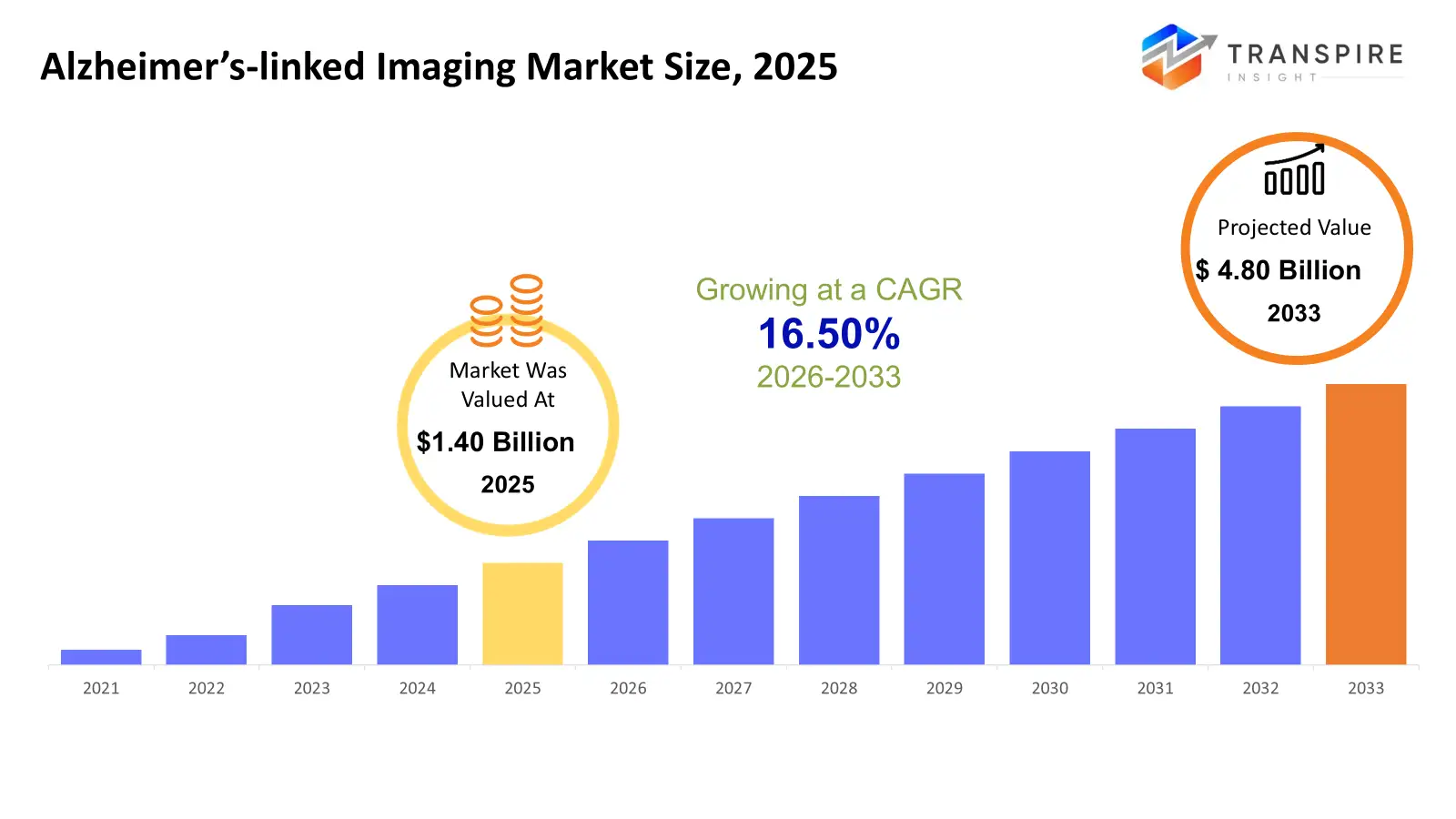
The global Alzheimer’s-linked Imaging market size was valued at USD 1.40 billion in 2025 and is projected to reach USD 4.80 billion by 2033, growing at a CAGR of 16.50% from 2026 to 2033. More people facing Alzheimer’s means more need for brain scans. As detection gains attention, tools like PET and MRI see wider use. Amyloid tracers now play bigger roles in spotting changes early. Clinical studies are spreading, pushing better methods forward. New treatments in testing rely on clear imaging proof. Smart software powered by artificial intelligence helps uncover subtle patterns. Hospitals and labs build stronger systems to support complex diagnostics. Money flowing into nerve-related science adds momentum. Progress in tech keeps pace with medical demands. Growth stays steady thanks to layered advances across fields. Strong yearly increases seem likely under current trends.
Market Size & Forecast
- 2025 Market Size: USD 1.40 Billion
- 2033 Projected Market Size: USD 4.80 Billion
- CAGR (2026-2033): 16.50%
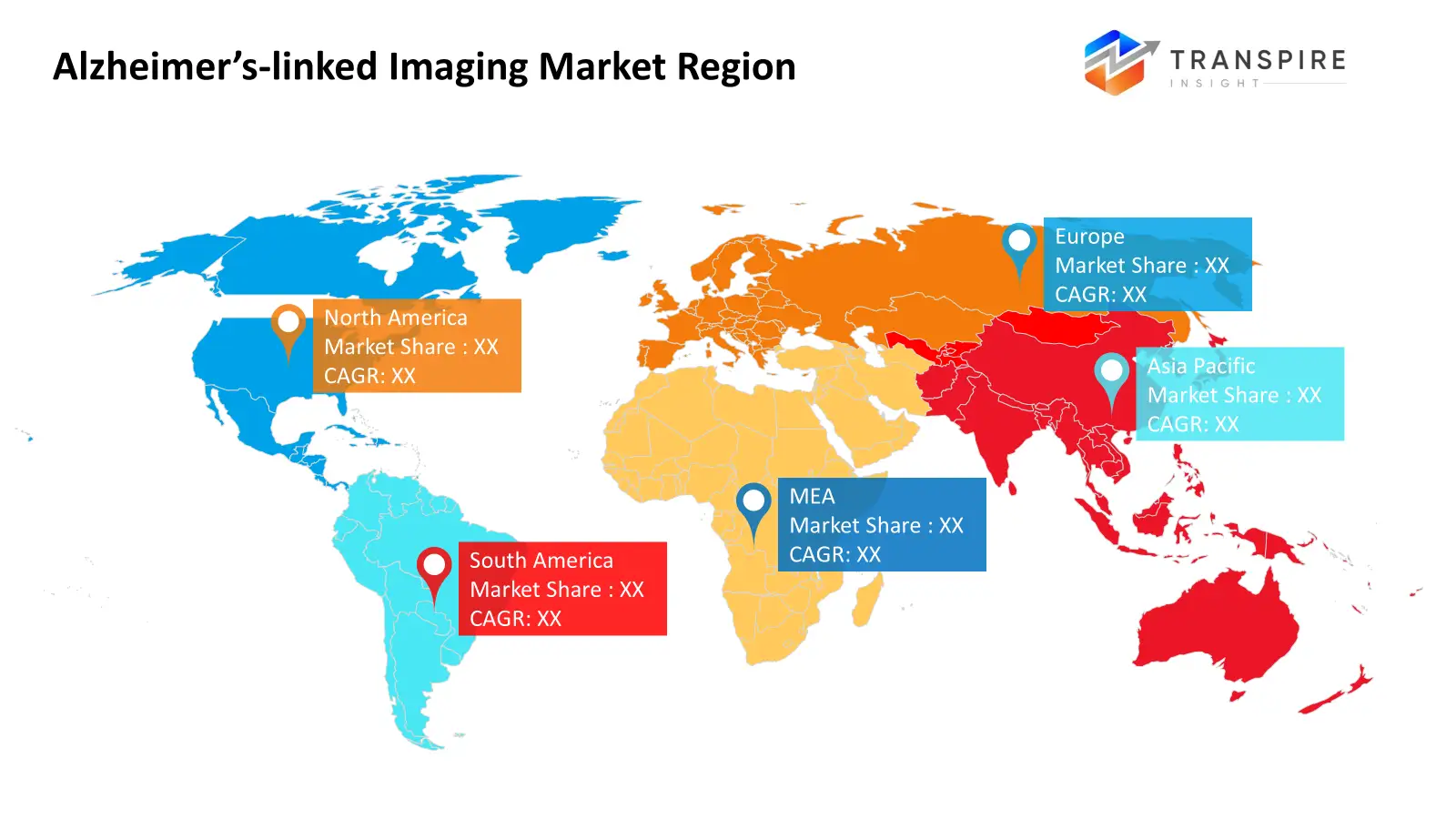
- North America: Largest Market in 2026
- Asia Pacific: Fastest Growing Market
To learn more about this report,  Download Free Sample Report
Key Market Trends Analysis
- The North American market share is estimated to be approximately 44% in 2026. Across North America, clinics lean heavily on PET scans because systems for diagnosis run deep here. Reimbursement policies back these choices well. Research trials pop up often, fueling momentum. This region pulls ahead simply by doing more, day after day.
- Out front in North America, the United States holds most of the market, thanks to quick green lights on amyloid scans. Fueled partly by a dense network of tech firms that make imaging tools. Another push comes from rising attention on spotting Alzheimer’s sooner rather than later.
- Fueled by more cases of dementia, the Asia-Pacific area sees quicker growth than elsewhere. Healthcare systems are broadening their reach. Awareness around brain-related illnesses climbs alongside public interest. Investment flows into high-end scanning tools at a steady pace.
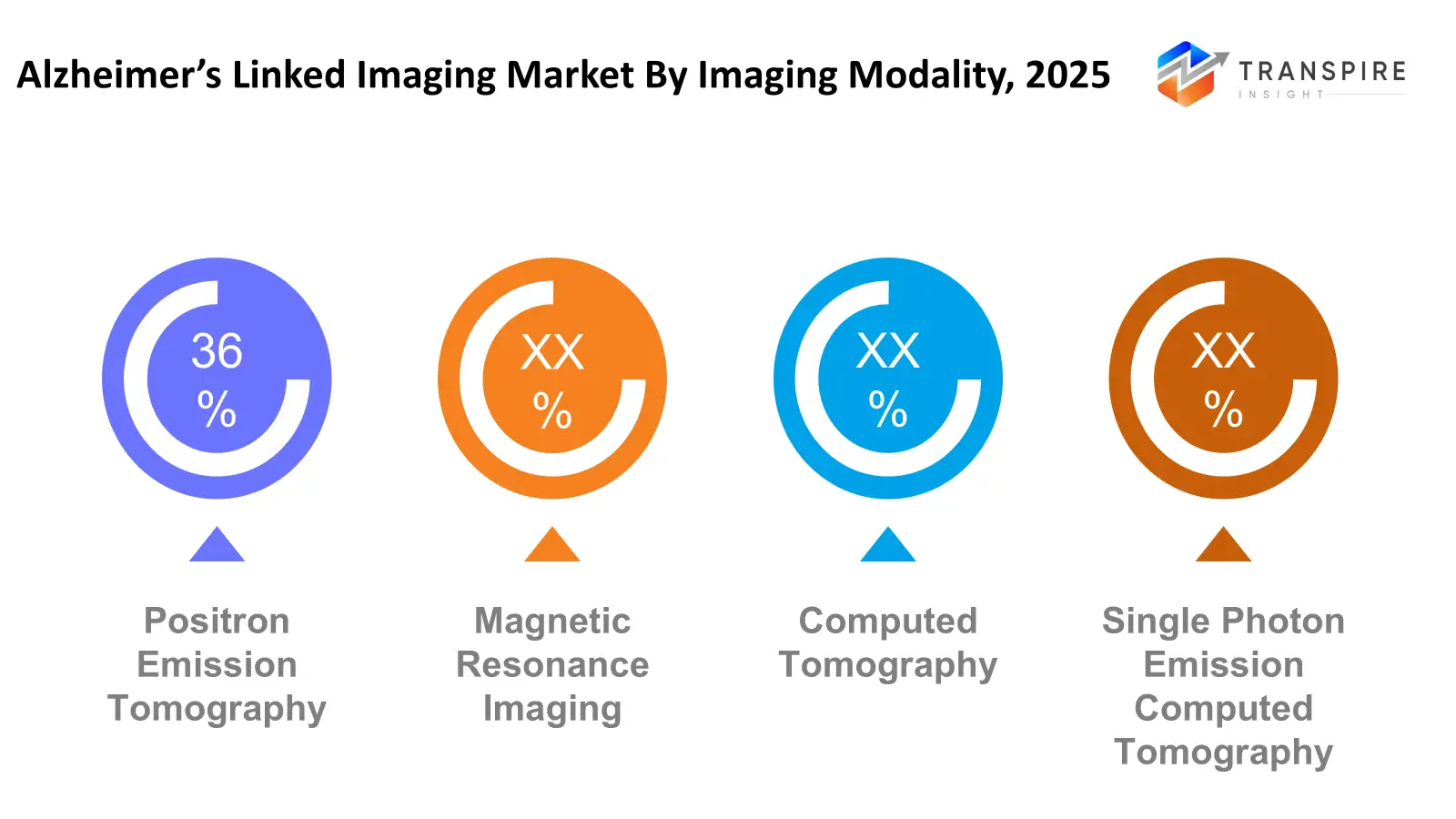
- Positron Emission Tomography shares approximately 38% in 2026. Ahead of the pack, PET scans spot amyloid and tau changes, key signs of Alzheimer’s as they emerge. Their precision sets them apart when catching the disease early.
- Finding its place across clinics, amyloid imaging leads because it spots issues early while sorting patients effectively during testing and research alike.
- Clear backing from regulators helps. Payment policies follow that lead. Doctors already use them regularly in patient care. Their spot at the front comes from real-world adoption, not just early promise.
- Fueled by a growing push toward catching issues sooner, spotting conditions early claims the lead role among uses. This shift leans heavily into treatments that can alter how diseases unfold.
Seeing brain changes early makes PET scans more useful in both clinics and labs studying Alzheimer’s. Because they spot amyloid buildups along with twisted tau proteins, these images reveal what's really happening inside. With medicine now looking past symptoms alone, such scans help confirm dementia through physical signs instead of guesses. Their role grows stronger as doctors rely on clear evidence found in the body itself.
Spotlights now shine brighter on catching signs sooner, which quietly pushes change across care pathways. Before minds fade too far, scans reveal hidden markers tied to memory loss, helping doctors tell one kind of confusion apart from another with sharper clarity. With new treatments moving forward, those same images become key to matching people to options that fit, slowly weaving themselves deeper into daily medical choices.
A growing presence in drug studies and tests on people. Picture scans help sort patients, check if a therapy hits its mark, then track how well it works, especially when tackling Alzheimer’s. Because they deliver clear, measurable clues about how illness moves through the body, these tools stick around from first looks to final trial rounds as tailored treatments become more common.
North America leads in Alzheimer's-related PET scans because new ideas keep emerging there. Because universities team up closely with labs, tech firms, and drug makers, better scanning methods appear often. Even as public attention grows around brain health, doctors adopt early testing more widely. Since clinics now include high-end imaging regularly in patient evaluations, progress in diagnosing Alzheimer’s stays ahead here.
Alzheimer’s-linked Imaging Market Segmentation
By Imaging Modality
- Magnetic Resonance Imaging
Inside hospitals, MRI scans show brain shape changes over time. These pictures reveal shrinking in memory areas tied to Alzheimer’s disease. Hippocampus gets smaller, a sign doctors watch closely. The brain surface also grows thinner as the condition worsens. Detailed views help track how far damage has spread. Scans do not use radiation, relying on magnets instead. They give clear images of soft tissue structures. Changes appear before severe symptoms arise. Doctors compare past and current results regularly. Each scan adds context to the person's journey.
- Positron Emission Tomography
A scan called PET shows signs of Alzheimer’s before symptoms get worse. This method tracks sticky proteins building up in the brain. Instead of waiting for memory loss, doctors see changes using special imaging. Brain energy use appears clearly, revealing trouble spots. Protein tangles become visible long before confusion sets in. One way to spot damage early involves detecting abnormal clumps. Changes in activity patterns give clues about disease progress.
- Computed Tomography
A brain scan might miss early signs of Alzheimer’s, yet it can rule out other issues like bleeding or growths. Though not ideal for spotting dementia clues, this imaging helps clarify what is not causing memory loss.
- Single Photon Emission Computed Tomography
A scan called SPECT looks at how blood moves through the brain. Tracking circulation, it reveals irregular activity tied to nerve cell decline. This method spots changes that suggest damage over time. Instead of structure, it focuses on function, showing areas where flow is too low or uneven. Doctors use these patterns to help recognize disorders early. Unlike standard imaging, it captures behavior, not just anatomy. What shows up often points to ongoing neurological shifts.
To learn more about this report, Download Free Sample Report
By Imaging Biomarker Type
- Amyloid Imaging
Starting, amyloid imaging spots clumps of beta-amyloid plaques in the brain. These findings help identify Alzheimer's earlier. What happens next is that patients get grouped based on their scan results. This process shapes how cases are managed moving forward.
- Tau Imaging
Picture-taking of tau tangles helps track how far the illness has moved. With this view, doctors see changes more clearly over time.
- Structural Brain Imaging
Looking inside the head through scans shows a shrinking brain size, revealing how far things have progressed. Shape shifts in tissues give clues about what stage the condition has reached.
- Functional Imaging
Finding trouble spots in brain activity often starts with watching how blood flows and energy gets used. A closer look at these patterns can reveal issues long before they show obvious signs. Watching fuel use plus circulation gives clues about hidden problems. What happens deep inside matters just as much as what appears on the surface.
By Radiotracer Type
- Amyloid Radiotracer
Amyloid radiotracer helps spot clumps in the brain during PET scans. This tool picks up changes long before symptoms show clearly. It works when disease signs are just beginning to form. Detection happens through glowing signals tied to protein buildup. Early clues appear even if memory issues seem mild. The tracer sticks to harmful deposits quietly growing over time.
- Tau Radiotracer
With greater accuracy, tau radiotracer spots abnormal protein buildup tied to certain brain conditions. Often found in studies today, it supports efforts to track disease progression through imaging methods. Its role grows stronger across test settings where detailed observation matters most.
- FDG
Glucose levels in the brain show how well neurons are working, using FDG to track changes over time. Though metabolic activity drops, scans reveal where function is slipping away. When cells slow down, the tracer highlights areas losing their usual rhythm. As illness moves forward, these images capture shifts most tools miss.
By Application
- Early Diagnosis & Screening
Besides spotting early brain changes, testing can catch Alzheimer’s signs while thinking skills are still mostly intact. Though memory may seem fine, subtle shifts might show up under close review. Because damage begins long before clear decline, checking earlier could reveal hidden patterns. Instead of waiting for an obvious loss, some markers appear years ahead. While symptoms stay mild, certain scans or fluids point to developing issues. Even when daily life feels normal, biological clues sometimes suggest risk.
- Disease Progression Monitoring
Tracking how illness moves forward helps spot shifts in the brain's shape and how it works across months or years. Over time, repeated checks reveal patterns others might miss at a single glance.
- Differentiated Diagnosis
Helps distinguish Alzheimer’s disease from other forms of dementia and neurological disorders.
- Clinical Trials & Drug Development
When testing new medicines, scientists pick participants carefully. Biomarkers get checked to see if they work as expected. Results show whether treatments actually help people. Some methods measure how well drugs perform over time.
- Treatment Response Assessment
How well a treatment works gets checked by watching shifts in how the body responds. Changes inside the system give clues about progress over time. What happens biologically matters just as much as visible outcomes. Function shifts help show if things are moving forward or stuck. Seeing these signs early shapes what comes next.
Regional Insights
A well-built system for diagnostics plays a big role. PET and MRI tools arrived here first, settling fast into regular medical routines. Biomarker use fits smoothly into how doctors work each day. Research pulses strongly across labs and universities. Trials lean heavily on scans to track progress. Partnerships link hospitals, tech hubs, and drug developers in steady loops. Public understanding runs deep when it comes to brain decline. Spotting issues early is not rare; it’s expected. Demand holds firm because attention stays sharp.
Not far behind comes Europe, where rules shape much of health care, backed by solid public services and a push toward uniform ways to spot dementia. Instead of waiting, many nations are now weaving brain scans that detect biological signs into their plans for tackling Alzheimer’s sooner rather than later. Research keeps moving, fueled by joint studies across borders plus funding aimed at better imaging tools. Even so, how easily people get these tests and whether they are paid for depends heavily on which country you are in.
The rise in dementia cases pushes Asia-Pacific ahead, along with better health systems and more attention to Alzheimer’s. In places like China, Japan, South Korea, and Australia, new brain scanning tools are gaining ground through deeper research spending. On the edges, Latin America plus parts of the Middle East and Africa move more slowly, their progress tied to stronger testing skills and outside partnerships. Even so, high-end imaging stays out of reach for many there, spread unevenly where neurology slowly climbs the priority list.
To learn more about this report, Download Free Sample Report
Recent Development News
- December 10, 2025 – Blood tests reveal obesity rapidly accelerates Alzheimer’s progression.
(Source:https://www.sciencedaily.com/releases/2025/12/251210092019.htm)
- April 7, 2025 – Labcorp launches blood test to accelerate Alzheimer’s diagnosis
(Source:https://www.medtechdive.com/news/labcorp-blood-test-alzheimers-disease-amyloid/744569/)
|
Report Metrics |
Details |
|
Market size value in 2025 |
USD 1.40 Billion |
|
Market size value in 2026 |
USD 1.70 Billion |
|
Revenue forecast in 2033 |
USD 4.80 Billion |
|
Growth rate |
CAGR of 16.50% from 2026 to 2033 |
|
Base year |
2025 |
|
Historical data |
2021 – 2024 |
|
Forecast period |
2026 – 2033 |
|
Report coverage |
Revenue forecast, competitive landscape, growth factors, and trends |
|
Regional scope |
North America; Europe; Asia Pacific; Latin America; Middle East & Africa |
|
Country scope |
United States; Canada; Mexico; United Kingdom; Germany; France; Italy; Spain; Denmark; Sweden; Norway; China; Japan; India; Australia; South Korea; Thailand; Brazil; Argentina; South Africa; Saudi Arabia; United Arab Emirates |
|
Key company profiled |
GE Healthcare, Siemens Healthineers, Lantheus Holdings, Curium Pharma, Jubilant Radiopharma, Cardinal Health, Advanced Accelerator Applications (Novartis), Life Molecular Imaging, Cerveau Technologies, SOFIE Biosciences, Blue Earth Diagnostics, Invicro (Konica Minolta), Eli Lilly and Company, Avid Radiopharmaceuticals, Canon Medical Systems Corporation, Philips Healthcare, and Fujifilm Holdings Corporation |
|
Customization scope |
Free report customization (country, regional & segment scope). Avail customized purchase options to meet your exact research needs. |
|
Report Segmentation |
By Imaging Modality (Magnetic Resonance Imaging, Positron Emission Tomography, Computed Tomography, Single Photon Emission Computed Tomography), By Imaging Biomarker Type (Amyloid Imaging, Tau Imaging, Structural Brain Imaging, Functional Imaging), By Radiotracer Type (Amyloid Radiotracer, Tau Radiotracer, FDG), By Application (Early Diagnosis & Screening, Disease Progression Monitoring, Differentiated Diagnosis, Clinical Trials & Drug Development, Treatment Response Assessment) |
Key Alzheimer’s-linked Imaging Company Insights
One step ahead in brain scanning tech, GE Healthcare builds high-end tools like PET, MRI, and CT machines, often found in Alzheimer’s studies. Not just devices, its collection includes special PET markers plus full imaging setups helping spot illness sooner, track shifts over time, or assist trial work. Put together smartly, their combined systems link physical scanners with digital brains to clearly show sticky plaque, twisted proteins, and how thinking centers shift activity. Thanks to deep science roots and reach across continents, it quietly pushes next-gen brain views into real-world clinics.
Key Alzheimer’s-linked Imaging Companies:
- GE Healthcare
- Siemens Healthineers
- Lantheus Holdings
- Curium Pharma
- Jubilant Radiopharma
- Cardinal Health
- Advanced Accelerator Applications (Novartis)
- Life Molecular Imaging
- Cerveau Technologies
- SOFIE Biosciences
- Blue Earth Diagnostics
- Invicro (Konica Minolta)
- Eli Lilly and Company
- Avid Radiopharmaceuticals
- Canon Medical Systems Corporation
- Philips Healthcare
- Fujifilm Holdings Corporation
Global Alzheimer’s-linked Imaging Market Report Segmentation
By Imaging Modality
- Magnetic Resonance Imaging
- Positron Emission Tomography
- Computed Tomography
- Single Photon Emission Computed Tomography
By Imaging Biomarker Type
- Amyloid Imaging
- Tau Imaging
- Structural Brain Imaging
- Functional Imaging
By Radiotracer Type
- Amyloid Radiotracer
- Tau Radiotracer
- FDG
By Application
- Early Diagnosis & Screening
- Disease Progression Monitoring
- Differentiated Diagnosis
- Clinical Trials & Drug Development
- Treatment Response Assessment
Regional Outlook
- North America
- United States
- Canada
- Mexico
- Europe
- Germany
- United Kingdom
- France
- Spain
- Italy
- Rest of Europe
- Asia Pacific
- Japan
- China
- Australia & New Zealand
- South Korea
- India
- Rest of Asia Pacific
- South America
- Brazil
- Argentina
- Rest of South America
- Middle East & Africa
- Saudi Arabia
- United Arab Emirates
- South Africa
- Rest of the Middle East & Africa
Frequently Asked Questions
Find quick answers to common questions.
The approximate Alzheimer’s-linked Imaging Market size for the market will be USD 4.80 billion in 2033.
Key segments for the Alzheimer’s-linked Imaging Market are By Imaging Modality (Magnetic Resonance Imaging, Positron Emission Tomography, Computed Tomography, Single Photon Emission Computed Tomography), By Imaging Biomarker Type (Amyloid Imaging, Tau Imaging, Structural Brain Imaging, Functional Imaging), By Radiotracer Type (Amyloid Radiotracer, Tau Radiotracer, FDG), By Application (Early Diagnosis & Screening, Disease Progression Monitoring, Differentiated Diagnosis, Clinical Trials & Drug Development, Treatment Response Assessment).
Major Alzheimer’s-linked Imaging Market players are GE Healthcare, Siemens Healthineers, Lantheus Holdings, Curium Pharma, and Jubilant Radiopharma.
The North America region is leading the Alzheimer’s-linked Imaging Market.
The Alzheimer’s-linked Imaging Market CAGR is 16.50%.
- GE Healthcare
- Siemens Healthineers
- Lantheus Holdings
- Curium Pharma
- Jubilant Radiopharma
- Cardinal Health
- Advanced Accelerator Applications (Novartis)
- Life Molecular Imaging
- Cerveau Technologies
- SOFIE Biosciences
- Blue Earth Diagnostics
- Invicro (Konica Minolta)
- Eli Lilly and Company
- Avid Radiopharmaceuticals
- Canon Medical Systems Corporation
- Philips Healthcare
- Fujifilm Holdings Corporation
Recently Published Reports
-
Apr 2026
Biosimilars Market
Biosimilars Market By Product Type (Monoclonal Antibodies, Recombinant Hormones, Erythropoietin, G-CSF, Others), By Indication (Oncology, Autoimmune Diseases, Blood Disorders, Diabetes, Others), By Manufacturing Type (In-House Manufacturing, Contract Manufacturing), By Distribution Channel (Hospital Pharmacies, Retail Pharmacies, Online Pharmacies), By Industry Analysis, Size, Share, Growth, Trends, and Forecasts 2021-2033
-
Apr 2026
Gastrointestinal Endoscopy Market
Gastrointestinal Endoscopy Market By Type (Rigid Gastrointestinal Endoscope, Flexible Gastrointestinal Endoscopes, Disposable Gastrointestinal Endoscope), By Procedure Type (Colonoscopy, Gastroscopy, Duodenoscopy, Enteroscopy, Flexible Sigmoidoscopy, Others), By Application (Diagnosis, Treatment), By End-Users (Hospitals, Ambulatory Surgical Centers, Specialty Clinics, Laboratories, Others), By Industry Analysis, Size, Share, Growth, Trends, and Forecasts 2021-2033
-
Apr 2026
Rare Inherited Metabolic Disorder Drug Market
Rare Inherited Metabolic Disorder Drug Market By Drug Class (Enzyme Replacement Drugs, Gene Therapy Drugs, Substrate Reduction Drugs, Small Module Drugs, Protein Drugs), By Route of Administration(Parenteral, Oral, Intrathecal), By Clinical Development (Marketed Drugs, Late Stage Clinical Phase III, Early Stage Clinical Phase I-II, Preclinical Candidates), By Indication (Lysosomal Storage Disorders, Urea Cycle Disorders, Amino Acid Metabolic Disorders, organic Acidemias, Peroximal Disorders), By Industry Analysis, Size, Share, Growth, Trends, and Forecasts 2021-2033
-
Jan 2026
Pharmaceutical Cleanroom Technology Market
Pharmaceutical Cleanroom Technology Market By Product (Equipment, Consumables, Services); By Cleanroom Type (Standard Cleanrooms, Modular Cleanrooms); By End Use (Pharmaceutical Companies, Biotechnology Companies), By Industry Analysis, Size, Share, Growth, Trends, and Forecasts 2021-2033