
Global CAR T- Cell Therapy Market Size & Forecast:
- Global CAR T- Cell Therapy Market Size 2025: USD 5 Billion
- Global CAR T- Cell Therapy Market Size 2033: USD 12.8 Billion
- Global CAR T- Cell Therapy Market CAGR: 12.54%
- Global CAR T- Cell Therapy Market Segments: By Type (Autologous, Allogeneic, Next-gen CAR-T, Dual-target CAR-T), By Application (Leukemia, Lymphoma, Multiple Myeloma, Solid Tumors), By End-User (Hospitals, Cancer Centers, Research Institutes, Patients)

To learn more about this report,  Download Free Sample Report
Global CAR T- Cell Therapy Market Summary:
The CAR T-Cell Therapy Market size is estimated at USD 5 billion in 2025 and is projected to reach USD 12.8 billion by 2033, growing at a CAGR of 12.54% from 2026 to 2033. The global CAR T-cell therapy market is growing due to rapid technological advances and increased investment from major pharma and well-funded biotechs. These shifts include product consistency, reliability, and center production, and enable wider clinical adoption.
The worldwide market for CAR-T cell therapy is growing at a steady pace. In recent years, the CAR T-cell therapy market has transformed the industry. The improvement of next-generation dual-target CAR allogeneic approaches in the clinical setting is progressively enabling treatment of previously untreated solid tumor patients .
Key Market Insights:
- In Asia- Pacific markets, companies like CARsgenTherapeutics are improving CLD 18 P2- targeted therapies for solid tumors, shifting the market toward localized, high-volume production models to lower costs.
- North American leaders like Gilead (Kite Pharma) are expanding Yescarta’s label into second-line treatments.
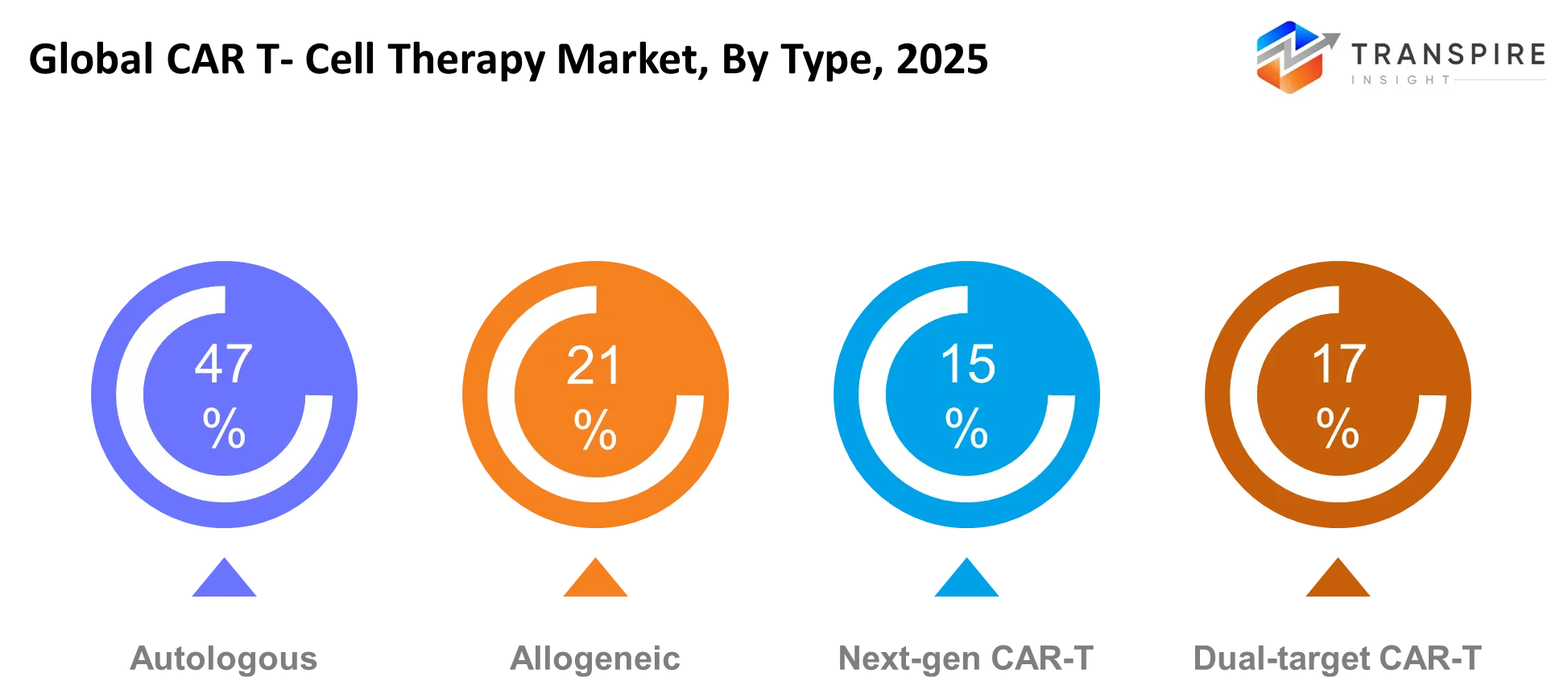
- Autologous is a dominating segment with a market share of 47%.
- Johnson & Johnson (Janssen) has secured expanded approvals for Carvykti, transitioning the market’s focus from B-cell lymphomas to BCMA-targeted therapies for worsening myeloma.
- Allogeneic holds a 21% of market share.
- The hospital segment controls approximately 33% of the CAR T- Cell therapy market.
- Allogeneic is the fastest-growing segment with a CAGR of 10.0%.
What are the Key Drivers, Restraints, and Opportunities in the CAR T- Cell Therapies?
Drivers
Technological advancements in manufacturing are one of the major drivers of CAR T- cell therapies. The shift from manual processes to automated or semi-automated workflows is the primary driver. CAR T-cell therapies are progressing from ultimate option treatments to earlier lines of therapy. As clinical data show strong efficacy signals, regulatory bodies are expanding approvals, allowing these therapies to be used much sooner in a patient's treatment journey. Significant funding is flowing into the market to improve product consistency and "vein-to-vein" reliability. Large players like Bristol-Myers Squibb and Gilead are heavily investing in R&D to enhance center production and clinical adoption.
Restraint
One of the restraints of this CAR T- cell therapy is expense. The individualized nature of autologous therapy, where a patient's own cells are used to take out, modify, and reinfuse, makes it incredibly labor-intensive. Total costs often exceed USD 350,000 per treatment, creating a significant barrier for many patients and healthcare systems. Another problem with this industry is reimbursement challenges and friction.
Opportunities
Though hematologic cancers currently have the biggest ratio, the future growth lies in targeting solid tumors (e.g., lung or breast cancer). There is an important opportunity in moving away from patient-specific cells to universal, donor-derived CAR-T cells. This would allow for immediate treatment, mass production, and lower costs by eliminating the complex "one patient, one batch" logistics.
What Has the Impact of Artificial Intelligence Been on the Global CAR T- Cell Therapy Market?
The combination of Artificial Intelligence (AI) with CAR T- Cell has become an essential, shifting the field from custom- made, manual treatments to scalable, highly personalized medical modalities (Artificial Intelligence and the Transformation, 2026). AI-driven machine learning (ML) algorithms are widely used for automation and operational advancements, particularly in continuous manufacturing systems that optimize cell culture conditions like pH and temperature in real-time (The Impact of Artificial Intelligence, n.d.). These technologies provide strong predictive capabilities, enabling researchers to analyze large genetic datasets to predict patient responses and identify optimal T-cell populations, which significantly improves clinical outcomes.
CAR T-cell treatments are changing as a result of artificial intelligence, moving from single-target designs to extremely intricate multi-target frameworks. The $320 million merger of Liminatus Pharma with InnocsAI. The industry is successfully preventing tumor cells from hiding or adapting by utilizing AI to create cells that attack two cancer sites simultaneously rather than just one, thereby shutting off the main source of patient relapse. In May 2026, Liminatus Pharma signed a deal to buy InnocsAI. InnocsAI is a biotech company that uses artificial intelligence to design better CAR T-cell therapies. By using AI, they can engineer cells to attack multiple cancer targets at the same time.
Key Market Trends
- Transitioning from oncology-only, companies like Kyverna Therapeutics are successfully treating Refractory Lupus; this behavioral movement redefines CAR-T as an "immune-reset" tool rather than just a cancer killer.
- Industry leaders are shifting away from massive central hubs toward in-hospital production, using automated "cell-in-a-box" platforms like Lonza’s Cocoon. Hospitals can now manufacture doses on-site, slashing vein-to-vein time from 4 weeks to 7 days.
- The market is moving from patient-specific (autologous) to universal "off-the-shelf" donor cells; technological advancements in CRISPR gene editing now allow for the mass production of cells that don't trigger Graft-vs-Host Disease (GvHD).
- A prominent shift is occurring as companies move from expensive lentiviral vectors to transposon systems (e.g., Sleeping Beauty). This movement significantly lowers manufacturing costs and reduces the risk of long-term genomic mutations.
- Previously requiring weeks of hospitalization, improved management of side effects (like CRS) has enabled a behavioral shift toward outpatient infusion, which increases clinic throughput and drastically lowers the "total cost of care" for healthcare systems.
- Move from broad eligibility to predictive biomarker screening; clinicians now use AI to analyze a patient’s T-cell fitness before manufacturing, ensuring that high-cost production only begins for patients with a high probability of response.
- Historically reserved for 4th or 5th-line relapse, CAR-T is now moving into 2nd-line treatment; this industry shift follows data showing superior outcomes when T-cells are harvested from less "exhausted" immune systems earlier in the disease.
Global CAR T- Cell Therapy Market Segmentation
By Type
The autologous section is the dominating sector with 47% market share. In this method, T-cells are harvested from the patient, genetically modified in a laboratory to recognize cancer-specific antigens and then re-infused into the patient. This approach avoids the risk of graft-versus-host disease and immune rejection since the therapeutic material comes from the patient. But the personalised use of autologous therapy also presents a number of market challenges, such as high manufacturing expenses and the need to produce the therapy over a number of weeks – even some advanced stage patients are unable to endure this time constraint.
Allogenic accounts for 21% of the market share. To overcome these logistical challenges, the allogeneic, or “off-the-shelf” cell therapy component of existing pipelines is growing at the fastest compound annual growth rate. Allogeneic therapies use healthy donor T-cells, but also involve modifying them to ensure that they don't target the recipient's own cells or be harmed by the recipient's immune system. There are various advantages to this, such as the ability to produce cells in bulk, freeze them, and then send them straight to a treatment centre for use. The allogeneic segment is projected to significantly reduce the entry cost of cell immunotherapies in the near future due to the removal of the patient's waiting period and the introduction of economies of scale.
The next generation CAR-T is a highly advanced group of biological engineering techniques aimed at extending cell survival and overcoming the immunosuppressive effect of a tumor microenvironment. It accounts for 15% of the market share. This class includes “armored” CAR-T cells, genetically modified with targeted tools such as CRISPR to release targeted cytokines or block signals that induce cell exhaustion. Next generation frameworks seek to provide long-lasting remissions by supporting the survival and growth of the engineered cells within the human body. Biotechnology companies are investing heavily in this segment with a view to make cell therapy a nutritious and lasting remedy rather than a one-off treatment.
Dual-target CAR-T is a key biological advancement to address the antigen escape problem in the cancer market that is being challenged by single-target CAR-T. It has 17% of the market share. These therapies activate multiple chimeric antigen receptors, like two CD19 and two CD22, or two BCMA and two GPRC5D, which means that cancer cells cannot easily evade the immune system. There are many high-profile company mergers and clinical investments coming in here, with dual targeting mechanisms proving to have a dramatic impact in lowering relapse rates. This area is therefore moving from early clinical trials to a very profitable commercial area.
To learn more about this report, Download Free Sample Report
By Application
Lymphoma is the major application segment, accounting for more than 50% of the total market value, owing to the early approval of the drug by the regulatory authorities and high clinical adoption. Blockbuster commercial therapies have now been established as second line and third line therapies in aggressive B-cell lymphomas. Non-Hodgkin's lymphoma represents a large part of the global population and has strong long-term survival rates, resulting in continuous patient flow and significant revenue growth. Major oncology companies continue to be powered by the lymphoma segment as insurance coverage expands for these specific indications.
The leukemia segment is the original and historical champion of cellular immunotherapy with very high initial remission rates in acute lymphoblastic leukemia (ALL). The market is being propelled by regulatory approvals in the field, such as those given for paediatric and young adult populations that have not responded to conventional chemotherapy. Presently, the market is growing with the advancement of these advanced cell therapies to earlier lines of therapy instead of using them as a last resort. This change significantly expands the patient population and improves commercial prospects for leukemia applications in the longer-term.
Multiple myeloma is the fastest-growing application segment in hematology, driven by the swift uptake of B-cell maturation antigen (BCMA) targeting therapies. These therapies consistently deliver deep and durable responses in heavily pretreated patients, and are driving a surge in sales for major market players. A competitive environment is emerging, in which companies are aggressively increasing their manufacturing capacity to cater to strong demand. The application is expected to be a much bigger share of the oncology market as the data from clinical trials prove these therapies to be effective earlier in the treatment sequence.
The CAR T-cell therapy market is expected to see the largest unpenetrated opportunity and the ultimate frontier in the form of solid tumors. Although the field is currently dominated by blood cancers, emerging research is driving advances in solid mass cancers such as gastric, lung, pancreatic, etc., with the identification of novel antigens such as Claudin18.2. The physical obstacles of solid tumors (dense tissue matrices and hostile microenvironments) demand special modifications in cells which are currently driving active clinical trials. If successful in this application segment, the market size will be multiplied, advancing the use of cellular therapies to mainstream oncology with the most prevalent cancer types.
By end-user
The current market leader, or end-user, is the hospital, where CAR-T therapies are administered, which require advanced medical facilities. The treatment itself is complicated and includes leukapheresis (collection of cells), lymphodepleting chemotherapy, and close post-infusion monitoring. Patients must have access to specialized intensive care units, trained medical staff, and should be monitored for significant side effects such as cytokine release syndrome (CRS). Therefore, the major operational centers for cell therapy delivery are the large multi-specialty hospitals, and they generate a substantial amount of income from the cell therapy drug as well as from hospital stays.
Specialized oncologic networks are helping to accelerate the delivery of cellular immunotherapies, and cancer centers are expanding rapidly. These dedicated centres are dedicated to cancer care and can handle the intake of patients, logistics with the manufacturing labs and special outpatient monitoring. Specialized cancer centers provide an efficient patient experience with shorter waiting times, which is a benefit because they detract from the overall patient experience at general hospitals. These facilities are increasingly supporting Outpatient administration models, making them appealing partners to the pharmaceutical companies who want to expand commercial distribution.
The research institutes are the key drivers for the initial market growth, especially in Asia Pacific. These organizations act as "micro-factories" to advance and evaluate new cell constructs before industrialization and commercialization and perform the majority of phase 1 and phase 2 clinical trials. Research institutes may also offer access to clinical trials to individuals who do not have the funds for commercial clinical care due to the use of academic-career networks and government funding. As they continue to uncover novel tumor targets and optimization protocols, they play an integral role in the commercial pipeline's development that fuels the industry's growth.
Patients are the ultimate consumers and at the heart of the emerging market access strategies of the cellular therapy market. The economics in this market are heavily influenced by patient eligibility, insurance reimbursement structures and patient assistance programs, due to the premium pricing of these therapies. Patient advocacy groups are gaining voice and force to educate governments to fund these therapies, thereby influencing regions' market penetration rates. In the end, commercial sustainability in the market depends on patient centric outcomes, and the combination of high clinical efficacy of these curative therapies with affordability and broad access.
What are the Key Use Cases Driving the Global CAR T- Cell Therapy Market?
Treating blood cancers is by far the largest use case of CAR-T therapeutics, with lymphoma and leukemia being the focus of almost all therapies today. The CAR-T treatment modality is generally prescribed for patients with worsening disease across blood cancers who have exhausted other treatment options, such as chemotherapy. Currently, only larger hospitals and cancer centers have the capacity and monitoring resources to provide treatment due to the personalized nature of cell processing.
Additional applications are expanding rapidly in multiple myeloma, which has shown very promising remission rates with BCMA-directed treatments. Drug makers and research bodies are also investigating opportunities to provide CAR-T treatment at earlier stages in the treatment process, with hopes of improving long-term survival while lessening the need for stem cell transplantation following treatment.
Promising new use cases for CAR-T therapies include solid tumor treatment, autoimmune disease, and next-generation bispecific treatments. Scientists are already developing next-generation CAR-T platforms to treat solid cancers such as brain, lung, and breast cancer, which would dramatically expand the number of use cases addressed in global oncology.
Report Metrics
|
Report Metrics |
Details |
|
Market size value in 2025 |
USD 5 Billion |
|
Market size value in 2026 |
USD 5.6 Billion |
|
Revenue forecast in 2033 |
USD 12.8 Billion |
|
Growth rate |
CAGR of 12.54% from 2026 to 2033 |
|
Base year |
2025 |
|
Historical data |
2021 - 2024 |
|
Forecast period |
2026 - 2033 |
|
Report coverage |
Revenue forecast, competitive landscape, growth factors, and trends |
|
Regional scope |
United States; Canada; Mexico; United Kingdom; Germany; France; Italy; Spain; Denmark; Sweden; Norway; China; Japan; India; Australia; South Korea; Thailand; Brazil; Argentina; South Africa; Saudi Arabia; United Arab Emirates |
|
Key company profiled |
Novartis, Gilead Sciences, Bristol Myers Squibb, Johnson & Johnson, Pfizer, Roche, AstraZeneca, Takeda, Amgen, Kite Pharma, Bluebird Bio, Legend Biotech, Autolus, Allogene Therapeutics, Cellectis |
|
Customization scope |
Free report customization (country, regional & segment scope). Avail customized purchase options to meet your exact research needs. |
|
Report Segmentation |
By Type (Autologous, Allogeneic, Next-gen CAR-T, Dual-target CAR-T), By Application (Leukemia, Lymphoma, Multiple Myeloma, Solid Tumors), By End-User (Hospitals, Cancer Centers, Research Institutes, Patients) |
Which Regions are Driving the CAR T- Cell Market Growth?
Asia-Pacific dominates the CAR-T Cell Therapy market with approximately 45% market share, owing to increasing incidence of cancer, low-cost manufacturing facilities, and rapid growth of biotechnology sectors in countries such as China, Japan, etc. In addition, active support being provided by the governments of countries in this region for research and development of cell and gene therapies in terms of financial support through grant programs, speedy approvals, and collaborations with biotechnology firms is expected to drive the market growth further. This region is experiencing robust growth because of many driving factors. Australia's Therapeutic Goods Administration (TGA) officially granted regulatory approval for the first-in-human clinical evaluation of KMCAR T-cell immunotherapy. This milestone allows the Phase 1 trial to actively target relapsed or refractory multiple myeloma using a novel approach that destroys cancer cells while completely sparing the patient's healthy immune system. In March 2026, Australia's Therapeutic Goods Administration (TGA) officially granted regulatory approval for the first-in-human clinical evaluation of KMCAR T-cell immunotherapy.
Europe is the second-largest regional market due to well-established healthcare systems, a mature field of cancer research, and high reimbursement for novel interventions. In contrast to the Asia-Pacific region, Europe emphasizes a quality-oriented clinical introduction and the integration into the healthcare system in the long term instead of a fast production scale-up. Germany and the UK are among the leading European countries that are now heavily investing in oncology research centers and in making CAR-T therapies accessible to the public healthcare system. University College London Hospitals (UCLH) successfully launched Europe’s first clinical trial testing a dual-targeting CAR T-cell therapy specifically for light chain amyloidosis. Recently, this clinical launch marked a major geographic expansion for CAR T-cell therapy technologies in Europe. This clinical launch marks a major geographic expansion for CAR T-cell technologies in Europe, moving the advanced cell-reprogramming treatment out of standard blood cancers and directly into rare protein-disorder conditions for the first time. In May 2026, University College London Hospitals (UCLH) successfully launched Europe’s first clinical trial of a dual-targeting CAR T-cell therapy specifically for light-chain amyloidosis.
North America is experiencing the highest growth, with a CAGR of approximately 10.6%, driven by rising FDA approvals, advancements in next-generation CAR-T, and increasing funding for allogeneic therapies. Recent advancements in the U.S. market encompass the broadened scope of clinical trials for solid tumors and for dual-target CAR-T therapies, thereby creating fresh market prospects outside of hematological malignancies. For adult patients with recurrent or refractory mantle cell lymphoma (MCL), Kite's CAR T-cell treatment, Tecartus (brexucabtagene autoleucel), received full conventional FDA clearance. This milestone successfully converts its previous accelerated status into a permanent regulatory approval based on long-term data showing exceptionally high response rates and durable remissions. In April 2026, the U.S. Food and Drug Administration (FDA) granted full traditional approval to Kite's CAR T-cell therapy, Tecartus (brexucabtagene autoleucel), for adult patients with relapsed or refractory mantle cell lymphoma (MCL).

To learn more about this report, Download Free Sample Report
Who are the Key Players in the CAR T-Cell Therapy Market and how do they Compete?
The CAR-T cell therapy market is highly competitive and innovative, as companies compete with each other by developing innovative cell engineering techniques, manufacturing at scale, establishing strategic partnerships, and expediting regulatory approvals. There are two major product classes: Novartis, Gilead Sciences, and Bristol Myers Myers Squibb are heavily involved in commercialized autologous CAR-T therapies for various blood cancers, while others like Johnson & Johnson and Legend Biotech are building on innovation by targeting BCMA in multiple myeloma. Kite Pharma differentiates itself with excellent manufacturing capacities and treatment delivery capabilities, whereas Bluebird Bio and Autolus are developing next-generation CAR-T platforms that offer a better safety profile in a niche space.
Pfizer, Roche, AstraZeneca, Takeda, and Amgen are pursuing growth strategies, with the latest including next-generation pipelines in the field of immunotherapies and oncology strategy partnerships. Allogene Therapeutics and Cellectis are working on approaches based on cost, which are referred to as “off-the-shelf” CAR-Ts, to make them more scalable and accessible. In addition, numerous companies are also conducting regional clinical trials, manufacturing collaborations, and participating in biotechnology programs made available by governments in the Asia-Pacific and Europe to enhance their global footprint.
Key Car T- Cell Therapy Companies
- Novartis
- Gilead Sciences
- Bristol Myers Squibb
- Johnson & Johnson
- Pfizer
- Roche
- AstraZeneca
- Takeda
- Amgen
- Kite Pharma
- Bluebird Bio
- Legend Biotech
- Autolus
- Allogene Therapeutics
- Cellectis
Recent Development News
In April 2026,Pfizer expanded its biotech-focused growth strategy through increased investments in oncology pipelines and smaller acquisition deals. The move strengthened Pfizer’s long-term innovation approach amid rising patent-expiry pressure and growing competition in advanced therapeutics. https://finance.yahoo.com
In February 2026, Gilead Sciences announced the acquisition of Arcellx for $7.8 billion to strengthen its CAR-T cell therapy portfolio and secure rights to anitocabtagene autoleucel (anito-cel) for multiple myeloma treatment. The move expanded Gilead’s position in next-generation cell therapy and reinforced its long-term immuno-oncology strategy through Kite Pharma’s manufacturing and treatment infrastructure. https://finance.yahoo.com
What Strategic Insights Define the Future of the Global CAR T- Cell Therapy Market?
The CAR-T cell therapy market is heading towards scalable next-generation treatment models with allogeneic and dual-target therapies to lower cost, speed treatment, and broaden indications beyond blood cancers to solid tumors and autoimmune diseases. The market is projected to evolve from highly specialized hospital-based treatment to wider usage of outpatient and regional cancer centers in the future, driven by the advancement of manufacturing technologies.
A hidden risk in the industry is the growing pressure on compensation systems and pricing sustainability. Even with strong clinical outcomes, high therapy costs and complex production techniques may limit accessibility in developing healthcare markets and create long-term payer struggles.
The new opportunity is the use of AI-enabled cell engineering and automated manufacturing platforms, which can greatly reduce the production time and enhance treatment uniformity. Firms that build manufacturing partnerships to scale up production, expand into the region, and develop low-cost “off-the-shelf” CAR-T platforms will likely have a more formidable competitive edge in the future global oncology market.
Global CAR T- Cell Therapy Market Segmentation
By Type
- Autologous
- Allogeneic
- Next-gen CAR-T
- Dual-target CAR-T
By Application
- Leukemia
- Lymphoma
- Multiple Myeloma
- Solid Tumors
By End-User
- Hospitals
- Cancer Centers
- Research Institutes
- Patients
Regional Outlook
North America
- United States
- Canada
- Mexico
Europe
- Germany
- United Kingdom
- France
- Spain
- Italy
- Rest of Europe
Asia Pacific
- Japan
- China
- Australia & New Zealand
- South Korea
- India
- Rest of Asia Pacific
South America
- Brazil
- Argentina
- Rest of South America
Middle East & Africa
- Saudi Arabia
- United Arab Emirates
- South Africa
- Rest of the Middle East & Africa
Frequently Asked Questions
Find quick answers to common questions.
The approximate global CAR T- Cell therapy market size for the market will be USD 12.8 billion in 2033.
Key segments for the global CAR T- Cell therapy market are By Type (Autologous, Allogeneic, Next-gen CAR-T, Dual-target CAR-T), By Application (Leukemia, Lymphoma, Multiple Myeloma, Solid Tumors), and By End-user (Hospitals, Cancer Centers, Research Institutes, Patients).
Major global CAR T- Cell therapy market players are Novartis, Gilead Sciences, Bristol Myers Squibb, Johnson & Johnson, Pfizer, Roche, AstraZeneca, Takeda, Amgen, Kite Pharma, Bluebird Bio, Legend Biotech, Autolus, Allogene Therapeutics, and Cellectis.
The global CAR T- Cell therapy market size is USD 5.6 billion in 2026.
The global CAR T- Cell therapy market is expected to grow 12.54% during the forecast period.
- Novartis
- Gilead Sciences
- Bristol Myers Squibb
- Johnson & Johnson
- Pfizer
- Roche
- AstraZeneca
- Takeda
- Amgen
- Kite Pharma
- Bluebird Bio
- Legend Biotech
- Autolus
- Allogene Therapeutics
- Cellectis
About the Authors

Pankaj Ghogare Patil
I am Pankaj Ghogare Patil, a Senior Research Analyst at Transpire Insight, specializing in the Pharmaceutical, Chemicals & Materials, Healthcare IT, and Biotechnology industry. My expertise lies in conducting comprehensive market research, analyzing industry trends, evaluating competitive landscapes, and translating complex data into actionable insights. At Transpire Insight, I closely follow emerging technologies, regulatory developments, and market innovations to create accurate, well-researched, and informative content that helps businesses and professionals make informed decisions. I am committed to producing credible, evidence-based articles that reflect industry best practices while making technical topics accessible and valuable for a broad audience.

Chakradhar Khansole
Chakradhar serves as the Research Director at Transpire Insight, bringing over 8 years of experience in technology, innovation, and strategic market intelligence. He specializes in transforming complex market data into actionable business insights that enable organizations to make informed, growth-oriented decisions. Recognized for his strategic vision and analytical expertise, Chakradhar leads high-impact research initiatives, delivering comprehensive market assessments, competitive intelligence, and forward-looking industry analysis.
Recently Published Reports
-
Jul 2026
Alopecia Treatment Market
Alopecia Treatment Market Size, Share & Analysis Report By Disease Type (Alopecia Areata, Cicatricial Alopecia, Traction Alopecia, Alopecia Totalis, Androgenetic Alopecia, Alopecia Universalis, and Other Disease Types), By Treatment Type (Topical Treatments, Oral Medications, Injectable Therapies, and Hair Transplantation), By Gender (Male, and Female), By Distribution Channel (Hospitals and Clinics, Retail Pharmacies, and Online Retailers), and Geography (North America, Europe, Asia-Pacific, Middle East and Africa, South and Central America), 2021 - 2031
-
Jul 2026
Medical Ultrasound Probe Market
Medical Ultrasound Probe Market Size, Share & Analysis Report By Type (Linear Type, Convex Type, Endocavitary Probe, Phased Array/Cardiac Probe, Transesophageal (TEE) Probe, and Others), By Application (Ophthalmology, Cardiology, Musculoskeletal, Oncology, Obstetrics & Gynecology, General Imaging, and Others), By End User (Hospitals & Clinics, Diagnostic Centers, Ambulatory Surgical Centers, and Others), and Geography (North America, Europe, Asia-Pacific, Middle East and Africa, South and Central America), 2021 – 2031
-
May 2026
Biosimilars Market
Biosimilars Market By Product Type (Monoclonal Antibodies, Recombinant Hormones, Erythropoietin, G-CSF, Others), By Indication (Oncology, Autoimmune Diseases, Blood Disorders, Diabetes, Others), By Manufacturing Type (In-House Manufacturing, Contract Manufacturing), By Distribution Channel (Hospital Pharmacies, Retail Pharmacies, Online Pharmacies), By Industry Analysis, Size, Share, Growth, Trends, and Forecasts 2021-2033
-
Apr 2026
Gastrointestinal Endoscopy Market
Gastrointestinal Endoscopy Market By Type (Rigid Gastrointestinal Endoscope, Flexible Gastrointestinal Endoscopes, Disposable Gastrointestinal Endoscope), By Procedure Type (Colonoscopy, Gastroscopy, Duodenoscopy, Enteroscopy, Flexible Sigmoidoscopy, Others), By Application (Diagnosis, Treatment), By End-Users (Hospitals, Ambulatory Surgical Centers, Specialty Clinics, Laboratories, Others), By Industry Analysis, Size, Share, Growth, Trends, and Forecasts 2021-2033