

North America Anthelmintic Drugs Market Size & Forecast:
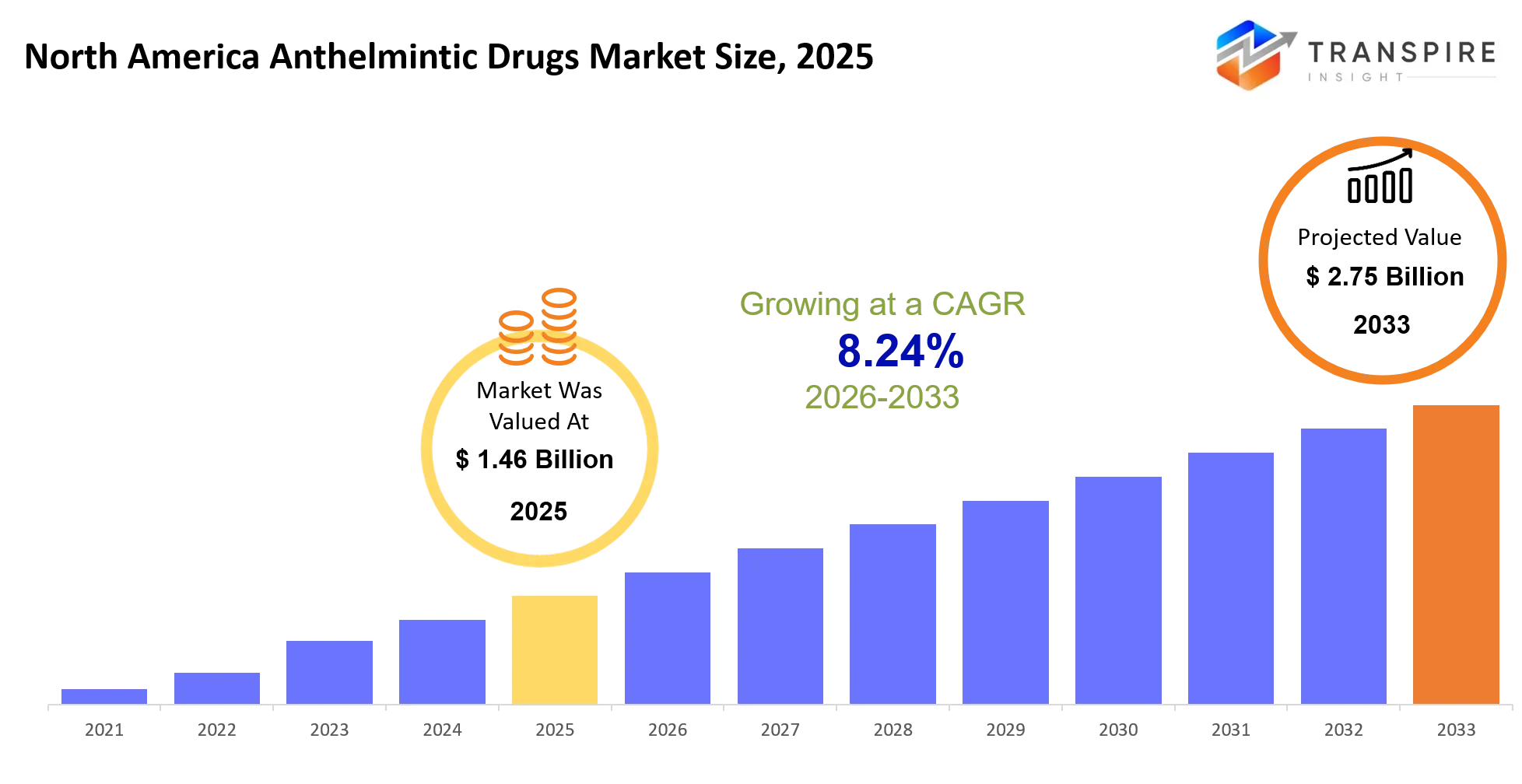
- North America Anthelmintic Drugs Market Size 2025: USD 1.46 Billion
- North America Anthelmintic Drugs Market Size 2033: USD 2.75 Billion
- North America Anthelmintic Drugs Market CAGR: 8.24%
- North America Anthelmintic Drugs Market Segments: By Drug Type (Albendazole, Mebendazole, Ivermectin, Praziquantel, Levamisole, Others), By Application (Soil-transmitted Helminth Infections, Filariasis, Schistosomiasis, Tapeworm Infections, Others), By Distribution Channel (Hospital Pharmacies, Retail Pharmacies, Online Pharmacies, Others), By End User (Hospitals, Clinics, Home Care Settings, Others).
To learn more about this report,  Download Free Sample Report
North America Anthelmintic Drugs Market Summary:
The North America Anthelmintic Drugs Market size is estimated at USD 1.46 Billion in 2025 and is anticipated to reach USD 2.75 Billion by 2033, growing at a CAGR of 8.24% from 2026 to 2033.North America’s anthelmintic drugs market matters a lot for keeping parasitic worm infections under control in both humans and animals, so healthcare systems can cut the disease burden and, at the same time, livestock output stays steadier and safer for food security. In real life, these therapies help prevent performance drops in cattle , sheep, and companion animals, and they also help handle neglected parasitic illnesses in communities that are more exposed or underserved.
In the last three to five years, the market has sort of slid toward integrated parasite management, where veterinarians and producers are pairing medication rounds with surveillance work and resistance-monitoring schemes . One big reason behind this is how resistance to antiparasitic drugs has been rising, especially across livestock setups, and that has pushed stakeholders to go for more focused, selective treatment plans. Because of this, purchasing habits are changing as well, with more attention landing on premium formulations , combo therapies, and choices that are supported by diagnostic signals not really on guesswork. So growth isn’t just coming from higher treatment volumes it’s also linked to higher value therapeutic approaches, that improve effectiveness, help stretch product lifecycles, and back more lasting parasite control outcomes across the region.
Key Market Insights
- In North America, the United States really takes the lead in the Anthelmintic Drugs Market, making up roughly 78% of the regional market share in 2024. It’s kind of clear why, since the market there is just, more established and all that.
- Canada is right behind it, as the second-largest market, helped by expanding livestock production along with more robust animal disease control programs, which keeps everything moving.
- Mexico is the fastest-growing regional market across the forecast, mainly because commercial farming modernization is picking up and veterinary drug accessibility is getting easier.
- When it comes to the drug classes, benzimidazoles are leading the market with about a 35% share in 2024. That’s tied to broad spectrum efficacy and their long standing clinical use.
- Then macrocyclic lactones take second place, holding the next largest share. This is supported by heavy use across cattle, sheep and equine parasite control… you know, that whole routine.
- Looking ahead, combination anthelmintic therapies are projected to grow the quickest through 2032, since manufacturers are working on emerging drug resistance issues, and also trying to stay ahead, basically.
- In terms of where the money comes from, veterinary uses dominate the North America Anthelmintic Drugs Market, with more than 85% revenue share in 2024. So yeah, that portion is huge.
- For applications, livestock parasite management stays the biggest segment, mostly because it directly affects productivity and the economics of the food supply.
- Companion animal treatment is the fastest-growing application category, driven by higher pet healthcare spending and the broader adoption of preventive care habits.
- On the end user side, veterinary hospitals and clinics account for around 48% of the industry size, so they are the top tier there.
- Commercial livestock producers also keep a meaningful presence, since routine parasite control is basically a constant need when you’re managing large herds.
- Finally specialized animal healthcare centers are projected to be the fastest-growing end-user type during the forecast period.
What are the Key Drivers, Restraints, and Opportunities in the North America Anthelmintic Drugs Market?
The strongest force pushing the North America Anthelmintic Drugs Market forward is the growing economic cost of parasitic infections on livestock productivity and yeah it’s pretty clear. Big scale cattle, sheep, and dairy setups increasingly deal with production slippage—like less weight gain, weaker milk output, and reproductive problems that pop up when parasite infestations take hold. At the same time , drug resistant parasite strains are showing up more often, so producers end up leaning on tighter, more frequent monitoring and they move toward pricier anthelmintic formulations. That change has a very direct effect, it lifts spending per treatment cycle, which then helps the market revenue rise. It also fuels wider combination therapy usage and more veterinary guided treatment programs that keep things on track, or at least try to.
Even so, anthelmintic resistance is still the market’s biggest structural obstacle. After decades of repeated use of the same drug families, the parasites basically learn resistance mechanisms that don’t go away fast, not even with regulatory pressure or new product reformulation. Coming up with new antiparasitic compounds means long research schedules, heavy capital commitments and complicated regulatory clearances. And when treatment performance starts to drop in certain livestock groups, producers sometimes postpone drug upgrades or they reduce how often they treat, so that action tends to stunt possible revenue growth and it quietly erodes confidence in long run treatment results.
Precision parasite management is, honestly, one of the more promising growth opportunity s that people keep circling back to. With newer diagnostic testing in the mix, plus fecal egg count analysis and that digital herd monitoring angle, veterinarians can actually tailor treatments to specific infection profiles, instead of doing routine mass deworming every time. And as commercial livestock operations keep putting money into data driven animal health programs, manufacturers have a chance to expand revenue via integrated solutions that pull together diagnostics, monitoring services, and targeted anthelmintic therapies. It’s kinda like… package it all, but in a more refined way.
What Has the Impact of Artificial Intelligence Been on the North America Anthelmintic Drugs Market?
Artificial intelligence and newer digital technologies are starting to nudge and reshape the North America Anthelmintic Drugs Market , mainly by speeding up parasite surveillance, tweaking treatment choices, and generally improving livestock health management. On the ground, veterinary groups and big livestock producers are using AI powered herd management platforms more and more. These platforms sort of handle the collection and analysis of animal health information automatically, like weight gain trends, grazing routines and infection indicators. In practice they can point out animals that look like they are at higher risk for parasitic infections, and then help teams make more focused treatment decisions, not just blanket ones.
At the same time, machine learning models are being used to anticipate parasite outbreaks using environmental conditions, older infection reports, seasonal weather swings, and also farm level health data. The idea is to forecast infection risk before visible clinical signs appear. When that happens producers can adjust the treatment schedule earlier, and cut down on unnecessary drug administration. The upside is clearer treatment efficacy, less pharmaceutical waste, and it even helps slow the emergence of anthelmintic resistance , which is kind of a big deal.
From an operational angle, digital monitoring platforms can raise herd output, reduce spending on veterinary interventions, and strengthen adherence to animal health protocols. Some producers say they see better treatment outcomes and a more efficient way to allocate resources once they switch to a data driven parasite management approach. It feels more strategic , less reactive in other words.
Still, a key constraint stays in the background: data quality and data integration. A lot of farms run with scattered record keeping systems, with inputs sitting in different places, and machine learning models really need big consistent datasets in order to be accurate. Because of this mismatch, AI adoption remains uneven across parts of the livestock health ecosystem, and that delay keeps showing up.
Key Market Trends
- Since 2020, livestock producers have been, kind of replacing the calendar based deworming idea with targeted protocols that lean on diagnostic testing and ongoing infection monitoring.
- Between 2019 and 2025 , the worry about anthelmintic resistance kinda got louder, so more farms started using combination therapies—across cattle, sheep, and even dairy operations, more often than before.
- Veterinary practices have also pushed fecal egg count testing programs outward, which allowed for more accurate treatment recommendations and, in turn , less unnecessary drug dosing on commercial farms.
- Big names like Zoetis and Elanco Animal Health seemed to pivot toward integrated parasite management solutions, not just standalone drug products, in other words a more bundled approach.
- After 2020, spending on companion animal healthcare went upward , and clinics began stressing preventive parasite control plus year round treatment compliance, more consistently.
- During the 2020 and 2021 disruptions, supply chains were messy enough that distributors and producers started diversifying where they source critical veterinary pharmaceuticals from.
- Digital herd management platforms gained traction after 2021, and they helped producers relate parasite burdens with productivity indicators and treatment results, sort of in a measurable loop.
- Regulatory and industry guidance kept nudging resistance stewardship, so veterinarians were encouraged to avoid blanket treatments and instead prescribe using evidence, rather than just routine.
- Premium formulations got more attention too, because producers cared about actual treatment performance and longer lasting parasite control, even if the purchase price isn’t the very lowest.
- Also, cross-border livestock trade and commercial farming modernization in Mexico helped strengthen regional treatment protocols and it expanded access to advanced anthelmintic products after 2022, in a practical way.
North America Anthelmintic Drugs Market Segmentation
By Drug Type
In the world of drug types, ivermectin and albendazole seem to sit at the strongest market positions, mainly because they show broad spectrum efficacy, they’ve had established clinical use for awhile, and they’re widely adopted in both human and veterinary care, so it’s pretty natural they keep pulling in demand. Albendazole is still kind of a go to choice for treating multiple parasitic infections, partly because its effectiveness profile feels favorable, and also because it tends to be cost efficient. Ivermectin keeps commanding a lot of interest especially in livestock management, and also in some selected human therapeutic applications, not every case but still enough to matter.
Mebendazole and praziquantel stay relevant in their more targeted categories, for example intestinal worms, and tapeworm related infections, where clinicians and programs tend to be more specific. Levamisole, plus other niche therapies, shows up for specialized needs, but overall utilization looks more limited. At the same time, growing concerns about drug resistance are quietly reshaping purchasing behavior, and they are also pushing a shift toward combination therapies, and toward better formulations, that are meant to last longer or work better under pressure.Looking ahead, future growth will likely lean toward manufacturers who can deliver differentiated products that balance efficacy with safety, while also addressing resistance management and supporting long-term treatment outcomes, though the market will probably stay picky.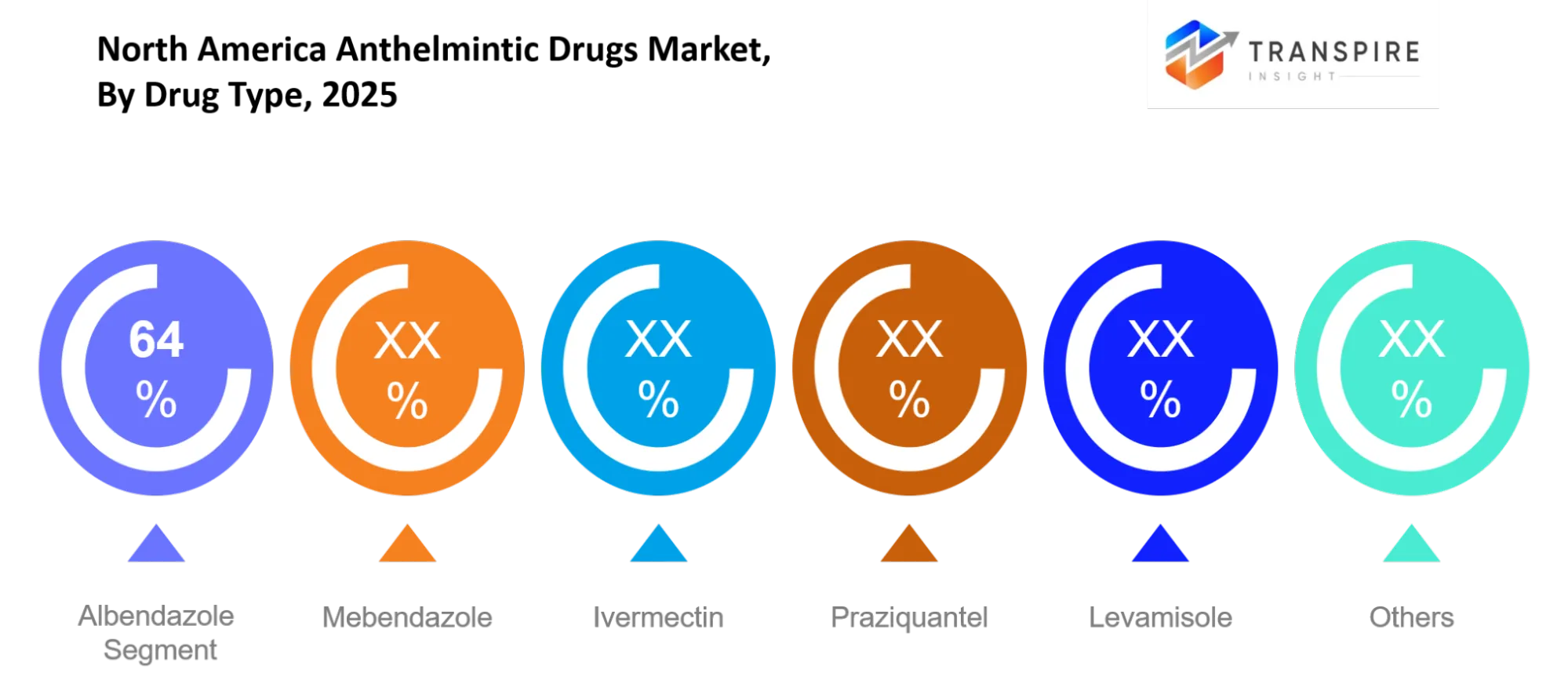
To learn more about this report, Download Free Sample Report
By Application
In application terms, soil transmitted helminth infections end up taking the biggest share, largely because roundworm , hookworm, and whipworm are so widespread, which means routine treatment and prevention strategies are almost always needed. Filariasis and schistosomiasis are smaller segments, sure, but they still matter a lot clinically, and they’re backed by public health programs and targeted therapeutic interventions that stay pretty focused.
Tapeworm infections keep driving steady demand for specialized treatments, especially among vulnerable populations , and also in animal health settings where monitoring is more complicated.What’s changing lately is that demand is leaning more toward earlier diagnosis and a more deliberate treatment selection, instead of blanket preventive administration. As diagnostic capabilities improve, and surveillance programs get stronger, healthcare providers can spot infections more accurately, then optimize therapy choices. That whole transition tends to support premium treatment options and opens up space for companies to line up drug development with newer parasite management approaches and shifting clinical protocols.
By Distribution Channel
Hospital pharmacies are still, kind of, the main distribution channel, because complicated parasitic infections often need physician oversight, prescription management, and access to specialized therapies. Retail pharmacies seem to sit in the second place, largely due to easy availability, long standing consumer trust, and convenient access to the usual anthelmintic medications people get prescribed. Online pharmacies are growing pretty fast the past few years too, as digital health adoption keeps rising and telemedicine usage keeps getting stronger across North America.
There is more convenience now, home delivery options, and even a wider product view, all of which push people toward digital buying channels. That said, regulatory oversight and prescription checks still matter a lot, they nudge channel behavior and make things harder for some online providers . Going forward, channel growth is expected to lean into more integrated digital healthcare ecosystems—where prescriptions, consultations, and medication fulfillment all happen through connected platforms. This could open fresh opportunities for distributors, healthcare providers, and pharmaceutical manufacturers alike.
By End-User
Hospitals show up as the leading end-user segment, mostly because severe or hard to manage parasitic infections often call for advanced diagnostic tools, specialist involvement, and pretty structured treatment pathways, you know. Clinics make up a solid share of use, especially for the more common diagnosis steps, follow-up appointments and outpatient treatment coordination, and so on. Home care environments are starting to matter more too, as healthcare systems lean toward convenience, lower cost efficiency, and patient-centered care patterns. Also, expanded telehealth availability and treatment regimens that are simplified in practice supports that shift, even if people don’t always notice it right away.
Other end users, like public health organizations and local community providers, still add to market activity through screening campaigns and targeted interventions. Looking ahead, growth will probably hinge on whether healthcare providers can bundle diagnostics, monitoring and actual treatment delivery across different care environments, giving patients more flexibility. At the same time it can improve treatment adherence and the overall efficiency of healthcare.
What are the Key Use Cases Driving the North America Anthelmintic Drugs Market?
The main, kinda obvious use of anthelmintic drugs is the treatment and control of soil-transmitted helminth infections in people and animals, at least in human and veterinary healthcare. This is where the biggest demand tends to come from, since routine parasite control directly helps livestock productivity, better animal health outcomes, and also more effective infection management when you are dealing with clinical cases.
More applications are showing up too, especially companion animal parasite prevention, and also those more targeted treatment programs done inside outpatient clinics and everyday veterinary practices. With pet healthcare spending rising, and diagnostic testing getting used more often, stakeholders seem to lean toward steadier deworming protocols , plus longer-term parasite management approaches across these end-user groups.
The newer use cases are leaning into precision parasite management programs, where diagnostic screening gets paired with digital herd monitoring, and then the therapy selection is kept targeted. On top of that, interest is growing around resistance-management initiatives that rely on data-based treatment decisions, so they can cut back on unnecessary drug exposure. That whole shift is opening up space for advanced formulations and integrated animal health solutions during the forecast period.
|
Report Metrics |
Details |
|
Market size value in 2025 |
USD 1.46 Billion |
|
Market size value in 2026 |
USD 1.58 Billion |
|
Revenue forecast in 2033 |
USD 2.75 Billion |
|
Growth rate |
CAGR of 8.24% from 2026 to 2033 |
|
Base year |
2025 |
|
Historical data |
2021 - 2024 |
|
Forecast period |
2026 - 2033 |
|
Report coverage |
Revenue forecast, competitive landscape, growth factors, and trends |
|
Country scope |
North America (Canada, The United States, and Mexico) |
|
Key company profiled |
GlaxoSmithKline, Pfizer, Johnson & Johnson, Bayer, Merck & Co., Sanofi, Cipla, Teva Pharmaceuticals, Sun Pharmaceutical, Viatris, Lupin, Aurobindo Pharma, Dr. Reddy’s Laboratories, Hikma Pharmaceuticals, Novartis |
|
Customization scope |
Free report customization (country, regional & segment scope). Avail customized purchase options to meet your exact research needs. |
|
Report Segmentation |
By Drug Type (Albendazole, Mebendazole, Ivermectin, Praziquantel, Levamisole, Others), By Application (Soil-transmitted Helminth Infections, Filariasis, Schistosomiasis, Tapeworm Infections, Others), By Distribution Channel (Hospital Pharmacies, Retail Pharmacies, Online Pharmacies, Others), By End User (Hospitals, Clinics, Home Care Settings, Others) |
Which Regions are Driving the North America Anthelmintic Drugs Market Growth?
The United States basically is the leading slice of the North America Anthelmintic Drugs Market, mainly because it has a big livestock population and a more advanced veterinary healthcare setup, plus very solid pharmaceutical distribution networks. On top of that, federal and state animal health programs help keep parasite surveillance routine and they also nudge commercial farms toward treatment decisions that are actually evidence-based . There are also major animal health manufacturers and research institutions around, which keeps product supply available and it supports continual innovation. And yeah, the regional setup of veterinarians, diagnostic laboratories, and large-scale producers keeps things stable and it keeps that dominance in place.
Canada sits in the second-largest position, though the power there is more about steadiness than raw size. The country benefits from consistent livestock management norms, predictable regulatory supervision, and ongoing funding for animal health initiatives. Producers are also moving more toward preventive care strategies to safeguard productivity in cattle and dairy sectors, so demand for parasite control products stays dependable. Overall, this careful, disciplined way of buying basically makes Canada a reliable contributor to regional revenue .
Mexico is sort of emerging as the fastest-growing market, as commercial livestock operations modernize and access to veterinary services keeps improving. In the last stretch, recent investments in animal health infrastructure, disease monitoring programs, and also farm productivity initiatives have expanded the use of advanced parasite management solutions. There’s also growing integration with North American agricultural supply chains which in turn is encouraging the adoption of higher-value treatment protocols, not just the standard ones. From 2026 to 2033, this momentum is expected to create quite attractive opportunities for manufacturers, distributors, and investors that want to expand beyond the more mature markets.
Who are the Key Players in the North America Anthelmintic Drugs Market and How Do They Compete?
Competition in the North America Anthelmintic Drugs Market stays sort of moderately consolidated, with this small cluster of multinational animal health firms that ends up controlling a big portion of branded sales, while regional and generic players, you know, go at it more aggressively on price. Honestly, the market doesn’t look like it’s getting disrupted by tons of fresh entrants either, mainly because the regulatory requirements, product development spend, and those long established veterinary distribution networks add heavy barriers to entry. In practice, differentiation is shifting more toward treatment efficacy, resistance management know-how, diagnostic integration, and technical assistance, not just pricing, full stop. As parasite resistance turns into a bigger and bigger issue, the companies are trying to sell broader parasite control approaches instead of basically offering just a standalone pharmaceutical.
Zoetis leans into innovation-led growth via wide parasite management portfolios, and they back it with veterinary education programs plus digital livestock health tools. Together, this supports customer stickiness and helps enable more data informed treatment decisions, even when conditions are changing. Merck & Co. differentiates through deep research capabilities and a more integrated animal health package, where therapeutics are paired with herd management expertise. Ongoing investment in veterinary partnerships and livestock productivity programs also helps keep market access strong across commercial farming operations.
Elanco Animal Health really focuses on solutions that push productivity, so it ties back to livestock results and the overall economic picture, and that makes their offerings kind of easy to like for large-scale producers. They also keep doing strategic acquisitions, so the product range got wider and access to several animal health categories got stronger, even if sometimes it feels a bit fast. Boehringer Ingelheim, meanwhile, leans hard on solid vet relationships and preventive healthcare know-how, to help keep long-term parasite control programs running in a steady way.Then Virbac, they tend to concentrate on companion animals and more specialized veterinary segments, and there the targeted formulations, plus a customer-first service model, creates clear differentiation. Overall, these companies keep moving forward through research collaborations, portfolio improvements, and deeper engagement with veterinarians and livestock producers, all while aiming at sustainable parasite management solutions that actually last.
Company List
- GlaxoSmithKline
- Pfizer
- Johnson & Johnson
- Bayer
- Merck & Co.
- Sanofi
- Cipla
- Teva Pharmaceuticals
- Sun Pharmaceutical
- Viatris
- Lupin
- Aurobindo Pharma
- Dr. Reddy’s Laboratories
- Hikma Pharmaceuticals
- Novartis
Recent Development News
In May 2026, Zoetis Reports Strong 2026 Performance Driven by Parasiticide Portfolio: Zoetis announced first-quarter 2026 results, highlighting continued demand across its companion-animal portfolio, including parasiticide products that are central to the anthelmintic and antiparasitic treatment segment. The company also raised its full-year 2026 revenue outlook, signaling confidence in sustained market growth across North America.
Source: https://investor.zoetis.com
In May 2026, Elanco Animal Health Posts Higher Revenue from Parasiticide Products: Elanco reported first-quarter financial results showing strong growth in its pet-health business. The company attributed part of the increase to rising sales of parasite-control products, including its expanding parasiticide portfolio, reflecting growing demand for deworming and parasite-management therapies in North America.
Source: https://www.prnewswire.com
What Strategic Insights Define the Future of the North America Anthelmintic Drugs Market?
Over the next five to seven years, the North America Anthelmintic Drugs Market is expected to sort of drift away from volume driven treatment models and toward precision parasite management ecosystems. The main push behind this shift is the growing economic and biological cost of anthelmintic resistance, which is in turn trimming down the effectiveness of those older, all at once, blanket treatment approaches. Because of that, future value creation is likely to come less from simple drug sales alone, and more from diagnostics, data guided treatment choice, and integrated animal health platforms.
One underappreciated risk is that the market might become more concentrated, like only a handful of active pharmaceutical ingredients and suppliers really end up mattering. If there is any disruption in raw material availability, manufacturing capacity, or regulatory compliance, it can end up creating supply constraints. And then those constraints kind of ripple through treatment access, and pricing across the region, even if the clinical demand stays pretty steady, or at least stable enough to seem normal.
A big emerging opportunity is AI-enabled parasite surveillance and predictive livestock health management. As commercial producers roll out digital herd monitoring systems, companies that tie together diagnostics, analytics, and targeted therapies will probably pick up a clear edge. Market participants should invest in integrated parasite management offerings and maintain strategic partnerships with veterinary networks, so they can lock in longer term differentiation, and yes, stronger pricing power.
North America Anthelmintic Drugs Market Report Segmentation
By Drug Type
- Albendazole
- Mebendazole
- Ivermectin
- Praziquantel
- Levamisole
- Others
By Application
- Soil-transmitted Helminth Infections
- Filariasis
- Schistosomiasis
- Tapeworm Infections
- Others
By Distribution Channel
- Hospital Pharmacies
- Retail Pharmacies
- Online Pharmacies
- Others
By End User
- Hospitals
- Clinics
- Home Care Settings
- Others
Frequently Asked Questions
Find quick answers to common questions.
The Approximate North America Anthelmintic Drugs Market size for the Market will be USD 2.75 Billion in 2033.
The key Segments of the North America Anthelmintic Drugs Market are By Drug Type (Albendazole, Mebendazole, Ivermectin, Praziquantel, Levamisole, Others), By Application (Soil-transmitted Helminth Infections, Filariasis, Schistosomiasis, Tapeworm Infections, Others), By Distribution Channel (Hospital Pharmacies, Retail Pharmacies, Online Pharmacies, Others), By End User (Hospitals, Clinics, Home Care Settings, Others).
Major Players in the North America Anthelmintic Drugs Market are GlaxoSmithKline, Pfizer, Johnson & Johnson, Bayer, Merck & Co., Sanofi, Cipla, Teva Pharmaceuticals, Sun Pharmaceutical, Viatris, Lupin, Aurobindo Pharma, Dr. Reddy’s Laboratories, Hikma Pharmaceuticals, Novartis.
The Current Market size of the North America Anthelmintic Drugs Market is USD 1.46 Billion in 2025.
The North America Anthelmintic Drugs Market CAGR is 8.24%.
- GlaxoSmithKline
- Pfizer
- Johnson & Johnson
- Bayer
- Merck & Co.
- Sanofi
- Cipla
- Teva Pharmaceuticals
- Sun Pharmaceutical
- Viatris
- Lupin
- Aurobindo Pharma
- Dr. Reddy’s Laboratories
- Hikma Pharmaceuticals
- Novartis
About the Authors

Pankaj Ghogare Patil
I am Pankaj Ghogare Patil, a Senior Research Analyst at Transpire Insight, specializing in the Pharmaceutical, Chemicals & Materials, Healthcare IT, and Biotechnology industry. My expertise lies in conducting comprehensive market research, analyzing industry trends, evaluating competitive landscapes, and translating complex data into actionable insights. At Transpire Insight, I closely follow emerging technologies, regulatory developments, and market innovations to create accurate, well-researched, and informative content that helps businesses and professionals make informed decisions. I am committed to producing credible, evidence-based articles that reflect industry best practices while making technical topics accessible and valuable for a broad audience.

Chakradhar Khansole
Chakradhar serves as the Research Director at Transpire Insight, bringing over 8 years of experience in technology, innovation, and strategic market intelligence. He specializes in transforming complex market data into actionable business insights that enable organizations to make informed, growth-oriented decisions. Recognized for his strategic vision and analytical expertise, Chakradhar leads high-impact research initiatives, delivering comprehensive market assessments, competitive intelligence, and forward-looking industry analysis.
Recently Published Reports
-
Jul 2026
Alopecia Treatment Market
Alopecia Treatment Market Size, Share & Analysis Report By Disease Type (Alopecia Areata, Cicatricial Alopecia, Traction Alopecia, Alopecia Totalis, Androgenetic Alopecia, Alopecia Universalis, and Other Disease Types), By Treatment Type (Topical Treatments, Oral Medications, Injectable Therapies, and Hair Transplantation), By Gender (Male, and Female), By Distribution Channel (Hospitals and Clinics, Retail Pharmacies, and Online Retailers), and Geography (North America, Europe, Asia-Pacific, Middle East and Africa, South and Central America), 2021 - 2031
-
Jul 2026
Medical Ultrasound Probe Market
Medical Ultrasound Probe Market Size, Share & Analysis Report By Type (Linear Type, Convex Type, Endocavitary Probe, Phased Array/Cardiac Probe, Transesophageal (TEE) Probe, and Others), By Application (Ophthalmology, Cardiology, Musculoskeletal, Oncology, Obstetrics & Gynecology, General Imaging, and Others), By End User (Hospitals & Clinics, Diagnostic Centers, Ambulatory Surgical Centers, and Others), and Geography (North America, Europe, Asia-Pacific, Middle East and Africa, South and Central America), 2021 – 2031
-
May 2026
Biosimilars Market
Biosimilars Market By Product Type (Monoclonal Antibodies, Recombinant Hormones, Erythropoietin, G-CSF, Others), By Indication (Oncology, Autoimmune Diseases, Blood Disorders, Diabetes, Others), By Manufacturing Type (In-House Manufacturing, Contract Manufacturing), By Distribution Channel (Hospital Pharmacies, Retail Pharmacies, Online Pharmacies), By Industry Analysis, Size, Share, Growth, Trends, and Forecasts 2021-2033
-
Apr 2026
Gastrointestinal Endoscopy Market
Gastrointestinal Endoscopy Market By Type (Rigid Gastrointestinal Endoscope, Flexible Gastrointestinal Endoscopes, Disposable Gastrointestinal Endoscope), By Procedure Type (Colonoscopy, Gastroscopy, Duodenoscopy, Enteroscopy, Flexible Sigmoidoscopy, Others), By Application (Diagnosis, Treatment), By End-Users (Hospitals, Ambulatory Surgical Centers, Specialty Clinics, Laboratories, Others), By Industry Analysis, Size, Share, Growth, Trends, and Forecasts 2021-2033