

North America Middle Ear Infections Treatment Market Size & Forecast:
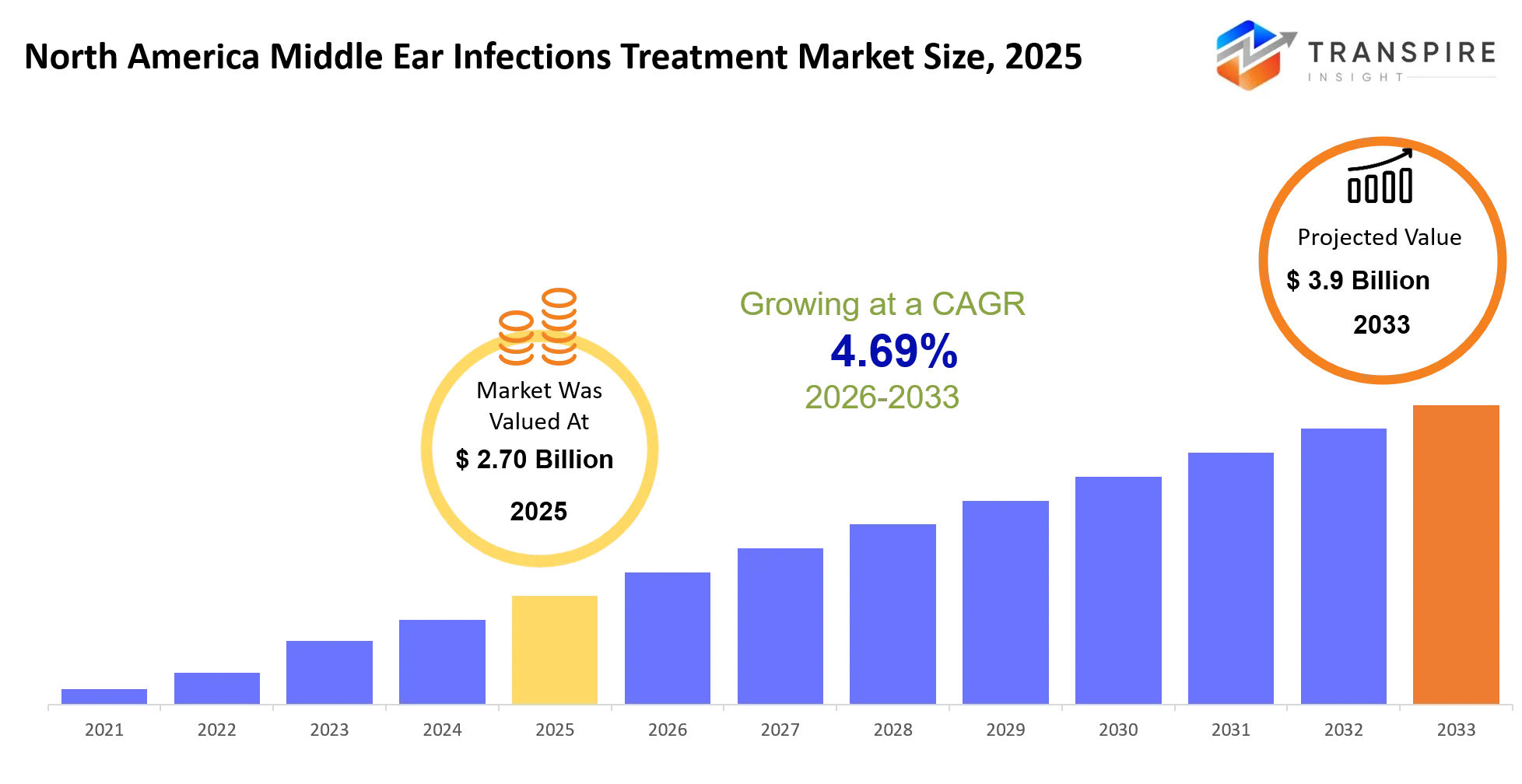
- North America Middle Ear Infections Treatment Market Size 2025: USD 2.70 Billion
- North America Middle Ear Infections Treatment Market Size 2033: USD 3.9 Billion
- North America Middle Ear Infections Treatment Market CAGR: 4.69%
- North America Middle Ear Infections Treatment Market Segments: By Treatment Type (Antibiotics, Pain Relievers, Ear Tubes, Surgical Procedures, Others); By Application (Acute Otitis Media, Chronic Otitis Media, Otitis Media with Effusion, Others); By End User (Hospitals, ENT Clinics, Ambulatory Surgical Centers, Others); By Distribution Channel (Hospital Pharmacies, Retail Pharmacies, Online Pharmacies, Others)
To learn more about this report,  Download Free Sample Report
North America Middle Ear Infections Treatment Market Summary
The North America Middle Ear Infections Treatment Market was valued at USD 2.70 Billion in 2025. It is forecast to reach USD 3.9 Billion by 2033. That is a CAGR of 4.69% over the period.
North America’s Middle Ear Infections Treatment Market tackles a familiar clinical hiccup by offering drug options, diagnostic support and therapeutic approaches that let clinicians handle both acute and recurring ear infections, especially in pediatric groups. When managed well, treatment can reduce downstream complications, ease overall healthcare usage and help patients get back to baseline quicker, whether they’re treated in outpatient clinics or inside hospitals.
Over the last five years, a more evidence‑led prescribing tilt has emerged, alongside more careful antibiotic application. This change has been, kind of pushed along by antimicrobial stewardship programs all over the United States and Canada. At the same time, during the COVID‑19 pandemic, people shifted how they reached for care a bit, which temporarily quieted down routine visits then later created a rebound in pediatric appointments once restrictions eased. That pause, really, also reshaped treatment volumes and the choice of therapies.
Right now growth is being powered by more frequent diagnoses, easier access to child health services, and newer formulations that are simpler to use, which helps adherence. As clinicians lean into more deliberate care routines, companies should end up seeing better adoption and more steady revenue outlooks across both prescription and nonprescription areas.
Key Market Insights
- The United States kind of seems to steer the North America Middle Ear Infections Treatment Market, with roughly XX% market share in 2025, mostly because it has a sturdy healthcare infrastructure and, honestly, how the care is kind of organized overall.
- Canada is expected to grow the fastest across the region during the forecast window, aided by better access for pediatric healthcare and a wider uptake of treatment options.
- More investment into primary care networks keeps adding momentum to the regional market size, and it also makes treatments feel more reachable, sooner for patients.
- Antibiotics are still the leading segment, taking in close to XX% share in 2025, largely because they’re used widely against bacterial middle ear infections.
- Analgesics land in the second position, backed by their job in pain control and symptom easing strategies that providers often rely on.
- Combination therapies are projected to be the fastest-growing segment from 2025 to 2030, since clinicians look for better overall treatment outcomes, not only quick relief.
- Advanced drug formulations—especially those with stronger adherence or compliance profiles—are drawing new demand in pediatric care settings.
- Acute Otitis Media (AOM) is mostly what’s driving the market, with something like XX% of revenue share, and it kinda fits the fact that it’s really common in kids.
- Recurrent middle ear infections are showing the fastest growth as an application category, likely because the clinical focus is moving toward longer-term, kind of sustained care strategies.
- For the settings side, hospitals and specialty clinics take the lead with around XX%, helped by broader diagnostic capabilities and more in-depth evaluation routines, more or less.
What are the Key Drivers, Restraints, and Opportunities in the North America Middle Ear Infections Treatment Market?
Driver: The strongest growth driver in the North America Middle Ear Infections Treatment Market seems to be the push toward earlier diagnosis, along with evidence based treatment pathways in pediatric care and well… just a bit more. Over the past few years healthcare systems have expanded access to primary care and urgent care centers, plus telehealth consultations that let clinicians catch ear infections sooner. This change has raised the number of treated cases moving into the healthcare system, and it also nudges prescription volumes higher for antibiotics, pain management therapies, and then the follow up interventions too.Earlier treatment in general reduces the chance of complications, so you get recurring clinical demand and pretty steady revenue generation across pharmaceutical and healthcare service providers.
Restraint: Antibiotic stewardship programs act as a kind of structural limit on how far the market can grow, you know. Regulatory agencies,and healthcare organizations have tightened the rules for prescribing in order to tackle antimicrobial resistance, therefore broad spectrum antibiotics are being more restricted for mild or maybe not so clear cases.Since antimicrobial resistance is still a long term public health worry, these prescribing controls probably won’t ease up soon. Because of that, treatment volumes for some drug categories remain limited, which suppresses possible revenue growth even though the patient population is still substantial.
Opportunity: A major future opportunity is advanced diagnostics that can distinguish viral from bacterial infections right at the point of care. Rapid molecular testing platforms, plus AI assisted diagnostic tools, can help clinicians target treatment with more precision and reduce needless prescriptions. As healthcare providers invest in these solutions, especially across outpatient and pediatric networks in the United States and Canada adoption of targeted therapies is expected to create new revenue streams and strengthen market growth.
What Has the Impact of Artificial Intelligence Been on the North America Middle Ear Infections Treatment Market?
Artificial intelligence and advanced digital technologies are, kind of, reshaping marine emission control systems. They improve operational visibility compliance management, and equipment reliability, in a way that feels more connected than before. Ship operators now increasingly use AI-enabled monitoring platforms to sort of automate scrubber performance tracking. They continuously look at exhaust gas parameters, washwater quality pressure levels, and sulfur emissions. Because of this they cut down on manual inspections and they get real-time alerts when performance drifts past regulatory thresholds. In practice this helps fleets stay in line with international emission standards, pretty consistently.
Machine learning is also boosting predictive abilities across exhaust gas cleaning technology deployments. When these models study historical operating records, fuel characteristics, environmental conditions, and equipment behavior, they can foresee component failures before they happen. That supports predictive maintenance planning and reduces surprise downtime, which then makes scrubber availability higher. In addition, some operators use AI-driven emissions forecasting tools. These help adjust scrubber settings based on voyage routes and expected fuel consumption trends. The goal is lower operating costs and better fuel efficiency, basically.
Overall, these digital solutions tend to bring higher system uptime, more stable regulatory compliance, and less money spent on upkeep. Still, AI rollout has a big catch. Bringing advanced analytics platforms into older vessel infrastructure often takes major capital. Also, the data quality isn’t always consistent across fleets, and that can lower model accuracy and slow down when people actually start seeing the operational benefits.
Key Market Trends
- Since 2020, antimicrobial stewardship programs have helped dial down those unnecessary antibiotic prescriptions, and honestly that sorta nudged manufacturers toward more targeted therapies, plus the pediatric formulations are clearly differentiated, in a way that makes sense.
- After the pandemic, telehealth adoption really took off, so clinicians could do earlier clinical assessments, and the referral volumes for confirmed middle ear infection cases climbed up.
- From 2021 to 2025, pediatric care networks started using evidence based treatment protocols more and more, which then made prescribing patterns feel more standardized across North America.
- Big pharma like Pfizer, GlaxoSmithKline, and Sanofi have been upping investment in child friendly formulations, trying to boost adherence,and keep patients on track.
- Rapid diagnostic technologies, got a lot more traction after 2022 which lets clinicians sort out infection severity more clearly, and that in turn backs sharper treatment decisions.
- Healthcare providers are increasingly leaning toward shorter duration antibiotic regimens when it’s clinically appropriate, basically matching the newest guidance and resistance management objectives.
- In the supply chain disruptions around 2021 and 2022, pediatric drug availability showed real weak spots, so manufacturers began diversifying their sourcing approaches.
- Outpatient clinics and urgent care centers started taking on more of the treatment volumes than they had pre 2020, so patient management gradually shifted away from hospitals, bit by bit .
- Data driven prescribing tools and the integration with electronic health records expanded across healthcare systems, helping with treatment consistency and clinical decision support.
- Competitive activity is now more about formulation innovation,strategic partnerships, and lifecycle management, not just competing on product pricing alone.
North America Middle Ear Infections Treatment Market Segmentation
By Treatment Type
Antibiotics kind of hold the front seat within the treatment categories, since bacterial infections are still one of the big reasons people end up seeing a physician for middle ear issues. They have broad clinical buy-in, plus reimbursement pathways that are already well, set up. Because of routine prescribing habits too, antibiotics end up keeping a substantial share of total revenue. Pain relievers come next as a key complementary option, whereas ear tubes, and surgical procedures make up a smaller slice but still matter in real-world spending.
The growth story is not the same across every category. Antibiotics are getting more supervision through antimicrobial stewardship programs, so the prescription volumes may get moderated, but at the same time it pushes the market toward more targeted formulations. Ear tubes, and surgical interventions, tend to start getting more attention when people experience recurrent bouts or treatment that simply won’t respond, and yes, this happens a lot with pediatric patients who end up facing repeated infections. In the forecast period, product developers are likely to shift toward precision based therapies, stronger drug delivery systems, and approaches that lean on less invasive procedural methods. Overall, investment activity may move toward options that help keep clinical results strong while also supporting responsible antibiotic use, and that then creates room for new ideas across the drug market side and the procedure side.
By Application
Acute Otitis Media is the largest application segment, largely because incidence rates stay high among infants and younger children. Lots of physician consultations, along with established care pathways, support strong utilization. Chronic Otitis Media and Otitis Media with Effusion are smaller in share, but they still drive meaningful healthcare spending, because managing them often means extended observation, plus specialized interventions that take more time and coordination.
Distinct clinical pathways end up shaping demand across different applications, kinda directly. Acute cases tend to push routine prescription volumes, while chronic conditions really need repeated checkups, diagnostic testing, and in some situations surgical action. Otitis Media with Effusion is getting more clinical attention lately, because fluid that keeps building up can interfere with hearing and also affect developmental outcomes. The coming growth is expected to be powered by better diagnostic precision and earlier, more proactive intervention strategies. Healthcare providers and manufacturers are likely to stress treatment approaches that match specific disease presentations, instead of leaning on one-size-fits-all management methods.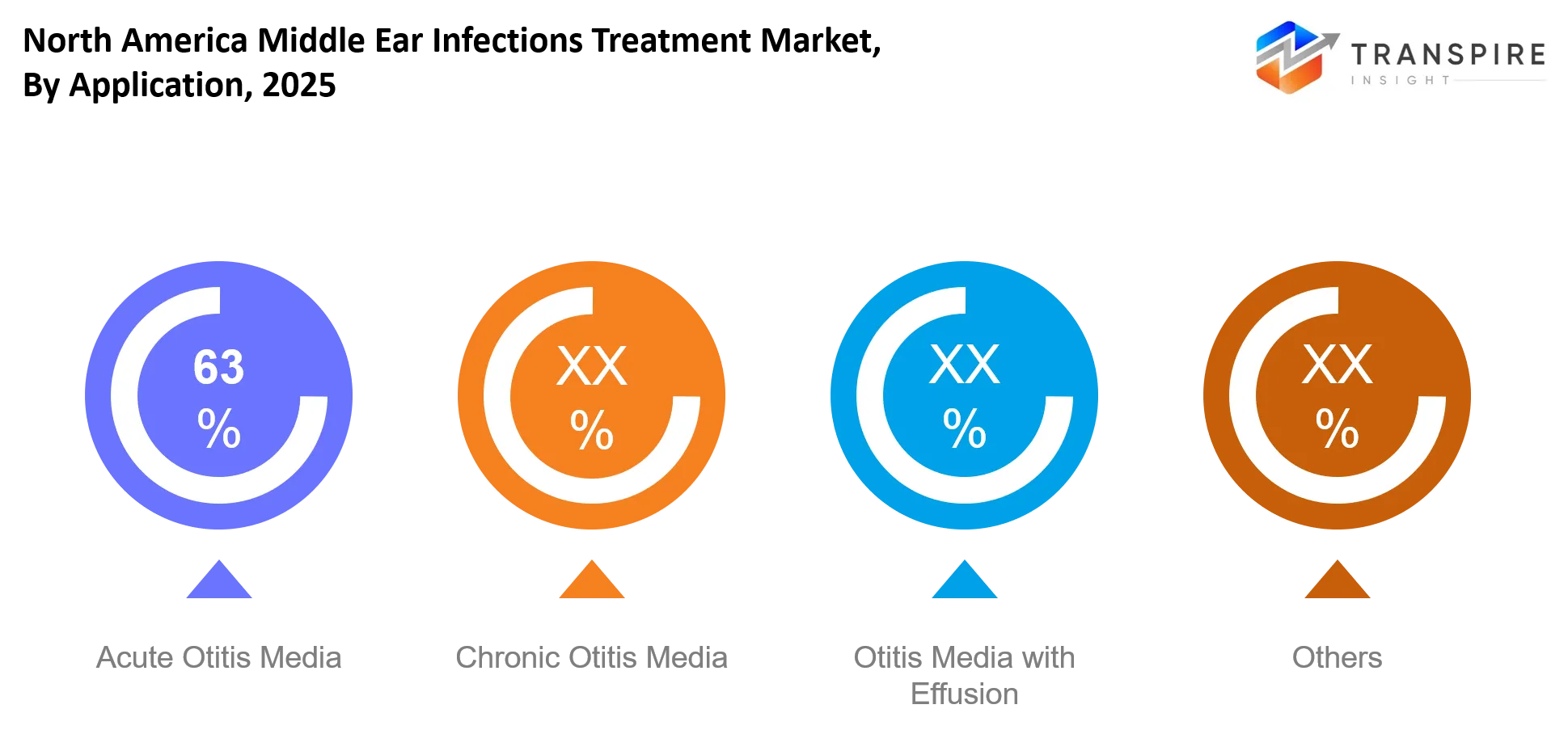
To learn more about this report, Download Free Sample Report
By End User
Hospitals hold the largest end-user slice, mainly since broad diagnostic capability, specialist teams, and emergency care services handle a large patient flow. ENT clinics make up a significant part of the treatment activity, especially when there are recurring infections and specialized assessments. Ambulatory Surgical Centers keep expanding their role in procedural care, notably for ear tube placement and related interventions.
Changing care delivery models are reshaping how end users behave. Hospitals stay strong for complex, harder cases, while ENT clinics benefit from rising referrals and more niche treatment demand. Ambulatory Surgical Centers gain momentum too, mostly because lower procedural costs and tighter treatment timelines feel attractive to both healthcare systems and payers. More movement toward outpatient care is expected during the forecast period. That shift opens doors for facility operators, medical device suppliers, and healthcare investors who focus on efficient specialty care delivery.
By Distribution Channel
Hospital pharmacies kinda hold the biggest position right now, partly because lots of prescriptions start from hospital based consults and pediatric care situations. Retail pharmacies are still the second largest option mainly due to broad geographic reach, plus the consumer trust they’ve built over time. Online pharmacies only take a smaller slice today, but they’re becoming more noticeable within the overall distribution mix.
A bunch of factors, like technology adoption and how people end up purchasing things now, shape how each channel really performs. Retail pharmacies do good work on convenience and quick access to frequently used medications, while hospital pharmacies stay tied to acute care workflow, you know, the kind that moves fast. Online platforms are getting more traction via digital prescription processing, home delivery support, and telehealth networks that feel kinda more interconnected. As the digital healthcare infrastructure keeps expanding, online pharmacy growth is expected to get stronger throughout the forecast period. At the same time, pharmaceutical brands and distribution partners are likely to pump more resources into omnichannel efforts, blending physical availability with digital ease.
What are the Key Use Cases Driving the North America Middle Ear Infections Treatment Market?
The main use case really runs around dealing with Acute Otitis Media in kids, like the pediatric side. In day to day practice, primary care physicians, hospitals, and pediatric clinics end up prescribing antibiotics and pain relief therapies, since acute infections make up the biggest portion of clinical appointments and treatment volume. That pattern keeps demand fairly steady across the healthcare systems.
Also, the expansion is pretty clear for recurrent ear infections, plus those cases where there is lingering middle ear fluid buildup. ENT clinics do more and more follow up monitoring, and they also carry out ear tube procedures when patients keep having repeat episodes. At the same time, ambulatory surgical centers manage a rising number of minimally invasive interventions, which is becoming common.
On the newer end, you see precision diagnostics and telehealth-supported care routes showing up. Rapid molecular testing and AI-guided clinical decision tools sort out bacterial from viral infections, so clinicians can choose targeted therapy better and avoid unnecessary prescriptions. If things continue like this, these technologies could reshape treatment strategies throughout the forecast period.
|
Report Metrics |
Details |
|
Market size value in 2025 |
USD 2.70 Billion |
|
Market size value in 2026 |
USD 2.83 Billion |
|
Revenue forecast in 2033 |
USD 3.9 Billion |
|
Growth rate |
CAGR of 4.69% from 2026 to 2033 |
|
Base year |
2025 |
|
Historical data |
2021 - 2024 |
|
Forecast period |
2026 - 2033 |
|
Report coverage |
Revenue forecast, competitive landscape, growth factors, and trends |
|
Regional scope |
North America (Canada, The United States, and Mexico) |
|
Key company profiled |
Pfizer, GlaxoSmithKline, Sanofi, Novartis, Cipla, Teva Pharmaceuticals, Sun Pharmaceutical, Abbott Laboratories, Johnson & Johnson, Bayer, Eli Lilly, Bausch Health, Merck & Co., AstraZeneca, Takeda Pharmaceutical |
|
Customization scope |
Free report customization (country, regional & segment scope). Avail customized purchase options to meet your exact research needs. |
|
Report Segmentation |
By Treatment Type (Antibiotics, Pain Relievers, Ear Tubes, Surgical Procedures, Others); By Application (Acute Otitis Media, Chronic Otitis Media, Otitis Media with Effusion, Others); By End User (Hospitals, ENT Clinics, Ambulatory Surgical Centers, Others); By Distribution Channel (Hospital Pharmacies, Retail Pharmacies, Online Pharmacies, Others) |
Which Regions are Driving the North America Middle Ear Infections Treatment Market Growth?
The United States kind of represents the dominant regional market, mostly because of high healthcare expenditure, an extensive pediatric care network, and very strong access to prescription therapies. Clinical guidance from major medical associations helps keep diagnosis and treatment pathways rather standardized, which in turn sustains consistent treatment volumes. There’s also a dense web of hospitals, urgent care centers, ENT specialists, and retail pharmacies, and this creates broad patient access across urban and suburban areas. Plus, ongoing investment into healthcare technology, diagnostic tools, and pharmaceutical innovation reinforces that market leadership, kind of all the time.
Canada, meanwhile, ranks as the second-largest regional contributor, but market performance depends more on healthcare system steadiness than sheer scale. Universal healthcare coverage supports consistent access to diagnosis and therapy, which reduces variability in patient outcomes between provinces. Government-backed healthcare programs and established reimbursement mechanisms generate more predictable demand for medications and related interventions. On top of that, steady investment in pediatric services and preventive care initiatives makes Canada a dependable source for long-term market revenue, even when things shift.
Mexico is becoming the fastest-growing market in the region, since healthcare infrastructure keeps modernizing and specialized care access keeps widening. Rising investment in private healthcare facilities, plus more ENT service availability, has improved diagnosis and treatment rates lately. Pharmaceutical companies are strengthening distribution channels and increasing product availability across both cities and secondary towns. Growth momentum through 2026–2033 is expected to bring attractive opportunities for manufacturers, healthcare providers and investors looking for expansion in underserved patient pop ulation, where supply still feels thin in a few areas.
Who are the Key Players in the North America Middle Ear Infections Treatment Market and How Do They Compete?
Competition in the North America Middle Ear Infections Treatment Market still feels moderately consolidated, like a few big players are kind of steering most of it, while smaller firms circle around the edges . In practice, a small group of multinational pharmaceutical companies controls a notable slice of prescription treatment revenue. The rivalry is less about simple price swings and more about actual product efficacy, pediatric formulation design, regulatory compliance, and how far the distribution network can reach. Meanwhile, well-known manufacturers keep defending their market share using lifecycle management strategies and ongoing formulation improvements. At the same time, smaller biotechnology and specialty pharmaceutical companies try to carve out openings in targeted therapies and more advanced infection management solutions. Honestly, strong relationships with healthcare providers, pharmacy networks, and healthcare systems remain a very practical competitive edge.
Pfizer leans heavily into pharmaceutical innovation and broad healthcare network penetration. The company benefits from wide clinical development capabilities, plus a large portfolio that helps support physician confidence and market access. Continued investment in research partnerships and pediatric treatment development helps keep its long-term positioning more secure, even as guidelines evolve. GlaxoSmithKline differentiates itself through infectious disease management know-how and strong brand recognition across healthcare markets. Through strategic investments in research collaborations and product optimization initiatives, it tries to sustain resilience as treatment standards shift over time.
Sanofi emphasizes geographic reach and diversified healthcare offerings, which enables efficient access to hospitals, specialty clinics, and retail pharmacy channels. Johnson & Johnson uses a mix of consumer health experience and prescription healthcare capabilities, giving it advantages in both symptom management and treatment-related products. Abbott strengthens market presence through diagnostic technologies that support earlier detection and treatment decisions, enabling healthcare providers to deliver more targeted care. These companies increasingly compete through integrated healthcare solutions that combine therapeutic products, diagnostics, and patient support capabilities rather than relying solely on individual treatment offerings.
Company List
- Pfizer
- GlaxoSmithKline
- Sanofi
- Novartis
- Cipla
- Teva Pharmaceuticals
- Sun Pharmaceutical
- Abbott Laboratories
- Johnson & Johnson
- Bayer
- Eli Lilly
- Bausch Health
- Merck & Co.
- AstraZeneca
- Takeda Pharmaceutical
Recent Development News
“In May 2026, Pfizer advanced its investigational 25-valent pneumococcal conjugate vaccine (25vPnC) into Phase 3 development. The vaccine is designed to broaden protection against pneumococcal disease, including strains associated with acute otitis media (middle ear infections), potentially strengthening future prevention options in the pediatric market.https://www.pfizer.com
“In April 2026, Sanofi completed the market authorization transfer and commercial launch preparation for Nuvaxovid in Canada. While primarily a COVID-19 vaccine transaction, the move expanded Sanofi’s vaccine commercialization footprint in North America and reinforced its investment commitment to infectious disease prevention infrastructure relevant to respiratory and ear infection-related healthcare markets.https://www.sanofi.ca
What Strategic Insights Define the Future of the North America Middle Ear Infections Treatment Market?
The North America Middle Ear Infections Treatment Market is drifting, kind of… toward a more precision driven care model over the next five to seven years. With advances in fast diagnostics, digital health integration, and antimicrobial stewardship, the whole value creation angle is slowly moving away from “more treatments sold” and toward treatment accuracy, or at least that’s what payers and clinicians seem to care about more. In practice, companies that help enable earlier diagnosis and then a more targeted intervention are probably going to grab a bigger portion of future spend, especially as healthcare systems push for clinical outcomes plus cost efficiency, together.
There’s also a less visible risk that doesn’t get talked about as much. Market concentration is tightening around a small roster of therapies that are widely used. As stewardship guidance gets more restrictive and generic competition heats up, revenue growth might get squeezed even if patient volumes look stable. On top of that, relying on a narrow set of treatment approaches can make it harder for manufacturers to adjust pricing flexibility when the market shifts.
One emerging opportunity is commercializing point of care molecular diagnostic platforms, basically tools that can quickly sort bacterial from viral infections in outpatient environments. Market participants should focus on partnerships between pharmaceutical developers, diagnostic technology providers, and pediatric care networks so they can form integrated treatment ecosystems that fit with reimbursement changes and clinical decision making frameworks as they evolve.
North America Middle Ear Infections Treatment Market Report Segmentation
By Treatment Type
- Antibiotics
- Pain Relievers
- Ear Tubes
- Surgical Procedures
- Others
By Application
- Acute Otitis Media
- Chronic Otitis Media
- Otitis Media with Effusion
- Others
By End User
- Hospitals
- ENT Clinics
- Ambulatory Surgical Centers
- Others
By Distribution Channel
- Hospital Pharmacies
- Retail Pharmacies
- Online Pharmacies
- Others
Frequently Asked Questions
Find quick answers to common questions.
The North America Middle Ear Infections Treatment Market size is USD 3.9 Billion in 2033.
Key Segments for the North America Middle Ear Infections Treatment Market are By Treatment Type (Antibiotics, Pain Relievers, Ear Tubes, Surgical Procedures, Others); By Application (Acute Otitis Media, Chronic Otitis Media, Otitis Media with Effusion, Others); By End User (Hospitals, ENT Clinics, Ambulatory Surgical Centers, Others); By Distribution Channel (Hospital Pharmacies, Retail Pharmacies, Online Pharmacies, Others).
Major North America Middle Ear Infections Treatment Market Players are Pfizer, GlaxoSmithKline, Sanofi, Novartis, Cipla, Teva Pharmaceuticals, Sun Pharmaceutical, Abbott Laboratories, Johnson & Johnson, Bayer, Eli Lilly, Bausch Health, Merck & Co., AstraZeneca, Takeda Pharmaceutical.
The Current North America Middle Ear Infections Treatment Market size is USD 2.70 Billion in 2025.
The North America Middle Ear Infections Treatment Market CAGR is 4.69% from 2026 to 2033.
- Pfizer
- GlaxoSmithKline
- Sanofi
- Novartis
- Cipla
- Teva Pharmaceuticals
- Sun Pharmaceutical
- Abbott Laboratories
- Johnson & Johnson
- Bayer
- Eli Lilly
- Bausch Health
- Merck & Co.
- AstraZeneca
- Takeda Pharmaceutical
About the Authors

Pankaj Ghogare Patil
I am Pankaj Ghogare Patil, a Senior Research Analyst at Transpire Insight, specializing in the Pharmaceutical, Chemicals & Materials, Healthcare IT, and Biotechnology industry. My expertise lies in conducting comprehensive market research, analyzing industry trends, evaluating competitive landscapes, and translating complex data into actionable insights. At Transpire Insight, I closely follow emerging technologies, regulatory developments, and market innovations to create accurate, well-researched, and informative content that helps businesses and professionals make informed decisions. I am committed to producing credible, evidence-based articles that reflect industry best practices while making technical topics accessible and valuable for a broad audience.

Chakradhar Khansole
Chakradhar serves as the Research Director at Transpire Insight, bringing over 8 years of experience in technology, innovation, and strategic market intelligence. He specializes in transforming complex market data into actionable business insights that enable organizations to make informed, growth-oriented decisions. Recognized for his strategic vision and analytical expertise, Chakradhar leads high-impact research initiatives, delivering comprehensive market assessments, competitive intelligence, and forward-looking industry analysis.
Recently Published Reports
-
Jul 2026
Alopecia Treatment Market
Alopecia Treatment Market Size, Share & Analysis Report By Disease Type (Alopecia Areata, Cicatricial Alopecia, Traction Alopecia, Alopecia Totalis, Androgenetic Alopecia, Alopecia Universalis, and Other Disease Types), By Treatment Type (Topical Treatments, Oral Medications, Injectable Therapies, and Hair Transplantation), By Gender (Male, and Female), By Distribution Channel (Hospitals and Clinics, Retail Pharmacies, and Online Retailers), and Geography (North America, Europe, Asia-Pacific, Middle East and Africa, South and Central America), 2021 - 2031
-
Jul 2026
Medical Ultrasound Probe Market
Medical Ultrasound Probe Market Size, Share & Analysis Report By Type (Linear Type, Convex Type, Endocavitary Probe, Phased Array/Cardiac Probe, Transesophageal (TEE) Probe, and Others), By Application (Ophthalmology, Cardiology, Musculoskeletal, Oncology, Obstetrics & Gynecology, General Imaging, and Others), By End User (Hospitals & Clinics, Diagnostic Centers, Ambulatory Surgical Centers, and Others), and Geography (North America, Europe, Asia-Pacific, Middle East and Africa, South and Central America), 2021 – 2031
-
May 2026
Biosimilars Market
Biosimilars Market By Product Type (Monoclonal Antibodies, Recombinant Hormones, Erythropoietin, G-CSF, Others), By Indication (Oncology, Autoimmune Diseases, Blood Disorders, Diabetes, Others), By Manufacturing Type (In-House Manufacturing, Contract Manufacturing), By Distribution Channel (Hospital Pharmacies, Retail Pharmacies, Online Pharmacies), By Industry Analysis, Size, Share, Growth, Trends, and Forecasts 2021-2033
-
Apr 2026
Gastrointestinal Endoscopy Market
Gastrointestinal Endoscopy Market By Type (Rigid Gastrointestinal Endoscope, Flexible Gastrointestinal Endoscopes, Disposable Gastrointestinal Endoscope), By Procedure Type (Colonoscopy, Gastroscopy, Duodenoscopy, Enteroscopy, Flexible Sigmoidoscopy, Others), By Application (Diagnosis, Treatment), By End-Users (Hospitals, Ambulatory Surgical Centers, Specialty Clinics, Laboratories, Others), By Industry Analysis, Size, Share, Growth, Trends, and Forecasts 2021-2033