Market Summary
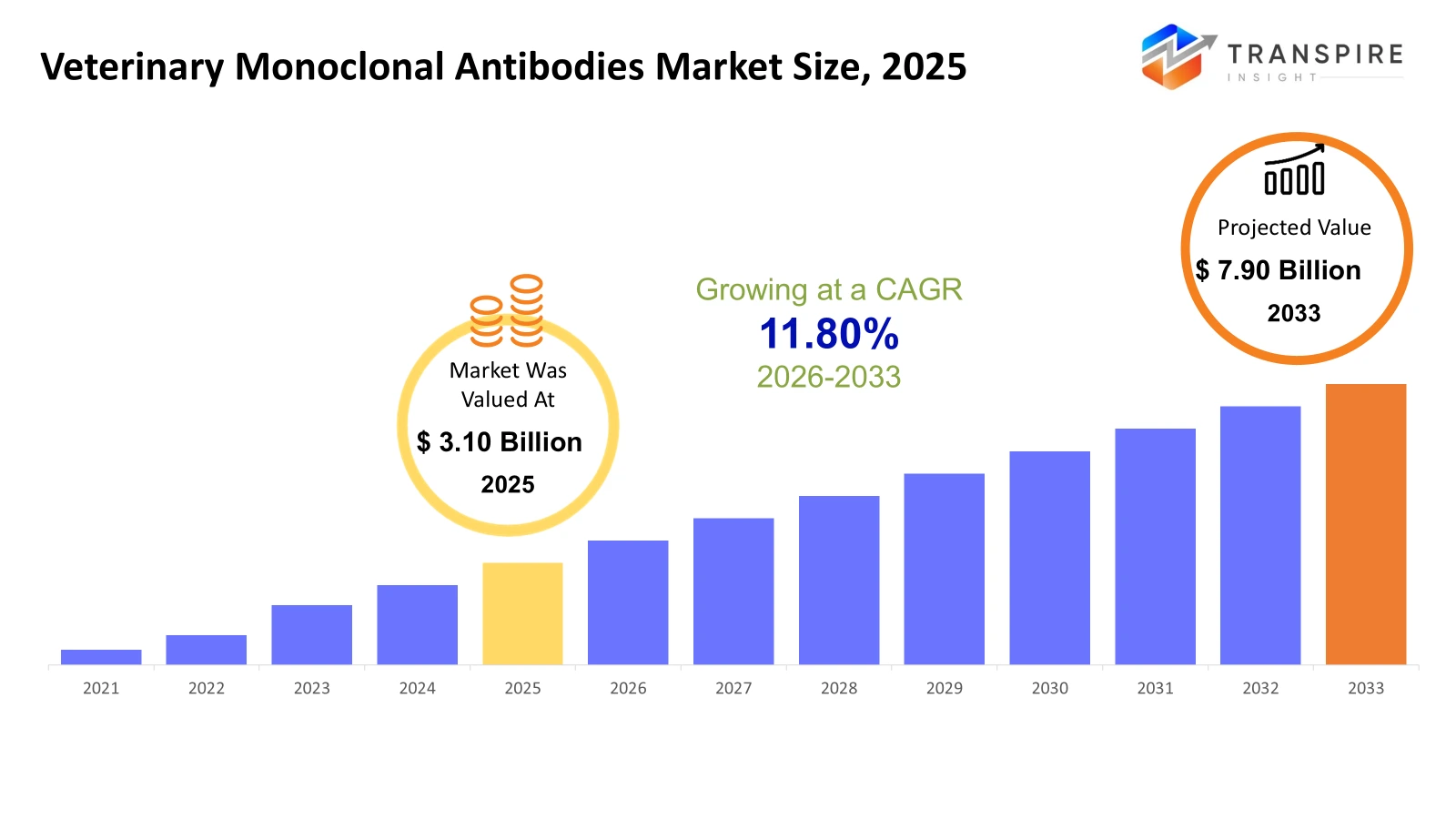
The global Veterinary Monoclonal Antibodies market size was valued at USD 3.10 billion in 2025 and is projected to reach USD 7.90 billion by 2033, growing at a CAGR of 11.80% from 2026 to 2033. The market is growing steadily with increasing pet humanization and a growing willingness of pet owners to spend on sophisticated biologic therapies for chronic indications such as dermatitis and osteoarthritis. This fundamental demand shift is enhancing long-term revenue visibility for companies.
Market Size & Forecast
- 2025 Market Size: USD 3.10 Billion
- 2033 Projected Market Size: USD 7.90 Billion
- CAGR (2026-2033): 11.80%
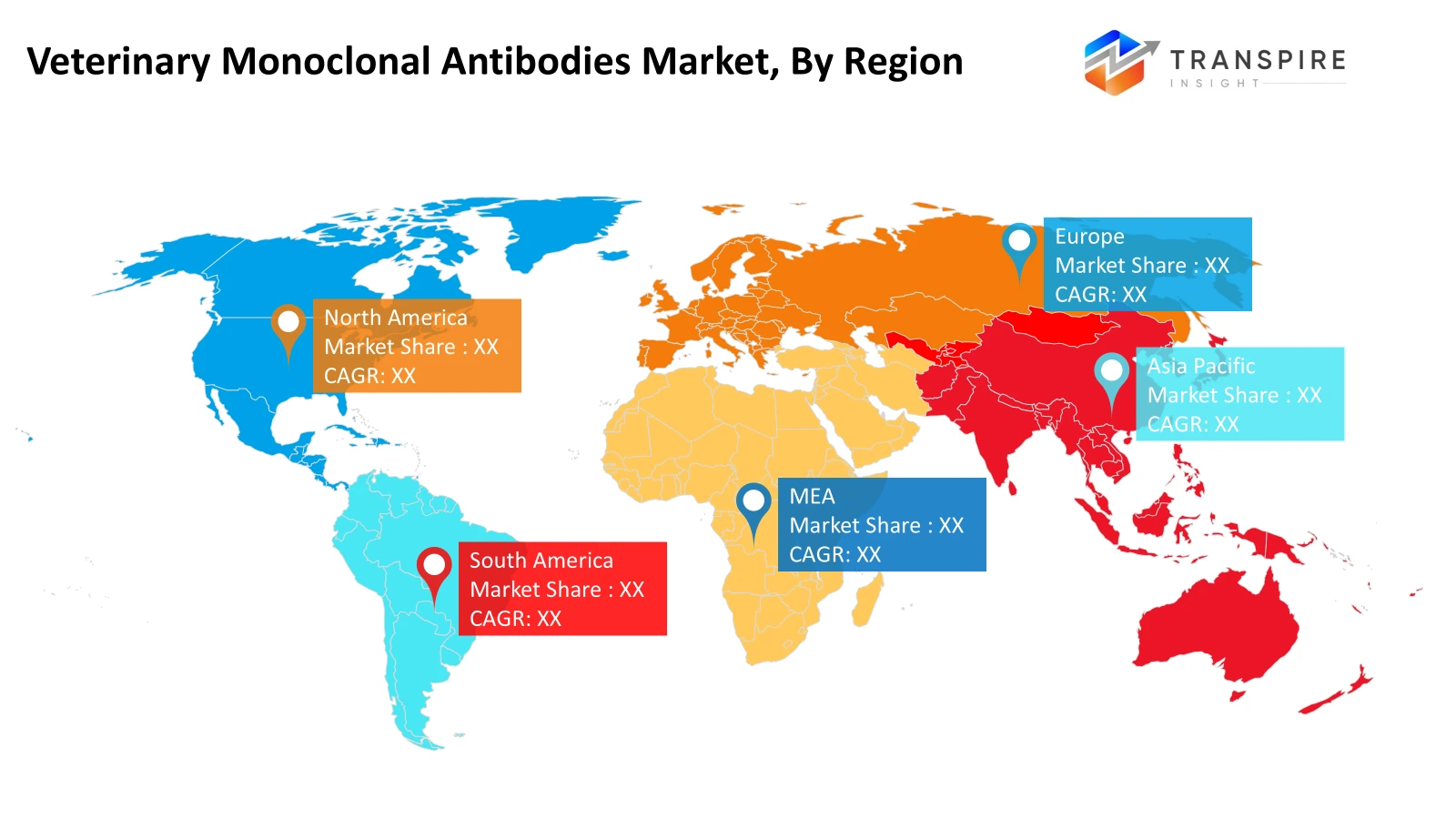
- North America: Largest Market in 2026
- Asia Pacific: Fastest Growing Market
To learn more about this report,  Download Free Sample Report
Key Market Trends Analysis
- The North America market sustains its leadership position due to high penetration of pet insurance, advanced veterinary infrastructure, and the fast adoption of biologics for chronic disease treatment. The innovation pipelines and premium pricing strategies continue to drive revenue growth and high therapeutic adoption rates.
- The United States leads the demand in the region due to high per-pet healthcare spending, favorable regulatory environments, and early commercialization of species-specific monoclonal antibodies. The rising incidence of osteoarthritis and dermatological diseases continues to drive repeat treatment revenues.
- The Asia Pacific market is witnessing a growth boost due to the rising disposable income, urbanization, and increasing ownership of companion animals. Early adoption of biologics is observed in markets like Japan and Australia, while China and India are poised for long-term growth with improving veterinary accessibility.
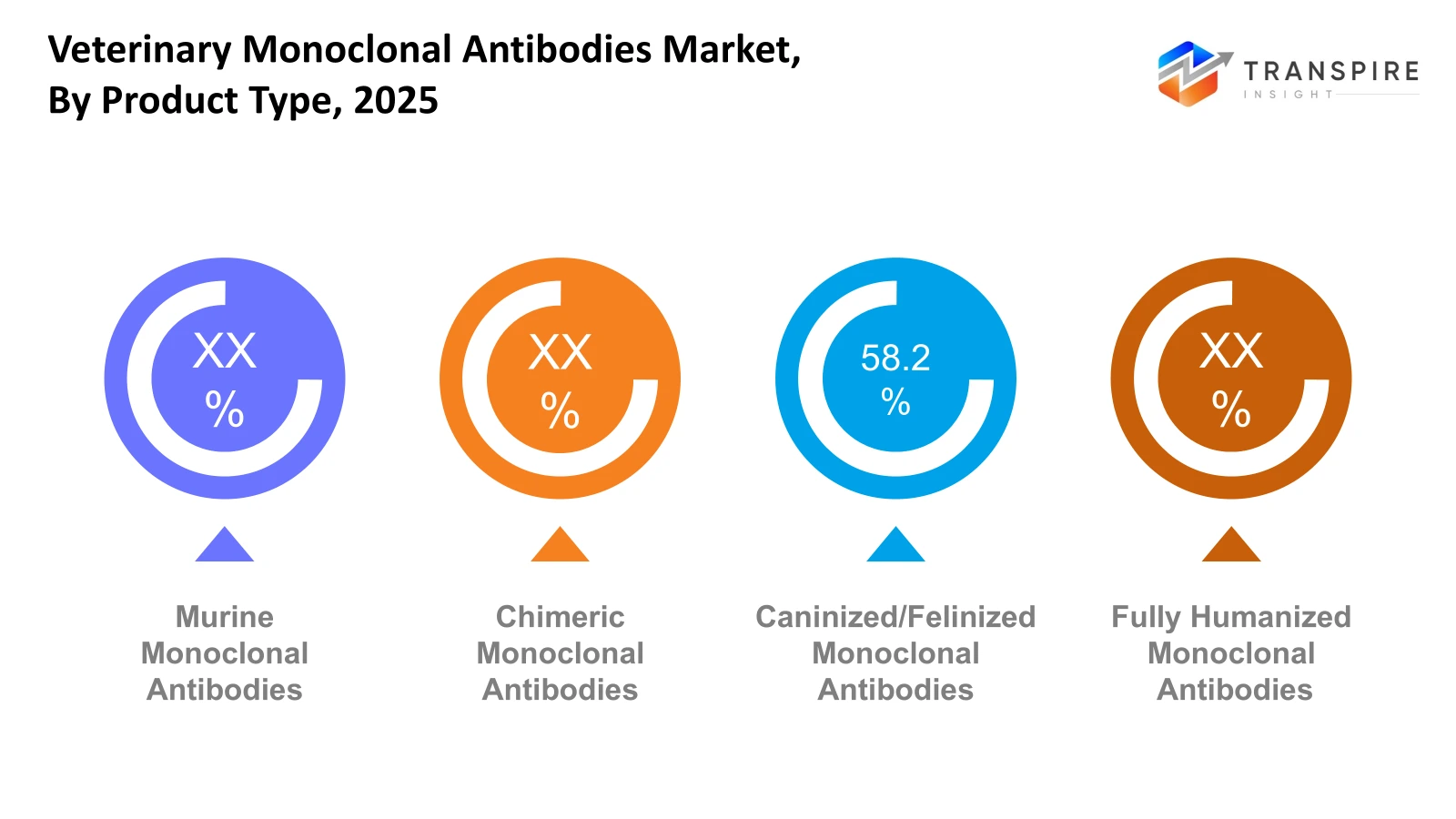
- Caninized and felinized monoclonal antibodies drive product demand because of their favorable tolerability and repeated-dose compatibility. Their targeted cytokine inhibition mechanism is well-suited for chronic disease treatment, making them the market leaders in developed veterinary infrastructure.
- Companion animals are the largest animal type supported by humanization trends and the growing lifespan of companion animals. The affordability of treatment and emotional bonding fuel the demand for high-end biologics over livestock.
- Dermatology is the leading indication supported by the efficacy of monoclonal antibodies in treating atopic dermatitis with long-term control of symptoms and fewer systemic side effects. Repeated dosing regimens ensure steady revenue streams and improve market penetration.
- Veterinary hospitals have the largest end-user market share because of their diagnostic and infrastructure capabilities for biologic administration. Their involvement in the treatment of complex chronic diseases makes them the central prescription point for high-end antibody treatments.
So, The Veterinary Monoclonal Antibodies Market is a group of biologic therapies designed to target particular antigens in animals, mainly for the treatment of chronic inflammatory, dermatological, oncological, and pain disorders. Unlike conventional drugs, monoclonal antibodies offer precision-based immune modulation, which enhances therapeutic efficacy and reduces systemic adverse reactions. The market has evolved from research use to commercialized, species-specific antibody platforms, mainly in the context of companion animals. Market development is strongly associated with the rising number of pet owners, the increased lifespan of pets, and the growing focus on preventive and chronic care. Biologic therapies are increasingly preferred over conventional corticosteroids and non-steroidal anti-inflammatory drugs because of their enhanced safety profile and longer duration of action. Advances in antibody engineering technologies are also reducing the risks of immunogenicity and improving acceptance among veterinarians.
The competitive landscape is defined by partnerships, pipeline development, and regulatory support. Companies operating in the market are working towards expanding their indications and territories while sustaining high pricing structures. As the veterinary healthcare infrastructure develops worldwide, the veterinary monoclonal antibodies market is emerging as a revolutionary area in the context of advanced animal therapeutics.
Veterinary Monoclonal Antibodies Market Segmentation
By Product Type
- Murine Monoclonal Antibodies
Murine antibodies are first-generation biologics, which are produced from mouse-derived cells. Although they show strong targeted binding, their use in veterinary applications is hindered by the possibility of immunogenic reactions. Their adoption is selective, mainly in scientific and budget-conscious markets.
- Chimeric Monoclonal Antibodies
Chimeric antibodies are chimeric, meaning they are composed of murine variable regions and species-specific constant regions. They are less immunogenic compared to murine antibodies. They have shown better therapeutic efficacy and are used in both the companion animal and farm animal markets. Their market growth is moderate, mainly due to a balance of efficacy and development costs.
Caninized/Felinized Monoclonal Antibodies
- These species-specific antibodies are engineered to be very similar to canine or feline antibodies, thereby reducing immune reactions. They are the leading products in the companion animal market due to their better tolerability and repeated dosing. Rising spending on pet healthcare strongly supports their market development.
Fully Humanized Monoclonal Antibodies
- Fully humanized antibodies are engineered to be least immunogenic, thereby improving long-term safety profiles. Their use in veterinary applications is still in its infancy, mainly in advanced therapeutic areas like oncology. Higher development costs are currently hindering their widespread adoption.
To learn more about this report, Download Free Sample Report
By Animal Type
- Companion Animals
Companion animals are the most prominent segment, driven by the growing number of pet owners, humanization, and increased per-animal healthcare expenditures. Chronic diseases like dermatitis and osteoarthritis are major drivers for biologics. North America and Europe lead the demand.
- Livestock Animals
Monoclonal antibodies are selectively used in livestock due to cost limitations and large-scale animal populations. The use is more common in high-value animals or disease management programs. The market will grow based on regulatory approvals and economical biologic production.
Equine
- The equine market is driven by the high value of treatment per animal, especially in sports and racing animals. Monoclonal treatments are under investigation for inflammatory and musculoskeletal disorders. The market is small but premium.
- Others
The market comprises exotic animals and specialty animals. The demand is small but increasing with advances in veterinary biologic research. The demand largely depends on veterinary biologic research centers.
By Application
- Dermatology
Dermatology is the leading application area, mainly due to the prevalence of atopic dermatitis in dogs. Monoclonal antibodies are more targeted in their approach to inhibit cytokines with less systemic side effects. Repeated cycles of treatment help in sustained generation of revenues.
- Pain Management
The pain management market, particularly in osteoarthritis, is a quickly growing area. Biologics help in sustained relief with better compliance than the current oral daily medication. The aging pet population is a major driving force for this market.
- Oncology
The oncology market is a high-growth area with the rising incidence of cancer in domestic pets. Monoclonal antibodies are being investigated for targeted therapy of tumors. Adoption is a gradual process because of regulatory and pricing issues.
- Infectious Diseases
The application of the technology in infectious diseases is based on specific immune modulation and pathogen neutralization. The growth in this area is moderate and largely driven by the prevalence of diseases in the region.
- Autoimmune & Inflammatory Diseases
This category of diseases will benefit from the precision mechanism of monoclonal antibodies in regulating immune-mediated diseases. The rising rate of diagnoses and awareness among veterinarians is contributing to the expansion of the demand base.
Others
- Other applications of the technology include respiratory and metabolic diseases. These are still in the development or early stages of commercialization and thus offer long-term growth opportunities.
By End User
- Veterinary Hospitals
The use of veterinary hospitals is dominated because of their sophisticated diagnostic facilities and infrastructure for biologic delivery. They handle complicated chronic and specialty patients, thus promoting the prescription of high-value drugs.
- Veterinary Clinics
Veterinary clinics are another significant source, especially in densely populated cities with a large number of pets. The increasing distribution of biologics through partnerships will help this segment grow.
- Research Institutes
Research institutes are very important for clinical trials and development. Even though they are not a significant source of revenue, they help shape innovation and approval.
- Others
This category includes specialty care centers and research institutions. The adoption rate depends on the funding and development of infrastructure in the region.
Regional Insights
North America, consisting of the United States, Canada, and Mexico, is the most developed market. The United States is the tier-1 market because of its advanced veterinary infrastructure and high adoption of biologics, while Canada shows sustainable adoption. Mexico is a tier-2 market with improving infrastructure. Europe consists of tier-1 countries like Germany, the United Kingdom, and France, which have favorable harmonization and pet insurance. Spain and Italy are tier-2 countries with increasing spending on companion animals, while the Rest of Europe shows stable biologic adoption patterns.
The Asia Pacific market is the fastest-growing market. Japan and Australia & New Zealand are tier-1 markets because of early adoption of biologics. China, South Korea, and India are tier-2 high-growth markets because of increasing urbanization and pet ownership. The Rest of Asia Pacific is an emerging market. South America, with Brazil as the main tier-1 country, has moderate growth due to the development of veterinary care. Argentina and the Rest of South America are tier-2 markets, which are affected by economic fluctuations. Middle East & Africa is an emerging market with tier-1 development countries Saudi Arabia, United Arab Emirates, and South Africa. The Rest of Middle East & Africa is a tier-2 market with slow development of infrastructure and awareness.
To learn more about this report, Download Free Sample Report
Recent Development News
- February 2026, Zoetis announces continued global growth and approvals for long-acting monoclonal antibody products for osteoarthritis pain in dogs and cats, with Lenivia and Portela approved in Canada and the EU, representing a major expansion in the OA pain business. Approvals were also received for lifecycle innovation and geographic expansion for key products.
- In April 2025, Virbac announced that it has licensed new therapeutic monoclonal antibodies from MabGenesis, allowing the development and marketing of promising new therapies for dogs. The agreement includes licensing fees, milestone payments, and royalties.
|
Report Metrics |
Details |
|
Market size value in 2025 |
USD 3.10 Billion |
|
Market size value in 2026 |
USD 3.60 Billion |
|
Revenue forecast in 2033 |
USD 7.90 Billion |
|
Growth rate |
CAGR of 11.80% from 2026 to 2033 |
|
Base year |
2025 |
|
Historical data |
2021 – 2024 |
|
Forecast period |
2026 – 2033 |
|
Report coverage |
Revenue forecast, competitive landscape, growth factors, and trends |
|
Regional scope |
North America; Europe; Asia Pacific; Latin America; Middle East & Africa |
|
Country scope |
United States; Canada; Mexico; United Kingdom; Germany; France; Italy; Spain; Denmark; Sweden; Norway; China; Japan; India; Australia; South Korea; Thailand; Brazil; Argentina; South Africa; Saudi Arabia; United Arab Emirates |
|
Key company profiled |
Zoetis Inc., Elanco Animal Health Incorporated, Merck Animal Health (Merck & Co., Inc.), Boehringer Ingelheim Animal Health GmbH, Virbac S.A., Ceva Santé Animale S.A., Dechra Pharmaceuticals PLC, Indian Immunologicals Limited, Kindred Biosciences, Inc., Aratana Therapeutics, Inc., Vetoquinol S.A., Bayer Animal Health, PetMedix Ltd., Nextmune, and Bio-Rad Laboratories, Inc. |
|
Customization scope |
Free report customization (country, regional & segment scope). Avail customized purchase options to meet your exact research needs. |
|
Report Segmentation |
By Product Type (Murine Monoclonal Antibodies, Chimeric Monoclonal Antibodies, Caninized/Felinized Monoclonal Antibodies, Fully Humanized Monoclonal Antibodies), By Animal Type (Companion Animals, Livestock Animals, Equine, Others), By Application (Dermatology, Pain Management, Oncology, Infectious Diseases, Autoimmune & Inflammatory Diseases, Others) and By End User (Veterinary Hospitals, Veterinary Clinics, Research Institutes, Others) |
Key Veterinary Monoclonal Antibodies Company Insights
Zoetis Inc. is the most prominent leader in the veterinary monoclonal antibodies market with a diversified portfolio that targets pain, dermatology, and chronic diseases in companion animals. Its best-selling biologics, such as Lokivetmab, Bedinvetmab, and Frunevetmab, have transformed the way targeted therapies are administered, resulting in outstanding clinical success and repeat business for veterinarians. With a vast distribution network across the globe and continued investment in R&D, Zoetis Inc. sustains its competitive edge through its strong product pipelines and collaborations to broaden therapeutic indications, in addition to geographical scale to further consolidate market position in the North America, Europe, and Asia Pacific markets.
Key Veterinary Monoclonal Antibodies Companies:
- Zoetis Inc.
- Elanco Animal Health Incorporated
- Merck Animal Health (Merck & Co., Inc.)
- Boehringer Ingelheim Animal Health GmbH
- Virbac S.A.
- Ceva Santé Animale S.A.
- Dechra Pharmaceuticals PLC
- Indian Immunologicals Limited
- Kindred Biosciences, Inc.
- Aratana Therapeutics, Inc.
- Vetoquinol S.A.
- Bayer Animal Health
- PetMedix Ltd.
- Nextmune
- Bio-Rad Laboratories, Inc.
Global Veterinary Monoclonal Antibodies Market Report Segmentation
By Product Type
- Murine Monoclonal Antibodies
- Chimeric Monoclonal Antibodies
- Caninized/Felinized Monoclonal Antibodies
- Fully Humanized Monoclonal Antibodies
By Animal Type
- Companion Animals
- Livestock Animals
- Equine
- Others
By Application
- Dermatology
- Pain Management
- Oncology
- Infectious Diseases
- Autoimmune & Inflammatory Diseases
- Others
By End User
- Veterinary Hospitals
- Veterinary Clinics
- Research Institutes
- Others
Regional Outlook
- North America
- United States
- Canada
- Mexico
- Europe
- Germany
- United Kingdom
- France
- Spain
- Italy
- Rest of Europe
- Asia Pacific
- Japan
- China
- Australia & New Zealand
- South Korea
- India
- Rest of Asia Pacific
- South America
- Brazil
- Argentina
- Rest of South America
- Middle East & Africa
- Saudi Arabia
- United Arab Emirates
- South Africa
- Rest of the Middle East & Africa
Frequently Asked Questions
Find quick answers to common questions.
The approximate Veterinary Monoclonal Antibodies Market size for the market will be USD 7.90 billion in 2033.
Key segments for the Veterinary Monoclonal Antibodies Market By Product Type (Murine Monoclonal Antibodies, Chimeric Monoclonal Antibodies, Caninized/Felinized Monoclonal Antibodies, Fully Humanized Monoclonal Antibodies), By Animal Type (Companion Animals, Livestock Animals, Equine, Others), By Application (Dermatology, Pain Management, Oncology, Infectious Diseases, Autoimmune & Inflammatory Diseases, Others) and By End User (Veterinary Hospitals, Veterinary Clinics, Research Institutes, Others).
Major Veterinary Monoclonal Antibodies Market players are Zoetis Inc., Merck Animal Health (Merck & Co., Inc.), Elanco Animal Health Incorporated, Boehringer Ingelheim Animal Health GmbH, Virbac S.A.
The North America region is leading the Veterinary Monoclonal Antibodies Market.
The CAGR of the Veterinary Monoclonal Antibodies Market is 11.80%.
- Zoetis Inc.
- Elanco Animal Health Incorporated
- Merck Animal Health (Merck & Co., Inc.)
- Boehringer Ingelheim Animal Health GmbH
- Virbac S.A.
- Ceva Santé Animale S.A.
- Dechra Pharmaceuticals PLC
- Indian Immunologicals Limited
- Kindred Biosciences, Inc.
- Aratana Therapeutics, Inc.
- Vetoquinol S.A.
- Bayer Animal Health
- PetMedix Ltd.
- Nextmune
- Bio-Rad Laboratories, Inc.
Recently Published Reports
-
Apr 2026
AI in Diabetic Retinopathy Market
AI in Diabetic Retinopathy Market Size, Share & Analysis Report By Type (Screening AI Systems, Diagnostic AI Systems, and Predictive AI Models), By Application Segment (Hospitals, Ophthalmology Clinics, Diagnostic Centers, and Research and Development), and Geography (North America, Europe, Asia-Pacific, Middle East and Africa, South and Central America), 2021 - 2031
-
Apr 2026
Psychometric Tests Market
Psychometric Tests Market Size, Share & Analysis Report By Type (Personality Tests, Ability/Aptitude Tests, Skill/Knowledge Tests, and Others), By Application (Talent Acquisition and Talent Management), and Geography (North America, Europe, Asia-Pacific, Middle East and Africa, South and Central America), 2021 – 2031
-
Apr 2026
Rare Biological Sample Collection Market
Rare Biological Sample Collection Market Size, Share & Analysis Report By Type (Isolation Kits & Reagent, Blood Collection Tubes, and Others), By Application (Oncology, Transcriptomics, Pharmacogenomics, and Others), and Geography (North America, Europe, Asia-Pacific, Middle East and Africa, South and Central America), 2021 – 2031
-
May 2026
Patient Lift Pendant Market
Patient Lift Pendant Market By Product Type (Wired Pendants, Wireless, Programmable), By Operation Type(Manual, Electric), By End-Users (Healthcare Professionals, Patients), By Application (Hospitals, Homecare, Rehabilitation Centers, Others), By Industry Analysis, Size, Share, Growth, Trends, and Forecasts 2021-2033
Our Clients
.jpg)