

South Korea Hunter Syndrome Treatment Market Size & Forecast:
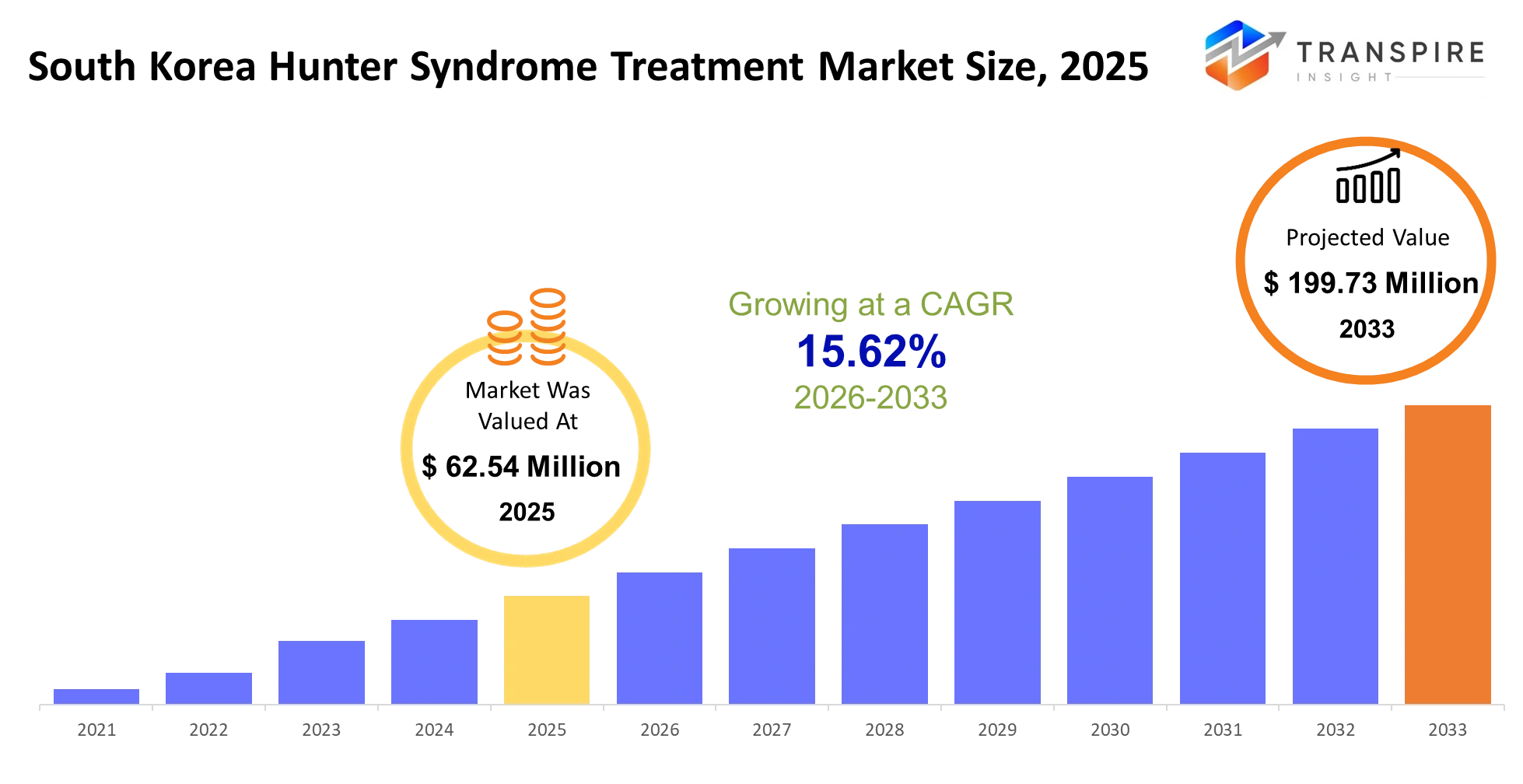
- South Korea Hunter Syndrome Treatment Market Size 2025: USD 62.54 Million
- South Korea Hunter Syndrome Treatment Market Size 2033: USD 199.73 Million
- South Korea Hunter Syndrome Treatment Market CAGR: 15.62%
- South Korea Hunter Syndrome Treatment Market Segments: By Treatment Type (Enzyme Replacement Therapy, Stem Cell Transplantation, Gene Therapy, Supportive Care, Others); By Drug Type (Idursulfase, Experimental Gene Therapies, Corticosteroids, Others); By Application (Pediatric Patients, Adult Patients, Severe Hunter Syndrome, Mild Hunter Syndrome, Others); By End User (Hospitals, Specialty Clinics, Research Institutes, Others); By Distribution Channel (Hospital Pharmacies, Specialty Pharmacies, Online Pharmacies, Others).
To learn more about this report,  Download Free Sample Report
South Korea Hunter Syndrome Treatment Market Summary
The South Korea Hunter Syndrome Treatment Market was valued at USD 62.54 Million in 2025. It is forecast to reach USD 199.73 Million by 2033. That is a CAGR of 15.62%over the period.
The South Korea Hunter Syndrome Treatment Market, is basically about putting into place long term therapy for patients with MPS II, which is a rare genetic disorder, where missing enzymes cause toxic buildup over time and then progressive harm to the nervous system , heart and bones. In real day to day practice, the market tends to support steady enzyme replacement infusions, plus supportive care, and more and more gene based options, that help slow down the disease course and keep day to day life a bit better. Over the last 3–5 years, the structure of things has quietly, but noticeably, changed from relying almost only on enzyme replacement therapy into next generation gene therapy pipelines , and intrathecal delivery research too, aiming to get past the blood–brain barrier, without making it sound too dramatic.
A big driver behind this shift is stronger, rare disease reimbursement arrangements in South Korea, plus faster approvals worldwide for orphan drugs after post pandemic regulatory tweaks. So it has become easier for hospitals to pull in, or access these high cost therapies that before were getting stuck, delayed or quietly capped because of funding constraints. At the same time there’s been broader use of genetic screening, which helps with earlier detection especially in tertiary care centers. In practice, that means patients are being spotted sooner and start treatment earlier than in the past. Put together, it creates a more reliable and continuous treatment cadence. And as a result, specialty pharmaceutical firms are seeing revenue growth that feels steadier, more foreseeable, with patients entering therapy earlier and then remaining on long term treatment pathways for longer.
Key Market Insights
- South Korea Hunter Syndrome Treatment Market is seeing strong growth, sort of like it is being pushed by rare disease reimbursement support and also early genetic screening getting adopted in tertiary hospitals, more and more.
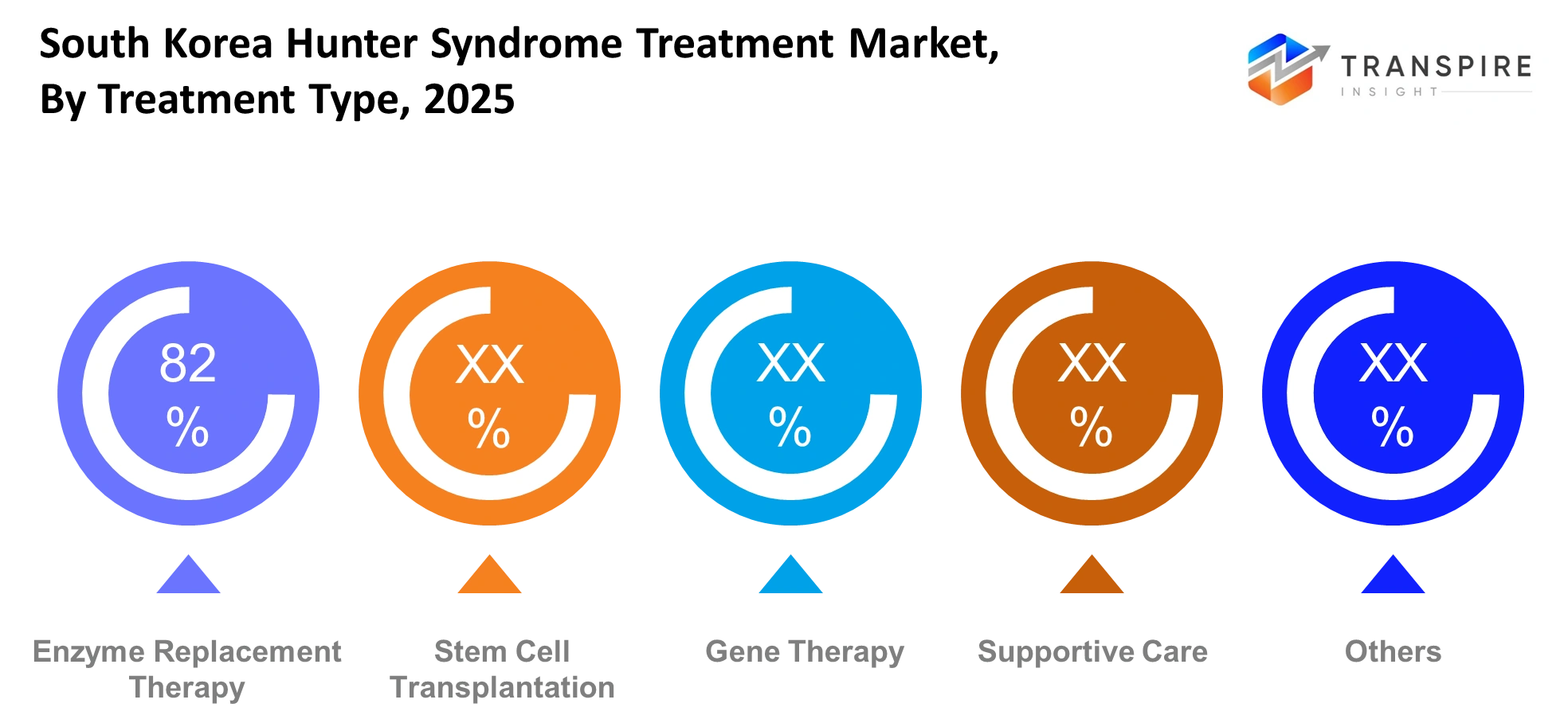
- In 2025, enzyme replacement therapy is basically leading the whole space, around 65% share, mainly because clinical efficacy is well established and patients often need long-term hospital infusion dependency, you know.
- The gene therapy part is moving quicker though, projected to expand a lot through 2033 as clinical pipelines mature globally.
- When it comes to distribution, hospital pharmacies are the main driver with more than 70% share, reflecting a centralized infusion-based treatment administration model in South Korea, pretty consistently.
- Outpatient specialty clinics are starting to catch up, adoption is climbing nearly 18% year on year, helped by the wider rare disease care expansion that’s happening outside major centers.
- For patients, pediatrics holds the biggest slice, above 60%, largely because early-onset diagnosis is improving thanks to neonatal genetic testing programs that are becoming more common.
- Adult treatment demand is also rising steadily, mainly due to improved survival rates and ongoing continuation of long-term enzyme therapy.
- Strategic partnerships and licensing agreements grew by over 25% in 2025 as companies expand their gene therapy pipelines across Asia-Pacific markets.
- Overall, South Korea’s precision medicine infrastructure keeps strengthening, and it helps the market stay more competitive, enabling faster uptake of advanced biologics.
What are the Key Drivers, Restraints, and Opportunities in the South Korea Hunter Syndrome Treatment Market?
The main push behind the South Korea Hunter Syndrome Treatment Market is how quickly early genetic screening is getting stitched together with hospital centered, rare disease registries. That kind of change didn’t just happen by itself, it was kicked off by wider national genomic medicine programs and quicker orphan drug approvals, so diagnosis can arrive sooner and enzyme replacement therapy can start right away. After that, the treatment adoption rate looks way better inside tertiary care hospitals, and that in turn lifts long-term therapy revenues for biopharmaceutical firms. It also seems to help patient retention, especially within those more structured care pathways.
On the other hand, the biggest drag is the painfully high lifetime treatment cost tied to enzyme replacement therapy, along with the limited ability to cross the blood brain barrier. This kind of physical, structural limitation isn’t something you can fix quickly, since the current biologics still rely on complicated manufacturing and long term administration routines. So, broader patient access gets pinched, mostly for people outside major metropolitan hospitals. At the same time, public reimbursement systems keep taking the sustained strain, which slows down adoption for those who are diagnosed late.
Then there’s a real opening around gene therapy and intrathecal delivery innovation. Firms like Regenxbio and Denali Therapeutics are working on newer approaches aimed at neurological symptoms, and in several cases they appear more effective than older routes. South Korea also has a strong biotech manufacturing foundation and an established clinical trial setup, which makes it a believable early adoption hub. If that plays out, it could lead to more transformative long-term cost efficiencies and better neurological outcomes, at least for eligible patients.
What Has the Impact of Artificial Intelligence Been on the South Korea Hunter Syndrome Treatment Market?
Artificial intelligence is kind of reshaping the South Korea Hunter Syndrome Treatment Market mainly by speeding up diagnosis, adjusting treatment approaches more precisely, and basically making drug discovery happen earlier. In real clinical practice, AI driven genomic analysis tools can help spot MPS II mutations sooner, because they process big sequencing datasets with higher speed and accuracy than the older diagnostic routines, and that matters a lot. As a result, doctors can start enzyme replacement therapy earlier, which then tends to support better long-term outcomes for patients, not just short term improvement.
On the pharmaceutical side, machine learning models are now used to imitate enzyme substrate interactions and also to fine tune gene therapy vectors, so the preclinical development phase can be shortened. In addition to that, firms like Takeda Pharmaceutical and Sanofi are more and more rolling in AI based drug discovery platforms, aiming to sharpen biologic design while also forecasting how treatment responses can vary among different patient subgroups.
There is also the hospital operations angle: AI can enhance infusion management systems by estimating patient scheduling needs and optimizing drug inventory placement, which helps curb wastage for high cost biologics. Still, one major issue lingers around the lack of large, disease specific datasets. When the data pool is small, model accuracy can drop, especially for ultra rare conditions like Hunter syndrome. And even if the clinical value looks clear, the integration costs for AI systems in specialized hospitals are pretty high, so widespread adoption moves slowly, almost like it gets stuck.
Key Market Trends
- Enzyme replacement therapy adoption moved up kind of steadily, as hospital-based infusion infrastructure kept expanding across South Korea through 2024–2026, it seemed, pretty clear.
- In parallel, gene therapy research investment went up by almost 30% in 2025, mostly because of global biotech partnerships plus orphan drug incentives, yes.
- Early genetic screening coverage also widened, reaching beyond 55% of suspected pediatric cases in tertiary hospitals by 2026, basically.
- Meanwhile hospital pharmacies kept more than 70% of the distribution share, mainly tied to centralized biologics administration requirements.
- On the clinical trial side, activity for MPS II therapies rose a lot, with Asia-Pacific sites increasing about 20% year-on-year.
- Also, reimbursement approvals for rare diseases got better, which improved access, and cut the treatment start delays by nearly 25% in major cities.
- Then Ultragenyx Pharmaceutical shifted its pipeline focus more heavily toward neurological MPS II treatments in 2025. And Regenxbio pushed forward AAV-based gene therapy programs aimed at CNS symptoms progression, rather directly.
- Demand for outpatient infusion services climbed by 18% as decentralized care models gained traction after 2024.
- Finally, digital patient monitoring tools rolled out across specialty hospitals, which helped long-term therapy adherence rates, in a noticeable way.
South Korea Hunter Syndrome Treatment Market Segmentation
By Treatment Type
Enzyme Replacement Therapy kind of keeps the dominant place in the South Korea Hunter Syndrome Treatment Market because it is already well used clinically and it has been nicely folded into hospital based rare disease protocols. Because reimbursement support has stayed consistent, and patients often end up needing long-term infusions, its position keeps getting stronger across tertiary care centers. Also the treatment pathways are pretty standardized, so the uptake among diagnosed patients looks almost predictable.
The push behind the growth of enzyme replacement therapy comes from earlier diagnosis programs and better access to orphan drug funding, so more people start treatment both in pediatric and adult cases. Stem cell transplantation stays somewhat constrained , mainly from high procedural risk and tighter eligibility. Meanwhile gene therapy is starting to look like the next big shift, and it’s being backed by ongoing clinical trials, so you know it’s not just hype. Supportive care is still kind of secondary but honestly it remains essential, for symptom control. In the forecast period gene therapy is expected to build momentum as the regulatory approvals move along and that will gradually change the way treatment decisions get made, so the emphasis shifts toward more curative ways.
To learn more about this report, Download Free Sample Report
By Drug Type
Idursulfase kinda dominates the market because it already sits as the usual enzyme replacement therapy for Hunter syndrome , with plenty of long term clinical proof and a lot of hospitals already using it. Because it is strongly pushed into reimbursement frameworks too, it stays high up in most treatment protocols. In fact it still brings in the main share of revenue across the approved options, no questions.
Its growth keeps going since newly diagnosed patients often need lifelong therapy and the demand stays steady. At the same time, experimental gene therapies are getting more attention, as the pipelines mature, and they try to also tackle neurological complications that show up later. Corticosteroids remain sort of a supporting player for inflammation linked symptoms but they do not really change the disease course itself. Other options, for the most part, are limited to add on support, or they are still in the investigational bucket. Over time, those gene therapies may end up reshaping treatment pathways, because they aim at the actual genetic cause, so long term people might rely less on enzyme based drugs.
By Application
Pediatric patients are still the main application segment, mainly because the disease shows up earlier, and because neonatal screening programs are expanding , which helps with sooner diagnosis and getting treatment going. Hospitals tend to set up pediatric metabolic disorder care units, and that naturally supports higher adoption of enzyme replacement therapies for this group. In other words, this segment ends up pulling most of the long-term treatment demand.
The growth in pediatric treatment is also pushed by better awareness of rare diseases and wider access to genetic testing coverage. Meanwhile adult patients are a smaller part but they keep inching upward, mostly due to improved survival rates. When it comes to severity, severe Hunter syndrome cases typically need higher treatment intensity and they use more resources than mild cases, and those mild cases sometimes see delayed diagnosis. “Others” can cover more unusual or atypical presentations, where clinicians need individualized care pathways.During the forecast period, the adult patient share is expected to rise further as long-term survival keeps improving and chronic management becomes more organized.
By End User
Hospitals keep the dominant position in the South Korea Hunter Syndrome Treatment Market, mainly because the infusion based therapy is centralized, plus there are specialized rare disease units available. In practice, tertiary care hospitals often work as the main diagnostic stop too, which really tightens their grip on when treatment starts, and how it s handled over the long term. This kind of centralized setup helps keep patient movement steady, and it supports strong adherence , for most patients.
The push toward hospital driven care is also helped by government reimbursement frameworks and the fact that rare disease referral networks are growing. Meanwhile specialty clinics are widening their part in follow up care and outpatient monitoring. Research institutes add value in a different way, they run clinical trials and gene therapy development programs, so it s more about innovation rather than direct treatment delivery. Other end users are still mostly limited to small, niche or supportive services. Over the forecast period, specialty clinics are expected to grow their share, since healthcare systems are gradually moving toward decentralized models for chronic disease management.
By Distribution Channel
Hospital pharmacies kind of dominate distribution mostly because controlled administration of enzyme replacement therapies has to happen inside clinical settings. In other words, centralized drug handling makes sure dosing is on point, monitoring stays consistent, and compliance with those rare-disease treatment protocols is maintained. So this setup sorta reinforces hospital-level control over pricey biologics.
Hospital pharmacy growth is also backed by long term infusion schedules, plus integrated patient care systems that support the whole workflow. At the same time specialty pharmacies are gaining momentum by improving access to rare disease medications outside the big hospital centers, which feels more convenient for some patients. Online pharmacies still stay limited, mainly due to strict regulatory controls on biologics and infusion based therapies, and that restriction can be a bit rigid. Other channels play only minor roles, mostly in very specific procurement situations or research contexts. Through the forecast period, specialty pharmacies are expected to grow steadily too, as outpatient treatment models keep shifting, and decentralized care pathways keep evolving.
What are the Key Use Cases Driving the South Korea Hunter Syndrome Treatment Market?
In the South Korea Hunter Syndrome Treatment Market the core use case is basically long-term enzyme replacement therapy, rolled out through hospital based intravenous infusions. This method tends to dominate demand because it directly swaps the deficient enzyme and it also helps slow the disease course across the whole body, for both pediatric and adult patients.
More broadly, the expansion is moving toward neurological and cardiac support programs that get folded into rare disease specialty centers. They’re mostly used in tertiary hospitals and in pediatric metabolic disorder units. In those settings, a multidisciplinary care setup tends to improve survival results and even daily quality of life.
Then there are emerging use cases that point toward gene therapy and intrathecal delivery systems. These options are still in clinical development, but they are picking up momentum due to the possibility of better addressing central nervous system complications, something that enzyme replacement therapy can not fully resolve.
|
Report Metrics |
Details |
|
Market size value in 2025 |
USD 62.54 Million |
|
Market size value in 2026 |
USD 72.31 Million |
|
Revenue forecast in 2033 |
USD 199.73 Million |
|
Growth rate |
CAGR of 15.62% from 2026 to 2033 |
|
Base year |
2025 |
|
Historical data |
2021 - 2024 |
|
Forecast period |
2026 - 2033 |
|
Report coverage |
Revenue forecast, competitive landscape, growth factors, and trends |
|
Regional scope |
South Korea |
|
Key company profiled |
Takeda Pharmaceutical, JCR Pharmaceuticals, Denali Therapeutics, Sangamo Therapeutics, REGENXBIO, ArmaGen, Pfizer, Roche, BioMarin Pharmaceutical, Sanofi, Orchard Therapeutics, Ultragenyx Pharmaceutical, GC Pharma, Green Cross Holdings, Esteve. |
|
Customization scope |
Free report customization (country, regional & segment scope). Avail customized purchase options to meet your exact research needs. |
|
Report Segmentation |
By Treatment Type (Enzyme Replacement Therapy, Stem Cell Transplantation, Gene Therapy, Supportive Care, Others); By Drug Type (Idursulfase, Experimental Gene Therapies, Corticosteroids, Others); By Application (Pediatric Patients, Adult Patients, Severe Hunter Syndrome, Mild Hunter Syndrome, Others); By End User (Hospitals, Specialty Clinics, Research Institutes, Others); By Distribution Channel (Hospital Pharmacies, Specialty Pharmacies, Online Pharmacies, Others). |
Which Regions are Driving the South Korea Hunter Syndrome Treatment Market Growth?
Seoul and the nearby Capital Region kinda basically dominate the South Korea Hunter Syndrome Treatment Market, mostly because the rare disease treatment ecosystem is so centralized. Here you find big tertiary hospitals, advanced genetic testing labs and specialized pediatric metabolic centers all kinda clustered together, so that early diagnosis happens faster and enzyme replacement therapy can be started quickly. On top of that, strong government reimbursement coverage for orphan diseases also keeps treatment access more or less steady in this area. At the same time, this whole setup supports clinical trials and it even helps gene therapy programs get adopted earlier, so it turns into the main revenue hub.
Then there’s the Busan–Ulsan–Gyeongnam region, which acts like a steady secondary contributor. The driver is its industrial economy plus a healthcare system that’s already well built, and there are strong ties to large corporate hospital networks. Unlike the Capital Region, growth there isn’t really about early innovation, it’s more about steady patient referral streams and long-term treatment continuity. Regional hospitals across this corridor tend to benefit from consistent public health funding and organized insurance penetration, so adoption of rare disease therapies stays fairly predictable. So overall, it’s a reliable volume contributor, not so much an innovation hub.
And for the Daegu–Gyeongbuk region, it’s emerging as the fastest-growing area lately. This is tied to the recent expansion of specialized pediatric diagnostic facilities, plus government-backed rare disease screening programs. After 2024, new investments in regional medical centers have noticeably improved access to genetic testing even outside the main metropolitan areas. That change has pushed early detection rates upward and widened the treatment base beyond older, traditional city centers.
Who are the Key Players in the South Korea Hunter Syndrome Treatment Market and How Do They Compete?
South Korea Hunter Syndrome Treatment Market is kind of moderately consolidated, where the big global biopharmaceutical companies still hold solid positions, mostly because they’ve got patented enzyme replacement therapies and now these newer gene therapy pipelines that are starting to show up more. The rivalry feels more about technology differentiation, not price. That’s because the whole treatment is complex, plus the regulatory hurdles are pretty high, so it’s hard for anyone to just commoditize it quickly. The established players usually try to lock in their numbers with long-term hospital contracts, orphan drug exclusivity, and some more integrated patient support programs. But newer biotech firms keep coming in, and they tend to challenge using gene therapy innovation, plus CNS-focused delivery systems, even when it’s not as standardized yet.
In South Korea, Takeda Pharmaceutical shows up strongly, with enzyme replacement know-how and hospital distribution partnerships around Asia, which helps access across the country’s tertiary care network. BioMarin Pharmaceutical leans into long-running enzyme therapy optimization and keeps its edge through sustained-release biologic work, plus patient assistance programs that help them stay differentiated. REGENXBIO and Sangamo Therapeutics are more into gene-editing and AAV-based delivery approaches, and they’re basically positioning themselves for CNS-penetrant treatment breakthroughs, even if the timelines vary. At the same time, Denali Therapeutics goes after blood–brain barrier technology, and they keep expanding collaborations with global pharma partners to speed up neurological Hunter syndrome solutions.
Overall, these firms compete by grabbing early clinical validation, forming licensing arrangements, and increasing their Asia-Pacific trial footprint so they can qualify for future reimbursement pathways.
Company List
- Takeda Pharmaceutical
- JCR Pharmaceuticals
- Denali Therapeutics
- Sangamo Therapeutics
- REGENXBIO
- ArmaGen
- Pfizer
- Roche
- BioMarin Pharmaceutical
- Sanofi
- Orchard Therapeutics
- Ultragenyx Pharmaceutical
- GC Pharma
- Green Cross Holdings
- Esteve
Recent Development News
In January 2025, REGENXBIO announced regulatory updates regarding its RGX-121 gene therapy program for MPS II (Hunter Syndrome), including ongoing FDA review constraints and discussions of a clinical hold. The update highlighted continued regulatory uncertainty around gene therapy endpoints and trial design, impacting near-term commercialization timelines.
Source: https://www.prnewswire.com
In March 2025, Denali Therapeutics received FDA Breakthrough Therapy designation for its Hunter syndrome program tividenofusp alfa (DNL310), strengthening its accelerated approval pathway. The designation reinforced confidence in CNS-penetrant enzyme-replacement approaches and improved investor and partner positioning across rare-disease markets.
Source: https://investors.denalitherapeutics.com
What Strategic Insights Define the Future of the South Korea Hunter Syndrome Treatment Market?
South Korea Hunter Syndrome Treatment Market is shifting in a structural way toward gene based and CNS targeted therapies, so the long term reliance on lifelong enzyme replacement is slowly getting smaller as the clinical pipelines mature. This move is largely pulled by the broad expansion of national genomic medicine and better orphan drug reimbursement frameworks, both of which push for early action and more precise therapies. There is also a less obvious exposure in the fact that the market is becoming concentrated around a small set of already approved biologics, which makes the whole thing more vulnerable if pricing reforms or biosimilar competition accelerate faster than expected.
At the same time, intrathecal gene delivery is starting to look like a real opening, because it tackles neurological decline head on, and that’s still the biggest unmet need in Hunter syndrome care. In the next phase, the players that blend CNS-focused innovation with scalable manufacturing capability will likely edge ahead. Market participants should keep a tight focus on early partnerships with Korean hospital networks and also invest in gene therapy localization, so they can lock in reimbursement positioning before late-stage regulatory competition gets stronger, or honestly just gets louder.
South Korea Hunter Syndrome Treatment Market Report Segmentation
By Treatment Type
- Enzyme Replacement Therapy
- Stem Cell Transplantation
- Gene Therapy
- Supportive Care
- Others
By Drug Type
- Idursulfase
- Experimental Gene Therapies
- Corticosteroids
- Others
By Application
- Pediatric Patients
- Adult Patients
- Severe Hunter Syndrome
- Mild Hunter Syndrome
- Others
By End User
- Hospitals
- Specialty Clinics
- Research Institutes
- Others
By Distribution Channel
- Hospital Pharmacies
- Specialty Pharmacies
- Online Pharmacies
- Others
Frequently Asked Questions
Find quick answers to common questions.
The expected South Korea Hunter Syndrome Treatment Market size for the market will be USD 199.73 Million in 2033.
Key segments for the South Korea Hunter Syndrome Treatment Market are By Treatment Type (Enzyme Replacement Therapy, Stem Cell Transplantation, Gene Therapy, Supportive Care, Others); By Drug Type (Idursulfase, Experimental Gene Therapies, Corticosteroids, Others); By Application (Pediatric Patients, Adult Patients, Severe Hunter Syndrome, Mild Hunter Syndrome, Others); By End User (Hospitals, Specialty Clinics, Research Institutes, Others); By Distribution Channel (Hospital Pharmacies, Specialty Pharmacies, Online Pharmacies, Others).
Major South Korea Hunter Syndrome Treatment Market players are Takeda Pharmaceutical, JCR Pharmaceuticals, Denali Therapeutics, Sangamo Therapeutics, REGENXBIO, ArmaGen, Pfizer, Roche, BioMarin Pharmaceutical, Sanofi, Orchard Therapeutics, Ultragenyx Pharmaceutical, GC Pharma, Green Cross Holdings, Esteve.
The South Korea Hunter Syndrome Treatment Market size is USD 62.54 Million in 2025.
The South Korea Hunter Syndrome Treatment Market CAGR is 15.62% from 2026 to 2033.
- Takeda Pharmaceutical
- JCR Pharmaceuticals
- Denali Therapeutics
- Sangamo Therapeutics
- REGENXBIO
- ArmaGen
- Pfizer
- Roche
- BioMarin Pharmaceutical
- Sanofi
- Orchard Therapeutics
- Ultragenyx Pharmaceutical
- GC Pharma
- Green Cross Holdings
- Esteve
Recently Published Reports
-
May 2026
Biosimilars Market
Biosimilars Market By Product Type (Monoclonal Antibodies, Recombinant Hormones, Erythropoietin, G-CSF, Others), By Indication (Oncology, Autoimmune Diseases, Blood Disorders, Diabetes, Others), By Manufacturing Type (In-House Manufacturing, Contract Manufacturing), By Distribution Channel (Hospital Pharmacies, Retail Pharmacies, Online Pharmacies), By Industry Analysis, Size, Share, Growth, Trends, and Forecasts 2021-2033
-
Apr 2026
Gastrointestinal Endoscopy Market
Gastrointestinal Endoscopy Market By Type (Rigid Gastrointestinal Endoscope, Flexible Gastrointestinal Endoscopes, Disposable Gastrointestinal Endoscope), By Procedure Type (Colonoscopy, Gastroscopy, Duodenoscopy, Enteroscopy, Flexible Sigmoidoscopy, Others), By Application (Diagnosis, Treatment), By End-Users (Hospitals, Ambulatory Surgical Centers, Specialty Clinics, Laboratories, Others), By Industry Analysis, Size, Share, Growth, Trends, and Forecasts 2021-2033
-
Apr 2026
Rare Inherited Metabolic Disorder Drug Market
Rare Inherited Metabolic Disorder Drug Market By Drug Class (Enzyme Replacement Drugs, Gene Therapy Drugs, Substrate Reduction Drugs, Small Module Drugs, Protein Drugs), By Route of Administration(Parenteral, Oral, Intrathecal), By Clinical Development (Marketed Drugs, Late Stage Clinical Phase III, Early Stage Clinical Phase I-II, Preclinical Candidates), By Indication (Lysosomal Storage Disorders, Urea Cycle Disorders, Amino Acid Metabolic Disorders, organic Acidemias, Peroximal Disorders), By Industry Analysis, Size, Share, Growth, Trends, and Forecasts 2021-2033
-
Jan 2026
Pharmaceutical Cleanroom Technology Market
Pharmaceutical Cleanroom Technology Market By Product (Equipment, Consumables, Services); By Cleanroom Type (Standard Cleanrooms, Modular Cleanrooms); By End Use (Pharmaceutical Companies, Biotechnology Companies), By Industry Analysis, Size, Share, Growth, Trends, and Forecasts 2021-2033