

North America Therapeutic Neurotoxin Market Size & Forecast:
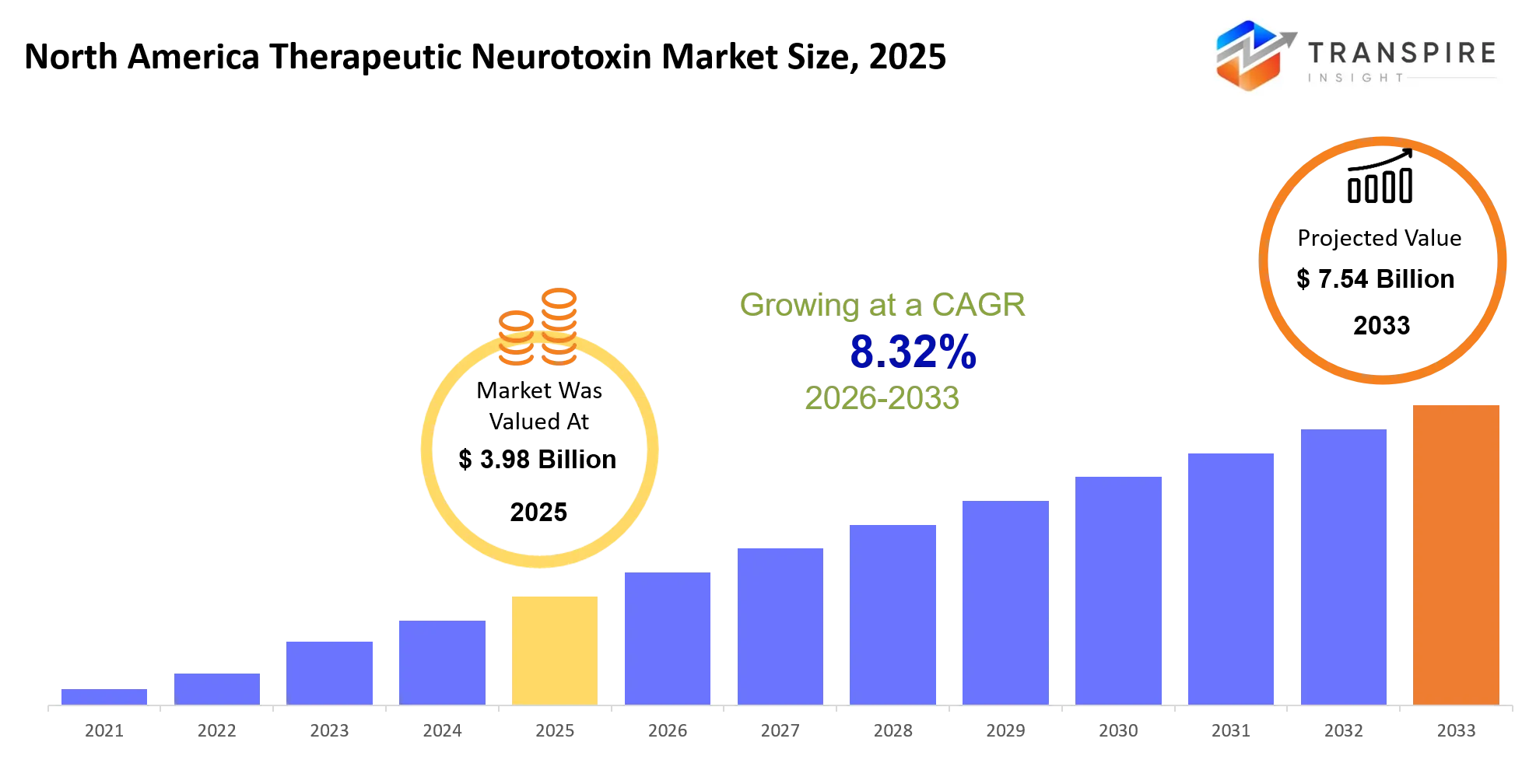
- North America Therapeutic Neurotoxin Market Size 2025: USD 3.98 Billion
- North America Therapeutic Neurotoxin Market Size 2033: USD 7.54 Billion
- North America Therapeutic Neurotoxin Market CAGR: 8.32%
- North America Therapeutic Neurotoxin Market Segments: By Product Type (Botulinum Toxin Type A, Botulinum Toxin Type B, Combination Neurotoxins, Others), By Application (Chronic Migraine, Muscle Spasticity, Cervical Dystonia, Hyperhidrosis, Others), By End User (Hospitals, Neurology Clinics, Cosmetic Clinics, Others), By Distribution Channel (Hospital Pharmacies, Retail Pharmacies, Online Pharmacies, Others).
To learn more about this report,  Download Free Sample Report
North America Therapeutic Neurotoxin Market Summary:
The North America Therapeutic Neurotoxin Market size is estimated at USD 3.98 Billion in 2025 and is anticipated to reach USD 7.54 Billion by 2033, growing at a CAGR of 8.32% from 2026 to 2033. The North America Therapeutic Neurotoxin Market plays a pretty critical part in handling long term neurological and muscular disorders that can really mess with daily routine. In real clinical practice, therapeutic neurotoxins are used to cut down involuntary muscle activity, help control chronic migraine episodes, manage spasticity, and also deal with things like cervical dystonia as well as overactive bladder. The overall value is in giving more targeted symptom control, which can help patients stay more mobile feel more at ease, and generally raise quality of life while also lowering reliance on more disruptive procedures.
Over the last five years, the market has shifted in a structural kind of way, moving away from just narrow neurological uses and toward more multi specialty application supported by broader clinical proof and newer regulatory clearances. A big trigger was the disruption of healthcare delivery during the COVID-19 pandemic, first it slowed down elective care, but later it sped up attempts to keep patients engaged, improve treatment scheduling and support long term disease management. This shift strengthened the need for treatments with more predictable outcomes, and it also helped put in place reimbursement routes. Since healthcare providers are increasingly weaving neurotoxin treatments into chronic care pathways, usage levels are climbing across both established indications and newly approved ones , which builds a wider revenue foundation and supports continued growth.
Key Market Insights
- The United States really sort of dominates the North America Therapeutic Neurotoxin Market, taking over 85% of the regional market share in 2024 . And yeah, strong physician adoption, plus more advanced healthcare infrastructure, and some reimbursement support these keep reinforcing that leadership spot.
- Canada is the fastest moving regional market during the forecast period , mainly because specialist networks are expanding and treatment accessibility is getting better too.
- When it comes to product type, Botulinum Toxin Type A leads the market, capturing more than 75% of industry size in 2024, mostly thanks to wide therapeutic approvals.
- Meanwhile, the established neurotoxin formulations stay in the second-largest segment, helped by physician familiarity and solid clinical outcomes .
- Next-generation neurotoxin products are the fastest-growing segment through 2032 , supported by longer-lasting efficacy and more differentiated formulations.
- On the application side, chronic migraine treatment holds the largest market share , contributing around 30% of overall therapeutic neurotoxin demand in 2024.
- Spasticity management is still a major revenue generator, showing up across rehabilitation and neurology settings.
- Overactive bladder treatment is growing quickest as an application segment, driven by expanding patient eligibility and broader clinical acceptance.
- Cervical dystonia and movement disorder therapies continue to keep growth consistent, with recurring treatment volumes staying steady.
- For end users , hospitals and specialty clinics dominate the North America Therapeutic Neurotoxin Market, making up more than 60% of treatment procedures.
- Neurology-focused treatment centers are next, as the second-largest end-user category, largely because patient referrals are increasing.
What are the Key Drivers, Restraints, and Opportunities in the North America Therapeutic Neurotoxin Market?
The strongest force behind the North America Therapeutic Neurotoxin Market seems to be the expansion of approved therapeutic indications, plus stronger clinical evidence that supports long term disease management. In the last ten years, regulatory approvals for things like chronic migraine , spasticity and overactive bladder have basically nudged neurotoxins from a niche neurological solution into more mainstream, everyday therapeutic tools. And then, naturally, this shift has made physicians more likely to fold neurotoxin therapy into standard care pathways, which boosts treatment frequency and helps with patient retention too. Since most indications call for repeat administration every few months , every newly approved use case becomes a recurring revenue stream. Not really a one time treatment moment.
The biggest pushback or barrier, is usually the high cost and the annoying complexity of specialist delivered treatment. Therapeutic neurotoxins need trained clinicians, very precise administration protocols, and ongoing patient monitoring. This feels structural because scaling specialist capacity takes years of medical training , and it also needs healthcare infrastructure investment, sort of in the background while everything else moves. So a lot of patients end up dealing with access limitations, longer wait times , or reimbursement hurdles. All of this lowers treatment penetration, and delays the revenue realization companies are aiming for.
A major future opportunity sits in next generation neurotoxins with an extended duration of action. Firms working on formulations that hold efficacy for longer intervals could reduce how often patients need dosing, while also strengthening patient adherence. For instance, investment into longer lasting botulinum toxin platforms is pulling in a lot of clinical development attention. That creates room to broaden adoption among patients who currently stop therapy because of the frequent clinic visits, or because the schedule is just too demanding.
What Has the Impact of Artificial Intelligence Been on the North America Therapeutic Neurotoxin Market?
Artificial intelligence, and advanced digital technologies are increasingly reshaping the North America Therapeutic Neurotoxin Market in a way that feels almost constant, by improving treatment planning , patient management and clinical decision-making . Healthcare providers are now rolling out AI-enabled platforms, those systems help automate patient screening, appointment scheduling , treatment documentation, and reimbursement workflows. In practice this cuts a lot of administrative drag, and lets clinics manage more patients without a matching jump in staffing costs.
At the same time, machine learning models are improving predictive capabilities. Providers rely on analytics tools that review patient history, track treatment response patterns , and use disease progression data to spot people most likely to benefit from neurotoxin therapy. In chronic migraine and spasticity care, predictive algorithms help tune injection intervals and dosage strategies, which supports more tailored treatment protocols. This can improve patient staying power, reduce missed treatment cycles, and boost longer term therapy adherence .
On top of that, advanced digital monitoring platforms add another layer of operational strength. They track clinical outcomes and also generate real-world evidence. Those insights support more consistent treatment execution, while manufacturers can use aggregated data to back market access efforts and push label expansion. So overall you get better resource use, stronger treatment results, and improved revenue efficiency across care networks.
Still, a key issue remains, data fragmentation. Patient information often lives across multiple healthcare systems, causing integration headaches that can lower AI model accuracy and slow down large-scale deployment.
Key Market Trends
- Between 2019 and 2025, regulatory approvals quietly but steadily broadened who can receive these therapies. That expansion allowed providers to weave neurotoxins into long term care plans, without too much friction, even when patients stay on treatment for a while.
- More and more physicians seem to lean toward evidence backed options, mainly because retreatment timing is more predictable. This, in turn, helps keep recurring treatment volumes steadier across specialty clinics
- The competitive landscape also shifted. Companies like Allergan, Ipsen, Merz Pharma, and Revance have been putting real money into next generation formulations, so it’s not only about legacy products anymore.
- Clinical development priorities moved away from efficacy alone. Developers are now hunting for longer duration of action, with the explicit goal of lowering the number of injections per year.
- Since the pandemic , healthcare providers have also been speeding up digital patient tracking systems. The idea is straightforward, boost adherence and reduce missed treatment cycles.
- Manufacturers increasingly lean on real world outcomes data during reimbursement discussions. They use it to support coverage arguments and, honestly, to build more trust with physicians about therapeutic use.
- At the same time, strategic partnerships between biotech firms and specialty care networks have broadened access. This matters particularly in underserved regions, where referral pathways can be a little thin.
- Delivery of treatment has gradually slid toward outpatient and ambulatory settings, which reduces dependence on hospitals, and makes things more convenient for patients.
- Also since 2021, investment activity has been aimed more at pipeline diversification , with companies pursuing new neurological, urological, and rehabilitation indications.
North America Therapeutic Neurotoxin Market Segmentation
By Product Type
By product type, Botulinum Toxin Type A keeps the top spot, mostly because it has a lot of regulatory approvals, wide doctor familiarity, and solid clinical data across several treatment areas. The established brands have actually built long term trust with neurologists and other specialists, which helps support repeat treatment cycles, and keeps revenue generation pretty steady too. Botulinum Toxin Type B is smaller but still matters, especially when patients start showing reduced responsiveness to Type A options.
Combination neurotoxins and other newer formulations are still earlier in commercialization though, but they’re drawing investment because they might improve treatment duration, achieve finer precision, and lead to better patient outcomes. Overall growth is increasingly leaning toward products that can stretch dosing intervals, and also lower the number of times patients need to come to the clinic. What happens next in competition, is likely to revolve around formulation innovation, expanding indications, and increasing treatment durability. That should create differentiation opportunities for manufacturers, while giving healthcare providers more focused and specialized therapeutic choices.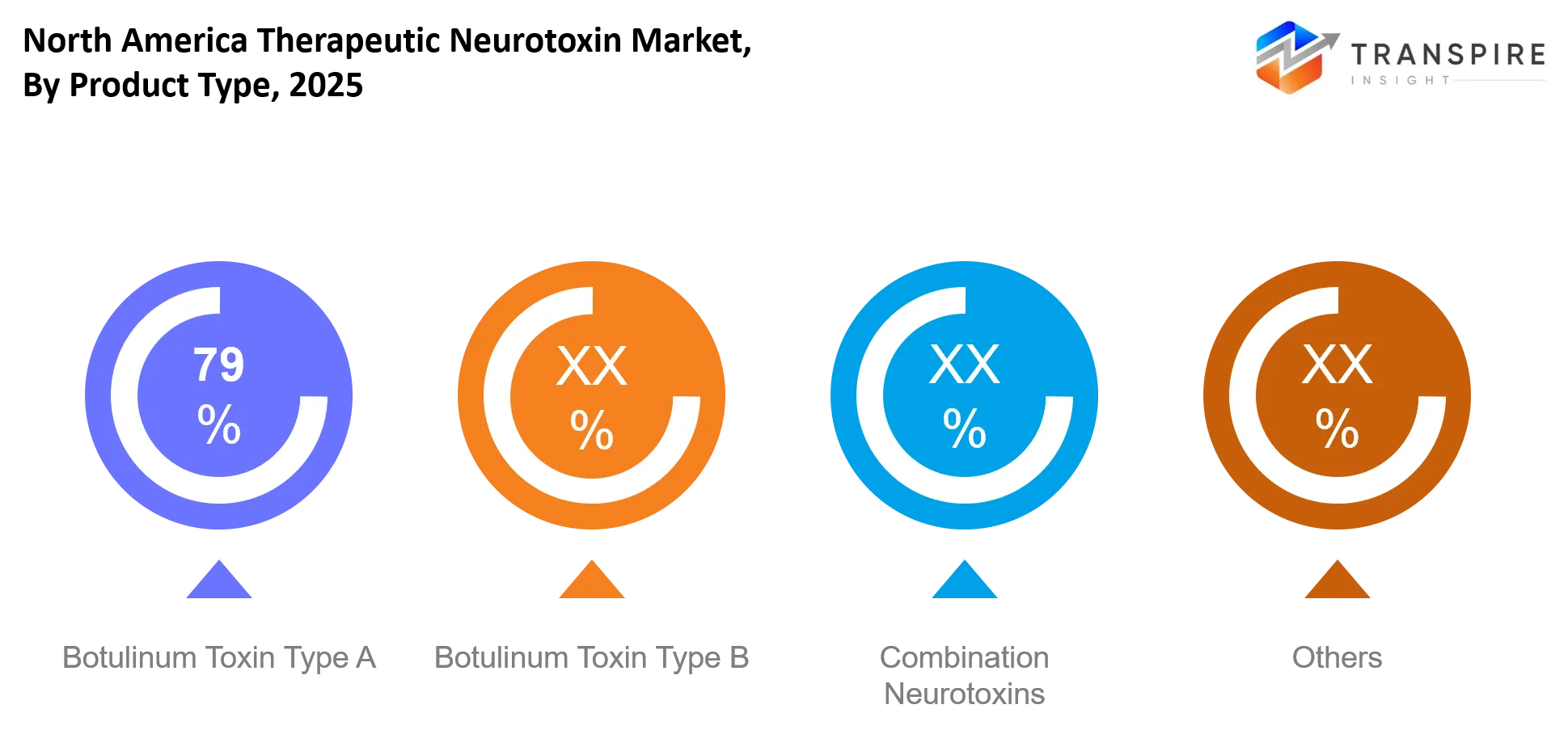
To learn more about this report, Download Free Sample Report
By Application
In application chronic migraine seems to be the dominant slice, mostly due to the big patient base, ongoing treatment calendars, and the wider incorporation of neurotoxin therapy into neurological care routes. Muscle spasticity also takes a meaningfully large portion , since healthcare organizations put more weight on rehabilitation and the long run functional progress. Cervical dystonia is still an established application, backed by clear treatment protocols and specialist uptake. Hyperhidrosis keeps picking up momentum, because more physicians are actually seeing the advantages of focused neurotoxin intervention for symptom handling.
Then there are other therapeutic employments, like certain urological and movement disorder contexts, which are quietly building extra growth channels. Overall demand looks like it’s sliding toward chronic disease management rather than quick, short-term symptom relief. And as the clinical evidence keeps growing, and new indications get approved , this variety across applications should keep strengthening revenue steadiness while lowering reliance on just one treatment category.
By End-User
In terms of end user, hospitals end up taking the largest share, mostly because there’s better access to multidisciplinary specialists, stronger diagnostic capabilities, and a long-standing reimbursement setup. A lot of complex neurological conditions really need coordinated care, so that helps keep hospital based treatment settings in the lead. Neurology clinics come next as the second-largest segment , and they keep growing as referral networks tighten and specialized care becomes more reachable for patients.
Cosmetic clinics still show up in therapeutic administration for certain indications, especially when practitioner know how lines up with neurotoxin use. Other healthcare facilities—like rehab centers and outpatient locations—are gradually getting more involved too, since care delivery is shifting closer to patients . For the future, growth is expected to lean toward specialized outpatient environments that can administer treatment efficiently while easing pressure on the overall healthcare system. That shift might also push providers to invest in dedicated neurotoxin programs, and expand broader geographic access to therapy.
By Distribution Channel
By distribution channel, it’s the hospital pharmacies that really dominate , mainly because therapeutic neurotoxin administration is tightly controlled and it typically needs specialist oversight. In practice, most treatments happen inside structured healthcare settings, so hospital procurement routes end up being the central way the products move. Retail pharmacies take up a smaller share, not so much because they can’t dispense, but because many neurotoxin therapies aren’t designed for direct patient self-use, and they instead need trained healthcare professionals during administration.
Online pharmacies still remain kind of a limited player next to traditional channels, even if digital healthcare platforms are steadily getting better at prescription management and patient guidance support. Other pathways, like specialty pharmacy networks, are starting to matter more too, especially when manufacturers are trying to increase product accessibility and align reimbursement coordination. Looking ahead, channel development should likely lean toward integrated supply models that better connect manufacturers, providers, and payers in a more efficient loop. If that happens, it could help products show up faster across different treatment settings, cut down on administrative fuss, and encourage broader adoption.
What are the Key Use Cases Driving the North America Therapeutic Neurotoxin Market?
The main use case for therapeutic neurotoxins is chronic migraine management in neurology care, but honestly it’s kind of a big deal mainly because it drives repeat visits. Patients often need re injections throughout the year, so the treatment volume stays high, and that means sustained utilization across hospitals and those specialty neurology clinics.
After migraines, uptake is starting to broaden into muscle spasticity and overactive bladder management. You can see this in rehabilitation centers and neurology clinics, they’re using these neurotoxins to enhance mobility, and lower disability after neurological injuries. At the same time urology specialists are folding these therapies into longer-term symptom programs, not just short term fixes.
More recently, emerging applications are being discussed for other movement disorders and new neuromuscular conditions, mostly backed by ongoing clinical research. Manufacturers are also looking into wider therapeutic uses, especially in areas where conventional drugs tend to show limited outcomes, or where the response isn’t great. As more evidence comes in and regulatory approvals keep moving forward, these developing indications could reach new patient groups, and really support future market growth.
|
Report Metrics |
Details |
|
Market size value in 2025 |
USD 3.98 Billion |
|
Market size value in 2026 |
USD 4.31 Billion |
|
Revenue forecast in 2033 |
USD 7.54 Billion |
|
Growth rate |
CAGR of 8.32% from 2026 to 2033 |
|
Base year |
2025 |
|
Historical data |
2021 - 2024 |
|
Forecast period |
2026 - 2033 |
|
Report coverage |
Revenue forecast, competitive landscape, growth factors, and trends |
|
Country scope |
North America (Canada, The United States, and Mexico) |
|
Key company profiled |
AbbVie, Ipsen, Merz Pharma, Evolus, Hugel, Medytox, Revance Therapeutics, Galderma, Eisai, Daewoong Pharmaceutical, Teijin Pharma, Pfizer, Johnson & Johnson, Bausch Health, Eisai |
|
Customization scope |
Free report customization (country, regional & segment scope). Avail customized purchase options to meet your exact research needs. |
|
Report Segmentation |
By Product Type (Botulinum Toxin Type A, Botulinum Toxin Type B, Combination Neurotoxins, Others), By Application (Chronic Migraine, Muscle Spasticity, Cervical Dystonia, Hyperhidrosis, Others), By End User (Hospitals, Neurology Clinics, Cosmetic Clinics, Others), By Distribution Channel (Hospital Pharmacies, Retail Pharmacies, Online Pharmacies, Others) |
Which Regions are Driving the North America Therapeutic Neurotoxin Market Growth?
The United States is sort of the leading region in the North America Therapeutic Neurotoxin Market, mainly because its healthcare infrastructure is more advanced , reimbursement is broad, and there s a strong concentration of neurological specialists. The regulatory pathways also help, in the sense that they support new therapeutic indications, so manufacturers can widen treatment access across several disease categories at once. You see this ecosystem everywhere—big hospital networks , specialty clinics , and academic medical centers working together for diagnosis, care, and long term patient monitoring. Plus there s continuous investment in clinical research and physician training which kind of locks in the market leadership and keeps treatment volumes high.
Canada lands as the second-largest regional market, but the growth pattern doesn’t quite reflect the U.S. model, not in the same mirror like way. Since it has a publicly funded healthcare system, patient access tends to stay fairly steady, and clinically proven therapies get picked up through structured reimbursement rules, kind of like a slow steady valve. Here, expansion leans less on sheer size, and more on predictable healthcare spend, strong regulatory control, and consistent specialist participation. Because of that Canada becomes a dependable source of regional revenue, while also offering manufacturers a fairly stable day to day operating setting.
Mexico is emerging as the fastest-growing market in North America, mostly because healthcare modernization is improving access to specialty treatments. Newer investments in private healthcare facilities , neurology services, and outpatient treatment centers have increased the availability of therapeutic neurotoxin procedures. There s also rising participation from private insurers, and physician know-how is growing, which then speeds up adoption in major urban areas.
Who are the Key Players in the North America Therapeutic Neurotoxin Market and How Do They Compete?
Competition in the North America Therapeutic Neurotoxin Market is still sort of moderately concentrated, meaning a small group of manufacturers control a large slice of therapeutic treatment volumes. And it’s not only about price competition, not really. Physician confidence, clinical evidence, regulatory clearances, and treatment durability end up weighing more in purchasing decisions, like a lot more. Meanwhile, established companies keep trying to defend their standing using indication expansion, plus lifecycle management programs. On the other hand, newer entrants are trying to shake things up with differentiated formulations and products that last longer. So, in the end technology innovation and clinical performance really turn into the main grounds of competition rather than cost leadership.
Allergan Aesthetics, which is an AbbVie company, competes with a pretty extensive set of therapeutic approvals and a wide collection of real world clinical data that backs long-term use across neurological and urological conditions. That evidence base tends to reinforce physician adoption and reimbursement acceptance. Ipsen comes at it through specialized neuroscience know-how and a concentrated therapeutic portfolio aimed at movement disorders and spasticity management. Merz Pharma leans more on physician training initiatives, together with treatment support services, which strengthens engagement with specialist clinics, plus it helps broaden adoption across outpatient care environments.
Revance Therapeutics, they really focus on innovation by building neurotoxin formulations that aim to deliver longer clinical impact, which basically speaks to a key unmet need of treatment frequency. It’s like they are positioning themselves to win on therapeutic convenience not just the size of manufacturing or scale. Evolus on the other hand has been pushing portfolio expansion and strategic partnerships, to solidify market access while also strengthening recognition inside the neurotoxin category. When you look at the whole competitive space, most players are increasing spending on clinical trials, trying for fresh therapeutic indications, and making collaborations with healthcare providers. All of that helps them expand patient access and also build some sustainable differentiation, over the coming decade.
Company List
- AbbVie
- Ipsen
- Merz Pharma
- Evolus
- Hugel
- Medytox
- Revance Therapeutics
- Galderma
- Eisai
- Daewoong Pharmaceutical
- Teijin Pharma
- Pfizer
- Johnson & Johnson
- Bausch Health
- Eisai
Recent Development News
In May 2026, Evolus Reports Strong First-Quarter 2026 Financial Results: Evolus reported first-quarter 2026 revenue of $73.1 million, reflecting continued growth in its neurotoxin franchise. The company also delivered its second consecutive quarter of positive adjusted EBITDA, highlighting improving profitability and strengthening commercial momentum in the North American injectable neurotoxin market.
Source: https://www.businesswire.com
In February 2026, AbbVie Challenges U.S. Medicare Price Controls on Botox: AbbVie, a major player in the therapeutic neurotoxin market through Botox, filed a lawsuit against the U.S. Department of Health and Human Services challenging the inclusion of Botox in Medicare's drug price negotiation program. The case could have significant implications for reimbursement and pricing dynamics in the North American therapeutic neurotoxin segment.
Source: https://www.reuters.com
What Strategic Insights Define the Future of the North America Therapeutic Neurotoxin Market?
The North America Therapeutic Neurotoxin Market is kinda moving, or at least it seems to be, toward a precision therapy model where neurotoxins are folded into larger chronic disease management strategies, not just used as stand alone symptom control treatments . Underneath that, the main push is the growing capability of healthcare systems to blend clinical evidence with patient monitoring data , plus add expanded therapeutic uses , so long term care paths become more realistic. In practice this change will likely give an edge to manufacturers who can show measurable results across a range of neurological and urological conditions, not only in one narrow setting.
There’s also a risk that is less obvious at first glance: market concentration . When only a handful of manufacturers cover a big share of supply, you get a bigger chance of exposure to production disruptions, regulatory setbacks, or competitive bottlenecks, and those issues could ripple into treatment availability and even pricing patterns across the region.
At the same time, an opportunity is starting to take shape around next generation neurotoxins with longer duration of action and treatment personalization that is backed by data. If these options keep advancing through clinical trials, they can open the door for new patient groups, and they may also help with adherence . Market players should therefore put weight on investments in differentiated formulations and real world evidence platforms , because future advantage may come less from how familiar a product feels and more from outcome based value that can be proven.
North America Therapeutic Neurotoxin Market Report Segmentation
By Product Type
- Botulinum Toxin Type A
- Botulinum Toxin Type B
- Combination Neurotoxins
- Others
By Application
- Chronic Migraine
- Muscle Spasticity
- Cervical Dystonia
- Hyperhidrosis
- Others
By End User
- Hospitals
- Neurology Clinics
- Cosmetic Clinics
- Others
By Distribution Channel
- Hospital Pharmacies
- Retail Pharmacies
- Online Pharmacies
- Others
Frequently Asked Questions
Find quick answers to common questions.
The Expected North America Therapeutic Neurotoxin Market size for the Market will be USD 7.54 Billion in 2033.
The key Segments of the North America Therapeutic Neurotoxin Market are By Product Type (Botulinum Toxin Type A, Botulinum Toxin Type B, Combination Neurotoxins, Others), By Application (Chronic Migraine, Muscle Spasticity, Cervical Dystonia, Hyperhidrosis, Others), By End User (Hospitals, Neurology Clinics, Cosmetic Clinics, Others), By Distribution Channel (Hospital Pharmacies, Retail Pharmacies, Online Pharmacies, Others).
Major Players in the North America Therapeutic Neurotoxin Market are AbbVie, Ipsen, Merz Pharma, Evolus, Hugel, Medytox, Revance Therapeutics, Galderma, Eisai, Daewoong Pharmaceutical, Teijin Pharma, Pfizer, Johnson & Johnson, Bausch Health, Eisai.
The Current Market size of the North America Therapeutic Neurotoxin Market is USD 3.98 Billion in 2025.
The North America Therapeutic Neurotoxin Market CAGR is 8.32%.
- AbbVie
- Ipsen
- Merz Pharma
- Evolus
- Hugel
- Medytox
- Revance Therapeutics
- Galderma
- Eisai
- Daewoong Pharmaceutical
- Teijin Pharma
- Pfizer
- Johnson & Johnson
- Bausch Health
- Eisai
About the Authors

Pankaj Ghogare Patil
I am Pankaj Ghogare Patil, a Senior Research Analyst at Transpire Insight, specializing in the Pharmaceutical, Chemicals & Materials, Healthcare IT, and Biotechnology industry. My expertise lies in conducting comprehensive market research, analyzing industry trends, evaluating competitive landscapes, and translating complex data into actionable insights. At Transpire Insight, I closely follow emerging technologies, regulatory developments, and market innovations to create accurate, well-researched, and informative content that helps businesses and professionals make informed decisions. I am committed to producing credible, evidence-based articles that reflect industry best practices while making technical topics accessible and valuable for a broad audience.

Chakradhar Khansole
Chakradhar serves as the Research Director at Transpire Insight, bringing over 8 years of experience in technology, innovation, and strategic market intelligence. He specializes in transforming complex market data into actionable business insights that enable organizations to make informed, growth-oriented decisions. Recognized for his strategic vision and analytical expertise, Chakradhar leads high-impact research initiatives, delivering comprehensive market assessments, competitive intelligence, and forward-looking industry analysis.
Recently Published Reports
-
Jul 2026
Alopecia Treatment Market
Alopecia Treatment Market Size, Share & Analysis Report By Disease Type (Alopecia Areata, Cicatricial Alopecia, Traction Alopecia, Alopecia Totalis, Androgenetic Alopecia, Alopecia Universalis, and Other Disease Types), By Treatment Type (Topical Treatments, Oral Medications, Injectable Therapies, and Hair Transplantation), By Gender (Male, and Female), By Distribution Channel (Hospitals and Clinics, Retail Pharmacies, and Online Retailers), and Geography (North America, Europe, Asia-Pacific, Middle East and Africa, South and Central America), 2021 - 2031
-
Jul 2026
Medical Ultrasound Probe Market
Medical Ultrasound Probe Market Size, Share & Analysis Report By Type (Linear Type, Convex Type, Endocavitary Probe, Phased Array/Cardiac Probe, Transesophageal (TEE) Probe, and Others), By Application (Ophthalmology, Cardiology, Musculoskeletal, Oncology, Obstetrics & Gynecology, General Imaging, and Others), By End User (Hospitals & Clinics, Diagnostic Centers, Ambulatory Surgical Centers, and Others), and Geography (North America, Europe, Asia-Pacific, Middle East and Africa, South and Central America), 2021 – 2031
-
May 2026
Biosimilars Market
Biosimilars Market By Product Type (Monoclonal Antibodies, Recombinant Hormones, Erythropoietin, G-CSF, Others), By Indication (Oncology, Autoimmune Diseases, Blood Disorders, Diabetes, Others), By Manufacturing Type (In-House Manufacturing, Contract Manufacturing), By Distribution Channel (Hospital Pharmacies, Retail Pharmacies, Online Pharmacies), By Industry Analysis, Size, Share, Growth, Trends, and Forecasts 2021-2033
-
Apr 2026
Gastrointestinal Endoscopy Market
Gastrointestinal Endoscopy Market By Type (Rigid Gastrointestinal Endoscope, Flexible Gastrointestinal Endoscopes, Disposable Gastrointestinal Endoscope), By Procedure Type (Colonoscopy, Gastroscopy, Duodenoscopy, Enteroscopy, Flexible Sigmoidoscopy, Others), By Application (Diagnosis, Treatment), By End-Users (Hospitals, Ambulatory Surgical Centers, Specialty Clinics, Laboratories, Others), By Industry Analysis, Size, Share, Growth, Trends, and Forecasts 2021-2033