
North America Fallopian Tube Cancer Therapeutics Market Size & Forecast:
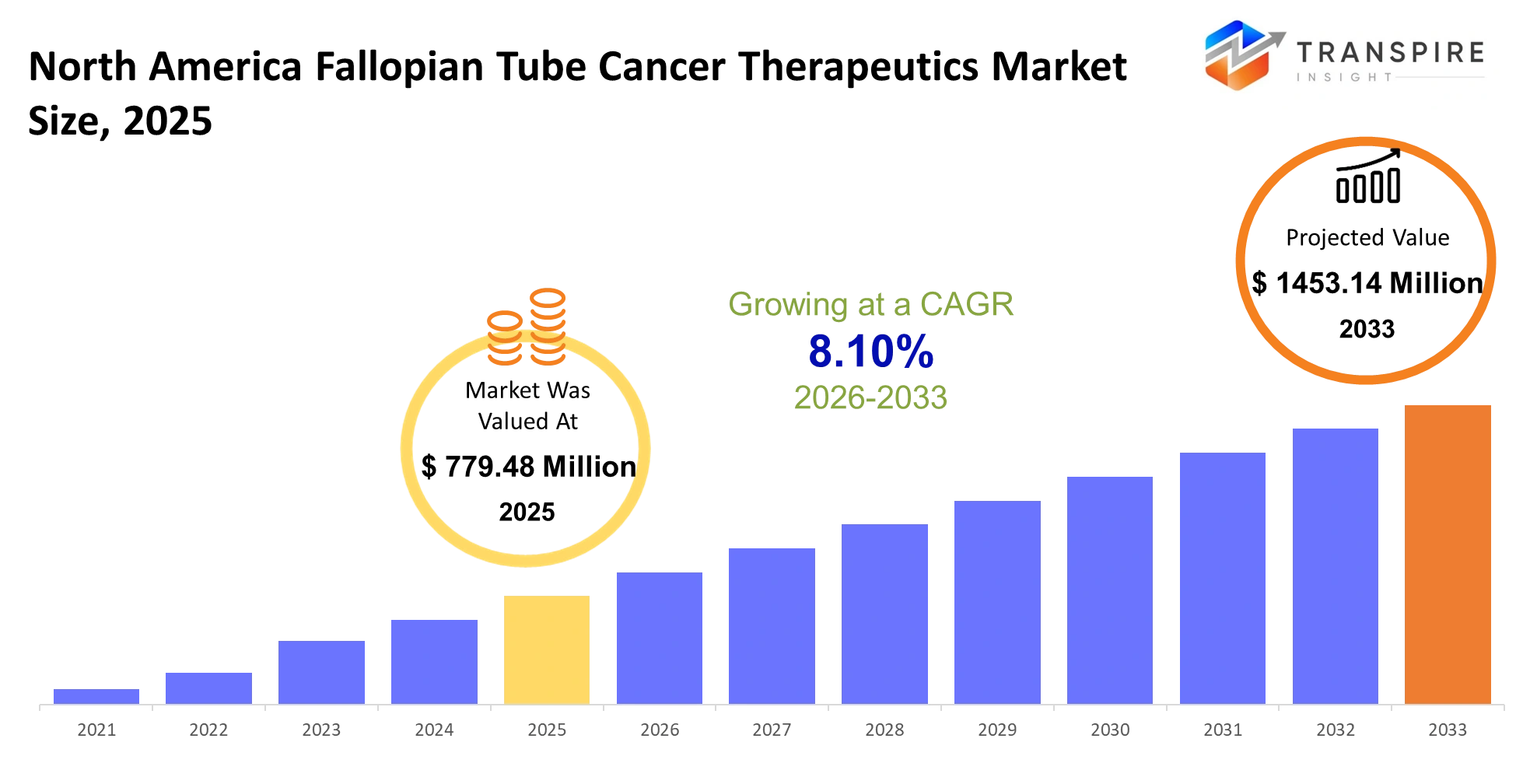
- North America Fallopian Tube Cancer Therapeutics Market Size 2025: USD 779.48 Million
- North America Fallopian Tube Cancer Therapeutics Market Size 2033: USD 1453.14 Million
- North America Fallopian Tube Cancer Therapeutics Market CAGR: 8.10%
- North America Fallopian Tube Cancer Therapeutics Market Segments: By Type (Chemotherapy, Targeted Therapy, Immunotherapy, Hormonal Therapy, Others), By Application (Primary Cancer, Metastatic, Recurrent, Others), By End-User (Hospitals, Clinics, Cancer Centers, Others), By Distribution (Hospital Pharmacy, Retail, Online, Others).
To learn more about this report,  Download Free Sample Report
North America Fallopian Tube Cancer Therapeutics Market Summary:
The North America Fallopian Tube Cancer Therapeutics Market size is estimated at USD 779.48 Million in 2025 and is anticipated to reach USD 1453.14 Million by 2033, growing at a CAGR of 8.10% from 2026 to 2033. The North America Fallopian Tube Cancer Therapeutics Market deals with a very specialized but still clinically urgent situation: trying to improve survival for people facing aggressive gynecologic cancers via targeted medicines, very tuned chemotherapy routines, and more advanced biologics. In real day to day practice, this market ends up supporting oncology centers and hospital systems when they handle late stage detections, those cases often need complicated, multi line care plans, plus longer monitoring windows afterward.
Over the past 3–5 years, the whole market has moved in a more structural way toward biomarker based treatment choices, especially by leaning harder on PARP inhibitor use and companion diagnostics that connect to BRCA profiling and homologous recombination deficiency testing. That shift has changed the sequencing logic oncologists use, so now pharmaceutical firms push capital into precision oncology pipelines rather than relying only on broad cytotoxic options. And then the COVID-19 pandemic, kind of acted like a big accelerant by interrupting routine gynecologic screening and causing diagnosis delays, which in turn raised the share of patients showing up with advanced stage disease for those treatment pathways. Because of this, healthcare providers are putting more effort and funding behind higher value oncology therapeutics, which is helping revenue growth for the targeted lines that can show progression free survival improvements, and fewer relapse events.
Key Market Insights
- The United States pretty much dominated the North America Fallopian Tube Cancer Therapeutics Market, with more than 82% market share in 2025, mostly because of its advanced oncology setup and overall research ecosystem, you know the usual stuff.
- Canada is set to be the fastest growing regional market through 2032, pulled along by broader reimbursement coverage and a deeper integration of precision medicine across cancer centers.
- In North America, strong clinical trial momentum keeps pushing therapeutic advances, regulatory approvals , and the commercial uptake of newer oncology drugs.
- Also, higher healthcare spending and better access to molecular diagnostics are really helping expand the regional cancer therapeutics industry size, and they should support a steadier long term revenue outlook.
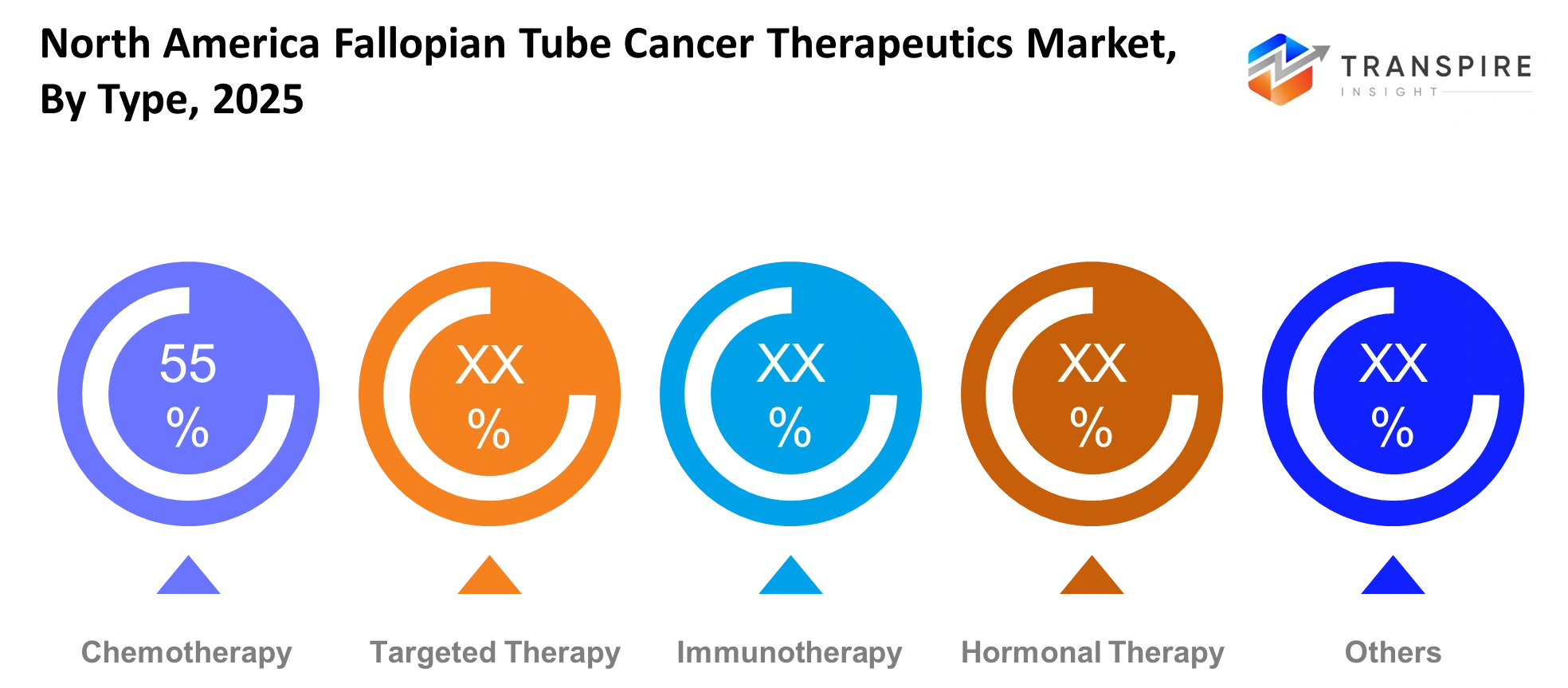
- In 2025, targeted therapy led the North America Fallopian Tube Cancer Therapeutics Market, taking up close to 48% share, largely tied to PARP inhibitor utilization, and yeah that dependency is noticeable.
- Chemotherapy still sat in the second spot, since platinum based regimens keep acting as the first line option for patients with advanced stage disease, at least for many clinicians.
- Immunotherapy is projected to grow the quickest during the forecast period, backed by checkpoint inhibitor development, and a growing amount of combination therapy research.
- Personalized medicine platforms are also reshaping treatment sequencing practices, which in turn improves progression free survival outcomes and boosts demand across the oncology therapeutics market.
- For advanced stage fallopian tube cancer treatment, that segment held the largest market share in 2025, because a lot of diagnoses happen when the disease is already moving into later progression phases.
- For applications, recurrent cancer management shows up as the fastest growing segment, since relapse incidence tends to be higher, and maintenance therapy adoption keeps extending treatment duration.
- Finally, hospitals and specialty oncology centers accounted for the majority share, around 64% in 2025, which makes sense given the concentration of complex care delivery.
What are the Key Drivers, Restraints, and Opportunities in the North America Fallopian Tube Cancer Therapeutics Market?
The strongest force accelerating North America Fallopian Tube Cancer Therapeutics Market is, the rapid integration of precision oncology into gynecologic cancer care, more or less. With broader clinical evidence for PARP inhibitors and BRCA-linked treatments, the whole treatment economics have shifted, because progression-free survival improved for patients with recurrent disease or advanced stage. Regulatory sign offs for maintenance options also shifted how doctors prescribe, especially across U.S. oncology networks, where many physicians now depend on biomarker oriented treatment sequencing, rather than older schedules. That transition boosted revenue per patient too, since targeted therapies tend to run longer, and they also trigger recurring molecular diagnostic testing. So you end up with a bigger therapeutic value chain reaching hospitals , pharmaceutical companies, and diagnostic providers.
Still, high treatment costs are the market’s most structural obstacle. Advanced biologics, genomic testing, and combination therapy pathways create real financial strain on private insurers, and on public reimbursement systems as well. This issue doesn’t unwind quickly either, because oncology drug pricing is linked to years of clinical development, patent exclusivity windows, and specialized manufacturing know how. As a consequence, smaller cancer centers may delay adoption of premium therapies, which narrows patient access and also reduces overall market penetration
Looking forward, AI-driven oncology drug development is a major opportunity. Drug makers are putting more money into predictive biomarker platforms, aiming to find higher response patient groups faster. In Canada and in several major U.S. academic cancer centers, genomic data partnerships are expanding. That creates conditions for quicker trial enrollment, and more individualized therapeutic commercialization, in practice.
What Has the Impact of Artificial Intelligence Been on the North America Fallopian Tube Cancer Therapeutics Market?
Artificial intelligence and newer digital technologies are kind of reshaping the North America Fallopian Tube Cancer Therapeutics Market, mostly by changing how clinical teams decide things, speeding up drug development schedules, and also streamlining the oncology treatment workflows. With AI centered genomic analysis platforms, a lot of the work around interpreting BRCA mutations and homologous recombination deficiency markers is getting automated, so oncology groups can spot who is eligible for targeted therapies quicker, and more consistently too. At the same time, hospitals and cancer research centers are more and more plugging machine learning into pathology imaging systems , so they can catch small tumor features that standard human review might just miss.
Then there is predictive analytics , which is pushing both therapeutic development and patient management in a different direction. Pharmaceutical companies rely on AI models to estimate treatment response rates, refine how patients are selected for clinical trials, and even flag promising drug candidates before big scale trials start. In practice, these tools cut down on research backtracking and they help compress development timelines, especially for precision oncology therapies. Clinically, digital monitoring platforms are used to tailor treatments further, by forecasting recurrence risks and likely adverse reactions based on an individual’s genomic profile plus what treatments they’re getting.
On the operational side, these digital systems are improving diagnostic turnaround times, lowering exposure to treatments that may not be necessary, and improving how accurate therapy selection is. Still, AI rollout has a major snag, because really high quality gynecologic oncology datasets are limited overall , which makes it harder for algorithms to stay accurate across rare cancer subtypes, including fallopian tube malignancies.
Key Market Trends
- Since 2021, PARP inhibitors got more traction as oncologists— kind of started leaning more on BRCA-guided maintenance therapies instead of, say, the usual chemo- only lanes, you know.
- In the U.S. cancer centers, molecular diagnostic testing jumped by over 30% after reimbursement rules for precision oncology were revised and that made testing easier to access, generally speaking.
- From 2020 to 2025, pharma companies rebalanced their R&D spending toward antibody-drug conjugates , plus a bigger push for combination immunotherapy programs, especially for recurrent gynecologic cancers.
- AstraZeneca and Merck & Co. tightened their oncology collaborations to speed up targeted therapy commercialization, while also improving biomarker led clinical trial recruitment.
- Hospitals increasingly brought in AI enabled pathology platforms after COVID-19 delays made it pretty clear that manual oncology workflows had some limits, and the queues just kept growing.
- In Canada, oncology networks moved faster on genomic profiling systems once provincial healthcare programs expanded reimbursement coverage for precision cancer tests.
- Specialty oncology clinics expanded their outpatient infusion capacity after 2022, because healthcare systems gradually shifted more complex cancer therapies away from inpatient treatment, and toward day settings.
- Drug developers, well they kind of dialed back those big broad patient recruitment pushes too ,by leaning on predictive analytics to find genomic subgroups that seem to respond better while trials are running.
- From 2020 to 2022 supply chain disruptions, basically shoved pharmaceutical manufacturers into regionalizing oncology drug production, and they also diversified how they source active ingredients .
- Regulatory agencies have been placing more weight on accelerated review pathways for rare gynecologic cancer therapies, and that has shortened the approval timelines for targeted oncology treatments , overall.
North America Fallopian Tube Cancer Therapeutics Market Segmentation
By Type
Targeted therapy right now keeps that top spot in the type segment , mainly because PARP inhibitors plus biomarker-first drugs show better progression-free survival results than the more conventional routes. Meanwhile chemotherapy still keeps a big chunk, since the well known platinum based protocols stay in place for first line care and later advanced-stage management. Immunotherapy is also picking up momentum, as sponsors broaden combination therapy studies and they chase quicker regulatory clearances for gynecologic oncology use cases. Hormonal therapy and other supportive lines stay comparatively constrained, because fallopian tube malignancies usually need more assertive treatment strategies.
On top of that, the growing reliance on genomic testing is basically reshaping how clinicians decide , across oncology networks and it’s pushing demand toward personalized therapeutic schedules. Looking ahead , the future growth in the type segment will likely tilt toward companies with precision oncology portfolios, companion diagnostic know-how, and maintenance therapy pipelines that can last. Investment activity should ramp up further around targeted biologics and the next wave of immunotherapeutic platforms, especially those meant to handle recurrent disease progression.
To learn more about this report, Download Free Sample Report
By Application
Primary cancer treatment applications basically dominate the application slice, mostly because a lot of the therapeutic spend is still clustered near the first intervention, plus those early disease stabilization steps. Meanwhile metastatic and recurrent cancer applications are growing bit by bit as survival rates rise, so patients wind up needing longer term treatment sequencing, sometimes across several therapy lines, which creates more demand than before. Recurrent disease management is getting extra attention too, largely because relapse shows up more often among advanced stage patients, and that pushes care teams to use maintenance therapies, and targeted drug combinations, a little more aggressively than in past years. In metastatic applications specifically, demand is also shifting as oncologists increasingly lean into molecular profiling to figure out treatment eligibility, and to better tune the therapeutic response rates.
Other application areas like palliative, and supportive oncology care still help sustain ancillary revenue streams, but they take up a smaller portion of the clinical investment pie. Looking ahead, the market direction will likely orbit around therapies that can extend remission durations and also lower the chance of recurrence. That, in turn, should open up stronger commercial opportunities for firms working in precision medicine and adaptive treatment pathways.
By End-User
Hospitals hold the prevailing spot in the end user space, because advanced cancer therapeutics usually need this kind of multidisciplinary oncology setup , plus genomic testing access, and specialty infusion capabilities too. Cancer centers are the quickest growing category, in part because health systems keep folding their oncology services into more focused treatment hubs , with integrated diagnostics and clinical trial participation built in. Clinics add solid revenue momentum as well , through outpatient chemotherapy administration and follow-up monitoring services, especially across larger urban care networks.
Other end users, such as academic research institutes and specialty care facilities, still matter a lot for early stage therapeutic evaluation, plus translational oncology initiatives. Overall demand is sliding toward centralized cancer management models, where oncology providers can bundle diagnostics, treatment planning, and long term monitoring inside one shared care framework, kind of under the same umbrella. Looking ahead , the end user segment should expand most where organizations back AI supported pathology systems, precision oncology infrastructure , and decentralized outpatient treatment models that can lower operating costs while also boosting patient throughput.
By Distribution
Hospital pharmacies still seem to dominate the distribution side, because oncology therapeutics come with tight handling protocols, reimbursement coordination, and physician supervised dispensing routines, which is kind of hard to replicate elsewhere. Retail pharmacies have a smaller but still steadier place in the picture, mostly covering supportive care medications and a few oral oncology therapies that are prescribed for maintenance style treatment. Online distribution is growing bit by bit too, as specialty pharmaceutical logistics keep getting better and healthcare providers lean into digital prescription management, especially for those long duration regimens. Other routes too, like specialty oncology distributors, keep becoming more relevant for instance with rising needs for temperature controlled biologics and targeted therapeutics.
What’s also changing is how the whole distribution dynamic is getting shaped by reimbursement setups, cold chain needs, and direct partnerships between pharmaceutical manufacturers and healthcare systems. Looking ahead, growth in this area will likely hinge on more advanced logistics, better digital prescription integration, and specialty pharmacy expansion that can actually support personalized treatment delivery. Manufacturers and investors are expected to put focus on distribution networks that raise therapy accessibility while still keeping regulatory compliance intact and protecting product integrity across these complicated oncology supply chains.
What are the Key Use Cases Driving the North America Fallopian Tube Cancer Therapeutics Market?
Targeted therapy for advanced and recurring fallopian tube cancer is still basically the main use case , because oncology hospitals are leaning more and more on PARP inhibitors and biomarker based regimens to push out progression-free survival. The treatment intensity stays pretty high, and the maintenance phase tends to run long, so specialized cancer centers end up with major therapeutic spending.
Then there are secondary use cases, and these seem to be growing in outpatient oncology clinics , and in academic cancer institutes too. This is especially true for monitoring recurrent disease, plus running combination immunotherapy programs. Also, selection of therapy tied to genomic testing is getting more momentum, since health systems are folding precision oncology workflows into wider gynecologic cancer management approaches.
For what’s emerging, people talk about AI-assisted prediction of treatment response, and even individualized maintenance planning that draws from molecular profiling data. On top of that, pharmaceutical companies and research hospitals are actively looking at antibody drug conjugates and newer immunotherapies aimed at resistant, or heavily pretreated patient populations. All of this is creating fresh opportunities for precision oncology commercialization throughout the forecast period .
|
Report Metrics |
Details |
|
Market size value in 2025 |
USD 779.48 Million |
|
Market size value in 2026 |
USD 842.59 Million |
|
Revenue forecast in 2033 |
USD 1453.14 Million |
|
Growth rate |
CAGR of 8.10% from 2026 to 2033 |
|
Base year |
2025 |
|
Historical data |
2021 - 2024 |
|
Forecast period |
2026 - 2033 |
|
Report coverage |
Revenue forecast, competitive landscape, growth factors, and trends |
|
Country scope |
North America (Canada, The United States, and Mexico) |
|
Key company profiled |
Roche, AstraZeneca, Pfizer, Novartis, Merck, Bristol Myers Squibb, AbbVie, Eli Lilly, Sanofi, GSK, Takeda, Bayer, Johnson & Johnson, Amgen, Boehringer Ingelheim. |
|
Customization scope |
Free report customization (country, regional & segment scope). Avail customized purchase options to meet your exact research needs. |
|
Report Segmentation |
By Type (Chemotherapy, Targeted Therapy, Immunotherapy, Hormonal Therapy, Others), By Application (Primary Cancer, Metastatic, Recurrent, Others), By End-User (Hospitals, Clinics, Cancer Centers, Others), By Distribution (Hospital Pharmacy, Retail, Online, Others). |
Which Regions are Driving the North America Fallopian Tube Cancer Therapeutics Market Growth?
The United States basically leads the North America Fallopian Tube Cancer Therapeutics Market, mainly due to its advanced oncology infrastructure, a pretty strong pharmaceutical innovation pipeline and a generally favorable reimbursement setting for precision medicine. There’s also federal backing for cancer genomics research, plus faster oncology drug approvals, and that combination has made targeted therapies get picked up more quickly across the biggest hospital networks. In addition, large academic cancer centers keep pushing clinical trial enrollment, so pharmaceutical companies get quicker access to real world treatment data …and they see more commercialization chances. On top of that, there is a mature ecosystem of biotechnology firms, diagnostic providers specialty pharmacies, and oncology service networks that helps keep the country’s top market position pretty stable.
Canada comes in as the second-largest regional contributor, but the market behavior isn’t exactly the same as the United States. Growth there leans more on coordinated public healthcare systems and an expansion of reimbursement that stays relatively steady. Provincial healthcare agencies have been increasing funding for genomic testing, and also for maintenance oncology therapies, which helps keep adoption consistent ,without too much pricing volatility. There’s also strong collaboration between cancer research institutes and government-backed healthcare programs, and that has expanded patient access to biomarker-driven treatment pathways. This kind of stability makes Canada a dependable long-term revenue market for pharmaceutical manufacturers focused on precision oncology and more hospital-based cancer therapeutics.
Mexico is coming up as the fastest-growing regional market, mostly because of recent investments that modernize oncology infrastructure, and also because more people can access specialty cancer treatment services. In the meantime, private hospital groups , along with international healthcare providers have been steadily expanding their oncology capabilities in key urban areas, this is helping with the availability of targeted therapies plus advanced diagnostics. On top of that, the greater involvement in multinational clinical trials has meant faster exposure to newer oncology drugs and treatment protocols, kind of spreading across the whole country. Overall, growth across Mexico from 2026 through 2033 is expected to open solid expansion chances for pharmaceutical companies , for diagnostic firms and for investors who are looking for earlier entry into oncology networks that are still underserved.
Who are the Key Players in the North America Fallopian Tube Cancer Therapeutics Market and How Do They Compete?
The competitive landscape of the North America Fallopian Tube Cancer Therapeutics Market stays somewhat moderately consolidated, because a small set of multinational pharmaceutical companies sort of controls most of the high value, targeted oncology treatments. What’s happening more and more is that competition doesn’t just revolve around pricing, instead it leans into precision medicine know how, biomarker driven drug performance, and the longer term “maintenance” style results. Existing players keep pushing to defend their share by running wider clinical trial pipelines and also by forming companion diagnostic arrangements, while smaller biotechnology groups try to stir things up—thinking about antibody drug conjugates and newer generation immunotherapy concepts. Even regulatory throughput, access to genomic datasets, and oncology network collaborations are now treated like serious competitive perks, especially as picking the right therapy gets more personalized each year.
AstraZeneca has, in practice, strengthened its standing by pushing PARP inhibitor uses more widely across recurrent phases and maintenance treatment scenarios. They look differentiated because they’ve built very tight ties with genomic testing partners , helping with biomarker-driven selection, and supporting more accurate patient stratification. GlaxoSmithKline , on the other hand , leans into a targeted oncology focus and leans on clinical evidence that points to progression-free survival improvements within gynecologic cancers. Their strategic work with cancer research institutions, plus the expansion of real-world evidence initiatives , has helped reinforce physician assurance and also support reimbursement across North American oncology systems for both of these companies.
Merck & Co. kind of competes by leaning hard on immunotherapy innovation and also combination strategies, aimed at cancer groups that are more resistant and later-stage, you know, that kind of population. They keep expanding their oncology trial networks to test checkpoint inhibitor combinations with targeted therapies too, so they can stand out via wider treatment sequencing flexibility. Pfizer is putting major money into antibody-drug conjugate development and also doing precision oncology acquisitions, to thicken the long-term pipeline, basically. Bristol Myers Squibb stresses immuno-oncology integration and “data based” treatment optimization, with help from collaborations alongside academic cancer centers. Overall, these moves appear to help the companies lock in stronger standing in hospital based oncology networks where personalized treatment infrastructure, even more and more, affects procurement choices.
Company List
- Roche
- AstraZeneca
- Pfizer
- Novartis
- Merck
- Bristol Myers Squibb
- AbbVie
- Eli Lilly
- Sanofi
- GSK
- Takeda
- Bayer
- Johnson & Johnson
- Amgen
- Boehringer Ingelheim
Recent Development News
In April 2026, GSK Highlights Strong Early Data for Gynecologic Cancer ADC Therapy: GSK reported encouraging early-stage clinical results for its B7H4-targeting antibody-drug conjugate “Mo-rez,” showing strong tumor reduction rates in platinum-resistant ovarian cancer patients. The therapy is being positioned as a next-generation targeted treatment opportunity across ovarian and fallopian tube cancer segments.
Source: https://www.reuters.com
In March 2026, Corcept Therapeutics Won FDA Approval for Lifyorli in Platinum-Resistant Ovarian Cancer: Corcept Therapeutics received U.S. FDA approval for Lifyorli (relacorilant) combined with nab-paclitaxel for platinum-resistant epithelial ovarian cancer, a category closely linked with fallopian tube and primary peritoneal cancers. The approval strengthened Corcept’s oncology pipeline and marked a major commercial milestone in gynecologic cancer therapeutics.
Source: https://www.reuters.com
What Strategic Insights Define the Future of the North America Fallopian Tube Cancer Therapeutics Market?
The North America Fallopian Tube Cancer Therapeutics Market is kind of shifting toward very tailored oncology ecosystems, where treatment choice diagnostics and long-term checkups sort of move together through one integrated genomic and AI assisted platform situation. The main push behind this change is the rising clinical and market value of biomarker led therapies, these are rewriting reimbursement structures, and also pushing pharma firms to focus on smaller but higher response patient groups. In the next five to seven years, competitive leverage will depend more on who controls genomic collections, companion diagnostic know how, and adaptive clinical trial setups, instead of relying on wide oncology portfolios as the only strategy.
One less talked about risk is how the market is becoming concentrated around a few specific targeted treatments and diagnostic paths. If everyone leans heavily on limited biomarker categories, manufacturers and care providers might face pricing strain, reimbursement disagreements, or even treatment switching if rival approaches end up showing better sustained results. There is also a real emerging chance in AI enabled recurrence forecasting tools that are tied into liquid biopsy platforms, especially inside big U.S. cancer network organizations. Firms should really line up partnerships with genomic diagnostics companies and university oncology centers, so they can get earlier access to patient data, speed up patient recruitment for studies, and lock in a stronger precision therapy position before reimbursement rules tighten up even more.
North America Fallopian Tube Cancer Therapeutics Market Report Segmentation
By Type
- Chemotherapy
- Targeted Therapy
- Immunotherapy
- Hormonal Therapy
- Others
By Application
- Primary Cancer
- Metastatic
- Recurrent
- Others
By End-User
- Hospitals
- Clinics
- Cancer Centers
- Others
By Distribution
- Hospital Pharmacy
- Retail
- Online
- Others
Frequently Asked Questions
Find quick answers to common questions.
The approximate North America Fallopian Tube Cancer Therapeutics Market size for the market will be USD 1453.14 Million in 2033.
The key segments of the North America Fallopian Tube Cancer Therapeutics Market are By Type (Chemotherapy, Targeted Therapy, Immunotherapy, Hormonal Therapy, Others), By Application (Primary Cancer, Metastatic, Recurrent, Others), By End-User (Hospitals, Clinics, Cancer Centers, Others), By Distribution (Hospital Pharmacy, Retail, Online, Others).
Major players in the North America Fallopian Tube Cancer Therapeutics Market are Roche, AstraZeneca, Pfizer, Novartis, Merck, Bristol Myers Squibb, AbbVie, Eli Lilly, Sanofi, GSK, Takeda, Bayer, Johnson & Johnson, Amgen, Boehringer Ingelheim.
The current market size of the North America Fallopian Tube Cancer Therapeutics Market is USD 779.48 Million in 2025.
The North America Fallopian Tube Cancer Therapeutics Market CAGR is 8.10%.
- Roche
- AstraZeneca
- Pfizer
- Novartis
- Merck
- Bristol Myers Squibb
- AbbVie
- Eli Lilly
- Sanofi
- GSK
- Takeda
- Bayer
- Johnson & Johnson
- Amgen
- Boehringer Ingelheim
Recently Published Reports
-
May 2026
Biosimilars Market
Biosimilars Market By Product Type (Monoclonal Antibodies, Recombinant Hormones, Erythropoietin, G-CSF, Others), By Indication (Oncology, Autoimmune Diseases, Blood Disorders, Diabetes, Others), By Manufacturing Type (In-House Manufacturing, Contract Manufacturing), By Distribution Channel (Hospital Pharmacies, Retail Pharmacies, Online Pharmacies), By Industry Analysis, Size, Share, Growth, Trends, and Forecasts 2021-2033
-
Apr 2026
Gastrointestinal Endoscopy Market
Gastrointestinal Endoscopy Market By Type (Rigid Gastrointestinal Endoscope, Flexible Gastrointestinal Endoscopes, Disposable Gastrointestinal Endoscope), By Procedure Type (Colonoscopy, Gastroscopy, Duodenoscopy, Enteroscopy, Flexible Sigmoidoscopy, Others), By Application (Diagnosis, Treatment), By End-Users (Hospitals, Ambulatory Surgical Centers, Specialty Clinics, Laboratories, Others), By Industry Analysis, Size, Share, Growth, Trends, and Forecasts 2021-2033
-
Apr 2026
Rare Inherited Metabolic Disorder Drug Market
Rare Inherited Metabolic Disorder Drug Market By Drug Class (Enzyme Replacement Drugs, Gene Therapy Drugs, Substrate Reduction Drugs, Small Module Drugs, Protein Drugs), By Route of Administration(Parenteral, Oral, Intrathecal), By Clinical Development (Marketed Drugs, Late Stage Clinical Phase III, Early Stage Clinical Phase I-II, Preclinical Candidates), By Indication (Lysosomal Storage Disorders, Urea Cycle Disorders, Amino Acid Metabolic Disorders, organic Acidemias, Peroximal Disorders), By Industry Analysis, Size, Share, Growth, Trends, and Forecasts 2021-2033
-
Jan 2026
Pharmaceutical Cleanroom Technology Market
Pharmaceutical Cleanroom Technology Market By Product (Equipment, Consumables, Services); By Cleanroom Type (Standard Cleanrooms, Modular Cleanrooms); By End Use (Pharmaceutical Companies, Biotechnology Companies), By Industry Analysis, Size, Share, Growth, Trends, and Forecasts 2021-2033