

North America Small Interfering RNA (siRNA) Therapeutics Market Size & Forecast:
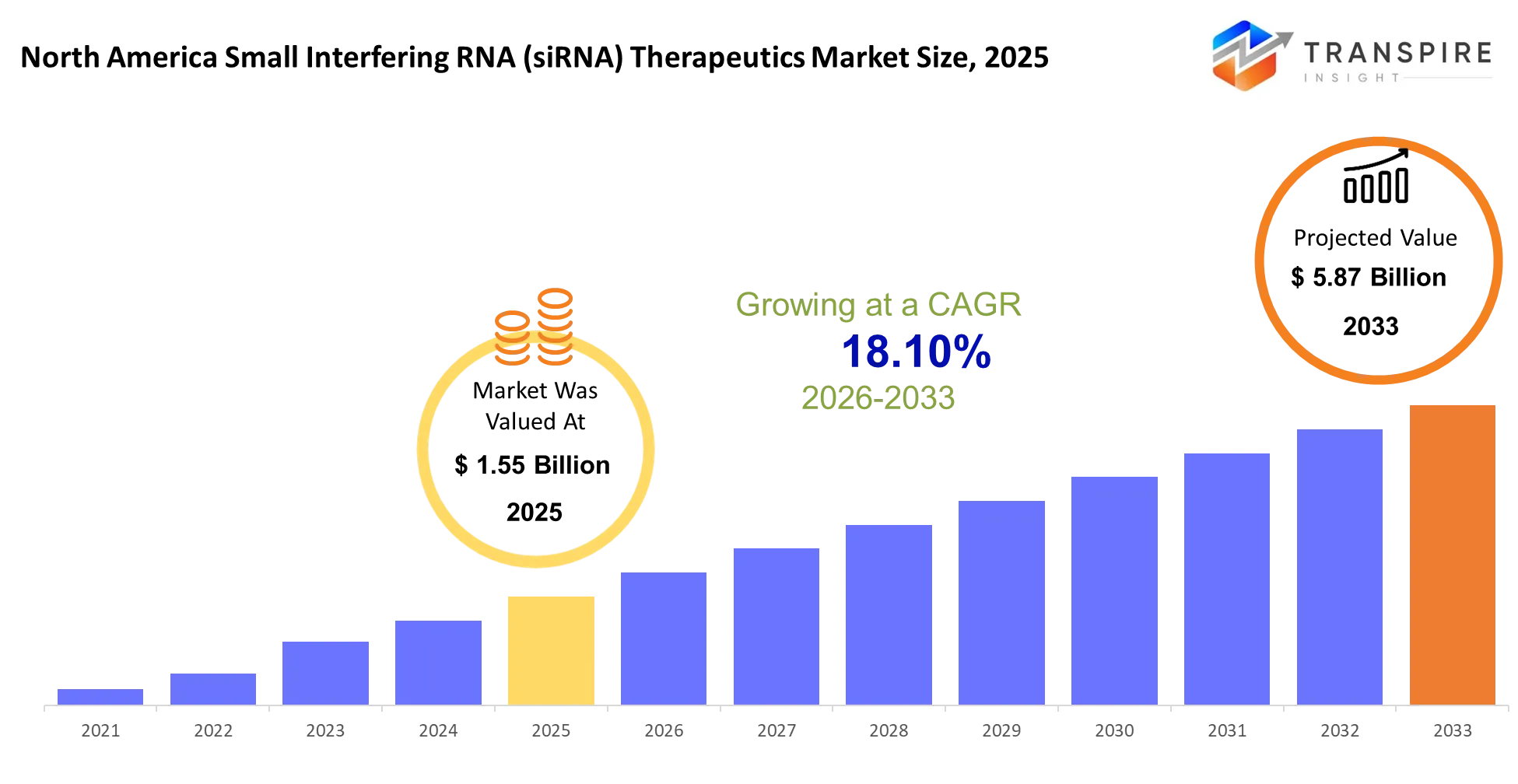
- North America Small Interfering RNA (siRNA) Therapeutics Market Size 2025: USD 1.55 Billion
- North America Small Interfering RNA (siRNA) Therapeutics Market Size 2033: USD 5.87 Billion
- North America Small Interfering RNA (siRNA) Therapeutics Market CAGR: 18.10%
- North America Small Interfering RNA (siRNA) Therapeutics Market Segments: By Product Type (Lipid Nanoparticle Therapeutics, Conjugate Therapeutics, Viral Vector Therapeutics, Others), By Application (Genetic Disorders, Oncology, Cardiovascular Diseases, Infectious Diseases, Others), By End User (Hospitals, Research Institutes, Biotechnology Companies, Pharmaceutical Companies, Others), By Delivery Technology (Nanoparticle Delivery, Peptide Delivery, Liposomal Delivery, Others).
To learn more about this report,  Download Free Sample Report
North America Small Interfering RNA (siRNA) Therapeutics Market Summary:
The North America Small Interfering RNA (siRNA) Therapeutics Market size is estimated at USD 1.55 Billion in 2025 and is anticipated to reach USD 5.87 Billion by 2033, growing at a CAGR of 18.10% from 2026 to 2033. North America’s small interfering RNA therapeutics market is kinda moving away from that niche genetic intervention phase, and more into mainstream precision medicine. I mean in practice, siRNA therapies turn off trouble-making genes before the harmful proteins even get a chance to form, which makes them especially useful for liver disorders, rare genetic diseases, cardiometabolic issues, and also oncology pipelines where conventional drugs sometimes lack that tight specificity. Over the last five years, the market has gone from proof-of-concept development into platform commercialization, helped along by better lipid nanoparticle delivery systems and improved RNA stability, this reduced those earlier worries about targeting efficiency and toxicity.
The COVID-19 pandemic basically served as a big catalyst, because it pushed investment in RNA manufacturing infrastructure, helped build regulatory comfort with nucleic acid therapeutics, and encouraged partnerships between biotech companies and larger pharma groups. Now that same infrastructure supports quicker clinical translation of siRNA candidates. At the same time, as payers and providers increasingly favor targeted therapies with clear, measurable outcomes, adoption is widening beyond orphan indications into broader chronic disease categories, so treatment durations get longer and the revenue models become more scalable across North America’s specialty therapeutics ecosystem.
North America Small Interfering RNA (siRNA) Therapeutics Market Key Market Insights
- In 2025, the United States basically dominated the North America Small Interfering RNA (siRNA) Therapeutics Market , holding more than 82% share and this happened mainly because of advanced biotech infrastructure.
- Canada, meanwhile looks like the fastest-growing regional market through 2032 , with momentum coming from expanding RNA research funding , plus strategic investments in clinical trials , not just a small push but a real ramp.
- There was also strong FDA support for RNA based therapeutics, and that kind of backing helped commercialization timelines speed up and made market entry opportunities more realistic across North America.
- After 2021, academic-industry collaborations increased quite a bit, which boosted regional innovation capacity, and also helped strengthen clinical development pipelines.
- When it comes to delivery , lipid nanoparticle delivery systems accounted for nearly 48% industry share in 2025, largely due to better gene-targeting efficiency , and improved therapeutic stability.
- For targeting , hepatic-directed siRNA therapeutics stayed near the top as the second-largest segment, because liver-focused delivery technologies had higher clinical success rates.
- In terms of therapy focus, oncology focused siRNA therapeutics are projected as the fastest-growing segment between 2026 and 2032 , driven by demand for personalized cancer treatment approaches.
- Rare disease therapeutics also gained solid market traction , as orphan drug incentives improved reimbursement and supported faster regulatory approvals.
- As for application categories, genetic liver disorders led the demand side with roughly 41% market share in 2025, mostly tied to broad commercial adoption of RNA therapeutics.
- Cardiometabolic disease applications emerged as the quickest mover in the therapeutic landscape after positive late-stage clinical trial results started stacking up.
- Finally , oncology applications showed rising pipeline activity as pharmaceutical companies expanded precision medicine , and leaned more into biomarker driven treatment strategies.
What are the Key Drivers, Restraints, and Opportunities in the North America Small Interfering RNA (siRNA) Therapeutics Market?
The strongest force behind the North America Small Interfering RNA (siRNA) Therapeutics Market is basically the push to commercialize clinically validated RNA interference therapies for long-term, and also rare, diseases. That drive got stronger after regulatory approvals of liver focused siRNA medicines showed real world long-term benefit, with fewer dosing cycles, compared with older biologics. Meanwhile, progress in lipid nanoparticle platforms plus GalNAc conjugate delivery approaches improved how precisely the genetic material is aimed , and it also helped reduce off target or systemic toxicity. All of this cuts down clinical disappointment risk and it nudges big pharmaceutical companies to grow their licensing arrangements and keep putting more money into their pipelines. And as more treatments start moving beyond ultra rare only uses into cardiometabolic and oncology spaces, overall treatment volumes are rising plus reimbursement coverage widens , which then supports revenue expansion in a pretty direct way.
Still, manufacturing complexity stays the most solid structural obstacle. siRNA therapeutics depend on specialized synthesis, careful purification, cold-chain handling, and delivery optimization skills that can’t just be ramped up fast using conventional pharmaceutical setups. When large scale manufacturing is tight, production expenses rise and launch timelines stretch out. On top of that, regulatory validation for RNA delivery systems is extremely strict, since even small formulation tweaks can shift therapeutic performance. So these limits slow adoption across price sensitive healthcare environments and they curb market penetration in the near term.
The next growth phase is probably going to come from extrahepatic delivery approaches, aiming at tissues beyond the liver, kind of like how things are being redirected now. Firms building nanoparticle platforms that can deliver siRNA therapies to the lung, the muscle, and the central nervous system, are pulling in a lot of venture capital and also more strategic partnerships lately. This change may end up unlocking bigger scale oncology and neurodegenerative disease uses across North America.
What Has the Impact of Artificial Intelligence Been on the North America Small Interfering RNA (siRNA) Therapeutics Market?
Artificial intelligence is, pretty much reshaping the North America Small Interfering RNA (siRNA) Therapeutics Market , by speeding up target discovery, tweaking molecule design, and making clinical development feel more efficient. In practice, biotechnology players are leaning on machine learning models to comb through genomic datasets and spot disease causing gene sequences with a bit more precision than older screening approaches. AI driven platforms can now estimate siRNA binding efficiency, flag potential off target effects, and outline toxicity profiles prior to lab validation , so early-stage development can shrink by several months.
On top of that, pharmaceutical manufacturers are also automating RNA synthesis workflows, quality monitoring and even batch analytics using digital manufacturing systems . That tends to lift production consistency while cutting down material waste. Meanwhile, predictive analytics tools are showing up more often to improve clinical trial enrollment choices, and to forecast how patients might respond, based on genetic biomarkers. In the end , these features can raise trial success rates and help companies place their bets on candidates with higher probability.
There’s also the cloud angle. Advanced cloud based bioinformatics platforms help research institutes and commercial developers collaborate more smoothly , which supports quicker data sharing and easier regulatory documentation management. Operationally, all of this is lowering discovery costs, boosting manufacturing yield, and potentially shortening the path to commercialization for RNA interference therapies. Still, AI adoption has a major snag because high quality genomic and clinical datasets stay scattered across different healthcare systems. When training data is limited or not standardized, predictive accuracy can drop , especially for rare diseases or patient groups that are more diverse.
Key Market Trends
- Since 2021, pharmaceutical companies kinda shifted their investment from monoclonal antibodies to RNA interference platforms, with longer dosing intervals and also higher target specificity… or at least that’s how it’s been described.
- Alnylam Pharmaceuticals expanded commercial adoption after several siRNA therapy approvals basically confirmed long term efficacy for chronic liver issues and genetic disorders.
- Between 2020 and 2025, lipid nanoparticle and GalNAc delivery technologies improved tissue targeting in a noticeable way, and at the same time reduced systemic toxicity concerns— fairly important.
- Major drug manufacturers ramped up RNA manufacturing investment after COVID-19, because it made vulnerabilities obvious in outsourced biologics and active pharmaceutical ingredient supply chains.
- AI-driven genomic screening platforms cut siRNA candidate identification timelines by nearly 30% compared with more traditional discovery workflows, especially after 2022 when teams sped things up.
- Oncology pipelines grew fast once developers started going after previously undruggable genes tied to resistant solid tumor progression , and metastasis too.
- Regulatory agencies introduced more defined RNA therapeutic evaluation pathways after 2021 , which in practice accelerated clinical trial approvals for precision gene silencing therapies.
- Contract manufacturing organizations also expanded nucleic acid production capacity across North America, as demand for scalable siRNA synthesis infrastructure kept increasing.
- Developers increasingly prioritized extrahepatic delivery platforms after 2023, trying to unlock commercial opportunities in neurological , pulmonary and muscle related diseases.
North America Small Interfering RNA (siRNA) Therapeutics Market Segmentation
By Product Type
Lipid nanoparticle therapeutics still basically hold the leading position in the product type segment because pharmaceutical companies keep prioritizing delivery efficiency, scalability and clinical reliability . The commercial pull of liver-targeted RNA therapies has strengthened confidence in lipid based formulations and, sort of, encouraged wider investment across cardiometabolic and rare disease pipelines. Conjugate therapeutics also keep solid market traction , mainly because of better tissue specificity and fewer dosing moments, especially via GalNAc targeting systems.
Viral vector therapeutics take up a smaller share because manufacturing complexity , immunogenicity concerns and more stringent regulatory scrutiny continue to throttle big scale adoption. Other therapeutic formats are still mostly experimental but they attract venture capital for extrahepatic work . The competitive focus is shifting more toward platform differentiation instead of only single product development. Manufacturers are pouring money into formulation optimization and intellectual property protection to lock in long term licensing revenue. Where the market lands next will depend on delivery precision , production scalability and the capability to broaden therapeutic applications beyond liver associated disorders.
By Application
Genetic disorders kind of represent the dominant use segment, mostly because early approvals showed measurable efficacy in rare inherited liver conditions , and the biomarker results looked very clear. Then there was strong reimbursement backing and those orphan drug incentives, which really helped the rollout across specialty treatment centers. Oncology use is also starting to ramp up fast, since developers are going after gene pathways that used to be hard to reach , especially those linked to tumor resistance and metastatic progression.
Cardiovascular programs are growing too, partly because more clinical data supports cholesterol regulation via RNA interference rather than anything more traditional. Infectious disease applications still stay smaller, but they got renewed attention after pandemic driven investment in RNA research infrastructure. There are other areas as well, like neurological disorders and autoimmune diseases, and they continue to move forward through early stage clinical studies , bit by bit. Overall, demand patterns are shifting toward treatments that have longer lasting effects and less frequent dosing compared with classic biologics. Investors are putting more capital into programs that can serve wider patient groups and still scale well for reimbursement, while providers are more focused on options that come with measurable long-term clinical outcomes , and safety profiles that are easier to manage.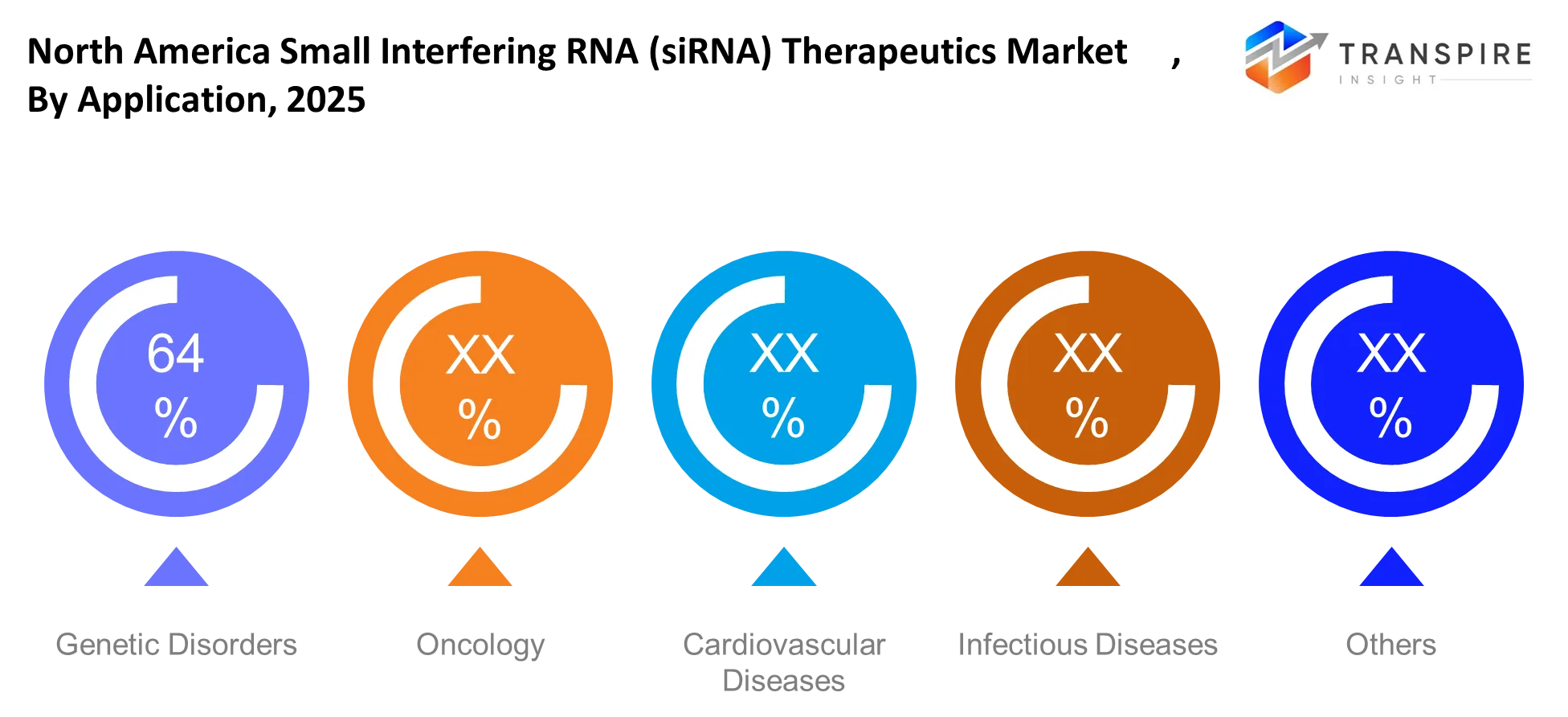
To learn more about this report, Download Free Sample Report
By End-User
Pharmaceutical companies end up with the biggest end-user share mostly because, you know, big scale clinical development , plus regulatory navigation and then commercialization, all of that really needs major financial and operational resources. Biotechnology companies still carry a pretty influential weight as well, since they’re often pushing innovation driven pipeline development and they also do strategic licensing deals with multinational drug manufacturers. Hospitals stay crucial adoption centers, because advanced RNA therapies generally need specialized administration , plus patient monitoring and even genomic testing infrastructure.
Research institutes also show up strong in early stage discovery and translational medicine efforts, especially when they team up with government supported genomic research programs.
Then you have other end users, like contract research organizations and contract manufacturing providers, and they keep expanding because outsourcing models keep getting more traction across the RNA therapeutics supply chain. Operational demand is starting to tilt toward integrated development ecosystems, where manufacturing , analytics , and clinical capabilities get bundled inside one partnership or, sometimes, one long term collaboration. Looking ahead, competition will probably hinge on collaborative networks that can speed up regulatory approvals, lower development costs, and make access easier to that specialized genomic medicine infrastructure across North America.
By Delivery Technology
Nanoparticle delivery technology sort of dominates the delivery space , because most current commercial siRNA therapies rely a lot on stable intracellular transport and also on targeted tissue penetration. Liposomal delivery systems still keep a strong foothold, mainly because people already know how to manufacture them, and they fit relatively well with the existing pharmaceutical infrastructure, so there is less friction overall. Peptide delivery technologies are picking up speed though , since developers want more exact tissue targeting especially for extrahepatic uses, including muscle , lung , and central nervous system disorders.
A bunch of other experimental options—like polymer based delivery or hybrid systems — are still in motion , but they run into hurdles around toxicity, biodistribution , and the ability to reproduce results consistently at scale. What competition is really turning into is a constant tradeoff , trying to maintain therapeutic potency while also lowering immune response and improving dosing convenience at the same time.
And demand keeps coming, from both biotechnology firms and pharmaceutical manufacturers, and it keeps shifting toward multifunctional delivery platforms that can support multiple therapeutic indications, using adaptable formulation strategies. So , future market leadership will probably go to companies that can pull off efficient extrahepatic targeting while also keeping scalable production economics and staying aligned with regulatory consistency across large patient populations.
What are the Key Use Cases Driving the North America Small Interfering RNA (siRNA) Therapeutics Market?
Genetic liver disorders still feel like the main use case pushing siRNA therapeutic adoption across North America, and honestly everyone seems to be watching that. Specialty hospitals and big pharmaceutical companies really prioritize these kinds of treatments , mainly because liver-targeted delivery systems bring strong therapeutic precision. They also tend to need lower dosing frequency and there are measurable biomarker outcomes, which helps.
Meanwhile cardiovascular disease applications are growing fast, especially for cholesterol management therapies that get rolled out through large healthcare networks, and the specialty treatment centers too. On the oncology front , RNA therapies are getting more attention as biotechnology companies work on targeted treatments for tumors that won’t respond and for metastatic cancers.
Other emerging use cases are starting to show up, like neurological and pulmonary disease therapies. This is helped by improvements in extrahepatic delivery technologies, even though the whole story is still evolving. Research institutes and early-stage biotech firms are actively testing RNA interference treatments for Alzheimer’s disease, muscular disorders , and chronic respiratory conditions. There’s also a sense that the long-term commercial potential looks pretty solid.
|
Report Metrics |
Details |
|
Market size value in 2025 |
USD 1.55 Billion |
|
Market size value in 2026 |
USD 1.83 Billion |
|
Revenue forecast in 2033 |
USD 5.87 Billion |
|
Growth rate |
CAGR of 18.10% from 2026 to 2033 |
|
Base year |
2025 |
|
Historical data |
2021 - 2024 |
|
Forecast period |
2026 - 2033 |
|
Report coverage |
Revenue forecast, competitive landscape, growth factors, and trends |
|
Country scope |
North America (Canada, The United States, and Mexico) |
|
Key company profiled |
Alnylam Pharmaceuticals, Arrowhead Pharmaceuticals, Dicerna Pharmaceuticals, Silence Therapeutics, Novo Nordisk, Ionis Pharmaceuticals, Moderna, Sanofi, Pfizer, Roche, Novartis, AstraZeneca, Arbutus Biopharma, Sirnaomics, OliX Pharmaceuticals |
|
Customization scope |
Free report customization (country, regional & segment scope). Avail customized purchase options to meet your exact research needs. |
|
Report Segmentation |
By Product Type (Lipid Nanoparticle Therapeutics, Conjugate Therapeutics, Viral Vector Therapeutics, Others), By Application (Genetic Disorders, Oncology, Cardiovascular Diseases, Infectious Diseases, Others), By End User (Hospitals, Research Institutes, Biotechnology Companies, Pharmaceutical Companies, Others), By Delivery Technology (Nanoparticle Delivery, Peptide Delivery, Liposomal Delivery, Others) |
Which Regions are Driving the North America Small Interfering RNA (siRNA) Therapeutics Market Growth?
The United States keeps leading the North America Small Interfering RNA (siRNA) Therapeutics Market, mostly because its biotechnology ecosystem is pretty strong, its genomic research setup is advanced , and the regulatory system feels supportive overall. You also have major pharmaceutical companies around, plus specialized RNA manufacturing facilities, and there’s a lot of clinical trial activity going on, which keeps pushing commercialization forward. On top of that, federal funding programs and the FDA being familiar with RNA based therapeutics have lowered some of the approval uncertainty for developers. And the reimbursement capability across specialty care networks is solid too, so those expensive precision therapies can be adopted longer term without too much friction.
Canada sits as the second largest regional contributor, but the growth curve looks a little different, more about research steadiness and how public healthcare gets coordinated. The country continues to lean on government backed innovation programs and university led genomic medicine initiatives, which help support early stage RNA therapeutic development. Compared with the United States, Canada tends to favor collaborative clinical research and long term healthcare integration, instead of trying to move at the fastest commercialization pace. At the same time, consistent investment in biotechnology infrastructure , plus cross-border pharmaceutical partnerships, makes Canada a dependable contributor for regional revenue generation.
Mexico is starting to look like the fastest growing regional market , and a big driver is that more pharmaceutical manufacturing investment is arriving while biotechnology know-how keeps improving. Since around 2023, there has also been modernization in clinical research infrastructure, and more enrollment in multinational drug trials which opened up additional opportunities for RNA therapy developers. Because of this, international pharmaceutical companies are increasingly reviewing Mexico for cost efficient research operations, and for diversifying regional supply chain options.
Who are the Key Players in the North America Small Interfering RNA (siRNA) Therapeutics Market and How Do They Compete?
The North America Small Interfering RNA, ( siRNA ) Therapeutics Market still feels moderately consolidated, because only a handful of companies really steer the clinically proven delivery approaches and the large-scale RNA production abilities. What’s changing though is that competition is moving away from pure availability, and more toward delivery precision, who owns which intellectual property and frankly, the capability to broaden therapies past liver-only use. Big pharmaceutical players keep protecting their slice of the pie via licensing arrangements and strategic acquisitions, while smaller biotech firms seem to nudge the market forward with more specialized delivery tools, and even AI-supported drug discovery patterns. Regulatory know-how and scalable manufacturing infrastructure are also acting like sturdier walls than price, alone.
Alnylam Pharmaceuticals stands out using its own GalNAc delivery approach ,which enables very targeted liver programs and in turn supports reduced dosing frequency. They keep pushing forward by teaming up with larger pharmaceutical manufacturers, aiming to strengthen commercialization, and also to advance late stage clinical development. On the other hand, Arrowhead Pharmaceuticals zeroes in on tissue specific RNA interference platforms, targeted toward pulmonary, cardiovascular, and hepatic diseases. That focus gives Arrowhead a wider application surface than a lot of rivals have. Their work on extrahepatic delivery systems also suggests a path for expanding into bigger chronic disease segments, not just the liver lane.
Pfizer leans on huge clinical infrastructure and worldwide regulatory expertise , so it can push RNA therapeutic adoption into wider precision medicine portfolios more quickly. Novo Nordisk has gone pretty hard expanding into RNA -driven cardiometabolic treatments, using licensing plus acquisition maneuvers aimed at long-duration treatment markets. Dicerna Pharmaceuticals, on their side, carved out a competitive edge via modular GalXC delivery tech, which enables configurable gene-silencing use cases across several disease areas, and that basically boosts partnership appeal for bigger pharmaceutical companies who want flexible RNA platforms.
Company List
- Alnylam Pharmaceuticals
- Arrowhead Pharmaceuticals
- Dicerna Pharmaceuticals
- Silence Therapeutics
- Novo Nordisk
- Ionis Pharmaceuticals
- Moderna
- Sanofi
- Pfizer
- Roche
- Novartis
- AstraZeneca
- Arbutus Biopharma
- Sirnaomics
- OliX Pharmaceuticals
Recent Development News
In May 2026, Arrowhead Pharmaceuticals Expands RNAi Portfolio Through Madrigal Licensing Agreement: Arrowhead Pharmaceuticals announced an exclusive worldwide licensing agreement with Madrigal Pharmaceuticals for ARO-PNPLA3, its clinical-stage RNAi therapeutic targeting metabolic dysfunction-associated steatohepatitis (MASH). The agreement strengthened Arrowhead’s liver disease pipeline and expanded commercialization opportunities for its RNAi platform.
Source: https://firstwordpharma.com
In May 2026, Silence Therapeutics Provided 2026 Business Update and Clinical Progress: Silence Therapeutics reported first-quarter financial results showing reduced R&D spending as it completed Phase 3 readiness activities for zerlasiran. The company also confirmed continued progress for divesiran, with Phase 2 clinical data expected later in 2026, highlighting ongoing investment in cardiovascular-focused siRNA therapies.
Source: https://www.stocktitan.net
What Strategic Insights Define the Future of the North America Small Interfering RNA (siRNA) Therapeutics Market?
The North America Small Interfering RNA (siRNA) Therapeutics Market is, kind of, inching toward wider chronic disease treatment lanes, especially cardiometabolic, oncology, and neurological conditions. The core driver is that extrahepatic delivery approaches are improving quickly , so RNA interference isn’t only about liver focused use anymore. In the next five to seven years, the real edge is going to hinge less on whether one drug works perfectly, and more on scalable delivery platforms, manufacturing being built in rather than bolted on, and AI assisted genomic selection or targeting features.
There’s also a risk people don’t talk about enough, which is how much the market can cluster around a small set of proprietary delivery systems plus a handful of raw material providers. If most players lean heavily on specialized lipid components and patented conjugate methods, that can bring pricing pressure, licensing delays or bottlenecks, and supply issues when commercialization ramps up. Even so, there are opportunities coming together, particularly for central nervous system delivery platforms where newer nanoparticle engineering is helping molecules cross the blood brain barrier more effectively, which matters for neurodegenerative therapy areas.
Market players should move early on partnerships with delivery technology teams and start investing in adaptable RNA manufacturing capabilities, so they can lower the long term dependence on outside supply networks and those licensing arrangements.
North America Small Interfering RNA (siRNA) Therapeutics Market Report Segmentation
By Product Type
- Lipid Nanoparticle Therapeutics
- Conjugate Therapeutics
- Viral Vector Therapeutics
- Others
By Application
- Genetic Disorders
- Oncology
- Cardiovascular Diseases
- Infectious Diseases
- Others
By End User
- Hospitals
- Research Institutes
- Biotechnology Companies
- Pharmaceutical Companies
- Others
By Delivery Technology
- Nanoparticle Delivery
- Peptide Delivery
- Liposomal Delivery
- Others
Frequently Asked Questions
Find quick answers to common questions.
The Approximate North America Small Interfering RNA (siRNA) Therapeutics Market size for the Market will be USD 5.87 Billion in 2033.
The key Segments of the North America Small Interfering RNA (siRNA) Therapeutics Market are By Product Type (Lipid Nanoparticle Therapeutics, Conjugate Therapeutics, Viral Vector Therapeutics, Others), By Application (Genetic Disorders, Oncology, Cardiovascular Diseases, Infectious Diseases, Others), By End User (Hospitals, Research Institutes, Biotechnology Companies, Pharmaceutical Companies, Others), By Delivery Technology (Nanoparticle Delivery, Peptide Delivery, Liposomal Delivery, Others).
Major Players in the North America Small Interfering RNA (siRNA) Therapeutics Market are Alnylam Pharmaceuticals, Arrowhead Pharmaceuticals, Dicerna Pharmaceuticals, Silence Therapeutics, Novo Nordisk, Ionis Pharmaceuticals, Moderna, Sanofi, Pfizer, Roche, Novartis, AstraZeneca, Arbutus Biopharma, Sirnaomics, OliX Pharmaceuticals.
The Current Market size of the North America Small Interfering RNA (siRNA) Therapeutics Market is USD 1.55 Billion in 2025.
The North America Small Interfering RNA (siRNA) Therapeutics Market CAGR is 18.10%.
- Alnylam Pharmaceuticals
- Arrowhead Pharmaceuticals
- Dicerna Pharmaceuticals
- Silence Therapeutics
- Novo Nordisk
- Ionis Pharmaceuticals
- Moderna
- Sanofi
- Pfizer
- Roche
- Novartis
- AstraZeneca
- Arbutus Biopharma
- Sirnaomics
- OliX Pharmaceuticals
About the Authors

Pankaj Ghogare Patil
I am Pankaj Ghogare Patil, a Senior Research Analyst at Transpire Insight, specializing in the Pharmaceutical, Chemicals & Materials, Healthcare IT, and Biotechnology industry. My expertise lies in conducting comprehensive market research, analyzing industry trends, evaluating competitive landscapes, and translating complex data into actionable insights. At Transpire Insight, I closely follow emerging technologies, regulatory developments, and market innovations to create accurate, well-researched, and informative content that helps businesses and professionals make informed decisions. I am committed to producing credible, evidence-based articles that reflect industry best practices while making technical topics accessible and valuable for a broad audience.

Chakradhar Khansole
Chakradhar serves as the Research Director at Transpire Insight, bringing over 8 years of experience in technology, innovation, and strategic market intelligence. He specializes in transforming complex market data into actionable business insights that enable organizations to make informed, growth-oriented decisions. Recognized for his strategic vision and analytical expertise, Chakradhar leads high-impact research initiatives, delivering comprehensive market assessments, competitive intelligence, and forward-looking industry analysis.
Recently Published Reports
-
Jul 2026
Alopecia Treatment Market
Alopecia Treatment Market Size, Share & Analysis Report By Disease Type (Alopecia Areata, Cicatricial Alopecia, Traction Alopecia, Alopecia Totalis, Androgenetic Alopecia, Alopecia Universalis, and Other Disease Types), By Treatment Type (Topical Treatments, Oral Medications, Injectable Therapies, and Hair Transplantation), By Gender (Male, and Female), By Distribution Channel (Hospitals and Clinics, Retail Pharmacies, and Online Retailers), and Geography (North America, Europe, Asia-Pacific, Middle East and Africa, South and Central America), 2021 - 2031
-
Jul 2026
Medical Ultrasound Probe Market
Medical Ultrasound Probe Market Size, Share & Analysis Report By Type (Linear Type, Convex Type, Endocavitary Probe, Phased Array/Cardiac Probe, Transesophageal (TEE) Probe, and Others), By Application (Ophthalmology, Cardiology, Musculoskeletal, Oncology, Obstetrics & Gynecology, General Imaging, and Others), By End User (Hospitals & Clinics, Diagnostic Centers, Ambulatory Surgical Centers, and Others), and Geography (North America, Europe, Asia-Pacific, Middle East and Africa, South and Central America), 2021 – 2031
-
May 2026
Biosimilars Market
Biosimilars Market By Product Type (Monoclonal Antibodies, Recombinant Hormones, Erythropoietin, G-CSF, Others), By Indication (Oncology, Autoimmune Diseases, Blood Disorders, Diabetes, Others), By Manufacturing Type (In-House Manufacturing, Contract Manufacturing), By Distribution Channel (Hospital Pharmacies, Retail Pharmacies, Online Pharmacies), By Industry Analysis, Size, Share, Growth, Trends, and Forecasts 2021-2033
-
Apr 2026
Gastrointestinal Endoscopy Market
Gastrointestinal Endoscopy Market By Type (Rigid Gastrointestinal Endoscope, Flexible Gastrointestinal Endoscopes, Disposable Gastrointestinal Endoscope), By Procedure Type (Colonoscopy, Gastroscopy, Duodenoscopy, Enteroscopy, Flexible Sigmoidoscopy, Others), By Application (Diagnosis, Treatment), By End-Users (Hospitals, Ambulatory Surgical Centers, Specialty Clinics, Laboratories, Others), By Industry Analysis, Size, Share, Growth, Trends, and Forecasts 2021-2033