
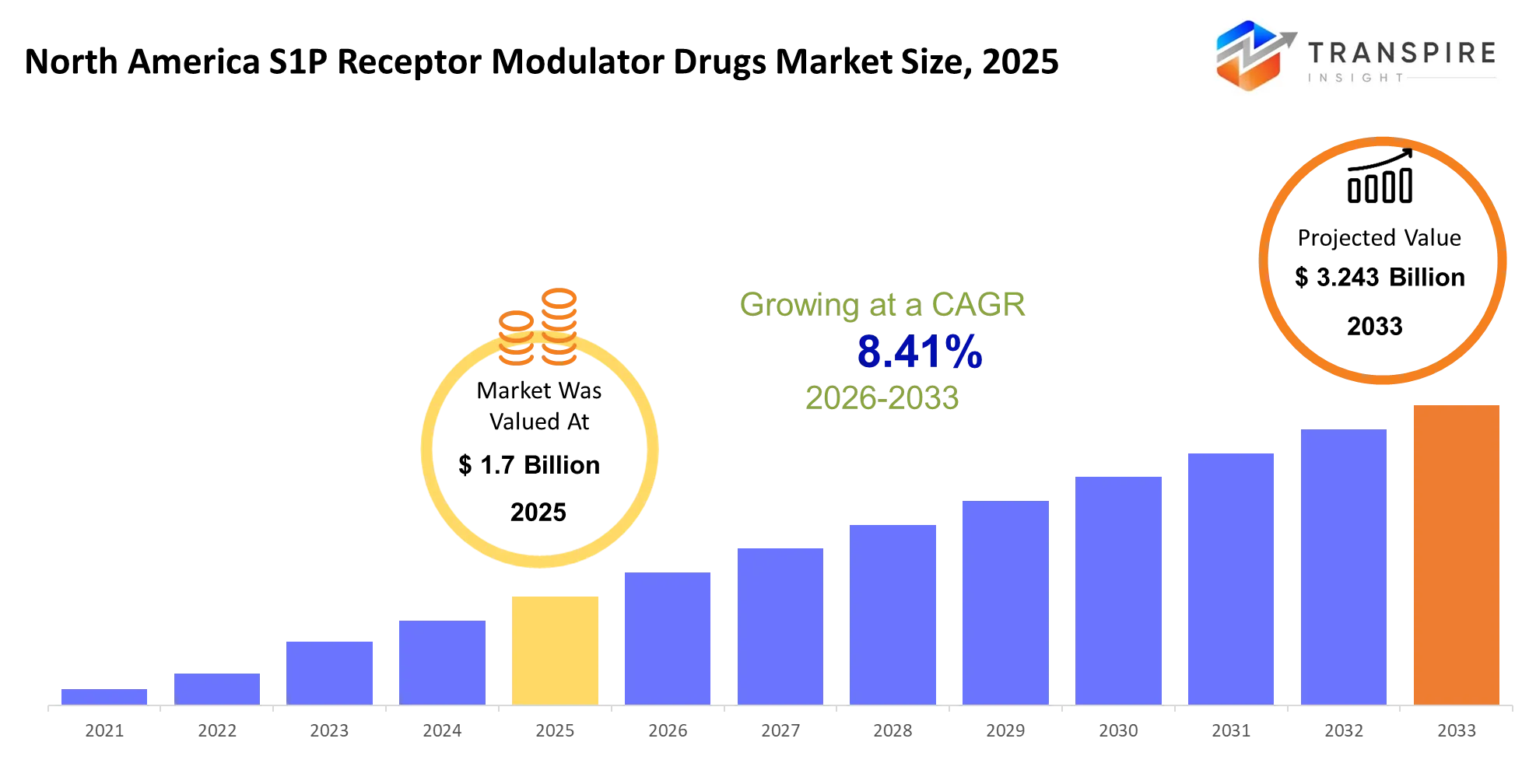
North America S1P Receptor Modulator Drugs Market Size & Forecast:
- North America S1P Receptor Modulator Drugs Market Size 2025: USD 1.7 Billion
- North America S1P Receptor Modulator Drugs Market Size 2033: USD 3.243 Billion
- North America S1P Receptor Modulator Drugs Market CAGR: 8.41%
- North America S1P Receptor Modulator Drugs Market Segments: By Drug Type (Fingolimod, Siponimod, Ozanimod, Ponesimod, Others), By Application (Multiple Sclerosis, Ulcerative Colitis, Crohn’s Disease, Psoriasis, Others), By Distribution Channel (Hospital Pharmacies, Retail Pharmacies, Online Pharmacies, Others), By End User (Hospitals, Neurology Clinics, Specialty Clinics, Others).
To learn more about this report,  Download Free Sample Report
North America S1P Receptor Modulator Drugs Market Summary:
The North America S1P Receptor Modulator Drugs Market size is estimated at USD 1.7 Billion in 2025 and is anticipated to reach USD 3.243 Billion by 2033, growing at a CAGR of 8.41% from 2026 to 2033. The North America S1P receptor modulator drugs market sort of tackles a practical clinical issue in autoimmune disease care, by letting physicians steer immune-driven nerve and tissue harm, without just blanket suppressing the entire immune system. In the real world these treatments are getting more and more attention for disorders like multiple sclerosis , and ulcerative colitis too, where steady disease control over time has a direct effect on a patient’s walking ability, how often relapse happens, the number of hospital stays, and overall healthcare expenses.
Over the last 3–5 years, the market has slowly moved away from the earlier oral immunomodulator wave, and toward more selective S1P receptor targeting. That shift helps with safety monitoring, and it also makes clinicians feel more comfortable with ongoing prescribing. This momentum sort of picked up after pandemic-era healthcare systems started favoring outpatient friendly options, because they lower infusion dependence and reduce the need for frequent inpatient visits. Around the same time, regulatory clearances for newer molecules , plus label expansions , broadened the group of patients who can actually qualify for treatment.
Right now the growth you see ties into a wider change in neurological and autoimmune healthcare practices. Earlier diagnosis, longer course of therapy, and payer comfort with high-value oral biologic-like alternatives are all supporting stronger prescription persistence. And that, in turn, helps protect recurring drug revenues and opens lifecycle extension possibilities for manufacturers.
Key Market Insights
- In 2025 the United States basically dominated the North America S1P Receptor Modulator Drugs Market, with something like nearly 82% market share, largely because the country has advanced specialty care infrastructure and that kind of supports the whole thing.
- Canada meanwhile looks like the fastest-growing regional market through 2032, driven by expanded reimbursement frameworks, plus neurological disease management investments that keep stacking up.
- Diagnosis rates are climbing, and treatment is starting earlier too , which keeps pushing the North America S1P receptor modulator drugs industry size, along with prescription volumes that keep rising.
- Also cross-border clinical research collaborations are speeding up commercialization timelines, while at the same time improving market penetration across North American healthcare systems.
- When you break it down by therapy, multiple sclerosis therapeutics brought in over 68% revenue share in 2025, so they stayed the leading product segment across the North America S1P receptor modulator drugs industry.
- Ulcerative colitis therapies came in second, mostly because gastroenterology specialists are adopting targeted oral immunomodulators more and more.
- In terms of type, selective S1P1 receptor modulators are expected to grow fastest between 2026 and 2032, mainly due to improved cardiac safety profiles.
- And for delivery, oral drug formulations continue to dominate demand drivers, since healthcare providers are leaning toward outpatient-friendly, long-term chronic disease management solutions.
- On the application side, relapsing-remitting multiple sclerosis held around 61% application share in 2025, mainly from long-term treatment persistence, and relapse prevention benefits that patients actually stick with.
- Meanwhile autoimmune gastrointestinal disorders are the fastest-growing application category, as biologic alternatives gain wider clinical acceptance across specialty care networks.
What are the Key Drivers, Restraints, and Opportunities in the North America S1P Receptor Modulator Drugs Market?
The most powerful force pushing the North America S1P receptor modulator drugs market forward is basically the clinical shift toward oral targeted immunotherapy for long term chronic autoimmune diseases , especially multiple sclerosis and ulcerative colitis. This kind of transition really started to pick up speed after healthcare systems, kind of ramped up outpatient style delivery models following the COVID-19 pandemic. More and more clinicians seemed to prefer oral treatments that lower the need for infusion center visits, while also helping with longer term patient persistence. At the same time, newer S1P receptor modulators are showing better selectivity, plus a smaller overall burden for cardiac monitoring compared with older generation products. Together, these factors made neurologists and gastroenterologists feel more confident when prescribing, and that in turn boosts treatment duration, refills stickiness, and keeps specialty drug revenues coming back in recurring cycles.
Still , the market’s most stubborn structural hurdle remains the high cost and the operational complexity involved in managing immune modulation therapy over time. S1P receptor modulators come with a lot of upfront and ongoing requirements, like cardiovascular screening, liver function checks, and infection risk evaluation before and during dosing. Because of all that, payers and reimbursement processes face friction, so approvals can move slower across North America’s healthcare landscape. Also, since these safety elements are tightly connected to the immune regulation biology itself, manufacturers can’t really wipe them away quickly with just incremental product changes. The outcome is that therapy starts later, patient eligibility gets more limited, and commercial uptake ends up weaker in cost sensitive delivery networks.
A big future opportunity is in broadening S1P receptor modulation into wider inflammatory disease groups than neurology, kind of, you know. Pharmaceutical companies are starting to put more money into inflammatory bowel disease pipelines where oral targeted therapies can go up against injectable biologics. Also, improvements in biomarker-guided patient stratification and precision immunology are making the whole treatment-response prediction more accurate, especially in specialty care centers across the United States and Canada.
What Has the Impact of Artificial Intelligence Been on the North America S1P Receptor Modulator Drugs Market?
Artificial intelligence, and advanced digital technologies, are kinda reshaping the North America S1P receptor modulator drugs market, mainly by boosting clinical development efficiency, better patient monitoring, and supporting commercial decision making across autoimmune care. Pharmaceutical companies are, more and more often, leaning on AI powered analytics platforms so they can automate patient stratification during multiple sclerosis, and ulcerative colitis studies. In practice, machine learning models look through imaging data, biomarker profiles, and electronic health records in order to flag patients with a higher relapse risk or with a stronger, expected therapeutic effect. The net result is that recruitment timelines get shortened and trial precision tends to improve, especially for next generation selective S1P receptor modulators, where it really matters.
Drug manufacturers are also putting predictive algorithms to work for pharmacovigilance and longer-term safety tracking, not just the early stuff. AI systems can pick up early cardiovascular or liver related adverse event signals from real world patient datasets, so teams can intervene sooner and stay more aligned with regulatory expectations. Specialty care providers, who use digital adherence platforms, have said they see better prescription staying power, and less therapy discontinuation, which then supports recurring specialty pharmaceutical revenue in a very direct way.
On the commercial side, advanced analytics tools are making forecasting feel a bit sharper, by estimating regional prescribing tendencies, reimbursement approval movement, and specialty pharmacy demand patterns. With that, manufacturers can reduce inventory mismatches and tune their market access maneuvers more effectively.
Key Market Trends
- Since 2021, neurologists have kind of leaned more toward selective S1P1 modulators, which are said to cut down the whole first dose cardiac monitoring stuff and , also make it easier for outpatient treatment to actually get started.
- Between 2022 and 2025, Novartis and Bristol Myers Squibb rolled out broader lifecycle management moves, mainly via fresh indication studies and a bunch of label extension programs , that keep the products “in play” longer.
- After the post-pandemic slowdown, healthcare systems leaned less on infusion-centers, and by 2024 oral autoimmune therapies were showing up in more than 60% of newly started specialty neurology treatment plans, kind of steadily.
- Starting after 2023, specialty pharmacies started weaving in AI based adherence monitoring platforms more and more, and that has helped refill persistence along, while also lowering treatment discontinuation rates in chronic autoimmune groups.
- From 2022 through 2025, payers tightened their reimbursement reviews, so manufacturers were pushed to strengthen real-world evidence initiatives and also improve how long-term safety outcomes get reported, more formally.
- Overall, clinical pipelines moved away from broad immunosuppression toward receptor-selective modulation, and the next generation candidates are aiming for profiles that are meant to lower infection risk and cardiovascular risk, at the same time.
- In Canada , specialty drug reimbursement modernization picked up momentum after 2023, which created quicker commercial access pathways for autoimmune therapies compared with the older approval cycles.
- Adoption in gastroenterology jumped pretty clearly following ulcerative colitis label expansions, letting manufacturers diversify revenue away from multiple sclerosis dependence and into a wider set of uses.
- Since 2022, pharmaceutical companies also ramped up investments in biomarker led patient stratification, in an effort to sharpen treatment response prediction and, at the same time, make clinical trial recruitment more efficient.
North America S1P Receptor Modulator Drugs Market Segmentation
By Drug Type
Fingolimod keeps that lead spot in the drug type slice , mostly because it came out early, clinicians already know it pretty well, and the treatment results in relapsing multiple sclerosis are well established. Siponimod and Ozanimod have kept climbing in market presence, as healthcare providers lean toward receptor selectivity and also want less hassle with cardiovascular monitoring. Ponesimod meanwhile seems to be picking up momentum with specialists who like flexible dosing and a more distinct relapse approach, kind of tailored.
At the same time, generic entry pressure has started to alter pricing for the first-generation options, especially in established treatment centers across the United States . Demand is also shifting toward newer oral formulations , where efficacy is paired with long-term safety management. Pharmaceutical companies are putting a lot of money into selective S1P receptor pipelines too , trying to protect premium pricing and hold onto patent protected revenue longer. Looking ahead , competition is expected to get tougher around safer-by-design profiles, wider autoimmune uses, and patient targeting driven by biomarkers. All of this transition should, quite likely , spark more strategic licensing and stronger partnerships between biotech developers and specialty pharmaceutical firms.
By Application
Multiple sclerosis is still kind of the big application segment, because long term disease management means you usually need sustained immunomodulatory therapy , and ongoing relapse prevention that doesn’t really stop. Established clinical guidelines plus earlier neurological screening programs have made it easier to start treatment sooner across different specialty care networks, so initiation rates keep going up. Ulcerative colitis is showing up as the second biggest application area too, mostly after recent label expansions and because more gastroenterology teams are using oral targeted therapies rather than older options. Crohn’s disease and psoriasis applications stay relatively smaller, not because there’s no interest, but more because the clinical evidence base and regulatory approvals are still, in a sense, catching up.
That said, ongoing inflammatory bowel disease trials are pulling in a lot of pharmaceutical investment, since the market value looks strong if oral alternatives can replace injectable biologics. Demand growth also seems to match physician preference for outpatient friendly chronic disease management, the kind that supports adherence and reduces the need for infusions. Looking ahead, application expansion will hinge a lot on what late stage clinical outcomes show, whether payers reimburse in a supportive way, and whether manufacturers can prove better long term safety than existing immunosuppressive therapies.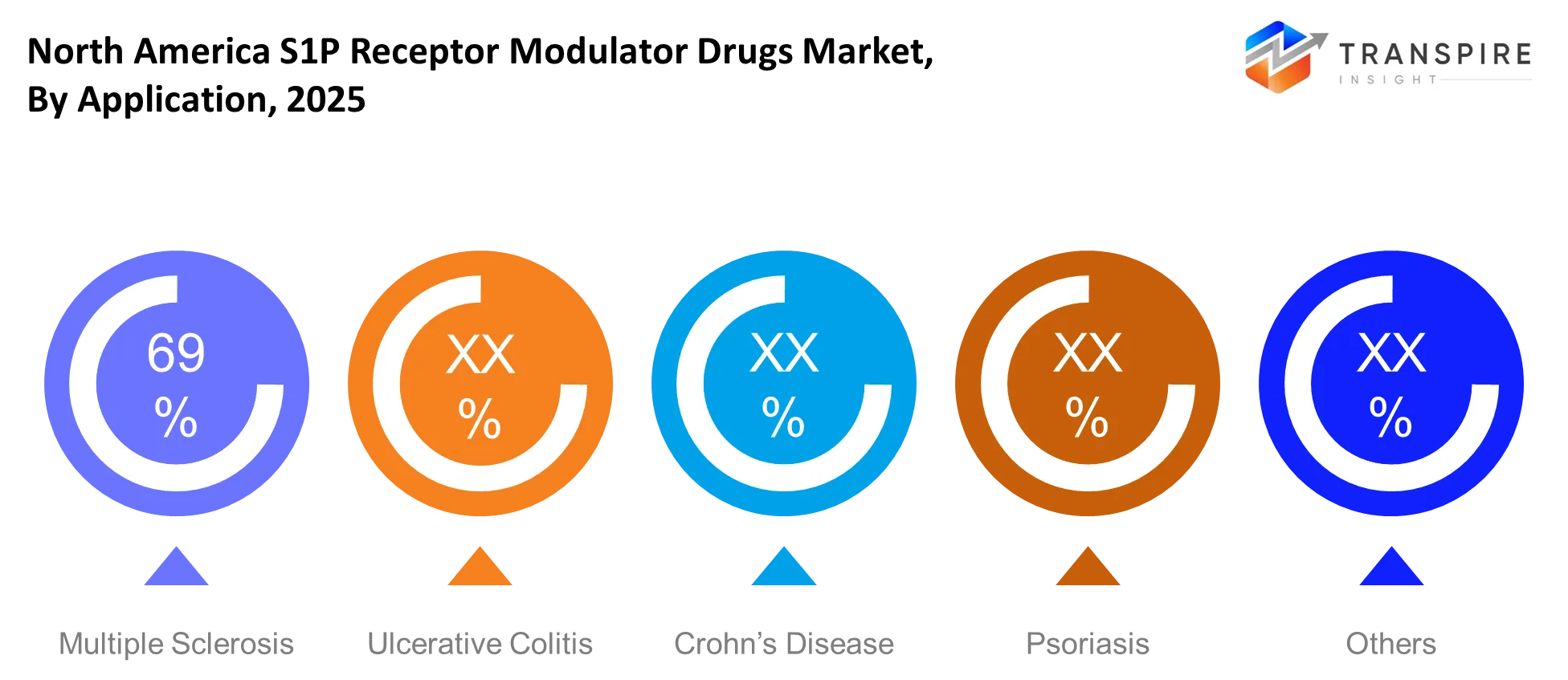
To learn more about this report, Download Free Sample Report
By Distribution Channel
Hospital pharmacies really dominate the distribution channel segment right now , partly because specialty autoimmune therapies need coordinated physician oversight, cardiovascular screening and reimbursement management before anything is dispensed. Retail pharmacies have been getting more involved as oral immunomodulators get more and more tangled into long term outpatient care pathways. Online pharmacies are also picking up speed, mainly from digital prescription management, home delivery muscle, and just a general push from patients who like the convenience based refill setup. Still, the whole specialty drug handling side and the insurance authorization steps keep acting like a brake on fast online growth.
Distribution behavior has shifted a lot since the pandemic, with healthcare systems leaning harder into remote patient monitoring and more decentralized medication fulfillment models. Big pharmacy networks are putting money into specialty care coordination platforms, aiming to improve adherence tracking and also, reduce therapy drop off. Looking ahead, channel development will probably revolve around digital integration, automated prescription verification, and payer linked dispensing systems. If that plays out, it could end up strengthening direct manufacturer relationships with specialty pharmacy providers , while also making recurring revenue visibility clearer across chronic autoimmune treatment programs.
By End-User
Hospitals still seem to be the main choice for the end user segment, mainly because managing complex autoimmune disease usually needs a multidisciplinary neurological checkup , imaging backup and long-term tracking of adverse events. Neurology clinics come in second, mostly driven by higher patient volumes and the growing adoption of outpatient disease modifying therapies. Specialty clinics that deal with autoimmune plus gastrointestinal disorders are showing quicker progress too, as healthcare providers push targeted immunology care beyond the usual hospital walls, and build more capability there. Smaller community based care providers keep running into obstacles around reimbursement systems , specialist availability, and access to more advanced diagnostic resources.
Since 2021 the way treatment is delivered has kept moving toward ambulatory specialty care, especially for people who are stable with chronic illness, where it’s more about continuous prescription handling than acute intervention. At the same time healthcare systems are putting more money into connected care networks that blend digital adherence monitoring, specialty pharmacy coordination, and even predictive patient management tools. For future expansion across end users, a lot will hinge on care decentralization momentum , growth in the specialist workforce, and whether outpatient centers can handle complicated long term safety monitoring requirements without delays or extra friction.
What are the Key Use Cases Driving the North America S1P Receptor Modulator Drugs Market?
Treatment for Multiple sclerosis still seems to be the main reason people go for S1P receptor modulator uptake across North America. In practice, neurology clinics along with specialty hospitals lean pretty hard on oral immunomodulators, to cut relapse frequency, postpone disability progression and generally keep outpatient disease management running more efficiently over the long run.
For Ulcerative colitis , the situation looks even more promising in gastroenterology specialty clinics that are actively looking for alternatives to injectable biologics and those infusion based approaches. Retail specialty pharmacies also end up helping a lot, mainly by making refills easier and by supporting better long term medication adherence for chronic autoimmune patients, which is kind of the real bottleneck sometimes.
Newer use cases are showing up too, like Crohn’s disease and certain inflammatory dermatology conditions where immune modulation that is more targeted could lower the need for wider, all over immunosuppressive therapies. Plus the continued work in precision immunology , along with biomarker driven treatment programs , is likely to speed up adoption later on inside advanced specialty care networks.
|
Report Metrics |
Details |
|
Market size value in 2025 |
USD 1.7 Billion |
|
Market size value in 2026 |
USD 1.843 Billion |
|
Revenue forecast in 2033 |
USD 3.243 Billion |
|
Growth rate |
CAGR of 8.41% from 2026 to 2033 |
|
Base year |
2025 |
|
Historical data |
2021 - 2024 |
|
Forecast period |
2026 - 2033 |
|
Report coverage |
Revenue forecast, competitive landscape, growth factors, and trends |
|
Country scope |
North America (Canada, The United States, and Mexico) |
|
Key company profiled |
Novartis, Bristol Myers Squibb, Janssen Pharmaceuticals, Pfizer, Roche, Teva Pharmaceuticals, Eli Lilly, Sanofi, Biogen, Merck & Co., AbbVie, AstraZeneca, Takeda Pharmaceutical, Horizon Therapeutics, Celgene |
|
Customization scope |
Free report customization (country, regional & segment scope). Avail customized purchase options to meet your exact research needs. |
|
Report Segmentation |
By Drug Type (Fingolimod, Siponimod, Ozanimod, Ponesimod, Others), By Application (Multiple Sclerosis, Ulcerative Colitis, Crohn’s Disease, Psoriasis, Others), By Distribution Channel (Hospital Pharmacies, Retail Pharmacies, Online Pharmacies, Others), By End User (Hospitals, Neurology Clinics, Specialty Clinics, Others) |
Which Regions are Driving the North America S1P Receptor Modulator Drugs Market Growth?
The United States still looks like the dominant region in the North America S1P receptor modulator drugs market because there is a pretty advanced neurological care setup, solid specialty pharmaceutical spending, and quicker regulatory routes to commercialize. Big academic medical centers, plus integrated healthcare networks, kinda help with early detection and then long-term autoimmune disease support, especially for multiple sclerosis patients. On top of that there’s the presence of major pharmaceutical companies, specialty pharmacies , and a wide clinical trial environment, which all together makes market leadership hold up across neurology and gastroenterology use cases. Also, the reimbursement environment for high value specialty therapies keeps prescription activity steady and supports recurring treatment revenue, even while payers get more cautious about the total cost of extended treatment.
Canada comes in as the second biggest regional contributor, but the market behaves differently , like it depends less on aggressive commercialization and more on the steadiness of the health system. Provincial reimbursement growth and coordinated public healthcare delivery create a more predictable way for specialty autoimmune treatments to be adopted. Neurology clinics and hospital based specialty centers keep a consistent prescribing rhythm because there are structured chronic disease programs and centralized patient monitoring. The regulatory pace is slower, but it’s reliable, so manufacturers can treat Canada as a stable revenue source for ongoing continuity, not really a place for rapid short term expansion.
Mexico is sort of coming up as the fastest-growing regional market, as healthcare modernization and specialty care access keep getting better across major city treatment centers. More funding toward private hospital infrastructure, plus advanced neurology services, has helped speed up access to oral immunomodulatory therapies since 2023, honestly. At the same time , international pharmaceutical companies are widening distribution partnerships together with physician education activities, aiming to raise autoimmune disease detection and treatment penetration. Because of this, the overall growth path is setting up solid opportunities for manufacturers and investors from 2026 to 2033, especially in specialty care areas that are still underserved, where targeted autoimmune therapies remain kind of limited in competition.
Who are the Key Players in the North America S1P Receptor Modulator Drugs Market and How Do They Compete?
The competitive landscape for the North America S1P receptor modulator drugs market is still kind of moderately consolidated, with a small pack of global pharmaceutical companies grabbing most of the commercial revenue via patented oral immunotherapies and also well established specialty care networks. Lately, the fight seems to be more about receptor selectivity, long haul safety results, and pushing into wider autoimmune disease uses, not just price. The players that are already in the game, defend with product lifecycle extensions, more regulatory go aheads, and better payer negotiation muscles. Meanwhile, biotechnology firms working on next generation selective modulators are adding extra pressure too, mainly by leaning into differentiated cardiovascular safety performance and precision immunology approaches.
Novartis keeps a solid competitive standing, thanks to early commercialization know how with fingolimod and a deep embedded presence in neurology treatment pathways. They sort of stand out through a large base of multiple sclerosis clinical evidence and the fact that physicians already know them, especially across North American specialty care networks. Bristol Myers Squibb is leaning hard on selective receptor targeting plus safety refinement, with a special emphasis on therapies meant to reduce the need for first dose cardiac monitoring. That approach kinda helps outpatient uptake, and it supports better long term patient adherence. Johnson & Johnson is also growing its autoimmune footprint, by reinforcing gastroenterology treatment portfolios and upping investment in inflammatory bowel disease research collaborations.
Roche kinda competes by integrated diagnostics and biomarker driven treatment strategies, which in turn help precision immunology progress and also support more targeted patient identification . At the same time they keep expanding clinical partnerships with specialty research centers, so they can improve long term autoimmune disease monitoring capabilities, you know, more consistently. Biogen on the other hand differentiates through specialized neurological know-how and solid ties with multiple sclerosis treatment providers across the United States and Canada. They are also making strategic investments in digital patient monitoring as well as real world evidence platforms, and that is basically helping strengthen their commercial positioning because payers are looking for better long term outcome validation before they approve those premium specialty therapies.
Company List
- Novartis
- Bristol Myers Squibb
- Janssen Pharmaceuticals
- Pfizer
- Roche
- Teva Pharmaceuticals
- Eli Lilly
- Sanofi
- Biogen
- Merck & Co.
- AbbVie
- AstraZeneca
- Takeda Pharmaceutical
- Horizon Therapeutics
- Celgene
Recent Development News
In April 2026, Bristol Myers Squibb Reports Strong Q1 2026 Results, Reinforcing Immunology Portfolio: Bristol Myers Squibb reported first-quarter 2026 financial results, highlighting continued execution across its growth portfolio. The company reaffirmed its full-year revenue guidance and emphasized ongoing investment in pipeline expansion and commercialization efforts, including products within its immunology and neurology franchises such as Zeposia (ozanimod), an S1P receptor modulator used in multiple sclerosis and ulcerative colitis.
Source: https://www.bms.com
In May 2026, Pfizer Reaffirms 2026 Guidance Amid Growth of Newly Launched Specialty Medicines: Pfizer reported first-quarter 2026 earnings and reaffirmed its annual financial guidance. The company highlighted growth from recently launched and acquired products, reflecting continued commercial expansion across its specialty-care portfolio. Velsipity (etrasimod), Pfizer’s S1P receptor modulator for ulcerative colitis, remains one of the company’s newer immunology assets supporting long-term growth in North America.
Source: https://s206.q4cdn.com
What Strategic Insights Define the Future of the North America S1P Receptor Modulator Drugs Market?
The North America S1P receptor modulator drugs market is kinda moving, you know, toward precision immunology platforms that mix selective receptor targeting, biomarker guided prescribing , and digitally monitored long term disease management. In the next five to seven years, the growth story may lean less on just adding multiple sclerosis treatment volumes and more on whether manufacturers can win wider autoimmune use cases , while also proving real world outcome upgrades that actually matter to payers. This shift probably helps firms with connected clinical data ecosystems and stronger specialty care partnerships, even if the pathways aren’t always perfectly linear.
There is also a sort of hidden risk, market concentration around a small group of high value oral therapies. As payer scrutiny ramps up , and patent cliffs for first generation products get closer, reimbursement pressure could squeeze margins faster than many current projections would suggest. Meanwhile, a few newer chances are showing up in inflammatory bowel disease treatment, especially via biomarker driven patient selection models, these seem to make the therapeutic response predictions more sharp, more reliable.
So market participants should focus on strategic alliances with specialty clinics, digital health platforms, and diagnostics providers to help sustain patients, speed up evidence generation, and increase payer negotiation leverage before competitive saturation gets more intense.
North America S1P Receptor Modulator Drugs Market Report Segmentation
By Drug Type
- Fingolimod
- Siponimod
- Ozanimod
- Ponesimod
- Others
By Application
- Multiple Sclerosis
- Ulcerative Colitis
- Crohn’s Disease
- Psoriasis
- Others
By Distribution Channel
- Hospital Pharmacies
- Retail Pharmacies
- Online Pharmacies
- Others
By End User
- Hospitals
- Neurology Clinics
- Specialty Clinics
- Others
Frequently Asked Questions
Find quick answers to common questions.
The Approximate North America S1P Receptor Modulator Drugs Market size for the market will be USD 3.243 Billion in 2033.
The key Segments of the North America S1P Receptor Modulator Drugs Market are By Drug Type (Fingolimod, Siponimod, Ozanimod, Ponesimod, Others), By Application (Multiple Sclerosis, Ulcerative Colitis, Crohn’s Disease, Psoriasis, Others), By Distribution Channel (Hospital Pharmacies, Retail Pharmacies, Online Pharmacies, Others), By End User (Hospitals, Neurology Clinics, Specialty Clinics, Others).
Major Players in the North America S1P Receptor Modulator Drugs Market are Novartis, Bristol Myers Squibb, Janssen Pharmaceuticals, Pfizer, Roche, Teva Pharmaceuticals, Eli Lilly, Sanofi, Biogen, Merck & Co., AbbVie, AstraZeneca, Takeda Pharmaceutical, Horizon Therapeutics, Celgene.
The Current Market size of the North America S1P Receptor Modulator Drugs Market is USD 1.7 Billion in 2025.
The North America S1P Receptor Modulator Drugs Market CAGR is 8.41%.
- Novartis
- Bristol Myers Squibb
- Janssen Pharmaceuticals
- Pfizer
- Roche
- Teva Pharmaceuticals
- Eli Lilly
- Sanofi
- Biogen
- Merck & Co.
- AbbVie
- AstraZeneca
- Takeda Pharmaceutical
- Horizon Therapeutics
- Celgene
About the Authors

Pankaj Ghogare Patil
I am Pankaj Ghogare Patil, a Senior Research Analyst at Transpire Insight, specializing in the Pharmaceutical, Chemicals & Materials, Healthcare IT, and Biotechnology industry. My expertise lies in conducting comprehensive market research, analyzing industry trends, evaluating competitive landscapes, and translating complex data into actionable insights. At Transpire Insight, I closely follow emerging technologies, regulatory developments, and market innovations to create accurate, well-researched, and informative content that helps businesses and professionals make informed decisions. I am committed to producing credible, evidence-based articles that reflect industry best practices while making technical topics accessible and valuable for a broad audience.

Chakradhar Khansole
Chakradhar serves as the Research Director at Transpire Insight, bringing over 8 years of experience in technology, innovation, and strategic market intelligence. He specializes in transforming complex market data into actionable business insights that enable organizations to make informed, growth-oriented decisions. Recognized for his strategic vision and analytical expertise, Chakradhar leads high-impact research initiatives, delivering comprehensive market assessments, competitive intelligence, and forward-looking industry analysis.
Recently Published Reports
-
Jul 2026
Alopecia Treatment Market
Alopecia Treatment Market Size, Share & Analysis Report By Disease Type (Alopecia Areata, Cicatricial Alopecia, Traction Alopecia, Alopecia Totalis, Androgenetic Alopecia, Alopecia Universalis, and Other Disease Types), By Treatment Type (Topical Treatments, Oral Medications, Injectable Therapies, and Hair Transplantation), By Gender (Male, and Female), By Distribution Channel (Hospitals and Clinics, Retail Pharmacies, and Online Retailers), and Geography (North America, Europe, Asia-Pacific, Middle East and Africa, South and Central America), 2021 - 2031
-
Jul 2026
Medical Ultrasound Probe Market
Medical Ultrasound Probe Market Size, Share & Analysis Report By Type (Linear Type, Convex Type, Endocavitary Probe, Phased Array/Cardiac Probe, Transesophageal (TEE) Probe, and Others), By Application (Ophthalmology, Cardiology, Musculoskeletal, Oncology, Obstetrics & Gynecology, General Imaging, and Others), By End User (Hospitals & Clinics, Diagnostic Centers, Ambulatory Surgical Centers, and Others), and Geography (North America, Europe, Asia-Pacific, Middle East and Africa, South and Central America), 2021 – 2031
-
May 2026
Biosimilars Market
Biosimilars Market By Product Type (Monoclonal Antibodies, Recombinant Hormones, Erythropoietin, G-CSF, Others), By Indication (Oncology, Autoimmune Diseases, Blood Disorders, Diabetes, Others), By Manufacturing Type (In-House Manufacturing, Contract Manufacturing), By Distribution Channel (Hospital Pharmacies, Retail Pharmacies, Online Pharmacies), By Industry Analysis, Size, Share, Growth, Trends, and Forecasts 2021-2033
-
Apr 2026
Gastrointestinal Endoscopy Market
Gastrointestinal Endoscopy Market By Type (Rigid Gastrointestinal Endoscope, Flexible Gastrointestinal Endoscopes, Disposable Gastrointestinal Endoscope), By Procedure Type (Colonoscopy, Gastroscopy, Duodenoscopy, Enteroscopy, Flexible Sigmoidoscopy, Others), By Application (Diagnosis, Treatment), By End-Users (Hospitals, Ambulatory Surgical Centers, Specialty Clinics, Laboratories, Others), By Industry Analysis, Size, Share, Growth, Trends, and Forecasts 2021-2033