
North America Follicular Lymphoma Market Size & Forecast:
- North America Follicular Lymphoma Market Size 2025: USD 624.7 Million
- North America Follicular Lymphoma Market Size 2033: USD 624.7 Million
- North America Follicular Lymphoma Market CAGR: 3.58%
- North America Follicular Lymphoma Market Segments: By Treatment Type (Monoclonal Antibodies, Chemotherapy, Targeted Therapy, CAR T-Cell Therapy, Radioimmunotherapy, Stem Cell Transplantation, Combination Therapy, Others); By Disease Stage (Stage I, Stage II, Stage III, Stage IV, Relapsed Follicular Lymphoma, Refractory Follicular Lymphoma, Maintenance Therapy, Others); By Route of Administration (Intravenous, Oral, Subcutaneous, Injectable, Combination Therapy, Extended-Release Therapy, Others); By End User (Hospitals, Cancer Centers, Specialty Clinics, Academic Medical Centers, Research Institutes, Ambulatory Infusion Centers, Others); By Distribution Channel (Hospital Pharmacies, Specialty Pharmacies, Retail Pharmacies, Online Pharmacies, Government Supply, Direct Sales, Others)
North America Follicular Lymphoma Market Summary
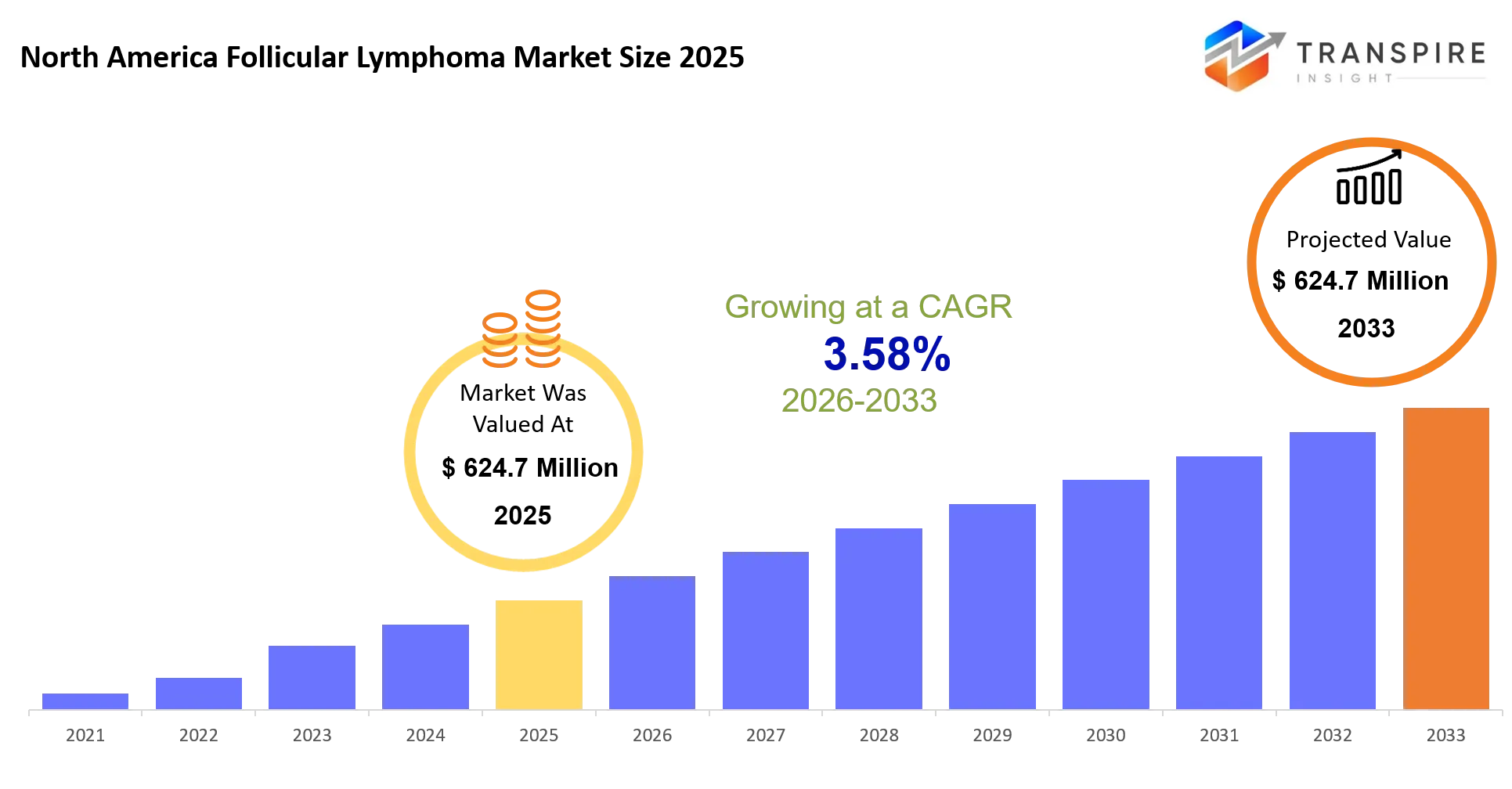
The North America Follicular Lymphoma Market was valued at USD 624.7 Million in 2025. It is forecast to reach USD 624.7 Million by 2033. That is a CAGR of 3.58% over the period.
The North America Follicular Lymphoma Market helps healthcare providers to sort out, diagnose, track, and manage patients with a kind of slow growing non Hodgkin lymphoma using targeted therapies, immunotherapies, more precise diagnostics, and kind of steady long term care plans. The goal is to raise survival odds while also lowering side effects from treatment, even if it takes a while for responses to show up. Over the last three to five years the entire market vibe sort of moved away from standard chemo immunotherapy, and more toward biomarker led targeted agents, bispecific antibodies, CAR T cell therapies, and a kind of personalized sequencing of treatment. This change is also being pushed along by quicker regulatory approvals, and by a growing body of clinical evidence , so clinicians can make decisions with a bit more confidence.
One big reason the market dynamics changed so much was the COVID 19 pandemic. It kind of threw oncology care off schedule , delayed diagnoses, and caused interruptions in clinical trial enrollment, plus it really muddled pharmaceutical supply chains too. Because of that , a lot of healthcare systems leaned harder into decentralized patient monitoring , fine tuned treatment pathways, and also improved inventory planning. At the same time, manufacturers pushed to expand domestic production, and they diversified sourcing strategies too , trying to be steadier if another disruption happens again.
Key Market Insights
- In 2025, the United States really dominated the North America Follicular Lymphoma Market, taking something like 88% market share, and it was pushed by an advanced oncology setup plus commercial launches moving faster than expected.
- Canada meanwhile is projected to be the quickest-growing region from 2025–2032, largely because reimbursement rules keep expanding and more patients are lining up for clinical trial participation.
- On the product side, targeted therapies led the way, claiming nearly 42% market share in 2025, which basically shows strong uptake of treatment and some favorable, long run market momentum.
- Immunotherapy stayed in the second slot in 2025, since newer and broader clinical evidence improved physician willingness to use these options across different treatment lines, yeah.
- For CAR-T cell therapy, that segment is expected to be the fastest-growing between 2025 and 2032. This is tied to more commercial manufacturing capacity and widening eligibility for treatment programs.
- When it comes to applications, first-line treatment led with around 47% market share in 2025, driven by broader use of targeted combination regimens, and a bit of routine clinical integration too.
- Relapsed or refractory follicular lymphoma therapy is forecast to grow quickest during 2025–2032, because more innovative therapy approvals keep arriving one after another.
- For end-users, hospitals actually held the leading share, at almost 61% in 2025 , mainly because that complicated biologic administration is still sort of concentrated in specialized oncology centers, not across all places.
- In the same line, specialty cancer centers are expected to expand at the fastest pace through 2032 , since advanced cellular therapies tend to require dedicated clinical know-how, plus tighter coordination for care.
What are the Key Drivers, Restraints, and Opportunities in the North America Follicular Lymphoma Market?
The most forceful factor driving the North America Follicular Lymphoma Market is basically the move toward precision oncology , after a run of regulatory clearances for targeted therapies and cellular immunotherapies . That shift in technology kind of tweaked how physicians decide , earlier intervention with biomarker driven treatments helped progression-free survival improve and also broadened the group of patients that could actually be considered. Hospitals put money into molecular diagnostics, plus dedicated infusion setups. Pharmaceutical organizations then answered , pushing commercial launches faster, scaling manufacturing capacity, and beefing up clinical development pipelines. In practice , these steps turned into more patient uptake and brighter revenue prospects across higher value oncology products.
The biggest drag still sits with the complexity , and also the overall cost, behind advanced biologic and cell based therapies. Making them up needs specialized facilities , highly trained teams, and very controlled logistics. On top of that, reimbursement reviews can stretch out commercialization timelines. So these obstacles really can not be removed overnight because they hinge on infrastructure growth , and regulatory compliance. The outcome is slower patient access , delayed go-to-market for products, and lower revenue especially at smaller treatment centers. And according to a Transpire Insight review of regional procurement notices and launch timings , supply chain concentration stays the core execution risk.
The next growth opportunity is sort of in integrating next generation biomarkers, liquid biopsy platforms, and AI supported clinical decision systems into lymphoma care pathways. Investment in precision diagnostics keeps accelerating across North America, and it’s almost like everyone is aligning on it. These tools can help spot the optimal treatment sequence earlier , improve trial enrollment efficiency, and strengthen the personalized therapy selection process. At the same time, expanded domestic manufacturing for biologics and cellular therapies keeps boosting commercialization prospects, and it also supports longer term market resilience.
What Has the Impact of Artificial Intelligence Been on the North America Follicular Lymphoma Market?
Artificial intelligence is kind of reshaping the regional follicular lymphoma treatment industry by nudging clinical workflows along , improving patient monitoring, and giving oncology decision support some serious help. The AI-powered software does the automation part for pathology image analysis, it also highlights high-risk disease features, and it helps clinicians choose individualized treatment options. This is done using molecular information and also clinical context. At the same time, digital platforms streamline compliance paperwork and treatment scheduling, so cancer centers end up with less administrative fuss, and the whole process feels less heavy.
Meanwhile, machine learning models are getting used more often to forecast patient response, approximate disease progression, fine tune clinical trial recruitment, and even estimate pharmaceutical demand across specialty oncology networks. These predictive functions help manufacturers with production planning. They also help providers place infusion capacity where it’s more needed, so staffing and resources aren’t just sitting there unused. Many healthcare organizations say they see real, measurable gains in operational efficiency , mainly from automated data processing , quicker diagnostic review, and less manual documentation. That ends up lowering administrative costs and speeding up treatment planning timelines, sometimes quite a bit.
Still, even with all these advances, AI adoption is not fully taking off because integration is complicated. A lot of oncology systems run across fragmented electronic health record platforms, and the data quality is often inconsistent. On top of that, limited access to standardized real-world datasets can reduce algorithm accuracy across different patient groups. Implementation costs plus cybersecurity requirements are also major barriers, which slows broader deployment, especially for smaller hospitals and community oncology providers. They usually don’t have the same digital infrastructure readiness as larger cancer centers, and that difference matters in practice.
Key Market Trends
- From 2021 to 2025, biomarker led treatment choices started becoming normal, like really standard, across a lot of major oncology centers, so reliance on the usual chemotherapy playbooks dropped, somewhat.
- Since 2022, bispecific antibodies moved along quickly through clinical development, and that ended up making the competition more intense, especially versus the established monoclonal antibody treatments, yes it’s like a different pace overall.
- Cell therapy manufacturing investment kept growing across the United States through 2023 to 2025, which improved commercial readiness for more CAR-T product launches, sooner than before.
- Regulators also seemed to speed up review routes for novel hematology treatments after multiple breakthrough therapy designations happened between 2021, and 2025. It made approvals feel faster in practice.
- Digital pathology platforms got rolled out more broadly after 2022, helping with faster diagnostic workflows and even better multidisciplinary treatment planning.
- Pharmaceutical companies ramped up strategic partnerships with biotechnology firms from 2023 to 2025, basically to reinforce targeted oncology pipelines and also to extend regional manufacturing coverage, not just in one place.
- Supply chain diversification sort of accelerated after the pandemic issues, with manufacturers putting money into regional production capacity and using dual source procurement approaches , which reduced fragility a bit.
- Liquid biopsy technologies were looked at more broadly between 2022 and 2025, supporting earlier disease monitoring , and enabling more tailored decisions on treatment.
- Also, real world evidence programs expanded a lot after 2021, and that helped manufacturers push reimbursement discussions more effectively, while in parallel showing longer term clinical outcomes .
North America Follicular Lymphoma Market Segmentation
By Treatment Type :
Targeted therapy is still kind of reshaping how we handle treatment because the disease control is better and the toxicity is lower , so in the end clinical practice looks different in most major oncology centers. Monoclonal antibodies remain a core option for first line and maintenance care, though in many cases combination therapy helps produce steadier clinical results. CAR T cell therapy is also getting bigger in relapsed disease , especially as manufacturing capacity grows and more patients can actually access treatment. Chemotherapy still stays important, but its role will slowly shrink as precision based options become more available and easier to reach.
Stem cell transplantation plus radioimmunotherapy continue to work for selected patients where the clinical situation fits, no question. At the same time, ongoing clinical studies should refine how treatments are sequenced and encourage wider adoption of personalized care plans that feel more tailored. Product development is expected to emphasize longer response duration and more favorable safety profiles. And broader reimbursement support will matter too, because it should make advanced treatment options easier to take up across different healthcare systems.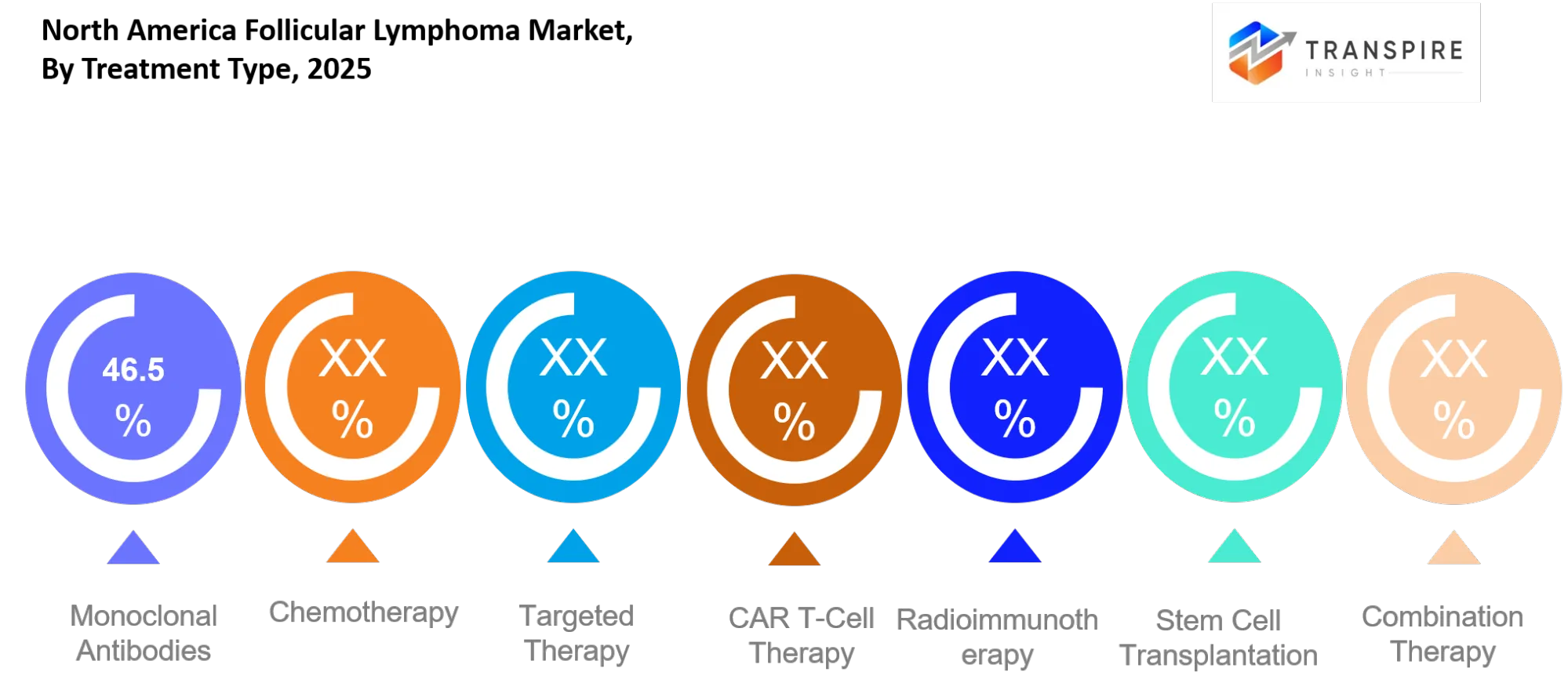
By Disease Stage :
Stage III plus Stage IV disease make up a big chunk of the treatment activity since people often don’t get diagnosed until the illness has already moved on. Maintenance therapy still matters a lot too, it helps prolong remission after the first treatment works. Meanwhile, relapsed and refractory follicular lymphoma keep fueling demand for new kinds of therapies , ones that can provide longer lasting or even steady responses. If diagnosis happens earlier thanks to advanced imaging and molecular testing, then treatment planning can be more precise.
For Stage I and Stage II cases, localized care or a combination plan is commonly used, based on the disease traits and also on the patient's situation. Clinical guidance keeps pushing personalized treatment choices across every stage. Having broader access to precision diagnostics will help with improved risk assessment and treatment selection. And better monitoring tools will back long term disease management too.
By Route of Administration :
Intravenous administration still is the leading route, mostly because a lot of biologics, immunotherapies , and cellular therapies need supervised infusion in specialized facilities, so it’s not really just a “convenience” thing. Oral therapies keep getting more accepted, mainly due to better convenience and fewer hospital visit requirements. Subcutaneous formulations are becoming more common as healthcare providers try for quicker administration, plus a more pleasant patient experience. Combination administration methods also help with flexible treatment planning across varied clinical environments, which sounds kind of obvious but it really matters.
Extended release formulations will get more spotlight as pharmaceutical companies concentrate on improving adherence, and lowering how often administration happens. Injectable therapies will remain important for supportive care and certain targeted treatments. Product innovation will keep moving forward, to improve patient comfort while staying consistent with treatment effectiveness. Healthcare providers will likely choose administration approaches that balance safety, efficiency , and long term disease control.
By End User :
Hospitals stay the biggest end-user, because advanced biologics, CAR T-cell therapy, and harder oncology care really need specialized infrastructure, and multidisciplinary clinical teams. Cancer centers keep expanding their advanced treatment programs, backed by seasoned oncology specialists, and clinical research work happening alongside it. Academic medical centers add value by running clinical trials that test new therapies, and also new treatment combinations, sometimes at a faster cadence. Research institutes help the whole effort move forward by crafting innovative therapeutic approaches, like targeted immunologic methods and related solutions.
Also, specialty clinics and ambulatory infusion centers will grow their service capacity as outpatient treatment models become more usual, not only a niche option. Better healthcare infrastructure will make access to these advanced therapies stronger across regional markets. Cooperation between healthcare providers and pharmaceutical companies should help treatment availability. And investment in specialized oncology services supports long-term market development, steady growth over time, not just short term wins.
By Distribution Channel :
Hospital pharmacies still kind of lead the way in medicine distribution, mostly because lots of advanced therapies need controlled storage , specialized handling, and pretty direct coordination with oncology teams. Specialty pharmacies are also taking a larger role now, they manage high value medicines, plus they deliver patient support services, through most of the whole treatment period. Retail pharmacies mostly provide supportive medications and a few selected oral therapies. Government supply programs keep getting better at improving access for eligible patients, using public healthcare systems.
Online pharmacies will slowly strengthen their presence for approved oral therapies when regulations allow digital dispensing. Direct sales channels help manufacturers supply specialized treatment centers, especially when it comes to complex biologic products. Distribution plans will stay centered on product availability , supply stability , and timely delivery, without too many delays. Better coordination across manufacturers , distributors, and healthcare providers should help maintain treatment continuity and boost day to day operational efficiency.
What are the Key Use Cases Driving the North America Follicular Lymphoma Market?
The biggest use case, kind of starts at first-line treatment in hospitals and specialized cancer centers where targeted therapies plus monoclonal antibodies are chosen to help with newly diagnosed follicular lymphoma, and honestly it’s often about staying ahead early. Large health networks buy into these options because clinical guidelines back early control of the condition, plus the idea of long-term remission with more personalized treatment approaches, rather than one-size-fits-all.
Other use cases keep unfolding in specialty cancer centers and academic medical centers, especially when the situation is relapsed or refractory. CAR T cell therapy programs are getting wider adoption in referral hospitals, meanwhile maintenance therapy keeps showing up as a steady way to support long-term disease management, typically through specialized oncology clinics that provide dedicated check-ins and follow-up services.
What’s next is more emerging stuff, including biomarker-guided treatment selection backed by molecular diagnostics and even AI-assisted clinical decision tools inside advanced health systems. Precision medicine programs and decentralized clinical trials are also opening new doors, particularly for research institutes and pharmaceutical companies working on next-generation therapies, all while regulatory pathways are changing over time.
|
Report Metrics |
Details |
|
Market size value in 2025 |
USD 624.7 Million |
|
Market size value in 2026 |
USD 488.5 Million |
|
Revenue forecast in 2033 |
USD 624.7 Million |
|
Growth rate |
CAGR of 3.58% from 2026 to 2033 |
|
Base year |
2025 |
|
Historical data |
2021 - 2024 |
|
Forecast period |
2026 - 2033 |
|
Report coverage |
Revenue forecast, competitive landscape, growth factors, and trends |
|
Regional scope |
North America (Canada, The United States, and Mexico) |
|
Key company profiled |
Roche, Genentech, Novartis, Bristol Myers Squibb, Gilead Sciences, AbbVie, AstraZeneca, Eli Lilly, BeiGene, TG Therapeutics, Incyte, Johnson & Johnson, Pfizer, Kite Pharma, Autolus Therapeutics |
|
Customization scope |
Free report customization (country, regional & segment scope). Avail customized purchase options to meet your exact research needs. |
|
Report Segmentation |
By Treatment Type (Monoclonal Antibodies, Chemotherapy, Targeted Therapy, CAR T-Cell Therapy, Radioimmunotherapy, Stem Cell Transplantation, Combination Therapy, Others); By Disease Stage (Stage I, Stage II, Stage III, Stage IV, Relapsed Follicular Lymphoma, Refractory Follicular Lymphoma, Maintenance Therapy, Others); By Route of Administration (Intravenous, Oral, Subcutaneous, Injectable, Combination Therapy, Extended-Release Therapy, Others); By End User (Hospitals, Cancer Centers, Specialty Clinics, Academic Medical Centers, Research Institutes, Ambulatory Infusion Centers, Others); By Distribution Channel (Hospital Pharmacies, Specialty Pharmacies, Retail Pharmacies, Online Pharmacies, Government Supply, Direct Sales, Others) |
Which Regions are Driving the North America Follicular Lymphoma Market Growth?
The United States counts for around 88% of the regional revenue , so it is basically the strongest market all across North America. There is solid regulatory backing for novel oncology treatments, plus wide reimbursement coverage, and an increasingly capable cancer care setup that keeps this edge in place. On top of that, you get a fairly mature landscape of pharma manufacturers, biotech firms, contract manufacturing organizations, and academic research centers, which kind of strengthens both product development and reliable commercial supply . Ongoing spending on precision medicine, cellular therapy capacity, and oncology research should keep the leadership steady through the whole forecast stretch.
Canada shows up as the second-largest regional market, mainly because healthcare delivery works under a coordinated public funding approach, with regulatory oversight that stays consistent. National reimbursement reviews and well defined procurement routines make access to advanced lymphoma therapies more stable, and they also support predictable purchasing behavior. Academic hospitals, provincial cancer agencies, and joint research programs help maintain clinical uptake, while also motivating enrollment in international clinical studies. So even with a smaller patient base, these structural benefits make Canada a dependable source for longer term revenue.
Canada is also projected to see the quickest expansion during the 2026–2033 stretch, even if it sounds a bit strange, because investment in precision oncology, molecular diagnostics, and specialized cancer treatment capacity keeps speeding up. In the last while there has been a recent expansion of provincial funding for innovative therapies, and that plus wider access to biomarker testing has actually improved treatment availability across multiple healthcare networks. More involvement in international clinical trials, plus the ongoing modernization of infrastructure, is setting up favorable conditions for commercial launches of advanced therapies. All this momentum should end up creating appealing opportunities for pharmaceutical manufacturers, biotechnology companies, and investors who are looking for longer term growth, through innovation driven healthcare markets.
Who are the Key Players in the North America Follicular Lymphoma Market and How Do They Compete?
Competition is still moderately consolidated, but mostly because only a handful of pharmaceutical companies control many already approved therapies, and also the late stage development programs. In practice, innovation in technology is the main engine of competition, so companies spend money on targeted therapies , bispecific antibodies, and CAR T cell platforms more than they just try to undercut prices. The established manufacturers keep defending their market share by doing ongoing clinical research. Meanwhile, biotechnology firms push in with more niche, specialized treatment approaches, so therapeutic options get wider, especially for patient groups that are harder to treat.
Hoffmann-La Roche improves and holds its market position through continuous development of monoclonal antibody therapies. This is backed by broad oncology research and a large base of clinical evidence, not just one type of study. Bristol Myers Squibb leans heavily into cellular immunotherapy and differentiates mainly via advanced CAR T technology, with support from specialized manufacturing capabilities that help keep the process consistent. Gilead Sciences, on the other hand, expands treatment access by scaling up cell therapy production capacity, plus refining the commercial delivery networks across North America.
AbbVie kind of builds competitive advantage by focusing on therapy development that is targeted, to help improve long-term disease management with convenient treatment options, sort of in a practical way. AstraZeneca differentiates by investing in next generation bispecific antibodies, plus combination treatment research that opens up future therapeutic opportunities. Then strategic collaborations keep showing up, expanded clinical trial programs too, and manufacturing investments as well, while pipeline diversification is basically the other lever that strengthens competitive positioning; all of that also supports commercial expansion across the regional oncology treatment landscape.
Company List
Gilead Sciences
AbbVie
AstraZeneca
Eli Lilly
BeiGene
TG Therapeutics
Incyte
Johnson & Johnson
Pfizer
Kite Pharma
Autolus Therapeutics
Recent Development News
In June 2026, Roche announced that the U.S. Food and Drug Administration accepted the supplemental Biologics License Application for Lunsumio VELO in combination with Polivy for relapsed or refractory large B-cell lymphoma. The filing strengthens Roche's bispecific antibody platform and supports continued investment in outpatient lymphoma treatment technologies across North America. Sourcehttps://www.roche.com/
In December 2025, Roche received U.S. Food and Drug Administration approval for Lunsumio VELO as a subcutaneous formulation for adults with relapsed or refractory follicular lymphoma after two or more prior systemic therapies. The one-minute subcutaneous administration reduces treatment time and expands access to advanced follicular lymphoma care in community oncology settings. Source https://www.roche.com/
What Strategic Insights Define the Future of the North America Follicular Lymphoma Market?
The North America Follicular Lymphoma Market is going to drift toward treatment that is more like tailored on individual needs over the next five to seven years, mostly because biomarker based therapy picking, next generation immunotherapies, and cell centered treatments are being folded more and more into regular oncology routines. It will likely be backed by wider molecular testing, tougher clinical proof, and ongoing funding for precision medicine infrastructure, not just in a shiny pilot way but in day to day workflows too. Still there is a risk that is a bit less visible, which is manufacturing concentration for advanced biologics and cellular therapies where production bandwidth is tight and the supply routes are tricky, so even with great demand the commercial rollout can get delayed. At the same time, a newer opportunity is showing up in AI supported treatment planning, paired with liquid biopsy approaches, which could help enable earlier steps and smoother therapy sequencing that is more on point. Market players should do well by leaning into broader collaborations with diagnostic developers and regional manufacturing organizations, this can build stronger supply resilience, and also make access easier for personalized therapies across North American healthcare systems, even when regions vary.
North America Follicular Lymphoma Market Report Segmentation
By Treatment Type
- Monoclonal Antibodies
- Chemotherapy
- Targeted Therapy
- CAR T-Cell Therapy
- Radioimmunotherapy
- Stem Cell Transplantation
- Combination Therapy
By Disease Stage
- Stage I
- Stage II
- Stage III
- Stage IV
- Relapsed Follicular Lymphoma
- Refractory Follicular Lymphoma
- Maintenance Therapy
By Route of Administration
- Intravenous
- Oral
- Subcutaneous
- Injectable
- Combination Therapy
- Extended-Release Therapy
By End User
- Hospitals
- Cancer Centers
- Specialty Clinics
- Academic Medical Centers
- Research Institutes
- Ambulatory Infusion Centers
By Distribution Channel
- Hospital Pharmacies
- Specialty Pharmacies
- Retail Pharmacies
- Online Pharmacies
- Government Supply
- Direct Sales
Frequently Asked Questions
Find quick answers to common questions.
The Expected North America Follicular Lymphoma Market size for the Market will be USD 624.7 Million in 2033.
Key Segments for the North America Follicular Lymphoma Market are Type By Treatment Type (Monoclonal Antibodies, Chemotherapy, Targeted Therapy, CAR T-Cell Therapy, Radioimmunotherapy, Stem Cell Transplantation, Combination Therapy, Others); By Disease Stage (Stage I, Stage II, Stage III, Stage IV, Relapsed Follicular Lymphoma, Refractory Follicular Lymphoma, Maintenance Therapy, Others); By Route of Administration (Intravenous, Oral, Subcutaneous, Injectable, Combination Therapy, Extended-Release Therapy, Others); By End User (Hospitals, Cancer Centers, Specialty Clinics, Academic Medical Centers, Research Institutes, Ambulatory Infusion Centers, Others); By Distribution Channel (Hospital Pharmacies, Specialty Pharmacies, Retail Pharmacies, Online Pharmacies, Government Supply, Direct Sales, Others).
Major North America Follicular Lymphoma Market Players are Roche, Genentech, Novartis, Bristol Myers Squibb, Gilead Sciences, AbbVie, AstraZeneca, Eli Lilly, BeiGene, TG Therapeutics, Incyte, Johnson & Johnson, Pfizer, Kite Pharma, Autolus Therapeutics.
The Current North America Follicular Lymphoma Market size is USD 624.7 Million in 2025.
The North America Follicular Lymphoma Market CAGR is 3.58% from 2026 to 2033.
Roche
Genentech
Novartis
Bristol Myers Squibb
Gilead Sciences
AbbVie
AstraZeneca
Eli Lilly
BeiGene
TG Therapeutics
Incyte
Johnson & Johnson
Pfizer
Kite Pharma
Autolus Therapeutics
About the Authors

Pankaj Ghogare Patil
I am Pankaj Ghogare Patil, a Senior Research Analyst at Transpire Insight, specializing in the Pharmaceutical, Chemicals & Materials, Healthcare IT, and Biotechnology industry. My expertise lies in conducting comprehensive market research, analyzing industry trends, evaluating competitive landscapes, and translating complex data into actionable insights. At Transpire Insight, I closely follow emerging technologies, regulatory developments, and market innovations to create accurate, well-researched, and informative content that helps businesses and professionals make informed decisions. I am committed to producing credible, evidence-based articles that reflect industry best practices while making technical topics accessible and valuable for a broad audience.

Chakradhar Khansole
Chakradhar serves as the Research Director at Transpire Insight, bringing over 8 years of experience in technology, innovation, and strategic market intelligence. He specializes in transforming complex market data into actionable business insights that enable organizations to make informed, growth-oriented decisions. Recognized for his strategic vision and analytical expertise, Chakradhar leads high-impact research initiatives, delivering comprehensive market assessments, competitive intelligence, and forward-looking industry analysis.
Recently Published Reports
-
Jul 2026
Alopecia Treatment Market
Alopecia Treatment Market Size, Share & Analysis Report By Disease Type (Alopecia Areata, Cicatricial Alopecia, Traction Alopecia, Alopecia Totalis, Androgenetic Alopecia, Alopecia Universalis, and Other Disease Types), By Treatment Type (Topical Treatments, Oral Medications, Injectable Therapies, and Hair Transplantation), By Gender (Male, and Female), By Distribution Channel (Hospitals and Clinics, Retail Pharmacies, and Online Retailers), and Geography (North America, Europe, Asia-Pacific, Middle East and Africa, South and Central America), 2021 - 2031
-
Jul 2026
Medical Ultrasound Probe Market
Medical Ultrasound Probe Market Size, Share & Analysis Report By Type (Linear Type, Convex Type, Endocavitary Probe, Phased Array/Cardiac Probe, Transesophageal (TEE) Probe, and Others), By Application (Ophthalmology, Cardiology, Musculoskeletal, Oncology, Obstetrics & Gynecology, General Imaging, and Others), By End User (Hospitals & Clinics, Diagnostic Centers, Ambulatory Surgical Centers, and Others), and Geography (North America, Europe, Asia-Pacific, Middle East and Africa, South and Central America), 2021 – 2031
-
May 2026
Biosimilars Market
Biosimilars Market By Product Type (Monoclonal Antibodies, Recombinant Hormones, Erythropoietin, G-CSF, Others), By Indication (Oncology, Autoimmune Diseases, Blood Disorders, Diabetes, Others), By Manufacturing Type (In-House Manufacturing, Contract Manufacturing), By Distribution Channel (Hospital Pharmacies, Retail Pharmacies, Online Pharmacies), By Industry Analysis, Size, Share, Growth, Trends, and Forecasts 2021-2033
-
Apr 2026
Gastrointestinal Endoscopy Market
Gastrointestinal Endoscopy Market By Type (Rigid Gastrointestinal Endoscope, Flexible Gastrointestinal Endoscopes, Disposable Gastrointestinal Endoscope), By Procedure Type (Colonoscopy, Gastroscopy, Duodenoscopy, Enteroscopy, Flexible Sigmoidoscopy, Others), By Application (Diagnosis, Treatment), By End-Users (Hospitals, Ambulatory Surgical Centers, Specialty Clinics, Laboratories, Others), By Industry Analysis, Size, Share, Growth, Trends, and Forecasts 2021-2033