

North America Fluoroquinolones Market Size & Forecast:
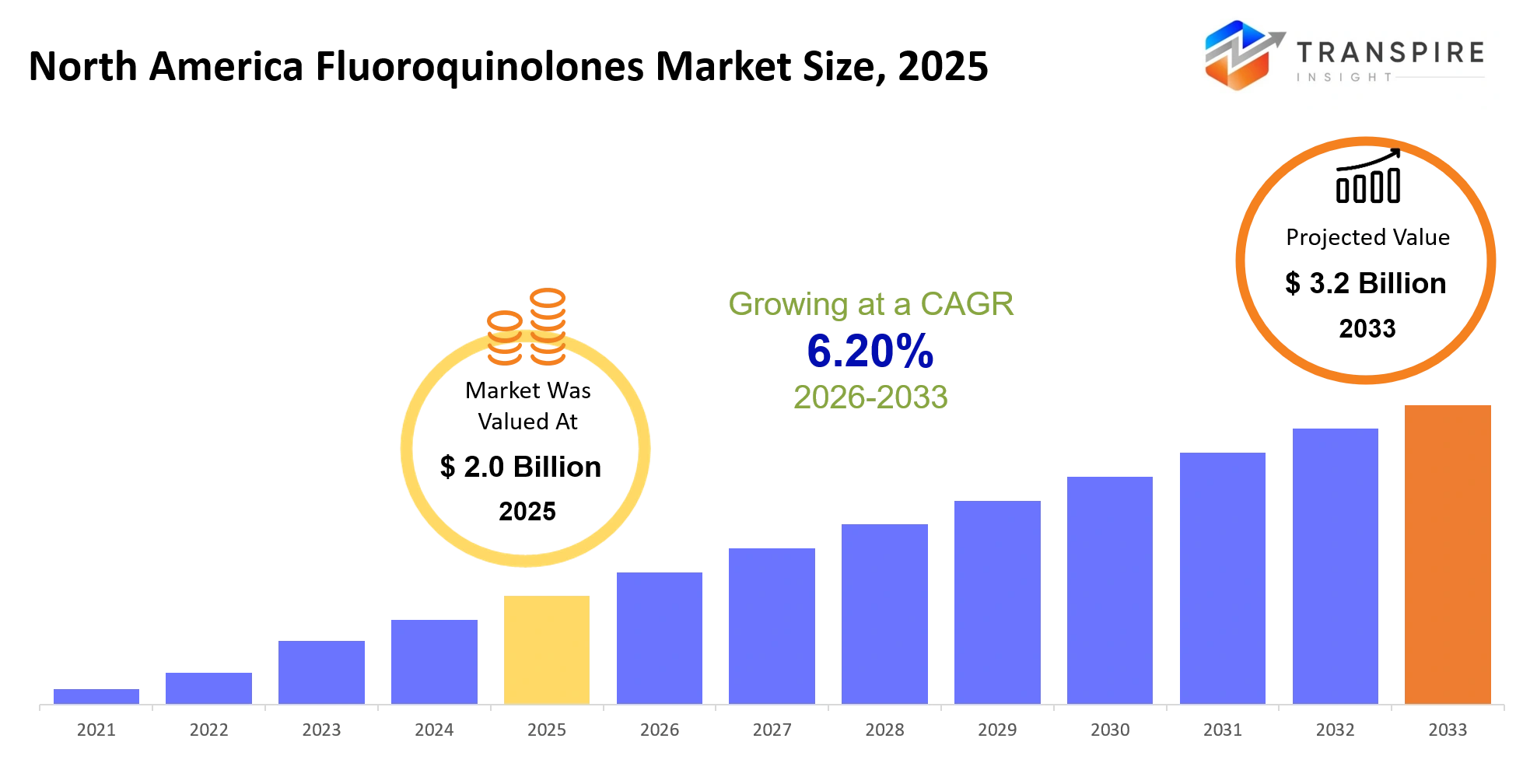
- North America Fluoroquinolones Market Size 2025: USD 2.0 Billion
- North America Fluoroquinolones Market Size 2033: USD 3.2 Billion
- North America Fluoroquinolones Market CAGR: 6.20%
- North America Fluoroquinolones Market Segments: By Drug Type (Ciprofloxacin, Levofloxacin, Moxifloxacin, Norfloxacin, Others), By Application (Respiratory Infections, Urinary Tract Infections, Gastrointestinal Infections, Skin Infections, Others), By Distribution Channel (Hospital Pharmacies, Retail Pharmacies, Online Pharmacies, Others), By End User (Hospitals, Clinics, Home Care Settings, Others).
To learn more about this report,  Download Free Sample Report
North America Fluoroquinolones Market Summary:
The North America Fluoroquinolones Market size is estimated at USD 2.0 Billion in 2025 and is anticipated to reach USD 3.2 Billion by 2033, growing at a CAGR of 6.20% from 2026 to 2033. The North America Fluoroquinolones Market plays a key part in handling bacterial infections across hospitals, outpatient clinics, and emergency care zones, where quick and dependable antimicrobial treatment is needed. These antibiotics are often picked when clinicians want broad spectrum coverage, for example respiratory, urinary tract, gastrointestinal , and a few specific skin infections, and overall it supports lowering complications, helping people recover faster, and backing the bigger efficiency of the healthcare system. Even with that said, sometimes day to day operations get a little messy during peak demand, but the role itself remains pretty central.
Over the last several years, the market has seen a real structural change, more selective and stewardship driven prescribing behaviors. Regulatory scrutiny around safety concerns and antimicrobial resistance has pushed providers to hold back fluoroquinolones for situations where alternative therapies might be less suitable. At the same time, the COVID-19 pandemic made routine care less steady and also shifted antibiotic prescribing patterns , so treatment volumes and procurement decisions were temporarily impacted and kind of rebalanced on the fly.
Right now, market momentum is coming from the back and forth between clinical need and responsible use. As healthcare organizations strengthen antimicrobial stewardship initiatives, demand is getting more focused on targeted, high value care environments. That approach is also tied to revenue creation through more optimized utilization, specialized formulations, and hospital centered prescribing rather than chasing broad based volume growth, which sounds simple but it is not always simple.
Key Market Insights
- The United States dominates the North America Fluoroquinolones Market, in 2025 it holds about 80–85% of the share mainly because the healthcare system is more advanced and resourced in general.
- Canada sits as the second-largest regional market, backed by infectious disease management programs that keep expanding, and by steady hospital antibiotic procurement which is gaining momentum.
- Mexico is expected to be the fastest-growing regional market all the way to 2032 , with growth tied to better healthcare access and stronger pharmaceutical distribution networks that seem to reach more places each year.
- Cross border pharmaceutical investments keep building up , and they keep boosting regional market size plus long-term growth prospects that look steady.
- Ciprofloxacin is still the top product category, it captures nearly 35% of the North America Fluoroquinolones Market in 2025, and it seems to stay dominant.
- Levofloxacin ranks second in market share since it is widely used for respiratory infections and urinary tract infections, it’s a common choice for clinicians
- Moxifloxacin is projected as the fastest-growing segment during the forecast period, supported by wider adoption within specialized infection management approaches across different settings.
- Product portfolio diversification keeps affecting market share, and also its competitive stance across the broader fluoroquinolone industry.
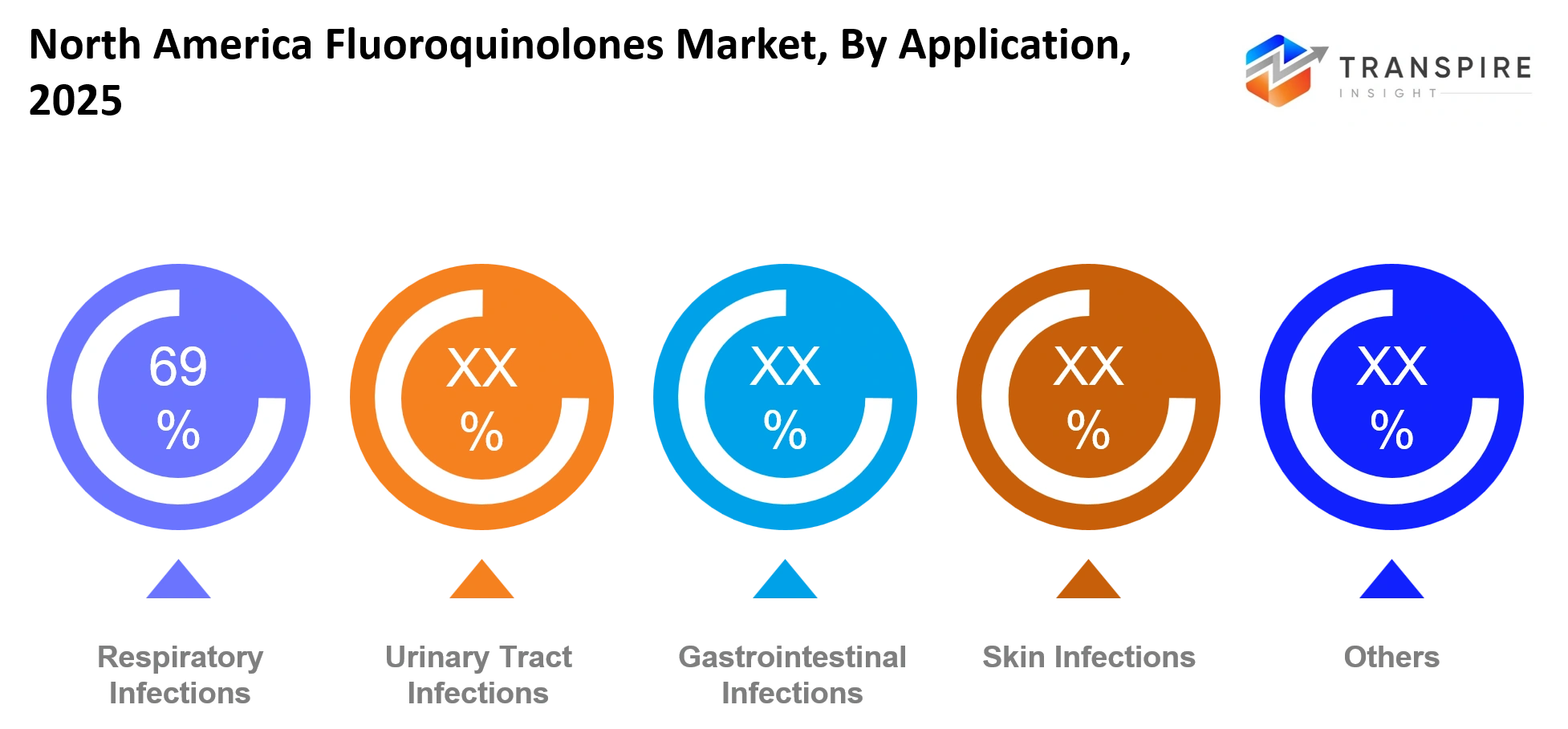
- For applications , urinary tract infection treatment is leading, it accounts for roughly 40% of total market revenue in 2025 which is a pretty clear majority.
- Respiratory tract infections take the next spot as the second-largest application segment across North America.
- Complicated bacterial infections are emerging as the fastest-growing application category through 2032, it’s gaining attention.
- There is also a growing push toward targeted antimicrobial therapy , and this is reshaping treatment practices as well as prescription patterns that clinicians follow.
- Hospitals lead the market with nearly 55% revenue share in 2025, mainly due to high-volume inpatient antibiotic administration where throughput stays very high.
What are the Key Drivers, Restraints, and Opportunities in the North America Fluoroquinolones Market?
The main driver behind the North America Fluoroquinolones Market is basically that clinicians still need broad-spectrum antibiotics, especially for hard to manage bacterial infections. That requirement keeps getting stronger as hospital-acquired infections show up more often , along with complicated urinary tract infections . On top of that, antibiotic-resistant pathogens are spreading, and they need fairly fast therapeutic action. Because of this, healthcare providers lean on fluoroquinolones more and more when other options don’t work as well, or when the speed of treatment actually changes what happens to the patient. Meanwhile, hospitals are pushing for shorter lengths of stay , and fewer readmissions, so fluoroquinolones keep moving revenue through high acuity and specialty care units where timing matters
The biggest obstacle, though, is the structural expansion of antimicrobial stewardship programs, paired with regulatory safety warnings. In practice, clinical guidelines keep tightening fluoroquinolone use due to worries about adverse effects , and also the risk of resistance development. And once it’s embedded, it’s not easy to undo, because it’s built into prescribing routines, hospital formularies, and even physician training . So the patient pool that qualifies shrinks, prescription volumes get capped , and even if infection rates climb , revenue growth stays limited
A clear chance appears with precise infection management powered by rapid diagnostic technologies. Hospitals are putting money into molecular diagnostic platforms that can detect bacterial pathogens plus resistance patterns within hours , not days. This helps clinicians choose fluoroquinolone therapies that are more “on target” for the right people, rather than guessing, and that confidence supports better uptake in appropriate cases.
What Has the Impact of Artificial Intelligence Been on the North America Fluoroquinolones Market?
Artificial intelligence, plus newer digital tools, are quietly but steadily reshaping the North America Fluoroquinolones Market, mainly because they push drug development forward, improve supply chain handling, and also strengthen antimicrobial stewardship. In practice, pharmaceutical manufacturers are putting AI driven systems to work, so quality control can be automated, production can be monitored better, and inventories get managed across multiple plants. These systems look at operational data in near real time and then flag process deviations , which tends to lower batch failures and also makes scheduling more efficient. As a result, manufacturers often report lower operating costs, plus more consistent product availability.
At the same time, machine learning is adding stronger predictive ability across the whole antibiotic value chain. Clinicians and healthcare teams use predictive analytics to spot patients who are more likely to develop bacterial infections , and that supports evidence based antibiotic choices. At the same moment, pharmaceutical firms lean on AI for demand forecasting, resistance trend monitoring, and distribution network tuning. That combo can help cut down stockouts, while improving treatment access across both hospital and outpatient settings. Even distribution planning gets smoother, kind of like a smaller bottleneck effect.
From an operations point of view, digital technologies are helping with faster manufacturing cycles, clearer supply chain visibility, and more reliable regulatory compliance. Many organizations say they see real reductions in inventory waste, and also in procurement inefficiencies, when they use data driven planning tools. But there’s still a major problem that stays in the background: clinical data, and antimicrobial resistance data, are not always available, and they often are not standardized. Differences in data quality between healthcare systems can hurt model accuracy, and this makes large scale AI rollout more complicated , plus it slows adoption across the wider antibiotics market.
Key Market Trends
- Since 2020, hospitals have tightened their prescribing protocols , kind of reducing the usual fluoroquinolone use while still pushing them harder in the most high acuity infection situations.
- From 2021 through 2025, antimicrobial stewardship programs showed up more broadly across big North American health systems, and they started reshaping antibiotic selection as well as procurement behavior, not in small ways either.
- After 2020, rapid molecular diagnostics got broader adoption, so clinicians could identify the pathogen faster , and that made the fluoroquinolone prescribing calls feel more targeted.
- Even with all that, regulatory safety warnings kept affecting physician behavior, which then led to a measurable move toward alternative antibiotics , especially for uncomplicated infections.
- Meanwhile, manufacturers kept putting more weight on supply chain resilience after the pandemic era disruptions revealed weaknesses in active pharmaceutical ingredient sourcing.
- Generic competition also intensified between 2021 and 2025, and it nudged suppliers toward manufacturing efficiency and more strategic hospital contracting , almost like everything became more cost aligned.
- More and more healthcare providers started integrating clinical decision support software, which helped track antibiotic utilization better and, in turn, improved compliance with stewardship requirements.
- Companies like Pfizer Inc. and Teva Pharmaceutical Industries Ltd. kept working on portfolio optimization, because product differentiation has been harder to hold onto, lately it seems.
- After 2022, surveillance programs that keep an eye on antimicrobial resistance got more capable and in practice that ended up changing treatment guidelines too, and also the way regions did their buying, more or less.
- In parallel, outpatient infection management was expanding across North America, and this moved some parts of antibiotic administration away from inpatient settings. So the distribution channels sort of had to adapt as well, you could say.
North America Fluoroquinolones Market Segmentation
By Drug Type
Within the drug type segment, Ciprofloxacin somehow keeps the strongest market hold , mainly because of broad clinical use across many bacterial infections and also because doctors are really already familiar with it. The strong availability of generic formulations also helps, so adoption stays wide in hospital and outpatient environments. Levofloxacin comes next as a notable segment, since it shows solid effectiveness in respiratory and urinary tract infections, and it’s kind of seen as a reliable option by many clinicians.
Moxifloxacin is still getting more attention too, mostly for specialized treatment use, or more niche applications where it fits well. Norfloxacin sits in a smaller slice now , as prescribing becomes more selective, and alternative therapies get preferred for certain indications. Other fluoroquinolone products add therapeutic variety but their actual utilization can swing a lot, depending on how clinical guidelines are written. Looking ahead, growth in this segment will depend more and more on targeted prescribing patterns, resistance monitoring efforts, and better formulation work. Manufacturers will probably emphasize steady supply reliability, plus showing clear clinical value, while investors will keep an eye on product portfolios that match the changing stewardship expectations.
By Application
Application trends point to urinary tract infections as the dominant segment, partly because fluoroquinolones still stay an important treatment option for tricky, complicated cases that really need effective bacterial coverage. Respiratory infections show up as the second-largest application area, and this is pushed along by continued use in certain community-acquired situations plus hospital-associated infections, where they still make sense. Gastrointestinal infections and skin infections add meaningful demand too, especially when rapid intervention is necessary, or when alternative therapies don’t work as well, or are restricted.
Other applications keep feeding smaller, niche revenue streams across specialized care environments. Overall demand patterns are also being shaped more and more by antimicrobial stewardship initiatives, along with evidence-based prescribing protocols, these measures essentially steer treatment toward patients who are most likely to benefit, not just whoever shows up first. And as diagnostic technologies keep improving and pathogen identification becomes faster, application specific prescribing should get more precise. That shift could open doors for suppliers that help healthcare providers with clinical data, and with optimized treatment solutions.
To learn more about this report, Download Free Sample Report
By Distribution Channel
The distribution channel landscape still seems to be led by hospital pharmacies, which kind of mirrors how fluoroquinolone use is concentrated in acute care environments where difficult bacterial infections are frequently handled. You see, centralized procurement systems and formulary management, plus those big prescription volumes, really keep that channel in front. Retail pharmacies sit in second place, mainly because outpatient treatment is still a core part of infection management . Meanwhile online pharmacies are creeping up slowly as digital healthcare platforms , electronic prescriptions, and home delivery options become more routine across North America.
Other distribution channels take up a smaller slice of overall sales, but they do back specialized procurement needs. Going forward, the channel dynamics will probably lean toward organizations that can blend digital ordering systems with better inventory visibility tools and more fluid fulfillment, sort of like less friction overall. Manufacturers and distributors that really tighten the ties, both with institutional and outpatient buyers could end up with steadier revenue streams over time.
By End-User
Hospitals are the biggest end-user chunk, mostly because severe , complicated bacterial infections often need supervised treatment , diagnostic help, and a coordinated clinical approach. Large patient loads, plus well established antibiotic stewardship programs, also push hospital demand even more. Clinics come in as the second-largest group, since outpatient care models keep expanding, and infection management keeps shifting toward more decentralized structures . Meanwhile home care is showing up as the faster-growing segment, backed by improvements in remote monitoring, outpatient treatment pathways , and broader healthcare access initiatives. Other end users add extra demand too, like specialized care facilities and community health programs.
For long term growth here, it will really hinge on how well the market balances inpatient versus outpatient care routes. Manufacturers will likely want flexible go-to-market methods, so they can fit into different care environments. At the same time , purchasers will probably focus more on treatment effectiveness, safety profiles, and day-to-day operational efficiency when they choose therapeutic options.
What are the Key Use Cases Driving the North America Fluoroquinolones Market?
The main use case for fluoroquinolones kinda stays the treatment of complicated urinary tract infections , both in hospital and in outpatient care environments. These infections often need fast , wide spectrum bacterial coverage so fluoroquinolones tend to be the go to option when treatment effectiveness directly affects patient recovery and also how much healthcare resources get used.
Beyond that , people are expanding into respiratory and gastrointestinal infection management, mostly inside hospitals and specialty clinics where high-risk patients are handled day to day. More diagnostic testing and better lab workflows have helped clinicians spot the situations where a targeted fluoroquinolone regimen can lead to improved outcomes , while still supporting antimicrobial stewardship goals.
Now, there are also emerging use cases showing up in precision infection management programs that pair rapid molecular diagnostics with evidence based antibiotic choosing. Another area that looks promising is outpatient and home-based treatment pathways for selected bacterial infections, where health systems try to lower inpatient load while keeping clinical effectiveness and treatment continuity steady.
|
Report Metrics |
Details |
|
Market size value in 2025 |
USD 2.0 Billion |
|
Market size value in 2026 |
USD 2.1 Billion |
|
Revenue forecast in 2033 |
USD 3.2 Billion |
|
Growth rate |
CAGR of 6.20% from 2026 to 2033 |
|
Base year |
2025 |
|
Historical data |
2021 - 2024 |
|
Forecast period |
2026 - 2033 |
|
Report coverage |
Revenue forecast, competitive landscape, growth factors, and trends |
|
Country scope |
North America (Canada, The United States, and Mexico) |
|
Key company profiled |
Bayer, Johnson & Johnson, Pfizer, Sanofi, Teva Pharmaceuticals, Sun Pharmaceutical, Lupin, Dr. Reddy’s Laboratories, Aurobindo Pharma, Cipla, Viatris, Hikma Pharmaceuticals, Novartis, Glenmark Pharmaceuticals, Zydus Lifesciences. |
|
Customization scope |
Free report customization (country, regional & segment scope). Avail customized purchase options to meet your exact research needs. |
|
Report Segmentation |
By Drug Type (Ciprofloxacin, Levofloxacin, Moxifloxacin, Norfloxacin, Others), By Application (Respiratory Infections, Urinary Tract Infections, Gastrointestinal Infections, Skin Infections, Others), By Distribution Channel (Hospital Pharmacies, Retail Pharmacies, Online Pharmacies, Others), By End User (Hospitals, Clinics, Home Care Settings, Others). |
Which Regions are Driving the North America Fluoroquinolones Market Growth?
The United States still feels like the dominant market in North America , mainly because of its big healthcare spending, a very wide hospital network, and a real strong footprint in pharmaceutical manufacturing. Regulatory agencies keep a pretty rigorous watch on how antibiotics are used, but they also still enable access to important treatments, especially for serious bacterial infections. There’s this already built ecosystem of hospitals , specialty clinics, diagnostic laboratories, and pharmacy distribution networks that basically keeps utilization steady across many kinds of care. Add solid investment into antimicrobial stewardship and infectious disease management , and you get even more reinforcement for market leadership.
Canada sits as the second-largest regional market, but its growth path looks a bit different compared to the United States. With universal healthcare coverage , plus coordinated provincial procurement, purchasing tends to stay steady, and demand for antibacterial therapies is more predictable. Prescribing guidelines are rolled out in a consistent way, so antibiotic use stays responsible, while access remains available for cases where it’s clinically appropriate. So overall, policy steadiness plus reliable healthcare funding makes Canada a dependable contributor to regional revenue.
Mexico is showing up as the fastest-growing market, as healthcare infrastructure investment keeps increasing and pharmaceutical distribution networks keep widening. With better reach to hospital services, diagnostics, and prescription medicines , treatment availability is improving across both bigger cities and more developing regions. Recent modernization in healthcare delivery has also boosted capacity to diagnose and handle bacterial infections more effectively. Looking forward, growth opportunities through 2033 are expected to draw manufacturers and investors who want exposure to a larger patient base and better healthcare capabilities , overall.
Who are the Key Players in the North America Fluoroquinolones Market and How Do They Compete?
In the North America Fluoroquinolones Market , competition looks moderately consolidated, like some branded pharmaceutical players alongside big generic manufacturers are trading shots across hospital and outpatient channels. New entrants do not really shake things up much, because antibiotic development is complicated by regulatory expectations, big upfront investment, and strict clinical standards . so disruption stays limited. Because of that, the real contest tends to revolve around how efficient manufacturing is, whether supply stays dependable , and if products keep getting formulary access. There is also the practical angle of keeping product availability steady , not just launching a thing once. In addition, companies push through distribution reach , pricing plans, and relationships with healthcare systems, which increasingly lean toward stewardship- driven purchasing decisions.
Pfizer Inc. leans on a wide anti-infective portfolio plus long standing hospital relationships to stay relevant in infectious disease treatment pathways. The edge here is its strong clinical know-how, proven regulatory know-how, and its ability to plug into large healthcare networks. Merck & Co., Inc. sets itself apart by continuing to put money into infectious disease research, and by staying actively engaged with healthcare providers who handle hard-to-treat bacterial infections. Both companies, end up reinforcing their positions through research collaborations, generating clinical proof, and doing portfolio optimization moves, that keep them in antimicrobial therapy markets for the long term.
Teva Pharmaceutical Industries Ltd. kind of competes by relying on large scale generic manufacturing and cost efficient production, so it can reach quite a lot of patients via hospital and retail pharmacy channels. Sun Pharmaceutical Industries Ltd. tends to push the idea of manufacturing scale , plus a more varied catalog of products, while it also expands its specialty pharmaceutical capabilities , to help solidify its regional presence a bit more. Bayer AG gets a boost from its long time reputation tied to fluoroquinolone therapies, and it keeps working on product lifecycle management through scientific conversations, plus regulatory compliance efforts that stay in motion. Overall these firms grow via strategic distribution partnerships, investments in the supply chain, and a more focused entry into healthcare systems, where they want dependable antibiotic sourcing and stable product quality, no weird surprises.
Company List
- Bayer
- Johnson & Johnson
- Pfizer
- Sanofi
- Teva Pharmaceuticals
- Sun Pharmaceutical
- Lupin
- Dr. Reddy’s Laboratories
- Aurobindo Pharma
- Cipla
- Viatris
- Hikma Pharmaceuticals
- Novartis
- Glenmark Pharmaceuticals
- Zydus Lifesciences
Recent Development News
In May 2026, Cipla's Fourth-Quarter Profit Misses Estimates on Weak U.S. Sales: Cipla reported a significant decline in its North American business during its FY26 fourth-quarter results. The company stated that revenue from North America fell substantially year-over-year, contributing to lower-than-expected earnings. Cipla remains an important supplier of generic anti-infective medicines, including antibiotic products in North America.
Source: https://sa.marketscreener.com
In February 2026, Viatris Beats Estimates as Generic Business Faces North America Competition: Viatris reported better-than-expected quarterly results in February 2026. The company noted that its generics business continued to face competitive pressure in North America. As one of the major generic pharmaceutical suppliers in the region, Viatris participates in multiple anti-infective categories, making its financial performance relevant to the broader antibiotic market.
Source: https://www.investing.com
What Strategic Insights Define the Future of the North America Fluoroquinolones Market?
Over the next five to seven years, the North America Fluoroquinolones Market is expected to lean more toward a precision oriented and clinically selective way of working, rather than that broad prescription driven growth pattern. The real driver (the underlying pull) behind this shift is basically the way antimicrobial stewardship requirements line up with rapid diagnostic take-up, plus those data driven treatment protocols that are now nudging fluoroquinolone use into more clearly defined patient groups. So the market value will likely depend less on sheer prescription volume, and more on clinical effectiveness in the more complex infection settings.
There is also a quieter risk, maybe not as easy to spot at first glance, and it has to do with supply chain concentration for active pharmaceutical ingredients and other critical manufacturing inputs. Even smaller disruptions that hit only a limited number of suppliers can still trigger shortages, pricing swings , and procurement headaches across healthcare systems. At the same time, the move toward molecular diagnostics and antimicrobial susceptibility testing actually creates a meaningful opportunity. As hospitals fold these technologies into everyday workflows, antibiotic choice that is more targeted could improve outcomes while also enabling premium value use in a more sensible manner. Market players should really focus on partnerships with diagnostic providers and also build resilient manufacturing networks , so they can keep long term competitiveness strong and limit how exposed they are to supply related problems.
North America Fluoroquinolones Market Report Segmentation
By Drug Type
- Ciprofloxacin
- Levofloxacin
- Moxifloxacin
- Norfloxacin
- Others
By Application
- Respiratory Infections
- Urinary Tract Infections
- Gastrointestinal Infections
- Skin Infections
- Others
By Distribution Channel
- Hospital Pharmacies
- Retail Pharmacies
- Online Pharmacies
- Others
By End User
- Hospitals
- Clinics
- Home Care Settings
- Others
Frequently Asked Questions
Find quick answers to common questions.
The approximate North America Fluoroquinolones Market size for the market will be USD 3.2 Billion in 2033.
The key segments of the North America Fluoroquinolones Market are By Drug Type (Ciprofloxacin, Levofloxacin, Moxifloxacin, Norfloxacin, Others), By Application (Respiratory Infections, Urinary Tract Infections, Gastrointestinal Infections, Skin Infections, Others), By Distribution Channel (Hospital Pharmacies, Retail Pharmacies, Online Pharmacies, Others), By End User (Hospitals, Clinics, Home Care Settings, Others).
Major players in the North America Fluoroquinolones Market are Bayer, Johnson & Johnson, Pfizer, Sanofi, Teva Pharmaceuticals, Sun Pharmaceutical, Lupin, Dr. Reddy’s Laboratories, Aurobindo Pharma, Cipla, Viatris, Hikma Pharmaceuticals, Novartis, Glenmark Pharmaceuticals, Zydus Lifesciences.
The current market size of the North America Fluoroquinolones Market is USD 2.0 Billion in 2025.
The North America Fluoroquinolones Market CAGR is 6.20%.
- Bayer
- Johnson & Johnson
- Pfizer
- Sanofi
- Teva Pharmaceuticals
- Sun Pharmaceutical
- Lupin
- Dr. Reddy’s Laboratories
- Aurobindo Pharma
- Cipla
- Viatris
- Hikma Pharmaceuticals
- Novartis
- Glenmark Pharmaceuticals
- Zydus Lifesciences
About the Authors

Pankaj Ghogare Patil
I am Pankaj Ghogare Patil, a Senior Research Analyst at Transpire Insight, specializing in the Pharmaceutical, Chemicals & Materials, Healthcare IT, and Biotechnology industry. My expertise lies in conducting comprehensive market research, analyzing industry trends, evaluating competitive landscapes, and translating complex data into actionable insights. At Transpire Insight, I closely follow emerging technologies, regulatory developments, and market innovations to create accurate, well-researched, and informative content that helps businesses and professionals make informed decisions. I am committed to producing credible, evidence-based articles that reflect industry best practices while making technical topics accessible and valuable for a broad audience.

Chakradhar Khansole
Chakradhar serves as the Research Director at Transpire Insight, bringing over 8 years of experience in technology, innovation, and strategic market intelligence. He specializes in transforming complex market data into actionable business insights that enable organizations to make informed, growth-oriented decisions. Recognized for his strategic vision and analytical expertise, Chakradhar leads high-impact research initiatives, delivering comprehensive market assessments, competitive intelligence, and forward-looking industry analysis.
Recently Published Reports
-
Jul 2026
Alopecia Treatment Market
Alopecia Treatment Market Size, Share & Analysis Report By Disease Type (Alopecia Areata, Cicatricial Alopecia, Traction Alopecia, Alopecia Totalis, Androgenetic Alopecia, Alopecia Universalis, and Other Disease Types), By Treatment Type (Topical Treatments, Oral Medications, Injectable Therapies, and Hair Transplantation), By Gender (Male, and Female), By Distribution Channel (Hospitals and Clinics, Retail Pharmacies, and Online Retailers), and Geography (North America, Europe, Asia-Pacific, Middle East and Africa, South and Central America), 2021 - 2031
-
Jul 2026
Medical Ultrasound Probe Market
Medical Ultrasound Probe Market Size, Share & Analysis Report By Type (Linear Type, Convex Type, Endocavitary Probe, Phased Array/Cardiac Probe, Transesophageal (TEE) Probe, and Others), By Application (Ophthalmology, Cardiology, Musculoskeletal, Oncology, Obstetrics & Gynecology, General Imaging, and Others), By End User (Hospitals & Clinics, Diagnostic Centers, Ambulatory Surgical Centers, and Others), and Geography (North America, Europe, Asia-Pacific, Middle East and Africa, South and Central America), 2021 – 2031
-
May 2026
Biosimilars Market
Biosimilars Market By Product Type (Monoclonal Antibodies, Recombinant Hormones, Erythropoietin, G-CSF, Others), By Indication (Oncology, Autoimmune Diseases, Blood Disorders, Diabetes, Others), By Manufacturing Type (In-House Manufacturing, Contract Manufacturing), By Distribution Channel (Hospital Pharmacies, Retail Pharmacies, Online Pharmacies), By Industry Analysis, Size, Share, Growth, Trends, and Forecasts 2021-2033
-
Apr 2026
Gastrointestinal Endoscopy Market
Gastrointestinal Endoscopy Market By Type (Rigid Gastrointestinal Endoscope, Flexible Gastrointestinal Endoscopes, Disposable Gastrointestinal Endoscope), By Procedure Type (Colonoscopy, Gastroscopy, Duodenoscopy, Enteroscopy, Flexible Sigmoidoscopy, Others), By Application (Diagnosis, Treatment), By End-Users (Hospitals, Ambulatory Surgical Centers, Specialty Clinics, Laboratories, Others), By Industry Analysis, Size, Share, Growth, Trends, and Forecasts 2021-2033