

North America Carbamazepine Market Size & Forecast:
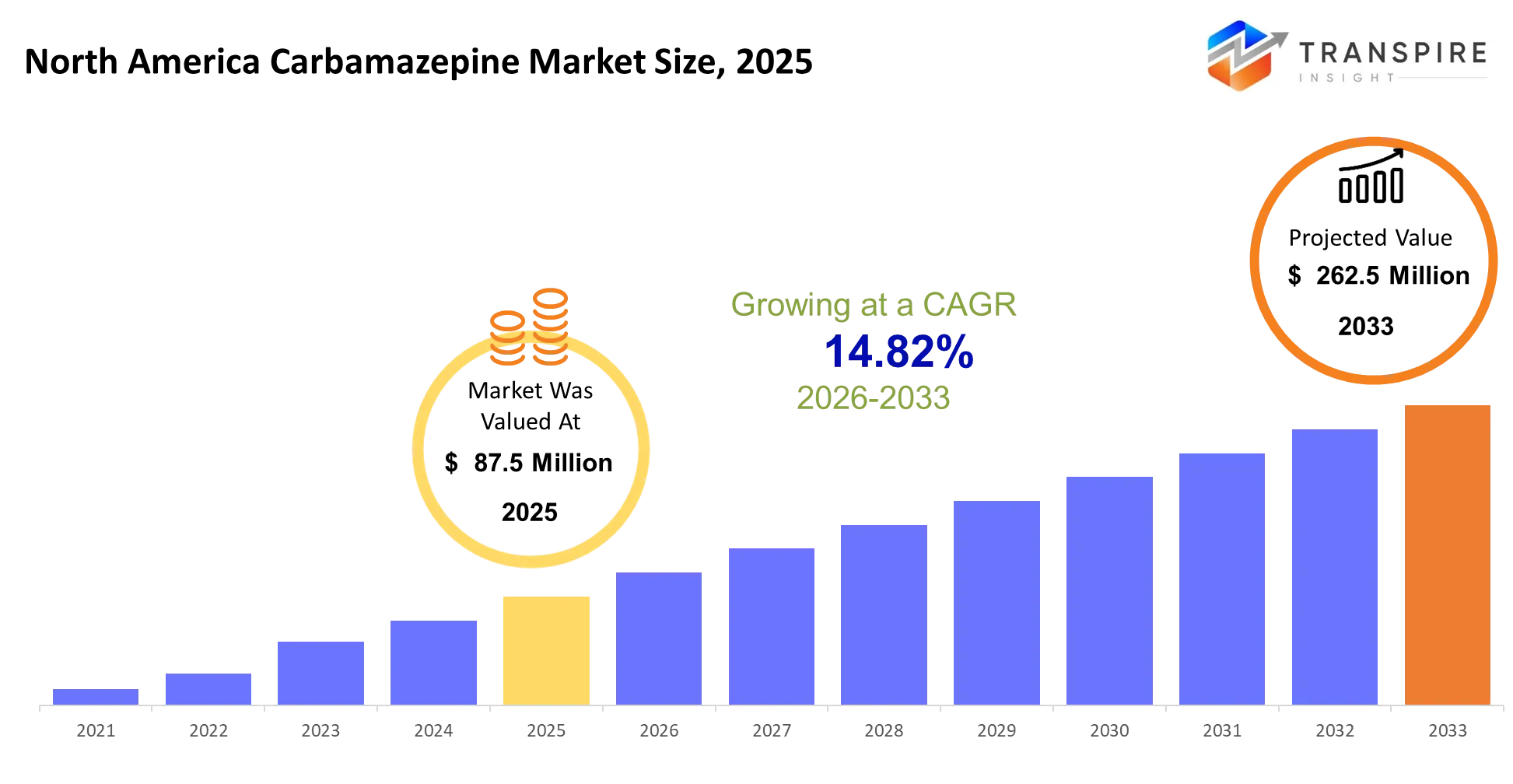
- North America Carbamazepine Market Size 2025: USD 87.5 Million
- North America Carbamazepine Market Size 2033: USD 262.5 Million
- North America Carbamazepine Market CAGR: 14.82%
- North America Carbamazepine Market Segments: By Form (Tablets, Capsules, Syrups, Injectable Formulations, Others); By Application (Epilepsy, Bipolar Disorder, Trigeminal Neuralgia, Neuropathic Pain, Others); By Distribution Channel (Hospital Pharmacies, Retail Pharmacies, Online Pharmacies, Others); By End User (Hospitals, Specialty Clinics, Home Care Settings, Others)
To learn more about this report,  Download Free Sample Report
North America Carbamazepine Market Summary
The North America Carbamazepine Market was valued at USD 87.5 Million in 2025. It is forecast to reach USD 262.5 Million by 2033. That is a CAGR of 14.82% over the period.
North America’s Carbamazepine Market basically backs long-term management for epilepsy, trigeminal neuralgia, bipolar disorder, and neuropathic pain, across hospitals, specialty clinics, and even home care routines. Most clinicians tend to keep choosing carbamazepine because it’s a cost-effective and clinically proven path for long-duration nervous system support, especially for people needing seizure stability over many years. And, since generic versions are widely available, plus reimbursement is pretty broad through insurance programs , the therapy stays really embedded in outpatient neurology and pain management tracks.
In the last five years, the whole market vibe moved toward extended-release formats and prescription workflows that are digitally managed, which helps with adherence and lowers the chances of treatment drop-offs. Also, pandemic-era supply chain shocks made it clear how much the system leaned on Asian sourcing for active pharmaceutical ingredients, so companies started diversifying procurement across North America. On top of that, regulatory attention on pharmacogenetic safety screening pushed prescribers to adjust, mainly for higher-risk patient groups. Altogether these structural moves are steering investment into controlled-release products, stronger inventory resilience, and more specialty neurology partnerships, which is creating steadier recurring revenue potential for manufacturers and healthcare distributors alike.
Key Market Insights
- The United States was basically running the North America Carbamazepine Market with almost 78% share in 2025, mostly because there’s a large neurological treatment setup, and prescriptions keep coming in big numbers , so yeah.
- Canada kept a notable market share via publicly financed healthcare, which really helped keep long term anticonvulsant therapy reimbursement stable, and treatment continuity didn’t wobble much.
- Mexico showed up as the quickest-growing regional market during 2026–2033. this happened after healthcare modernization programs, plus generic pharmaceutical distribution networks started expanding faster than before.
- Tablets took the lead in product demand in 2025, exceeding 60% market share, because neurologists leaned toward cost efficient oral formulations for ongoing epilepsy care.
- Extended release capsules were the next biggest formulation segment. outpatient care providers favored less frequent dosing, and that apparently improved patient adherence results.
- Injectable carbamazepine formulations are expected to grow the fastest through 2033, since more emergency neurological treatment capacity is being added across hospital systems.
- Epilepsy management made up around 55% of total demand in 2025 , it’s backed by repeat prescriptions and long-term seizure control protocols.
- Neuropathic pain management is showing newer demand momentum, as physicians started using lower-cost anticonvulsant options before moving toward opioid based treatment pathways.
- Bipolar disorder applications kept climbing steadily after specialty psychiatry clinics increased the use of add on mood stabilization therapies, especially for treatment-resistant patient groups.
- Hospitals held the biggest market share in 2025, because inpatient seizure care and neurological emergency services needs are handled there, co
What are the Key Drivers, Restraints, and Opportunities in the North America Carbamazepine Market?
Honestly, the main thing driving the North America Carbamazepine market looks like the steady climb in epilepsy and neuropathic pain diagnoses across the United States and Canada , especially for older demographics. With broader neurological screening efforts plus updated treatment directives, doctors seem to gravitate toward tried and true anticonvulsants, the ones with established efficacy and easier reimbursement pathways. Carbamazepine sort of “wins” here because payers and hospital networks often put lower-cost generic options first, before they even consider newer branded equivalents. So this sort of cost-containment push keeps improving prescription activity in outpatient neurology and long-term chronic pain programs, which then supports pretty consistent revenue growth for generic manufacturers and their contract partners.
On the other side the biggest restraint is the structural weight coming from strict regulatory monitoring tied to serious adverse events, like Stevens-Johnson syndrome and hematologic toxicity. Regulators expect heavy pharmacovigilance, tight labeling discipline, and in certain high-risk groups , genetic screening suggestions too. All of that raises compliance overhead for manufacturers and it also drags out approvals , including for new formulation types. And because these safeguards are built into the longer-running drug safety frameworks, they cannot just be taken away quickly. As a result the market expansion moves slower, and penetration across wider patient groups is delayed, even though real-world clinical demand stays there.
Still, there’s a meaningful opportunity showing up through extended-release and controlled-delivery formulations that aim to improve adherence for chronic neurological care.Some North American pharmaceutical firms are putting money into modified-release technologies, they help lower the dosing frequency and keep plasma drug levels steady. This overall direction feels especially appealing in the U.S outpatient care market, where clinicians are measuring whether treatment is working by looking at adherence related metrics and also fewer hospital readmissions , more or less.
What Has the Impact of Artificial Intelligence Been on the North America Carbamazepine Market?
Artificial intelligence is kind of re-shaping North America’s marine emission control systems market, mostly because it changes the way operators watch and run exhaust gas cleaning equipment across commercial fleets, you know. Shipping companies are now leaning on AI enabled scrubber performance systems, they grab real-time sensor data about sulfur oxide levels, wash water quality, pressure differentials, and even fuel consumption. From there, automated control platforms can tweak scrubber flow rates and chemical dosing, pretty much without any manual fuss, so vessels stay aligned with International Maritime Organization sulfur rules while also trimming operational downtime, which is a big deal.
On top of that, machine learning models are making predictive maintenance feel more proactive. Operators sift through vibration patterns, corrosion information, and pump efficiency trends to catch early warning signals of equipment failure, before breakdowns ever happen. A few fleet operators say they’ve seen clear reductions in unplanned maintenance incidents, plus fuel inefficiencies, once predictive analytics platforms went live. And there are AI driven emissions forecasting tools too, they assist shipping companies with route optimization and engine loading choices, which tends to boost fuel efficiency while lowering compliance risk, overall.
Still though, adoption has a noticeable snag. A lot of vessels deal with patchy satellite connectivity, so real time data transmission gets limited, and that in turn lowers the reliability of cloud based monitoring in offshore conditions.
Key Market Trends
- Since 2021, U.S. hospitals have kind of increased generic anticonvulsant procurement, to offset those rising neurological treatment costs and also insurer reimbursement pressure, it kind of squeezes everybody.
- Teva Pharmaceutical Industries and Sun Pharma expanded extended-release carbamazepine production after adherence focused prescribing guidelines started gaining traction, across outpatient neurology networks .
- Between 2020 and 2025, FDA scrutiny of active pharmaceutical ingredient sourcing intensified, following pandemic-era disruptions in Asian pharmaceutical supply chains, it was more visible than before .
- Canadian healthcare systems have shifted toward centralized epilepsy treatment programs, which helped with longer term prescription continuity and stabilized the recurring demand for established anticonvulsants, overall .
- Pharmacogenetic screening adoption picked up after regulators emphasized carbamazepine linked Stevens-Johnson syndrome risks in genetically susceptible patient populations , so clinicians paid attention faster .
- Retail pharmacy chains sped up digital prescription refill systems, reducing therapy interruptions among chronic epilepsy and trigeminal neuralgia patients .
- Since 2022, manufacturers have put more money into controlled-release formulations, that reduce daily dosing frequency and improve patient compliance rates, in real world practice .
- Competitive behavior changed a bit as low-cost generic manufacturers prioritized high-volume hospital contracts instead of fragmented independent pharmacy distribution channels, like before .
- North American distributors diversified raw material sourcing strategies, after freight volatility and ingredient shortages disrupted anticonvulsant inventories during the pandemic period.
North America Carbamazepine Market Segmentation
By Form
Tablets keep the leading spot across carbamazepine formulations because neurologists and primary care physicians, keep leaning toward oral solid dosages for long term epilepsy and neuropathic pain care. Prescriptions stay high, manufacturing is relatively cheap and insurance reimbursements come through broadly, so demand is pretty steady for immediate release and extended release tablet types. Retail pharmacies and hospital procurement teams tend to like tablets too, mainly due to longer shelf stability and simpler overall inventory handling. Capsules and syrups, meanwhile, are typically dispensed in smaller doses because routine use is mostly seen among pediatric patients and people with swallowing difficulties.
Injectable formulations are a smaller slice but they still matter in a strategic way, especially for urgent seizure management and inpatient neurological treatment. Hospitals are stocking injectable carbamazepine options more often to cut down delays during acute episodes, particularly in critical care units. Looking ahead, growth will probably focus on modified release tablets and more patient friendly liquid formats, since those help adherence in ongoing treatment programs. Developers are also expected to put additional emphasis into controlled release systems and abuse resistant packaging, as outpatient neurological care keeps expanding across North America.
By Application
Epilepsy is still the main application segment because carbamazepine has been, for a long time, clinically effective for focal seizure control and ongoing neurological treatment routines. There are big patient numbers, long-time prescribing comfort, and continued inclusion in essential medicine guidelines, which all keep prescription demand fairly steady in the United States and Canada. Bipolar disorder and trigeminal neuralgia also bring in solid revenue, even if mental health pathways are slowly folding in newer mood stabilizers, and combo therapies, more often. For neuropathic pain, adoption has picked up as clinicians look for lower-cost options first before moving to pricier biologic approaches or opioid centered regimens, in other words they try stepwise escalation.
Looking ahead, clinical diversification is starting to steer the next application patterns, especially as health systems put more weight on long-term outpatient oversight and treatment adherence monitoring. Trigeminal neuralgia demand should climb as populations age and neurological diagnosis rates rise. Pharmaceutical groups may push indication tuned formulations, plus dosage optimization, to reinforce their market position. Specialty neurology providers might also extend therapeutic monitoring programs that help refine dosing accuracy and limit adverse reactions during long term treatment cycles.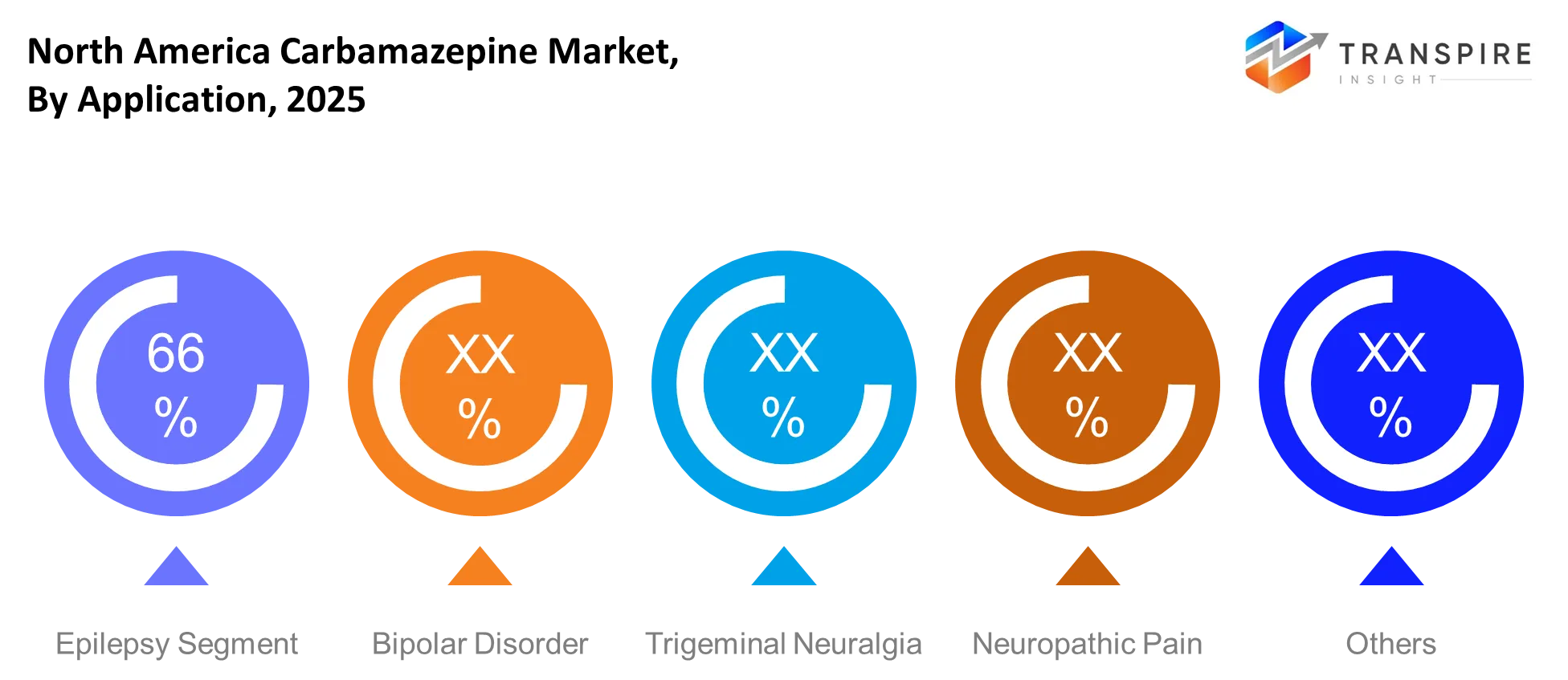
To learn more about this report, Download Free Sample Report
By Distribution Channel
Retail pharmacies right now take the biggest slice of distribution, mainly because chronic neurological conditions need recurring prescription refills and long term patient access. Big pharmacy chains get a real edge from existing insurer ties, automated re up systems, and wide geographic coverage across city plus suburban areas. Hospital pharmacies sit in a solid second role, too, since acute neurological care demands and inpatient seizure management protocols are pretty strict, keeping them relevant. Online pharmacies keep building momentum, especially as digital prescription platforms and mail order medication programs keep getting smoother for people in long term treatment plans.
Overall the distribution playbooks are kind of moving toward digitally integrated fulfillment models. The goal is to cut down prescription interruption risks, and also make adherence tracking easier, which sounds small but it matters. Online routes are expected to grow steadily as telehealth consultations and electronic prescribing tools become more usual in neurological care pathways. Pharmaceutical suppliers may want to deepen partnerships with digital pharmacy networks, basically to protect recurring revenue and improve patient stickiness. Finally, buyers and healthcare systems will likely choose distributors with reliable inventory management capabilities, particularly after the recent supply chain disruptions across North America.
By End User
Hospitals are still the top end-user segment, because inpatient neurological care plus emergency seizure care, and even tight dose monitoring, often needs firm institutional oversight. Big healthcare systems tend to keep steady procurement arrangements for carbamazepine products since epilepsy admissions keep coming back, and chronic neurological treatment programs stay in place. Specialty clinics are also taking a larger slice, not just because outpatient neurology keeps expanding but because diagnostic precision is getting better, bit by bit. Meanwhile, home care environments keep getting stronger too, as long-term epilepsy management slowly shifts away from staying in hospital for long stretches.
Looking ahead, the demand curve seems like it will tilt more toward decentralized neurological treatment, supported by remote monitoring and digital prescription handling. Specialty clinics should see quicker growth as providers push for focused chronic disease management and try to reduce inpatient treatment costs. Home care adoption might speed up as well, driven by adherence centered therapies and dosing formats that are simpler for long-term use outside of institutions. Investors and pharmaceutical manufacturers will probably put more emphasis on patient support platforms, plus extended-release products that fit with the outpatient expansion trend.
What are the Key Use Cases Driving the North America Carbamazepine Market?
Epilepsy treatment still feels like the main reason people adopt carbamazepine across North America. Neurology departments, hospital pharmacies, and long-term outpatient programs primarily rely on it for focal seizure control, given its proven clinical efficacy and broad insurance reimbursement coverage. There is also this steady refill demand from long-time epilepsy patients, which keeps turning into the biggest prescription volumes, overall.
Meanwhile, bipolar disorder and trigeminal neuralgia are growing too, kind of quietly but steadily in speciality clinics and retail pharmacy channels. Psychiatrists are more often using carbamazepine for mood stabilization in treatment resistant situations. At the same time, pain management teams use it to keep severe facial nerve pain under control. And the expansion of outpatient neurological services, has helped pull demand up across those secondary areas as well.
Newer use cases show up too, like combination neurological therapies, and dosing that is more precision-guided with pharmacogenetic screening programs. Healthcare providers are also looking at extended release formulations for home care patients who need stable long term symptom management, with fewer dosing moments, which sounds simple but it matters for adherence.
|
Report Metrics |
Details |
|
Market size value in 2025 |
USD 87.5 Million |
|
Market size value in 2026 |
USD 99.8 Million |
|
Revenue forecast in 2033 |
USD 262.5 Million |
|
Growth rate |
CAGR of 14.82% from 2026 to 2033 |
|
Base year |
2025 |
|
Historical data |
2021 - 2024 |
|
Forecast period |
2026 - 2033 |
|
Report coverage |
Revenue forecast, competitive landscape, growth factors, and trends |
|
Regional scope |
North America (Canada, The United States, and Mexico) |
|
Key company profiled |
Novartis, Teva Pharmaceuticals, Sun Pharmaceutical, Pfizer, Mylan, Sanofi, Torrent Pharmaceuticals, Apotex, Aurobindo Pharma, Lupin, Zydus Lifesciences, Hikma Pharmaceuticals, Amneal Pharmaceuticals, Glenmark Pharmaceuticals, Cipla |
|
Customization scope |
Free report customization (country, regional & segment scope). Avail customized purchase options to meet your exact research needs. |
|
Report Segmentation |
By Form (Tablets, Capsules, Syrups, Injectable Formulations, Others); By Application (Epilepsy, Bipolar Disorder, Trigeminal Neuralgia, Neuropathic Pain, Others); By Distribution Channel (Hospital Pharmacies, Retail Pharmacies, Online Pharmacies, Others); By End User (Hospitals, Specialty Clinics, Home Care Settings, Others) |
Which Regions are Driving the North America Carbamazepine Market Growth?
The United States basically holds the lead in the regional carbamazepine picture, because it has very advanced neurological care infrastructure , plus the epilepsy diagnosis rates are relatively high, and the generic pharmaceutical manufacturing capacity is strong. Federal reimbursement programs, along with fairly widespread insurance coverage, keep supporting long-term anticonvulsant therapy adoption across both hospital and outpatient settings. Big retail pharmacy chains, and also integrated healthcare networks, sustain that recurring prescription demand using automated refill systems and chronic disease management programs. In addition, strong FDA oversight kinda reinforces product quality standards, so major generic drug manufacturers, and specialty neurology providers keep investing, and not stopping anytime soon.
Canada is a more steady and publicly coordinated market, shaped by centralized healthcare systems and consistent access to neurological treatment. The provincial reimbursement frameworks create predictable prescription volumes for epilepsy as well as neuropathic pain therapies, and that tends to lower demand volatility, compared to markets that feel more commercially driven. Canadian hospitals and specialty clinics also focus on long-term treatment continuity, which supports steady utilization of established anticonvulsant therapies , rather than quick switching between rival medications. Because of that stability, Canada ends up acting as a dependable contributor to regional pharmaceutical revenue, even if the patient base is smaller.
Mexico meanwhile is starting to look like the fastest-growing regional option, driven by expanding healthcare access, rising neurological diagnosis rates, and more widespread generic drug penetration. Public healthcare modernization programs, plus investments in pharmaceutical distribution networks, have improved medication availability across urban areas and secondary care centers. Domestic and international manufacturers are strengthening supply partnerships in response to growing demand for lower-cost epilepsy and pain management therapies. Market expansion across Mexico creates meaningful opportunities for generic drug suppliers, contract manufacturers, and regional distributors through the 2026–2033 forecast period.
Who are the Key Players in the North America Carbamazepine Market and How Do They Compete?
The North America carbamazepine market runs in a kinda moderately consolidated competitive setup, where big generic pharmaceutical manufacturers end up controlling a lot of prescription volume, mainly by pricing strength , solid regulatory compliance and pharmacy distribution reach. The rivalry mostly happens around cost efficiency formulation reliability and the ability to keep shipping steadily over time, not so much around breakthrough innovation since carbamazepine is already a mature therapy. Incumbent firms keep defending their market share with extended-release product series, high-volume hospital deals , and supply chains that are vertically integrated. Meanwhile, smaller entrants run into hurdles tied to regulatory approval expenses pharmacovigilance duties and pretty narrow access to large retail pharmacy procurement agreements , which slows them down.
Teva Pharmaceutical Industries  has boosted its market position using aggressive generic pricing and big manufacturing capacity, helping it maintain steady availability across U.S. retail pharmacy networks. It also tends to stand out through a wide range of neurological medicines and established relationships with insurers, that together support better formulary placement. Sun Pharmaceutical Industries  leans hard into extended-release formulations and cost optimized production. This helps it push into long-term outpatient care programs more effectively. Their expansion efforts are increasingly aimed at North American specialty pharmacy channels and hospital purchasing partnerships too.
Novartis stays competitively relevant through brand recognition and deep neurological treatment know-how , especially in settings where specialist physicians have a bigger influence. The company leverages clinical credibility and physician familiarity to sustain demand despite generic competition. Apotex Inc. differentiates through Canadian manufacturing strength and stable domestic distribution infrastructure that supports provincial healthcare procurement systems. Mylan N.V., now operating under Viatris, continues expanding through global supply chain integration and high-volume generic manufacturing designed to reduce production costs and improve inventory resilience during pharmaceutical supply disruptions.
Company List
- Novartis
- Teva Pharmaceuticals
- Sun Pharmaceutical
- Pfizer
- Mylan
- Sanofi
- Torrent Pharmaceuticals
- Apotex
- Aurobindo Pharma
- Lupin
- Zydus Lifesciences
- Hikma Pharmaceuticals
- Amneal Pharmaceuticals
- Glenmark Pharmaceuticals
- Cipla
Recent Development News
In April 2026, Teva Pharmaceuticals announced the acquisition of Emalex Biosciences for $700 million. The acquisition expanded Teva’s neuroscience pipeline and reinforced long-term investment in neurological treatment markets closely connected to anticonvulsant and central nervous system therapies. https://www.tevausa.com
In January 2026, Teva Pharmaceuticals entered an expanded funding agreement with Royalty Pharma to accelerate development of the anti-IL-15 therapy TEV-‘408. The investment strengthened Teva’s neurology and immunology innovation pipeline while supporting broader specialty pharmaceutical expansion across North America. https://www.tevausa.com
What Strategic Insights Define the Future of the North America Carbamazepine Market?
The North America carbamazepine market is kind of sliding toward a more specialized and adherence centered treatment setup, driven by aging demographics, more neurological diagnosis rates showing up, and also outpatient care models that are getting broader. Over the next five to seven years, extended release products, digital prescription management, and pharmacogenetic screening will probably nudge prescribing behavior in a new direction, or at least more tightly. At the same time though, market expansion comes with a quieter kind of risk, tied to the active pharmaceutical ingredient concentration in Asia. If manufacturers keep relying on a small number of raw material suppliers, they can end up exposed to pricing shocks, regulatory disruptions, and even repeated inventory shortages, especially when geopolitical conditions or trade related instability start acting up.
Meanwhile there’s a real opportunity starting to form around precision neurology programs that blend genetic screening with anticonvulsant prescribing decisions. Healthcare systems in the United States and Canada, are gradually rolling out genotype based safety checks for neurological therapies that are considered higher risk, and that’s creating room for premium differentiated formulations plus companion diagnostic partnerships. Pharmaceutical companies and investors should put emphasis on regional manufacturing diversification, and also on specialty neurology collaborations, so supply resilience holds up better and long term institutional contracts get locked in.
North America Carbamazepine Market Report Segmentation
By Form
- Tablets
- Capsules
- Syrups
- Injectable Formulations
- Others
By Application
- Epilepsy
- Bipolar Disorder
- Trigeminal Neuralgia
- Neuropathic Pain
- Others
By Distribution Channel
- Hospital Pharmacies
- Retail Pharmacies
- Online Pharmacies
- Others
By End User
- Hospitals
- Specialty Clinics
- Home Care Settings
- Others
Frequently Asked Questions
Find quick answers to common questions.
The Expected North America Carbamazepine Market size is USD 262.5 Million in 2033.
Key segments for the North America Carbamazepine Market are By Form (Tablets, Capsules, Syrups, Injectable Formulations, Others); By Application (Epilepsy, Bipolar Disorder, Trigeminal Neuralgia, Neuropathic Pain, Others); By Distribution Channel (Hospital Pharmacies, Retail Pharmacies, Online Pharmacies, Others); By End User (Hospitals, Specialty Clinics, Home Care Settings, Others).
Major North America Carbamazepine Market players are Novartis, Teva Pharmaceuticals, Sun Pharmaceutical, Pfizer, Mylan, Sanofi, Torrent Pharmaceuticals, Apotex, Aurobindo Pharma, Lupin, Zydus Lifesciences, Hikma Pharmaceuticals, Amneal Pharmaceuticals, Glenmark Pharmaceuticals, Cipla.
The current North America Carbamazepine Market size is USD 87.5 Million in 2025.
The North America Carbamazepine Market CAGR is 14.82% from 2026 to 2033.
- Novartis
- Teva Pharmaceuticals
- Sun Pharmaceutical
- Pfizer
- Mylan
- Sanofi
- Torrent Pharmaceuticals
- Apotex
- Aurobindo Pharma
- Lupin
- Zydus Lifesciences
- Hikma Pharmaceuticals
- Amneal Pharmaceuticals
- Glenmark Pharmaceuticals
- Cipla
Recently Published Reports
-
May 2026
Biosimilars Market
Biosimilars Market By Product Type (Monoclonal Antibodies, Recombinant Hormones, Erythropoietin, G-CSF, Others), By Indication (Oncology, Autoimmune Diseases, Blood Disorders, Diabetes, Others), By Manufacturing Type (In-House Manufacturing, Contract Manufacturing), By Distribution Channel (Hospital Pharmacies, Retail Pharmacies, Online Pharmacies), By Industry Analysis, Size, Share, Growth, Trends, and Forecasts 2021-2033
-
Apr 2026
Gastrointestinal Endoscopy Market
Gastrointestinal Endoscopy Market By Type (Rigid Gastrointestinal Endoscope, Flexible Gastrointestinal Endoscopes, Disposable Gastrointestinal Endoscope), By Procedure Type (Colonoscopy, Gastroscopy, Duodenoscopy, Enteroscopy, Flexible Sigmoidoscopy, Others), By Application (Diagnosis, Treatment), By End-Users (Hospitals, Ambulatory Surgical Centers, Specialty Clinics, Laboratories, Others), By Industry Analysis, Size, Share, Growth, Trends, and Forecasts 2021-2033
-
Apr 2026
Rare Inherited Metabolic Disorder Drug Market
Rare Inherited Metabolic Disorder Drug Market By Drug Class (Enzyme Replacement Drugs, Gene Therapy Drugs, Substrate Reduction Drugs, Small Module Drugs, Protein Drugs), By Route of Administration(Parenteral, Oral, Intrathecal), By Clinical Development (Marketed Drugs, Late Stage Clinical Phase III, Early Stage Clinical Phase I-II, Preclinical Candidates), By Indication (Lysosomal Storage Disorders, Urea Cycle Disorders, Amino Acid Metabolic Disorders, organic Acidemias, Peroximal Disorders), By Industry Analysis, Size, Share, Growth, Trends, and Forecasts 2021-2033
-
Jan 2026
Pharmaceutical Cleanroom Technology Market
Pharmaceutical Cleanroom Technology Market By Product (Equipment, Consumables, Services); By Cleanroom Type (Standard Cleanrooms, Modular Cleanrooms); By End Use (Pharmaceutical Companies, Biotechnology Companies), By Industry Analysis, Size, Share, Growth, Trends, and Forecasts 2021-2033