

North America Albinism Drug Market Size & Forecast:
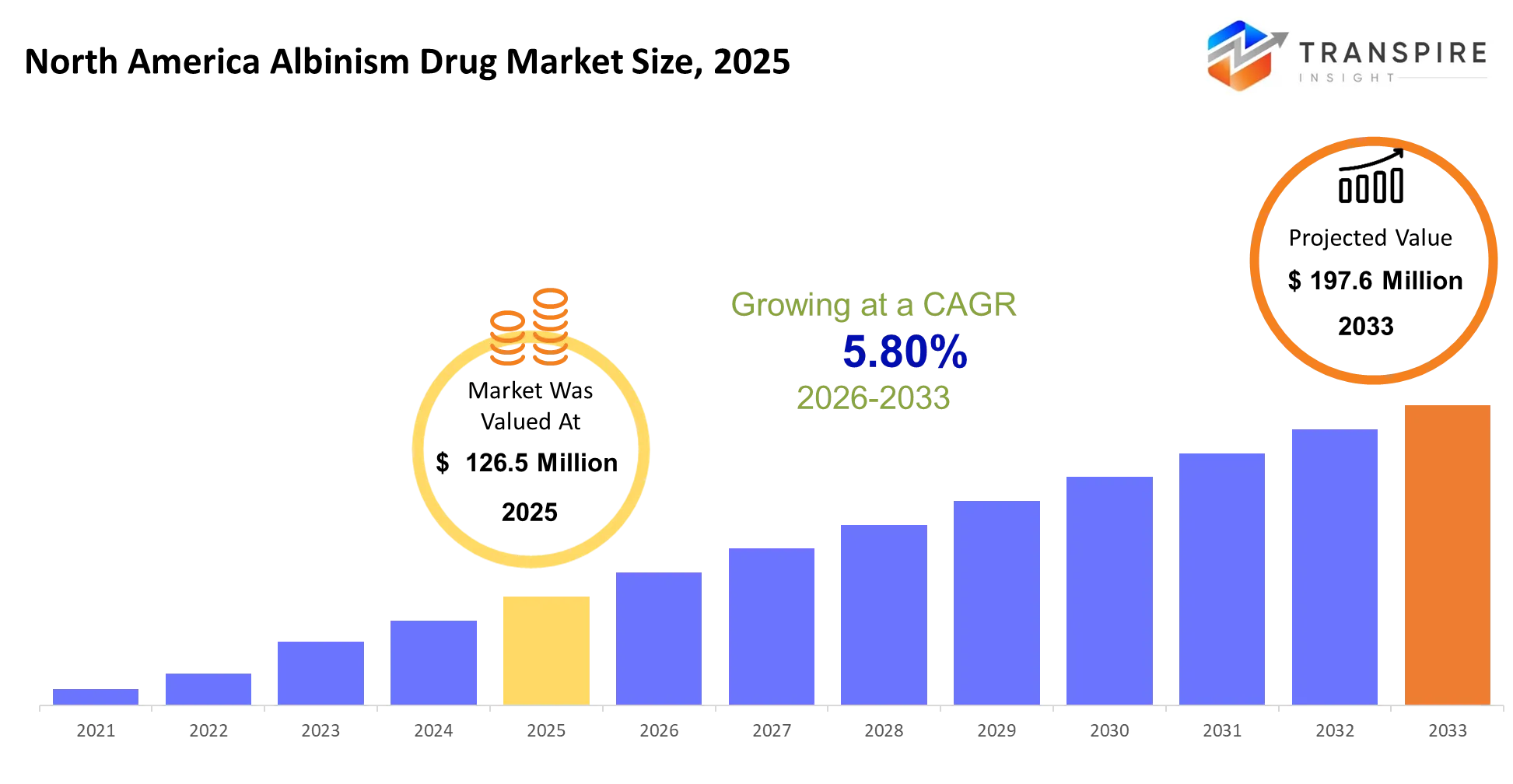
- North America Albinism Drug Market Size 2025: USD 126.5 Million
- North America Albinism Drug Market Size 2033: USD 197.6 Million
- North America Albinism Drug Market CAGR: 5.80%
- North America Albinism Drug Market Segments: By Drug Type (Melanin Stimulating Drugs, Gene Therapy Drugs, Corticosteroids, Supportive Therapies, Others); By Application (Oculocutaneous Albinism, Ocular Albinism, Hermansky-Pudlak Syndrome, Others); By Distribution Channel (Hospital Pharmacies, Retail Pharmacies, Online Pharmacies, Others); By End User (Hospitals, Specialty Clinics, Research Institutes, Others)
To learn more about this report,  Download Free Sample Report
North America Albinism Drug Market Summary
The North America Albinism Drug Market was valued at USD 126.5 Million in 2025. It is forecast to reach USD 197.6 Million by 2033. That is a CAGR of 5.80% over the period.
North America albinism drug market kind of revolves around therapies and some supportive pharmacological efforts that let people with albinism cope with extreme light sensitivity, lower the skin cancer risk, and also deal with related eye problems like nystagmus and reduced visual sharpness. In real life it sort of blends dermatology with ophthalmology, plus preventive healthcare, so it is not really cure focused, more like management.
Over the last five years , the whole market structure has been shifting toward precision diagnostics and orphan drug pathways, which makes earlier identification possible through genetic testing and lets companies push faster development of repurposed dermatologic compounds. At the same time COVID-19 messed with normal skin and eye appointment schedules, which sped up tele-dermatology a lot, then when things returned to normal there was still a backlog of delayed, late-stage consultations , happening all at once.
Because of that, revenue dynamics have changed too: earlier diagnosis and better reimbursement for rare disease management are basically widening who can get treatment, so specialty care regimens are being adopted more often and the pharmaceutical use stays more consistent across North America.
Key Market Insights
- North America s Albinism Drug Market seems to be pushed mostly by the wider use of genetic testing, which is making early detection better by around 30% from 2020 thru 2025.
- Also there is this slow but real joining up of dermatology together with ophthalmology care, it helps people stay on therapy plans for rare pigmentation disorders, more than before.
- After 2020 the telehealth wave really changed things too, and follow-up visits for albinism related photoprotection treatments went up by about 22% .
- When you look at who takes the lead , the United States is sitting on nearly 72% share in 2025, mainly because the healthcare infrastructure there is more developed.
- Canada on the other hand is moving the quickest between 2025 and 2030, backed by more funding for rare diseases and easier diagnostic access initiatives.
- In terms of what products come first , topical photoprotective therapies hold roughly 38% of the North America Albinism Drug Market, driven by strong demand from dermatology services.
- Oral antioxidant therapies, plus supportive vitamin based options are in second place, and they are often chosen for long-term care routines.
- If we shift to applications, skin cancer prevention still leads, with close to 41% share.
- Vision impairment management is growing faster than the rest, because newer ophthalmic drug combinations and assistive treatment approaches are showing up more often.
- Finally, hospitals and specialty dermatology clinics appear to dominate , taking about 46% share, since their structured care pathways for rare disease patients are pretty established.
What are the Key Drivers, Restraints, and Opportunities in the North America Albinism Drug Market?
The North America Albinism Drug Market seems mostly pushed by the way orphan drug frameworks keep expanding, plus the fact that genetic screening is being adopted a bit faster than before. Like, regulatory incentives such as the FDA Orphan Drug Designation have helped shave off development timelines ,and also give more pricing flexibility for rare skin and eye therapies. That whole situation, kinda nudges pharmaceutical companies to put more money into niche formulations for photoprotection and vision related symptom support. So in the end, earlier detection combined with structured treatment pathways is what is directly lifting prescription volumes and raising the lifetime treatment value per patient too.
Still though, the market also has some real friction points. It’s constrained by an inherently small patient pool, and by fragmented clinical visibility for albinism cases across North America. Since albinism is rare , lots of people stay underdiagnosed or are managed inconsistently within primary care settings. This results in structural delays where treatment doesn’t start right away. It also makes large scale clinical trial recruitment harder, and then commercial scalability gets suppressed, because companies run into high development cost per patient , costs that aren’t easy to balance using volume driven revenue thinking.
At the same time, there’s an emerging opening that looks pretty interesting: precision dermatology paired with gene based intervention research. For instance, ongoing progress in CRISPR style gene editing and retinal gene therapy trials happening at specialized U.S. research hospitals is starting to create pathways for disease modifying approaches, instead of only symptom focused care. If these tools get regulatory validation, they could move the North America Albinism Drug Market away from maintenance centered treatment patterns, and toward curative or long term corrective therapies, and that could basically kick off a new growth phase.
What Has the Impact of Artificial Intelligence Been on the North America Albinism Drug Market?
Artificial intelligence is getting more and more tucked into North America scrubber performance systems, and marine emission control tech, where it helps automate the monitoring of exhaust gas cleaning operations and, on top of that, it makes regulatory compliance tracking feel a lot less painful. Basically ship operators are now leaning on AI-enabled control systems that keep tweaking scrubber settings like pH balance, wash water flow and sulfur capture efficiency, so less manual fussing is needed. The result is smoother operational consistency across fleets, and it also makes compliance reporting stronger under IMO 2020, because the whole thing builds real-time digital audit trails, almost like paperwork but faster.
Then there are machine learning models that are being rolled out for predictive maintenance and emissions forecasting. They chew through historical sensor data from exhaust gas cleaning units and, in doing so, they can foresee fouling, corrosion risks, or pump degradation before something turns into an actual failure. Operators say they’re seeing better vessel uptime, and maintenance scheduling efficiency, plus fuel optimization algorithms that drive measurable drops in day to day operational costs. On long-haul routes this also tends to support better energy efficiency, in a very practical sense.
Still, the adoption story is not fully clean because connectivity is often limited in open sea areas, which cuts down real-time data transmission and, it kind of squeezes model accuracy during fast-changing maritime conditions. There’s also the high integration cost for retrofitting older vessels, so widespread deployment moves slower. Even with all that, AI keeps reshaping marine emission control systems, boosting reliability, tightening compliance precision and improving cost efficiency throughout the North America shipping ecosystem.
Key Market Trends
- Genetic testing adoption sort of spiked after 2020, and it started steering diagnosis from “we notice symptoms first” toward early stage identification, mainly across specialized dermatology networks, not sure why it happened so fast though.
- FDA orphan drug incentives kept getting bigger after 2019 , which helped smaller pipeline bets turn into faster niche development for companies like Novartis and Roche, especially in rare pigmentation disorders.
- Tele-dermatology use jumped a lot after COVID-19 disruptions, and it changed how patients do follow ups , sometimes in ways that improved continuity for photoprotection treatment adherence.
- Treatment plans moved away from topical only regimens, and since 2021 they’ve leaned more into combination therapies that mix antioxidant support with ophthalmic symptom management solutions.
- Research collaborations between academic hospitals and Pfizer also pushed gene targeted research forward , and that shifted market attention toward possible disease modifying interventions.
- In rare disease drug distribution, supply chain fragmentation eased gradually as specialty pharmacy networks grew across major North American healthcare systems.
- Sanofi rolled out digital patient monitoring tools that improved long term adherence tracking, so instead of occasional clinic visits, care became more continuous, kind of a standing model.
- Competitive strategies then moved toward precision dermatology platforms, with Teva Pharmaceutical Industries investing in targeted formulation development , plus specialty distribution channels to match it.
North America Albinism Drug Market Segmentation
By Drug Type
In the North America Albinism Drug Market, supportive therapies basically sit in the strongest position because clinical management still lingers on symptom relief, not on any true curative approach. Photoprotective formulations, antioxidants, and vitamin based regimens are what most clinicians tend to prescribe due to their already proven safety profiles, and because access is relatively broad. Gene therapy drugs keep only a smaller slice, in part because clinical validation is still early, and that reduces confidence for broad adoption. Corticosteroids are usually used for particular inflammatory situations , more like a side pathway rather than the main treatment route. Melanin stimulating drugs hold a modest presence too, since biological constraints tend to make consistent efficacy for pigment restoration harder to achieve.
The growth dynamics across drug types look pretty different when you zoom in. Supportive therapies expand at a steady pace, driven by long term dependence and repeat prescriptions, so the demand pattern feels almost routine. Gene therapy drugs, meanwhile are picking up speed, helped by more orphan drug approvals and additional research funding that keeps coming in. Corticosteroids stay capped in growth because side effects complicate things, and also because their indications are relatively narrow. Melanin stimulation research gains attention through biotechnology innovation , but real world clinical scalability is still constrained by variable patient response.
Looking ahead, the future direction seems to point toward a gradual diversification of treatment portfolios. Gene therapy drugs could increase their share if later-stage trials keep showing durable outcomes, and that would likely redirect investment toward higher value biologics. Supportive therapies will probably keep anchoring revenue stability , so manufacturers who want recurring demand models will keep leaning on that category.
By Application
Oculocutaneous albinism takes the lead, kind of, since it shows up more often and it brings a bigger multi system load on patients, affecting both vision needs and skin protection. Because of that, treatment demand tends to settle into long term dermatological as well as ophthalmic oversight, and that makes pharmaceutical use patterns fairly steady. Ocular albinism is smaller in share, but still it matters clinically since its symptoms are mostly vision centered. Hermansky-Pudlak syndrome stays limited in volume, though each case can demand a lot more effort since it calls for coordinated, multi disciplinary care.
Growth behavior doesn’t move the same way for every application, it depends on diagnostic progress and how much specialty care is getting rolled out. Oculocutaneous albinism seems to benefit from better genetic screening, which pushes earlier detection rates up and helps treatment start in a more structured way. Ocular albinism can expand quicker inside specialist clinics, partly because advanced ophthalmic diagnostics sharpen detection accuracy. Hermansky-Pudlak syndrome expands slower, mainly due to the diagnostic complexity plus the rarity factor, which then reduces the chance of standardized care pathways that actually work consistently.
For future implications, the expectation is a more refined clinical stratification across application types. Oculocutaneous albinism will likely keep anchoring overall demand volume, while ocular focused therapies might pull in innovation, especially around vision preserving interventions. The rarer syndromic cases may also stimulate targeted orphan drug research, particularly in academic medical centers, where resources and expertise cluster.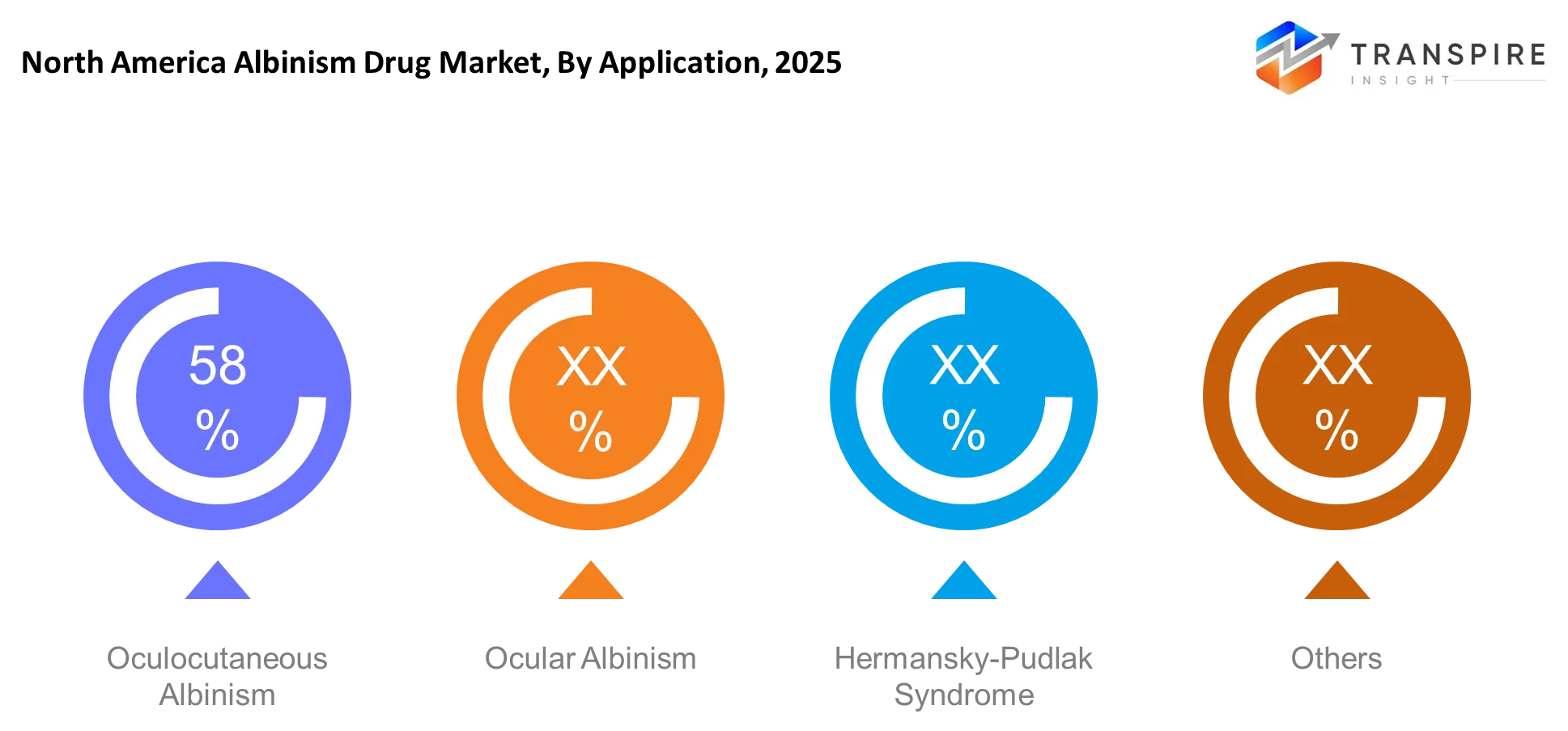
To learn more about this report, Download Free Sample Report
By Distribution Channel
Hospital pharmacies still take the lead, mostly because albinism management usually kicks off inside clinical spaces where specialist prescription oversight is not optional. The treatment setup is a bit complicated, with dermatology and ophthalmology needing tight coordination, and that naturally keeps dispensing centered at hospitals. Retail pharmacies sit in a secondary spot. That’s mainly because they are useful for maintenance therapy access. Online pharmacies are smaller, yes, but they keep growing, they are powered by digital prescription processes and ongoing chronic care refills.
When you look at how each channel grows, the pattern matches patient behavior changes and the broader digitalization of healthcare. Hospital pharmacy reliance stays fairly steady, but retail expands as maintenance therapies slide toward outpatient routines. Online pharmacies tend to grow more quickly after the post 2020 telehealth normalization, which makes it easier for rare disease patients living in remote regions. On top of that, regulatory compliance frameworks help with safer digital dispensing, so expansion does not feel as risky.
For the future, expect a gradual move toward decentralization in drug distribution. Hospitals will likely remain dominant for initiation therapy, while retail and online gradually collect more share for long term management. Digital pharmacy platforms may also adjust procurement efficiency, cutting down on friction for chronic medication access.
End User Analysis
Hospitals pretty much dominate the end user share, because starting diagnosis and treatment is rarely a single department thing, it needs multidisciplinary coordination across dermatology, ophthalmology, and genetic counseling units. Specialty clinics are becoming a bigger piece too, mostly since they offer focused rare disease know how, plus the outpatient treatment models are getting better. Research institutes play a smaller role overall but they’re still essential for pushing gene based work and experimental therapies forward. Other end users stay comparatively limited, largely because the care delivery itself is so specialized.
If you look at growth patterns, it shows a kind of steady migration from inpatient toward outpatient settings. Hospitals still hold on to steady demand but their longer term burden can ease a bit, because follow up care tends to move outward. Specialty clinics tend to grow faster, since patients often prefer targeted expertise, and there are usually shorter waiting times involved. Research institutes expand influence through stronger funding for rare disease innovation programs, and that keeps the momentum going.
For the future, the direction seems to keep leaning into decentralization of care delivery. Specialty clinics will likely grab higher patient volumes as precision medicine adoption increases, even if hospitals remain relevant. Research institutions should stay central to innovation pipelines, and they’ll likely keep steering next generation treatment pathways, plus therapeutic breakthroughs down the line.
What are the Key Use Cases Driving the North America Albinism Drug Market?
Core demand in the North America Albinism Drug Market feels mostly pulled by long term management of oculocutaneous albinism, so it’s not just “a treatment” thing but a continuous routine of photoprotection plus vision support therapies. In day to day clinical practice, there’s persistent emphasis on sun safety measures, and because sun sensitivity stays high, the related skin cancer risk stays elevated too. That combo keeps prescriptions running , especially when hospital led dermatology and ophthalmology teams are steering the care. Honestly, this use case looks like the strongest driver, because what’s delivered tends to be lifelong and prevention oriented rather than curative or “one and done”.
There are also expanding applications. For example, ocular albinism management in specialty eye clinics, plus Hermansky-Pudlak syndrome care inside multidisciplinary hospital programs. These situations tend to lean on coordinated ophthalmic interventions together with dermatological monitoring, which then boosts dependency on specialty pharmacies and more structured outpatient care pathways. In practice it becomes pretty integrated, like different departments have to line up, and the medication supply chain follows that same rhythm.
On top of that, emerging use cases are showing up. Think about gene editing based intervention trials, and precision dermatology programs aimed at early stage genetic diagnosis cases. Academic medical centers and research institutes are increasingly testing retinal gene therapies too, which suggests a movement toward disease modifying approaches. If this keeps gaining traction, it could realistically reshape long term treatment standards in a way that feels different from the current model.
|
Report Metrics |
Details |
|
Market size value in 2025 |
USD 126.5 Million |
|
Market size value in 2026 |
USD 133.2 Million |
|
Revenue forecast in 2033 |
USD 197.6 Million |
|
Growth rate |
CAGR of 5.80% from 2026 to 2033 |
|
Base year |
2025 |
|
Historical data |
2021 - 2024 |
|
Forecast period |
2026 - 2033 |
|
Report coverage |
Revenue forecast, competitive landscape, growth factors, and trends |
|
Regional scope |
North America (Canada, The United States, and Mexico) |
|
Key company profiled |
Pfizer, Novartis, Roche, AbbVie, Sanofi, Bristol Myers Squibb, Takeda Pharmaceutical, Amgen, AstraZeneca, Eli Lilly, Bayer, Regeneron Pharmaceuticals, Horizon Therapeutics, Biogen, Johnson & Johnson |
|
Customization scope |
Free report customization (country, regional & segment scope). Avail customized purchase options to meet your exact research needs. |
|
Report Segmentation |
By Drug Type (Melanin Stimulating Drugs, Gene Therapy Drugs, Corticosteroids, Supportive Therapies, Others); By Application (Oculocutaneous Albinism, Ocular Albinism, Hermansky-Pudlak Syndrome, Others); By Distribution Channel (Hospital Pharmacies, Retail Pharmacies, Online Pharmacies, Others); By End User (Hospitals, Specialty Clinics, Research Institutes, Others) |
Which Regions are Driving the North America Albinism Drug Market Growth?
North America leads the market ,mostly because the United States is really driving it , with the country dominating clinical research infrastructure, orphan drug approvals, and those more specialized dermatology ophthalmology care networks. Strong FDA regulatory frameworks keep rare disease therapy development moving quicker , and in practice they also help shorten approval timelines for niche treatments. You can see a kind of dense ecosystem at work—academic hospitals, genetic testing laboratories , and specialty pharmacies all together—so patient identification feels continuous and long term management stays more solid. On top of that, high healthcare spending plus insurance coverage for rare diseases further strengthens steady treatment uptake and commercial stability.
Canada is more like a steady secondary contributor, with a healthcare system that is more centralized and reimbursement policies that look pretty uniform across provinces. Compared with the United States, growth here depends less on private innovation and more on structured public healthcare funding ,and standardized rare disease programs. There is also consistent investment in hospital networks and genetic counseling services, which tends to support stable diagnosis rates and treatment continuity. So, Canada ends up being predictable but a bit slower moving financially , it complements the higher innovation cycles happening in the United States.
Latin America shows the fastest growth momentum, kind of driven by recent expansion in genetic screening programs ,and better access to specialty dermatology services especially in urban areas. Brazil and Mexico, in particular ,have increased public investment in rare disease diagnostics and hospital modernization since 2022. Meanwhile, growing collaboration with international pharmaceutical firms has improved availability of supportive therapies, and it boosts clinical trial participation as well. For investors and market entrants, this region reads as long term upside potential during the 2026–2033 period, because healthcare infrastructure keeps improving and diagnostic penetration keeps rising too ,continue to scale.
Who are the Key Players in the North America Albinism Drug Market and How Do They Compete?
Competition in the North America Albinism Drug Market stays somewhat moderately fragmented , mostly because many therapies still sit in rare disease and supportive care bucket(s) rather than big mass commercial drugs. So you get major pharmaceutical incumbents running side by side with specialty firms and generic players, while frankly nobody really owns the full treatment scenery. What mostly drives the rivalry is not just headcount , but instead tech differentiation in gene-based research, the actual dermatology formulation quality , and even how quickly orphan drug regulation moves. Companies also go after pipeline depth and access to specialty care networks more than they chase price , alone.
Novartis basically keeps a technology innovation posture , putting money into rare disease dermatology and ophthalmology pipelines, and they keep leaning on precision therapies that are backed by solid clinical trial operations across North America. Roche plays the integrated angle , using diagnostics tied into treatment platforms, so genetic testing tools are linked with targeted therapeutic development, helping push earlier intervention routes. Pfizer tends to grow via collaborations with academic medical centers, which helps with entry to gene therapy research and also boosts rare disease trial enrollment across U.S. hospital networks.
Sanofi aims for competitive leverage through specialty care programs and patient support services, which in turn improves long-term adherence in chronic dermatology settings. Teva Pharmaceutical Industries leans into cost efficient supportive therapies plus wider distribution across retail and hospital pharmacies, and this reinforces its standing in maintenance care portions. Taken together, these approaches point toward more collaboration , precision medicine investment, and niche specialization, where differentiation hinges on clinical benefit, not sheer volume scale.
Company List
- Pfizer
- Novartis
- Roche
- AbbVie
- Sanofi
- Bristol Myers Squibb
- Takeda Pharmaceutical
- Amgen
- AstraZeneca
- Eli Lilly
- Bayer
- Regeneron Pharmaceuticals
- Horizon Therapeutics
- Biogen
- Johnson & Johnson
Recent Development News
In April 2026, Pfizer Inc. showcased expanded next-generation oncology and precision medicine pipeline data at the ASCO 2026 Annual Meeting, highlighting earlier-line therapy combinations and biomarker-driven treatment approaches. The update reflects Pfizer’s strategic shift toward genetically guided therapies that indirectly support rare disease and mutation-based research ecosystems relevant to albinism-linked pathways.https://www.pfizer.com
In 2025, Novartis AG advanced its broader gene therapy and rare disease portfolio, including sustained investment in CAR-T and genetic medicine platforms that support downstream applications in inherited disorders and specialty dermatology research. This strengthens North America-focused innovation capacity in rare disease treatment pathways, including pigmentary and ocular genetic conditions.https://www.drugdiscoverytrends.com
What Strategic Insights Define the Future of the North America Albinism Drug Market?
North America Albinism Drug Market is kinda moving, toward precision led and genetics informed care, driven by deeper blending of rare disease screening into dermatology and ophthalmology routines. At the same time, growth in genomic diagnostics plus orphan drug incentives should keep steering treatment away from only symptom management, and more toward earlier mechanism based interventions over the next 5–7 years. So basically this shift suggests higher value per patient but with a smaller slice of commercialization, and it’s more tightly specialized.
There’s also a risk that is less obvious at first, like clinical fragmentation and evidence bottlenecks for ultra rare populations, which can then drag out regulatory approvals and funnel development spend toward a small set of large pharmaceutical firms. That leads to exposure to pipeline concentration risk, where slowdowns in a handful of flagship programs can throw off the market momentum overall.
On the opportunity side, there’s this convergence happening between retinal gene therapy platforms and AI assisted genetic screening, especially inside U.S. academic medical hubs that are expanding rare disease registries. That mix may enable earlier identification plus better trial recruitment efficiency, almost like a quiet unlock. Market actors should make partnerships a priority, with genomic diagnostics providers and specialty clinics, so patient access channels are secured before therapeutic standardization really speeds up competition.
North America Albinism Drug Market Report Segmentation
By Drug Type
- Melanin Stimulating Drugs
- Gene Therapy Drugs
- Corticosteroids
- Supportive Therapies
- Others
By Application
- Oculocutaneous Albinism
- Ocular Albinism
- Hermansky-Pudlak Syndrome
- Others
By Distribution Channel
- Hospital Pharmacies
- Retail Pharmacies
- Online Pharmacies
- Others
By End User
- Hospitals
- Specialty Clinics
- Research Institutes
- Others
Frequently Asked Questions
Find quick answers to common questions.
The Expected North America Albinism Drug Market size is USD 197.6 Million in 2033.
Key segments for the North America Albinism Drug Market are By Drug Type (Melanin Stimulating Drugs, Gene Therapy Drugs, Corticosteroids, Supportive Therapies, Others); By Application (Oculocutaneous Albinism, Ocular Albinism, Hermansky-Pudlak Syndrome, Others); By Distribution Channel (Hospital Pharmacies, Retail Pharmacies, Online Pharmacies, Others); By End User (Hospitals, Specialty Clinics, Research Institutes, Others).
Major North America Albinism Drug Market Players are Pfizer, Novartis, Roche, AbbVie, Sanofi, Bristol Myers Squibb, Takeda Pharmaceutical, Amgen, AstraZeneca, Eli Lilly, Bayer, Regeneron Pharmaceuticals, Horizon Therapeutics, Biogen, Johnson & Johnson.
The Current North America Albinism Drug Market size is USD 126.5 Million in 2025.
The North America Albinism Drug Market CAGR is 5.80% from 2026 to 2033.
- Pfizer
- Novartis
- Roche
- AbbVie
- Sanofi
- Bristol Myers Squibb
- Takeda Pharmaceutical
- Amgen
- AstraZeneca
- Eli Lilly
- Bayer
- Regeneron Pharmaceuticals
- Horizon Therapeutics
- Biogen
- Johnson & Johnson
Recently Published Reports
-
May 2026
Biosimilars Market
Biosimilars Market By Product Type (Monoclonal Antibodies, Recombinant Hormones, Erythropoietin, G-CSF, Others), By Indication (Oncology, Autoimmune Diseases, Blood Disorders, Diabetes, Others), By Manufacturing Type (In-House Manufacturing, Contract Manufacturing), By Distribution Channel (Hospital Pharmacies, Retail Pharmacies, Online Pharmacies), By Industry Analysis, Size, Share, Growth, Trends, and Forecasts 2021-2033
-
Apr 2026
Gastrointestinal Endoscopy Market
Gastrointestinal Endoscopy Market By Type (Rigid Gastrointestinal Endoscope, Flexible Gastrointestinal Endoscopes, Disposable Gastrointestinal Endoscope), By Procedure Type (Colonoscopy, Gastroscopy, Duodenoscopy, Enteroscopy, Flexible Sigmoidoscopy, Others), By Application (Diagnosis, Treatment), By End-Users (Hospitals, Ambulatory Surgical Centers, Specialty Clinics, Laboratories, Others), By Industry Analysis, Size, Share, Growth, Trends, and Forecasts 2021-2033
-
Apr 2026
Rare Inherited Metabolic Disorder Drug Market
Rare Inherited Metabolic Disorder Drug Market By Drug Class (Enzyme Replacement Drugs, Gene Therapy Drugs, Substrate Reduction Drugs, Small Module Drugs, Protein Drugs), By Route of Administration(Parenteral, Oral, Intrathecal), By Clinical Development (Marketed Drugs, Late Stage Clinical Phase III, Early Stage Clinical Phase I-II, Preclinical Candidates), By Indication (Lysosomal Storage Disorders, Urea Cycle Disorders, Amino Acid Metabolic Disorders, organic Acidemias, Peroximal Disorders), By Industry Analysis, Size, Share, Growth, Trends, and Forecasts 2021-2033
-
Jan 2026
Pharmaceutical Cleanroom Technology Market
Pharmaceutical Cleanroom Technology Market By Product (Equipment, Consumables, Services); By Cleanroom Type (Standard Cleanrooms, Modular Cleanrooms); By End Use (Pharmaceutical Companies, Biotechnology Companies), By Industry Analysis, Size, Share, Growth, Trends, and Forecasts 2021-2033