
Middle East and Africa Pharmaceutical Market Size & Forecast:
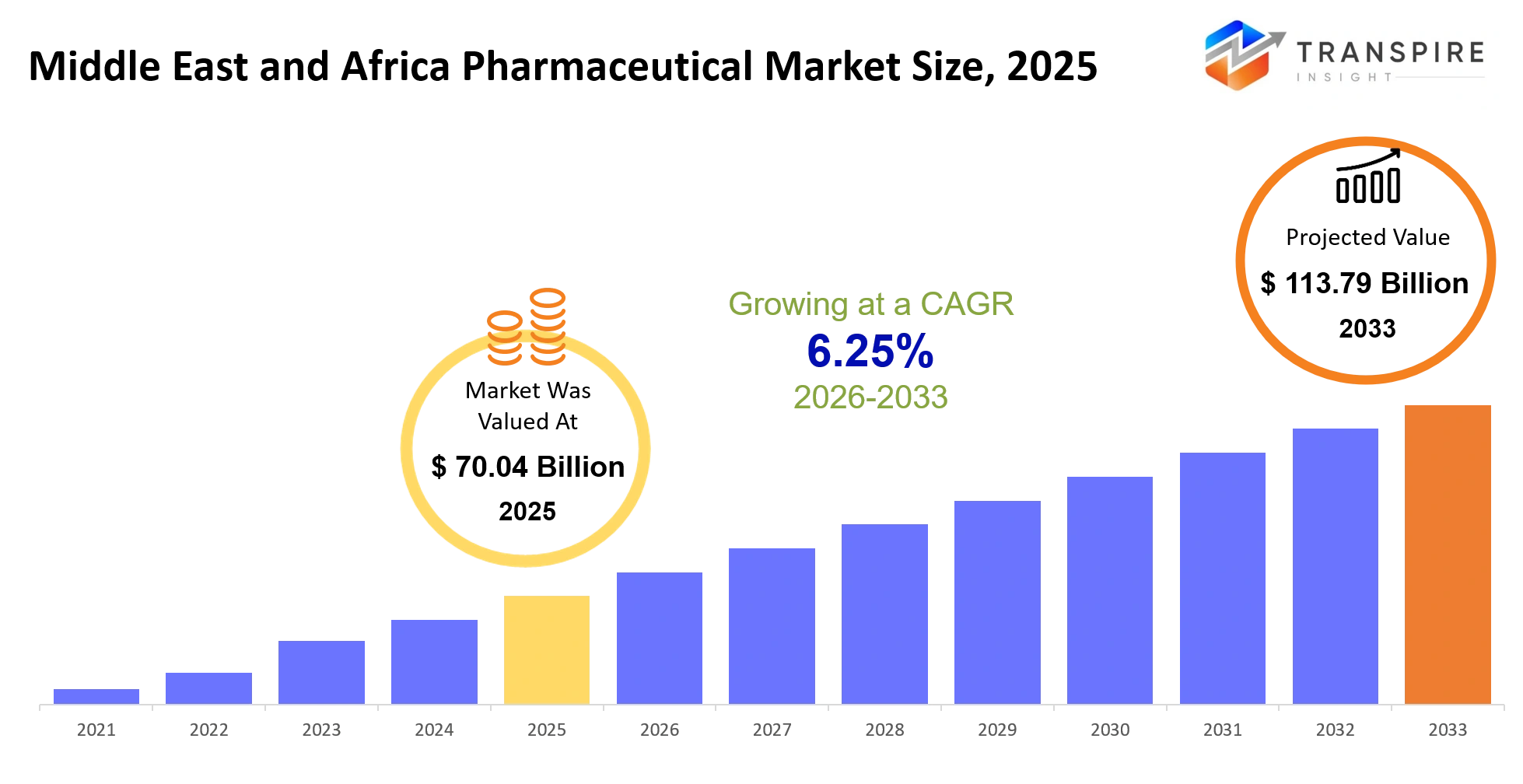
- Middle East and Africa Pharmaceutical Market Size 2025: USD 70.04 Billion
- Middle East and Africa Pharmaceutical Market Size 2033: USD 113.79 Billion
- Middle East and Africa Pharmaceutical Market CAGR: 6.25%
- Middle East and Africa Pharmaceutical Market Segments: By Product Type (Prescription Drugs, OTC Drugs, Generics, Vaccines, Biologics, Others); By Application (Oncology, Cardiology, Diabetes, Infectious Diseases, Others); By End User (Hospitals, Clinics, Pharmacies, Others).
To learn more about this report,  Download Free Sample Report
Middle East and Africa Pharmaceutical Market Summary
The Middle East and Africa Pharmaceutical Market was valued at USD 70.04 Billion in 2025. It is forecast to reach USD 113.79 Billion by 2033. That is a CAGR of 6.25% over the period.
The Middle East and Africa pharmaceutical market has this kind of essential role in making sure medicines, vaccines and therapeutic options actually get to public health systems, hospitals, clinics, and the regular community healthcare providers, you know. Overall, it also supports governments and healthcare organisations in managing chronic illnesses and infectious diseases at the same time, while pushing improved treatment availability for expanding populations, even when budgets are tight, or when logistics get messy.
Over the last five years, the market has gone through a structural shift, more or less, toward more local pharmaceutical manufacturing and a sturdier supply chain. A few countries have rolled out policies that encourage domestic drug production, with the idea of reducing dependence on imported medicines. One big trigger for all of this was the COVID-19 pandemic. It really exposed the weak points in global pharmaceutical supply chains, and at the same time it led to shortages, or at least delays, for essential medical products. Afterwards, governments and private investors started channelling additional funds into manufacturing sites, distribution networks, and healthcare infrastructure. In practice, these actions improved product availability and also reduced procurement risks.
Now, since healthcare coverage keeps expanding and local production capabilities keep getting stronger, pharmaceutical companies are getting broader market access. This then opens up extra revenue streams and helps sustain longer-term market expansion across the region, slowly but reliably.
Key Market Insights
- Gulf Cooperation Council countries pretty much lead the Middle East and Africa Pharmaceutical Market, holding around 42% of the regional pharmaceutical revenue in 2025.
- Saudi Arabia is kinda leading the regional market share, because of healthcare modernization programs and a solid level of pharmaceutical procurement spending, the kind that really keeps things moving along.
- North Africa keeps a pretty significant share because of established manufacturing capabilities, and it’s also pushing forward with expanding domestic drug production, bit by bit, day by day.
- Sub-Saharan Africa is, um, the fastest-growing region through the forecast period, led by healthcare infrastructure improvements and a wider medicine access, sort of like broader access to therapeutic options.
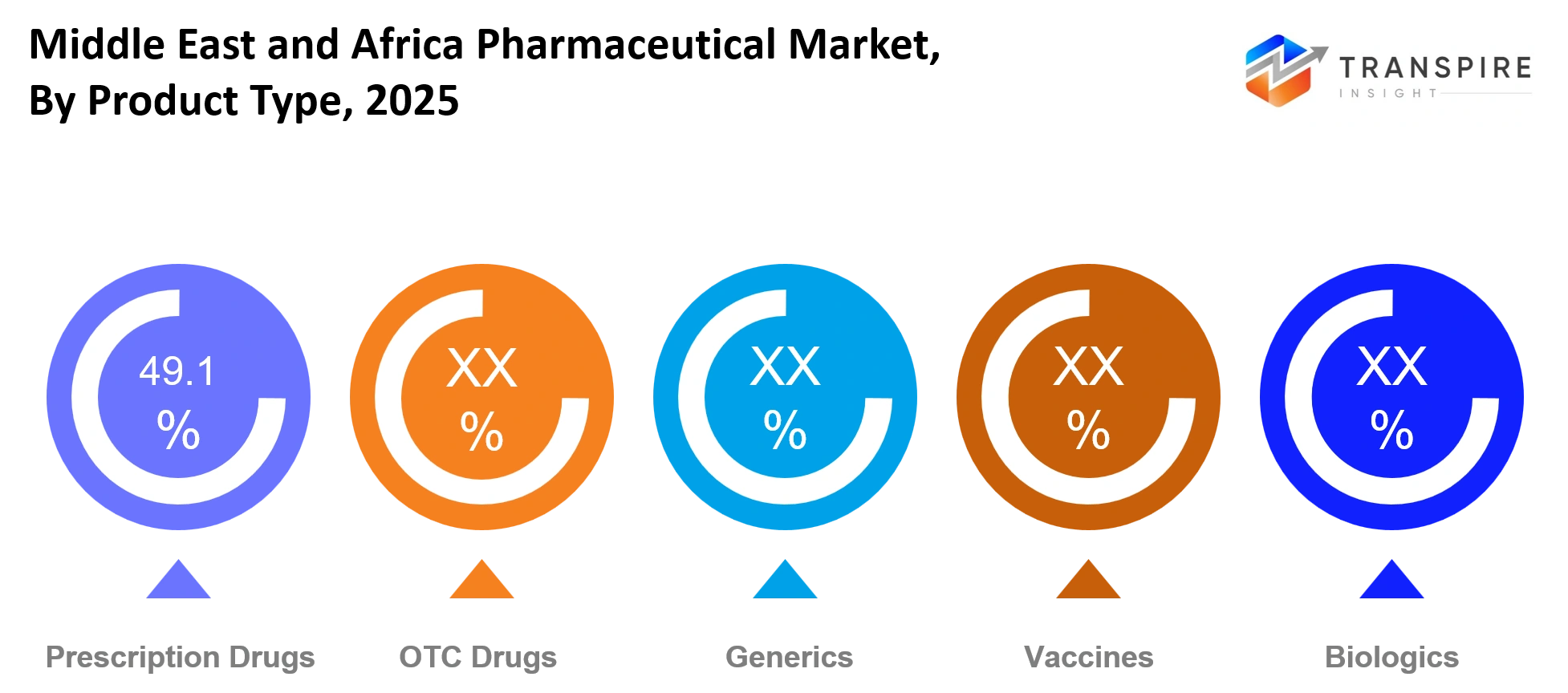
- Prescription drugs pretty much dominate the market, with almost 65% share in 2025. This is mainly backed by the constant need for chronic disease care, requirements that keep showing up over and over, not just short-term treatments.
- Generic medicines sit as the second-largest segment, mostly because they're more affordable and there are also government procurement initiatives that help. Overall, it feels like cost benefits and public buying programs kind of push this segment forward, even if the wording shifts a little across sources.
- Biopharmaceuticals are the fastest-growing part through 2033, kind of benefiting from ongoing innovation in oncology and speciality therapeutics, all that better stuff.
- Speciality therapeutics continue to gain traction as healthcare systems slowly but surely expand access to these advanced treatment options. In some places it looks almost inevitable, because the demand for highly targeted care is rising, and the pathways for getting it in place are getting smoother, which helps a lot.
- Cardiovascular diseases show up as the leading application share, sort of like they’re taking the biggest portion, about 25% of pharmaceutical expenditure, in general.
- Infectious disease treatments stay one of the major revenue contributors, across multiple regional health systems, still bringing in a lot of income overall and for a while.
- Advanced manufacturing tech and local production capacity are helping firms see cost-plus distribution advantages, in a way that feels more nimble.
What are the Key Drivers, Restraints, and Opportunities in the Middle East and Africa Pharmaceutical Market?
The main force pushing growth in the Middle East and Africa pharmaceutical market is honestly the expansion of government-backed healthcare programs, and these pharmaceutical localisation policies that keep showing up, like again and again. A few countries, especially Saudi Arabia, the United Arab Emirates, and Egypt, have rolled out initiatives to bolster domestic drug production, and at the same time reduce reliance on imports. This change really picked up momentum after the COVID-19 pandemic kind of spotlighted vulnerabilities in global medicine supply chains. As governments pour money into local manufacturing sites and widen healthcare coverage, pharmaceutical companies tend to get more space in public procurement agreements, plus access to broader patient bases. In plain terms, these developments support stronger medicine sales, more output, and steadier revenue creation across the regional pharma landscape.
The biggest stumbling block still seems to be uneven healthcare infrastructure across many African countries; it is kind of structural, because it needs sustained funding in hospitals, distribution networks, cold chain logistics, and also building up the healthcare workforce. When access remains patchy in rural areas or underserved neighbourhoods, prescription medicines and more advanced therapies do not get to people the way they should, period. Because of that, pharmaceutical companies often experience slower market penetration and reduced revenue upside even when there are clearly major unmet medical needs.
One very notable opportunity shows up in biologics and speciality treatments. New investments in advanced healthcare facilities and diagnostic capabilities are creating favourable conditions for therapies aimed at cancer, autoimmune conditions, and rare diseases.
What Has the Impact of Artificial Intelligence Been on the Middle East and Africa Pharmaceutical Market?
Artificial intelligence plus advanced digital technologies are slowly but surely reshaping how pharmaceutical companies, healthcare providers, and distributors move products around across the Middle East and Africa. More recently, manufacturers have been leaning on AI-driven automation to get a tighter hold on production planning, quality control, inventory management and even supply chain monitoring. You also see computer vision systems being used to scan pharmaceutical products for packaging dents, sealing issues, and labelling errors, faster than most manual routines, and in the end that tends to cut down waste while pushing production efficiency up. Meanwhile, digital inventory platforms support automated stock tracking, so the likelihood of medicine shortages along distribution routes goes down in a pretty noticeable way.
Then there’s machine learning, which is quietly improving predictive power across the entire pharmaceutical value chain. Plenty of organisations use predictive analytics to estimate medicine demand, catch possible supply disruptions early, and adjust procurement decisions with less guesswork. In drug research, AI can sift through massive clinical and biological datasets, letting researchers surface promising drug candidates sooner than older, more traditional methods. Healthcare providers too are using predictive models, backing disease management programs and making treatment planning a bit more even for chronic conditions, rather than constantly wobbling. Taken together, these tools can mean lower operating costs, more accurate inventory records, quicker product release cycles, and stronger overall supply chain performance. Still, AI adoption hits a big wall in many places. Limited access to high-quality healthcare data, plus the price of integrating advanced digital systems, can reduce model accuracy and also stretch out timelines for rollout, particularly for smaller manufacturers and healthcare organisations
Key Market Trends
- Since 2021, Saudi Arabia, Egypt and the UAE have pushed, more or less steadily, expanded pharmaceutical localisation programs in order to reduce their reliance on medicines that are imported and sort of give a more stable supply, overall.
- Pharmaceutical manufacturers started ramping up investment in regional production sites after the pandemic; supply shocks basically made it obvious where the weak points were in global sourcing networks, and yes. Those disruptions kind of revealed vulnerabilities in the wider supply chain, so companies adjusted their whole approach, more locally oriented now rather than just distant sourcing.
- Between 2022 and 2025, the adoption of biologics and specialist medicines kinda sped up, as healthcare systems kept widening access to advanced therapies.
- Digital supply chain platforms kind of gained more traction over time, allowing manufacturers and distributors to get sharper inventory visibility and maybe reduce stockout risks too.
- Regulatory agencies kind of strengthened local manufacturing incentives, so multinational companies end up seeking production partnerships across important regional markets. This way it encourages that establishment, and the key markets get covered more quickly, even if it’s not always super straightforward.
- Pfizer, Roche, Novartis and AstraZeneca expanded a set of regional collaborations to kind of improve medicine access, and also to bolster their distribution capabilities, in general.
- In public healthcare systems, generic medicine procurement seemed to rise a bit, as governments looked for more cost-efficient ways to handle healthcare spending, and all that. it was kind of about economic procurement strategies, you know, trying to stretch budgets without making things too complicated.
- Artificial intelligence applications started appearing in the pharmaceutical manufacturing world, helping streamline production planning, quality control, and also prediction of demand processes, in a kind of more accurate way.
- In oncology treatment programs, we saw things expand across Gulf countries, which helped push a wider adoption of targeted therapies and kind of precision medicine approach, more or less.
- In recent months healthcare providers started mixing digital health platforms together with pharmaceutical services a bit more, and honestly it helped with patient monitoring, plus also supported treatment adherence outcomes.
Middle East and Africa Pharmaceutical Market Segmentation
By Product Type:
Prescription drugs make up a major part of pharma sales in the region, mostly because treatment has to keep moving forward for chronic and acute health issues. Healthcare providers rely on these medicines for cardiovascular diseases, diabetes, respiratory disorders and also infectious diseases, and the rhythm doesn’t really stop. There’s also heavy hospital procurement going on. And on top of that, healthcare programs are growing, so prescription therapies get used in public and private healthcare systems, more or less, all the time.
Generic medicines still sit in an important place, mostly because they are affordable and easy to find. Government health agencies quite often encourage generic drug purchasing as a way to reduce treatment costs while still keeping access to essential medicines intact. At the same time, biopharmaceutical products are getting more attention, since healthcare facilities are widening access to advanced therapies for complicated conditions. Continued investment in research, manufacturing, and speciality treatments should keep fueling further momentum across this segment.
To learn more about this report, Download Free Sample Report
By Application:
Cardiovascular disease treatment is still considered one of the most important application areas, mostly because the burden of heart related conditions keeps getting heavier. Healthcare systems keep throwing a lot of resources into medicines that support long-term disease management and prevention, not only quick relief. Diabetes therapies are also a major push behind pharmaceutical spending, since treatment programs are spreading across many countries
Oncology is turning into a rapidly developing application area, and it’s being fueled by stronger diagnostic capability and better access to specialised treatment options. Infectious disease management still depends on a stable pharmaceutical supply, especially in regions where public health challenges are still ongoing. At the same time, expanding healthcare infrastructure and broader treatment access should help maintain growth across multiple therapeutic categories.
By End User:
Hospitals kinda act as the main end-user group, mostly because big medicine procurement happens there, plus those broad patient care services in-house. In general, both public and private healthcare facilities end up buying a wide variety of pharmaceutical goods, covering inpatient care, and outpatient care, so the demand stays pretty steady. Also there’s strong investment in healthcare infrastructure, and that keeps pushing purchasing activity across hospital networks, even when budgets are tight sometimes.
Retail pharmacies are getting more important as well, especially as medical access improves and medicine distribution networks become more mature. Pharmacy chains, alongside independent corner stores, help deliver prescription medicines, but also the over-the-counter stuff, to people in a day-to-day way. At the same time, private healthcare providers are upping their pharmaceutical buys, because their service catalogue keeps expanding, and patient volumes keep rising across different regional healthcare markets.
What are the Key Use Cases Driving the Middle East and Africa Pharmaceutical Market?
The biggest real use case for pharmaceutical products is tied to handling chronic illnesses, mostly cardiovascular issues and diabetes. People often need meds for the long run, there’s regular patient surveillance, and healthcare coverage keeps growing. all of that creates a pretty solid pull for prescription therapies, especially through hospitals and healthcare networks.
Also, other applications are starting to matter more in oncology and infectious disease management. Many hospitals and focused treatment centers are pushing more advanced therapies, since cancer screening programs keep expanding, and treatment ability improves over time. Meanwhile, public health systems still keep buying medicines too, for infectious disease control and related prevention initiatives.
Looking ahead, emerging use cases show up around precision medicine and biologic therapies made for tricky, complex, and rare diseases. New diagnostic technologies are helping selected healthcare facilities move toward more targeted treatment pathways. There’s also digital health integration with pharmaceutical services, which seems promising, because it can improve treatment compliance , and help with better patient outcomes during the forecast window.
|
Report Metrics |
Details |
|
Market size value in 2025 |
USD 70.04 Billion |
|
Market size value in 2026 |
USD 74.42 Billion |
|
Revenue forecast in 2033 |
USD 110.4 Billion |
|
Growth rate |
CAGR of 4.32% from 2026 to 2033 |
|
Base year |
2025 |
|
Historical data |
2021 - 2024 |
|
Forecast period |
2026 - 2033 |
|
Report coverage |
Revenue forecast, competitive landscape, growth factors, and trends |
|
Regional scope |
Middle East and Africa |
|
Key company profiled |
Pfizer, Novartis, Roche, Sanofi, GSK, AstraZeneca, Bayer, Merck, AbbVie, Eli Lilly, Johnson & Johnson, Takeda, Teva, Novo Nordisk, Amgen. |
|
Customization scope |
Free report customization (country, regional & segment scope). Avail customized purchase options to meet your exact research needs. |
|
Report Segmentation |
By Product Type (Prescription Drugs, OTC Drugs, Generics, Vaccines, Biologics, Others); By Application (Oncology, Cardiology, Diabetes, Infectious Diseases, Others); By End User (Hospitals, Clinics, Pharmacies, Others). |
Which Regions are Driving the Middle East and Africa Pharmaceutical Market Growth?
The Gulf Cooperation Council region, i mean, kind of leads the pharmaceutical market because of steady healthcare spending, an enabling regulatory environment, and ongoing government support for healthcare modernization. Saudi Arabia and the United Arab Emirates take up a big portion of pharmaceutical consumption due to broad public health programs and the way private healthcare services keep expanding. Regulatory reforms have basically pushed local production, while at the same time widening access to newer, more innovative medicines. There’s also a pretty mature ecosystem, with hospitals, research hubs, distributors, and pharmaceutical manufacturers all tied together, which is what really keeps the region in that leading position.
North Africa sits as the second-largest regional contributor but the momentum there comes from a slightly different story. Egypt and Morocco, for instance, rely on well established pharmaceutical manufacturing capabilities, which help for domestic demand and also for regional exports. Ongoing investment in production facilities and in medicine distribution networks brings a level of steadiness, even when the economy feels shaky or uncertain. This blend of manufacturing strength and real healthcare needs makes North Africa a dependable source of pharmaceutical revenue, if you want to put it that way.
Sub-Saharan Africa is growing the quickest, mostly because healthcare infrastructure is expanding, and policy reforms are improving access to medicines. A number of governments have boosted funding for local pharmaceutical production and for healthcare delivery systems in recent years. On top of that, international funding initiatives and public-private collaborations have helped strengthen medicine availability in underserved areas. Growth across this region should create solid opportunities for manufacturers, distributors, and healthcare investors looking for long-term expansion between 2026 and 2033.
Who are the Key Players in the Middle East and Africa Pharmaceutical Market and How Do They Compete?
Competition in the Middle East and Africa pharmaceutical market is, sort of, moderately concentrated with multinational manufacturers keeping pretty strong positions in innovative medicines. At the same time regional producers compete in a very determined way especially in generic drugs. Market participants usually protect their share via product portfolios, manufacturing skills, distribution coverage, and regulatory know how. Lately the competitive picture is being shaped more by technology plus localized manufacturing, and also by access to specialized therapies—more than pricing alone. New entrants still pop up in selected markets, but regulatory duties, the need for manufacturing investments, and healthcare procurement ties make entry quite difficult.
Pfizer looks toward innovation led growth using advanced therapies, vaccines, and specialty medicines. It differentiates itself with a broad research pipeline, and also with plenty of experience in complex therapeutic domains. Its expansion includes working with healthcare providers and governments, to enhance medicine access and to strengthen regional distribution networks. Novartis, meanwhile, stresses high value treatments across oncology, cardiovascular care, and immunology. The company’s know how in specialized medicines helps it respond to hard medical needs while also keeping a premium product stance.
Roche keeps a competitive edge through integrated diagnostics, paired with pharmaceutical solutions, mainly in cancer care. That model supports healthcare providers in refining treatment selection and improving patient outcomes. AstraZeneca continues pushing forward by putting money into oncology, respiratory therapies, and collaborations that are strategic with healthcare institutions. Sanofi leans on a diversified portfolio that covers vaccines, specialty medicines, and consumer healthcare products. Con
Company List
- Pfizer
- Novartis
- Roche
- Sanofi
- GSK
- AstraZeneca
- Bayer
- Merck
- AbbVie
- Eli Lilly and Company
- Johnson & Johnson
- Takeda Pharmaceutical Company
- Teva Pharmaceutical Industries
- Novo Nordisk
- Amgen
Recent Development News
"In January 2025, The Pfizer Foundation secured an investment commitment of USD 15 million for breast cancer care programs in Rwanda, Ghana, and Tanzania. The funding supports partnerships with healthcare organizations to improve diagnosis, treatment access, and healthcare system capacity across Sub-Saharan Africa, strengthening pharmaceutical access in key regional markets.
Source: https://www.pfizer.com
"In May 2025, Tabuk Pharmaceuticals announced an exclusive licensing partnership with Hanmi. The agreement will introduce innovative value-added medicines across Saudi Arabia and the wider MENA region, expanding access to advanced pharmaceutical products and supporting regional portfolio growth.
Source: https://www.tabukpharmaceuticals.com
"In October 2025, AstraZeneca entered strategic partnerships with the Saudi Ministry of Health Central Laboratory, King Faisal Specialist Hospital and Research Centre, and the Public Health Authority during the Global Health Exhibition 2025. The collaborations focus on rare disease diagnostics, clinical research, and AI-enabled healthcare capabilities, strengthening innovation and advanced treatment development in the regional pharmaceutical sector.
Source: https://www.globalhealthsaudi.com
What Strategic Insights Define the Future of the Middle East and Africa Pharmaceutical Market?
Over the next five to seven years, the Middle East and Africa pharmaceutical market is expected to shift from a largely import-reliant model toward a more regionally integrated one, such as an integrated healthcare manufacturing ecosystem. And the real push behind this shift will likely be healthcare security goals combined with broader access to treatment, plus government moves meant to fortify local production know-how. So naturally this transition should spark more spending in local manufacturing, contract development, and also in specialized therapeutic making.
There is also a less obvious risk beneath all this: active pharmaceutical ingredient sourcing is becoming more concentrated among a smaller set of global suppliers. Even if regional manufacturing capacity continues to grow, producers might still be tied to external raw material supply chains, which can lead to price swings or even production interruptions. This problem might not pop up right away in the usual market growth numbers, but it could quietly hit long term supply stability.
At the same time, there is a clear emerging opportunity that is hard to ignore, especially around biologics and biosimilars manufacturing. In particular, Gulf countries are investing heavily into advanced healthcare infrastructure, so the timing feels good. Market participants should try to prioritize partnerships that blend local production capability with international technology know ledge. These kinds of collaborations can support regulatory approvals, increase supply resilience, and help position companies for those higher value pockets inside the pharmaceutical industry.
Middle East and Africa Pharmaceutical Market Report Segmentation
By Product Type
- Prescription Drugs
- OTC Drugs
- Generics
- Vaccines
- Biologics
- Others
By Application
- Oncology
- Cardiology
- Diabetes
- Infectious Diseases
- Others
By End User
- Hospitals
- Clinics
- Pharmacies
- Others
Frequently Asked Questions
Find quick answers to common questions.
The expected Middle East and Africa Pharmaceutical Market size for the market will be USD 113.79 Billion in 2033.
Key segments for the Middle East and Africa Pharmaceutical Market are By Product Type (Prescription Drugs, OTC Drugs, Generics, Vaccines, Biologics, Others); By Application (Oncology, Cardiology, Diabetes, Infectious Diseases, Others); By End User (Hospitals, Clinics, Pharmacies, Others).
Major Middle East and Africa Pharmaceutical Market players are Pfizer, Novartis, Roche, Sanofi, GSK, AstraZeneca, Bayer, Merck, AbbVie, Eli Lilly, Johnson & Johnson, Takeda, Teva, Novo Nordisk, Amgen.
The Middle East and Africa Pharmaceutical Market size is USD 70.04 Billion in 2025.
The Middle East and Africa Pharmaceutical Market CAGR is 6.25% from 2026 to 2033.
- Pfizer
- Novartis
- Roche
- Sanofi
- GSK
- AstraZeneca
- Bayer
- Merck
- AbbVie
- Eli Lilly and Company
- Johnson & Johnson
- Takeda Pharmaceutical Company
- Teva Pharmaceutical Industries
- Novo Nordisk
- Amgen
About the Authors

Pankaj Ghogare Patil
I am Pankaj Ghogare Patil, a Senior Research Analyst at Transpire Insight, specializing in the Pharmaceutical, Chemicals & Materials, Healthcare IT, and Biotechnology industry. My expertise lies in conducting comprehensive market research, analyzing industry trends, evaluating competitive landscapes, and translating complex data into actionable insights. At Transpire Insight, I closely follow emerging technologies, regulatory developments, and market innovations to create accurate, well-researched, and informative content that helps businesses and professionals make informed decisions. I am committed to producing credible, evidence-based articles that reflect industry best practices while making technical topics accessible and valuable for a broad audience.

Chakradhar Khansole
Chakradhar serves as the Research Director at Transpire Insight, bringing over 8 years of experience in technology, innovation, and strategic market intelligence. He specializes in transforming complex market data into actionable business insights that enable organizations to make informed, growth-oriented decisions. Recognized for his strategic vision and analytical expertise, Chakradhar leads high-impact research initiatives, delivering comprehensive market assessments, competitive intelligence, and forward-looking industry analysis.
Recently Published Reports
-
Jul 2026
Alopecia Treatment Market
Alopecia Treatment Market Size, Share & Analysis Report By Disease Type (Alopecia Areata, Cicatricial Alopecia, Traction Alopecia, Alopecia Totalis, Androgenetic Alopecia, Alopecia Universalis, and Other Disease Types), By Treatment Type (Topical Treatments, Oral Medications, Injectable Therapies, and Hair Transplantation), By Gender (Male, and Female), By Distribution Channel (Hospitals and Clinics, Retail Pharmacies, and Online Retailers), and Geography (North America, Europe, Asia-Pacific, Middle East and Africa, South and Central America), 2021 - 2031
-
Jul 2026
Medical Ultrasound Probe Market
Medical Ultrasound Probe Market Size, Share & Analysis Report By Type (Linear Type, Convex Type, Endocavitary Probe, Phased Array/Cardiac Probe, Transesophageal (TEE) Probe, and Others), By Application (Ophthalmology, Cardiology, Musculoskeletal, Oncology, Obstetrics & Gynecology, General Imaging, and Others), By End User (Hospitals & Clinics, Diagnostic Centers, Ambulatory Surgical Centers, and Others), and Geography (North America, Europe, Asia-Pacific, Middle East and Africa, South and Central America), 2021 – 2031
-
May 2026
Biosimilars Market
Biosimilars Market By Product Type (Monoclonal Antibodies, Recombinant Hormones, Erythropoietin, G-CSF, Others), By Indication (Oncology, Autoimmune Diseases, Blood Disorders, Diabetes, Others), By Manufacturing Type (In-House Manufacturing, Contract Manufacturing), By Distribution Channel (Hospital Pharmacies, Retail Pharmacies, Online Pharmacies), By Industry Analysis, Size, Share, Growth, Trends, and Forecasts 2021-2033
-
Apr 2026
Gastrointestinal Endoscopy Market
Gastrointestinal Endoscopy Market By Type (Rigid Gastrointestinal Endoscope, Flexible Gastrointestinal Endoscopes, Disposable Gastrointestinal Endoscope), By Procedure Type (Colonoscopy, Gastroscopy, Duodenoscopy, Enteroscopy, Flexible Sigmoidoscopy, Others), By Application (Diagnosis, Treatment), By End-Users (Hospitals, Ambulatory Surgical Centers, Specialty Clinics, Laboratories, Others), By Industry Analysis, Size, Share, Growth, Trends, and Forecasts 2021-2033