

Middle East and Africa Micro Electric Vehicle Market Size & Forecast:
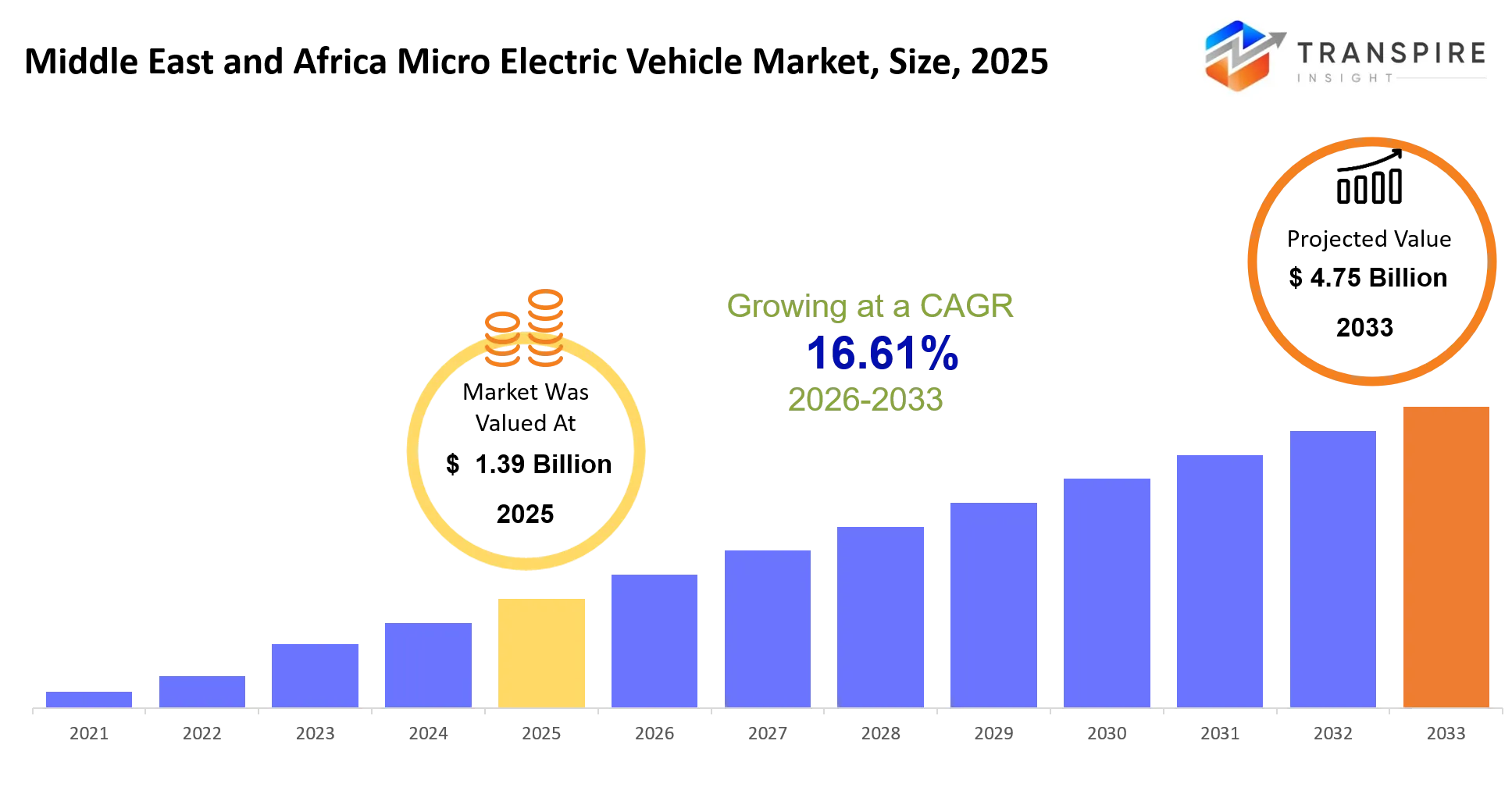
- Middle East and Africa Micro Electric Vehicle Market Size 2025: USD 1.39 Billion
- Middle East and Africa Micro Electric Vehicle Market Size 2033: USD 4.75 Billion
- Middle East and Africa Micro Electric Vehicle Market CAGR: 16.61%
- Middle East and Africa Micro Electric Vehicle Market Segments: By Vehicle Type (Electric Scooters, Electric Mopeds, Micro Cars, Electric ATVs, Electric Utility Vehicles, Electric Tricycles, Electric Golf Carts, Others); By Battery Type (Lithium-Ion Batteries, Lead Acid Batteries, Solid-State Batteries, Nickel-Based Batteries, Swappable Batteries, Fast Charging Batteries, High-Capacity Batteries, Others); By End User (Personal Mobility, Commercial Use, Shared Mobility, Tourism Applications, Industrial Use, Campus Mobility, Logistics, Others); By Distribution Channel (Online Sales, Dealers, OEM Stores, Rental Platforms, Fleet Operators, Distributors, Specialty Stores, Others)
Middle East and Africa Micro Electric Vehicle Market Summary
The Middle East and Africa Micro Electric Vehicle Market was valued at USD 1.39 Billion in 2025. It is forecast to reach USD 4.75 Billion by 2033. That is a CAGR of 16.61% over the period.
Micro electric vehicles sort of tackle a real mobility problem across different places, like cities, resorts, industrial areas, campuses, and logistics hubs where bigger full-sized vehicles are usually kinda wasteful, and also pricier to run. These compact electric platforms give a more budget-friendly way to move around for short-distance trips, last-mile delivery, tourism things, and everyday commercial fleet use, all while cutting operating expenses and lowering fuel reliance. Over the last five years , the market has drifted from mostly niche personal transportation toward more commercial use and shared mobility scenarios.
In particular, electrification initiatives pushed by governments in the United Arab Emirates , Saudi Arabia, South Africa, and a range of other African economies have made that shift happen faster. Also, the rising fuel price swings after global energy supply disruptions made companies and fleet operators look seriously at electric options. When battery costs started falling and charging infrastructure got more widespread, the overall “owning” math improved a lot.
That cost edge now helps wider uptake by commercial operators, tourism providers, and urban mobility services, which in turn creates new revenue streams for manufacturers, distributors , and mobility platform providers throughout the region.
Key Market Insights
- The Middle East and Africa Micro Electric Vehicle Market is kind of, benefiting from fleet electrification programs in Gulf countries and big African urban hubs, overall seems like it keeps accelerating.
- In 2025 Gulf Cooperation Council countries made up almost 40% of regional revenue, mainly because mobility policies there are more supportive, and they’re not really slowing down.
- East Africa is showing up as the fastest-growing subregion, driven by electric two-wheeler adoption and also commercial mobility use cases, which feels pretty noticeable.
- Electric scooters were leading in vehicle sales, taking in more than 35% market share in 2025, largely tied to affordability and everyday city practicality.
- Micro cars ended up as the second-largest segment, since municipalities were promoting low-emission urban transit solutions, kinda consistently.
- Battery-swapping models grew by over 20% each year from 2023 to 2025, and that helped improve vehicle utilization rates, at least for operators.
- Commercial use brought in the biggest chunk of demand, because logistics players were hunting for lower operating costs without changing everything at once.
- Tourism applications saw solid pickup in the UAE , Saudi Arabia and resort destinations across Africa, like it really became a thing there.
- Firms such as Yadea, NIU, Gogoro, Honda, and Yamaha continue their expansion by rolling out localized product offerings.
- Meanwhile, smart connectivity, fleet management solutions, and fast-charging technologies are turning into the main competitive differentiators, right now.
What are the Key Drivers, Restraints, and Opportunities in the Middle East and Africa Micro Electric Vehicle Market?
The main growth catalyst kinda comes from the economic benefit of electric mobility over fuel based options. Over the past several years, high fuel price swings pushed governments, organizations, and fleet managers to really look at transport choices with lower day to day costs. At the same time, the leap in lithium ion battery performance plus the gradual fall in battery prices made that decision easier, more “reasonable” maybe. In practice, commercial fleets, tourism outfits, and shared mobility providers can now reach lower maintenance costs, plus reduced energy expenses, so rolling out electric vehicles starts to look financially compelling. And yeah, this shift supports higher vehicle sales, while also widening recurring service revenues.
Still, charging infrastructure limits are the biggest structural snag. A lot of African markets deal with uneven power supply and there just aren’t enough public charging locations. Building infrastructure takes serious upfront capital and also coordination between public and private stakeholders, so fast deployment stays hard. Because of that, adoption grows slower in areas where charging access is patchy, and grid dependability is shaky. This kind of delay then affects fleet electrification roadmaps, and it also dampens wider consumer willingness, which then lowers overall potential revenue.
Battery swapping ecosystems, and the electrification of commercial fleets, are also where the future opportunity sits. Swap based setups can cut charging downtime quite a lot and boost vehicle productivity. Gogoro is one example that kinda showed the operational edge of swap driven mobility systems. Similar approaches could back delivery fleets, shared mobility operators, and business transport services across rapidly urbanizing African cities.
What Has the Impact of Artificial Intelligence Been on the Middle East and Africa Micro Electric Vehicle Market?
Artificial intelligence is getting more and more important throughout the micro electric vehicle value chain in a way that people can kinda see. Manufacturers and fleet operators are putting in AI enabled telematics platforms that keep watch on battery health, how people drive, energy usage, and vehicle utilization , all the time. From there the systems sort of automatically spot performance weirdness and adjust charging timetables, which helps operators get better fleet efficiency, instead of guessing.
Then there are machine learning algorithms that back predictive maintenance plans. When they look at battery temperature, charging cycles, motor performance, and those component wear patterns, the AI models can forecast what kind of maintenance will be needed before anything actually fails. This method reduces vehicle downtime and also helps extend battery life. In practice, fleet operators say they’re seeing real gains in operational availability and fewer maintenance expenses, thanks to predictive analytics and the whole routine.
On top of that, advanced route optimization systems are pushing delivery efficiency up while also cutting energy consumption down. AI based fleet management platforms can rework routes on the fly using traffic conditions, vehicle status, and delivery schedules. Those options basically support better asset utilization, and they can keep operating costs lower, which sounds simple but takes real work.
Still, even with all those advantages, rolling it out is not always smooth. The integration costs are high, digital infrastructure is fragmented, and data access can be inconsistent, which ends up limiting adoption across some regional markets. A lot of operators also do not have the historical operating datasets needed to train very accurate predictive models, so the full payback from AI driven performance improvements gets delayed , sometimes a lot.
Key Market Trends
- Between 2023 and 2026 , battery swapping deployments expanded quite a bit, sort of cutting down on charging downtime for commercial operators, more than before.
- Commercial fleet purchases went up by over 25% across the Gulf markets, even as operating cost pressures really intensified.
- In a similar vein, electric tourism transportation picked up speed across UAE and Saudi hospitality projects, mostly since 2024, and it kind of kept going.
- Manufacturers rolled out connected vehicle platforms that provide real-time diagnostics, GPS tracking, and predictive maintenance too, which sounded fancy but it is also useful.
- By 2025, lithium-ion battery adoption was above 60% of new vehicle installations, mainly because performance improvements kept improving.
- Fast-charging technologies managed to reduce charging times by close to 40% compared with earlier generation setups, and operators noticed.
- Shared mobility providers also expanded their electric scooter fleets across major metropolitan areas throughout Africa and the Middle East.
- Yadea, NIU, and Gogoro pushed harder into international expansion using localized mobility solutions and partnerships , working through local networks.
- Meanwhile, municipal authorities increasingly included low-speed electric vehicles in smart city transportation planning initiatives, sometimes earlier than expected.
- Industrial parks and university campuses started adopting compact electric mobility platforms, basically to boost internal transportation efficiency, and reduce friction between buildings.
Middle East and Africa Micro Electric Vehicle Market Segmentation
By Vehicle Type
Electric scooters are still covering a big slice of market activity, mostly because they stay affordable, they are kinda easy to run, and they fit urban mobility pretty well. Electric mopeds offer that decent mix of performance and efficiency, meanwhile micro cars handle short distance commuting needs in crowded city areas. Electric ATVs also keep showing up for both recreation and practical work across tourism spots and industrial facilities. Electric utility vehicles help tighten day to day operations inside campuses, industrial parks, and commercial properties.
Electric tricycles are slowly getting more attention, especially where cargo movement and passenger transport matter in developing markets. Electric golf carts continue to be well adopted in hospitality, tourism, and recreational venues. Beyond that, there are other vehicle categories, like specialized low speed electric mobility options meant for niche commercial , institutional, and municipal needs. Product diversification goes on expanding, as manufacturers tweak their offerings to match regional mobility requirements.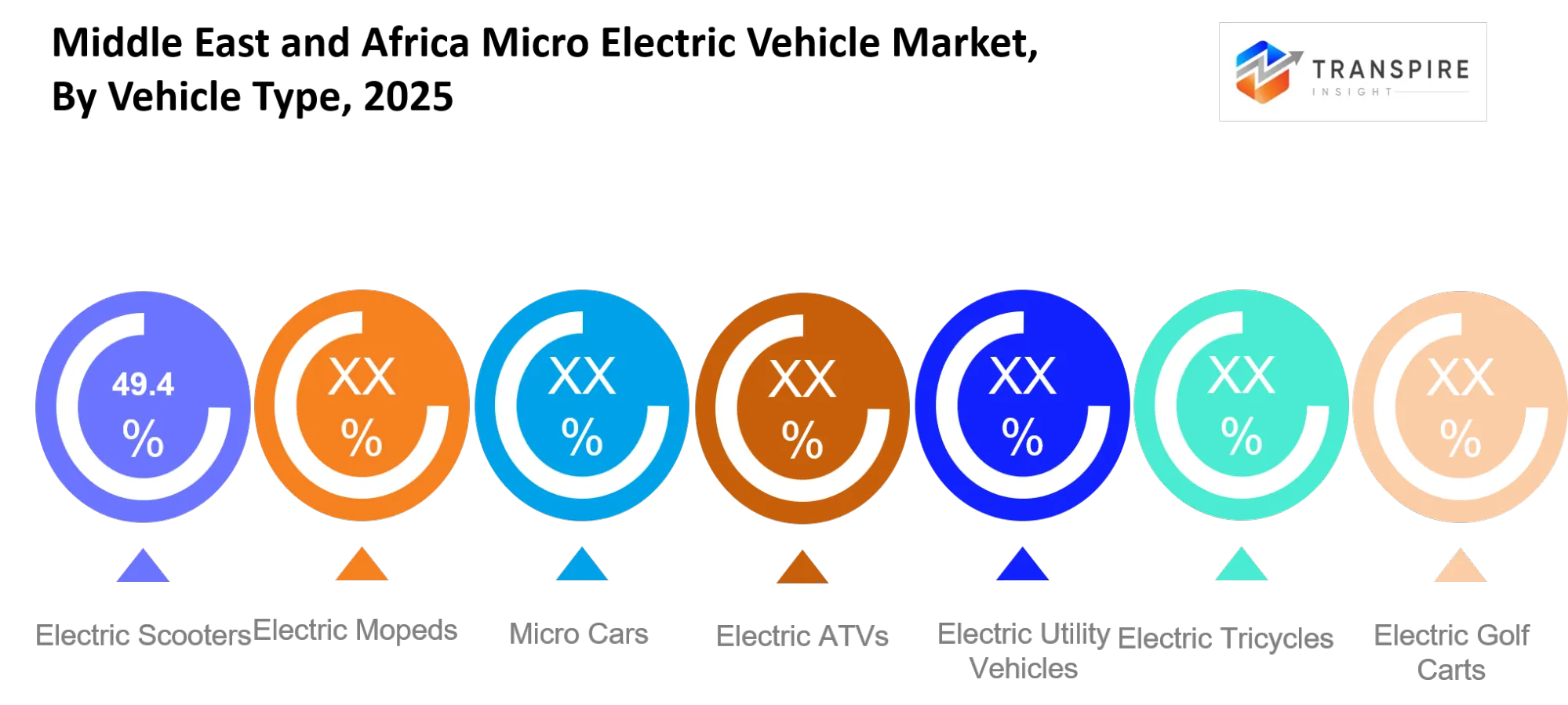
By Battery Type
Lithium ion batteries are still the go to choice, mostly because of the bigger energy density, the extended lifespan, and how costs are slowly coming down. Lead acid batteries keep showing up in cost sensitive use cases, when the lower purchase price really matters. Solid state batteries are getting more attention across the industry too, on account of the safety upside, plus the future performance promise, and, yeah, it is all a bit more hopeful than before. Nickel based batteries still stay around in a few niches where proven durability matters most and where operational reliability can not be optional.
Battery swapping is opening up new options for commercial fleets, since it reduces charging downtime and helps the schedule feel less fragile. Fast charging battery systems boost vehicle utilization, which gives extra operational flexibility in commercial settings. High capacity batteries back longer operating distances, and also support heavier duty tasks. Beyond those, other battery types keep emerging as companies chase better efficiency, tougher durability, and lower costs, at the same time.
By End User
Personal mobility stays a key application ,as city residents look for practical ways to move around, for those short-distance trips that you do everyday. On the commercial side there’s a lot of pull from delivery services, corporate fleets ,and day to day business transportation operations. Shared mobility providers are still folding in electric platforms into their rental and broader mobility service networks. For tourism, transportation needs show up inside resorts, recreation areas, and hospitality developments ,where moving guests around is basically part of the experience.
Then there is industrial use that’s growing steadily in manufacturing facilities, warehouses, and logistics hubs where compact mobility tools help boost day-to-day output. Campus mobility also matters, covering movement inside universities, healthcare sites and company grounds. Logistics operators increasingly push electric vehicles for last-mile delivery routes. Other groups too, like municipal operations and specialized transportation applications ,keep appearing as end-user categories.
By Distribution Channel
Online sales channels keep broadening, like the whole digital commerce thing is improving, and that makes products easier to find for regular buyers, also less hassle really. Dealers still matter, because many customers want a proper in person showing, plus some financing help, and of course after sale attention. OEM stores help with direct relationship building, yet they also give manufacturers the ability to steer how the brand looks, and how the whole customer experience feels. Rental platforms add a kind of easy trial, so people can try electric mobility first, before deciding to purchase it, you know.
Fleet operators are another major route for getting commercial vehicles out in the real world. Distributors help those vehicles land across various regions and for different types of customers, not just one lane. Specialty stores give deeper product know how and service that is tuned for a particular setup. Then there are other pathways too, like institutional procurement programs, plus government backed mobility initiatives, those quietly push the market to spread faster and reach more buyers.
What are the Key Use Cases Driving the Middle East and Africa Micro Electric Vehicle Market?
Urban transportation is still, like, the biggest application space overall. Compact electric vehicles kind of give cost-efficient mobility for short-distance commutes , so congestion and transportation expenses drop in tightly packed cities. Electric scooters plus micro cars handle everyday travel needs too , with lower operating costs compared to conventional vehicles
Commercial logistics and tourism are growing fast as well. Delivery firms increasingly roll out electric vehicles for last-mile transportation, while resorts and hospitality places lean on electric mobility solutions to move guests more efficiently. Shared mobility operators are also ramping up electric vehicle fleets across major metropolitan areas , kind of everywhere
Newer applications are starting to show up too , especially industrial mobility and smart campus transportation. Manufacturing plants, business parks, healthcare campuses , and schools are bringing in compact electric transport systems to boost day to day operational efficiency. Battery swapping networks and autonomous fleet management technologies may add more growth chances during the forecast period.
|
Report Metrics |
Details |
|
Market size value in 2025 |
USD 1.39 Billion |
|
Market size value in 2026 |
USD 1.62 Billion |
|
Revenue forecast in 2033 |
USD 4.75 Billion |
|
Growth rate |
CAGR of 16.61% from 2026 to 2033 |
|
Base year |
2025 |
|
Historical data |
2021 - 2024 |
|
Forecast period |
2026 - 2033 |
|
Report coverage |
Revenue forecast, competitive landscape, growth factors, and trends |
|
Regional scope |
United States; Canada; Mexico; United Kingdom; Germany; France; Italy; Spain; Denmark; Sweden; Norway; China; Japan; India; Australia; South Korea; Thailand; Brazil; Argentina; South Africa; Saudi Arabia; United Arab Emirates |
|
Key company profiled |
Yadea, NIU, Gogoro, Hero Electric, Mahindra Electric, Yamaha, Honda, Segway-Ninebot, Silence, Microlino, Renault, Toyota, Hyundai, Kandi Technologies, Luyuan |
|
Customization scope |
Free report customization (country, regional & segment scope). Avail customized purchase options to meet your exact research needs. |
|
Report Segmentation |
By Vehicle Type (Electric Scooters, Electric Mopeds, Micro Cars, Electric ATVs, Electric Utility Vehicles, Electric Tricycles, Electric Golf Carts, Others); By Battery Type (Lithium-Ion Batteries, Lead Acid Batteries, Solid-State Batteries, Nickel-Based Batteries, Swappable Batteries, Fast Charging Batteries, High-Capacity Batteries, Others); By End User (Personal Mobility, Commercial Use, Shared Mobility, Tourism Applications, Industrial Use, Campus Mobility, Logistics, Others); By Distribution Channel (Online Sales, Dealers, OEM Stores, Rental Platforms, Fleet Operators, Distributors, Specialty Stores, Others) |
Which Regions are Driving the Middle East and Africa Micro Electric Vehicle Market Growth?
The Gulf region is basically leading market revenue generation because strong government support for electrification, and smart mobility initiatives, keeps pushing things forward. Saudi Arabia and the United Arab Emirates keep on investing heavily in sustainable transport infrastructure. Also, strong purchasing power, plus advanced charging networks, make adoption easier in both personal use and business use. On top of that, tourism development projects kind of reinforce demand for compact electric transportation solutions… generally speaking.
South Africa counts as another key regional contributor , but its growth base is more diversified. Here, commercial fleet operators, logistics providers, and industrial users pull the demand forward with practical operational needs, not only with government-led mobility programs. Meanwhile, a growing electric vehicle ecosystem and better charging infrastructure help keep the market expanding steadily. Private sector investment also stays as a major growth spark.
East Africa is showing up as the fastest-growing regional market. More people moving into cities, rising commercial motorcycle usage , and a stronger curiosity for electric transportation solutions have shifted the whole market dynamic. Recent spending on electric two-wheeler infrastructure and mobility startups created fresh openings for manufacturers, and for service providers too. That momentum is expected to draw more investment and speed up market penetration through 2033.
Who are the Key Players in the Middle East and Africa Micro Electric Vehicle Market and How Do They Compete?
Competition still feels pretty moderately fragmented, with global manufacturers and regional distributors competing side by side, plus mobility technology providers that kinda hover in the background too. Overall, product affordability, battery performance , connected features, and after-sales service capability, these are the main battlegrounds. Lately, companies are trying to stand out by combining technology integration with localized mobility solutions instead of just going straight at price.
Yadea seems to lean hard into large scale manufacturing efficiency, plus wide product coverage across electric scooters, motorcycles, and commercial mobility platforms. The firm has pushed its international expansion, and it also released new electric mobility products aimed at emerging markets, basically in the same breath. NIU, meanwhile, differentiates with connected vehicle technology, app-based services, and smart urban mobility solutions that tend to attract customers who are into tech.
Gogoro plays a different game, focusing on battery swapping infrastructure and building out an energy ecosystem. That approach helps cut charging downtime, and it boosts fleet productivity. Honda and Yamaha rely on established brand recognition, engineering know-how, and extensive distribution networks, so they can expand into electric mobility categories with less friction. For the long term, partnerships, localized product development, and advanced battery technologies, they stay pretty central to how these players position themselves.
Company List
- Yadea
- NIU
- Gogoro
- Hero Electric
- Mahindra Electric
- Yamaha
- Honda
- Segway-Ninebot
- Silence
- Microlino
- Renault
- Toyota
- Hyundai
- Kandi Technologies
- Luyuan
Recent Development News
In June 2026, Yadea launched the KIFA commercial electric motorcycle at Autoexpo Kenya 2026. The launch marked a major East African expansion initiative focused on the commercial mobility and boda boda transportation segment.https://yadea.com
In January 2026, Yadea unveiled new FATBOY and FLO electric bicycle models during CES 2026. The launch expanded the company's global electric mobility portfolio and strengthened its all-scenario transportation strategy.https://yadea.com
In November 2025, Yamaha revealed the EC-06 electric scooter developed through collaboration with Indian EV startup River. The partnership expanded Yamaha's electric mobility portfolio and accelerated entry into the premium electric scooter category.https://timesofindia.indiatimes.com
What Strategic Insights Define the Future of the Middle East and Africa Micro Electric Vehicle Market?
The market seems to be moving toward integrated mobility ecosystems where cars, battery units, charging setup, fleet oversight platforms , and digital services end up acting like a connected whole, not like separate standalone things. In other words commercial transportation , shared mobility, and logistics uses will probably take up more and more revenue share as operators start caring more about total ownership economics than the price of buying the vehicle up front.
There is also a kind of less obvious risk here, battery supply chains getting too concentrated, plus being exposed to wild changes in critical mineral pricing. If lithium, or some other battery component availability, suddenly shifts a lot, it can squeeze manufacturer margins and slow down any affordability improvements. Still, at the very same time, battery swapping networks look like a pretty strong opportunity, specially in urban African areas where charging infrastructure progress is slower, more gradual.
So market players should really focus on partnerships that mix vehicle rollouts, energy infrastructure, and digital fleet management capabilities. Firms that build local service networks and a battery ecosystem that can scale, may end up in a better spot to grab the long-run growth, and also create more durable competitive advantages across the region.
Middle East and Africa Micro Electric Vehicle Market Report Segmentation
-
By Vehicle Type
Electric Scooters
Electric Mopeds
Micro Cars
Electric ATVs
Electric Utility Vehicles
Electric Tricycles
Electric Golf Carts
Others -
By Battery Type
Lithium-Ion Batteries
Lead Acid Batteries
Solid-State Batteries
Nickel-Based Batteries
Swappable Batteries
Fast Charging Batteries
High-Capacity Batteries
Others -
By End User
Personal Mobility
Commercial Use
Shared Mobility
Tourism Applications
Industrial Use
Campus Mobility
Logistics
Others -
By Distribution Channel
Online Sales
Dealers
OEM Stores
Rental Platforms
Fleet Operators
Distributors
Specialty Stores
Others
Frequently Asked Questions
Find quick answers to common questions.
The Expected Middle East and Africa Micro Electric Vehicle Market size for the Market will be USD 4.75 Billion in 2033.
Key Segments for the Middle East and Africa Micro Electric Vehicle Market are By Vehicle Type (Electric Scooters, Electric Mopeds, Micro Cars, Electric ATVs, Electric Utility Vehicles, Electric Tricycles, Electric Golf Carts, Others); By Battery Type (Lithium-Ion Batteries, Lead Acid Batteries, Solid-State Batteries, Nickel-Based Batteries, Swappable Batteries, Fast Charging Batteries, High-Capacity Batteries, Others); By End User (Personal Mobility, Commercial Use, Shared Mobility, Tourism Applications, Industrial Use, Campus Mobility, Logistics, Others); By Distribution Channel (Online Sales, Dealers, OEM Stores, Rental Platforms, Fleet Operators, Distributors, Specialty Stores, Others).
Major Middle East and Africa Micro Electric Vehicle Market Players are Yadea, NIU, Gogoro, Hero Electric, Mahindra Electric, Yamaha, Honda, Segway-Ninebot, Silence, Microlino, Renault, Toyota, Hyundai, Kandi Technologies, Luyuan.
The Current Middle East and Africa Micro Electric Vehicle Market size is USD 1.39 Billion in 2025.
The Middle East and Africa Micro Electric Vehicle Market CAGR is 16.61% from 2026 to 2033.
- Yadea
- NIU
- Gogoro
- Hero Electric
- Mahindra Electric
- Yamaha
- Honda
- Segway-Ninebot
- Silence
- Microlino
- Renault
- Toyota
- Hyundai
- Kandi Technologies
- Luyuan
About the Authors

Mayur Shinde
I am Mayur Shinde, a Senior Research Analyst at Transpire Insight, specializing in the Automotive & Transportation and Information & Communication Technology (ICT) Industry. My work focuses on analyzing emerging market trends, technological advancements, competitive landscapes, and industry developments to deliver accurate, data-driven insights. I am passionate about transforming complex market information into clear, actionable content that helps businesses, professionals, and decision-makers stay informed and make confident strategic decisions.

Chakradhar Khansole
Chakradhar serves as the Research Director at Transpire Insight, bringing over 8 years of experience in technology, innovation, and strategic market intelligence. He specializes in transforming complex market data into actionable business insights that enable organizations to make informed, growth-oriented decisions. Recognized for his strategic vision and analytical expertise, Chakradhar leads high-impact research initiatives, delivering comprehensive market assessments, competitive intelligence, and forward-looking industry analysis.
Recently Published Reports
-
Apr 2026
ATV & UTV Market
ATV & UTV Market Size, Share & Analysis Report By Type (ATV, and UTV), By Variants (Less Than 400 CC, 400 CC To 800 CC, and More Than 800 CC), and Geography (North America, Europe, Asia-Pacific, Middle East and Africa, South and Central America), 2021 - 2031
-
Apr 2026
Automotive Central Gateway Module Market
Automotive Central Gateway Module Market Size, Share & Analysis Report By Type (Ethernet Central Gateway Module, CAN Central Gateway Module, LIN Central Gateway Module, and FlexRay), By Application (Powertrain Control, Body Control, Infotainment System, Advanced Driver Assistance Systems (ADAS), and Others), By End User (Passenger Vehicles, and Commercial Vehicles), and Geography (North America, Europe, Asia-Pacific, Middle East and Africa, South and Central America), 2021 - 2031
-
Apr 2026
Automotive Engine Oil Filter Market
Automotive Engine Oil Filter Market Size, Share & Analysis Report By Filter Type (Fuel Filter, Engine Oil Filter, Hydraulic Oil Filter, and Others), By Filter Media (Cellulose, Synthetic, and Micro), By Sales Channel (OEMs, and Aftermarket), By Vehicle Type (Passenger Cars, Light Commercial Vehicles, Heavy Duty Trucks, Buses and Coaches, and Off-road Vehicles), and Geography (North America, Europe, Asia-Pacific, Middle East and Africa, South and Central America), 2021 - 2031
-
Apr 2026
Automotive Parts Aluminium Die Casting Market
Automotive Parts Aluminium Die Casting Market Size, Share & Analysis Report By Production Process (Pressure Die Casting, Vacuum Die Casting, Squeeze Die Casting, Gravity Die Casting), By Application (Body Parts, Engine Parts, Transmission Parts, Battery And Related Components, Other Application Types), and Geography (North America, Europe, Asia-Pacific, Middle East and Africa, South and Central America), 2021 - 2031
Our Clients



