

Global Aldose Reductase Inhibitor Market Size & Forecast:
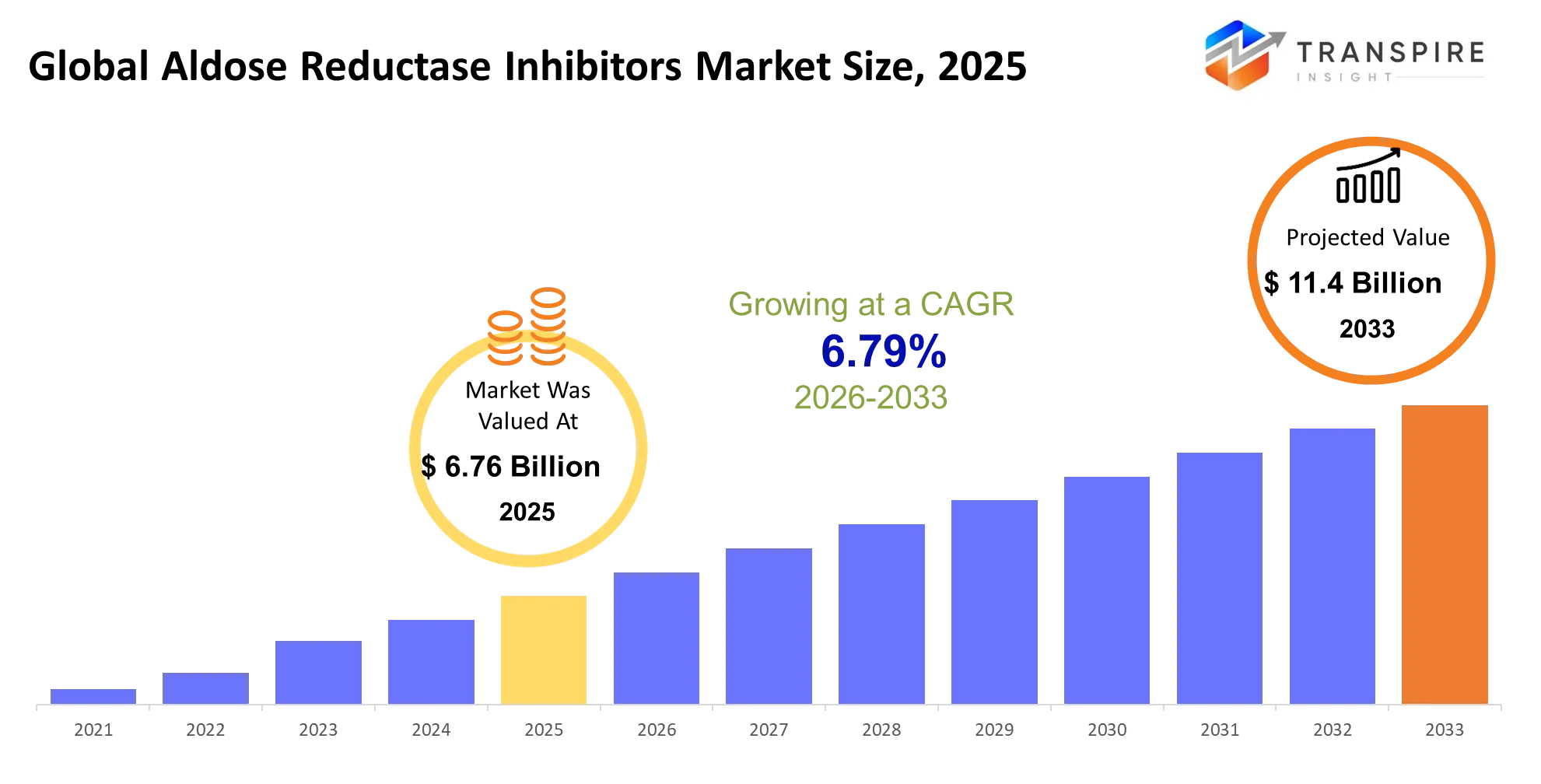
- Global Aldose Reductase Inhibitor Market Size 2025: USD 6.76 Billion
- Global Aldose Reductase Inhibitor Market Size 2033: USD 11.4 Billion
- Global Aldose Reductase Inhibitor Market CAGR: 6.79%
- Global Aldose Reductase Inhibitor Market Segments: By Drug Type (Epalrestat, Ranirestat, Fidarestat, Others), By Application (Diabetic Neuropathy, Retinopathy, Nephropathy, Others), By End-User (Hospitals, Clinics, Patients, Research Institutes)
To learn more about this report,  Download Free Sample Report
Global Aldose Reductase Inhibitor Market Summary:
The aldose reductase inhibitor market size is estimated at USD 6.76 billion in 2025 and is projected to reach USD 11.4 billion by 2033, growing at a CAGR of 6.79% from 2026 to 2033. The global aldose reductase inhibitor market balances metabolic disease control and technological innovation related to eye care and vision improvement.
In recent years, the inhibitor market has shifted toward vast research-driven development. It is supported by increasing diabetes cases across the world. A massive transformation has been the increasing investment in targeted diabetic problem therapies. Rather than only controlling the blood sugar level. The sharp increase in diabetes-related neuropathy among older generations in countries like India, China, and the US. Because the patients are experiencing long- term issues, there is a greater need for a preventive element for the treatment.
Key Market Insights:
- To discover safer and selective ARIs, major technologies have emerged, including artificial intelligence (AI), Computational Biology, and molecular screening.
- Earlier ARIs were used for critical cases, but now, doctors and the healthcare industry are using them to prevent diabetic complications before they become severe.
- Earlier ARIs faced many problems. With this in mind, pharmaceutical companies are now developing ARIs with improved tissue penetration, reduced side effects, and better targeting. New compounds like Ranirestat and Fidarestat are gaining attention for improved safety profiles.
- The Asia-Pacific region is becoming a major market for diabetic neuropathy treatment.
- Governments are supporting earlier diabetes screening programs, which indirectly causes ARI growth.
- Developing countries are becoming more proactive in managing diabetes complications due to increased awareness campaigns and improved access to healthcare.
- Countries in the Asia-Pacific and Latin America are seeing higher adoption of ARI therapies because diabetes cases are rapidly increasing.
- The International Diabetes Federation estimates that nearly 60% of patients live in Asia, making the region highly important for ARI growth.
What are the Key Drivers, Restraints, and Opportunities in the Global Aldose Reductase Inhibitor Market?
Nowadays, people are more concerned about their health. Almost everyone believes that prevention is better than a cure. Earlier, ARI was used for severe patients, but now at the initial age, the healthcare system uses to take care of the patient with perfection. The FDA introduced programs to encourage domestic pharmaceutical production and expedite generic drug reviews. This could benefit future ARI manufacturing and approvals. Namely, increased awareness campaigns on diabetic complications, support for AI-based drug development, etc. So, these are the reasons the Aldose Reductase Inhibitor Market is growing day by day.
The ARI can cause side effects. Earlier, the ARI drug showed liver toxicity, skin reactions, and limited effectiveness in some patients. Because of these safety concerns, several ARI candidates failed during clinical trials, slowing down market growth and regulatory approvals. Another important restraint is the limited approval of ARI drugs in many countries. While drugs like Epalrestat are approved in regions such as the Asia-Pacific, they are still not widely approved in regions like the United States and much of Europe. Strict regulatory requirements and the need for long-term clinical evidence make the approval process difficult, limiting global adoption and commercialization.
One of the major future opportunities is the use of artificial intelligence and computational biology to develop safer and more effective Aldose Reductase Inhibitors. Earlier ARI drugs were associated with toxicity and low success rates, but AI can now rapidly screen thousands of molecules to identify compounds with improved safety, greater enzyme selectivity, and enhanced tissue targeting. This technological shift could help companies create globally approved next-generation ARIs with fewer side effects. Another strong growth opportunity is the expansion of ARIs beyond diabetic neuropathy into diabetic retinopathy and diabetic nephropathy treatment.
What Has the Impact of Artificial Intelligence Been on the Global Aldose Reductase Inhibitors?
In the Aldose Reductase Inhibitors (ARI) industry, companies are increasingly using artificial intelligence, computational screening, and biomarker-based technologies to improve drug discovery and clinical development. For instance, Applied Therapeutics developed AT-007 and used advanced biomarker monitoring to measure sorbitol reduction in patients, helping researchers predict treatment effectiveness more accurately and optimize clinical trial outcomes. The company reported that AT-007 reduced toxic sorbitol levels by nearly 66% in patients with SORD Deficiency, demonstrating strong predictive and operational advantages for therapy development.
The industry is also adopting AI-driven in silico screening and convolutional neural network (CNN) models to automatically analyze thousands of chemical compounds and identify potential ARI molecules much faster than traditional laboratory testing. These technologies improve automation by reducing manual screening work, enhance predictive capabilities by forecasting drug-target interactions and toxicity risks, and create operational improvements by shortening research timelines and lowering development costs.
AI-assisted pharmaceutical systems are additionally helping optimize clinical trial management, patient selection, data analysis, and manufacturing efficiency across the ARI drug development process. In January 2026, pharmaceutical companies increasingly adopted artificial intelligence (AI) platforms to accelerate the discovery and optimization of enzyme-targeting drugs, including aldose reductase inhibitors. The technology helped researchers identify promising drug candidates faster, reduce development costs, and improve lead compound selection for diabetic complication therapies.
Key Market Trends:
- Asia-Pacific is the fastest-growing region in the ARI market due to rapidly increasing diabetes cases.
- Governments are expanding diabetes screening and chronic disease management programs.
- Asia-Pacific accounts for a major share of global ARI consumption due to high patient volumes.
- North America currently dominates the market due to its strong healthcare infrastructure and high healthcare spending.
- The region is seeing growing interest in next-generation ARIs with improved safety profiles.
- Strong drug safety regulations are shaping ARI development in the European region.
- Europe is focusing on reducing long-term diabetic complications in aging populations.
Global Aldose Reductase Inhibitors Market Segmentation
By Drug Type
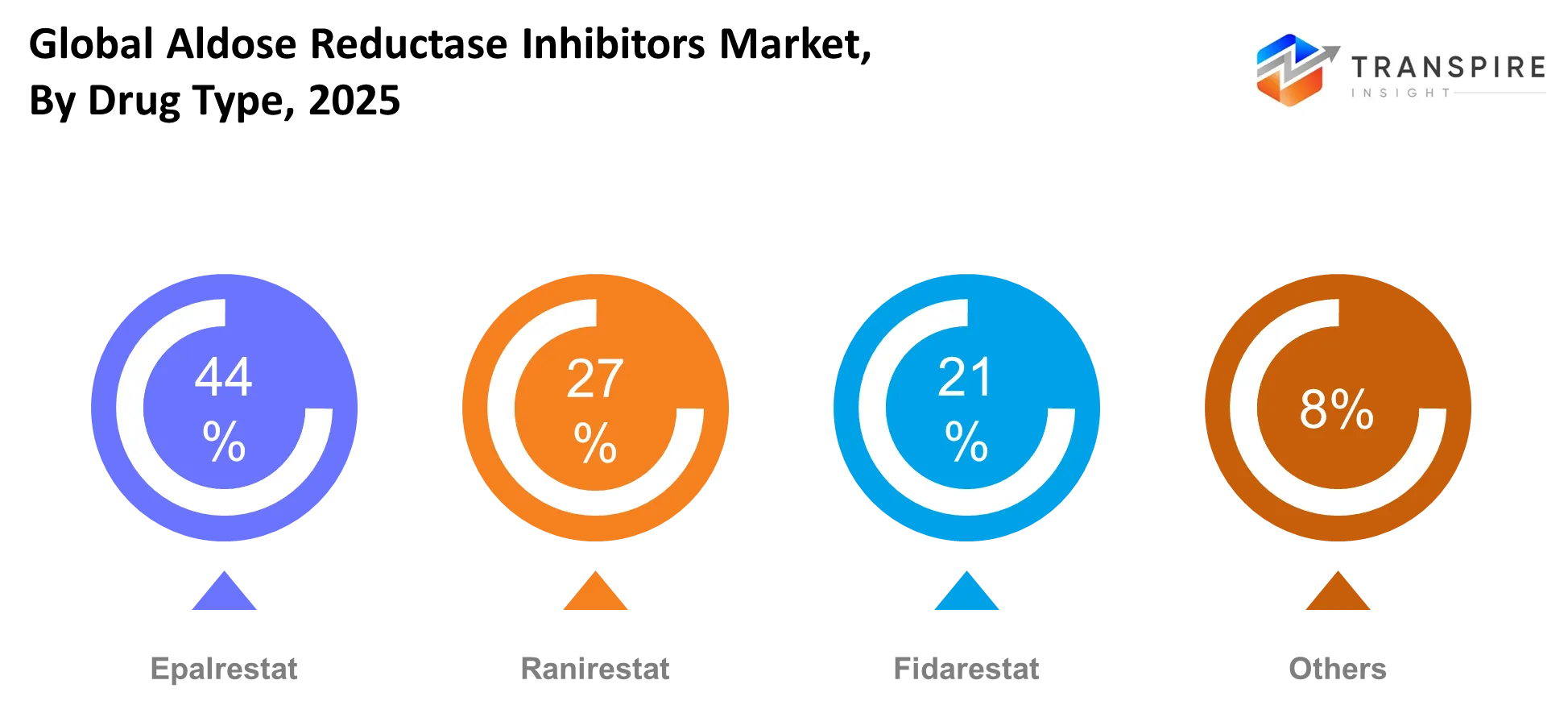
Epalrestat holds the largest share in the Aldose Reductase Inhibitors market because it is one of the very few ARI drugs commercially approved for diabetic neuropathy treatment. It is widely used in countries such as Japan, India, and China for managing nerve damage caused by diabetes. For instance, in Japan, Epalrestat has been prescribed for many years as part of diabetic neuropathy management programs, making it the most established product in this segment. Its strong clinical use, oral availability, and comparatively low cost continue to support its market dominance.
Ranirestat is gaining attention for its stronger enzyme inhibition and improved potential for nerve protection compared to older ARIs. Researchers are actively studying this drug for diabetic peripheral neuropathy and other diabetic complications. For example, clinical studies conducted by Sumitomo Pharma showed that Ranirestat helped improve nerve conduction velocity in diabetic patients, increasing interest in next-generation ARI therapies. Although it is not yet as widely commercialized as Epalrestat, its advanced therapeutic profile creates strong future growth potential.
Fidarestat is primarily known for its high selectivity and lower toxicity profile. It has been explored for diabetic neuropathy, cataracts, and retinal complications linked with long-term diabetes. For instance, several preclinical studies demonstrated that Fidarestat reduced oxidative stress and prevented nerve damage progression in diabetic animal models. Because of its promising safety profile, pharmaceutical researchers continue to evaluate Fidarestat for broader applications in diabetic complications.
The “Others” segment includes experimental and pipeline aldose reductase inhibitors currently under research and development. Many biotechnology companies and research institutes are now focusing on AI-assisted molecular discovery and plant-derived ARIs to develop safer, more effective therapies. For example, researchers are studying natural flavonoids and synthetic multi-target inhibitors that can simultaneously reduce inflammation, oxidative stress, and glucose-related tissue damage. This segment is expected to grow as next-generation ARI technologies continue advancing.
To learn more about this report, Download Free Sample Report
By Application
Diabetic neuropathy is the largest application segment in the Aldose Reductase Inhibitors (ARI) market because nerve damage is one of the most common long-term complications of diabetes. ARIs are mainly used to reduce sorbitol accumulation in nerve tissues, helping improve nerve function and slow disease progression. Asia-Pacific dominates this segment due to its massive diabetic population, especially in Japan, India, and China. For instance, Japan has widely used Epalrestat to treat diabetic neuropathy for many years, while India benefits from the availability of affordable generics. The Asia-Pacific diabetic neuropathy treatment market is expected to grow at a CAGR of 10.1% through 2030, driven by rising diabetes cases and increasing awareness. North America and Europe are also showing growing interest in next-generation ARIs as preventive diabetic care becomes more important.
Diabetic retinopathy is the fastest-growing application segment because diabetes-related eye damage is increasing rapidly worldwide. Researchers are exploring ARIs as preventive therapies to reduce retinal cell damage and oxidative stress caused by high glucose levels. Asia-Pacific is becoming a major growth center for this segment due to rising diabetic eye disease cases and improving ophthalmology infrastructure. For example, Japan and China are increasing investments in diabetic eye care and retinal therapies. The Asia-Pacific diabetic retinopathy market is projected to reach nearly USD 2.98 billion by 2030. In North America and Europe, pharmaceutical companies are focusing on advanced retinal drug delivery systems and combination therapies for diabetic eye protection.
The diabetic nephropathy segment is gaining attention as healthcare systems increasingly focus on preventing kidney failure caused by diabetes. ARIs are being studied for their ability to reduce oxidative stress and glucose-induced kidney tissue damage. Asia-Pacific shows strong future potential because countries like China and India are witnessing a sharp increase in diabetes-related kidney disease. Governments in the region are also promoting earlier diabetes screening and chronic disease management programs. Meanwhile, North America and Europe are investing more in precision medicine and biomarker-based kidney disease research, supporting future ARI development for nephropathy treatment.
By End-User
Hospitals hold a major share in the Aldose Reductase Inhibitors (ARI) market because most diabetic complication cases are diagnosed and treated in multispecialty hospitals. Hospitals are widely involved in diabetic neuropathy, retinopathy, and kidney disease management, especially for patients requiring advanced monitoring and specialist care. In the Asia-Pacific region, large hospitals in Japan, China, and India are increasingly adopting ARI-based therapies due to the growing population of diabetic patients. For instance, Japanese hospitals commonly prescribe Epalrestat for diabetic neuropathy management. In North America and Europe, hospitals are focusing more on preventive diabetic care and personalized treatment approaches, supporting the demand for next-generation ARIs.
Clinics are becoming an important end-user segment because many diabetic patients prefer regular outpatient treatment and long-term follow-up care at local diabetes clinics. In countries such as India and China, diabetic specialty clinics are expanding rapidly due to increasing awareness and government screening programs. These clinics often provide early-stage diabetic neuropathy diagnosis and oral ARI prescriptions. In Europe and North America, private endocrinology and diabetes care clinics are increasingly integrating digital monitoring systems and AI-assisted patient management tools, thereby improving the efficiency of chronic disease treatment.
The patient segment is growing rapidly because ARIs are primarily available as oral tablets, making home-based treatment convenient for long-term diabetes management. Many diabetic patients prefer self-managed therapies to reduce hospital visits and healthcare expenses. Asia-Pacific has the largest patient base due to the extremely high number of diabetes cases in India and China. For example, affordable generic Epalrestat availability in India has improved patient accessibility. Meanwhile, North American and European patients are increasingly seeking therapies that can prevent long-term diabetic complications rather than only treating symptoms after severe damage occurs.
Research institutes play a vital role in the development of next-generation aldose reductase inhibitors. Universities, biotechnology laboratories, and pharmaceutical research centers are actively studying safer ARIs, AI-based drug discovery methods, and multi-target therapies for diabetic complications. Asia-Pacific, particularly Japan and China, is becoming a growing research hub because of increasing government support for pharmaceutical innovation and lower research costs. In North America and Europe, institutes are heavily investing in biomarker-based research, computational drug screening, and retinal protection studies to expand ARI applications beyond diabetic neuropathy.
What are the Key Use Cases Driving the Adose Reductase Inhibitor Market?
The primary use case driving the Aldose Reductase Inhibitor (ARI) market is the treatment of diabetic neuropathy, where these drugs help reduce nerve damage caused by long-term high blood sugar levels. Hospitals and diabetic care clinics widely use ARIs, especially Epalrestat, to improve nerve function and manage pain in diabetic patients, particularly across Asia-Pacific countries such as Japan and India.
Beyond neuropathy, ARIs are increasingly being explored for diabetic retinopathy and nephropathy management. Researchers and pharmaceutical companies are studying their ability to reduce oxidative stress and tissue damage in the eyes and kidneys, creating new opportunities in ophthalmology and renal care.
Emerging use cases include neuroinflammation, cataract prevention, and rare metabolic disorders. AI-based drug discovery and biomarker-driven research are also helping expand ARI applications into broader chronic disease treatment areas.
|
Report Metrics |
Details |
|
Market size value in 2025 |
USD 6.76 Billion |
|
Market size value in 2026 |
USD 7.2 Billion |
|
Revenue forecast in 2033 |
USD 11.4 Billion |
|
Growth rate |
CAGR of 6.79% from 2026 to 2033 |
|
Base year |
2025 |
|
Historical data |
2021 - 2024 |
|
Forecast period |
2026 - 2033 |
|
Report coverage |
Revenue forecast, competitive landscape, growth factors, and trends |
|
Regional scope |
United States; Canada; Mexico; United Kingdom; Germany; France; Italy; Spain; Denmark; Sweden; Norway; China; Japan; India; Australia; South Korea; Thailand; Brazil; Argentina; South Africa; Saudi Arabia; United Arab Emirates |
|
Key company profiled |
Pfizer, Novartis, Roche, Merck, Bayer, Takeda, Astellas, Daiichi Sankyo, Sanofi, GSK, Eli Lilly, AstraZeneca, Teva, AbbVie, Bristol Myers Squibb. |
|
Customization scope |
Free report customization (country, regional & segment scope). Avail customized purchase options to meet your exact research needs. |
|
Report Segmentation |
By Drug Type (Epalrestat, Ranirestat, Fidarestat, Others), By Application (Diabetic Neuropathy, Retinopathy, Nephropathy, Others), By End-User (Hospitals, Clinics, Patients, Research Institutes) |
Which Regions Are Driving Global Aldose Reductase Inhibitor Market Growth?
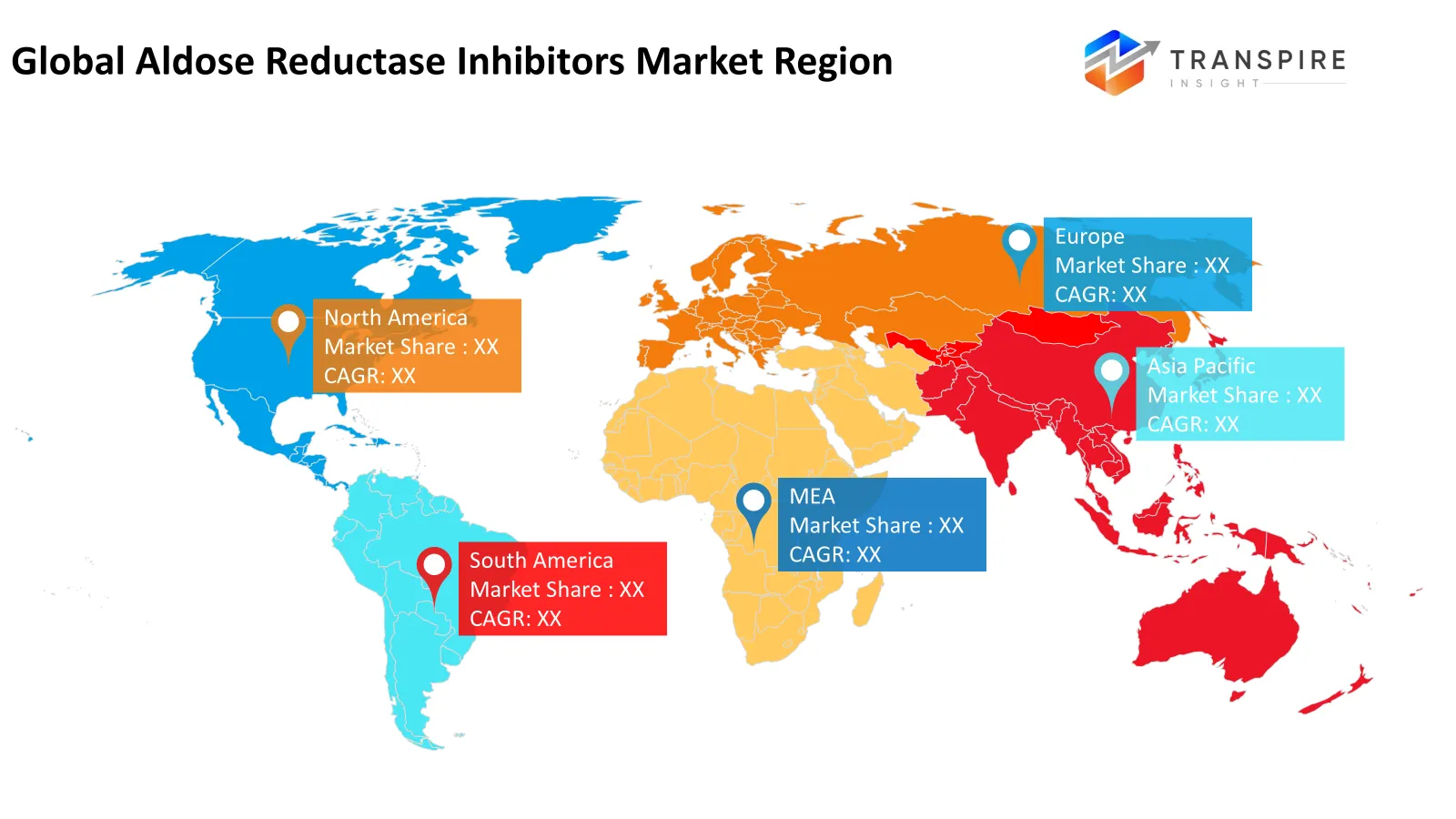
North America is the dominant ARI market because of its advanced healthcare system and strong pharmaceutical research ecosystem. Compared to Asia-Pacific, the region has lower patient volume but much higher investment in clinical trials, AI-based drug discovery, and precision medicine. The presence of major biotechnology companies and strong regulatory monitoring helps maintain market stability. Increasing focus on preventive diabetic care and long-term complication management also supports consistent growth across the United States and Canada. Applied Therapeutics advanced its Govorestat aldose reductase inhibitor program in the United States. The development supports new treatment options for rare metabolic disorders. In January 2026, Applied Therapeutics continued the development of Govorestat, an aldose reductase inhibitor. The drug is being developed to treat rare metabolic diseases and may help improve treatment options for patients.
Asia-Pacific is the leading region in the Aldose Reductase Inhibitors (ARI) market due to its very large diabetic population and rising cases of diabetic neuropathy. Countries such as Japan, China, and India drive demand because ARIs like Epalrestat are already widely used in diabetic care, especially in Japan. The region also benefits from affordable generic drug manufacturing, expanding healthcare access, and strong government diabetes screening programs. Supportive pharmaceutical production policies and growing hospital infrastructure further strengthen the Asia-Pacific’s market dominance. Otsuka Pharmaceutical in Japan continued supporting research and innovation in rare disease treatments. The activity highlighted growing interest in advanced therapies, including aldose reductase inhibitor-based treatments for rare metabolic disorders.
Europe is emerging as a stable market region due to rising focus on chronic disease prevention and personalized healthcare. Recently, the region has increased investments in diabetic eye disease research, biomarker-based therapies, and advanced pharmaceutical technologies. European healthcare systems are also encouraging earlier diagnosis of diabetic complications, creating new opportunities for ARI adoption. Future growth is expected from AI-driven drug development, precision medicine initiatives, and increasing research into retinal and kidney-related diabetic disorders. In February 2026, the European Medicines Agency (EMA) continued reviewing innovative therapies for rare diseases, including metabolic disorder treatments that could support future aldose reductase inhibitor development in Europe. The activity highlighted ongoing regulatory support for novel therapies targeting unmet medical needs. Source: European Medicines Agency (EMA).
To learn more about this report, Download Free Sample Report
Who are the Key Players in the Global Aldose Reductase Inhibitors Market and How do They Compete?
The Aldose Reductase Inhibitors (ARI) market is moderately competitive, with companies competing through innovation, diabetic complication research, regional expansion, and advanced drug development technologies. Pfizer, Novartis, Roche, Merck, Bayer, Takeda, Astellas, Daiichi Sankyo, Sanofi, GSK, Eli Lilly, AstraZeneca, Teva, AbbVie, and Bristol Myers Squibb are commonly associated with broader anti-diabetic and metabolic disorder markets, while companies such as Applied Therapeutics, Sumitomo Pharma, and Sanwa Kagaku Kenkyusho are more directly involved in dedicated ARI development.Roche andAbbVie have stronger positions in other therapeutic areas and are less prominently mentioned in specialized ARI market studies.
Companies compete using different strategies based on their strengths. Pfizer, Novartis, and Merck mainly focus on innovation-driven strategies by investing in metabolic disease research, AI-assisted drug discovery, and advanced diabetic complication therapies. Takeda, Astellas, and Daiichi Sankyo use niche-focused expansion strategies, particularly in Asia-Pacific, where diabetic neuropathy cases are rapidly increasing. Sanofi, Eli Lilly, and AstraZeneca compete through integrated diabetes portfolios, combining glucose-control therapies with complication-management research to strengthen long-term diabetic care offerings.
Meanwhile, Teva Pharmaceutical and GSK emphasize cost efficiency and global pharmaceutical distribution networks to improve market reach in price-sensitive regions. Bristol Myers Squibb and Bayer differentiate themselves through strong R&D ecosystems, strategic partnerships, and chronic disease management programs. Several firms are also expanding through biomarker-based clinical trials, precision medicine, and next-generation oral therapies with improved safety profiles. Companies directly involved in ARI innovation, such as Applied Therapeutics, are focusing on rare metabolic diseases and CNS-penetrant ARIs, helping create differentiation beyond traditional diabetic neuropathy treatment.
Key Companies in the Global Aldose Reductase Inhibitor Market
- Pfizer
- Novartis
- Roche
- Merck
- Bayer
- Takeda
- Astellas
- Daiichi Sankyo
- Sanofi
- GSK
- Eli Lilly
- AstraZeneca
- Teva
- AbbVie
- Bristol Myers Squibb
Recent Development News
- In September 2025,Applied Therapeutics completed a meeting with the U.S. FDA regarding a potential New Drug Application (NDA) submission strategy for govorestat in CMT-SORD treatment. The development marked an important regulatory step toward possible future approval and commercialization of the company’s aldose reductase inhibitor therapy. https://finance.yahoo.com
What Strategic Insights Define the Future of the Aldose Reductase Inhibitors Market?
The Aldose Reductase Inhibitors (ARI) market is gradually shifting from traditional diabetic neuropathy treatment toward broader complication management, including diabetic retinopathy, nephropathy, and rare metabolic disorders. Future growth will likely depend on next-generation ARIs with improved safety, better tissue targeting, and AI-assisted drug discovery capabilities. Asia-Pacific is expected to remain the key growth engine because of its expanding diabetic population, lower-cost manufacturing ecosystem, and rising preventive healthcare awareness.
However, one hidden risk in the market is the ongoing difficulty of obtaining global regulatory approvals, especially in the U.S. and Europe, where long-term evidence of efficacy and safety remains a critical barrier. At the same time, an emerging opportunity lies in biomarker-based precision medicine and CNS-penetrant ARIs for rare neurological diseases, which could significantly expand the therapeutic scope beyond diabetes. Strategically, companies should prioritize AI-driven molecule optimization, region-specific partnerships, and multi-application clinical research to improve differentiation and long-term commercialization success.
Key Global Aldose Reductase Inhibitor Market Segmentation
By Drug Type
- Epalrestat
- Ranirestat
- Fidarestat
- Others
By Application
- Diabetic Neuropathy
- Retinopathy
- Nephropathy
- Others
By End-User
- Hospitals
- Clinics
- Patients
- Research Institutes
Frequently Asked Questions
Find quick answers to common questions.
The expected Global Aldose Reductase Inhibitors Market size will be USD 11.4 billion in 2033.
Key segments for the Global Aldose Reductase Inhibitors Market are By Drug Type (Epalrestat, Ranirestat, Fidarestat, Others), By Application (Diabetic Neuropathy, Retinopathy, Nephropathy, Others), By End-User (Hospitals, Clinics, Patients, Research Institutes).
Major Global Aldose Reductase Inhibitors Market players are Pfizer, Novartis, Roche, Merck, Bayer, Takeda, Astellas, Daiichi Sankyo, Sanofi, GSK, Eli Lilly, AstraZeneca, Teva, AbbVie, Bristol Myers Squibb.
The Global Aldose Reductase Inhibitors Market size is USD 6.76 billion in 2025.
The Global Aldose Reductase Inhibitors Market is expected to grow 6.79% during the forecast period.
- Pfizer
- Novartis
- Roche
- Merck
- Bayer
- Takeda
- Astellas
- Daiichi Sankyo
- Sanofi
- GSK
- Eli Lilly
- AstraZeneca
- Teva
- AbbVie
- Bristol Myers Squibb
Recently Published Reports
-
May 2026
Biosimilars Market
Biosimilars Market By Product Type (Monoclonal Antibodies, Recombinant Hormones, Erythropoietin, G-CSF, Others), By Indication (Oncology, Autoimmune Diseases, Blood Disorders, Diabetes, Others), By Manufacturing Type (In-House Manufacturing, Contract Manufacturing), By Distribution Channel (Hospital Pharmacies, Retail Pharmacies, Online Pharmacies), By Industry Analysis, Size, Share, Growth, Trends, and Forecasts 2021-2033
-
Apr 2026
Gastrointestinal Endoscopy Market
Gastrointestinal Endoscopy Market By Type (Rigid Gastrointestinal Endoscope, Flexible Gastrointestinal Endoscopes, Disposable Gastrointestinal Endoscope), By Procedure Type (Colonoscopy, Gastroscopy, Duodenoscopy, Enteroscopy, Flexible Sigmoidoscopy, Others), By Application (Diagnosis, Treatment), By End-Users (Hospitals, Ambulatory Surgical Centers, Specialty Clinics, Laboratories, Others), By Industry Analysis, Size, Share, Growth, Trends, and Forecasts 2021-2033
-
Apr 2026
Rare Inherited Metabolic Disorder Drug Market
Rare Inherited Metabolic Disorder Drug Market By Drug Class (Enzyme Replacement Drugs, Gene Therapy Drugs, Substrate Reduction Drugs, Small Module Drugs, Protein Drugs), By Route of Administration(Parenteral, Oral, Intrathecal), By Clinical Development (Marketed Drugs, Late Stage Clinical Phase III, Early Stage Clinical Phase I-II, Preclinical Candidates), By Indication (Lysosomal Storage Disorders, Urea Cycle Disorders, Amino Acid Metabolic Disorders, organic Acidemias, Peroximal Disorders), By Industry Analysis, Size, Share, Growth, Trends, and Forecasts 2021-2033
-
Jan 2026
Pharmaceutical Cleanroom Technology Market
Pharmaceutical Cleanroom Technology Market By Product (Equipment, Consumables, Services); By Cleanroom Type (Standard Cleanrooms, Modular Cleanrooms); By End Use (Pharmaceutical Companies, Biotechnology Companies), By Industry Analysis, Size, Share, Growth, Trends, and Forecasts 2021-2033