

France Breast Pump Market Size & Forecast:
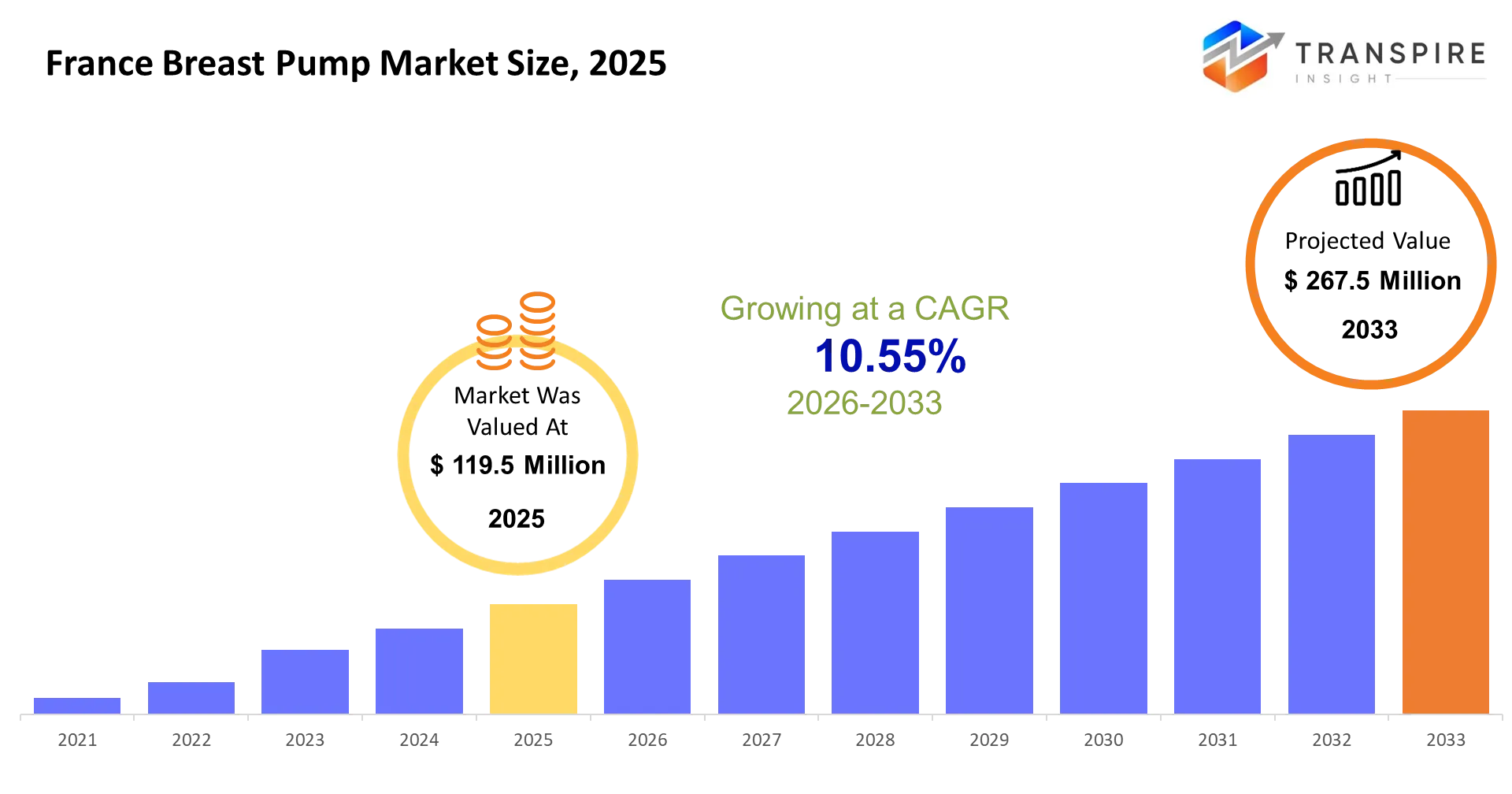
- France Breast Pump Market Size 2025: USD 119.5 Million
- France Breast Pump Market Size 2033: USD 267.5 Million
- France Breast Pump Market CAGR: 10.55%
- France Breast Pump Market Segments: By Type (Manual Pumps, Electric Pumps, Battery-operated Pumps, Others); By Application (Personal Use, Hospital Use, Others); By End-User (Mothers, Hospitals, Clinics, Others); By Distribution (Online, Retail, Pharmacies, Others)
To learn more about this report,  Download Free Sample Report
France Breast Pump Market Summary
The France Breast Pump Market was valued at USD 119.5 Million in 2025. It is forecast to reach USD 267.5 Million by 2033. That is a CAGR of 10.55% over the period.
In France, breast pumps kind of serve a very practical role, helping postpartum mothers keep breastfeeding going, even when direct feeding is not always possible, especially in city work settings, neonatal care contexts, and also when babies need medical supervision. The market ends up supporting two broad types, you have hospital-grade devices that are used in maternity wards and then smaller personal pumps, meant for home and office use. Over the last five years, there was a real structural shift, more towards portable, hands-free, and quieter electric models, partly because working mothers are going back to employment earlier after childbirth. One of the big triggers was the COVID-19 pandemic, since it messed up in person lactation support and pushed many families to look for home based breastfeeding solutions, with telehealth guidance.
At the same time, disruptions in the medical device supply chain , especially for imports , encouraged more sourcing from within Europe and it made digital retail channels take off faster. These drivers boosted overall accessibility and also doubled down on the need for replacements, mainly for the more advanced and comfort focused pumping systems.
Key Market Insights
- France Breast Pump Market seems to be tilting pretty hard toward wearable, hands free pumps, and by 2025 they are taking almost 38% share, sort of, in a big way.
- Electric breast pumps still lead the France Breast Pump Market, mainly because they work with more efficiency, and because hospitals are integrating them more and more.
- Manual pumps are more of a backup choice but they do keep showing up consistently, especially in cost sensitive rural healthcare segments, where budgets get tight.
- The fastest-growing slice is smart connected pumps, these come with app based monitoring, plus usage tracking, and it just feels like more people are asking for that.
- Hospital grade pumps also hold a noticeable portion, mostly tied to neonatal intensive care units, or NICU, dependency cases.
- For real-life use, homecare applications dominate, with well over 60% share, largely supported by early discharge maternity policies.
- If you look at applications, hospital based lactation support is expected to grow the quickest through 2033.
- As for end users, working mothers stay as the biggest group, pushed along by corporate maternity wellness policies.
- Also, new mothers in urban areas are the fastest-growing end user category in the France Breast Pump Market right now.
- Competition is basically betting on wearable design innovation, deeper hospital partnerships, and widening direct-to-consumer digital channels, so the brands can get closer to customers without as much friction.
What are the Key Drivers, Restraints, and Opportunities in the France Breast Pump Market?
The France Breast Pump Market is mainly driven by women getting more involved in the workforce, plus an early postnatal return-to-work routine that’s supported by French maternity policies. In practice, this makes more mothers depend on electric and wearable breast pumps so they can express milk not just at the office, but also during commuting. On top of that, hospitals are increasingly picking up more advanced pumping setups for neonatal care, and that ends up strengthening institutional demand. It then gets translated into bigger procurement volumes for hospital-grade machines, plus more activity in rental programs too.
One big restraint, though, is the expensive upfront price for advanced electric and smart breast pumps, especially the wearable kind that comes with sensors and app connectivity. Even when reimbursement exists in some parts of healthcare, lots of personal-use devices are still paid out-of-pocket. That situation slows adoption among lower-income households. Also there are real worries about maintenance and hygiene for reusable parts, so first-time users often hesitate. As a result, penetration stays weaker in rural areas, where support and services can be less available, or it feels harder to access.
The main opportunity sits with growing subscription-based and rental breast pump models, especially through hospital networks and e-commerce channels. This approach is starting to take hold in maternity clinics across urban France, where mothers can use higher-end devices without paying a large amount at the start. There’s also room for manufacturers to bundle lactation consulting services alongside device subscriptions. That combination could become a scalable revenue path, particularly as digital maternal health ecosystems continue to develop, and consumers expect more connected support.
What Has the Impact of Artificial Intelligence Been on the France Breast Pump Market?
Artificial intelligence is slowly reshaping the France Breast Pump Market , a bit like it’s not doing everything at once but it’s changing the whole vibe. By enabling smarter , more adaptive pumping systems, and also boosting postpartum care efficiency, these tools are becoming more than just hardware. In connected breast pumps, AI-driven algorithms are watching suction patterns and usage behavior, then they automatically modify pumping cycles so comfort goes up and milk output efficiency improves. Less fiddling with manual changes also means mothers get a smoother experience, especially when they’re juggling work and time constraints, which can be a lot.
At the same time predictive analytics is making its way into smart lactation devices, and into companion mobile applications too. With machine learning models, the systems can keep track of feeding schedules, milk volume trends, and how often the device gets used. Then they send back more personalized guidance for mothers, which supports long-term breastfeeding consistency. Some healthcare providers are even leaning on aggregated data insights to fine-tune lactation support programs in maternity wards , and that can help with patient outcomes while cutting down on nurse intervention time.
Operationally, the improvements are pretty concrete: better device reliability, fewer usage errors, and stronger adherence to breastfeeding schedules, often through real-time feedback systems. Still, AI adoption is not exactly everywhere, because data privacy regulations in France, and the broader EU, keep getting in the way, especially with strict healthcare data protection frameworks. On top of that, there aren’t always enough high-quality clinical datasets about lactation behavior, so model accuracy can drop in real-world conditions. That gap then slows down the move toward large-scale deployment of fully autonomous intelligent pumping systems.
Key Market Trends
- Since 2022, people have started adopting wearable breast pumps more, a bit suddenly, and it's sort of changed how lactation works at home in urban areas of France.
- At the same time, hospitals adjusted buying habits too.
- Once the demand after neonatal care rose, post pandemic, procurement shifted toward high-efficiency electric pumps, you know the type.
- Meanwhile direct-to-consumer online sales grew a lot, so pharmacies-only distribution isn't as central as it used to be.
- Also subscription based pump rental schemes got momentum, especially inside maternity hospitals across the bigger French cities.
- Premium brands began leaning harder on smart pump integration, paired with mobile apps. That combo became a real differentiator.
- And at workplaces, policies that support lactation, helped push demand for portable pumping systems in office environments.
- Competition then sped up, because manufacturers rolled out quieter motors and more ergonomic, discreet designs.
- Finally, supply chain localization in Europe improved availability, after the global disruptions tied to medical devices between 2020 and 2022.
France Breast Pump Market Segmentation
By Type
Manual pumps keep a smaller but kind of steady spot in the France Breast Pump Market. Mainly it’s because they are cheaper, and also pretty easy to handle for low-frequency pumping. They still matter for first time users, and for rural households where people care more about cost than about pure efficiency. With less mechanical fuss overall, they don’t lean so hard on power sources, so adoption tends to show up in emergency, or just occasional, situations. Still, the downside is that lower efficiency and more physical effort can limit take up among busy urban workers.
Electric pumps, on the other hand, end up leading because they are generally more efficient, they can express milk faster and they fit well in both hospital and homecare environments. These systems also ride along with higher levels of workforce participation among mothers, and a growing need for lactation solutions that save time. Battery-operated pumps are starting to gain ground too, acting like a bridge between manual and full electric categories, especially for people who move around a lot. Over the forecast horizon, electric and wearable systems are expected to consolidate share. Product innovation will likely keep shifting toward better portability, reduced noise, and digital monitoring add ons.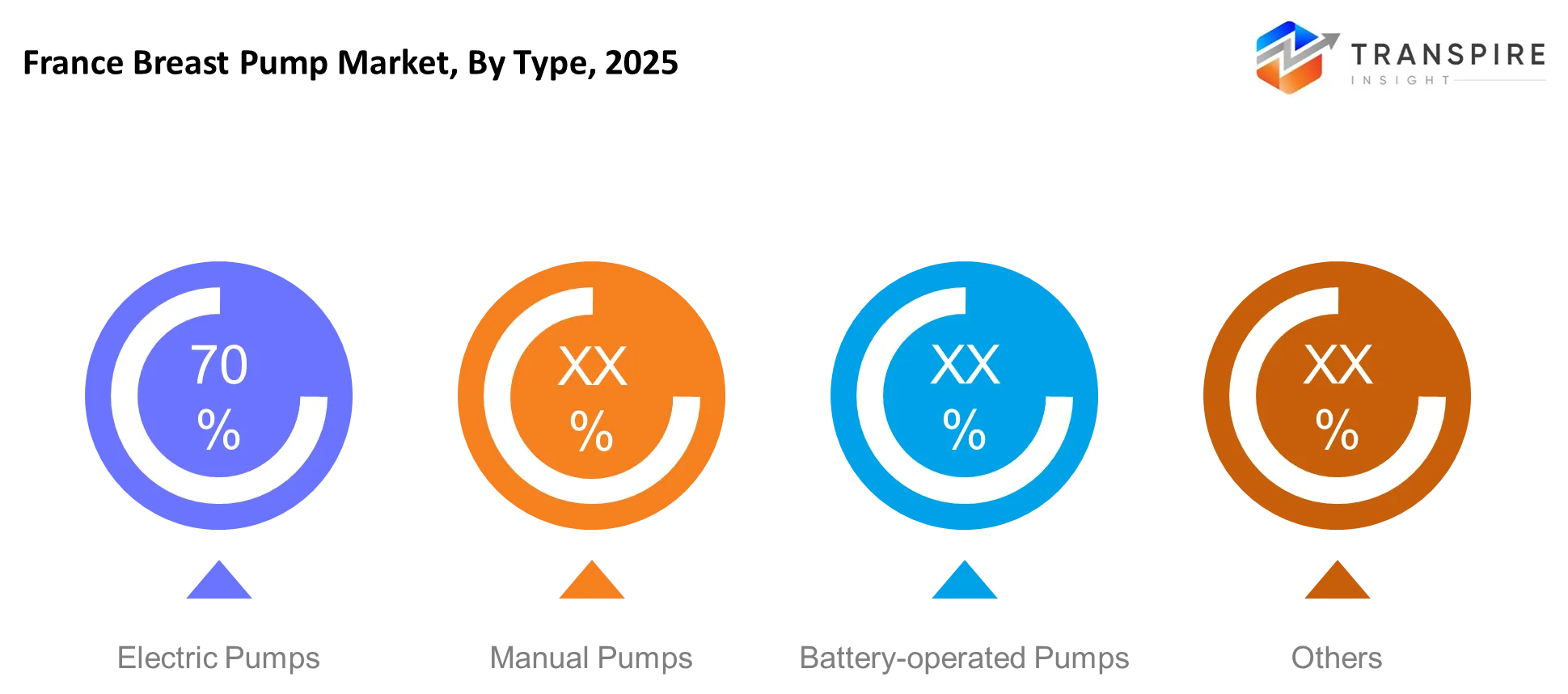
To learn more about this report, Download Free Sample Report
By Application
Personal use seems to be the leading application segment, partly because more working mothers are choosing flexible breastfeeding solutions that, you know, fit outside clinical settings. Urban households often lean toward compact, portable devices since these better match daily pumping routines with workplace timing. Also, there is growing awareness about breastfeeding continuity and maternal health support programs, and it sort of pushes this segment to stay on top. Meanwhile, digital lactation tracking tools are making personal use easier, by boosting user convenience, and keeping feeding routines more consistent.
Hospital use still matters a lot especially in neonatal intensive care units and maternity wards, where feeding needs to be medically supervised. Hospitals tend to depend on higher performance devices, mainly for premature infants and postnatal care situations where direct breastfeeding isn’t possible. The other section, which includes homecare support services and midwife-assisted lactation programs, is slowly growing too, mainly because early discharge policies are becoming more common. Over time, it’s expected that personal use will rise quicker than institutional use, as home-based maternal care models keep evolving.
By End-User
Mothers are basically the dominant end user group, mainly because workforce participation keeps climbing and because more people want continued breastfeeding even after coming back to employment. Urban users in particular seem to push demand for wearable and kind of discreet pumping systems, those that help with mobility, plus privacy… even if it sounds simple. Also, government supported maternity leave frameworks, even indirectly, keep adoption going since they help the switch between hospital care and homecare usage. And then there are the behavioral shifts too, toward more structured breastfeeding routines, that kinda reinforce the market position of this segment.
Hospitals still stay a major institutional end user, largely due to their role in neonatal care, and in maternal recovery support services. Clinics add steady pull through outpatient maternity services and lactation counseling programs, which often come with device recommendations, or rentals that feel more practical. The “others” bucket, like homecare providers and lactation consultants, is growing as telehealth integration becomes more common. Over the forecast period, decentralized maternal care models are expected to raise reliance on those hybrid hospital-to-home equipment usage patterns, where the device goes along with the patient rather than staying in just one place.
By Distribution
Online channels are holding a leading spot in distribution because more people are buying digitally and because global , plus domestic brands are easy to find through e-commerce platforms. Shoppers kind of lean toward online options for comparing products, checking reviews and getting access to wearable or more premium breast pump models. On top of that, subscription-like purchasing schemes , as well as direct-to-consumer approaches are making this channel even stronger, like it’s steadily pulling ahead. And with logistics that actually got better, and delivery that arrives quicker, trust in buying these medical devices online is also improving a lot.
Retail pharmacies still keep a fairly steady share though, since they let you get the item right away and provide professional guidance right where the purchase happens. Hospitals and maternity clinics often suggest pharmacy-based buying, especially for first-time users who want validated or confirmed product choices. Meanwhile the “others” slice, which covers specialized medical supply stores, ends up serving more niche procurement needs for institutions. Looking ahead, online distribution is expected to grow faster than offline channels. That should happen as digital healthcare ecosystems keep expanding, and teleconsultation-driven buying keeps becoming normal.
What are the Key Use Cases Driving the France Breast Pump Market?
In the France Breast Pump Market, the dominant use case is basically postpartum milk expression, especially for working mothers who still need to keep breastfeeding once they go back to the office, sort of. The strongest demand seems to show up in urban corporate settings where flexible breaks, and lactation rooms are now more often available, than not.
Then you have secondary use cases, like hospital based neonatal feeding support, and also milk expression for premature infants, mainly in NICU units, where direct breastfeeding simply isn’t possible. On top of that, midwife-led homecare services help push adoption among first-time mothers who are getting postnatal care outside hospitals.
Looking more into emerging use cases, there is telehealth integrated lactation monitoring, where digital platforms link mothers with consultants in real time. There are also rental based pump access programs inside maternity hospitals. These approaches keep spreading because healthcare providers are trying to cut cost barriers, while at the same time, improving breastfeeding continuity, overall.
|
Report Metrics |
Details |
|
Market size value in 2025 |
USD 119.5 Million |
|
Market size value in 2026 |
USD 132.6 Million |
|
Revenue forecast in 2033 |
USD 267.5 Million |
|
Growth rate |
CAGR of10.55% from 2026 to 2033 |
|
Base year |
2025 |
|
Historical data |
2021 - 2024 |
|
Forecast period |
2026 - 2033 |
|
Report coverage |
Revenue forecast, competitive landscape, growth factors, and trends |
|
Regional scope |
France |
|
Key company profiled |
Medela, Philips Avent, Spectra Baby, Ameda, Lansinoh, Pigeon, Evenflo, Tommee Tippee, Ardo Medical, Hygeia, Motif Medical, NUK, Chicco, Willow, Elvie . |
|
Customization scope |
Free report customization (country, regional & segment scope). Avail customized purchase options to meet your exact research needs. |
|
Report Segmentation |
By Type (Manual Pumps, Electric Pumps, Battery-operated Pumps, Others); By Application (Personal Use, Hospital Use, Others); By End-User (Mothers, Hospitals, Clinics, Others); By Distribution (Online, Retail, Pharmacies, Others) |
Which Regions are Driving the France Breast Pump Market Growth?
Île-de-France seems to lead the France Breast Pump Market , not just because of a lot of people there, but also due to how densely it has tertiary hospitals. Birth volumes are high , and advanced maternal healthcare services are being adopted in a steady way. In and around Paris, maternity networks keep folding hospital-grade pumping systems into neonatal intensive care units , so procurement demand doesn’t really pause. On top of that there are well- established workplace lactation policies in bigger corporate hubs, which pushes working mothers toward portable electric, even wearable, pump options.
Auvergne-Rhône-Alpes looks more like a steady second tier region, backed by resilient healthcare systems and ongoing spending for regional hospital modernization. Compared with Île-de-France, its momentum feels less tied to corporate workplace uptake and more to how public health services are organized across mid-sized towns , like Lyon and Grenoble. Hospitals there show procurement schedules that are fairly consistent for mid-range electric pumps, which suggests long-term budgeting rather than constant upgrades happening every season. Maternal care programs and policy rollouts across public hospitals stay in rhythm, so demand becomes predictable, and that makes the region a dependable contributor to national market revenues.
Provence-Alpes-Côte d’Azur is emerging as the fastest-growing area , helped by rapid improvements in private maternity clinics , plus more take-up of home- based postpartum care solutions. In particular, new growth in private healthcare infrastructure around Marseille and Nice has lifted demand for portable and smart breast pumps. The region also benefits from rising birth rates in urban coastal zones, while digital health adoption is getting stronger through telelactation services, which kind of ties everything together.
Who are the Key Players in the France Breast Pump Market and How Do They Compete?
The France Breast Pump Market is still moderately consolidated , with a bunch of well known global brands holding pretty tight control over hospital and premium retail lanes while newer wearable-tech players kind of shake up the consumer segment. What makes it competitive is mostly tech improvements, product comfort , and digital connectivity, not only price. The older companies defend their share via hospital agreements and solid distribution ties with pharmacies and maternity clinics, but the newer entrants tend to aim at app-enabled smart pumps and discreet wearable looks.
Medela shows up by leaning into hospital-grade focus and strong clinical take up in neonatal care areas, using long standing relationships with maternity hospitals so they can keep a steady institutional demand. Philips Avent differentiates by building an all in one mother-and-baby ecosystem, pulling together feeding bottles, sterilization systems, and pumps so they can secure consumer lifecycle value. Spectra Baby is more about high suction efficiency and reliability, and it positions itself strongly with medical-grade home users who want performance first devices.
Willow and Elvie are the ones that really lead the wearable part, they stress cordless, hands-free pumping systems that come with mobile app tracking and a quiet motor feel. Their growth plan leans on direct to consumer digital sales routes, plus tie-ins with maternity influencers and telehealth platforms. At the same time, brands like Ardo Medical and Lansinoh reinforce their standing through mid-tier hospital and pharmacy networks, pairing affordability with clinically verified performance.
Company List
- Medela
- Philips Avent
- Spectra Baby
- Ameda
- Lansinoh
- Pigeon
- Evenflo
- Tommee Tippee
- Ardo Medical
- Hygeia
- Motif Medical
- NUK
- Chicco
- Willow
- Elvie
Recent Development News
What Strategic Insights Define the Future of the France Breast Pump Market?
The France Breast Pump Market is structurally moving toward a sort of digitally integrated maternal care ecosystem where wearable devices, telehealth lactation support and subscription access models sort of, converge into one single service driven value chain. Growth will increasingly depend on how well manufacturers weave hardware with software ecosystems instead of treating the breast pump as a standalone device performance thing. There’s also a less visible risk in the EU level medical data governance tightening, which could end up restricting real time lactation data tracking and, in turn, limit large scale AI enabled personalization features.
At the same time, dependency on imported electronic components brings supply concentration risk, and that can throw off pricing stability. One emerging opportunity is hospital led rental and subscription programs, these reduce the upfront cost and also nudge users into recurring service ecosystems. Market participants should put emphasis on ecosystem partnerships with maternity clinics and digital health platforms, so they can secure long term user retention rather than just focusing on one time device sales.
France Breast Pump Market Report Segmentation
By Type
- Manual Pumps
- Electric Pumps
- Battery-operated Pumps
- Others
By Application
- Personal Use
- Hospital Use
- Others
By End-User
- Mothers
- Hospitals
- Clinics
- Others
By Distribution
- Online
- Retail
- Pharmacies
- Others
Frequently Asked Questions
Find quick answers to common questions.
The Approximate France Breast Pump Market size for the Market will be USD 267.5 Million in 2033.
Key Segments for the France Breast Pump Market are By Type (Manual Pumps, Electric Pumps, Battery-operated Pumps, Others); By Application (Personal Use, Hospital Use, Others); By End-User (Mothers, Hospitals, Clinics, Others); By Distribution (Online, Retail, Pharmacies, Others).
Major France Breast Pump Market Players are Medela, Philips Avent, Spectra Baby, Ameda, Lansinoh, Pigeon, Evenflo, Tommee Tippee, Ardo Medical, Hygeia, Motif Medical, NUK, Chicco, Willow, Elvie.
The Current France Breast Pump Market size is USD 119.5 Million in 2025.
The France Breast Pump Market CAGR is 10.55% from 2026 to 2033.
- Medela
- Philips Avent
- Spectra Baby
- Ameda
- Lansinoh
- Pigeon
- Evenflo
- Tommee Tippee
- Ardo Medical
- Hygeia
- Motif Medical
- NUK
- Chicco
- Willow
- Elvie
Recently Published Reports
-
May 2026
Biosimilars Market
Biosimilars Market By Product Type (Monoclonal Antibodies, Recombinant Hormones, Erythropoietin, G-CSF, Others), By Indication (Oncology, Autoimmune Diseases, Blood Disorders, Diabetes, Others), By Manufacturing Type (In-House Manufacturing, Contract Manufacturing), By Distribution Channel (Hospital Pharmacies, Retail Pharmacies, Online Pharmacies), By Industry Analysis, Size, Share, Growth, Trends, and Forecasts 2021-2033
-
Apr 2026
Gastrointestinal Endoscopy Market
Gastrointestinal Endoscopy Market By Type (Rigid Gastrointestinal Endoscope, Flexible Gastrointestinal Endoscopes, Disposable Gastrointestinal Endoscope), By Procedure Type (Colonoscopy, Gastroscopy, Duodenoscopy, Enteroscopy, Flexible Sigmoidoscopy, Others), By Application (Diagnosis, Treatment), By End-Users (Hospitals, Ambulatory Surgical Centers, Specialty Clinics, Laboratories, Others), By Industry Analysis, Size, Share, Growth, Trends, and Forecasts 2021-2033
-
Apr 2026
Rare Inherited Metabolic Disorder Drug Market
Rare Inherited Metabolic Disorder Drug Market By Drug Class (Enzyme Replacement Drugs, Gene Therapy Drugs, Substrate Reduction Drugs, Small Module Drugs, Protein Drugs), By Route of Administration(Parenteral, Oral, Intrathecal), By Clinical Development (Marketed Drugs, Late Stage Clinical Phase III, Early Stage Clinical Phase I-II, Preclinical Candidates), By Indication (Lysosomal Storage Disorders, Urea Cycle Disorders, Amino Acid Metabolic Disorders, organic Acidemias, Peroximal Disorders), By Industry Analysis, Size, Share, Growth, Trends, and Forecasts 2021-2033
-
Jan 2026
Pharmaceutical Cleanroom Technology Market
Pharmaceutical Cleanroom Technology Market By Product (Equipment, Consumables, Services); By Cleanroom Type (Standard Cleanrooms, Modular Cleanrooms); By End Use (Pharmaceutical Companies, Biotechnology Companies), By Industry Analysis, Size, Share, Growth, Trends, and Forecasts 2021-2033