

Eye Drops Market Summary:
According to Transpire Insights, a detailed research report on the market reflects that the dry eye treatment application segment dominates the Eye Drops Market, accounting for approximately 71% of the total share worldwide. Alcon Inc. leads the market with approximately (around USD 10.8 billion) in annual revenue and an estimated 19-23% market share, making it the leading contributor to market development, innovation, advanced eye drops production, expanding manufacturing capabilities, and growth dynamics.
Market Snapshot
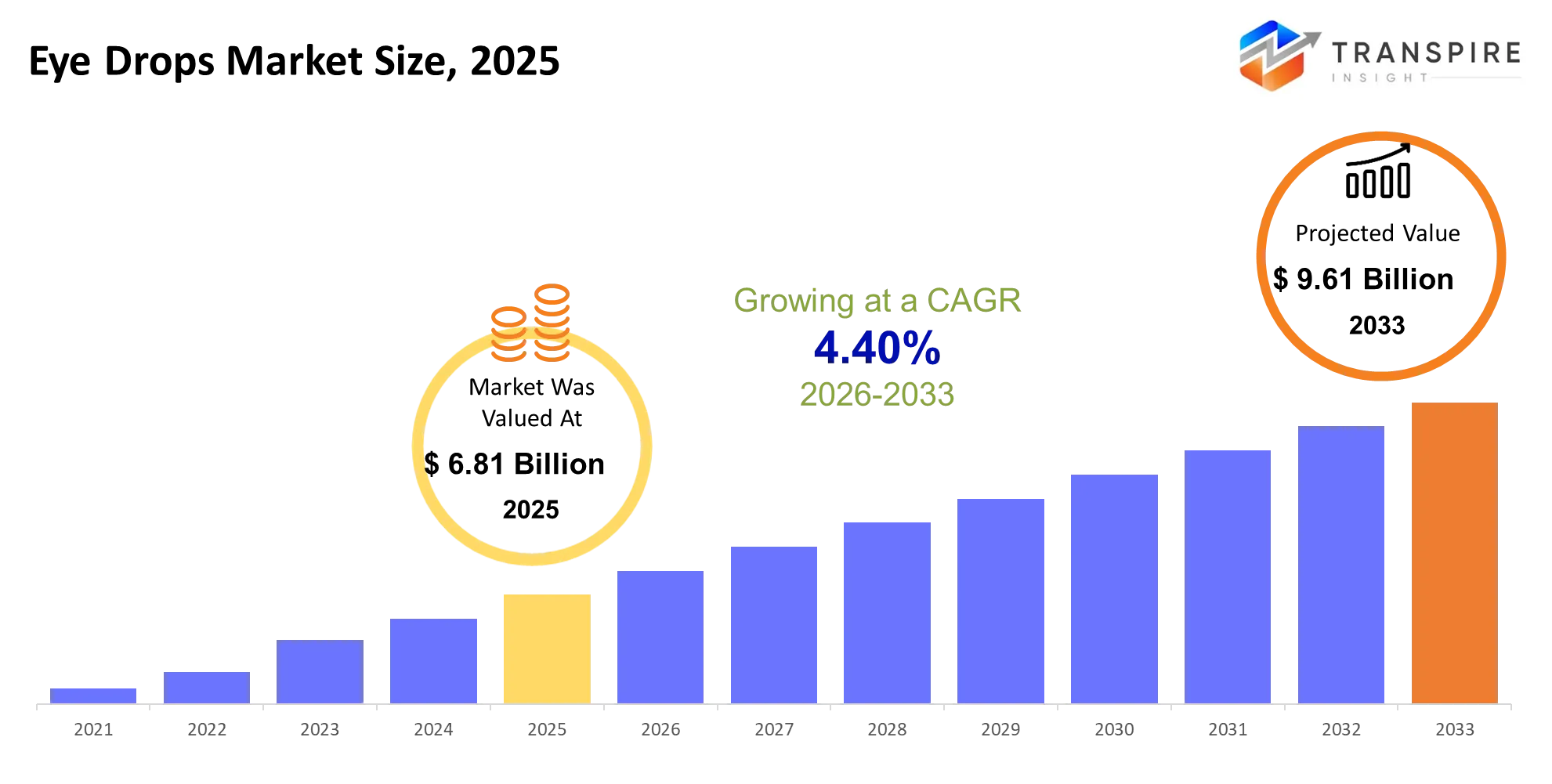
- Market Value (2025): USD 6.81 Billion.
- Expected Market Value (2026): USD 7.11 Billion.
- Estimated Market Value (2033): USD 9.61 Billion.
- Forecast CAGR (2026-2033): 4.40%.
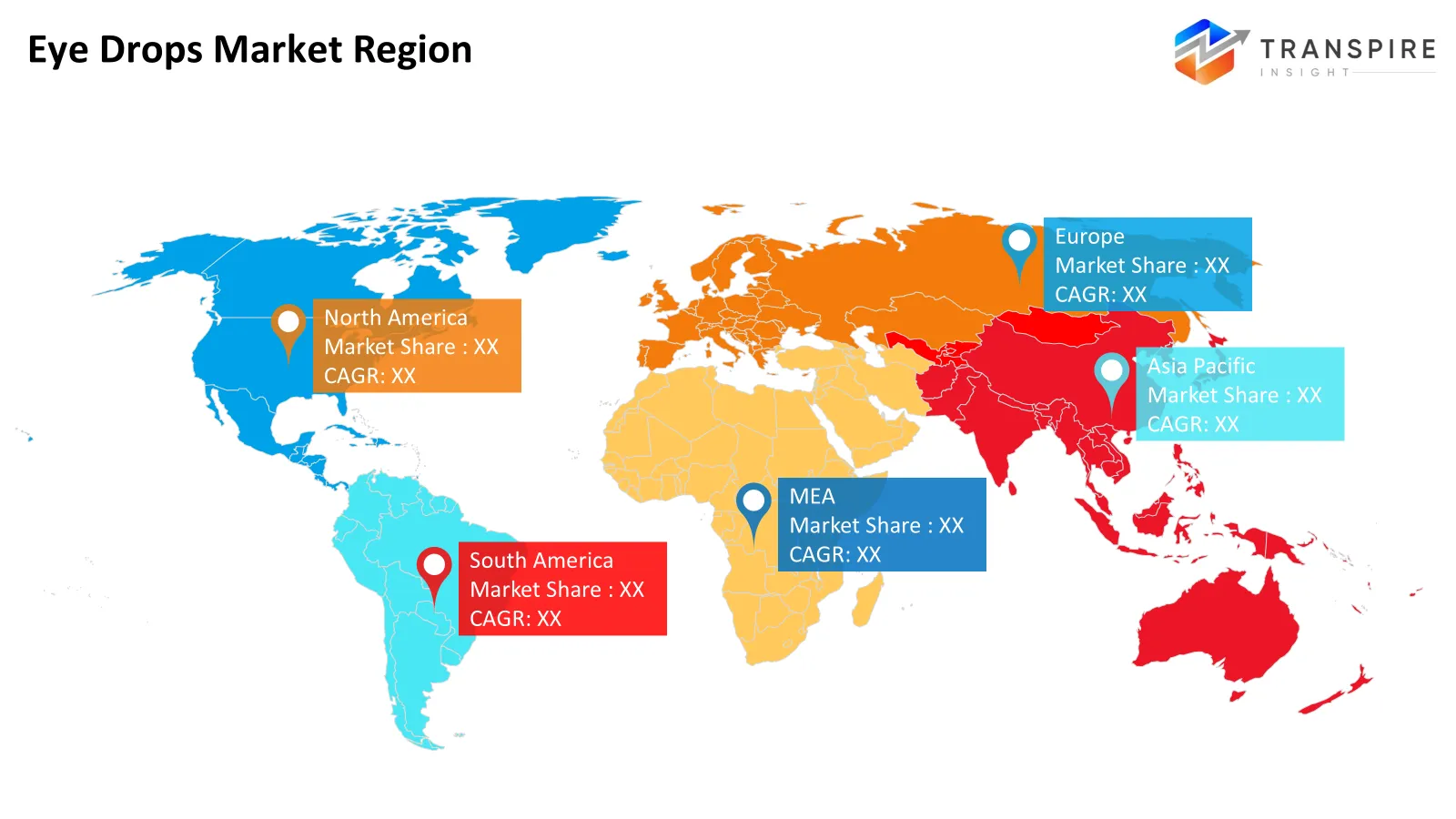
- Leading Region in 2025: Asia-Pacific.
- Second-largest Region: Europe.
- Fastest Growing Region: North America.
Introduction
Eye Drops are sterile ophthalmic formulations specifically designed to lubricate, moisturize, protect, or deliver medications directly to the eye for the treatment of various ocular conditions, including dry eye syndrome, glaucoma, conjunctivitis, allergic eye diseases, infections, and post-operative inflammation. These formulations are manufactured using advanced aseptic filling technologies, preservative-free delivery systems, sterile filtration, and precision pharmaceutical manufacturing processes to ensure product safety, efficacy, and patient compliance. The Eye Drops Market is primarily driven by the rising prevalence of ophthalmic disorders, increasing aging population, growing screen time associated with digital eye strain, expanding awareness regarding eye health, technological advancements in ophthalmic drug delivery, and increasing demand for both prescription and over-the-counter (OTC) eye care products.
For Instance:
- North America, Market Outlook: North America is expected to remain one of the dominant regions in the Eye Drops Market, projected to surpass USD 18.5 billion during the forecast period due to the high prevalence of glaucoma and dry eye syndrome, advanced healthcare infrastructure, increasing adoption of innovative ophthalmic therapies, and strong reimbursement support.
- Japan, Ophthalmic Innovation Initiatives: Eye drops manufacturers are increasingly investing in preservative-free formulations, sustained-release drug delivery systems, AI-assisted ophthalmic diagnostics, smart dispensing technologies, and advanced biologic ophthalmic therapies to improve treatment outcomes, enhance patient convenience, and meet growing demand for innovative eye care solutions.
Market Highlights
- Asia Pacific is expected to grow at a rapid CAGR in the Eye Drops Market, holding approximately 40% of the market share during the forecast period.
- North America remains one of the largest regional markets, accounting for approximately 31% of the market share during the forecast period.
- Europe is anticipated to hold approximately 23% of the Eye Drops Market over the forecast timeframe, supported by increasing healthcare expenditure, aging demographics, and rising awareness of preventive eye care.
- By Product Type, the Prescription Eye Drops segment dominated the market, holding approximately 58% share in 2025 and is projected to grow at a substantial CAGR during the forecast period.
- By Application, the Prescription Ophthalmic Treatment segment dominated the market, accounting for approximately 69% share in 2025 and is projected to witness significant growth throughout the forecast period.
- By End User, the Hospitals & Ophthalmology Clinics segment dominated the market with approximately 61% share in 2025 and is expected to maintain its leadership during the forecast period.
- Government Vision Care & Healthcare Programs: Governments across developed and emerging economies continue to strengthen eye care accessibility through vision screening programs, healthcare reimbursement policies, blindness prevention initiatives, and investments in ophthalmic healthcare infrastructure, significantly accelerating the growth of the Eye Drops Market.
How is Technology Driving Growth in the Eye Drops Market?
The Eye Drops Market is witnessing significant growth owing to continuous technological advancements in ophthalmic pharmaceutical manufacturing and drug delivery systems. Modern technologies, including aseptic manufacturing, preservative-free multidose delivery systems, nanotechnology-based drug formulations, sustained-release ophthalmic therapies, AI-assisted ophthalmology diagnostics, precision sterile filling equipment, and smart pharmaceutical manufacturing systems, have significantly improved product safety, bioavailability, patient compliance, and treatment effectiveness. Furthermore, innovations in biologic eye therapies, advanced lubricating formulations, gene-based ophthalmic treatments, and digital monitoring technologies enable manufacturers to deliver more effective and personalized eye care solutions while complying with stringent international pharmaceutical quality standards. Advanced automation and digital quality management systems also improve manufacturing efficiency, reduce contamination risks, lower production costs, and strengthen supply chain reliability, supporting the continued expansion of the Eye Drops Market.
Market Drivers
Rising Prevalence of Ophthalmic Disorders, Aging Population & Digital Eye Strain.The increasing prevalence of dry eye disease, glaucoma, cataracts, conjunctivitis, allergic eye disorders, diabetic retinopathy, and age-related macular degeneration, coupled with the rapidly growing geriatric population, continues to drive strong demand for eye drops worldwide. Additionally, rising digital device usage leading to prolonged screen exposure and digital eye strain has significantly increased the consumption of lubricating and artificial tear eye drops. Expanding healthcare access, increasing awareness regarding preventive eye care, continuous pharmaceutical innovation, and growing adoption of over-the-counter ophthalmic products further accelerate market growth.
For Instance: India: Under initiatives such as the National Programme for Control of Blindness and Visual Impairment (NPCBVI), Ayushman Bharat, expanding ophthalmology services, and increasing investments in healthcare infrastructure, the government continues to improve access to affordable eye care services and ophthalmic medications, significantly supporting the demand for Eye Drops.
Restrain
The primary restraint affecting the Eye Drops Market is the high cost associated with advanced ophthalmic biologics, stringent regulatory approval requirements, product recalls due to sterility concerns, and increasing pricing pressure from generic ophthalmic formulations. In addition, challenges related to preservative-induced ocular irritation.
Analysis of Prices and Consumer Behaviour
The Prescription Ophthalmic Treatment segment dominates the Eye Drops Market, contributing approximately 71% of total market revenue due to the increasing prevalence of chronic eye disorders requiring long-term pharmacological management. Preservative-free premium eye drops are generally priced approximately 20-30% higher than conventional ophthalmic formulations because of their superior safety profile, advanced delivery systems, enhanced patient comfort, and reduced risk of ocular irritation. Dry Eye Disease treatment accounts for nearly 48% of total eye drops consumption, driven by increasing screen time, aging populations, and environmental factors. Approximately 76% of total market demand originates from hospitals, ophthalmology clinics, retail pharmacies, and online pharmacy channels. Consumer preferences indicate that nearly 72% of patients prioritize rapid symptom relief, preservative-free formulations, long-lasting lubrication, physician recommendations, affordability, and ease of administration, while continuous innovation in ophthalmic therapeutics and expanding healthcare access continue to support the long-term growth of the Eye Drops Market.
Top Companies in the Eye Drops Market
- Alcon
- Bausch + Lomb
- Santen Pharmaceutical
- AbbVie
- Novartis
- Sun Pharmaceutical
- Johnson & Johnson Vision
- Théa Pharma
- Rohto Pharmaceutical
- Otsuka Pharmaceutical
- URSAPHARM
- Cipla
- Allergan
- Similasan
- Akorn Pharmaceuticals
Market Segmentation
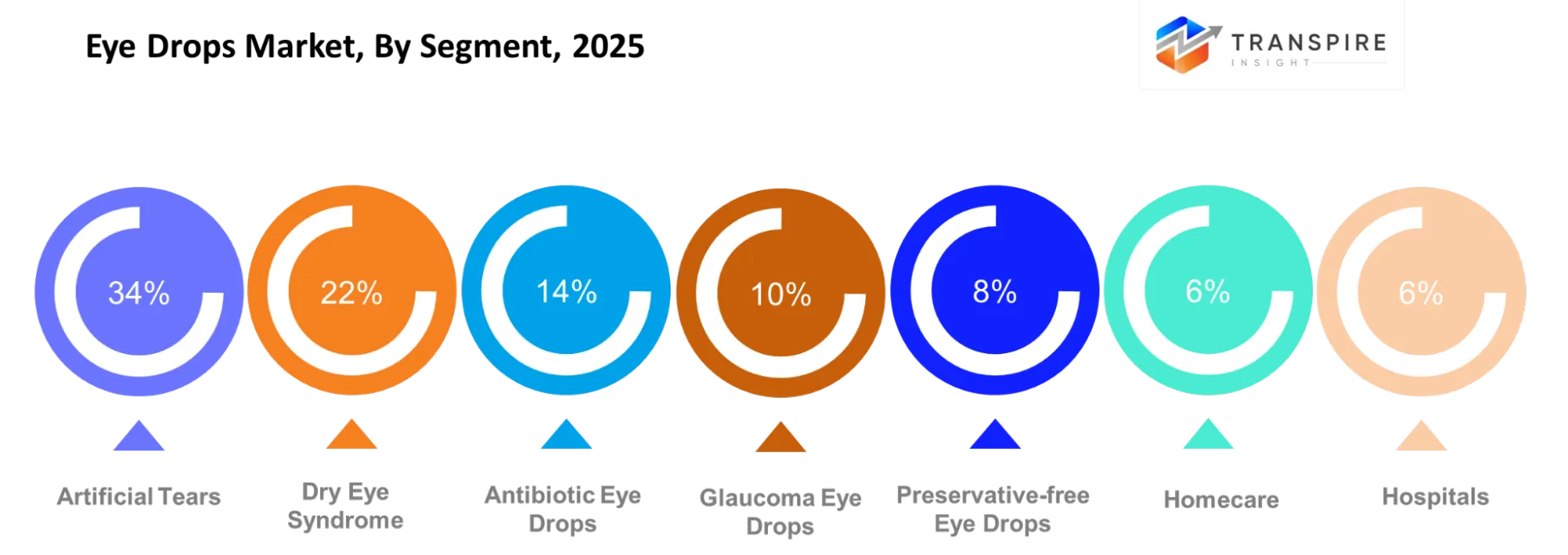
The Eye Drops Market share is divided into five categories: Product Type, Application, End User, Packaging Type, and Distribution Channel.
The Prescription Eye Drops Segment Dominated the Market, Accounting for Approximately 58% in 2025, and is Expected to Grow at a Significant CAGR During the Forecast Period
The Eye Drops Market is segmented by product type into Prescription Eye Drops, Over-the-Counter (OTC) Eye Drops, Artificial Tears, Anti-Allergy Eye Drops, Anti-Inflammatory Eye Drops, Antibiotic Eye Drops, Anti-Glaucoma Eye Drops, Lubricating Eye Drops, and Others. Among these, the Prescription Eye Drops segment dominated the market, accounting for approximately 58% in 2025, and is expected to witness a significant CAGR throughout the forecast period. The segment maintains its leadership due to the increasing prevalence of glaucoma, dry eye syndrome, bacterial and viral eye infections, allergic conjunctivitis, and other chronic ophthalmic disorders requiring physician-prescribed therapies. Continuous advancements in preservative-free formulations, sustained-release ophthalmic drug delivery systems, biologics, and combination therapies further strengthen market demand. Additionally, rising healthcare expenditure, increasing access to ophthalmology services, and growing awareness of early diagnosis and treatment continue to support the expansion of the Prescription Eye Drops segment globally.
The Prescription Ophthalmic Treatment Segment Held the Largest Share of Approximately 69% in 2025 and is Expected to Grow at a Substantial CAGR During the Forecast Period
The Eye Drops Market is segmented by application into Prescription Ophthalmic Treatment, Dry Eye Disease Management, Glaucoma Treatment, Eye Allergy Treatment, Eye Infection Treatment, Post-Surgical Eye Care, Contact Lens Care, Ocular Lubrication, and Others. Among these, the Prescription Ophthalmic Treatment segment accounted for approximately 69% of the market in 2025 and is projected to expand at a substantial CAGR during the forecast period. Rising incidences of chronic eye diseases, increasing aging populations, expanding ophthalmic healthcare infrastructure, and growing awareness regarding preventive eye care continue to drive market growth. In addition, continuous innovation in ophthalmic pharmaceuticals, increasing availability of advanced prescription therapies, and expanding reimbursement coverage significantly contribute to the long-term expansion of this segment.
The Hospitals & Ophthalmology Clinics Segment Held the Largest Share of Approximately 61% in 2025 and is Expected to Grow at a High CAGR During the Forecast Period
The Eye Drops Market is segmented by end user into Hospitals & Ophthalmology Clinics, Retail Pharmacies, Online Pharmacies, Ambulatory Surgical Centers, Specialty Eye Care Centers, Home Healthcare, Academic & Research Institutes, and Others. Among these, the Hospitals & Ophthalmology Clinics segment dominated the market with approximately 61% share in 2025 and is expected to witness considerable growth throughout the forecast period. Increasing patient visits for ophthalmic consultations, growing surgical procedures for cataracts and glaucoma, expanding access to specialized eye care, and rising adoption of advanced prescription therapies continue to drive demand. Furthermore, continuous investments in ophthalmology infrastructure, increasing healthcare spending, and the availability of skilled eye care professionals further strengthen market growth.
Regional Segment Analysis of the Eye Drops Market
- North America (U.S., Canada, Mexico)
- Europe (Germany, France, U.K., Italy, Spain, Rest of Europe)
- Asia-Pacific (China, Japan, India, South Korea, Rest of APAC)
- South America (Brazil, Argentina, Rest of South America)
- Middle East & Africa (UAE, Saudi Arabia, South Africa, Rest of MEA)
Asia Pacific is Expected to Grow at the Fastest CAGR in the Eye Drops Market by Holding Approximately 40% Market Share During the Forecast Period
Asia Pacific continues to dominate the Eye Drops Market owing to its large patient population, increasing prevalence of dry eye disease and glaucoma, rapidly aging demographics, expanding healthcare infrastructure, and rising awareness regarding eye health across China, India, Japan, South Korea, and Southeast Asian countries. Government initiatives supporting vision care, increasing pharmaceutical manufacturing capabilities, and growing access to affordable ophthalmic medications further accelerate market demand. Additionally, the rapid expansion of retail pharmacy chains, e-commerce healthcare platforms, and advanced ophthalmology services significantly strengthens the regional market outlook.
North America Holds Approximately 31% Market Share in the Eye Drops Market During the Forecast Period
North America remains one of the leading regional markets due to its advanced healthcare infrastructure, high diagnosis rates for ophthalmic disorders, increasing adoption of innovative ophthalmic biologics, and strong reimbursement systems. Growing prevalence of age-related eye diseases, digital eye strain associated with prolonged screen exposure, and continuous investments in pharmaceutical research and development continue to support regional market expansion. Furthermore, increasing adoption of preservative-free eye drops, sustained-release therapies, and AI-enabled ophthalmology diagnostics significantly contribute to market growth.
Europe is Anticipated to Hold Approximately 23% Share of the Eye Drops Market During the Forecast Period
Europe maintains strong market growth due to increasing healthcare expenditure, rising geriatric population, growing awareness of preventive eye care, and favorable government healthcare policies. Expanding pharmaceutical innovation, increasing demand for preservative-free ophthalmic formulations, and continuous investments in advanced ophthalmic drug delivery technologies further encourage the adoption of eye drops across hospitals, ophthalmology clinics, and retail pharmacies throughout the region.
Strategies for Market Growth in Non-Leading Regions
Emerging economies can accelerate Eye Drops Market growth by investing in modern pharmaceutical manufacturing facilities, sterile ophthalmic production technologies, and localized manufacturing capabilities. Strengthening domestic pharmaceutical supply chains, expanding public healthcare programs, improving access to ophthalmology services, and encouraging partnerships between pharmaceutical companies and healthcare providers will significantly improve market penetration. Governments can further stimulate demand by expanding national vision care programs, increasing reimbursement coverage for ophthalmic medications, promoting early diagnosis of eye diseases, and encouraging pharmaceutical innovation. Digital healthcare platforms, teleophthalmology services, AI-based eye disease screening, and smart pharmaceutical manufacturing technologies will further improve operational efficiency and long-term market competitiveness.
Future Market Trends for the Eye Drops Market
- Growing Adoption of Preservative-Free & Advanced Ophthalmic Formulations: Manufacturers are increasingly investing in preservative-free eye drops, sustained-release drug delivery systems, nanotechnology-based formulations, biologic ophthalmic therapies, and advanced lubricating solutions to improve patient safety, treatment effectiveness, and long-term ocular health while meeting evolving regulatory standards.
- Expansion of Personalized Eye Care & Digital Ophthalmology: The increasing adoption of AI-assisted diagnostics, teleophthalmology platforms, wearable eye monitoring devices, precision medicine, and personalized ophthalmic treatment approaches is significantly improving disease detection, treatment outcomes, and patient engagement while driving demand for advanced eye drop formulations.
- Smart Pharmaceutical Manufacturing & Product Innovation: Leading manufacturers are implementing AI-driven pharmaceutical manufacturing systems, robotic aseptic filling technologies, digital quality control platforms, automated sterile production lines, and advanced packaging innovations to improve manufacturing efficiency, product quality, regulatory compliance, and supply chain resilience while meeting the rapidly growing demand in the Eye Drops Market.
Recent Developments
- In May 2026: James Hardie Industries announced further expansion of its fiber cement manufacturing capabilities through investments in advanced production technologies and sustainable manufacturing initiatives to meet the growing demand for high-performance Eye Drops products used in residential and commercial construction.
- In December 2025: Capacity Expansion: Etex Group expanded its fiber cement production capacity by investing in modern manufacturing facilities and energy-efficient production technologies. The investment strengthens supply capabilities, enhances operational efficiency, and supports increasing demand for sustainable Eye Drops solutions across infrastructure and building construction projects.
Market Segment
This study forecasts revenue at global, regional, and country levels from 2020 to 2033. Transpire Insights has segmented the Eye Drops Market based on the below-mentioned segments:
Eye Drops Market, By Product
- Artificial Tears
- Antibiotic Eye Drops
- Anti-allergy Eye Drops
- Anti-inflammatory Eye Drops
- Glaucoma Eye Drops
- Lubricating Eye Drops
- Steroid Eye Drops
- Others
Eye Drops Market Packaging Type
- Single-dose
- Multi-dose
- Preservative-free
- Prescription Bottles
- OTC Bottles
- Unit-dose Vials
- Spray Format
- Others
Eye Drops Market, By Application
- Dry Eye Syndrome
- Glaucoma
- Eye Infection
- Allergy Relief
- Post-operative Care
- Redness Relief
- Contact Lens Care
- Others
Eye Drops Market, By Distribution Channel
- Hospital Pharmacies
- Retail Pharmacies
- Online Pharmacies
- Drug Stores
- Clinics
- Wholesalers
- Direct Sales
- Others
Eye Drops Market, By End User
- Hospitals
- Clinics
- Homecare
- Ophthalmology Centers
- Ambulatory Surgical Centers
- Retail Consumers
- Research Institutes
- Others
Eye Drops Market,By Regional Analysis
North America
- US
- Canada
- Mexico
Europe
- Germany
- UK
- France
- Italy
- Spain
- Russia
- Rest of Europe
Asia Pacific
- China
- Japan
- India
- South Korea
- Australia
- Rest of Asia Pacific
South America
- Brazil
- Argentina
- Rest of South America
Middle East & Africa
- UAE
- Saudi Arabia
- Qatar
- South Africa
- Rest of the Middle East & Africa
Frequently Asked Questions
Find quick answers to common questions.
Rising prevalence of dry eye syndrome, glaucoma, conjunctivitis, and other ophthalmic disorders, increasing aging population, growing digital screen usage leading to digital eye strain, expanding awareness of eye health, and continuous advancements in ophthalmic drug delivery technologies are driving the growth of the Eye Drops Market.
Asia Pacific dominates the Eye Drops Market due to its large patient population, increasing incidence of ophthalmic diseases, expanding healthcare infrastructure, rising healthcare expenditure, growing pharmaceutical manufacturing capabilities, and improving access to eye care services.
Eye Drops are widely used because they provide effective treatment for dry eyes, glaucoma, allergies, infections, inflammation, and post-operative eye care. They offer targeted drug delivery, rapid symptom relief, improved patient compliance, and convenient administration while minimizing systemic side effects.
The Prescription Ophthalmic Treatment segment leads the Eye Drops Market, driven by the increasing prevalence of chronic eye disorders, growing demand for prescription therapies, expanding ophthalmology services, rising healthcare awareness, and continuous innovation in ophthalmic pharmaceuticals.
Major companies operating in the Eye Drops Market include Alcon, Bausch + Lomb, AbbVie (Allergan Eye Care), Santen Pharmaceutical Co., Ltd., Novartis AG, Johnson & Johnson Vision, Rohto Pharmaceutical Co., Ltd., Sun Pharmaceutical Industries Ltd., Thea Pharma, and Akorn Operating Company LLC.
- Alcon
- Bausch + Lomb
- Santen Pharmaceutical
- AbbVie
- Novartis
- Sun Pharmaceutical
- Johnson & Johnson Vision
- Théa Pharma
- Rohto Pharmaceutical
- Otsuka Pharmaceutical
- URSAPHARM
- Cipla
- Allergan
- Similasan
- Akorn Pharmaceuticals
About the Authors

Pankaj Ghogare Patil
I am Pankaj Ghogare Patil, a Senior Research Analyst at Transpire Insight, specializing in the Pharmaceutical, Chemicals & Materials, Healthcare IT, and Biotechnology industry. My expertise lies in conducting comprehensive market research, analyzing industry trends, evaluating competitive landscapes, and translating complex data into actionable insights. At Transpire Insight, I closely follow emerging technologies, regulatory developments, and market innovations to create accurate, well-researched, and informative content that helps businesses and professionals make informed decisions. I am committed to producing credible, evidence-based articles that reflect industry best practices while making technical topics accessible and valuable for a broad audience.

Chakradhar Khansole
Chakradhar serves as the Research Director at Transpire Insight, bringing over 8 years of experience in technology, innovation, and strategic market intelligence. He specializes in transforming complex market data into actionable business insights that enable organizations to make informed, growth-oriented decisions. Recognized for his strategic vision and analytical expertise, Chakradhar leads high-impact research initiatives, delivering comprehensive market assessments, competitive intelligence, and forward-looking industry analysis.
Recently Published Reports
-
Jul 2026
Alopecia Treatment Market
Alopecia Treatment Market Size, Share & Analysis Report By Disease Type (Alopecia Areata, Cicatricial Alopecia, Traction Alopecia, Alopecia Totalis, Androgenetic Alopecia, Alopecia Universalis, and Other Disease Types), By Treatment Type (Topical Treatments, Oral Medications, Injectable Therapies, and Hair Transplantation), By Gender (Male, and Female), By Distribution Channel (Hospitals and Clinics, Retail Pharmacies, and Online Retailers), and Geography (North America, Europe, Asia-Pacific, Middle East and Africa, South and Central America), 2021 - 2031
-
Jul 2026
Medical Ultrasound Probe Market
Medical Ultrasound Probe Market Size, Share & Analysis Report By Type (Linear Type, Convex Type, Endocavitary Probe, Phased Array/Cardiac Probe, Transesophageal (TEE) Probe, and Others), By Application (Ophthalmology, Cardiology, Musculoskeletal, Oncology, Obstetrics & Gynecology, General Imaging, and Others), By End User (Hospitals & Clinics, Diagnostic Centers, Ambulatory Surgical Centers, and Others), and Geography (North America, Europe, Asia-Pacific, Middle East and Africa, South and Central America), 2021 – 2031
-
May 2026
Biosimilars Market
Biosimilars Market By Product Type (Monoclonal Antibodies, Recombinant Hormones, Erythropoietin, G-CSF, Others), By Indication (Oncology, Autoimmune Diseases, Blood Disorders, Diabetes, Others), By Manufacturing Type (In-House Manufacturing, Contract Manufacturing), By Distribution Channel (Hospital Pharmacies, Retail Pharmacies, Online Pharmacies), By Industry Analysis, Size, Share, Growth, Trends, and Forecasts 2021-2033
-
Apr 2026
Gastrointestinal Endoscopy Market
Gastrointestinal Endoscopy Market By Type (Rigid Gastrointestinal Endoscope, Flexible Gastrointestinal Endoscopes, Disposable Gastrointestinal Endoscope), By Procedure Type (Colonoscopy, Gastroscopy, Duodenoscopy, Enteroscopy, Flexible Sigmoidoscopy, Others), By Application (Diagnosis, Treatment), By End-Users (Hospitals, Ambulatory Surgical Centers, Specialty Clinics, Laboratories, Others), By Industry Analysis, Size, Share, Growth, Trends, and Forecasts 2021-2033