

North America Thoracic Outlet Syndrome Market Size & Forecast:
- North America Thoracic Outlet Syndrome Market Size 2025: USD 74.16 Million
- North America Thoracic Outlet Syndrome Market Size 2033: USD 120.87 Million
- North America Thoracic Outlet Syndrome Market CAGR: 6.30%
- North America Thoracic Outlet Syndrome Market Segments: By Treatment Type (Physical Therapy, Surgical Treatment, Pain Management, Anticoagulant Therapy, Thrombolytic Therapy, Botulinum Toxin Therapy, Rehabilitation Therapy, Others); By Disease Type (Neurogenic TOS, Venous TOS, Arterial TOS, Traumatic TOS, Congenital TOS, Acquired TOS, Recurrent TOS, Others); By Diagnosis (MRI, CT Scan, Ultrasound, X-ray, Electromyography, Nerve Conduction Studies, Angiography, Others); By End User (Hospitals, Specialty Clinics, Ambulatory Surgical Centers, Rehabilitation Centers, Academic Medical Centers, Diagnostic Centers, Research Institutes, Others); By Distribution Channel (Hospital Pharmacies, Retail Pharmacies, Online Pharmacies, Specialty Clinics, Direct Supply, Medical Distributors, Others)
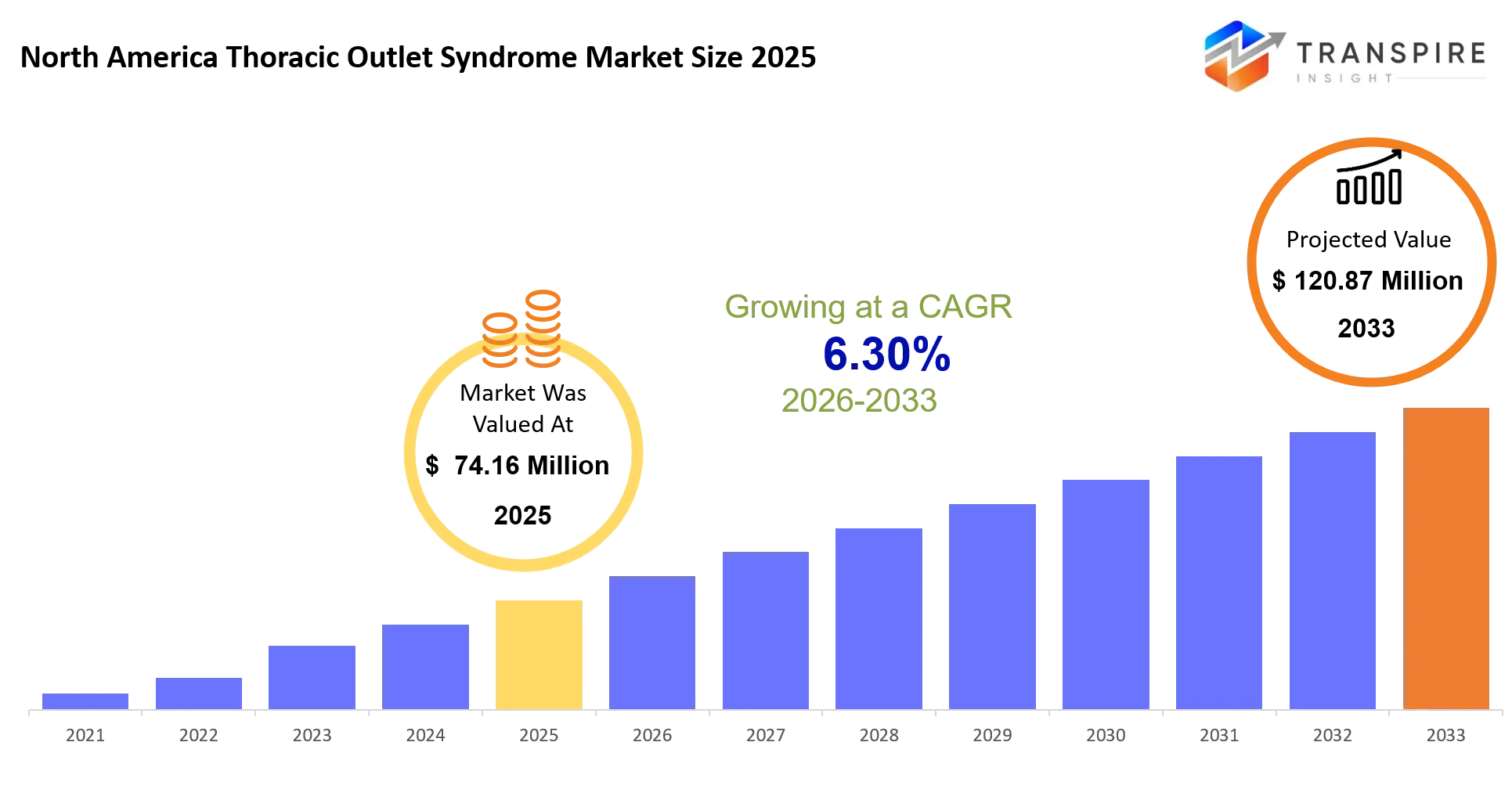
North America Thoracic Outlet Syndrome Market Summary
The North America Thoracic Outlet Syndrome Market was valued at USD 74.16 Million in 2025. It is forecast to reach USD 120.87 Million by 2033. That is a CAGR of 6.30% over the period.
The North America Neurovascular Thrombectomy Devices market will slowly drift toward a more connected treatment model , where advanced thrombectomy platforms, artificial intelligence, and integrated stroke care networks sort of work in tandem to speed up procedures and keep clinical results more consistent. Growth will get a boost from broader adoption of advanced imaging, increased hospital spending, and the steady tweaks of minimally invasive technologies, even when changes don’t look flashy in the beginning.
There’s also a quieter risk though , one that’s less visible until it shows up. Market concentration—meaning a smaller cluster of device companies and specialized component suppliers—can make procurement feel sluggish, and it may also reduce pricing flexibility if there’s any production disruption somewhere in the chain. At the same time an opportunity is forming, more noticeably around AI-assisted procedure planning and robotic neurovascular intervention, particularly as regional healthcare systems build out digital infrastructure and regulatory frameworks start to accept clinical decision support more readily.
To capture value, market participants should focus on integrated tech portfolios, physician training partnerships, and diversified manufacturing approaches that improve supply resilience. That way they not only reduce downtime risk, but also build a more durable, long-term competitive edge.
Key Market Insights
- In 2025 , the United States pretty much takes over the regional market , holding around 89% market share , mostly because of strong vascular surgery infrastructure and reimbursement policies that are , honestly, pretty favorable.
- Canada is also expected to move the quickest during 2025–2032, with growth tied to more specialist access and additional spending in vascular as well as orthopedic care, which seems to be a common pattern lately.
- For the product and service side , surgical treatment leads the pack with about 58% market share in 2025. This ties back to established clinical guidelines for more severe thoracic outlet syndrome cases, so it isn’t just marketing.
- On the other hand, diagnostic imaging services come in as the second-largest segment. Hospitals are expanding MRI, CT angiography , and ultrasound-based evaluation for complicated presentations, so demand keeps building there.
- Minimally invasive surgical techniques are forecast to be the fastest-growing segment between 2025 and 2032. The reasons are pretty direct shorter recovery periods , plus improved clinical results for many patients, even if cases vary.
- When looking at applications , neurogenic thoracic outlet syndrome dominates with roughly 72% market share in 2025. That reflects the highest diagnosis rate compared with other thoracic outlet syndrome subtypes.
- Venous thoracic outlet syndrome , meanwhile, is expected to grow the quickest through 2032. Better imaging protocols and earlier vascular intervention are the main drivers, as they help catch issues sooner.
- As for end users, hospitals account for close to 64% of the market share in 2025. This is supported by multidisciplinary surgical teams and advanced diagnostic capabilities, which makes referrals and follow up smoother.
- Finally specialty vascular and orthopedic clinics are projected to become the fastest-growing end-user category across the 2025–2032 forecast, largely because outpatient treatment is expanding , and that tends to pull volumes upward.
What are the Key Drivers, Restraints, and Opportunities in the North America Thoracic Outlet Syndrome Market?
The main growth driver is the broader uptake of advanced diagnostic imaging, plus multidisciplinary treatment pathways, across vascular surgery and neurology sites. Newer clinical routes nudge clinicians toward earlier referral for imaging ,and specialist review. When diagnosis happens sooner, physicians can choose the right surgical option or conservative care before permanent nerve or vascular harm starts to develop. That shift tends to boost procedure volumes, widen imaging consumption, and back stronger revenue performance across hospitals and specialty clinics.
The biggest structural restraint is that thoracic outlet syndrome is hard to pin down, largely because the symptoms can blend in with cervical spine disorders, peripheral neuropathy, and shoulder trauma. Figuring it out often means multiple specialists and advanced imaging, and the whole evaluation period can stretch by a few weeks or even months. If diagnosis is late, treatment decisions get pushed back, and procedural volumes typically soften. Based on Transpire Insight review of regional procurement announcements and product release timings, the supply chain concentration is still the most material execution risk. Also, the limited availability of specialized surgical instruments and imaging parts can slow down hospital purchasing cycles, and that can suppress short term revenue opportunities.
The strongest opportunity, though, comes from AI-assisted diagnostic imaging and minimally invasive surgical navigation tools. Healthcare providers keep putting money into digital imaging systems that can improve diagnostic precision and help with surgical planning. Canada also seems to have extra room to expand, thanks to ongoing investment in regional specialty care networks. Firms that combine imaging software, surgical technologies, and physician education programs, should be better placed to seize the next phase of market growth
What Has the Impact of Artificial Intelligence Been on the North America Thoracic Outlet Syndrome Market?
Artificial intelligence is getting better at diagnosis and also treatment planning, by helping with faster interpretation of vascular imaging like MRI, ultrasound, and CT angiography studies, that are used when evaluating thoracic outlet syndrome. At the same time digital workflow systems kind of automate scheduling, patient documentation, and the actual imaging review, so the admin load goes down, while coordination between vascular surgeons, neurologists, radiologists, and orthopedic specialists becomes smoother. These tools additionally aid quality monitoring and regulatory documentation across whole healthcare networks, and it all feels more streamlined than before, even if not perfectly.
Machine learning algorithms can spot more discreet anatomical compression patterns that might be missed during standard imaging assessment. Predictive analytics then helps hospitals forecast procedure volumes, fine tune operating room timing, and improve use of specialized imaging equipment. In practice, this leads to shorter diagnostic routes, more sensible resource distribution, and steadier treatment planning. Digital platforms also strengthen adherence to standardized clinical protocols, while lowering the chance of needless repeat imaging in certain patient groups, though “selected” still depends on local decisions.
Right now adoption is still not widespread, mainly because integration costs are high, clinical datasets are fragmented, and thoracic outlet syndrome is relatively uncommon compared with other more common vascular issues. Algorithm results depend on high quality imaging and comprehensive training data, which can vary quite a lot between healthcare systems. Broader rollout will likely require expanded digital infrastructure, multicenter validation studies, and better interoperability between hospital information systems and the imaging platforms themselves.
Key Market Trends
- Since 2023, multidisciplinary thoracic outlet syndrome clinics have sort of expanded across major healthcare systems, helping people coordinate diagnosis, and treatment planning more cleanly.
- Hospitals are also more and more adopting AI-assisted MRI and CT imaging platforms, for better identification of neurovascular compression, and to cut down on diagnostic variability that used to happen.
- Between 2022 and 2025, minimally invasive surgical techniques gained wider acceptance clinically, which seems to support shorter hospital stays, plus a quicker return to normal recovery for patients.
- Outpatient specialty vascular clinics keep expanding their procedural abilities, and as a result some selected treatments are being shifted away from large tertiary hospitals, which is kind of interesting to watch.
- GE HealthCare and Siemens Healthineers still invest in advanced vascular imaging technologies, aiming to improve preoperative evaluation for cases that need more careful assessment.
- Digital surgical planning software has become more common since 2024, and this improves procedural precision, while also strengthening multidisciplinary collaboration across complicated cases.
- Healthcare providers increasingly standardize thoracic outlet syndrome care pathways, to reduce diagnostic delays and improve referral efficiency across regional networks, even when workflows differ.
- Medical device manufacturers continue rolling out physician training initiatives to support adoption of advanced minimally invasive surgical technologies, and clinicians seem to like having structured learning.
- Finally, investment in image-guided therapy systems keeps strengthening hospital purchasing strategies, because providers prioritize procedural accuracy, and longer-term clinical outcomes overall.
North America Thoracic Outlet Syndrome Market Segmentation
By Treatment Type :
Physical therapy is still kinda the first thing many patients get because organized, structured exercises can lessen nerve compression and make movement feel better, more fluid. Surgery then becomes a big part in the harsher situations when conservative care just doesn’t really work. Pain control matters too, it helps keep symptoms steady and supports everyday function while recovery goes on, and at the same time anticoagulant therapy or thrombolytic therapy can help deal with vascular complications when a blood clot is actually there.
Botulinum toxin therapy keeps getting more attention lately for certain people, especially when temporary muscle relaxation is needed before surgery or alongside conservative care. Rehabilitation therapy then supports the longer term recovery, mainly by boosting strength and mobility. Other options also get used depending on the exact clinical picture, so physicians can put together a customized, individualized care plan that fits.
By Disease Type :
Neurogenic TOS is considered the biggest disease segment, mostly because nerve compression represents a large share of diagnosed cases. Venous TOS comes next, with a consistent clinical need tied to better vascular imaging and earlier diagnosis, though cases still vary. Arterial TOS is more specialized, because the stakes are higher and there is an elevated risk of serious vascular complications.
Traumatic TOS shows up after a physical injury, and it often takes a careful clinical evaluation before the final treatment choice is made. Congenital and acquired TOS, both add extra demand for ongoing monitoring and tailored, individual care over time. Recurrent TOS and other related presentations keep pushing specialized treatment strategies across different healthcare facilities.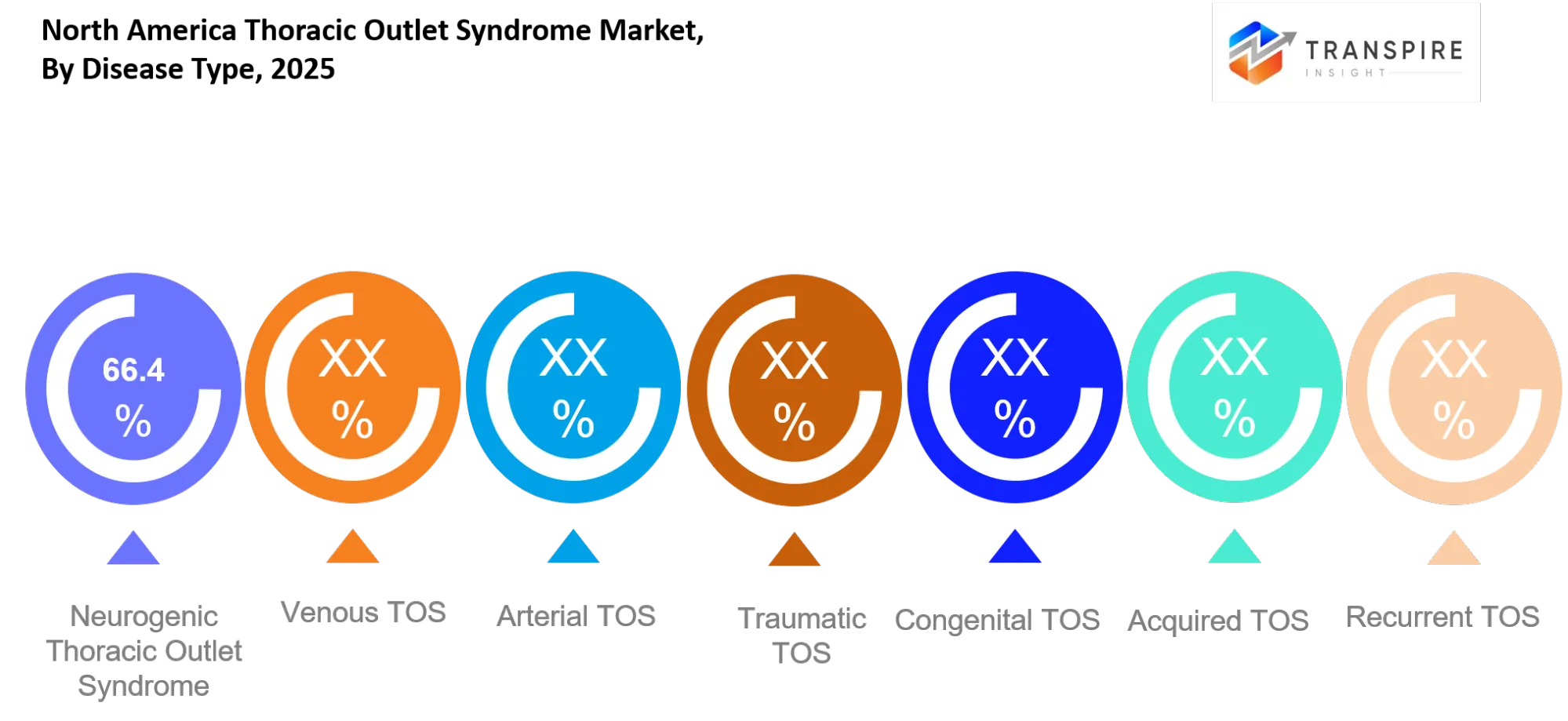
By Diagnosis :
MRI still remains one of the most valuable diagnostic tools , since detailed imaging helps in spotting compression affecting nerves as well as softer tissues. CT scans , and ultrasound also help with assessing blood vessels and nearby anatomical structures, in a more rounded way. Meanwhile, x-ray examinations can help locate bone irregularities that might play a role in thoracic outlet syndrome , especially when the cause seems partly skeletal.
Electromyography, plus nerve conduction studies assist clinicians in judging nerve performance and then confirming neurogenic conditions. Angiography gives a more granular vascular picture for tricky arterial and venous cases. There are also other diagnostic approaches that back up the full clinical assessment, based on patient symptoms, and their medical history.
By End User :
Hospitals end up accounting for the largest treatment volume because advanced imaging, surgery, and multidisciplinary care are all available in one place, usually without much delay. Specialty clinics provide a more focused evaluation and follow-up support for people who need ongoing management. Ambulatory surgical centers keep growing for selected procedures, mainly due to efficient outpatient services and lower overhead.
Rehabilitation centers help with recovery after surgery or after conservative treatment , through structured therapy programs. Academic medical centers and research institutes contribute as they run clinical studies and also support physician education. Diagnostic centers , along with other healthcare facilities, improve access to timely evaluation and referral services.
By Distribution Channel :
Hospital pharmacies still seem to be the main distribution route, because surgical treatments plus prescription medicines are often provided when patients are in hospital, you know, inpatient care. Retail pharmacies then back up access to those medications after discharge, so people can keep taking what was prescribed. Online pharmacies are still spreading, mainly offering easier convenience for eligible prescription refills, assuming the local rules allow it.
Specialty clinics, in the same spirit, dispense certain therapies during usual appointment days and follow-up check ins. Direct supply arrangements with medical distributors help products show up more reliably across hospitals, and across specialty providers as well. Besides that, other distribution channels cover regional needs and keep treatment products consistently reachable for patients, not just in one place.
What are the Key Use Cases Driving the North America Thoracic Outlet Syndrome Market?
The main thing people use this for is the diagnosis and treatment of neurogenic thoracic outlet syndrome in hospitals, like it’s pretty much the go to situation. Healthcare providers end up putting money into advanced imaging, surgical gear, and rehab services, because getting the treatment sooner helps cut down long term issues and it tends to make patient outcomes better. In practice, this use case ends up being the biggest spender across multidisciplinary care programs, no question.
Then there are more use cases that keep growing in specialty clinics and ambulatory surgical centers, especially when they’re handling venous thoracic outlet syndrome and the rehab after procedures. Diagnostic centers also do advanced imaging studies that help them make correct treatment plans, and they support referrals too. Overall, these services make it easier to keep coordinated care going across vascular, neurological, and orthopedic teams, sort of in one connected flow.
What’s starting to show up next are emerging use cases like AI assisted imaging analysis and rehabilitation programs that are tailored to each person, supported by digital monitoring platforms. Academic medical centers and research institutes are testing these ideas through clinical trials and technology partnerships. If they keep investing in digital health infrastructure and in treatment pathways backed by evidence, adoption should broaden during the forecast period, slowly but steadily.
|
Report Metrics |
Details |
|
Market size value in 2025 |
USD 74.16 Million |
|
Market size value in 2026 |
USD 78.83 Million |
|
Revenue forecast in 2033 |
USD 120.87 Million |
|
Growth rate |
CAGR of 6.30% from 2026 to 2033 |
|
Base year |
2025 |
|
Historical data |
2021 - 2024 |
|
Forecast period |
2026 - 2033 |
|
Report coverage |
Revenue forecast, competitive landscape, growth factors, and trends |
|
Regional scope |
North America (Canada, The United States, and Mexico) |
|
Key company profiled |
Medtronic, Stryker, Abbott, Boston Scientific, Johnson & Johnson MedTech, Becton Dickinson, GE HealthCare, Siemens Healthineers, Philips Healthcare, Zimmer Biomet, Terumo, Merit Medical, Cook Medical, Cardinal Health, Baxter |
|
Customization scope |
Free report customization (country, regional & segment scope). Avail customized purchase options to meet your exact research needs. |
|
Report Segmentation |
By Treatment Type (Physical Therapy, Surgical Treatment, Pain Management, Anticoagulant Therapy, Thrombolytic Therapy, Botulinum Toxin Therapy, Rehabilitation Therapy, Others); By Disease Type (Neurogenic TOS, Venous TOS, Arterial TOS, Traumatic TOS, Congenital TOS, Acquired TOS, Recurrent TOS, Others); By Diagnosis (MRI, CT Scan, Ultrasound, X-ray, Electromyography, Nerve Conduction Studies, Angiography, Others); By End User (Hospitals, Specialty Clinics, Ambulatory Surgical Centers, Rehabilitation Centers, Academic Medical Centers, Diagnostic Centers, Research Institutes, Others); By Distribution Channel (Hospital Pharmacies, Retail Pharmacies, Online Pharmacies, Specialty Clinics, Direct Supply, Medical Distributors, Others) |
Which Regions are Driving the North America Thoracic Outlet Syndrome Market Growth?
The North American market seems pretty solid, with strong reimbursement frameworks, lots of access to advanced diagnostic imaging, and clinical guidelines that really help keep diagnosis and treatment pretty consistent across most major healthcare networks. Medical device manufacturers, pharmaceutical suppliers, academic hospitals, and specialty vascular centers all kind of form a tight ecosystem, so there’s continuous investment and ongoing clinical innovation happening at the same time. And with healthcare spending that keeps going, more outpatient care getting used, plus the steady adoption of minimally invasive treatment techniques, this edge should stay in place for the whole forecast window.
Canada is sitting as the second-largest regional market, mainly because healthcare services run through a coordinated public funding approach, with standardized clinical practices that line up across the country. Stable healthcare budgets, and regulatory supervision that doesn’t wildly swing, make it easier to plan predictable investments in diagnostic tech, rehabilitation services, and surgical care. Meanwhile, provincial healthcare systems keep working to improve specialist access through long-range infrastructure planning, not by rushing capacity expansion. That structured style ends up creating dependable revenue opportunities for device makers, imaging providers, and treatment centers too.
Canada is also expected to see the quickest growth, largely because of more spending on regional specialty care linkages and advanced diagnostic setups. Lately the expansion of multidisciplinary vascular and neurological treatment streams has really helped with patient reach beyond the biggest metro areas. People are also using digital imaging tools more widely, plus referral systems that are better coordinated, and that keeps boosting clinical capacity across the different provincial healthcare networks. Overall, these changes should open up appealing chances for manufacturers, healthcare providers, and investors looking for steady expansion somewhere between 2026 and 2033.
Who are the Key Players in the North America Thoracic Outlet Syndrome Market and How Do They Compete?
Competition is still kinda moderately consolidated, mainly because specialized medical device manufacturers, diagnostic imaging firms, and surgical technology providers end up supplying most of the advanced treatment solutions. In practice, technology innovation and clinical performance stay the big competitive levers, but physician education along with integrated service support kinda nudges purchasing decisions too. The established players keep pushing by pouring money into research to reinforce their product portfolios, while newer companies tend to chase more focused technologies that help diagnosis and minimally invasive care
Medtronic expands surgical technology, through continuous investment in advanced operating room solutions that boost procedural efficiency. Stryker keeps the emphasis on minimally invasive surgical instruments, helping with precision and shorter recovery timeframes, plus it continues widening its product development pipeline through ongoing innovation. GE HealthCare differentiates with advanced diagnostic imaging systems that improve visualization for neurovascular structures, and in turn, strengthens clinical decision-making.
Siemens Healthineers puts money behind artificial intelligence-enabled imaging platforms, which improve workflow efficiency as well as diagnostic accuracy across hospitals and specialty clinics. Philips continues building out image-guided therapy technologies that enable complex vascular procedures, with enhanced visualization, and procedural confidence. Overall, each company tries to reinforce its market position using technology development, strategic partnerships, and broader healthcare network expansion, rather than competing mainly on product pricing .
Company List
Johnson & Johnson MedTech
Becton Dickinson
GE HealthCare
Siemens Healthineers
Philips Healthcare
Zimmer Biomet
Terumo
Merit Medical
Cook Medical
Cardinal Health
Baxter
Recent Development News
In April 2026, Mayo Clinic published an updated multidisciplinary clinical approach for neurogenic thoracic outlet syndrome. The guidance reinforced coordinated evaluation and conservative management but was a clinical practice update rather than a product launch, partnership, acquisition, or funding announcement. Sourcehttps://www.mayoclinic.org/
In September 2026, the European Society of Thoracic Surgeons (ESTS) announced the Third World Thoracic Outlet Syndrome Summit. The event promotes multidisciplinary collaboration and research but does not qualify as a corporate transaction, product launch, partnership, or funding event. Sourcehttps://www.ests.org/
What Strategic Insights Define the Future of the North America Thoracic Outlet Syndrome Market?
The North America Thoracic Outlet Syndrome Market is likely to shift, kind of towards earlier diagnosis , more integrated care pathways , and minimally invasive treatment that’s backed by advanced imaging plus digital clinical decision tools, during the next five to seven years. In practice, this will be pushed by stronger coordination between vascular surgeons , neurologists, orthopedic specialists, and rehabilitation providers so treatment decisions can happen faster and patient outcomes should improve a bit more than before.
There’s also this sort of less obvious risk: the number of specialized centers and experienced surgeons is still limited, so there can be capacity constraints , which may end up slowing access to care even when the market conditions look good. On the other hand, an emerging opportunity sits in using artificial intelligence, specifically for image interpretation and surgical planning, mainly as healthcare systems grow their digital infrastructure and better support data driven clinical workflows.
Market players will probably try to hold long term competitiveness by investing in multidisciplinary care partnerships, physician training programs , and digital diagnostic platforms. These efforts can improve referral efficiency, expand treatment access, and help keep clinical performance consistent across regional healthcare networks, even when demand shifts.
North America Thoracic Outlet Syndrome Market Report Segmentation
By Treatment Type
- Physical Therapy
- Surgical Treatment
- Pain Management
- Anticoagulant Therapy
- Thrombolytic Therapy
- Botulinum Toxin Therapy
- Rehabilitation Therapy
By Disease Type
- Neurogenic TOS
- Venous TOS
- Arterial TOS
- Traumatic TOS
- Congenital TOS
- Acquired TOS
- Recurrent TOS
By Diagnosis
- MRI
- CT Scan
- Ultrasound
- X-ray
- Electromyography
- Nerve Conduction Studies
- Angiography
By End User
- Hospitals
- Specialty Clinics
- Ambulatory Surgical Centers
- Rehabilitation Centers
- Academic Medical Centers
- Diagnostic Centers
- Research Institutes
By Distribution Channel
- Hospital Pharmacies
- Retail Pharmacies
- Online Pharmacies
- Specialty Clinics
- Direct Supply
- Medical Distributors
Frequently Asked Questions
Find quick answers to common questions.
The Expected North America Thoracic Outlet Syndrome Market size for the Market will be USD 120.87 Million in 2033.
Key Segments for the North America Thoracic Outlet Syndrome Market are Type By Treatment Type (Physical Therapy, Surgical Treatment, Pain Management, Anticoagulant Therapy, Thrombolytic Therapy, Botulinum Toxin Therapy, Rehabilitation Therapy, Others); By Disease Type (Neurogenic TOS, Venous TOS, Arterial TOS, Traumatic TOS, Congenital TOS, Acquired TOS, Recurrent TOS, Others); By Diagnosis (MRI, CT Scan, Ultrasound, X-ray, Electromyography, Nerve Conduction Studies, Angiography, Others); By End User (Hospitals, Specialty Clinics, Ambulatory Surgical Centers, Rehabilitation Centers, Academic Medical Centers, Diagnostic Centers, Research Institutes, Others); By Distribution Channel (Hospital Pharmacies, Retail Pharmacies, Online Pharmacies, Specialty Clinics, Direct Supply, Medical Distributors, Others).
Major North America Thoracic Outlet Syndrome Market Players are Medtronic, Stryker, Abbott, Boston Scientific, Johnson & Johnson MedTech, Becton Dickinson, GE HealthCare, Siemens Healthineers, Philips Healthcare, Zimmer Biomet, Terumo, Merit Medical, Cook Medical, Cardinal Health, Baxter.
The Current North America Thoracic Outlet Syndrome Market size is USD 74.16 Million in 2025.
The North America Thoracic Outlet Syndrome Market CAGR is 6.30% from 2026 to 2033.
Medtronic
Stryker
Abbott
Boston Scientific
Johnson & Johnson MedTech
Becton Dickinson
GE HealthCare
Siemens Healthineers
Philips Healthcare
Zimmer Biomet
Terumo
Merit Medical
Cook Medical
Cardinal Health
Baxter
About the Authors

Pankaj Ghogare Patil
I am Pankaj Ghogare Patil, a Senior Research Analyst at Transpire Insight, specializing in the Pharmaceutical, Chemicals & Materials, Healthcare IT, and Biotechnology industry. My expertise lies in conducting comprehensive market research, analyzing industry trends, evaluating competitive landscapes, and translating complex data into actionable insights. At Transpire Insight, I closely follow emerging technologies, regulatory developments, and market innovations to create accurate, well-researched, and informative content that helps businesses and professionals make informed decisions. I am committed to producing credible, evidence-based articles that reflect industry best practices while making technical topics accessible and valuable for a broad audience.

Chakradhar Khansole
Chakradhar serves as the Research Director at Transpire Insight, bringing over 8 years of experience in technology, innovation, and strategic market intelligence. He specializes in transforming complex market data into actionable business insights that enable organizations to make informed, growth-oriented decisions. Recognized for his strategic vision and analytical expertise, Chakradhar leads high-impact research initiatives, delivering comprehensive market assessments, competitive intelligence, and forward-looking industry analysis.
Recently Published Reports
-
Jul 2026
Alopecia Treatment Market
Alopecia Treatment Market Size, Share & Analysis Report By Disease Type (Alopecia Areata, Cicatricial Alopecia, Traction Alopecia, Alopecia Totalis, Androgenetic Alopecia, Alopecia Universalis, and Other Disease Types), By Treatment Type (Topical Treatments, Oral Medications, Injectable Therapies, and Hair Transplantation), By Gender (Male, and Female), By Distribution Channel (Hospitals and Clinics, Retail Pharmacies, and Online Retailers), and Geography (North America, Europe, Asia-Pacific, Middle East and Africa, South and Central America), 2021 - 2031
-
Jul 2026
Medical Ultrasound Probe Market
Medical Ultrasound Probe Market Size, Share & Analysis Report By Type (Linear Type, Convex Type, Endocavitary Probe, Phased Array/Cardiac Probe, Transesophageal (TEE) Probe, and Others), By Application (Ophthalmology, Cardiology, Musculoskeletal, Oncology, Obstetrics & Gynecology, General Imaging, and Others), By End User (Hospitals & Clinics, Diagnostic Centers, Ambulatory Surgical Centers, and Others), and Geography (North America, Europe, Asia-Pacific, Middle East and Africa, South and Central America), 2021 – 2031
-
May 2026
Biosimilars Market
Biosimilars Market By Product Type (Monoclonal Antibodies, Recombinant Hormones, Erythropoietin, G-CSF, Others), By Indication (Oncology, Autoimmune Diseases, Blood Disorders, Diabetes, Others), By Manufacturing Type (In-House Manufacturing, Contract Manufacturing), By Distribution Channel (Hospital Pharmacies, Retail Pharmacies, Online Pharmacies), By Industry Analysis, Size, Share, Growth, Trends, and Forecasts 2021-2033
-
Apr 2026
Gastrointestinal Endoscopy Market
Gastrointestinal Endoscopy Market By Type (Rigid Gastrointestinal Endoscope, Flexible Gastrointestinal Endoscopes, Disposable Gastrointestinal Endoscope), By Procedure Type (Colonoscopy, Gastroscopy, Duodenoscopy, Enteroscopy, Flexible Sigmoidoscopy, Others), By Application (Diagnosis, Treatment), By End-Users (Hospitals, Ambulatory Surgical Centers, Specialty Clinics, Laboratories, Others), By Industry Analysis, Size, Share, Growth, Trends, and Forecasts 2021-2033