

Cancer Treatments Market Summary:
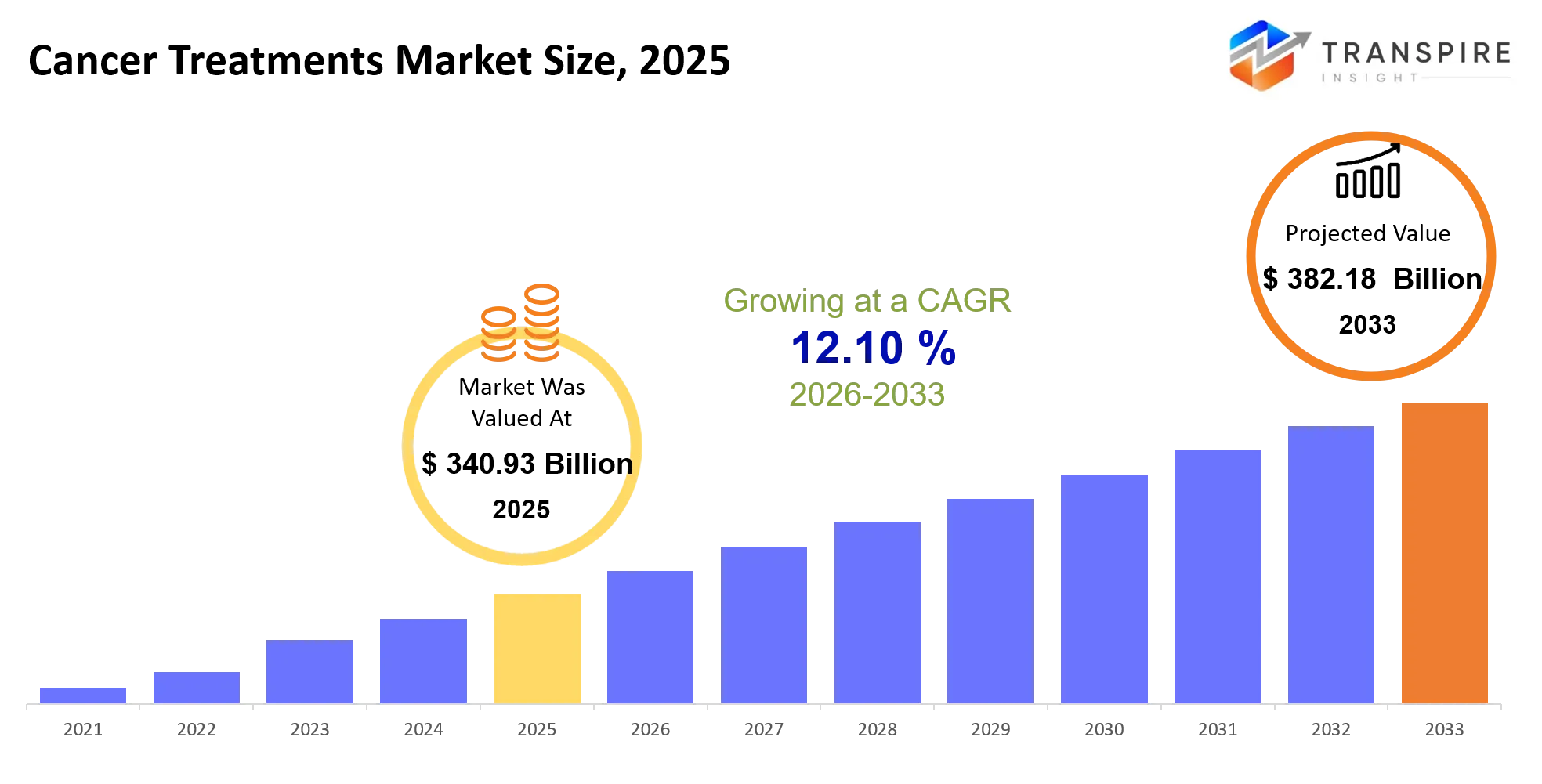
According to Transpire Insights, a detailed research report on the market reflects that the Cancer Treatments Market is valued at approximately USD 340.93 billion in 2025, is expected to reach USD 382.18 billion in 2026, and is estimated to reach USD 382.18 billion by 2033, registering a forecast CAGR of 12.10% during 2026–2033, making it a significant contributor to market development, innovation, advanced cancer treatment production, expanding healthcare and manufacturing capabilities, and growth dynamics.
Market Snapshot
- Market Value (2025): USD 340.93 Billion.
- Expected Market Value (2026): USD 382.18 Billion.
- Estimated Market Value (2033): USD 382.18 Billion.
- Forecast CAGR (2026–2033): 12.10%
- Leading Region in 2025: North America
- Second-largest Region: Europe
- Fastest Growing Region: Asia Pacific
Introduction
The cancer treatments market comprises pharmaceutical therapies, medical procedures and clinical care solutions used to diagnose, manage and treat different types of cancer. The market includes chemotherapy, targeted therapy, immunotherapy, hormone therapy, radiation therapy, cancer surgery and emerging treatment modalities including antibody-drug conjugates, CAR-T cell therapy & bispecific antibodies. The market is propelled by the growing incidence of cancer, advancements in precision oncology, increased use of personalized treatment strategies, and continuous innovation in oncology therapeutics. Healthcare providers are increasingly using biomarker-guided therapies and other advanced treatment technologies to improve clinical outcomes and treatment effectiveness. Further, the growth of cancer treatment market is also driven by the expansion of healthcare infrastructure, improved access to cancer care, increase in research and development activities and increasing availability of innovative therapies in emerging economies.
For instance:-
North America: The region leads the cancer treatments market due to high investment in oncology R&D, advanced precision medicine, favorable reimbursement frameworks, and fast adoption of targeted treatments.
Europe: Europe is boosting its cancer treatment infrastructure and therapeutic capabilities with greater investment in precision oncology, genomic medicine, advanced radiotherapy and collaborative cancer-care initiatives.
Key Market Highlights: -
- North America is expected to grow at a rapid CAGR in the Cancer Treatments Market by holding around 43% of the share during the forecast period.
- Europe is anticipated to hold roughly 21% share of the Cancer Treatments Market over the predicted timeframe.
- Asia Pacific is anticipated to hold nearly 21%share of the Cancer Treatments Market over the predicted timeframe.
- By Treatment Type, the targeted therapy dominated the market and holds nearly 53% share in 2025 and is projected to grow at a substantial CAGR during the forecast period.
- By Cancer Type, the Breast cancer segment dominated the market and holds close to 11% share in 2025 and is projected to grow at a substantial CAGR during the forecast period.
- By End User, the Hospitals and Cancer Centers dominated the market and holds about 60% share in 2025 and is projected to grow at a substantial CAGR during the forecast period.
- Initiatives by the government such as Ayushman Bharat PM-JAY, cancer assistance programs, screening initiatives, expansion of treatment infrastructure and financial support are improving the accessibility to cancer-care and supporting the growth of the cancer treatments market in India.
How is Technology Driving Growth in the Cancer Treatments Market?
Precision medicine, advanced diagnostics, innovative therapeutics, and data-driven treatment planning are transforming the Cancer Treatments Market. Gene sequencing, liquid biopsies, and companion diagnostics allow personalized cancer therapy via detection of tumor-specific biomarkers. New therapies such as immunotherapy, CAR-T cell therapy, antibody-drug conjugates and mRNA-based approaches are opening new doors for treatment of complex cancers. Artificial intelligence is accelerating drug discovery, optimizing clinical research, and aiding radiotherapy planning through advanced tumor detection and segmentation. These technological breakthroughs lead to more precise treatment, better patient outcomes, faster development of therapies and wider access to innovative oncology solutions worldwide.
|
Report Metrics |
Details |
|
Market size value in 2025 |
USD 340.93 Billion |
|
Market size value in 2026 |
USD 382.18 Billion |
|
Revenue forecast in 2033 |
USD 382.18 Billion |
|
Growth rate |
CAGR of 12.10%from 2026 to 2033 |
|
Base year |
2025 |
|
Historical data |
2021 - 2024 |
|
Forecast period |
2026 - 2033 |
|
Report coverage |
Revenue forecast, competitive landscape, growth factors, and trends |
|
Regional scope |
United States; Canada; Mexico; United Kingdom; Germany; France; Italy; Spain; Denmark; Sweden; Norway; China; Japan; India; Australia; South Korea; Thailand; Brazil; Argentina; South Africa; Saudi Arabia; United Arab Emirates |
|
Key company profiled |
Roche, Merck & Co., Bristol Myers Squibb, AstraZeneca, Pfizer, Novartis, Johnson & Johnson, Amgen, Eli Lilly, GSK, Sanofi, Bayer, AbbVie, Takeda Pharmaceutical, BeiGene |
|
Customization scope |
Free report customization (country, regional & segment scope). Avail customized purchase options to meet your exact research needs. |
|
Report Segmentation |
By Treatment Type (Chemotherapy, Immunotherapy, Targeted Therapy, Hormone Therapy, Radiation Therapy, Cell Therapy, Combination Therapy, Others); By Cancer Type (Breast Cancer, Lung Cancer, Colorectal Cancer, Prostate Cancer, Blood Cancer, Liver Cancer, Skin Cancer, Others); By End User (Hospitals, Cancer Centers, Specialty Clinics, Research Institutes, Ambulatory Surgical Centers, Academic Hospitals, Others); By Route of Administration (Oral, Intravenous, Injectable, Subcutaneous, Intramuscular, Topical, Others); By Distribution Channel (Hospital Pharmacies, Retail Pharmacies, Online Pharmacies, Specialty Pharmacies, Direct Sales, Others) |
Market Drivers
The cancer treatment market is driven by increasing cancer burden, rising healthcare expenditure and constant investment in oncology research and development. The growing adoption of precision medicine, biomarker-based diagnostics, targeted treatments, immunotherapies and advanced cell and gene therapies is broadening treatment opportunities. The market growth is being driven by government initiatives for cancer screening, healthcare infrastructure, and treatment accessibility. Pharmaceutical and biotechnology companies are stepping up investment in innovative oncology pipelines including antibody-drug conjugates and other next generation therapeutics. Further, the use of artificial intelligence, genomic technologies and personalized treatment techniques is improving treatment choice and clinical results, thereby facilitating constant innovation and expansion of the cancer treatment market.
For Instance
Asia-Pacific Cancer Treatments Market Asia-Pacific cancer treatment market is driven by increasing incidence of cancer, increasing healthcare infrastructure, increasing treatment access, local pharmaceutical manufacturing and increasing government support.
China: Growing healthcare expenditure, expanded reimbursement coverage of innovative cancer medicines, growing clinical research, and government policies driving the cancer drugs market.
Restrain
Restraints The high cost of advanced oncology therapies, reimbursement limitations and complex regulatory requirements that can delay treatment adoption and product commercialization are some of the restraints faced by the Cancer Treatments Market. In developing regions, limited access to specialized cancer care infrastructure, advanced diagnostics and skilled oncology professionals further restricts market penetration. Also, clinical outcomes and the widespread use of some cancer therapies can be influenced by treatment-related adverse effects, therapeutic resistance and challenges in the management of long-term treatment.
Analysis of Prices and Consumer Behaviour
The market for cancer treatments is shaped by treatment efficacy, safety, quality of life, accessibility and affordability, with patients generally valuing treatment outcomes and adverse-effect profiles above cost alone. Research indicates that 56% of patients would be willing to tolerate short-term side effects for longer life. Seventy-five percent of patients value the preservation of cognition, functional ability, and quality of life. study showed that approximately 60% of patients were willing to pay US$10,000 or more out-of-pocket for cancer treatment, indicating the importance of treatment value and financial capacity. Treatment convenience, length of hospital stay, access to specialist care, reimbursement coverage and availability of personalized options in oncology also impact consumer and patient behavior.
Who are the Key Players in the Cancer Treatments Market and how do they Compete?
International Competitiveness of Cancer Treatments Market hinges on companies' focus on innovative oncology therapeutics, precision medicine, advanced drug development and the expansion of healthcare networks. Companies compete not only through treatment efficacy but also targeted treatments, immunotherapies, cell and gene therapies, clinical research These competitive strategies are driving continuous innovation and allowing healthcare providers to improve treatment outcomes, broaden patient access, and address the growing burden of cancer.
Merck & Co. develops innovative oncology medicines, specialized treatments and immunotherapies that strengthen its market position through extensive clinical development and research capabilities. AstraZeneca’s broad oncology portfolio includes targeted treatments, antibody-drug conjugates and precision medicine and targets several important oncology indications. Roche combines cancer diagnostics and therapeutics to strengthen its competitive position and enable personalized treatment approaches and biomarker-driven oncology care.
Top Companies in the Cancer Treatments Market
- Roche
- Merck & Co.
- Bristol Myers Squibb
- AstraZeneca
- Pfizer
- Novartis
- Johnson & Johnson
- Amgen
- Eli Lilly
- GSK
- Sanofi
- Bayer
- AbbVie
- Takeda Pharmaceutical
- BeiGene
Cancer Treatments Market. Segmentation
The Cancer Treatments Market share is divided into five categories: By Treatment Type, By Cancer Type, By End User, By Route of Administration, By Distribution Channel.
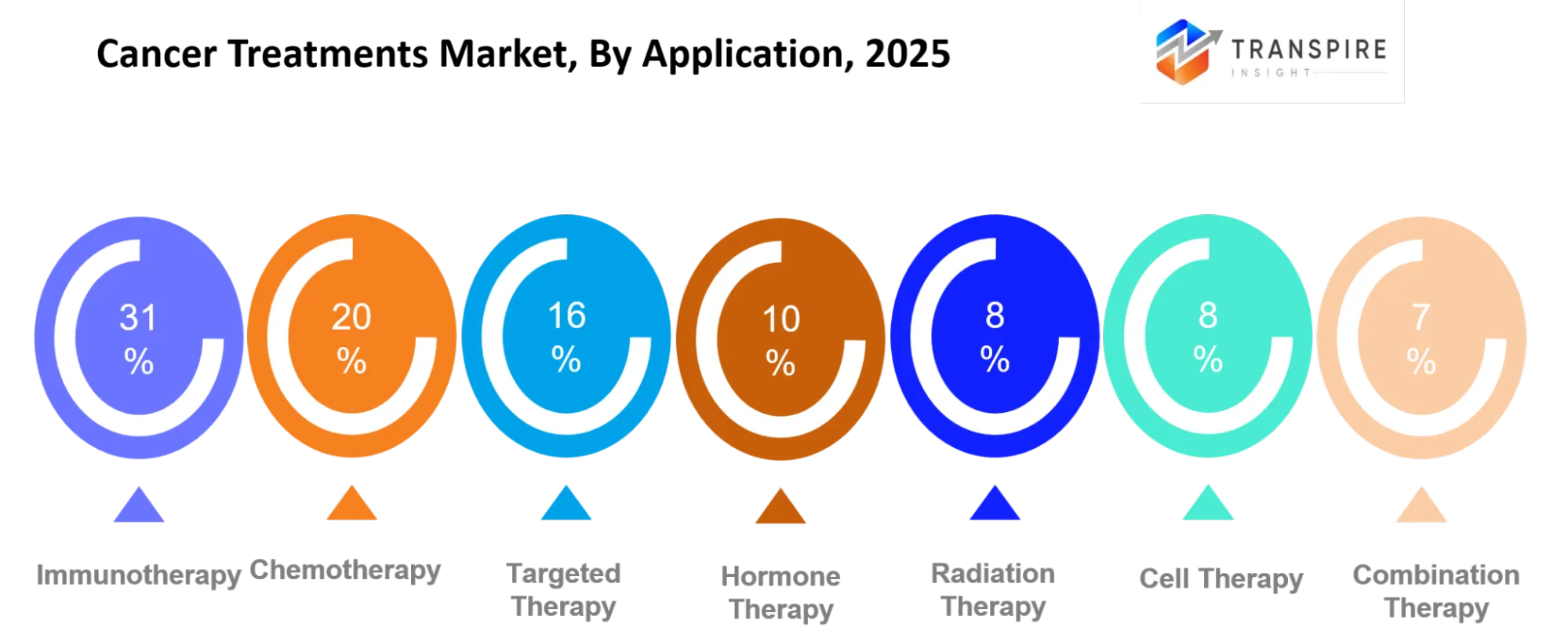
Targeted therapy dominated the market, accounting for nearly 53% in 2025 and is expected to rise at a significant CAGR during the forecast period.
The Cancer Treatments Market is by treatment type (chemotherapy, immunotherapy, targeted therapy, hormone therapy, radiation therapy, cell therapy, combination therapy, others. Among these, the targeted therapy dominated the market, accounting for nearly 53% in 2025 and expected to increase at a significant CAGR during the forecast period. The dominance is driven by the increasing adoption of precision oncology, improved efficacy of treatment, and rising demand for customized cancer therapies.
The Breast cancer segment dominated the market, accounting for close to 11% in 2025, and is expected to rise at a significant CAGR during the forecast period
The Cancer Treatments Market is segmented by cancer type into breast cancer, lung cancer, colorectal cancer, prostate cancer, blood cancer, liver cancer, skin cancer, others Among these, the Breast cancer segment dominated the market, accounting for close to 11% in 2025 and expected to increase at a significant CAGR during the forecast period. The Breast Cancer segment was the largest in 2025, accounting for nearly 11% due to high disease prevalence, increasing screening, and rising adoption of advanced cancer treatments.
The Hospitals and Cancer Centers dominated the market, accounting for about 60% in 2025 and is expected to rise at a significant CAGR during the forecast period.
The Cancer Treatments Market by end user into hospitals, cancer centers, specialty clinics, research institutes, ambulatory surgical centers, academic hospitals, others. Among these, the Hospitals and Cancer Centersdominated the market, accounting for about 60% in 2025 and expected to increase at a significant CAGR during the forecast period. The Breast Cancer segment held the largest share of the market in 2025, by over 11%, owing to high disease prevalence, increasing screening, and growing adoption of advanced cancer treatments.
Regional Segment Analysis of the Cancer Treatments Market
- Europe (Germany, France, U.K., Italy, Spain, Rest of Europe)
- North America (U.S., Canada, Mexico)
- Asia-Pacific (China, Japan, India, Rest of APAC)
- South America (Brazil and the Rest of South America)
- The Middle East and Africa (UAE, South Africa, Rest of MEA)
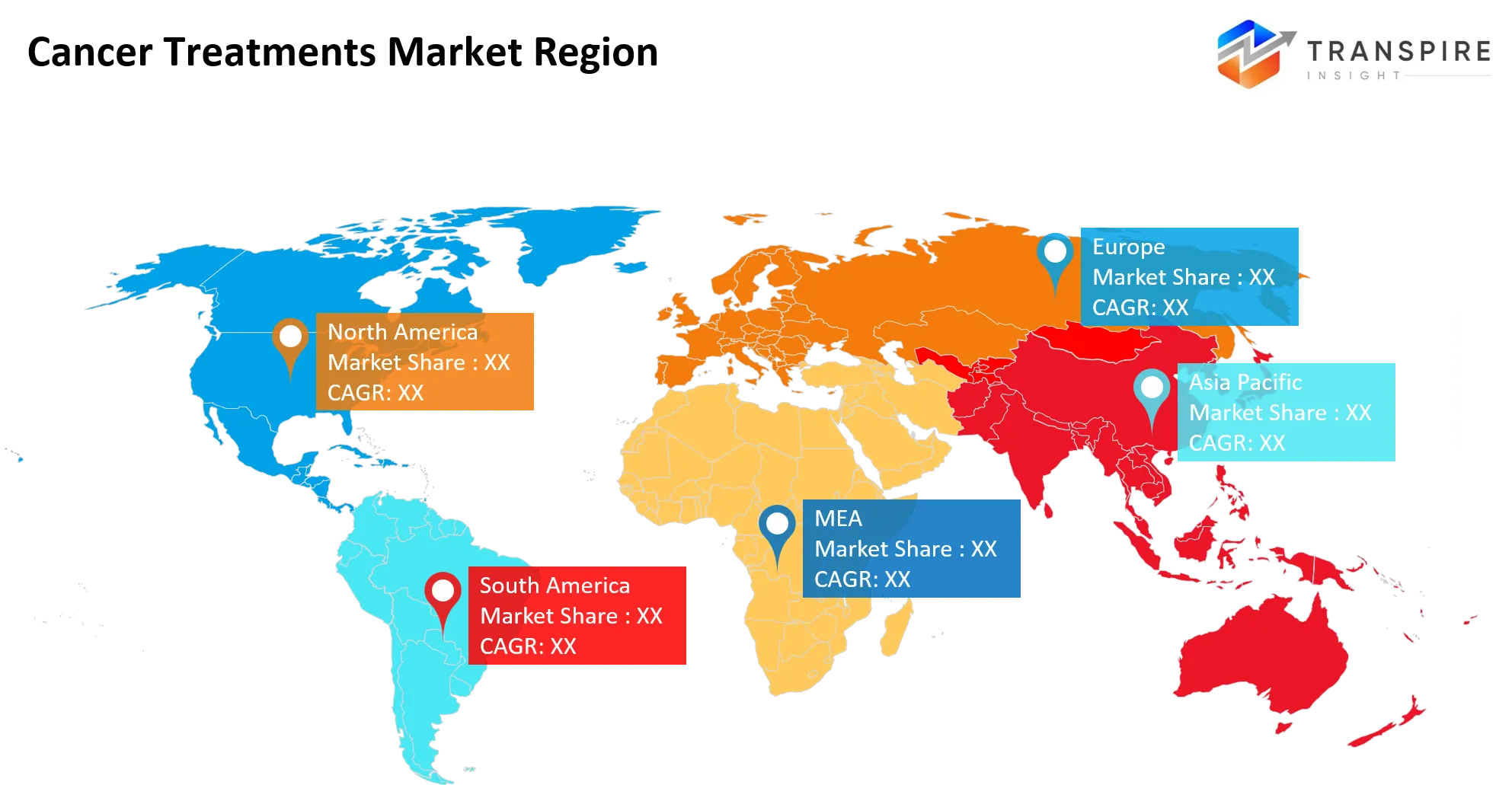
North America is expected to grow at a rapid CAGR in the Cancer Treatments Market, holding around 43% of the share during the forecast period.
This dominance is supported by sophisticated oncology infrastructure, high healthcare expenditure, high pharmaceutical R&D investment, broad use of precision medicine and immunotherapy, favorable reimbursement settings and rapid access to innovative cancer therapeutics. The region also has established cancer research institutions, significant clinical trial activity, leading diagnostic technologies, and a strong presence of major pharmaceutical companies. The rising incidence of cancer and the rising demand for targeted and personalized therapies are further augmenting the growth of the North America cancer treatments market during the forecast period.
Europe is the fastest-growing region in the Cancer Treatments Market during the period, holding roughly 21% share.
This growth is driven by rising cancer incidence, expanding healthcare expenditure, developed oncology infrastructure and strong uptake of precision medicine and targeted treatments. Demand in the region is also boosted by government-funded cancer research, improved screening programs, supportive healthcare systems and investments in new treatments. The growing clinical research activity and the availability of advanced cancer treatments are also supporting the growing European cancer treatment market.
Asia Pacific is the fastest-growing region in the Cancer Treatments Market during the period, holding nearly 21% share.
This growth is attributed to rising cancer incidence, growing healthcare infrastructure, rising healthcare expenditure and improved access to cutting-edge oncology therapies. Regional demand is further supported by growing clinical research and use of precision medicine, expansion of pharmaceutical manufacturing capabilities, and government-backed cancer programs. Other drivers for the Asia Pacific cancer treatment market include improvements in diagnostic facilities, an increase in specialist cancer care centers and rising investments in new therapeutics.
Strategies for Market Growth in Non-Leading Regions:
Efficient and scalable cancer treatment infrastructure for small to medium-sized health care providers and oncology centers would contribute to the development of non-leading regions. Expanding local diagnostic capabilities, oncology treatment facilities, and pharmaceutical manufacturing may help to narrow treatment access gaps and bolster regional healthcare capacity. We will improve market penetration for cancer treatment solutions by creating strategic alliances between hospitals, pharmaceutical companies, research organizations, diagnostic providers and healthcare distributors. Training programs and professional skill development will be needed to increase awareness of cancer prevention, screening, diagnosis, treatment options and personalized care. Moreover, flexible financing, insurance coverage, long-term procurement agreements and public-private partnerships can help reduce the cost of treatment and facilitate the wider uptake of advanced oncology therapies. Collaboration with governments, healthcare organizations, and research institutions, in addition to digital health platforms and tele-oncology services, will enhance access to cancer care and promote long-term development in the cancer treatments market in developing regions.
Future Market Trends for the Cancer Treatments Market: -
Precision Oncology and Biomarker Testing: The increasing adoption of genomic profiling, biomarker testing and liquid biopsies is enabling personalized cancer treatment and improving therapy selection and clinical outcomes.
Next-Generation Cancer Therapies Development of antibody-drug conjugates, bispecific antibodies, immunotherapies and cell therapies is expanding treatment options for complex cancers and accelerating innovation in oncology.
AI and Digital Healthcare Integration: AI, digital health platforms and data analytics are enhancing drug discovery, clinical trial recruitment, treatment planning, patient monitoring and cancer-care efficiency.
Recent Development
In March 2026,
Subcutaneous Administration: Sanofi announced an expanded subcutaneous administration option for Sarclisa, providing a more convenient treatment option for eligible patients with multiple myeloma.
In April 2026,
Cellular Therapy: saw further regulatory progress in cellular oncology therapies, broadening treatment options and promoting innovation in stem-cell transplantation and personalized cancer care.
Market Segment
This study forecasts revenue at , regional and country levels from 2020 to 2033. Transpire Insights has segmented the Cancer Treatments Market based on the below-mentioned segments:
Cancer Treatments Market, By Treatment Type
- Chemotherapy
- Immunotherapy
- Targeted Therapy
- Hormone Therapy
- Radiation Therapy
- Cell Therapy
- Combination Therapy
- Others
Cancer Treatments Market, By Cancer Type
- Breast Cancer
- Lung Cancer
- Colorectal Cancer
- Prostate Cancer
- Blood Cancer
- Liver Cancer
- Skin Cancer
- Others
Cancer Treatments Market, By End User
- Hospitals
- Cancer Centers
- Specialty Clinics
- Research Institutes
- Ambulatory Surgical Centers
- Academic Hospitals
- Others
Cancer Treatments Market,By Route of Administration
- Oral
- Intravenous
- Injectable
- Subcutaneous
- Intramuscular
- Topical
- Others
Cancer Treatments Market, By Distribution Channel
- Hospital Pharmacies
- Retail Pharmacies
- Online Pharmacies
- Specialty Pharmacies
- Direct Sales
- Others
Cancer Treatments Market, By Regional Analysis
North America
- US
- Canada
- Mexico
Europe
- Germany
- UK
- France
- Italy
- Spain
- Russia
- Rest of Europe
Asia Pacific
- China
- Japan
- India
- South Korea
- Australia
- Rest of Asia Pacific
South America
- Brazil
- Argentina
- Rest of South America
Middle East & Africa
- UAE
- Saudi Arabia
- Qatar
- South Africa
- Rest of the Middle East & Africa
Frequently Asked Questions
Find quick answers to common questions.
What is driving the growth of the Cancer Treatments Market?
Targeted therapy dominates due to increasing precision oncology adoption, improved treatment efficacy, biomarker-guided therapies, and growing demand for personalized cancer care.
Breast cancer holds the largest share, supported by high disease prevalence, improved screening programs, early diagnosis, and increasing adoption of advanced treatments.
North America leads due to advanced oncology infrastructure, high healthcare expenditure, strong pharmaceutical R&D, favorable reimbursement, and rapid adoption of innovative therapies.
AI accelerates drug discovery, improves clinical trial recruitment, supports treatment planning, enhances diagnostics, and enables more efficient personalized cancer care.
- Roche
- Merck & Co.
- Bristol Myers Squibb
- AstraZeneca
- Pfizer
- Novartis
- Johnson & Johnson
- Amgen
- Eli Lilly
- GSK
- Sanofi
- Bayer
- AbbVie
- Takeda Pharmaceutical
- BeiGene
About the Authors

Pankaj Ghogare Patil
I am Pankaj Ghogare Patil, a Senior Research Analyst at Transpire Insight, specializing in the Pharmaceutical, Chemicals & Materials, Healthcare IT, and Biotechnology industry. My expertise lies in conducting comprehensive market research, analyzing industry trends, evaluating competitive landscapes, and translating complex data into actionable insights. At Transpire Insight, I closely follow emerging technologies, regulatory developments, and market innovations to create accurate, well-researched, and informative content that helps businesses and professionals make informed decisions. I am committed to producing credible, evidence-based articles that reflect industry best practices while making technical topics accessible and valuable for a broad audience.

Chakradhar Khansole
Chakradhar serves as the Research Director at Transpire Insight, bringing over 8 years of experience in technology, innovation, and strategic market intelligence. He specializes in transforming complex market data into actionable business insights that enable organizations to make informed, growth-oriented decisions. Recognized for his strategic vision and analytical expertise, Chakradhar leads high-impact research initiatives, delivering comprehensive market assessments, competitive intelligence, and forward-looking industry analysis.
Recently Published Reports
-
Jul 2026
Alopecia Treatment Market
Alopecia Treatment Market Size, Share & Analysis Report By Disease Type (Alopecia Areata, Cicatricial Alopecia, Traction Alopecia, Alopecia Totalis, Androgenetic Alopecia, Alopecia Universalis, and Other Disease Types), By Treatment Type (Topical Treatments, Oral Medications, Injectable Therapies, and Hair Transplantation), By Gender (Male, and Female), By Distribution Channel (Hospitals and Clinics, Retail Pharmacies, and Online Retailers), and Geography (North America, Europe, Asia-Pacific, Middle East and Africa, South and Central America), 2021 - 2031
-
Jul 2026
Medical Ultrasound Probe Market
Medical Ultrasound Probe Market Size, Share & Analysis Report By Type (Linear Type, Convex Type, Endocavitary Probe, Phased Array/Cardiac Probe, Transesophageal (TEE) Probe, and Others), By Application (Ophthalmology, Cardiology, Musculoskeletal, Oncology, Obstetrics & Gynecology, General Imaging, and Others), By End User (Hospitals & Clinics, Diagnostic Centers, Ambulatory Surgical Centers, and Others), and Geography (North America, Europe, Asia-Pacific, Middle East and Africa, South and Central America), 2021 – 2031
-
May 2026
Biosimilars Market
Biosimilars Market By Product Type (Monoclonal Antibodies, Recombinant Hormones, Erythropoietin, G-CSF, Others), By Indication (Oncology, Autoimmune Diseases, Blood Disorders, Diabetes, Others), By Manufacturing Type (In-House Manufacturing, Contract Manufacturing), By Distribution Channel (Hospital Pharmacies, Retail Pharmacies, Online Pharmacies), By Industry Analysis, Size, Share, Growth, Trends, and Forecasts 2021-2033
-
Apr 2026
Gastrointestinal Endoscopy Market
Gastrointestinal Endoscopy Market By Type (Rigid Gastrointestinal Endoscope, Flexible Gastrointestinal Endoscopes, Disposable Gastrointestinal Endoscope), By Procedure Type (Colonoscopy, Gastroscopy, Duodenoscopy, Enteroscopy, Flexible Sigmoidoscopy, Others), By Application (Diagnosis, Treatment), By End-Users (Hospitals, Ambulatory Surgical Centers, Specialty Clinics, Laboratories, Others), By Industry Analysis, Size, Share, Growth, Trends, and Forecasts 2021-2033