
North America Liver Cancer Drug Market Summary
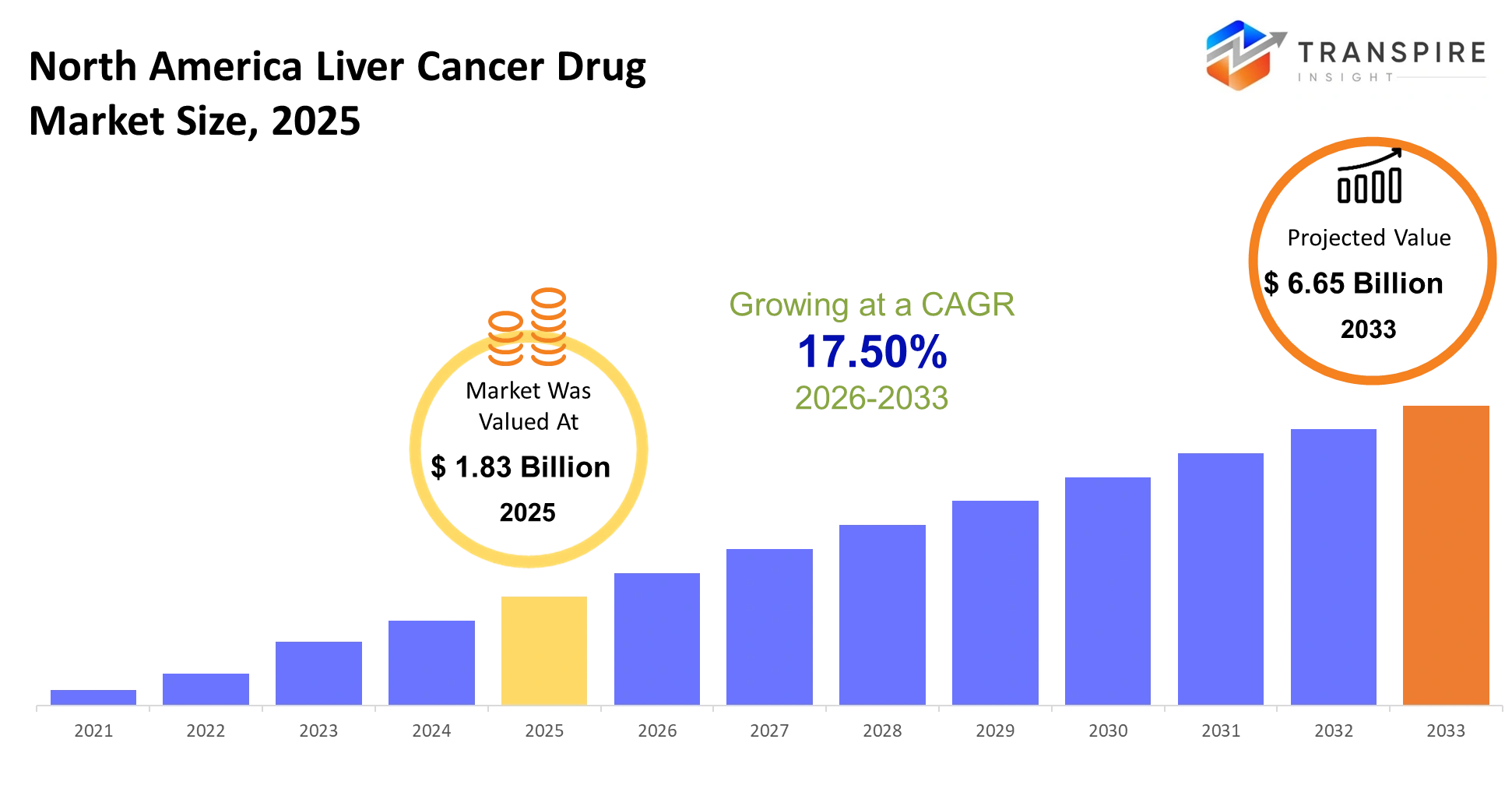
As per Transpire Insight Analysis the North America Liver Cancer Drug Market size is estimated at USD 1.83 Billion in 2025 and is anticipated to reach USD 6.65 Billion by 2033, growing at a CAGR of 17.50% from 2026 to 2033.
The North America liver cancer drug market is tackling one of the more urgent battles in oncology, by rolling out therapies that help extend survival, slow the disease course , and generally make treatment results better for people with primary liver cancers such as hepatocellular carcinoma. In real world practice, hospitals, cancer centers, and specialty clinics depend on these drugs to put more targeted and personalized care plans in place while also handling the messy reality of advanced disease stages.
In the past three to five years the market has been moving away from older, conventional systemic approaches and toward immunotherapy based combinations plus precision medicine, which is guided by biomarkers and supported by more careful treatment choices. The COVID-19 pandemic at first threw off cancer screening, diagnosis, and therapy timelines, yet in parallel it seemed to speed up investment in clinical studies, digital patient monitoring, and broader healthcare infrastructure.
Also, as earlier diagnosis keeps improving , and more patients qualify for advanced therapies, overall treatment volumes keep rising. That shift backs stronger commercial uptake of newer drugs, helps keep pharmaceutical funding active, and opens longer lasting revenue paths throughout the regional oncology landscape.
North America Liver Cancer Drug Market Size & Forecast:
- North America Liver Cancer Drug Market Size 2025: USD 1.83 Billion
- Expected Market Value 2033: USD 6.65 Billion
- Forecast CAGR: 17.50%
- Leading region in 2025: United States
- Fastest Growing region: Canada
- Key Profile: Bristol Myers Squibb, Roche, AstraZeneca, Eisai, Bayer, Merck & Co., Exelixis, Pfizer, Eli Lilly, BeiGene, Novartis, GSK, Amgen, Johnson & Johnson, Ipsen
Key Market Insights
- The United States, kind of just leads the regional scene with about 88% market share in 2025, backed by mature oncology infrastructure, lots of clinical trial activity, and premium drug adoption.
- Canada is expected to show the quickest growth across 2025–2033, mostly due to broader reimbursement , new precision medicine investments , and even stronger oncology research networks.
- Targeted therapy ends up taking the lead in the product segment with close to 46% market share in 2025, which points to the ongoing physician tendency toward evidence-based first line treatment patterns.
- Immunotherapy stays as the second-largest segment, mainly because combination regimens are still swapping out traditional monotherapies across advanced liver cancer care pathways.
- By 2033, combination immunotherapy regimens are anticipated to be the fastest-growing product category, helped along by favorable clinical outcomes and more regulatory approvals coming through.
- In terms of applications, hepatocellular carcinoma pretty much dominates with around 82% market share, this mirrors how it is the most common primary liver cancer diagnosis.
- For applications, advanced-stage liver cancer management will see the quickest growth during the forecast, as earlier diagnosis widens eligibility for more novel therapies.
- Treatment utilization is mostly concentrated in hospitals and specialty cancer centers, at roughly 69%, because multidisciplinary oncology know-how is available , plus better access to advanced biologic therapies.
- Finally , specialty oncology clinics should grow fastest among end users through 2033, driven by the continued spread of outpatient infusion ability and more personalized treatment services.
What are the Key Drivers, Restraints, and Opportunities in the North America Liver Cancer Drug Market?
The main growth lever is that fast shift toward immunotherapy pairings and precision-driven oncology. Regulatory clearances for new checkpoint inhibitor combinations, plus biomarker-informed treatment approaches have broadened the available options compared with the older systemic therapies. When patients see better clinical results, clinicians are more willing to start premium therapies earlier , in the care timeline. Earlier identification too boosts the pool of people who qualify for advanced medicines. Over time this helps prescription volumes, extends treatment duration, and lifts overall pharma revenue. Also, more funding for oncology clinical trials keeps pushing commercialization of fresh therapies across North America.
The biggest structural drag still sits with the very high price of biologic therapies, and the uneven way reimbursement works across health systems. Hospitals have to juggle complicated procurement budgets , while payers ask for a lot of clinical substantiation before they’ll grant wide reimbursement. On top of that, biologics manufacturing needs dedicated production capabilities that can’t simply be scaled overnight. Because of all this , some treatments reach the market later , and some patients get limited access. From a Transpire Insight look at regional purchasing announcements and timing of launches, supply chain concentration is staying the main operational risk. So adoption moves more slowly, launches get pushed back, and revenue ends up suppressed , even if clinical demand remains strong.
The most solid long term chance is basically wrapping liquid biopsy with genomic profiling and AI supported precision oncology into everyday liver cancer care, not just research. Pharmaceutical companies keep putting money into companion diagnostics and personalized medicine platforms too. Canada and a few big U.S. academic cancer centers are kind of ideal for these tools, mostly because of strong research backing and clinical collaboration networks, which helps a lot. As biomarker testing becomes routine, clinicians will pair each patient with more effective treatments sooner than before, so outcomes should get better, and that also grows commercial pathways for fresh drug developers.
What Has the Impact of Artificial Intelligence Been on the North America Liver Cancer Drug Market?
Artificial intelligence together with digital technologies is kind of changing how liver cancer drugs get developed, commercialized, and how clinicians decide what to do next, across North America. AI platforms can basically automate finding patients for oncology studies, by scanning electronic health records and then matching individuals to biomarker‑specific eligibility rules. At the same time, pharmaceutical companies also lean on machine learning to sort of fine tune clinical trial layout, monitor treatment safety signals in near real time, and keep regulatory documents more consistent, more or less. Predictive analytics is useful for demand forecasting too, because it combines prescription activity, hospital stock counts, and epidemiological forecasts, so manufacturers can reduce shortages while also improving product availability, generally.
Then there is digital pathology, an AI-assisted imaging setup, that can quietly help boost diagnostic precision by flagging liver lesions earlier, and also nudging treatment selection based on molecular features rather than only routine histology. Overall, these kind of tools can improve operational efficiency, shorten research timelines, and shrink some avoidable trial expenses, while at the same time making successful patient enrollment more likely. On top of that, healthcare teams benefit from clinical decision-support systems, that suggest evidence-based therapies, using real-world outcomes and genomic info, to guide choices.Still, AI adoption isn’t fully smooth. Putting together hospital information systems, genomic resources, and pharmaceutical platforms takes a lot of funding and standardized data formats. Interoperability issues between institutions, plus real-world datasets that vary a lot, can lower algorithm accuracy, which may slow wider rollout even though the technological progress is clearly substantial.
Key Market Trends
- Between 2021 and 2025, combination immunotherapy kind of ended up as a preferred first line approach after a bunch of positive Phase III clinical results, like folks already anticipated.
- Companion diagnostics started getting wider, almost routine adoption after 2022 so clinicians could pick patients a lot more precisely, and then the targeted treatment worked better with fewer unexpected side effects or surprises.
- In 2023–2025 pharmaceutical companies also ramped up real world evidence projects, partly for reimbursement conversations, and partly to support label expansion plans.
- AI assisted clinical trial recruitment played a role too, it shortened the time needed to locate eligible patients, so sponsors could improve enrollment throughput across major cancer centers.
- After 2022 contract manufacturing spend rose as well, and that sorta boosted biologic production capacity while also easing those pesky supply bottlenecks that tend to pop up with oncology medicines.
- Specialty oncology clinics started stretching out outpatient infusion services from 2023 to 2025 , so a few treatments kind of slowly drifted away from inpatient hospital rooms, more or less .
- Big players like AstraZeneca , Roche, and Bristol Myers Squibb leaned harder into combination therapy pipelines , and in the same breath they backed biomarker-led research.
- Cross border research partnerships between the United States and Canada also helped reinforce multicenter trials and yeah , in the real world this moved innovative liver cancer treatments closer faster.
- Digital pathology adoption kept rising through 2024 , improving diagnostic consistency, and supporting precision based planning across major healthcare networks.
North America Liver Cancer Drug Market Segmentation
By Drug Type :
Targeted therapy still has the leading position, mostly because the treatment zooms in on particular molecular pathways, which can slow tumor growth while also reducing harm to normal tissue. There is solid clinical evidence, plus broader regulatory permissions, and honestly better patient outcomes, that all keep pushing adoption in oncology centers. After that, Immunotherapy comes next as the second-largest category, mainly because the response can last for a long time, thanks to immune checkpoint inhibitors , and also combination regimens. More and more clinical trust is building, so the use of these therapies keeps moving forward across different stages in liver cancer care.
Chemotherapy remains a key choice for certain people, especially when targeted medicines are not a fit or simply aren’t on hand. Anti-VEGF therapy and kinase inhibitors add extra room for decisions, since they help slow down blood vessel formation and the cancer’s momentum . Monoclonal antibodies are also getting more attention, as precision medicine continues to spread across healthcare systems. Combination therapy will likely record the fastest growth, because ongoing clinical studies keep showing stronger survival advantages than a single drug alone.
By Cancer Type :
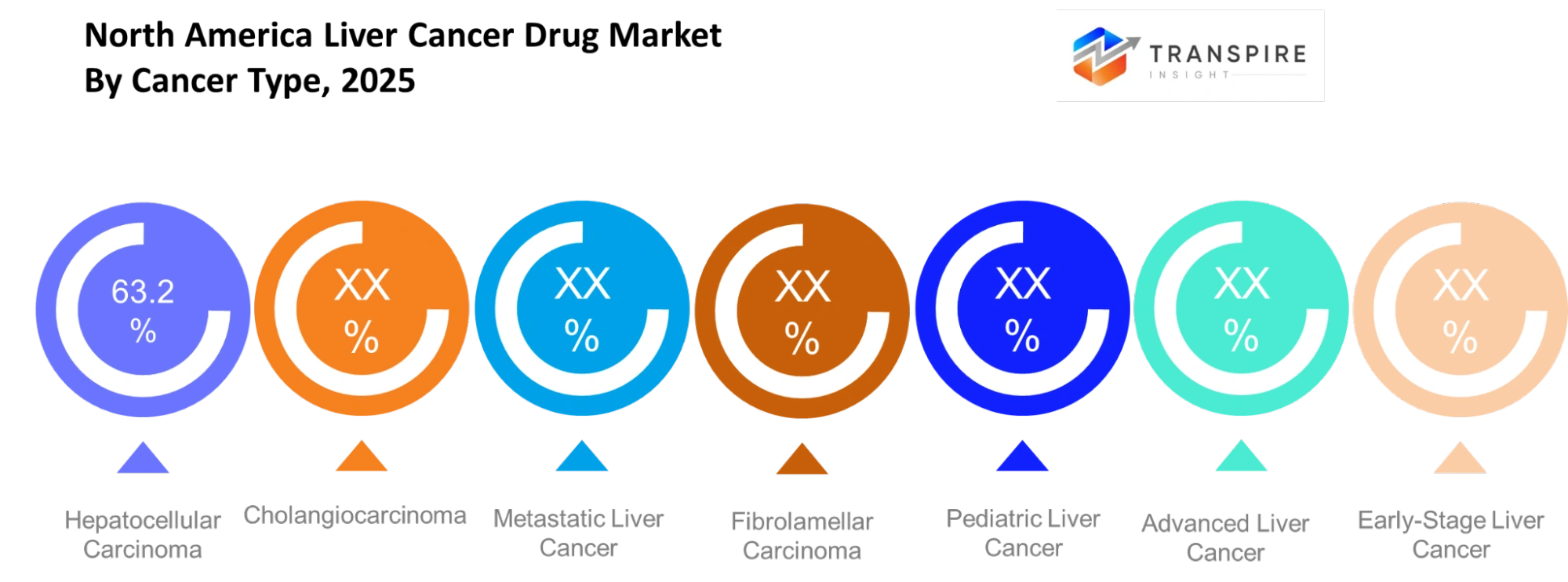
Hepatocellular carcinoma is often the biggest disease slice, partly because diagnosis rates stay notably higher than for other primary liver cancers. Clinical guidelines keep suggesting targeted therapies together with immunotherapy combinations for a large share of eligible patients, which ends up boosting real world adoption. For advanced liver cancer, it also takes a major treatment portion since the disease tends to move in a complicated way and patients need long term medication. Early detection programs should gradually help more people receive therapies before the condition progresses too far.
Meanwhile cholangiocarcinoma treatment keeps broadening as molecular testing keeps finding the right candidates for precision medicines. Metastatic liver cancer adds more openings for systemic therapies, so disease management gets better overall. Fibrolamellar carcinoma and pediatric liver cancer still stay comparatively small, mainly because the patient pool is limited. And as research pushes forward, personalized medicine is expected to keep enhancing treatment choices across the less common liver cancer categories.
By Route of Administration :
Intravenous administration pretty much leads the market because a lot of advanced biologics and immunotherapies depend on a controlled infusion, with specialist oversight. Hospitals and cancer centers keep leaning on infusion based treatment pathways, so they can keep dosing accuracy solid and also monitor the patient properly. Oral therapies show up as the second-largest part, mainly since they offer more ease of use and help sustain long-term outpatient regimens. When patient adherence gets better, that should push continued adoption of oral targeted medicines.
Meanwhile, injectable therapies still matter a lot for certain protocols where quick medication delivery is really needed. Combination therapy is also growing steadily, it uses more than one administration route as clinical plans become more tailored. Targeted infusion systems help fine tune treatment delivery in harder oncology cases. Extended release therapy will likely pull more attention, as healthcare providers aim for fewer appointments and a more comfortable day-to-day experience for patients.
By End User :
Hospitals still sit as the leading end user , mainly because multidisciplinary oncology teams, cutting edge diagnostic facilities, and specialized infusion units back a full range of liver cancer care. Those treatment journeys can be quite complex, plus emergency care services, and it all sort of locks in hospital usage. Cancer centers take the next spot as the second largest part , driven by focused oncology know how and easier access to newer treatment protocols. Ongoing funding for advanced treatment technologies should keep expanding services over time.
Specialty clinics keep adding capacity too, by rolling out personalized oncology services in outpatient environments. Academic medical centers and research institutes fuel progress through clinical trial activity and translational research programs. Ambulatory infusion centers are also growing , especially since biologic therapies show up more often outside inpatient places. When outpatient treatment becomes more available, patient access tends to rise , while the workload on hospital resources eases a bit.
By Distribution Channel :
Hospital pharmacies really tend to take over distribution, since those high value oncology medicines need careful storage, specialist handling, and tight coordination with the clinical teams, not just “send it and hope.” With integrated procurement systems too, access can be quicker for advanced therapies during those planned treatment cycles, basically on schedule. Specialty pharmacies are next, they act like the second-largest route because they manage complex biologic medicines and, plus the extra patient support services that come with them. If specialty distribution networks get wider, treatment continuity should feel more consistent across outpatient care places
Retail pharmacies still handle certain oral therapies when the prescription rules allow community based dispensing. Online pharmacies are slowly getting stronger at getting eligible maintenance medicines to people, using secure digital ordering systems. Government supply programs help keep treatment available for qualifying healthcare institutions and patient groups. Direct sales will still matter a lot for the really expensive specialty medicines, especially when manufacturer agreements and specialized healthcare providers are involved.
What are the Key Use Cases Driving the North America Liver Cancer Drug Market?
The biggest use case kinda sits around first-line care for advanced hepatocellular carcinoma, mostly in hospitals and dedicated cancer centers. Healthcare providers buy targeted therapies and immunotherapy combinations because clinical guidelines now more often suggest these medicines, to help improve survival and disease management. There’s also this strong reimbursement backing for approved treatments, and that really supports purchasing choices across major oncology networks , too.
The secondary use cases are still growing, especially in specialty clinics that run outpatient treatments, and in academic medical centers that do clinical research. Precision medicine programs increasingly lean on biomarker driven therapies for certain patient groups, while combination treatment protocols open up extra room for advanced oncology services, and for pharmaceutical uptake.
Then there are the emerging use cases , like more personalized treatment supported by genomic profiling, and liquid biopsy testing that helps guide which therapy to pick. Research institutes are also testing newer next generation combo regimens and fresh targeted medicines through ongoing clinical trials. If regulatory approvals keep coming, and translational research keeps getting funded, that should help wider commercial adoption throughout the forecast period.
|
Report Metrics |
Details |
|
Market size value in 2025 |
USD 1.83 Billion |
|
Market size value in 2026 |
USD 2.15 Billion |
|
Revenue forecast in 2033 |
USD 6.65 Billion |
|
Growth rate |
CAGR of 17.50% from 2026 to 2033 |
|
Base year |
2025 |
|
Historical data |
2021 - 2024 |
|
Forecast period |
2026 - 2033 |
|
Report coverage |
Revenue forecast, competitive landscape, growth factors, and trends |
|
Regional scope |
North America (Canada, The United States, and Mexico) |
|
Key company profiled |
Bristol Myers Squibb, Roche, AstraZeneca, Eisai, Bayer, Merck & Co., Exelixis, Pfizer, Eli Lilly, BeiGene, Novartis, GSK, Amgen, Johnson & Johnson, Ipsen . |
|
Customization scope |
Free report customization (country, regional & segment scope). Avail customized purchase options to meet your exact research needs. |
|
Report Segmentation |
By Drug Type (Targeted Therapy, Immunotherapy, Chemotherapy, Anti-VEGF Therapy, Combination Therapy, Kinase Inhibitors, Monoclonal Antibodies, Others); By Cancer Type (Hepatocellular Carcinoma, Cholangiocarcinoma, Metastatic Liver Cancer, Fibrolamellar Carcinoma, Pediatric Liver Cancer, Advanced Liver Cancer, Early-Stage Liver Cancer, Others); By Route of Administration (Oral, Intravenous, Injectable, Combination Therapy, Targeted Infusion, Extended-Release Therapy, Others); By End User (Hospitals, Cancer Centers, Specialty Clinics, Academic Medical Centers, Research Institutes, Ambulatory Infusion Centers, Others); By Distribution Channel (Hospital Pharmacies, Specialty Pharmacies, Retail Pharmacies, Online Pharmacies, Government Supply, Direct Sales, Others) |
Which Regions are Driving the North America Liver Cancer Drug Market Growth?
The United States accounts for about 88% of regional revenue ,so it is basically the lead driver behind market growth. There is strong regulatory backing and also broad reimbursement coverage for newer oncology medicines, plus an huge and well built network of specialized cancer centers that makes it easier for advanced therapies to be adopted quickly. On top of that ,the pharmaceutical ecosystem in the country is pretty mature, with help from global drug manufacturers, contract research organizations, and academic medical institutions. That mix supports both clinical development and reliable commercial distribution. If investment keeps going into precision oncology ,biomarker testing, and next generation immunotherapies then market leadership should hold up through the whole forecast timeframe.
Canada, though, has a more distinct shape of growth because public healthcare funding leans heavily toward long-range treatment access and reimbursement that is truly evidence based. Regulatory review is consistent, and healthcare spending stays fairly steady, so pharmaceutical companies can plan their commercial expansion with fewer surprises. University ,hospital, and biotechnology collaboration also keeps clinical innovation moving ,while adoption of already approved therapies stays relatively smooth. Because of all that Canada becomes a dependable wellspring for recurring revenue even if the patient population is smaller than in the United States.
Canada is expected to see the quickest growth in the 2026–2033 period, after bigger investment in precision medicine programs and expanded genomic testing capacity , plus more solid support for oncology research. In addition, the recent gains in clinical trial infrastructure are helping patients get to new liver cancer therapies faster. As personalized treatment pathways become more widely used, it is also turning into fresh commercial prospects for pharmaceutical companies rolling out targeted medicines, and combination therapies. All this momentum should keep pushing more investment, tighter partnerships, and additional product launches across the Canadian oncology sector through the forecast period.
Who are the Key Players in the North America Liver Cancer Drug Market and How Do They Compete?
Competition is still kinda relatively consolidated, since only a limited set of multinational pharmaceutical firms effectively hold most approved treatments plus the late stage pipeline. In the end, technology novelty , clinical data, and noticeably different treatment results are what mostly drive competition, not just price. Older companies keep trying to defend share by pushing for expanded indications, pairing medicines in combination protocols, and dropping more money into precision medicine programs, meanwhile biotechnology groups bring more pressure through focused oncology research and tightly targeted drug development.
Bristol Myers Squibb keeps leaning into immuno-oncology innovation, by growing combo treatment approaches that are supported by major clinical trial efforts. Roche positions itself differently via companion diagnostics being tied to targeted therapies, so they can pick patients more precisely and improve personalized treatment planning. AstraZeneca keeps widening its oncology offering through investments in combination regimens, plus research collaborations that are meant to help firm up the next product pipeline.
Merck & Co. expands competitive reach through extra immunotherapy indications, supported by wide international clinical studies, and also real world evidence programs that help reinforce physician confidence. Eisai leans on collaborative development deals, which speed commercialization, while also widening access to targeted oncology medicines across North American care systems. Taken together, these moves strengthen product differentiation, increase treatment uptake, and build longer term commercial advantages as precision oncology keeps changing how liver cancer care is done, in practice.
Company List
- Bristol Myers Squibb
- Roche
- AstraZeneca
- Eisai
- Bayer
- Merck & Co.
- Exelixis
- Pfizer
- Eli Lilly
- BeiGene
- Novartis
- GSK
- Amgen
- Johnson & Johnson
- Ipsen
Recent Development News
In April 2025, Bristol Myers Squibb received U.S. FDA approval for Opdivo (nivolumab) plus Yervoy (ipilimumab) as a first-line treatment for unresectable or metastatic hepatocellular carcinoma. The approval expanded frontline immunotherapy options and strengthened competition in the North American liver cancer treatment market.
Source https://news.bms.com/
In February 2025, Lion TCR received U.S. FDA clearance to launch a global multicenter Phase 2 clinical trial for Liocyx-M004 in hepatitis B virus-related hepatocellular carcinoma. The regulatory clearance advanced development of an mRNA-based TCR-T cell therapy and increased innovation within the liver cancer drug pipeline.
Source https://www.prnewswire.com/
What Strategic Insights Define the Future of the North America Liver Cancer Drug Market?
The North America Liver Cancer Drug Market is expected to shift toward a more precision driven treatment scene over the next five to seven years, backed by gains in molecular diagnostics, biomarker guided therapies and wider adoption of combination immunotherapy. However, growth will likely hinge more and more on matching people with targeted options that actually help clinical outcomes while still showing economic value to healthcare systems. There is also a quieter, less discussed issue: the innovation space is becoming concentrated among a small set of high value drug developers , and that can weaken competitive pricing while also making the whole market more fragile if pipeline progress stalls or if regulatory timelines get delayed. At the same time, there is an emerging opening, using artificial intelligence alongside real world clinical data to improve how patients get picked for studies and how treatment is optimized day to day. Market players should broaden strategic partnerships spanning pharmaceutical companies, diagnostics builders, and healthcare providers, so biomarker uptake accelerates and evidence generation stays stronger, which can help them keep a durable edge as personalized liver cancer care turns into the industry norm.
North America Liver Cancer Drug Market Report Segmentation
By Drug Type
- Targeted Therapy
- Immunotherapy
- Chemotherapy
- Anti-VEGF Therapy
- Combination Therapy
- Kinase Inhibitors
- Monoclonal Antibodies
By Cancer Type
- Hepatocellular Carcinoma
- Cholangiocarcinoma
- Metastatic Liver Cancer
- Fibrolamellar Carcinoma
- Pediatric Liver Cancer
- Advanced Liver Cancer
- Early-Stage Liver Cancer
By Route of Administration
- Oral
- Intravenous
- Injectable
- Combination Therapy
- Targeted Infusion
- Extended-Release Therapy
By End User
- Hospitals
- Cancer Centers
- Specialty Clinics
- Academic Medical Centers
- Research Institutes
- Ambulatory Infusion Centers
By Distribution Channel
- Hospital Pharmacies
- Specialty Pharmacies
- Retail Pharmacies
- Online Pharmacies
- Government Supply
- Direct Sales
Frequently Asked Questions
Find quick answers to common questions.
The expected North America Liver Cancer Drug Market size for the market will be USD 6.65 Billion in 2033.
Key segments for the North America Liver Cancer Drug Market are By Drug Type (Targeted Therapy, Immunotherapy, Chemotherapy, Anti-VEGF Therapy, Combination Therapy, Kinase Inhibitors, Monoclonal Antibodies, Others); By Cancer Type (Hepatocellular Carcinoma, Cholangiocarcinoma, Metastatic Liver Cancer, Fibrolamellar Carcinoma, Pediatric Liver Cancer, Advanced Liver Cancer, Early-Stage Liver Cancer, Others); By Route of Administration (Oral, Intravenous, Injectable, Combination Therapy, Targeted Infusion, Extended-Release Therapy, Others); By End User (Hospitals, Cancer Centers, Specialty Clinics, Academic Medical Centers, Research Institutes, Ambulatory Infusion Centers, Others); By Distribution Channel (Hospital Pharmacies, Specialty Pharmacies, Retail Pharmacies, Online Pharmacies, Government Supply, Direct Sales, Others) .
Major North America Liver Cancer Drug Market players are Bristol Myers Squibb, Roche, AstraZeneca, Eisai, Bayer, Merck & Co., Exelixis, Pfizer, Eli Lilly, BeiGene, Novartis, GSK, Amgen, Johnson & Johnson, Ipsen .
The North America Liver Cancer Drug Market size is USD 1.83 Billion in 2025.
The North America Liver Cancer Drug Market CAGR is 17.50% from 2026 to 2033.
- Bristol Myers Squibb
- Roche
- AstraZeneca
- Eisai
- Bayer
- Merck & Co.
- Exelixis
- Pfizer
- Eli Lilly
- BeiGene
- Novartis
- GSK
- Amgen
- Johnson & Johnson
- Ipsen
About the Authors

Pankaj Ghogare Patil
I am Pankaj Ghogare Patil, a Senior Research Analyst at Transpire Insight, specializing in the Pharmaceutical, Chemicals & Materials, Healthcare IT, and Biotechnology industry. My expertise lies in conducting comprehensive market research, analyzing industry trends, evaluating competitive landscapes, and translating complex data into actionable insights. At Transpire Insight, I closely follow emerging technologies, regulatory developments, and market innovations to create accurate, well-researched, and informative content that helps businesses and professionals make informed decisions. I am committed to producing credible, evidence-based articles that reflect industry best practices while making technical topics accessible and valuable for a broad audience.

Chakradhar Khansole
Chakradhar serves as the Research Director at Transpire Insight, bringing over 8 years of experience in technology, innovation, and strategic market intelligence. He specializes in transforming complex market data into actionable business insights that enable organizations to make informed, growth-oriented decisions. Recognized for his strategic vision and analytical expertise, Chakradhar leads high-impact research initiatives, delivering comprehensive market assessments, competitive intelligence, and forward-looking industry analysis.
Recently Published Reports
-
Apr 2026
AI in Diabetic Retinopathy Market
AI in Diabetic Retinopathy Market Size, Share & Analysis Report By Type (Screening AI Systems, Diagnostic AI Systems, and Predictive AI Models), By Application Segment (Hospitals, Ophthalmology Clinics, Diagnostic Centers, and Research and Development), and Geography (North America, Europe, Asia-Pacific, Middle East and Africa, South and Central America), 2021 - 2031
-
Apr 2026
Psychometric Tests Market
Psychometric Tests Market Size, Share & Analysis Report By Type (Personality Tests, Ability/Aptitude Tests, Skill/Knowledge Tests, and Others), By Application (Talent Acquisition and Talent Management), and Geography (North America, Europe, Asia-Pacific, Middle East and Africa, South and Central America), 2021 – 2031
-
Apr 2026
Rare Biological Sample Collection Market
Rare Biological Sample Collection Market Size, Share & Analysis Report By Type (Isolation Kits & Reagent, Blood Collection Tubes, and Others), By Application (Oncology, Transcriptomics, Pharmacogenomics, and Others), and Geography (North America, Europe, Asia-Pacific, Middle East and Africa, South and Central America), 2021 – 2031
-
Jul 2026
Diabetic Retinopathy Market
Diabetic Retinopathy Market Size, Share & Analysis Report By Type (Proliferative Diabetic Retinopathy, and Diabetic Macular Edema (DME)), By Treatment Type (Anti VEGF Drug, Steroid Implants, Laser Surgeries, and Vitrectomy), and Geography (North America, Europe, Asia-Pacific, Middle East and Africa, South and Central America), 2021 – 2031
Our Clients







