

United Kingdom CAR T-cell Therapy Market Summary
As per Transpire Insight Analysis the United Kingdom CAR T-cell Therapy Market size is estimated at USD 143.7 Million in 2025 and is anticipated to reach USD 561.6 Million by 2033, growing at a CAGR of 18.58% from 2026 to 2033.
The United Kingdom CAR T-cell Therapy Market supports hospitals, and cancer centers in a pretty hands on way when it comes to treating patients with aggressive blood cancers , especially those who don’t really have many choices left after conventional therapies stop working. In practice, the market is all about delivering treatments that are highly tailored, like cellular based interventions, that may bring long lasting clinical responses. That helps healthcare providers boost patient outcomes, while also lowering the need for repeated treatment cycles in cases where it’s appropriate.
In the past three to five years, you can see the market kind of move , from being used by only a handful of specialists toward more everyday inclusion inside the National Health Service. This shift is being powered by added treatment infrastructure , smoother manufacturing pathways, and tighter clinical cooperation. The COVID-19 pandemic also showed some cracks in global supply chains and patient care pathways, so it triggered more spending toward domestic treatment capability and logistics coordination. And as referral networks mature, manufacturing becomes more efficient, and reimbursement frameworks keep getting clearer, more eligible patients should reach therapy within timelines that are actually clinically acceptable. Overall, this operational momentum builds provider confidence, widens treatment volume , and supports a steadier revenue base across therapy developers, manufacturing partners and healthcare institutions.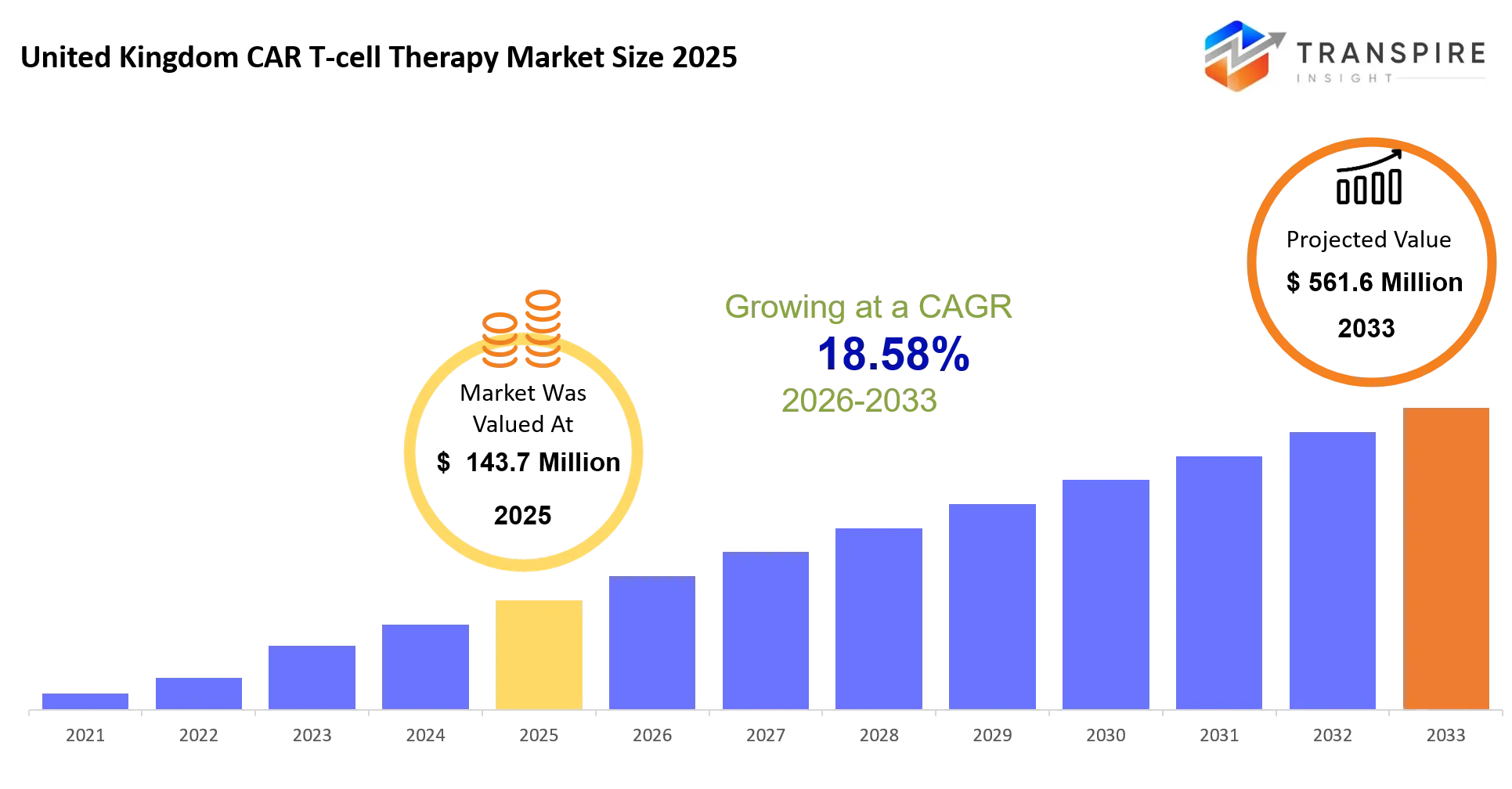
United Kingdom CAR T-cell Therapy Market Size & Forecast:
- United Kingdom CAR T-cell Therapy Market Size 2025: USD 143.7 Million
- Expected Market Value 2033: USD 561.6 Million
- Forecast CAGR: 18.58%
- Leading region in 2025: England
- Fastest Growing region: Scotland
- Key Profile: Gilead Sciences, Bristol Myers Squibb, Novartis, Johnson & Johnson, Autolus Therapeutics, Cellectis, Legend Biotech, JW Therapeutics, Miltenyi Biotec, Oxford BioMedica, Adaptimmune, Bluebird Bio, CRISPR Therapeutics, Caribou Biosciences, BioNTech
Key Market Insights
- England kind of owned the United Kingdom CAR T-cell Therapy Market in 2025, sitting at about 82% market share , and that was backed by specialist treatment centres plus referral networks that are already well set.
- Scotland, meanwhile, is projected to end up as the fastest-growing regional market during 2026–2033, mainly because oncology infrastructure keeps widening and more advanced therapy investments keep landing.
- In 2025, autologous CAR T-cell therapies were the clear front-runners with roughly 88% market share , which also ties back to broader regulatory approvals and those stronger reimbursement pathways on the commercial side.
- Allogeneic CAR T-cell therapies stayed in the second-largest spot , since several clinical programs moved ahead toward later-stage development across the whole forecast window.
- Looking ahead, allogeneic products are expected to be the fastest-growing segment from 2026 to 2033. That’s generally supported by scalable manufacturing and also shorter treatment timelines, compared with older approaches.
- For applications, hematological malignancies took around 91% share in 2025, because approved therapies kept expanding across eligible lymphoma and leukemia populations, bit by bit.
- On the fastest growth side, multiple myeloma treatment is forecast to show the quickest application rise through 2033, fueled by broader indications and a growing body of clinical evidence.
- By end use, hospitals and specialist cancer centres held close to 76% of the market in 2025, helped along by accredited infusion facilities and multidisciplinary treatment capabilities that actually get used in practice.
- Finally, academic research institutes are expected to become the fastest-growing end user category through 2033, supported by translational research funding and collaborative clinical trials , running across different partners.
What are the Key Drivers, Restraints, and Opportunities in the United Kingdom CAR T-cell Therapy Market?
The main growth driver is basically the broadening of approved CAR T-cell indications, that is backed by National Health Service reimbursement decisions, and also by improvements in advanced therapy manufacturing. Regulatory support for newer oncology treatments has been lifting the number of eligible patients, while hospital treatment networks are growing their specialist capacity. More referral centres mean shorter treatment pathways, and higher manufacturing reliability makes sure products stay on hand. So these things together directly help adoption rates, and they end up backing sustained revenue expansion across the cell therapy space.
The biggest structural restraint still feels like manufacturing complexity, and honestly the limited production capacity behind it. Personalized cell processing needs specialized facilities, skilled personnel, and very tight quality controls, but these can’t be ramped up quickly. When production slips, patients wait longer, and operating costs tend to climb. Capacity constraints also mute potential revenue because fewer patients can be treated each year, even while clinical demand keeps increasing. And based on Transpire Insight review of regional procurement announcements and launch schedules, supply chain concentration stays the main execution risk.
The clearest opportunity is next-generation allogeneic CAR T-cell platforms, especially when combined with automated manufacturing technologies. Investments in gene-editing, closed-system production, and digital manufacturing are trimming production timelines and making scalability more realistic. The United Kingdom’s advanced life sciences ecosystem and the steady rise of clinical research activity create pretty favourable conditions for commercialization. If manufacturing capacity expands, and next-generation therapies move faster too, it could unlock quicker patient access, while also widening future market penetration.
What Has the Impact of Artificial Intelligence Been on the United Kingdom CAR T-cell Therapy Market?
Artificial intelligence is kind of reshaping the United Kingdom CAR T-cell Therapy Market, mainly by tweaking manufacturing consistency , choosing the right patients more smartly, and strengthening quality management all along the treatment pathway. AI-driven analytics watch cell expansion, spot manufacturing deviations, and track quality signals in near real time, so manufacturers can stay on track with regulatory compliance while also trimming down those annoying swings in production. In the same breath, digital platforms help with automation for documentation and batch release, which cuts down the operational timelines, a bit more than before
Machine learning models are also getting used to estimate manufacturing success, squeeze and rebalance scheduling, anticipate treatment demand , and flag which patients might actually gain the most from personalized therapies. Hospitals and manufacturers then lean on predictive analytics to align production slots with clinical availability, so the gap between cell collection and infusion doesn’t stretch as much. Altogether, these tools boost operational efficiency, lift manufacturing utilization , and decrease preventable production failures, which in turn supports a better commercial position across the UK cell therapy space
That said, the current adoption still feels limited, mostly due to high implementation costs and clinical data that is spread out in fragmented pockets. A lot of AI systems need standardized datasets gathered across multiple treatment centres before their predictive accuracy really levels up. And when it comes to integration, legacy laboratory systems still pose technical headaches, so deployment doesn’t usually go far beyond top specialist facilities. Over time, as data interoperability gets better, digital technologies should start playing a larger role in manufacturing optimization, treatment planning, and long term patient outcome monitoring , with fewer obstacles in the middle of everything
Key Market Trends
- Since 2023, automated closed system manufacturing has been lowering production variability, but also helps keep commercial-scale CAR T-cell manufacturing more steady.
- Around 2024 to 2026, allogeneic CAR T-cell development seemed to pick up fast, and that pushed investment toward scalable off-the-shelf treatment platforms.
- Now digital manufacturing platforms are more and more folding in AI driven quality monitoring, which boosts batch consistency and makes the regulatory paperwork look cleaner across specialist production facilities.
- NHS treatment networks also rolled out more accredited centres after 2022, so referrals moved faster and some geographic access gaps for eligible patients eased.
- Oxford Biomedica expanded its viral vector manufacturing capabilities, and in turn that strengthened the domestic supply chain resilience for advanced cell therapies.
- Strategic collaborations between biotechnology firms and academic research hospitals have grown since 2023, more like a mutual boost that speeds up translational research and clinical development programs.
- Gene-editing technologies are becoming a bigger competitive emphasis, enabling next generation products with better persistence and a wider therapeutic reach, too.
- During 2025, investment started leaning more toward decentralized manufacturing models, with the goal of cutting production timelines and improving patient access.
- Regulatory engagement, meanwhile, keeps putting extra weight on real world evidence collection, which should help future label expansions and reimbursement decisions for advanced cellular therapies.
United Kingdom CAR T-cell Therapy Market Segmentation
By Therapy Type :
Autologous CAR T-cell Therapy kind of holds the top spot, mostly because approved products already have real clinical use and clear treatment pathways in various cancer specialist facilities. There’s strong physician confidence behind it, plus reimbursement help, and the outcomes are pretty well demonstrated so demand keeps showing up. Meanwhile Allogeneic CAR T-cell Therapy keeps getting bigger, since developers are really leaning into scalable manufacturing and production runs that are shorter, sometimes by design, and sometimes by process improvement. I also expect that off-the-shelf therapies will keep trending upward, as the clinical evidence keeps stacking up.
In terms of targeted options, CD19 CAR T-cell Therapy is still the biggest slice, largely because it sees broad use in blood cancer care. BCMA CAR T-cell Therapy keeps building momentum too, especially with its expanding role in multiple myeloma treatment. Dual-Target CAR T-cell Therapy and Next-Generation CAR T-cell Therapy bring in investment because the treatment design looks more refined, and the overall research activity is getting broader. Experimental CAR T-cell Therapy, along with other emerging ideas, supports pipeline growth, and that should open more commercial opportunities down the road.
By Indication :
Diffuse Large B-Cell Lymphoma kind of represents the biggest indication here, since the approved CAR T-cell therapies have shown pretty strong clinical outcomes for people with relapsed or refractory disease. Existing treatment guidelines plus referral networks kind of keep making the pathway easier, so the use can continue, and that’s a big deal. Acute Lymphoblastic Leukemia also adds a lot of demand, especially through approved pediatric and adult treatment programs, so it doesn’t really slow down. Multiple Myeloma keeps expanding at a faster pace right after recent product approvals and when more patients become eligible.
Mantle Cell Lymphoma and Follicular Lymphoma, meanwhile, hold steady adoption since more evidence keeps pointing toward long-term effectiveness, even if the pace feels gradual. Chronic Lymphocytic Leukemia stays a key research focus as multiple clinical programs are still under evaluation. Solid tumors are looking like future upside, because clinical trials are exploring fresh therapeutic targets, and there’s room to grow. Other indications also keep strengthening the development pipeline and essentially widening what future treatment options could look like.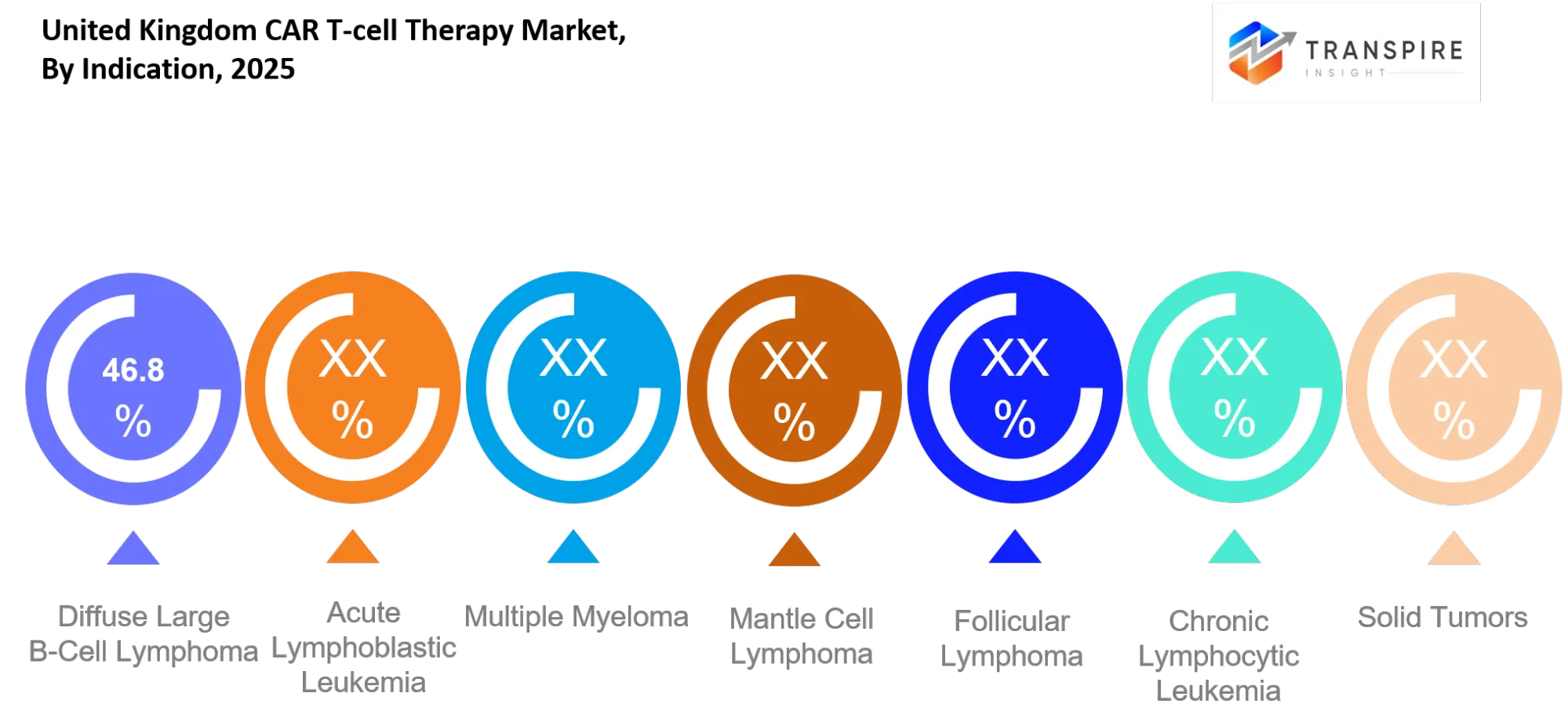
By End User :
Hospitals end up taking the biggest share since advanced treatment needs specialized infrastructure, multidisciplinary teams , and very close patient monitoring. Cancer Centers keep a sizable role as well, mostly due to focused oncology services and accredited cell therapy programs. Specialty Clinics take part in certain treatment routes, plus patient follow up services that are more or less tailored. Academic Research Institutes help push new ideas forward by running clinical studies and translational research activities that actually connect bench work to patients.
Biotechnology Companies keep expanding manufacturing capacity and product development initiatives. Pharmaceutical Companies respond by upping their investment through partnerships, acquisitions , and commercialization roadmaps. Government Research Centers back the science directly with research support and funding for advanced therapies. Other end users also chip in via laboratory services, cooperative research, and the kind of supporting healthcare activities that don’t always show up in headlines.
By Therapy Stage :
Commercial Therapies typically bring in the highest revenue, mainly since approved products get rolled out via well-known healthcare pathways. In addition, ongoing expansion of reimbursement coverage, along with more treatment capacity, helps keep market activity pretty consistent. Phase III Trials are still, kind of, a key step because they help confirm safety and effectiveness, before any regulatory sign-off. Phase II Trials keep looking at wider patient groups and how well the treatment performs in real life settings.
Phase I Trials back the early clinical stage and introduce new treatment concepts. Preclinical Research basically sets up the next waves, by using lab work and animal studies. Investigator-Initiated Trials end up giving useful clinical knowledge while Compassionate Use Programs offer care access for particular patients who have few alternatives. The remaining therapy stages also matter, in the background they support long-term innovation and product development overall.
By Distribution Channel :
Hospital Procurement pretty much drives the whole distribution side because approved therapies tend to be given through specialist hospitals that run their own purchasing systems, very controlled. So, having solid procurement processes helps keep treatments accessible and stays aligned with regulatory compliance, even when things get complicated. Meanwhile Direct Supply gives manufacturers a stronger connection to healthcare providers, it also helps keep the product quality intact during the delivery phase. Specialty Distributors then step in to handle the logistics for advanced therapies, especially where strict temperature management is non negotiable. \
Clinical Trial Supply is still, and I mean still, crucial for continuing research and for widening treatment indications over time. Government Procurement backs certain public healthcare programs plus research efforts that need a formal framework. Contract Manufacturing Supply keeps growing too as production outsourcing spreads through advanced therapy development, step by step. Research Supply and a few other distribution routes also matter for lab work, product assessment, and basically getting ready for future commercial rollout.
What are the Key Use Cases Driving the United Kingdom CAR T-cell Therapy Market?
The biggest use case basically comes from handling relapsed or refractory diffuse large B-cell lymphoma with commercial autologous CAR T-cell therapies. Hospitals and cancer centers create the most demand because accredited treatment sites, reimbursement support, and specialized clinical teams can really enable delivery in a safe way. Healthcare providers keep investing in these therapies so outcomes can be improved when patients have only limited options, or well, not much else.
Multiple myeloma is turning into a major growth space, especially as more CAR T-cell products reach everyday clinical practice. Academic research institutes along with biotechnology firms are also pushing broader adoption through Phase II and Phase III studies, in order to test wider patient groups and refined treatment designs. Clinical trial supply channels keep backing these applications across specialist oncology networks, without too much interruption.
Early-stage use cases show up as CAR T-cell therapies for solid tumors, and also next-generation dual-target platforms that are meant to enhance treatment response. Investigator-initiated trials, and government-funded research programs keep supporting these areas under closely monitored regulatory frameworks. Progress in gene-editing technologies and advanced manufacturing will help these therapies move toward more widespread clinical adoption during the forecast period.
|
Report Metrics |
Details |
|
Market size value in 2025 |
USD 143.7 Million |
|
Market size value in 2026 |
USD 170.4 Million |
|
Revenue forecast in 2033 |
USD 561.6 Million |
|
Growth rate |
CAGR of 18.58% from 2026 to 2033 |
|
Base year |
2025 |
|
Historical data |
2021 - 2024 |
|
Forecast period |
2026 - 2033 |
|
Report coverage |
Revenue forecast, competitive landscape, growth factors, and trends |
|
Regional scope |
United Kingdom (England, Scotland, Wales, Northern Ireland) |
|
Key company profiled |
Gilead Sciences, Bristol Myers Squibb, Novartis, Johnson & Johnson, Autolus Therapeutics, Cellectis, Legend Biotech, JW Therapeutics, Miltenyi Biotec, Oxford BioMedica, Adaptimmune, Bluebird Bio, CRISPR Therapeutics, Caribou Biosciences, BioNTech . |
|
Customization scope |
Free report customization (country, regional & segment scope). Avail customized purchase options to meet your exact research needs. |
|
Report Segmentation |
By Therapy Type (Autologous CAR T-cell Therapy, Allogeneic CAR T-cell Therapy, CD19 CAR T-cell Therapy, BCMA CAR T-cell Therapy, Dual-Target CAR T-cell Therapy, Next-Generation CAR T-cell Therapy, Experimental CAR T-cell Therapy, Others); By Indication (Diffuse Large B-Cell Lymphoma, Acute Lymphoblastic Leukemia, Multiple Myeloma, Mantle Cell Lymphoma, Follicular Lymphoma, Chronic Lymphocytic Leukemia, Solid Tumors, Others); By End User (Hospitals, Cancer Centers, Specialty Clinics, Academic Research Institutes, Biotechnology Companies, Pharmaceutical Companies, Government Research Centers, Others); By Therapy Stage (Commercial Therapies, Phase III Trials, Phase II Trials, Phase I Trials, Preclinical Research, Investigator-Initiated Trials, Compassionate Use Programs, Others); By Distribution Channel (Hospital Procurement, Direct Supply, Specialty Distributors, Clinical Trial Supply, Government Procurement, Contract Manufacturing Supply, Research Supply, Others) |
Which Regions are Driving the United Kingdom CAR T-cell Therapy Market Growth?
England keeps the leading position, around 82% of the total market share, mainly because most accredited CAR T-cell treatment centers work across the big National Health Service cancer networks . Also the reimbursement side, plus the centralized referral paths, and extra regulatory backing, helps eligible patients reach care at specialist hospitals. On top of that, manufacturing partnerships, biotechnology clusters, academic research bodies, and already-established supply chains make treatment actually easier to keep coming and they back up clinical development. With continued spending on advanced therapy infrastructure, and more room for treatment capacity, England should keep its regional lead through most of the forecast window.
Scotland comes next, as the second-largest regional market , but it grows in a slightly different shape that leans on coordinated public health planning and strong research cooperation. Healthcare funding stays relatively steady, regulatory rollout is fairly consistent, and long-term investment in life sciences keeps demand dependable for these cell-based therapies. Universities, research organizations, and healthcare providers collaborate closely, which in practice supports clinical trials and technology transfer. That kind of balanced ecosystem can keep revenue steady even if treatment numbers are not as high as in England.
Wales is expected to see the quickest growth over the 2026–2033 period, mostly because of the recent injection of investment into specialized oncology services and also more participation in advanced therapy research programs. The wider treatment reach, stronger clinical collaborations, and better referral routes have kind of pushed the regional momentum along faster. On top of that, extra support for translational research alongside healthcare modernization will be a real catalyst, creating more openings for commercial CAR T-cell therapy providers. Overall, these changes will likely give biotechnology firms, manufacturing partners , and long term healthcare investors some solid entry points throughout the forecast window.
Who are the Key Players in the United Kingdom CAR T-cell Therapy Market and How Do They Compete?
Competition is kind of moderately consolidated, mainly because commercial CAR T-cell therapy relies on advanced tech, regulatory signoffs, manufacturing know-how, and some fairly specialized clinical networks. In practice, tech upgrades and manufacturing reliability still end up being the big competitive levers, not price. The more established players keep stretching into additional approved indications, while newer biotech firms try to outpace them with next generation platforms and treatment designs that are a bit more distinct. At the same time, extra spending on production capacity and ongoing research partnerships keeps pushing who is positioned well.
Gilead Sciences keeps strengthening its market standing via continued manufacturing expansion, plus a wide commercial treatment network that basically helps ensure consistent product availability and patient access.Bristol Myers Squibb instead leans into widening the clinical evidence base and expanding approved indications, so more hematological cancers can realistically be targeted with its offerings. Autolus Therapeutics tries to stand apart using its proprietary CAR T-cell technology, and the related United Kingdom manufacturing investment that supports quicker regional rollouts.
Oxford Biomedica grows its viral vector manufacturing capabilities so it can feed both its own internal programs and outside development partners, which gives it a supply edge that matters. Novartis builds further competitive power by working with specialist treatment centers, running physician training initiatives, and making long-term investments into cell therapy infrastructure, all of which helps broaden access while still holding tight to manufacturing and quality benchmarks.
Company List
Bristol Myers Squibb
Novartis
Autolus Therapeutics
Cellectis
JW Therapeutics
Miltenyi Biotec
Adaptimmune
Bluebird Bio
CRISPR Therapeutics
Caribou Biosciences
BioNTech
Recent Development News
In November 2025, Autolus Therapeutics secured NICE recommendation for obe-cel (AUCATZYL) for eligible patients with relapsed or refractory B-cell acute lymphoblastic leukaemia. The recommendation supported NHS adoption of a UK-developed CAR T-cell therapy and strengthened domestic commercialization of advanced cell therapies.
Source https://www.nice.org.uk/
In June 2025, Autolus Therapeutics confirmed continued investment in commercial manufacturing capabilities following the previously announced strategic collaboration with BioNTech. The investment strengthened manufacturing readiness for autologous CAR T-cell programs and supported future commercial expansion from the United Kingdom.
Source https://www.autolus.com/
What Strategic Insights Define the Future of the United Kingdom CAR T-cell Therapy Market?
The United Kingdom CAR T-cell Therapy Market is likely to edge toward broader commercialization, but it will be kind of messy in a good way, supported by manufacturing automation, wider treatment eligibility, and a tighter link between biotechnology firms, healthcare providers and research groups. Meanwhile, progress in gene editing, closed system manufacturing, and digital production platforms should slowly make things more scalable , while also trimming treatment schedules, even if it doesn’t happen overnight. There’s also a quieter worry too, the supply chain is a bit concentrated for key raw materials and viral vectors, so if there are only a few manufacturing sources available, production could be pushed back even while patient demand keeps climbing.
At the same time, an interesting upside is coming from allogeneic CAR T-cell platforms. These could open up access to more patients by reducing manufacturing intricacy and enabling quicker product readiness , once clinical proof and regulatory approvals strengthen. For market participants, the practical play is investing early in regional manufacturing capacity, building strategic partnerships with academic research institutes, and rolling out more advanced digital quality systems. That mix should help create stronger operational resilience, and keep teams prepared for the next generation of commercial cell therapies.
United Kingdom CAR T-cell Therapy Market Report Segmentation
By Therapy Type
- Autologous CAR T-cell Therapy
- Allogeneic CAR T-cell Therapy
- CD19 CAR T-cell Therapy
- BCMA CAR T-cell Therapy
- Dual-Target CAR T-cell Therapy
- Next-Generation CAR T-cell Therapy
- Experimental CAR T-cell Therapy
By Indication
- Diffuse Large B-Cell Lymphoma
- Acute Lymphoblastic Leukemia
- Multiple Myeloma
- Mantle Cell Lymphoma
- Follicular Lymphoma
- Chronic Lymphocytic Leukemia
- Solid Tumors
By End User
- Hospitals
- Cancer Centers
- Specialty Clinics
- Academic Research Institutes
- Biotechnology Companies
- Pharmaceutical Companies
- Government Research Centers
By Therapy Stage
- Commercial Therapies
- Phase III Trials
- Phase II Trials
- Phase I Trials
- Preclinical Research
- Investigator-Initiated Trials
- Compassionate Use Programs
By Distribution Channel
- Hospital Procurement
- Direct Supply
- Specialty Distributors
- Clinical Trial Supply
- Government Procurement
- Contract Manufacturing Supply
- Research Supply
Frequently Asked Questions
Find quick answers to common questions.
The Expected United Kingdom CAR T-cell Therapy Market size for the Market will be USD 561.6 Million in 2033.
Key Segments for the United Kingdom CAR T-cell Therapy Market are By Therapy Type (Autologous CAR T-cell Therapy, Allogeneic CAR T-cell Therapy, CD19 CAR T-cell Therapy, BCMA CAR T-cell Therapy, Dual-Target CAR T-cell Therapy, Next-Generation CAR T-cell Therapy, Experimental CAR T-cell Therapy, Others); By Indication (Diffuse Large B-Cell Lymphoma, Acute Lymphoblastic Leukemia, Multiple Myeloma, Mantle Cell Lymphoma, Follicular Lymphoma, Chronic Lymphocytic Leukemia, Solid Tumors, Others); By End User (Hospitals, Cancer Centers, Specialty Clinics, Academic Research Institutes, Biotechnology Companies, Pharmaceutical Companies, Government Research Centers, Others); By Therapy Stage (Commercial Therapies, Phase III Trials, Phase II Trials, Phase I Trials, Preclinical Research, Investigator-Initiated Trials, Compassionate Use Programs, Others); By Distribution Channel (Hospital Procurement, Direct Supply, Specialty Distributors, Clinical Trial Supply, Government Procurement, Contract Manufacturing Supply, Research Supply, Others).
Major United Kingdom CAR T-cell Therapy Market Players are Gilead Sciences, Bristol Myers Squibb, Novartis, Johnson & Johnson, Autolus Therapeutics, Cellectis, Legend Biotech, JW Therapeutics, Miltenyi Biotec, Oxford BioMedica, Adaptimmune, Bluebird Bio, CRISPR Therapeutics, Caribou Biosciences, BioNTech.
The Current United Kingdom CAR T-cell Therapy Market size is USD 143.7 Million in 2025.
The United Kingdom CAR T-cell Therapy Market CAGR is 18.58% from 2026 to 2033.
Gilead Sciences
Bristol Myers Squibb
Novartis
Johnson & Johnson
Autolus Therapeutics
Cellectis
Legend Biotech
JW Therapeutics
Miltenyi Biotec
Oxford BioMedica
Adaptimmune
Bluebird Bio
CRISPR Therapeutics
Caribou Biosciences
BioNTech
About the Authors

Pankaj Ghogare Patil
I am Pankaj Ghogare Patil, a Senior Research Analyst at Transpire Insight, specializing in the Pharmaceutical, Chemicals & Materials, Healthcare IT, and Biotechnology industry. My expertise lies in conducting comprehensive market research, analyzing industry trends, evaluating competitive landscapes, and translating complex data into actionable insights. At Transpire Insight, I closely follow emerging technologies, regulatory developments, and market innovations to create accurate, well-researched, and informative content that helps businesses and professionals make informed decisions. I am committed to producing credible, evidence-based articles that reflect industry best practices while making technical topics accessible and valuable for a broad audience.

Chakradhar Khansole
Chakradhar serves as the Research Director at Transpire Insight, bringing over 8 years of experience in technology, innovation, and strategic market intelligence. He specializes in transforming complex market data into actionable business insights that enable organizations to make informed, growth-oriented decisions. Recognized for his strategic vision and analytical expertise, Chakradhar leads high-impact research initiatives, delivering comprehensive market assessments, competitive intelligence, and forward-looking industry analysis.
Recently Published Reports
-
Jul 2026
Alopecia Treatment Market
Alopecia Treatment Market Size, Share & Analysis Report By Disease Type (Alopecia Areata, Cicatricial Alopecia, Traction Alopecia, Alopecia Totalis, Androgenetic Alopecia, Alopecia Universalis, and Other Disease Types), By Treatment Type (Topical Treatments, Oral Medications, Injectable Therapies, and Hair Transplantation), By Gender (Male, and Female), By Distribution Channel (Hospitals and Clinics, Retail Pharmacies, and Online Retailers), and Geography (North America, Europe, Asia-Pacific, Middle East and Africa, South and Central America), 2021 - 2031
-
Jul 2026
Medical Ultrasound Probe Market
Medical Ultrasound Probe Market Size, Share & Analysis Report By Type (Linear Type, Convex Type, Endocavitary Probe, Phased Array/Cardiac Probe, Transesophageal (TEE) Probe, and Others), By Application (Ophthalmology, Cardiology, Musculoskeletal, Oncology, Obstetrics & Gynecology, General Imaging, and Others), By End User (Hospitals & Clinics, Diagnostic Centers, Ambulatory Surgical Centers, and Others), and Geography (North America, Europe, Asia-Pacific, Middle East and Africa, South and Central America), 2021 – 2031
-
May 2026
Biosimilars Market
Biosimilars Market By Product Type (Monoclonal Antibodies, Recombinant Hormones, Erythropoietin, G-CSF, Others), By Indication (Oncology, Autoimmune Diseases, Blood Disorders, Diabetes, Others), By Manufacturing Type (In-House Manufacturing, Contract Manufacturing), By Distribution Channel (Hospital Pharmacies, Retail Pharmacies, Online Pharmacies), By Industry Analysis, Size, Share, Growth, Trends, and Forecasts 2021-2033
-
Apr 2026
Gastrointestinal Endoscopy Market
Gastrointestinal Endoscopy Market By Type (Rigid Gastrointestinal Endoscope, Flexible Gastrointestinal Endoscopes, Disposable Gastrointestinal Endoscope), By Procedure Type (Colonoscopy, Gastroscopy, Duodenoscopy, Enteroscopy, Flexible Sigmoidoscopy, Others), By Application (Diagnosis, Treatment), By End-Users (Hospitals, Ambulatory Surgical Centers, Specialty Clinics, Laboratories, Others), By Industry Analysis, Size, Share, Growth, Trends, and Forecasts 2021-2033