

Speciality Pharmaceuticals Market Summary:
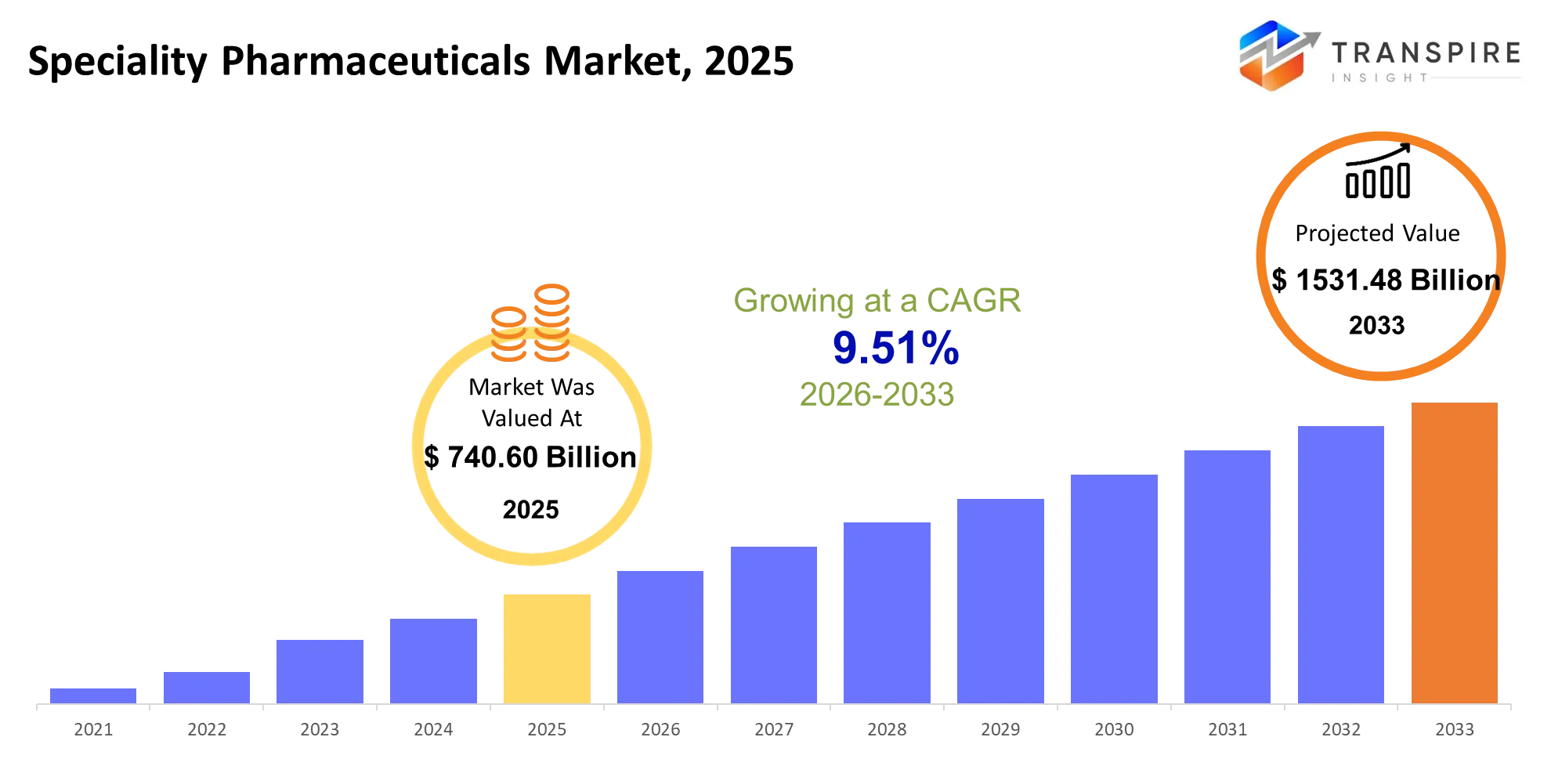
As per the Transpire Insight, The speciality pharmaceuticals marketsize is estimated at USD 740.60 billion in 2025 and is anticipated to reach USD 1531.48 billion by 2033, growing at a CAGR of 9.51% from 2026 to 2033.
The speciality pharmaceuticals market has evolved from a product focus to one with more targeted, high-complexity treatments that are integrated across the care pathway. Oncology, orphan diseases, immunology, biologics, biosimilars and novel therapies have become more strategically important in the last three to five years, as industry players seek differentiated commercial results and legal monopoly protection. Two structural shifts are underway as companies embrace highly precise treatments through biomarker testing, real-world data, digital monitoring and other innovations, enabling more flexible pathways for regulators. The acceleration of biologics and speciality pipelines, combined with the patent cliff, has led to a convergence of novel product launches and biosimilar market entry. This reinforces the growth engine through better disease stratification, longer-tail premium revenue, stronger health economic evidence, easier reimbursement, easier product adoption, and more scalable manufacturing. New regulatory pathways are enabling biosimilars to unlock increased access and commercial viability.
Speciality Pharmaceuticals Market Size & Forecast:
- Market Size 2025: USD 740.60 Billion
- Expected Market Value (2033): USD 1531.48 Billion
- Forecast CAGR (2026–2033): 9.51%
- Leading Region in 2025: North America
- Fastest Growing Region: Asia-Pacific
- Key Company Profiles: Pfizer, Roche, Novartis, AbbVie, Bristol Myers Squibb, Johnson & Johnson, Sanofi, AstraZeneca, Gilead Sciences, Amgen, Regeneron Pharmaceuticals, Eli Lilly, Merck & Co., Takeda, Vertex Pharmaceuticals.
Key Speciality Pharmaceuticals Market Insights:
Drug innovation is moving towards increasingly complex drug modalities and life cycles; speciality pharmaceuticals are transitioning to precision therapies and diagnostics; and data and access are all becoming part of the drug. The strategy shifts from single launches to treatment platforms, with enhanced patient selection, manufacturing scalability, and post-launch evidence.
- Oncology's 35.80% stake is bolstered by Pfizer's multi-modality pipeline, and the biomarker-led treatment drives prescription changes.
- With a 14.60% CAGR, the cell & gene therapies segment is driven by J&J's innovation and transition to targeted, durable therapies for oncology.
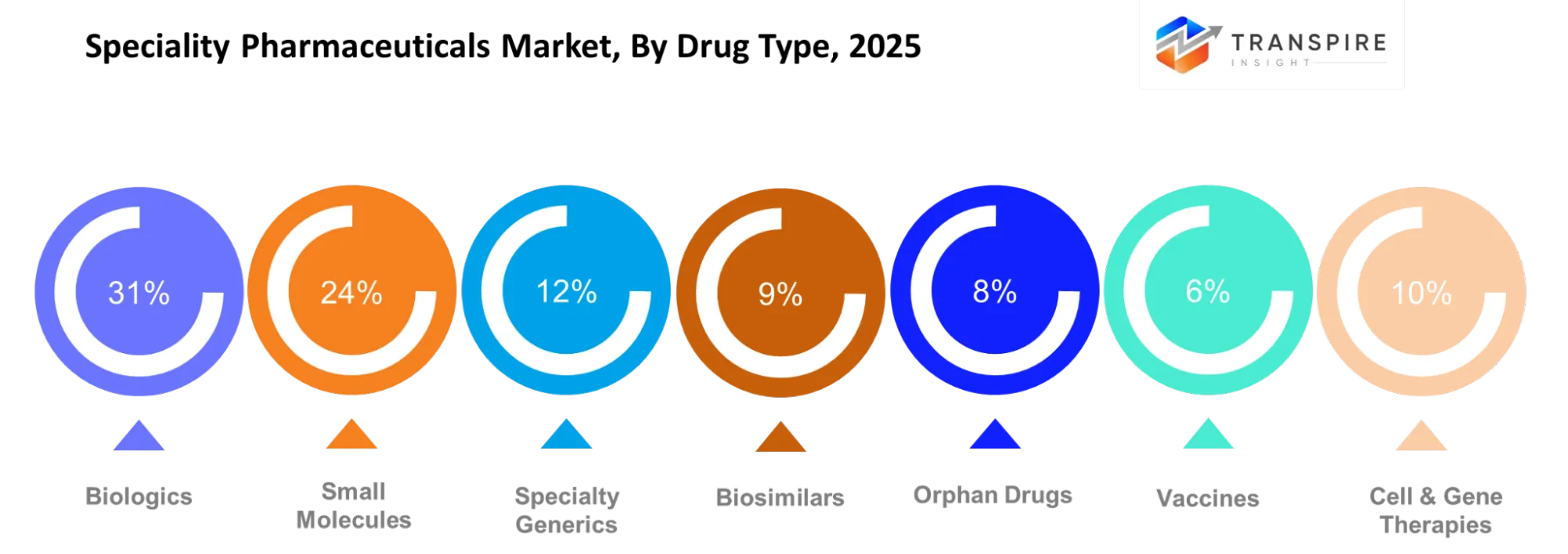
- Roche's pharma-diagnostic model is a positive development for biologics at 31.00%, where companion diagnostics guide treatment selection.
- Small molecules are still relevant at 24.00%, as Pfizer integrates them with these two modalities in oncology.
- Speciality generics at 12.00% are increasing in significance as manufacturers seek to gain access to wider product ranges and market into more complex products.
- Biosimilars at 9.00% are gaining their status as portfolio assets as Amgen extends development into oncology, inflammation and rare diseases.
- Platform investments are driven by Orphan drugs at 8.00%, with AstraZeneca building up programs for rare diseases and early patient identification.
- Vaccines at 6.00% continue to grow with the use of more platform technologies, while Sanofi continues to mature its mRNA capabilities while developing its Immunology portfolio.
- New modalities, such as cell & gene therapies and peptide drugs at 5.00%, expand modalities to increase specialised manufacturing requirements.
What are the Key Drivers, Restraints, and Opportunities in the Speciality Pharmaceuticals Market?
Driver:
Speciality pharmaceutical growth is being driven by a deeper pipeline of therapies aimed at biologically defined, high-burden diseases where conventional treatments have limited effectiveness. Oncology, immunology and rare-disease development have accelerated as genomic testing, biomarker-led trial design and orphan-drug incentives make smaller patient populations commercially viable. Regulatory momentum has reinforced this shift: 52% of FDA novel-drug approvals carried orphan designation, and 74% used expedited pathways. This shortens the route from clinical evidence to specialist adoption, expands the number of reimbursable indications and increases revenue per treated patient.
Restraint:
Affordability and market-access friction remain the central constraint. High acquisition costs, prior authorisation, step-therapy protocols, and uneven insurance coverage delay therapy initiation. The issue persists because one-time cell and gene therapies require payment systems designed for multi-year outcomes, while insurers typically manage annual budgets and patient mobility. Data fragmentation also makes outcomes-based contracts difficult to administer.
Opportunity:
Faster development of biosimilars and digitally enabled precision treatment can broaden the addressable patient base across underserved indications. FDA actions to reduce unnecessary biosimilar development burdens, alongside new international principles for responsible AI use, create room for lower-cost biologic access and more efficient evidence generation. Investment in regional speciality manufacturing and AI-supported trial selection can further reduce development friction and improve launch execution, particularly for smaller developers. Digital patient-support programs and speciality-pharmacy coordination can further improve adherence, reimbursement navigation, and treatment continuity, strengthening commercial conversion. Regional manufacturing investment can reduce supply risk for temperature-sensitive products and support faster localisation of complex therapies.
What Has the Impact of Artificial Intelligence Been on the Speciality Pharmaceuticals Market?
AI is transforming speciality pharmaceuticals, are being transformed by AI that enables rapid, precise discovery, development, manufacturing, and patient support. Artificial intelligence models play a role in research to analyse genomic, proteomic and real-world clinical data to identify drug targets, prioritise biomarker-defined patient populations and predict the trial participants most likely to respond. This reduces avoidable late-stage trial failures, particularly for difficult-to-recruit therapeutic areas like oncology, immunology and rare diseases.
In operations, machine learning models are used to forecast demand, allocate cold-chain inventory, monitor batch-release quality, detect supply risks and prioritise resupply orders. They can be especially important for personalised cell and gene therapies, in which small batch sizes, complex supply chains and a narrow patient treatment window mean delays can be costly, expensive or futile. AI-driven solutions also power the prior-authorisation process and adherence outreach to flag patients at risk of delayed initiation or early discontinuation. Specialty-care data still tend to be dispersed across hospital systems, pharmacies, payers and pharma companies, and implementation challenges like validation and cybersecurity requirements and the expense of adopting AI in a regulated setting limit its adoption at scale.
In January 2026, AstraZeneca acquired Modella AI to integrate its foundation models and AI agents into oncology research, aiming to accelerate biomarker discovery and streamline clinical development.
Key Speciality Pharmaceuticals Market Trends:
Speciality pharma is increasingly becoming more focused and lifecycle-driven, with innovation linked to the quality of evidence, manufacturing precision, and economics of access. At the same time, the industry is progressing toward sophisticated modalities and alternatives that are scalable, like biosimilars.
- The paradigm of oncology is changing from broad treatment regimens to biomarker-selected treatments, and combination treatments with integrated companion diagnostics.
- Biologics are becoming more operationally mature as manufacturers get more skilled in formulation, fill-finish, cold-chain, and process control.
- Biosimilars are shifting from cost containment instruments to intentional portfolio decisions based on biologic patent expiration and access challenges.
- Cell and gene therapies are moving toward ‘standardized manufacturing and decentralised treatment processes’.
- Speciality dispensing is transitioning to a digital ecosystem, connecting pharmacies, providers, adherence programs, reimbursement checks and patient support.
- Evidence is now starting to enter the development process early enough to provide sponsors with stronger evidence of treatment response and utilisation to inform evidence-based decisions.
- AI progresses from discovery experiments to more robust validation in clinical, manufacturing and Pharmacovigilance processes.
- More drug companies are collaborating for specialised platforms, regional access and late-stage commercialisation, driving external innovation sourcing.
- The commercial models are becoming more outcomes-based, and payers are looking at high-cost therapies more closely to determine the overall value.
Speciality Pharmaceuticals Market Segmentation
Drug Type:
The leading biologic market segment has a 31.00% share, benefiting from its crucial role in oncology, immunology, and inflammatory-disease care due to targeted-specific drugs and its specialised administration enabling a premium and continuation. Small molecules make up a 24.00% share and remain significant with oral targeted therapies through patient convenience and moving specialised care beyond infusion locations. Speciality generics and biosimilars share 12.00% and 9.00%, respectively, and continue to widen access via lower-cost alternatives in payer formularies in support of innovation. Orphan drugs share 8.00%, emphasising the commercial importance of incentives for rare-disease treatment and accurate diagnosis. Vaccines, cell and gene therapies, and peptide drugs all have a 5.00% share. The fastest growth through 2028 is the cell and gene-therapy segment with a 14.60% compound annual growth rate due to its curative capability and increased regulatory acceptance.
Therapeutic Area:
Oncology leads at 35.80%, supported by biomarker-guided treatment, antibody-drug conjugates and combination therapies. Immunology and Neurology maintain speciality use through biologic and precision treatments for chronic conditions. Rare Diseases benefit from orphan-drug development and genetic diagnostics, while Haematology relies on targeted therapies and advanced monitoring. Infectious Diseases continue to adopt specialised antivirals and vaccines. Endocrinology and Cardiovascular Diseases broaden the market through targeted medicines, improved patient stratification and increasingly personalised treatment pathways across complex and chronic conditions.
Route of Administration:
Injectable and Infusion formats remain important because biologics, monoclonal antibodies, and advanced therapies frequently require controlled administration and monitoring. Oral medicines provide a contrasting convenience advantage, supporting outpatient treatment and speciality-pharmacy dispensing. Inhalation therapies extend speciality treatment into respiratory conditions, while Transdermal and Topical formats can improve localised delivery and adherence. Ophthalmic products support targeted treatment of eye disorders. Other routes are also gaining relevance as formulation technologies seek to reduce administration burden and shift appropriate therapies toward home-based care.
Distribution Channel:
Speciality Pharmacies remain central because they coordinate prior authorisation, reimbursement support, cold-chain handling, and patient adherence for complex therapies. Hospital Pharmacies remain important for infused medicines and treatments requiring clinical supervision. Retail and Online Pharmacies expand access for suitable oral speciality medicines and repeat prescriptions. Clinics increasingly support administration and monitoring, while Wholesalers and Speciality Distributors connect manufacturers with geographically dispersed providers. Direct-to-Patient models are also expanding, using digital enrollment, home delivery and patient-support services to simplify treatment continuity.
Disease Type:
Cancer represents the principal speciality-treatment opportunity, supported by targeted oncology medicines, biologics and biomarker-based treatment selection. Autoimmune Disorders generate sustained speciality use through biologics and immune-modulating therapies requiring long-term management. Rare Diseases create opportunities for orphan medicines and genetically targeted treatments, while Multiple Sclerosis and Haemophilia depend on specialised therapies and continuous monitoring. HIV/AIDS continues to support differentiated antiviral treatment, while Growth Disorders and other chronic diseases broaden speciality applications through precision treatment, adherence programs and increasingly personalised care pathways.
End User:
Hospitals remain essential for diagnosis, complex treatment initiation, infusion and acute monitoring, while Speciality Clinics provide focused expertise for oncology, rare diseases and chronic speciality conditions. Pharmacies support dispensing, reimbursement coordination and adherence management. Home Healthcare is expanding as formulation, monitoring and digital support improve the feasibility of decentralised treatment. Ambulatory Centres provide lower-intensity administration outside hospitals, while Research Institutes remain important for clinical innovation and advanced therapies. Long-Term Care facilities support ongoing treatment management for patients requiring continuous specialised pharmaceutical services.
What are the Key Use Cases Driving the Speciality Pharmaceuticals Market?
Oncology is the core use case, aligned with its 35.80% share, where speciality pharmaceuticals support biomarker-selected treatment and targeted biologics. The value proposition is shifting from treating disease to matching therapy with molecular traits and monitoring response.
Expanding applications are strongest in immunology, neurology, rare diseases and haematology, where biologics, orphan drugs and speciality formulations address chronic or genetic conditions. Speciality pharmacies increasingly coordinate dispensing, adherence and monitoring.
Emerging use cases include AI-assisted patient selection, real-world evidence, cell and gene therapy follow-up, and decentralised administration. The 14.60% CAGR supplied for Cell & Gene Therapies signals emphasis on infrastructure, while biosimilar adoption creates opportunities around affordability and access globally.
|
Report Metrics |
Details |
|
Market size value in 2025 |
USD 740.60 Billion |
|
Market size value in 2026 |
USD 811.04 Billion |
|
Revenue forecast in 2033 |
USD 1531.48 Billion |
|
Growth rate |
CAGR of 9.51% from 2026 to 2033 |
|
Base year |
2025 |
|
Historical data |
2021 - 2024 |
|
Forecast period |
2026 - 2033 |
|
Report coverage |
Revenue forecast, competitive landscape, growth factors, and trends |
|
Regional scope |
United States; Canada; Mexico; United Kingdom; Germany; France; Italy; Spain; Denmark; Sweden; Norway; China; Japan; India; Australia; South Korea; Thailand; Brazil; Argentina; South Africa; Saudi Arabia; United Arab Emirates |
|
Key companies profiled |
Pfizer, Roche, Novartis, AbbVie, Bristol Myers Squibb, Johnson & Johnson, Sanofi, AstraZeneca, Gilead Sciences, Amgen, Regeneron Pharmaceuticals, Eli Lilly, Merck & Co., Takeda, Vertex Pharmaceuticals. |
|
Customization scope |
Free report customisation (country, regional & segment scope). Available customised purchase options to meet your exact research needs. |
|
Report Segmentation |
Drug Type (Biologics, Small Molecules, Vaccines, Cell & Gene Therapies, Biosimilars, Specialty Generics, Orphan Drugs, Peptide Drugs); Therapeutic Area (Oncology, Immunology, Neurology, Rare Diseases, Hematology, Infectious Diseases, Endocrinology, Cardiovascular Diseases); Route of Administration (Injectable, Oral, Infusion, Inhalation, Transdermal, Topical, Ophthalmic, Other Routes); Distribution Channel (Specialty Pharmacies, Hospital Pharmacies, Retail Pharmacies, Online Pharmacies, Clinics, Wholesalers, Direct-to-Patient, Specialty Distributors); Disease Type (Cancer, Autoimmune Disorders, Rare Diseases, Multiple Sclerosis, Hemophilia, HIV/AIDS, Growth Disorders, Other Chronic Diseases); End User (Hospitals, Specialty Clinics, Pharmacies, Home Healthcare, Research Institutes, Ambulatory Centers, Long-Term Care). |
Which Regions are Driving the Speciality Pharmaceuticals Market Growth?
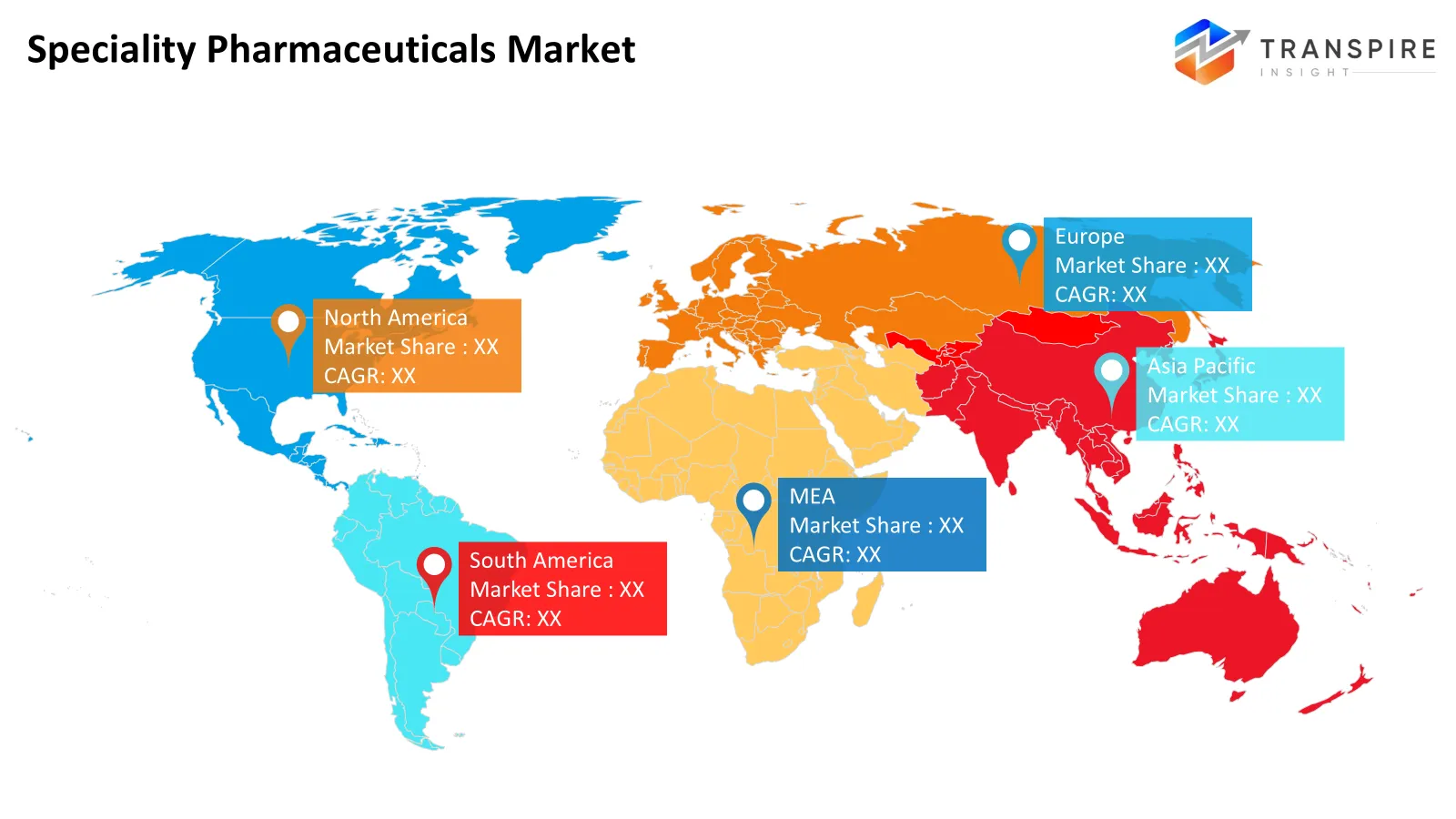
North America holds a 45.20% share of the speciality pharmaceuticals market primarily owing to high biologics utilisation, a mature oncology network, and fee-for-service reimbursement for complex therapies. North America has stayed dominant owing to the feasibility of a large healthcare system to leverage genomics testing, speciality pharmacies, and cold chain distribution at a large scale. The FDA expedited pathways and orphan-drug incentives have been further contributing to drive investment in the development of rare disease, oncology, and advanced therapies. However, payers' inquiries and Medicare drug-price negotiation and prior-authorisation management have already begun to drive stronger real-world evidence and outcomes-based payment.
In June 2026, GSK agreed to acquire Nuvalent for $10.6 billion. This transaction significantly expands the manufacturer's footprint in the precision lung cancer market, bolstering its advanced oncology network and pipeline to help mitigate the long-term impact of federal drug-price negotiations.
https://www.statnews.com/2026/06/22/pharma-biotech-ma-boom-2026-deals-total-123-billion/
Europe makes up 27.00% of the market and enjoys a stronger centralised evaluation, negotiation on price, and coordinated use of biosimilars. What gives the region stability is healthcare that covers everyone, a well-developed hospital network and stable, foreseeable regulatory administration by the European Medicines Agency. The rapid roll-out of biosimilars has already delivered hundreds of billions of euros in savings, allowing health systems to focus their budgets on high-value oncology and rare-disease therapies, rather than on those simply deemed to be innovative.
In July 2026, CuraTeQ Biologics received a positive recommendation from the European Medicines Agency's CHMP for its pegfilgrastim biosimilar, Cavoley. This regulatory milestone expands affordable access to supportive cancer care that stimulates white blood cell production for chemotherapy patients.
Asia Pacific makes up 20.00% of the market but is also the fastest-growing region, with an expected CAGR of 9.80%. Accelerating growth is driven by China reducing review timelines, India increasing biosimilar production, and other nations increasing diagnosis, insurance coverage, and tertiary-care capacity. The approval of 82 novel therapies by China shows a sharp increase in regulatory throughput as well as capacity for domestic innovation. In the long term, clinically developed locally produced biologics, multinational clinical trials, and digitally enabled access for large and previously underdiagnosed populations will be notable areas of opportunity.
In February 2026, Formycon and Taiwan-based Lotus Pharmaceutical concluded an exclusive license partnership to commercialize Formycon's key pembrolizumab biosimilar candidate, FYB206 (referencing Keytruda®), across major markets in the Asia-Pacific region.
https://www.lotuspharm.com/en/newsroom/news-page/312
Who are the Key Players in the Speciality Pharmaceuticals Market, and how do they compete?
The battle is mainly centred around scientific differentiation, extending the lifecycle and controlling the evidence-to-access route. Increasingly, companies compete by leveraging oncology platforms, immunology franchises, rare disease experience, targeted acquisitions and companion diagnostics capabilities rather than through controlling generic primary-care volume.
Pfizer has a hybrid approach of commercial scale and portfolio rebuilding, using Seagen's oncology portfolio, Metsera's cardiometabolic pipeline and external licensing to build out high-value therapy areas. Roche provides a differentiation of biomarker-guided treatment selection by combining diagnostics with oncology medicines. Novartis has a focus on high-value innovative medicines with acquisitions from outside the company, such as RNA and rare-disease expertise. AbbVie remains dedicated to next-generation therapies in immunology and targeted pipeline deals but is now joined by Bristol Myers Squibb in immuno-oncology, haematology and cell therapy. Johnson & Johnson adds to it oncology, immunology and multiple-myeloma franchises with combination approaches. Sanofi/Regeneron relies on immunology expertise and expanded indications for Dupixent, and AstraZeneca capitalises on ADCs, radioconjugates and late-stage oncology trials. Gilead and Amgen compete on HIV and inflammation, respectively, and Eli Lilly, Merck, Takeda, and Vertex on metabolic disease, vaccines, plasma-derived therapies, and rare-disease opportunities.
Key Players are:
- Pfizer
- Roche
- Novartis
- AbbVie
- Bristol Myers Squibb
- Johnson & Johnson
- Sanofi
- AstraZeneca
- Gilead Sciences
- Amgen
- Regeneron Pharmaceuticals
- Eli Lilly
- Merck & Co.
- Takeda
- Vertex Pharmaceuticals
Recent Development News
- In July 2026, PolyPid entered an exclusive partnership with Azurity Pharmaceuticals to commercialize D-PLEX₁₀₀ in the United States and Canada, with PolyPid eligible for more than $320 million in upfront and milestone payments. Azurity will fund additional clinical development and prepare the product for a targeted U.S. launch in the first quarter of 2027, strengthening the commercialisation pathway for a speciality surgical-infection therapy. https://www.reuters.com/world/polypid-azurity-sign-surgical-site-infection-drug-deal-2026-07-21/
- In September 2026, AbbVie Inc. launched Juvmo (tavapadon) tablets following official FDA regulatory approval. The commercial launch introduces a highly selective speciality oral therapeutic targeting advanced symptom management for Parkinson's disease. https://www.drugs.com/newdrugs.html
What Strategic Insights Define the Future of the Speciality Pharmaceuticals Market?
The industry is heading toward a new precision-care paradigm where the commercial potential of medicine is determined not by approvals, but by diagnostic penetration, speed to treatment, and measurable long-term outcomes. The threat is that payers will be overwhelmed by costly one-time solutions, complex clinical and claims data will hinder outcomes-based reimbursement, and insurers' annual budgets will restrict access to therapies whose benefits unfold over years. The opportunity is to create an affordable innovation cycle where biosimilars, remotely delivered speciality care, and artificial intelligence-enabled patient diagnosis can provide cost savings for payers and grow formulary coverage for cell, gene, and rare-disease therapies, and remote monitoring and home delivery can lower access barriers for the stable. Prelaunch, companies should unify launch planning with companion diagnostics, real-world evidence platforms, and risk-sharing agreements to eliminate reimbursement uncertainty and reduce delays in access, while promoting adoption as regulators and health systems increasingly demand demonstrated value.
Key Segmentations are:
Drug Type
- Biologics
- Small Molecules
- Vaccines
- Cell & Gene Therapies
- Biosimilars
- Speciality Generics
- Orphan Drugs
- Peptide Drugs
Therapeutic Area
- Oncology
- Immunology
- Neurology
- Rare Diseases
- Haematology
- Infectious Diseases
- Endocrinology
- Cardiovascular Diseases
Route of Administration
- Injectable
- Oral
- Infusion
- Inhalation
- Transdermal
- Topical
- Ophthalmic
- Other Routes
Distribution Channel
- Speciality Pharmacies
- Hospital Pharmacies
- Retail Pharmacies
- Online Pharmacies
- Clinics
- Wholesalers
- Direct-to-Patient
- Speciality Distributors
Disease Type
- Cancer
- Autoimmune Disorders
- Rare Diseases
- Multiple Sclerosis
- Haemophilia
- HIV/AIDS
- Growth Disorders
- Other Chronic Diseases
End User
- Hospitals
- Speciality Clinics
- Pharmacies
- Home Healthcare
- Research Institutes
- Ambulatory Centres
- Long-Term Care
By Regional Analysis
North America
- US
- Canada
- Mexico
Europe
- Germany
- UK
- France
- Italy
- Spain
- Russia
- Rest of Europe
Asia Pacific
- China
- Japan
- India
- South Korea
- Australia
- Rest of Asia Pacific
South America
- Brazil
- Argentina
- Rest of South America
Middle East & Africa
- UAE
- Saudi Arabia
- Qatar
- South Africa
- Rest of the Middle East & Africa
Frequently Asked Questions
Find quick answers to common questions.
The speciality pharmaceuticals market size was valued at USD 740.60 billion in 2025 and is poised to reach USD 1531.48 billion by 2033, expanding at a 9.51% CAGR.
Key segments for the speciality pharmaceuticals market are Drug Type (Biologics, Small Molecules, Vaccines, Cell & Gene Therapies, Biosimilars, Specialty Generics, Orphan Drugs, Peptide Drugs); Therapeutic Area (Oncology, Immunology, Neurology, Rare Diseases, Hematology, Infectious Diseases, Endocrinology, Cardiovascular Diseases); Route of Administration (Injectable, Oral, Infusion, Inhalation, Transdermal, Topical, Ophthalmic, Other Routes); Distribution Channel (Specialty Pharmacies, Hospital Pharmacies, Retail Pharmacies, Online Pharmacies, Clinics, Wholesalers, Direct-to-Patient, Specialty Distributors); Disease Type (Cancer, Autoimmune Disorders, Rare Diseases, Multiple Sclerosis, Hemophilia, HIV/AIDS, Growth Disorders, Other Chronic Diseases); End User (Hospitals, Specialty Clinics, Pharmacies, Home Healthcare, Research Institutes, Ambulatory Centers, Long-Term Care).
Growth is primarily driven by precision medicine, rising adoption of biologics and targeted therapies, expanding oncology and rare-disease pipelines, biosimilar development, advanced drug-delivery technologies, and increasing investment in cell and gene therapies.
The market is led by major manufacturers, including Pfizer, Roche, Novartis, AbbVie, Bristol Myers Squibb, Johnson & Johnson, Sanofi, AstraZeneca, Gilead Sciences, Amgen, Regeneron Pharmaceuticals, Eli Lilly, Merck & Co., Takeda, and Vertex Pharmaceuticals.
North America holds 45.20% of the market, supported by advanced biotechnology infrastructure, strong R&D investment, speciality pharmacy networks, sophisticated reimbursement systems, clinical-trial capabilities, and rapid adoption of innovative therapies.
Commercial opportunities include AI-enabled drug development, biosimilars, precision medicine, cell and gene therapies, speciality manufacturing, companion diagnostics, decentralised care, and expanding speciality-pharmaceutical access across Asia Pacific.
- Pfizer
- Roche
- Novartis
- AbbVie
- Bristol Myers Squibb
- Johnson & Johnson
- Sanofi
- AstraZeneca
- Gilead Sciences
- Amgen
- Regeneron Pharmaceuticals
- Eli Lilly
- Merck & Co.
- Takeda
- Vertex Pharmaceuticals
About the Authors

Pankaj Ghogare Patil
I am Pankaj Ghogare Patil, a Senior Research Analyst at Transpire Insight, specializing in the Pharmaceutical, Chemicals & Materials, Healthcare IT, and Biotechnology industry. My expertise lies in conducting comprehensive market research, analyzing industry trends, evaluating competitive landscapes, and translating complex data into actionable insights. At Transpire Insight, I closely follow emerging technologies, regulatory developments, and market innovations to create accurate, well-researched, and informative content that helps businesses and professionals make informed decisions. I am committed to producing credible, evidence-based articles that reflect industry best practices while making technical topics accessible and valuable for a broad audience.

Chakradhar Khansole
Chakradhar serves as the Research Director at Transpire Insight, bringing over 8 years of experience in technology, innovation, and strategic market intelligence. He specializes in transforming complex market data into actionable business insights that enable organizations to make informed, growth-oriented decisions. Recognized for his strategic vision and analytical expertise, Chakradhar leads high-impact research initiatives, delivering comprehensive market assessments, competitive intelligence, and forward-looking industry analysis.
Recently Published Reports
-
Jul 2026
Alopecia Treatment Market
Alopecia Treatment Market Size, Share & Analysis Report By Disease Type (Alopecia Areata, Cicatricial Alopecia, Traction Alopecia, Alopecia Totalis, Androgenetic Alopecia, Alopecia Universalis, and Other Disease Types), By Treatment Type (Topical Treatments, Oral Medications, Injectable Therapies, and Hair Transplantation), By Gender (Male, and Female), By Distribution Channel (Hospitals and Clinics, Retail Pharmacies, and Online Retailers), and Geography (North America, Europe, Asia-Pacific, Middle East and Africa, South and Central America), 2021 - 2031
-
Jul 2026
Medical Ultrasound Probe Market
Medical Ultrasound Probe Market Size, Share & Analysis Report By Type (Linear Type, Convex Type, Endocavitary Probe, Phased Array/Cardiac Probe, Transesophageal (TEE) Probe, and Others), By Application (Ophthalmology, Cardiology, Musculoskeletal, Oncology, Obstetrics & Gynecology, General Imaging, and Others), By End User (Hospitals & Clinics, Diagnostic Centers, Ambulatory Surgical Centers, and Others), and Geography (North America, Europe, Asia-Pacific, Middle East and Africa, South and Central America), 2021 – 2031
-
May 2026
Biosimilars Market
Biosimilars Market By Product Type (Monoclonal Antibodies, Recombinant Hormones, Erythropoietin, G-CSF, Others), By Indication (Oncology, Autoimmune Diseases, Blood Disorders, Diabetes, Others), By Manufacturing Type (In-House Manufacturing, Contract Manufacturing), By Distribution Channel (Hospital Pharmacies, Retail Pharmacies, Online Pharmacies), By Industry Analysis, Size, Share, Growth, Trends, and Forecasts 2021-2033
-
Apr 2026
Gastrointestinal Endoscopy Market
Gastrointestinal Endoscopy Market By Type (Rigid Gastrointestinal Endoscope, Flexible Gastrointestinal Endoscopes, Disposable Gastrointestinal Endoscope), By Procedure Type (Colonoscopy, Gastroscopy, Duodenoscopy, Enteroscopy, Flexible Sigmoidoscopy, Others), By Application (Diagnosis, Treatment), By End-Users (Hospitals, Ambulatory Surgical Centers, Specialty Clinics, Laboratories, Others), By Industry Analysis, Size, Share, Growth, Trends, and Forecasts 2021-2033