
South Korea Targeted Protein Degradation Market Size & Forecast:
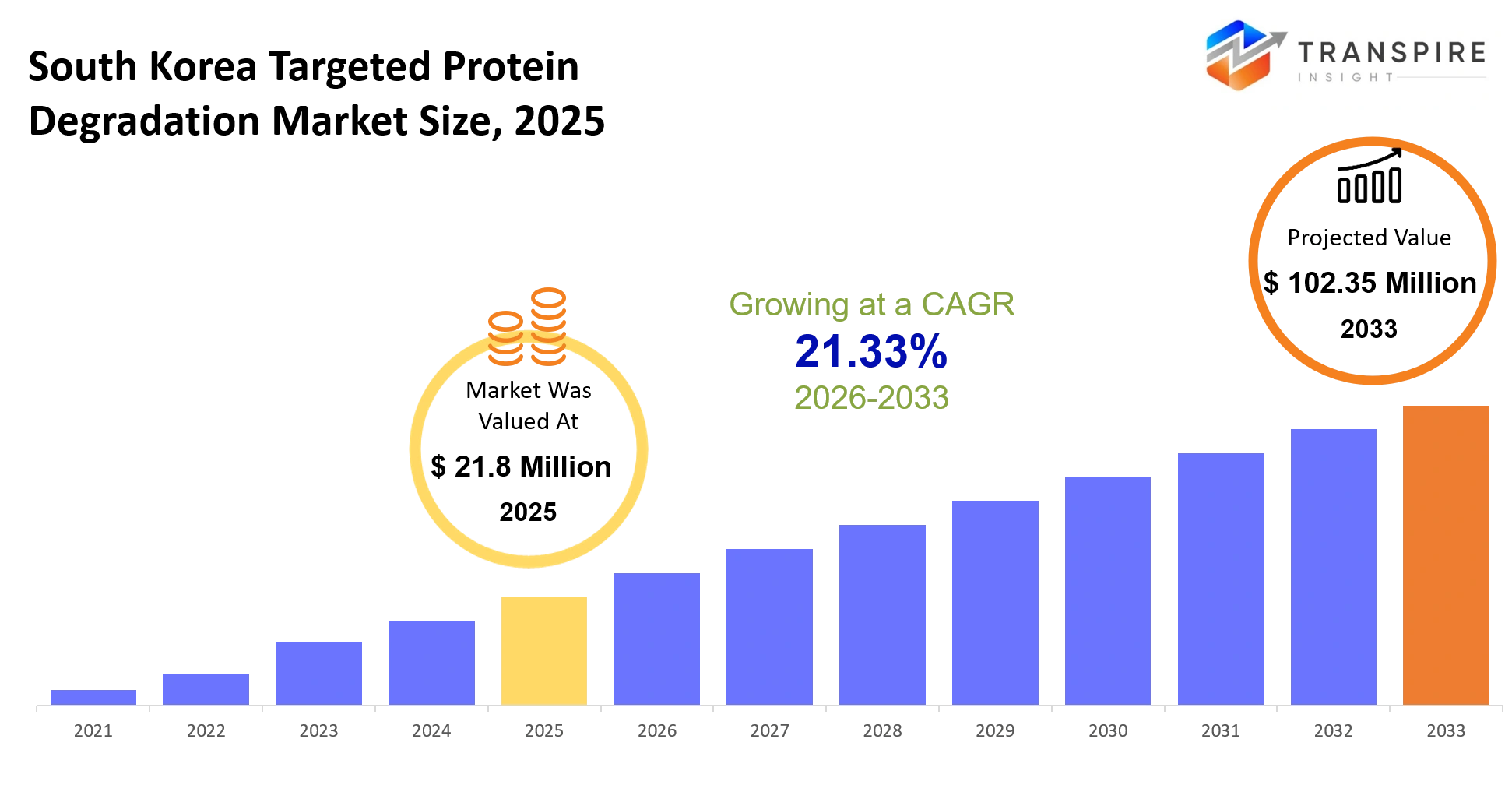
- South Korea Targeted Protein Degradation Market Size 2025: USD 21.8 Million
- South Korea Targeted Protein Degradation Market Size 2033: USD 102.35 Million
- South Korea Targeted Protein Degradation Market CAGR: 21.33%
- South Korea Targeted Protein Degradation Market Segments: By Technology (PROTACs, Molecular Glues, LYTACs, AUTACs, ATTECs, Protein Degraders, Protein Knockdown Tools, Others); By Application (Oncology, Neurology, Immunology, Infectious Diseases, Rare Diseases, Metabolic Disorders, Hematology, Others); By End User (Pharmaceutical Companies, Biotechnology Firms, Research Institutes, CROs, Hospitals, Academic Centers, Government Labs, Others); By Product Type (Drug Candidates, Discovery Platforms, Reagents, Assays, Screening Tools, Analytics Platforms, Software Tools, Others)
South Korea Targeted Protein Degradation Market Summary
The South Korea Targeted Protein Degradation Market was valued at USD 21.8 Million in 2025. It is forecast to reach USD 102.35 Million by 2033. That is a CAGR of 21.33% over the period.
The targeted protein degradation push in South Korea seeks to develop drugs that clear pathogenic proteins instead of only disabling them-making these molecules a solution for targeting previously unaddressable disease targets in cancer and neurodegenerative disease. In practice, it’s fundamentally changing the approach of domestic biotech companies on next-gen cancer and rare disease treatments, and boosting responses in patients who have developed drug resistance. Over the last 5 years, there has been a structural shift in the market away from classical enzyme inhibitors toward Degradation-as--a-Service and emerging technologies including PROTACs and molecular glues in early discovery pipelines. In parallel, the disruption of global supply chains during COVID-19 and subsequent awareness on API dependencies are further amplifying South Korea’s efforts to invest in its domestic, innovation-led drug development and to ensure greater biotech independence. This has increased joint-ventures between global licensors and domestic drug developers and CDMOs, thereby creating a smoother route towards early-stage clinical development and commercialization of their targeted degradation candidates.
Key Market Insights
- The South Korea Targeted Protein Degradation Market is shifting away from traditional small-molecule inhibition to bifunctional degraders, enhancing drug efficacy against 'undruggable' cancer targets.
- Expanding PROTAC pipelines is enabling clinical-stage activity at a quickening pace, establishing South Korea as a rapidly emerging APAC biotech innovation leader.
- Seoul Capital Region dominates the South Korea Targeted Protein Degradation Market as a major hub of biopharma R&D clusters, CDMO presence, etc.
- Daejeon & Incheon are anticipated to be the quickest growing innovation areas, boosted by government supported biotech incubators & research universities.
- PROTAC based drugs are expected to hold major segment share, while molecular glues are the fastest growing modality from now to 2030.
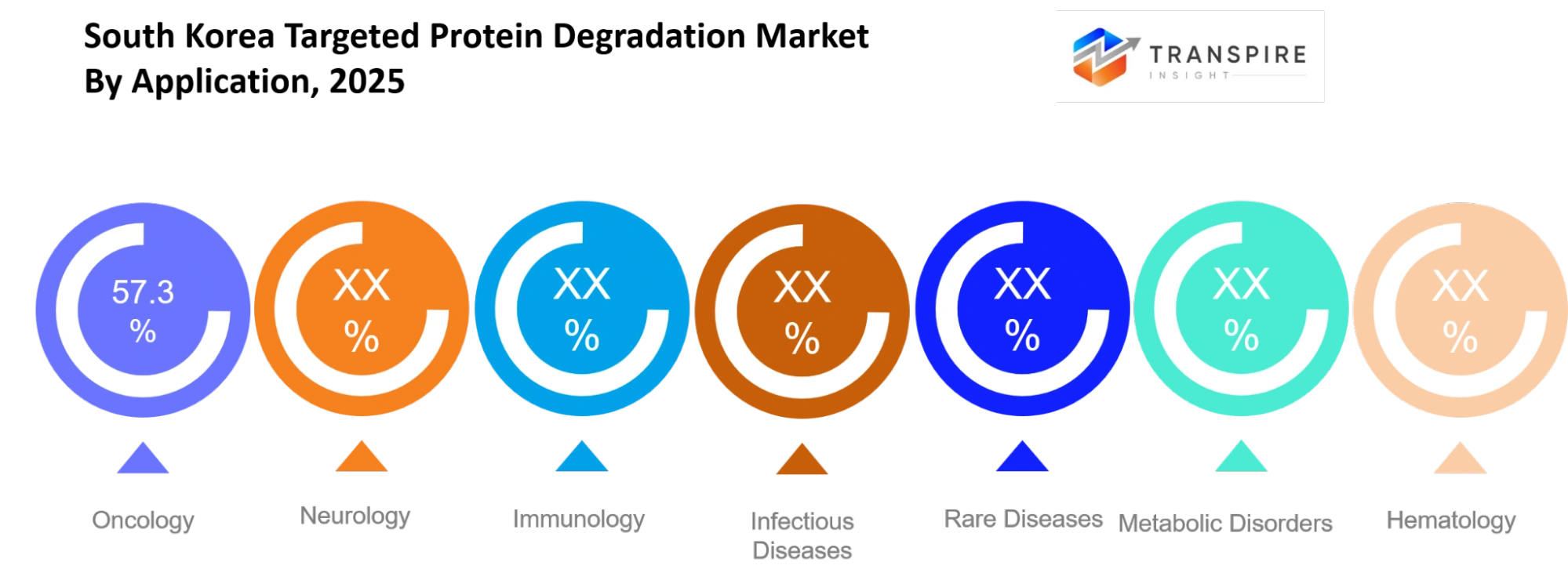
- Oncology is the leading application holding majority share, while neurodegenerative diseases have the fastest growing early pipeline activity.
- Pharmaceutical & biotech firms form the leading end-user market, with growing demand from CDMO's.
- CRO & AI driven biotech firms are the fastest growing end-user segment, driving accelerated target validation & compound screening.
What are the Key Drivers, Restraints, and Opportunities in the South Korea Targeted Protein Degradation Market?
The main driver of the South Korea Targeted Protein Degradation Market is precision oncology and the exploration of previously undruggable targets. The success of PROTAC and molecular glue technologies have shifted drug development away from inhibition of targeted disease proteins, to removal of proteins entirely, to more effectively treat resistant cancers. The support from the government in biotech research and growth of the CDMO market has also supported increased movement of candidates through clinical pipelines. This supports increasing commercialization of products, and provides an increase in licensing revenue of many of the Korean firms.
A constraint to growth of the market is the high degree of complexity, along with expense in designing and verifying the molecules within the protein degradation platform. With a need for advanced structural biology, prolonged development timelines, and increased preclinical testing, drug scaling can prove difficult. The complexity constraint also creates a barrier to adoption in the short term for the mid-size biotech sector that do not have intrinsic discovery systems, thus delaying revenues for parts of the market.
The largest opportunity available to this market is found within AI based drug discovery systems. By increasing the efficacy of target identification and degrader design, research can be accelerated, allowing for further progression of the market. With the development of AI biotech in Korea (especially within the cluster in Seoul), candidate screening and refinement times can be shortened, thus unlocking potential for faster commercialization, particularly in molecular glue degraders and next-generation cancer therapeutics.
What Has the Impact of Artificial Intelligence Been on the South Korea Targeted Protein Degradation Market?
Artificial intelligence is influencing the South Korea Targeted Protein Degradation Market by hastening early-stage drug discovery and increasing precision in molecular design. The application of AI-based platforms is becoming prevalent in identification of degradation targets by biotech companies and for simulation of the binding interaction between protein and ligand as well as designing of efficient PROTAC molecules with increased binding affinity to minimize the lab based hit and trial approach.
Various machine learning algorithms are now in use to predict the protein folding nature, efficiency of the degradation and the toxicity of the compounds that will aid in better candidate selection prior to experimental verification (wet-lab testing). This is further contributing towards improvement in productivity of the R&D departments with quite a few biotech companies showing shortened timelines in their drug discovery processes and better hit-to-lead conversion ratios in their early-stage programs.
Some operational benefits are being reaped by integrating biological data of genomic and proteomic information with chemical libraries in an AI-supported system which improves quick decision making in pre-clinical studies. A limitation however remains in high dependence on biologically relevant quality datasets, where the data on protein degradation systems, unlike in case of other systems, are not widely available, need to be specific of context, and more of complexity. Integration expenses of advanced AI platforms still remain high and a major deterrent for adoption by smaller biotech companies despite their promising long-term scope.
Key Market Trends
- The South Korea Targeted Protein Degradation Market transitioned from being predominantly focused on academia to an increasing number of commercial-stage biotech licensing deals between 2021 and 2025.
- The number of PROTAC programs has increased by ~40% since 2022 as South Korean pharmaceutical companies increased the pace of developing a degradable drug pipeline in the oncology space.
- In 2023, regulators have established faster IND review pathways that are facilitating decreased early clinical approval times for targeted protein degradation candidates.
- AI-powered molecular design uptake grew significantly following 2022 with companies such as Lunit utilizing predictive models in their drug discovery pipelines.
- The number of global partnership deals increased considerably post-2021 with companies such as Celltrion forming collaborations with US biotech firms for access to degrader platforms.
- Since post-2023 manufacturing is increasingly outsourcing through CDMO models, with Samsung Biologics scaling up its biologics capabilities to meet complex therapeutic production demands.
- Since 2022 investment in molecular glue technologies has emerged as compared to traditional inhibitor-based pipelines and is experiencing rapid growth.
- Post-2024, there has been a rise in neurodegenerative targets in the research landscape, widening the application of targeted protein degradation beyond the oncology space into protein aggregation disease targets.
- There is an increased competition for talents as SK Biopharmaceuticals is expanding its internal discovery pipelines as opposed to relying on third party licensing.
South Korea Targeted Protein Degradation Market Segmentation
By Technology :
South Korea Targeted Protein Degradation Market, especially for the PROTACs, remains the leader to drive development activity, owing to the usage of PROTACs within oncology pipelines and the growing clinical validation from 2022 onwards. Research centers in the pharmaceutical industry will focus on utilizing bifunctional molecules rather than blocking targeted disease related protein molecules. Molecular glue approaches will gain attraction, given that this chemistry is less complex in improving scalability across the discovery programs.
LYTACs, AUTACs, and ATTECs are gradually used after 2023 with broader research scope into cellular waste disposal and autophagy-connected degradation pathways. Protein knockdown tools, such as short interference RNA and CRISPR-Cas9, are being adopted in laboratories at early stage of the screenings and for the research institutes. Increased investments into platform-based discovery systems strengthen the translational gap between the fundamental research and the structured development strategy at the whole South Korean biotech ecosystem.
By Application :
Ontology, on the other hand, is a major therapeutic focus area for the South Korea Targeted Protein Degradation Market as the unmet needs are strongly associated with drug resistant cancer treatments. Conventional inhibitors failed to respond for those conditions, leading the researchers to further explore for therapies targeting both solid and hematologic cancers. Clinical pipelines become much more diverse from 2021, thanks to the uptake of precision medicine and reinforced hospital-based translational research collaboration.
The application in neurology becomes more promising after 2023, due to increased interests on the protein aggregation-associated disorders at research institutes. Programs in immunology and rare diseases become much more diverse with support from the research and academic institutes and through the funding schemes supported by the government, while those applications in infectious diseases will remain as experimental studies at the early stage of the discovery.
By End User :
The market has been primarily driven by pharmaceutical companies, which have adequate funds for the pipeline development, with an established structured approach to clinical development. The key integrated drug developers will integrate degradation platforms into their portfolio in the oncology sector, and biotechnology companies are having higher adoption of the new target degradation platforms due to accelerated development, novel degrader design, faster proof of concept (PoC) validation with the advanced screening technologies. The Contract Research Organizations (CROs) and academic institutes exhibit faster adoption of the technology post 2022 as more outsourced discovery work gets distributed.
The research institutes and laboratories and government research labs focus on increasing foundational research on protein structure and degradation mechanism, thereby promoting more use. Hospitals are expected to contribute to the increasing adoption of the technology as more clinical trials are performed across South Korea, which ensures an easier transition from the discovery to therapy and better patient targeting.
By Product Type :
The drug candidates constitute a major chunk of the output in the South Korea Targeted Protein Degradation Market. Drug discovery efforts are intensifying, with increasing numbers of compounds moving through pipelines in oncology and neurodegenerative diseases. Discovery platforms are seeing increasing traction post 2022 as biotechnology companies invest more in the integrated discovery systems for identification of targets, molecule design, and compound optimization.
Reagents, assays, and screening technologies will also contribute to market growth as these are used in all laboratory and academic research endeavors. The analytics and software platforms will increase due to increased use of computational biology and AI assisted drug design and more application of this in the field.
What are the Key Use Cases Driving the South Korea Targeted Protein Degradation Market?
Oncology is still the dominant use case in the South Korea Targeted Protein Degradation Market, with therapeutics eliminating disease-driving proteins in drug-resistant cancers. The South Korean pharmaceutical industry and tertiary hospitals are currently conducting clinical trials for drug-resistance poor response rates with conventional inhibitor therapy.
The neurologies and immunologies are beginning to appear in CROs and biotech companies' applications of degradation platforms in protein aggregation and autoimmune target fields.CROs speed up screening workflow; and they reduce candidate validation and optimize early stage development process for all outsourced discovery programs.
Rare disease and metabolic disorders are gaining momentum with academic and government labs investigating specific protein targeting in intractable conditions; early neurodegenerative programs progress with explorations into Alzheimer's and Parkinson's related protein buildup processes.
|
Report Metrics |
Details |
|
Market size value in 2025 |
USD 21.8 Million |
|
Market size value in 2026 |
USD 26.45 Million |
|
Revenue forecast in 2033 |
USD 102.35 Million |
|
Growth rate |
CAGR of 21.33% from 2026 to 2033 |
|
Base year |
2025 |
|
Historical data |
2021 - 2024 |
|
Forecast period |
2026 - 2033 |
|
Report coverage |
Revenue forecast, competitive landscape, growth factors, and trends |
|
Country scope |
South Korea |
|
Key company profiled |
Arvinas, C4 Therapeutics, Kymera Therapeutics, Nurix Therapeutics, Monte Rosa Therapeutics, Bristol Myers Squibb, Amgen, Pfizer, Novartis, Roche, Genentech, Boehringer Ingelheim, SK Biopharmaceuticals, Yuhan Corporation, LG Chem Life Sciences |
|
Customization scope |
Free report customization (country, regional & segment scope). Avail customized purchase options to meet your exact research needs. |
|
Report Segmentation |
By Technology (PROTACs, Molecular Glues, LYTACs, AUTACs, ATTECs, Protein Degraders, Protein Knockdown Tools, Others); By Application (Oncology, Neurology, Immunology, Infectious Diseases, Rare Diseases, Metabolic Disorders, Hematology, Others); By End User (Pharmaceutical Companies, Biotechnology Firms, Research Institutes, CROs, Hospitals, Academic Centers, Government Labs, Others); By Product Type (Drug Candidates, Discovery Platforms, Reagents, Assays, Screening Tools, Analytics Platforms, Software Tools, Others) |
Which Regions are Driving the South Korea Targeted Protein Degradation Market Growth?
Due to a high concentration of pharmaceutical companies' headquarters, biotech R&D centers and hospitals conducting clinical trials in this area, Seoul Capital Region is dominant in the South Korea Targeted Protein Degradation Market. Supportive government policies aimed at promoting precision medicine research accelerate the adoption of PROTAC and molecular glue platforms in this area. Regulatory agencies located in Seoul contribute to seamless coordination for IND approval and translation research programs. Continuously replenishing talents through close academic collaboration with leading universities generates and sustains discoveries.
Daejeon-Chungcheong region contributes continuously to the market by utilizing its scientific and research facilities established in national laboratories and biotechnology parks. Instead of a commercialization approach unlike Seoul, Daejeon-Chungcheong region focuses on long-term scientific validation and preclinical studies. Its steady government funding and institutional research consistency are vital to consistent discovery in protein structure analysis and initial compound screening. Pharmaceutical companies depend on the region for initial research before bringing drug candidates into the clinical pipeline.
Busan and Incheon are growing fast because of their expanding biotechnology investment zones and research facilities linked to the logistics and port related industry. Large-scale 2024-2025 investments on life science parks and startups working on next-generation degradation platforms and strong university and private company linkages are stimulating its commercialization readiness. Starting from 2026-2033, its innovation power diversifies away from Seoul and creates a new entry for the investors.
Who are the Key Players in the South Korea Targeted Protein Degradation Market and How Do They Compete?
The South Korea Targeted Protein Degradation Market is somewhat concentrated. This sector is composed of a few large biopharma companies alongside several smaller and quickly moving biotech developers who are differentiated by their technological depth as opposed to cost. The large biopharma companies are focused on quickly moving clinical pipelines forward while smaller biotech companies differentiate by using AI-driven drug design with novel degrader platforms. Intellectual property, time to clinical relevance, and global licensing deal networks are all the primary drivers of competition.
Samsung Biologics solidifies its stance in the market by leveraging its large-scale biomanufacturing and CDMO capabilities, providing services that can support late-stage development, and facilitate global commercialization partnerships. Celltrion competes in the space through its well-established expertise in biosimilar development while increasing investment in new therapeutic platforms and employing global alliances to access degradation technologies. SK Biopharmaceuticals utilizes a focused, internal pipeline approach especially for its applications in the CNS space and distinguishes itself through extensive clinical development capabilities.
ABL Bio leverages its bispecific antibody platforms to engineer the incorporation of protein degradation mechanisms for niche oncology indications. Orum Therapeutics’ strength lies in targeted protein degradation discovery with its proprietary platforms enabling rapid identification of compounds in the early stages while securing licensing deals from global pharma partners. The overall trend for these companies to grow entails strategic collaborations, transnational licensing agreements, and increased investment in AI-enabled drug discovery tools to decrease timelines for development and improve target accuracy.
Company List
- Arvinas
- C4 Therapeutics
- Kymera Therapeutics
- Nurix Therapeutics
- Monte Rosa Therapeutics
- Bristol Myers Squibb
- Amgen
- Pfizer
- Novartis
- Roche
- Genentech
- Boehringer Ingelheim
- SK Biopharmaceuticals
- Yuhan Corporation
- LG Chem Life Sciences
Recent Development News
In January 2026, Celltrion announced expansion of its global biologics and pipeline-driven growth strategy. The company emphasized scaling commercial biosimilars and strengthening next-generation therapeutic development, reinforcing its shift toward advanced biologics platforms.Source https://www.celltrion.com/
In January 2026, Korean biopharma leaders including Samsung Biologics, Celltrion, and SK Biopharmaceuticals highlighted increased investment in global drug discovery platforms. Companies are accelerating partnerships and scaling clinical execution capabilities to compete in advanced therapeutic markets. Sourcehttps://www.koreabiomed.com/
What Strategic Insights Define the Future of the South Korea Targeted Protein Degradation Market?
Within the South Korean Targeted Protein Degradation Market the structure of the drug discovery process is rapidly changing from inhibition-centric to elimination-centric platforms for Oncology and neurodegenerative pipelines as there's increased clinical proof of concept for PROTACs and molecular glues, in turn speeding up early discovery processes by a higher degree of AI-driven molecular design. Value creation in the next 5 to 7 years is going to be driven by firms that have integrated the three key pillars of discovery, translation and scaled manufacturing.
A lurking danger is the concentrated dependency of some of the leading advanced R&D centers and global licensing companies that may lead to bottleneck scenarios with slowing cross-border collaboration or stricter licensing agreements. This concentration may lead to a reduction of the innate discovery capabilities of mid-size Korean biotech and hinder pipeline diversity.
One of the key opportunities that lies ahead is the use of targeted protein degradation for neurodegenerative and rare disease indications especially with a higher involvement of in-hospital based translational R&D beyond oncological indications. Companies with strong AI-biotech platforms will emerge stronger, and the race for early stage collaborations with academic research hospitals will drive competitive advantage as will diversify platforms and bolster early stage licensing networks to maintain pipeline control for the long term.
South Korea Targeted Protein Degradation Market Report Segmentation
By Technology
- PROTACs
- Molecular Glues
- LYTACs
- AUTACs
- ATTECs
- Protein Degraders
- Protein Knockdown Tools
By Application
- Oncology
- Neurology
- Immunology
- Infectious Diseases
- Rare Diseases
- Metabolic Disorders
- Hematology
By End User
- Pharmaceutical Companies
- Biotechnology Firms
- Research Institutes
- CROs
- Hospitals
- Academic Centers
- Government Labs
By Product Type
- Drug Candidates
- Discovery Platforms
- Reagents
- Assays
- Screening Tools
- Analytics Platforms
- Software Tools
Frequently Asked Questions
Find quick answers to common questions.
The South Korea Targeted Protein Degradation Market size is USD 102.35 Million in 2033.
Key segments for the South Korea Targeted Protein Degradation Market are By Technology (PROTACs, Molecular Glues, LYTACs, AUTACs, ATTECs, Protein Degraders, Protein Knockdown Tools, Others); By Application (Oncology, Neurology, Immunology, Infectious Diseases, Rare Diseases, Metabolic Disorders, Hematology, Others); By End User (Pharmaceutical Companies, Biotechnology Firms, Research Institutes, CROs, Hospitals, Academic Centers, Government Labs, Others); By Product Type (Drug Candidates, Discovery Platforms, Reagents, Assays, Screening Tools, Analytics Platforms, Software Tools, Others).
Major South Korea Targeted Protein Degradation Market players are Arvinas, C4 Therapeutics, Kymera Therapeutics, Nurix Therapeutics, Monte Rosa Therapeutics, Bristol Myers Squibb, Amgen, Pfizer, Novartis, Roche, Genentech, Boehringer Ingelheim, SK Biopharmaceuticals, Yuhan Corporation, LG Chem Life Sciences.
The South Korea Targeted Protein Degradation Market size is USD 21.8 Million in 2025.
The South Korea Targeted Protein Degradation Market CAGR is 21.33% from 2026 to 2033.
- Arvinas
- C4 Therapeutics
- Kymera Therapeutics
- Nurix Therapeutics
- Monte Rosa Therapeutics
- Bristol Myers Squibb
- Amgen
- Pfizer
- Novartis
- Roche
- Genentech
- Boehringer Ingelheim
- SK Biopharmaceuticals
- Yuhan Corporation
- LG Chem Life Sciences
About the Authors

Pankaj Ghogare Patil
I am Pankaj Ghogare Patil, a Senior Research Analyst at Transpire Insight, specializing in the Pharmaceutical, Chemicals & Materials, Healthcare IT, and Biotechnology industry. My expertise lies in conducting comprehensive market research, analyzing industry trends, evaluating competitive landscapes, and translating complex data into actionable insights. At Transpire Insight, I closely follow emerging technologies, regulatory developments, and market innovations to create accurate, well-researched, and informative content that helps businesses and professionals make informed decisions. I am committed to producing credible, evidence-based articles that reflect industry best practices while making technical topics accessible and valuable for a broad audience.

Chakradhar Khansole
Chakradhar serves as the Research Director at Transpire Insight, bringing over 8 years of experience in technology, innovation, and strategic market intelligence. He specializes in transforming complex market data into actionable business insights that enable organizations to make informed, growth-oriented decisions. Recognized for his strategic vision and analytical expertise, Chakradhar leads high-impact research initiatives, delivering comprehensive market assessments, competitive intelligence, and forward-looking industry analysis.
Recently Published Reports
-
Jul 2026
Alopecia Treatment Market
Alopecia Treatment Market Size, Share & Analysis Report By Disease Type (Alopecia Areata, Cicatricial Alopecia, Traction Alopecia, Alopecia Totalis, Androgenetic Alopecia, Alopecia Universalis, and Other Disease Types), By Treatment Type (Topical Treatments, Oral Medications, Injectable Therapies, and Hair Transplantation), By Gender (Male, and Female), By Distribution Channel (Hospitals and Clinics, Retail Pharmacies, and Online Retailers), and Geography (North America, Europe, Asia-Pacific, Middle East and Africa, South and Central America), 2021 - 2031
-
Jul 2026
Medical Ultrasound Probe Market
Medical Ultrasound Probe Market Size, Share & Analysis Report By Type (Linear Type, Convex Type, Endocavitary Probe, Phased Array/Cardiac Probe, Transesophageal (TEE) Probe, and Others), By Application (Ophthalmology, Cardiology, Musculoskeletal, Oncology, Obstetrics & Gynecology, General Imaging, and Others), By End User (Hospitals & Clinics, Diagnostic Centers, Ambulatory Surgical Centers, and Others), and Geography (North America, Europe, Asia-Pacific, Middle East and Africa, South and Central America), 2021 – 2031
-
May 2026
Biosimilars Market
Biosimilars Market By Product Type (Monoclonal Antibodies, Recombinant Hormones, Erythropoietin, G-CSF, Others), By Indication (Oncology, Autoimmune Diseases, Blood Disorders, Diabetes, Others), By Manufacturing Type (In-House Manufacturing, Contract Manufacturing), By Distribution Channel (Hospital Pharmacies, Retail Pharmacies, Online Pharmacies), By Industry Analysis, Size, Share, Growth, Trends, and Forecasts 2021-2033
-
Apr 2026
Gastrointestinal Endoscopy Market
Gastrointestinal Endoscopy Market By Type (Rigid Gastrointestinal Endoscope, Flexible Gastrointestinal Endoscopes, Disposable Gastrointestinal Endoscope), By Procedure Type (Colonoscopy, Gastroscopy, Duodenoscopy, Enteroscopy, Flexible Sigmoidoscopy, Others), By Application (Diagnosis, Treatment), By End-Users (Hospitals, Ambulatory Surgical Centers, Specialty Clinics, Laboratories, Others), By Industry Analysis, Size, Share, Growth, Trends, and Forecasts 2021-2033