
North America Targeted Protein Degradation Analysis Market Size & Forecast:
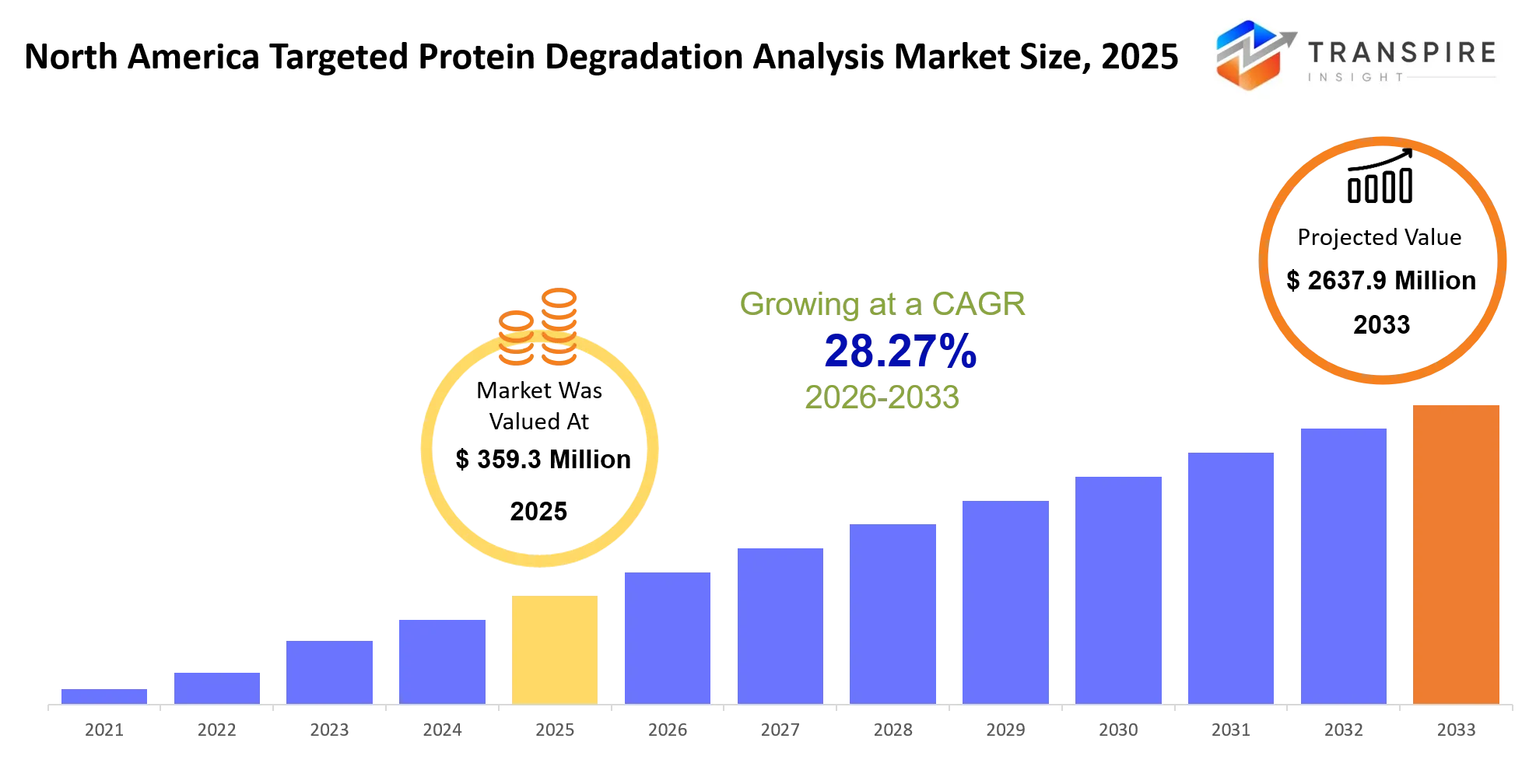
- North America Targeted Protein Degradation Analysis Market Size 2025: USD 359.3 Million
- North America Targeted Protein Degradation Analysis Market Size 2033: USD 2637.9 Million
- North America Targeted Protein Degradation Analysis Market CAGR: 28.27%
- North America Targeted Protein Degradation Analysis Market Segments: By Technology (PROTAC Technology, Molecular Glues, Lysosome-targeting Chimeras, Others); By Application (Oncology Research, Neurodegenerative Disease Research, Immunology Research, Others); By End User (Biotechnology Companies, Pharmaceutical Companies, Academic Institutes, Others); By Service Type (Analytical Services, Screening Services, Drug Discovery Services, Others)
To learn more about this report,  Download Free Sample Report
North America Targeted Protein Degradation Analysis Market Summary
The North America Targeted Protein Degradation Analysis Market was valued at USD 359.3 Million in 2025. It is forecast to reach USD 2637.9 Million by 2033. That is a CAGR of 28.27% over the period.
North America Targeted Protein Degradation (TPD) Analysis Market supports drug discovery, by helping researchers gauge how well new therapeutics do away with disease-causing proteins instead of merely blocking them. Basically these analytical platforms and service work in the background, letting pharmaceutical and biotechnology firms spot, approve, and then tune protein degraders, for oncology, neurodegenerative conditions and other hard-to-treat diseases where the usual drug strategies sometimes miss the mark.
Over the last five years the market sort of moved in a structural way, going from early exploratory work to more clinic-minded development programs. That change has pushed higher spending on stronger analytical technologies, biomarker assessment, and mechanistic check points. It sped up when a handful of TPD candidates advanced into clinical trials, so there was real, visible proof of the platform therapeutic potential. Meanwhile, during the COVID-19 period, disruptions in the classic drug development pipelines nudged many companies to try innovative modalities with a wider target reach. And now, as more drug developers widen their TPD pipelines, the need for specialized analytical know-how keeps rising, which opens additional revenue streams for contract research organizations, technology providers, and assay developers.
Key Market Insights
- The United States basically dominates the North America Targeted Protein Degradation Analysis Market, pulling in around 82% of the regional revenue in 2025, give or take.
- That’s mainly tied to a really strong biotechnology ecosystem, steady R&D funding, plus a pretty high density of clinical stage programs that keep things moving fast.
- Canada, on the other hand, looks like the fastest mover during the 2025–2032 forecast stretch. It benefits from broader life sciences investments and more frequent research collaborations, which in turn helps the whole analytical side grow.
- When you zoom into offerings, analytical services are still in front, holding almost 45% market share in 2025 .
- Assay development and validation solutions sit second, and they’re getting traction as demand keeps rising for mechanistic characterization work, even when studies are complex.
- For growth rate, high throughput screening platforms are expected to be the quickest segment through 2032. Companies are basically accelerating degrader candidate identification, so more screening capacity is needed all the time.
- Also, advanced proteomics alongside biomarker analysis tools are being adopted more often in pharmaceutical and biotechnology research workflows.
- Oncology applications are leading too, with roughly 52% share in 2025, largely because targeted protein degradation drug pipelines are expanding there.
- Meanwhile, hematological malignancies continue to be a major focus area for both protein degrader development, and for analytical testing services that support it.
- Finally, pharmaceutical and biotechnology companies lead the market overall, contributing about 68% of total revenue in 2025 .
What are the Key Drivers, Restraints, and Opportunities in the North America Targeted Protein Degradation Analysis Market?
Driver
The main force pushing the North America Targeted Protein Degradation Analysis Market is the change in targeted protein degradation programs, kind of moving from early exploratory study into actual clinical development. This shift, it seems, got a boost once PROTACs and molecular glue degraders moved far enough to reach human trials, and that gave pharmaceutical companies proof—real, tangible evidence—that disease targets once thought out of reach could be handled by removing the protein rather than merely blocking it. Now as more drug developers widen their TPD pipelines, they also need much more advanced analytical services. They have to quantify degradation efficiency, check selectivity, evaluate pharmacodynamics, and track biomarker reactions. And that, in turn, pushes up spending for proteomics platforms, mass spectrometry tools, and contract research services. So it becomes a solid revenue flow across the whole analytical ecosystem.
Restraint
The biggest limiting factor still sits in the technical complexity of TPD analysis. Protein degradation itself relies on shifting cellular processes, which means the work calls for specialized instrumentation, more nuanced data interpretation, and skilled scientific staff. This is not a quick hurdle either, it feels structural, because developing real analytical know-how, buying high end proteomics infrastructure, and putting consistent degradation assays in place takes years of investment. Because of that, smaller biotechnology companies often end up with heavier development costs and slower validation schedules. They’re stuck longer in the loop, and that can delay progression while also reducing wider market reach.
Opportunity
There’s a big chance here, in the way artificial intelligence merges with proteomics and degradation analytics, sort of like it knits everything together a little. AI-driven platforms can sift through huge protein datasets, spot subtle degradation behaviors, and push target validation forward faster. For instance, some North American biotechnology companies are putting more money into machine learning–ready drug discovery platforms that also back up TPD programs. As these tools mature , they tend to cut down those analytical slowdowns, boost overall development productivity, and open the next stretch of market expansion.
What Has the Impact of Artificial Intelligence Been on the North America Targeted Protein Degradation Analysis Market?
Artificial intelligence and advanced digital technologies are becoming increasingly important tools in the North America Targeted Protein Degradation Analysis Market, as they improve the speed, precision, and scalability of protein degradation work. Now AI-driven analytics platforms can automatically handle a big part of proteomics data processing, image analysis, compound screening, and biomarker evaluation. Rather than sorting through huge experimental datasets by hand, scientists can lean on machine learning algorithms to spot degradation trends, measure target engagement, and basically rank more interesting degrader candidates with better velocity.
At the same time, predictive modeling is also changing how the market moves. Machine learning models take protein structures, cellular response signals, and past experimental outcomes, then they forecast degradation performance, off-target risks, and candidate chances before any costly lab studies really start. With that, pharmaceutical and biotechnology organizations can tweak their development pipelines, and distribute resources a lot more wisely. So, they often shrink the number of experimental cycles, speed up lead discovery, lift lab output, and reduce the total discovery expenses.
Cloud-based solutions add another layer here by supporting collaboration. They can bring proteomics, genomics, and clinical datasets together into one analytical setting that’s easier to share. Still, AI uptake has a key weak point. High-quality training datasets for targeted protein degradation are still somewhat rare compared with more mature areas of drug discovery. Because of this, model accuracy may drop, especially when researchers look at new targets or fresh degradation pathways, meaning expert checking and experimental confirmation stay necessary, even if the predictions sound solid.
Key Market Trends
- Since 2020, pharmaceutical companies have started to shift their spending away from more exploratory TPD research, and toward clinical-stage analytical validation and this biomarker characterization stuff. It seems a little more, focused then before, not entirely sure exactly, but the direction is pretty clear.
- Between 2021 and 2025, the amount of PROTAC and molecular glue development programs grew quite a lot, and with that came more pressure for specialized degradation assays, like more and more of them, sooner than expected.
- Drug developers also became more inclined to swap out single, standalone analytical workflows for integrated proteomics platforms, where target validation and biomarker discovery and degradation profiling all happen together in the same pipeline. Less “one by one”, more “all at once”.
- AI-driven data analysis moved from little pilot runs into routine adoption. That helped researchers steer toward degrader candidates faster, and it also shaved down evaluation timelines, which is kind of the whole point.
- Contract research organizations expanded their TPD related service portfolios after some biotechnology companies started seeking external support rather then trying to build everything in-house. Outsourcing, but with extra steps.
- Strategic partnerships between biotechnology companies and analytical technology providers increased after clinical progress kept validating targeted protein degradation as a workable modality, meaning it wasn’t just a theory anymore.
- Adoption of advanced mass spectrometry picked up momentum, because teams needed tighter quantification for protein degradation kinetics and for off-target effects as well. The demand here is basically for “more exact” numbers.
- Buyers increasingly prefer end-to-end analytical service providers. Because of that, companies such as Thermo Fisher Scientific, Danaher, and Agilent Technologies have broadened what they can do. Like, not only parts, but more complete packages.
- Since 2022, investment activity has shifted toward platforms that can analyze previously undruggable targets, which mirrors the way therapeutic development priorities have changed over time. Different target set, different bets.
- Regulatory scrutiny of mechanism-of-action evidence has also strengthened in recent years, and that has pushed more teams to lean into quantitative proteomics and biomarker-driven validation studies.
North America Targeted Protein Degradation Analysis Market Segmentation
By Technology
PROTAC technology kinda leads the whole tech landscape, taking up the biggest portion of analytical work and the research budget. The strong adoption is driven by an increasing number of clinical-stage PROTAC candidates, plus substantial backing from pharmaceutical and biotechnology organisations. A lot of analytical workflows, biomarker validation studies, and degradation profiling services are still pretty centered on this approach, mostly because the development ecosystem feels more mature than others.
Molecular glues sit in the second-largest slice and they keep drawing attention as researchers look for simpler molecular formats, with wide therapeutic potential. Lysosome-targeting chimeras are smaller, but they’re expanding fast, partly because people want to degrade extracellular or membrane-bound proteins that older methods often can’t handle very well. During the forecast period, the whole technology mix will diversify, so demand for specialized analytical platforms should rise, which opens doors for service providers that can support multiple degradation mechanisms along with different target classes.
By Application
Oncology research keeps the dominant market spot because targeted protein degradation feels like a strong route for tackling cancer-related proteins that have long resisted the usual drug development playbook. There are extensive clinical pipelines, strong funding momentum, and lots of biomarker-heavy study activity, all of which helps maintain the leadership. Service demand stays especially high across solid tumor programs and hematological cancer research, and that pattern should remain steady for the near term.
Neurodegenerative disease studies are starting to look like one of the most rapidly growing use cases, mostly because people really need new therapeutic approaches aimed at protein buildup and misfolding conditions. At the same time immunology work is picking up speed too, since teams are looking at selective protein breakdown for immune tuning. If the field keeps broadening past oncology, it should widen revenue chances and push analytical providers to build disease specific checks, validation skills across several therapeutic domains, not just one.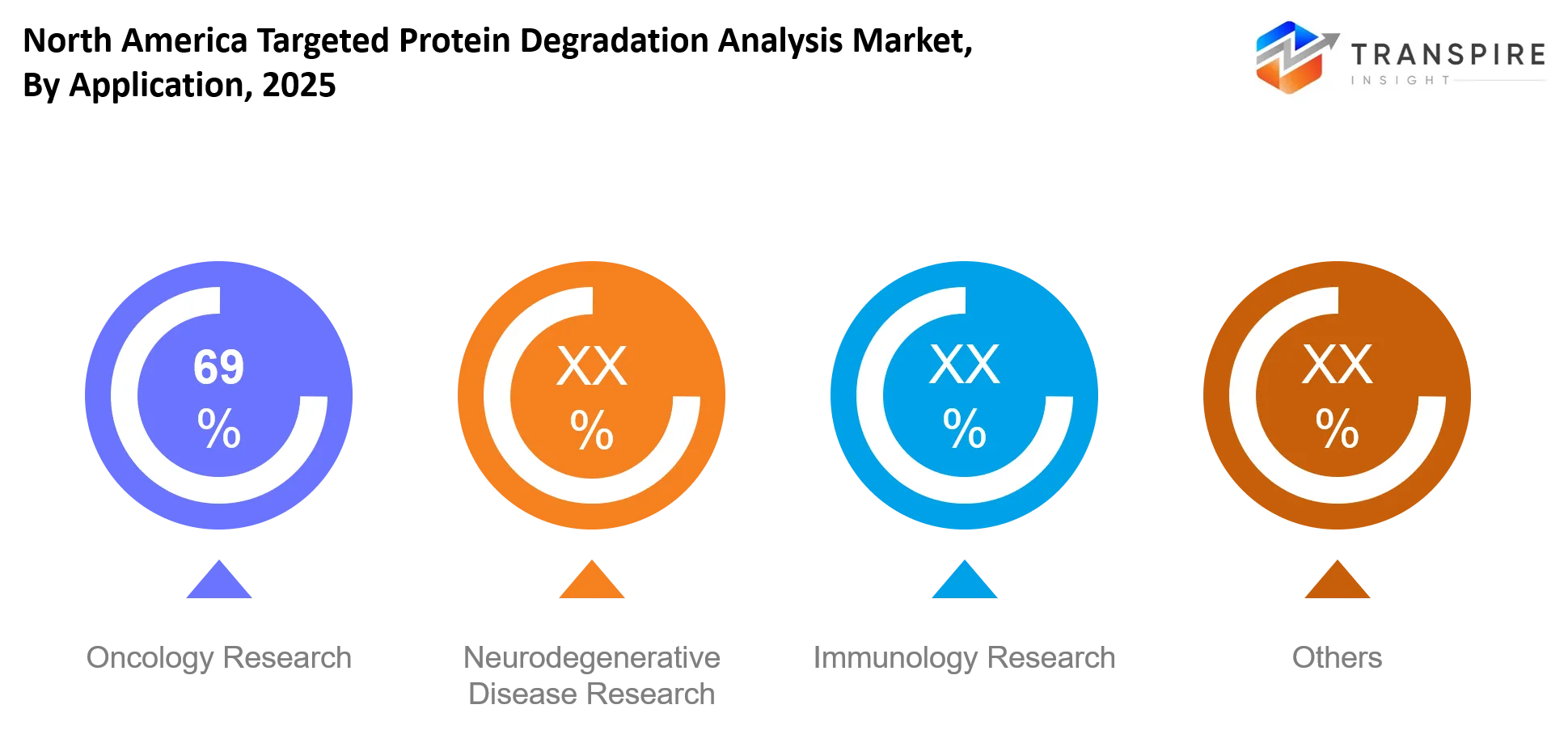
To learn more about this report, Download Free Sample Report
By End User
Pharmaceutical companies make up the biggest chunk of spending. That’s due to long drug development pipelines, bigger research budgets, and more companies joining in targeted protein degradation efforts. On top of that, major spending on clinical progress means advanced analytical backing is required, so the demand stays steady for proteomics, biomarker analysis, and mechanistic validation services. Big organizations also tend to have the purchasing strength to buy sophisticated analytical platforms, without pausing.
Biotechnology companies are growing the quickest in the end user group, since newer players often put a lot of emphasis on protein degradation innovation. Academic institutes still matter a lot, because they generate basic findings and help test novel biological targets. In the next few years, collaboration across pharma, biotech companies, and research institutions should strengthen innovation circles and open more doors for analytical service providers, overall.
By Service Type
Analytical services are at the moment holding the largest share in the market, kinda because at every step of protein degradation development, you need careful measurement of degradation efficiency, target engagement, selectivity, and the biological response. In addition, regulatory expectations that keep getting more strict around mechanistic evidence, they also push demand for solid, high-quality analytical support. Service providers who bring know how in proteomics and biomarker characterization still manage to keep a really strong competitive spot.
Screening services rank second, as developers seek efficient ways to pinpoint promising degrader candidates from large compound libraries. Drug discovery services are likely to grow the fastest across the forecast time, since many clients are choosing integrated development partnerships rather than doing isolated testing activities. This change should nudge providers toward building full platforms that blend discovery, screening, validation, and analytical capabilities in one single workflow, not split across multiple vendors.
What are the Key Use Cases Driving the North America Targeted Protein Degradation Analysis Market?
The main use case pushing market adoption is oncology drug development, kind of obvious when you look at it. Pharmaceutical and biotechnology companies depend on targeted protein degradation analysis to check degradation efficiency, how well the target is actually engaged, and what biomarker responses look like in cancer led therapeutic programs. With really high volumes of oncology research plus clinical trial activity, there is usually steady demand for advanced proteomics and for analytical validation services.
Things are also widening into neurodegenerative disease and immunology research. In practice, biotech companies are using degradation analysis to study proteins tied to disorders such as Alzheimer’s and Parkinson’s disease, while immunology teams apply these tools to evaluate selective immune pathway modulation. Academic institutes help too, mostly by validating new targets and mechanisms before any commercial development even starts, so it all feeds back into the pipeline.
More emerging use cases are showing up around rare disease research and precision medicine initiatives. Advanced analytical platforms are being used to map patient specific degradation pathways and to judge personalized therapeutic approaches. There is also growing interest in molecular glues and lysosome-targeting technologies, which could create fresh opportunities to reach protein targets that were previously hard, or just flat out inaccessible, over the forecast period.
|
Report Metrics |
Details |
|
Market size value in 2025 |
USD 359.3 Million |
|
Market size value in 2026 |
USD 461.6 Million |
|
Revenue forecast in 2033 |
USD 2637.9 Million |
|
Growth rate |
CAGR of 28.27% from 2026 to 2033 |
|
Base year |
2025 |
|
Historical data |
2021 - 2024 |
|
Forecast period |
2026 - 2033 |
|
Report coverage |
Revenue forecast, competitive landscape, growth factors, and trends |
|
Regional scope |
North America (Canada, The United States, and Mexico) |
|
Key company profiled |
Arvinas, C4 Therapeutics, Kymera Therapeutics, Monte Rosa Therapeutics, Nurix Therapeutics, Bristol Myers Squibb, Pfizer, Novartis, Genentech, Amgen, AbbVie, Thermo Fisher Scientific, Promega Corporation, Agilent Technologies, Danaher Corporation |
|
Customization scope |
Free report customization (country, regional & segment scope). Avail customized purchase options to meet your exact research needs. |
|
Report Segmentation |
By Technology (PROTAC Technology, Molecular Glues, Lysosome-targeting Chimeras, Others); By Application (Oncology Research, Neurodegenerative Disease Research, Immunology Research, Others); By End User (Biotechnology Companies, Pharmaceutical Companies, Academic Institutes, Others); By Service Type (Analytical Services, Screening Services, Drug Discovery Services, Others) |
Which Regions are Driving the North America Targeted Protein Degradation Analysis Market Growth?
North America is still kind of the main regional market,mostly because it has so many pharmaceutical innovators, biotechnology startups, and advanced research institutions hanging around. The area also gets a lot of help from active venture capital cycles, big biopharmaceutical R&D budgets and a pretty well-established clinical trial environment,which speeds up targeted protein degradation initiatives. Regulatory bodies have meanwhile offered more straightforward routes for reviewing new therapeutic formats, so it’s easier to justify ongoing investment in degradation-centric drug development. On top of that, a mature set of analytical labs, contract research organizations,and proteomics technology suppliers keeps things moving, plus it supports high-value analytical services demand that doesn’t really slow down.
Europe stays the second-largest market,and it is different from North America mainly because it leans more into co-operative research structures and publicly backed innovation programs. There’s strong involvement from universities, translational research hubs,and cross-border biotechnology collaborations, all of which make a dependable base for market momentum. Healthcare spending tends to be steady,alongside longer-term life sciences roadmaps,so even when economic conditions wobble,investment keeps getting maintained. That steadiness makes Europe a solid contributor to worldwide revenue and also helps keep the adoption of advanced degradation analysis platforms on a continual track.
Asia-Pacific is growing the quickest, with governments and private backers widening biotechnology strength across China, Japan, South Korea,and Singapore. Lately, higher life sciences funding, better lab infrastructure, and more domestic drug discovery programs have pushed the demand for specialized analytical services upward. More organizations are joining international clinical research,and they are forming strategic partnerships with North American and European developers have further strengthened regional momentum. Between 2026 and 2033, this expansion is expected to create significant opportunities for service providers, technology vendors, and investors seeking exposure to emerging biopharmaceutical innovation hubs.
Who are the Key Players in the North America Targeted Protein Degradation Analysis Market and How Do They Compete?
The competitive landscape is kinda moderately consolidated among big analytical instrumentation and life science service providers, while smaller specialized CROs and newer biotech analytics companies bring this fragmentation on the service layer. You see competition mostly around high-resolution proteomics platforms, AI-enabled data interpretation, and integrated workflows that glue screening, validation, and biomarker analysis together. The long-standing companies tend to defend their position with bundled ecosystems that tie instruments, software and consumables into fairly closed analytical pipelines. Meanwhile, new entrants mess with that setup by focusing on niche degradation assays, claiming faster turnaround times and offering flexible service models that lessen the need for in-house lab infrastructure.
Thermo Fisher Scientific leans into technology integration by pairing mass spectrometry platforms with cloud proteomics analytics, and it builds adoption through partnerships with pharmaceutical developers and CRO networks. Danaher Corporation, via SCIEX and Beckman Coulter Life Sciences, differentiates using high-sensitivity instrumentation plus modular automation systems, and it scales through acquisitions plus end to end workflow integration. Agilent Technologies leans hard on precision-driven LC-MS systems for biomarker validation, and it expands through collaborative research programs with drug developers. Waters Corporation creates advantage through chromatography systems optimized for protein characterization and targeted degradation workflows. Charles River Laboratories stays strong by specializing its service model, providing outsourced analytical support for protein degradation studies, and then expanding its capabilities via CRO network integration.
Company List
- Arvinas
- C4 Therapeutics
- Kymera Therapeutics
- Monte Rosa Therapeutics
- Nurix Therapeutics
- Bristol Myers Squibb
- Pfizer
- Novartis
- Genentech
- Amgen
- AbbVie
- Thermo Fisher Scientific
- Promega Corporation
- Agilent Technologies
- Danaher Corporation
Recent Development News
“In April 2026, C4 Therapeutics entered a partnership expansion with Roche focused on developing degrader-antibody conjugates for oncology applications. The agreement, valued at more than $1 billion in potential milestone payments, strengthened targeted protein degradation research capabilities and expanded both companies’ cancer therapy pipelines.https://www.reuters.com
“In May 2026, Arvinas and Pfizer announced FDA approval of VEPPANU (vepdegestrant), the first FDA-approved PROTAC protein degrader for ESR1-mutated advanced breast cancer. The approval marked a major commercial milestone for targeted protein degradation technologies and validated the therapeutic potential of PROTAC-based drug development.https://ir.arvinas.com
What Strategic Insights Define the Future of the North America Targeted Protein Degradation Analysis Market?
The North America Targeted Protein Degradation Analysis Market is kind of moving toward deeper integration of analytics inside end-to-end drug discovery pipelines, mostly pushed by the shift away from single-target validation toward mapping protein degradation at systems level. Over the next five to seven years, demand will more and more clump around platforms that mash up high-resolution proteomics, AI based prediction, and real time biomarker feedback, because pharma groups want a quicker jump from discovery to clinical readiness. All of this structural shift, will lean into service providers that can unify the data layers, instead of just giving isolated assay capabilities.
There’s also a less visible risk, sort of a quiet one, which is over reliance on standardized proteomics datasets. That can make models less solid when you try applying them to newer degradation mechanisms, or to rare disease targets where biology behaves a bit differently. This may slow down adoption in the more innovative therapeutic areas, even if there is strong headline investment. At the same time, a noticeable opportunity is coming together around clinical-stage companion diagnostics for targeted protein degradation therapies, especially as regulators start to request mechanistic validation along with efficacy data.
For market participants, the practical move is to invest in interoperable analytics ecosystems that connect discovery, clinical validation, and regulatory reporting inside one workflow, so they can lock in long term competitive positioning.
North America Targeted Protein Degradation Analysis Market Report Segmentation
By Technology
- PROTAC Technology
- Molecular Glues
- Lysosome-targeting Chimeras
- Others
By Application
- Oncology Research
- Neurodegenerative Disease Research
- Immunology Research
- Others
By End User
- Biotechnology Companies
- Pharmaceutical Companies
- Academic Institutes
- Others
By Service Type
- Analytical Services
- Screening Services
- Drug Discovery Services
- Other
Frequently Asked Questions
Find quick answers to common questions.
The Expected North America Targeted Protein Degradation Analysis Market size is USD 2637.9 Million in 2033.
Key Segments for the North America Targeted Protein Degradation Analysis Market are By Technology (PROTAC Technology, Molecular Glues, Lysosome-targeting Chimeras, Others); By Application (Oncology Research, Neurodegenerative Disease Research, Immunology Research, Others); By End User (Biotechnology Companies, Pharmaceutical Companies, Academic Institutes, Others); By Service Type (Analytical Services, Screening Services, Drug Discovery Services, Others).
Major North America Targeted Protein Degradation Analysis Market Players are Arvinas, C4 Therapeutics, Kymera Therapeutics, Monte Rosa Therapeutics, Nurix Therapeutics, Bristol Myers Squibb, Pfizer, Novartis, Genentech, Amgen, AbbVie, Thermo Fisher Scientific, Promega Corporation, Agilent Technologies, and Danaher Corporation.
The Current North America Targeted Protein Degradation Analysis Market size is USD 359.3 Million in 2025.
The North America Targeted Protein Degradation Analysis Market CAGR is 28.27% from 2026 to 2033.
- Arvinas
- C4 Therapeutics
- Kymera Therapeutics
- Monte Rosa Therapeutics
- Nurix Therapeutics
- Bristol Myers Squibb
- Pfizer
- Novartis
- Genentech
- Amgen
- AbbVie
- Thermo Fisher Scientific
- Promega Corporation
- Agilent Technologies
- Danaher Corporation
About the Authors

Pankaj Ghogare Patil
I am Pankaj Ghogare Patil, a Senior Research Analyst at Transpire Insight, specializing in the Pharmaceutical, Chemicals & Materials, Healthcare IT, and Biotechnology industry. My expertise lies in conducting comprehensive market research, analyzing industry trends, evaluating competitive landscapes, and translating complex data into actionable insights. At Transpire Insight, I closely follow emerging technologies, regulatory developments, and market innovations to create accurate, well-researched, and informative content that helps businesses and professionals make informed decisions. I am committed to producing credible, evidence-based articles that reflect industry best practices while making technical topics accessible and valuable for a broad audience.

Chakradhar Khansole
Chakradhar serves as the Research Director at Transpire Insight, bringing over 8 years of experience in technology, innovation, and strategic market intelligence. He specializes in transforming complex market data into actionable business insights that enable organizations to make informed, growth-oriented decisions. Recognized for his strategic vision and analytical expertise, Chakradhar leads high-impact research initiatives, delivering comprehensive market assessments, competitive intelligence, and forward-looking industry analysis.
Recently Published Reports
-
Apr 2026
Cord Blood Banking Services Market
Cord Blood Banking Services Market Size, Share & Analysis Report By Type of Service (Collection, Processing, Storage), By Bank Type (Private Banks, Public Banks, and Hybrid Banks), By Component (Cord Blood, and Cord Tissue), By End User (Hospitals, Research Institutions, Biotechnology Companies, and Others) and Geography (North America, Europe, Asia-Pacific, Middle East and Africa, South and Central America), 2021 - 2031
-
Apr 2026
ELISA Processors Market
ELISA Processors Market Size, Share & Analysis Report By Type (Optical Filter ELISA Analyzer, and Optical Grating ELISA Analyzers), By Mode (Automated ELISA Analyzers, and Semi-Automated ELISA Analyzers), By Applications (Immunology, Vaccine development, Drug Monitoring, and Others), By End Users (Biotechnology Companies, Pharmaceutical Companies, Contract Research Organization, and Diagnostic Laboratories) and Geography (North America, Europe, Asia-Pacific, Middle East and Africa, South and Central America), 2021 - 2031
-
May 2026
Microscope Slide Scanner Market
Microscope Slide Scanner Market Size, Share & Analysis Report By Type (Portable Microscope Slide Scanner, and Desktop Microscope Slide Scanner), By Application (Biological Research, Medicine, Veterinary, and Other) and Geography (North America, Europe, Asia-Pacific, Middle East and Africa, South and Central America), 2021 - 2031
-
Apr 2026
Microwave Cookware Market
Microwave Cookware Market Size, Share & Analysis Report By Material Type (Plastic, Glass, Ceramic, Silicone, and Metal), By Application (Cooking, Reheating, and Defrosting), By End User (Household, Commercial (Restaurants, Hotels, and Cafes), and Food Service Industry), By Sales Channel (Online Retail, Offline Retail (Supermarkets, Hypermarkets, Specialty Stores), and Direct Sales (Company Outlets)) and Geography (North America, Europe, Asia-Pacific, Middle East and Africa, South and Central America), 2021 - 2031