

Europe Molecular Glues Market Size & Forecast:
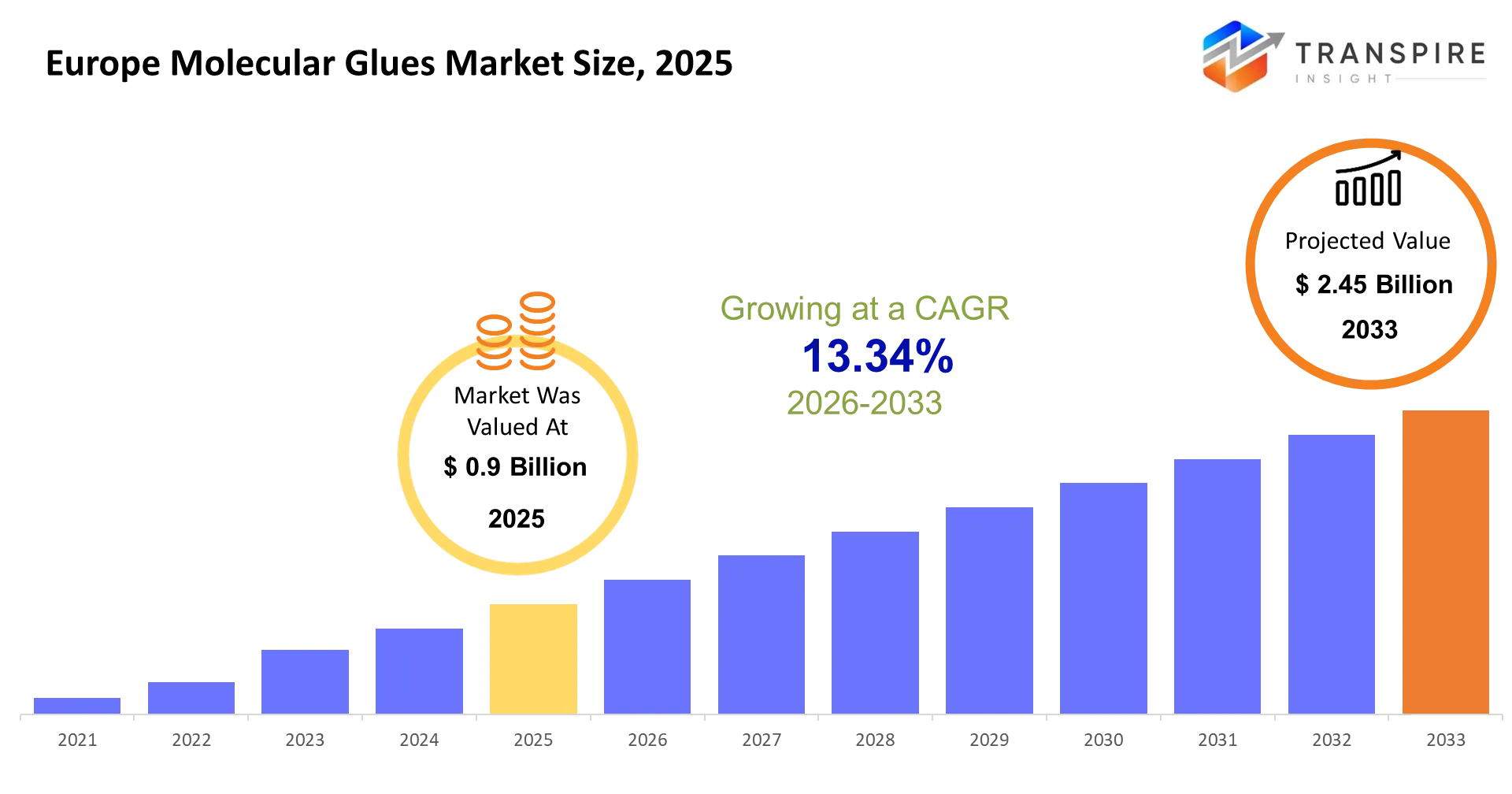
- Europe Molecular Glues Market Size 2025: USD 0.9 Billion
- Europe Molecular Glues Market Size 2033: USD 2.45 Billion
- Europe Molecular Glues Market CAGR: 13.34%
- Europe Molecular Glues Market Segments: By Type (Small Molecule Glues, Protein Degraders, Targeted Protein Degradation Agents, Others), By Application (Oncology, Neurology, Rare Diseases, Immunology, Others), By End-User (Pharma Companies, Biotech Firms, Research Institutes, Others), By Technology (PROTAC, Molecular Glue Degraders, Others).
To learn more about this report,  Download Free Sample Report
Europe Molecular Glues Market Summary:
The Europe Molecular Glues Market size is estimated at USD 0.9 Billion in 2025 and is anticipated to reach USD 2.45 Billion by 2033, growing at a CAGR of 13.34% from 2026 to 2033. The Europe Molecular Glues Market is evolving from a niche drug discovery segment into a strategic platform for targeting proteins that conventional therapies struggle to reach. The use of molecular glues in pharmaceutical development enables researchers to achieve precise control over the destruction and preservation of disease-related proteins which makes these substances essential for drug development in cancer treatment neurodegenerative diseases and autoimmune disorders that require different methods than standard small molecules.
The market has advanced during the past five years from its initial academic exploratory phase to its current state which supports drug development through clinically tested programs that have obtained backing from major pharmaceutical companies and their licensing agreements. The widespread acceptance of targeted protein degradation technologies brought about this main development which resulted in European biotech companies expanding their research capabilities after pandemic-related funding for biotechnology recovered through investor confidence.
AI-driven protein interaction modeling advances have enabled faster candidate identification which has made drug development processes more efficient. The development has created a major transformation in market economics. Companies are now investing earlier in molecular glue platforms because faster target validation improves pipeline productivity, increases partnership value, and reduces late-stage drug development risk.
Key Market Insights
- The European Molecular Glues Market of 2025 saw Germany maintain its leading position by generating approximately 28% of market share through its advanced biopharmaceutical research and development facilities.
- The UK represents the fastest-growing regional market through 2032, supported by biotech funding expansion and university-industry drug discovery collaborations.
- The revenue distribution showed oncology applications generated more than 45% of total revenue in 2025 because molecular glue therapies enabled access to previously untreatable cancer proteins.
- The research field dedicated to neurodegenerative diseases experienced rapid expansion between 2026 and 2032 because of existing gaps in treatment solutions.
- The Europe Molecular Glues Market was mostly controlled by small-molecule molecular glues which held about 60% market share in 2025 because their production methods enabled businesses to expand their operations.
- European pharmaceutical research programs now use targeted protein degradation platforms which have become the second biggest market segment through their rising implementation.
- AI-assisted molecular modeling became a major market trend in 2025, which reduced the time needed for drug screening during the first stages of development by almost 30%.
- Pharmaceutical companies represented the leading end-user segment with more than 55% market share because they invested heavily in their oncology pipeline projects.
- Biotechnology startups will experience their fastest growth rate during the forecast period because of their licensing agreements and venture capital funding.
- The forces that drive demand include the rising interest in precision medicine and the development of new rare disease treatments and the market launch of protein degradation technologies.
- Biotech innovators and major pharmaceutical companies are establishing strategic partnerships which lead to substantial market expansion within the European Molecular Glues Market.
What are the Key Drivers, Restraints, and Opportunities in the Europe Molecular Glues Market?
The Europe Molecular Glues Market experiences its strongest growth because targeted protein degradation has become the primary research focus for oncology and rare disease drug development. The momentum increased after several early-stage clinical programs proved that molecular glues could target “undruggable” protein targets with better selectivity than standard small molecules. Pharmaceutical companies responded by increasing licensing deals and platform acquisitions across Europe, particularly in Germany, the UK, and Switzerland. AI-powered protein interaction modeling technologies achieved two goals by shortening discovery processes and enhancing rate of successful hit identification. The combination has boosted molecular glue platforms' commercial value, which enables biotech companies to obtain larger partnership revenue streams and milestone-based funding agreements throughout the drug development process.
The market’s biggest structural barrier remains the scientific complexity of predicting protein-protein interactions and validating molecular glue mechanisms in humans. The development of molecular glues as therapeutics requires specific cellular responses which current standardized screening models fail to achieve. The procedure leads to extended validation periods which result in increased risk of clinical trial failures and heightened research and development expenses. European biotech companies struggle to secure funding for their later-stage development projects, which results in delayed product launches and lower immediate market revenues, despite their active development of new products.
The future potential exists to combine generative artificial intelligence with molecular simulation platforms for the purpose of speeding up rational drug development processes. European biotech clusters in Cambridge, Basel, and Berlin attract venture funding because they develop AI-driven discovery systems that find new degradation targets more efficiently than traditional laboratory methods. The development of cloud-based computational biology infrastructure enables companies to decrease costs for candidate optimization while they develop treatments for diseases beyond oncology to include neurodegenerative and autoimmune disorders.
What Has the Impact of Artificial Intelligence Been on the Europe Molecular Glues Market?
The European Molecular Glues Market experiences major changes because artificial intelligence and advanced computational biology platforms enhance target discovery and drug validation methods which leads to better compound screening results. Pharmaceutical companies and biotech firms are increasingly using AI-driven molecular interaction models to automate protein binding analysis and identify potential molecular glue candidates faster than conventional laboratory screening methods. The platforms enable analysis of extensive genomic and proteomic information which helps researchers predict how small molecules will achieve selective protein degradation thus decreasing manual screening efforts and speeding up discovery processes.
Researchers now use machine learning algorithms to create predictive models which forecast drug toxicity and off-target interactions and clinical response probabilities. The research teams use this process to remove less viable candidates from their development pipeline which results in reduced preclinical failure rates and more efficient research expenses. European biotech companies report that AI-assisted discovery platforms can reduce hit identification timelines by nearly 30% while improving candidate precision for oncology and neurodegenerative disease programs. The operational process leads to better pipeline productivity which helps organizations reach licensing milestones while increasing their chances of successful clinical progress.
The adoption of AI technologies faces major challenges because scientists need to grasp complex protein interactions which underlie molecular glue mechanisms. The prediction accuracy of machine learning models decreases because they use insufficient real-world biological training data while their ability to replicate results across different therapeutic targets is also restricted.
Key Market Trends
- The European pharmaceutical industry has shifted its research funding for cancer treatment studies from traditional small molecule methods to targeted protein degradation platforms which provide better accuracy since 2022.
- The use of AI-based molecular modeling technology helped European biotech centers to develop new partnerships since 2021 faster because it decreased their initial candidate evaluation process by almost 30 percent.
- Bristol Myers Squibb and Novartis expanded their licensing deals after molecular glue research produced programs which could specifically target previously untreatable protein targets.
- The biotech industry in Germany and Switzerland achieved stronger market positions through their dual investments in biotechnology facilities and international pharmaceutical research partnerships after 2023.
- The research activities of clinical-stage molecular glue pipelines extended their focus to neurodegenerative diseases and autoimmune diseases after 2024 because these disease areas received more funding from venture capital investors.
- European biotech firms increasingly adopted cloud-based computational biology platforms after laboratory screening costs rose sharply during post-pandemic drug development expansion.
- The period from 2022 to 2025 saw investors shift their focus from broad discovery platforms toward companies that possessed confirmed protein interaction databases and their own degradation libraries.
- European regulatory authorities now require additional testing for targeted protein degradation methods which first-in-class molecular glue therapeutics must prove through their first study results after 2023.
- European mid-sized biotech companies increasingly sought co-development partnerships because they found it hard to manage their financing needs for late-stage clinical trials in the European market.
Europe Molecular Glues Market Segmentation
By Type
Small molecule glues have become the most common type of pharmaceutical adhesive because they provide pharmaceutical companies with easy-to-manufacture compounds which can be used in various medical treatments. The medical community shows growing interest in targeted protein degradation which has created higher demand for these agents in oncology research. Drug developers have started using protein degraders because they need better treatment options for complex intracellular proteins which conventional inhibitors fail to target. The development of smaller emerging categories stays restricted because their clinical validation methods remain uncertain and their development processes involve greater risks.
Early-stage trials show investment activity now prefers platforms which can prove their ability to bind specific targets and achieve consistent degradation results. The type segment will experience upcoming years which will lead to increased competition between precision-targeting methods and computational discovery systems. The market will see increased interest in compounds which need less time for validation while showing strong potential for licensing according to both manufacturers and investors, who will focus their attention on this market trend.
By Application
The application area for oncology research shows primary expansion because molecular glue technologies enable cancer protein degradation which existing treatments cannot accomplish. The pharmaceutical industry maintains its research funding for both hematological malignancies and solid tumor treatment development which results in significant commercial growth for oncology research pipelines. The field of neurology research together with rare disease study has been growing since better protein interaction modeling systems have allowed scientists to examine complex degenerative diseases. The field of immunology research has gained popularity because scientists now study specific immune pathway control methods that produce reduced bodywide adverse effects.
The field of neurology research needs additional time to complete clinical validation because researchers encounter both blood-brain barrier challenges and difficulties with predicting biomarker behavior. The upcoming development process for various applications requires companies to implement patient selection methods based on biomarkers and utilize AI systems for target discovery. The drug developers need to expand their product lines by developing treatments that target diseases which extend beyond cancer. The investors need to monitor therapeutic areas that show potential for delivering first-in-class drug approvals and valuable licensing agreements.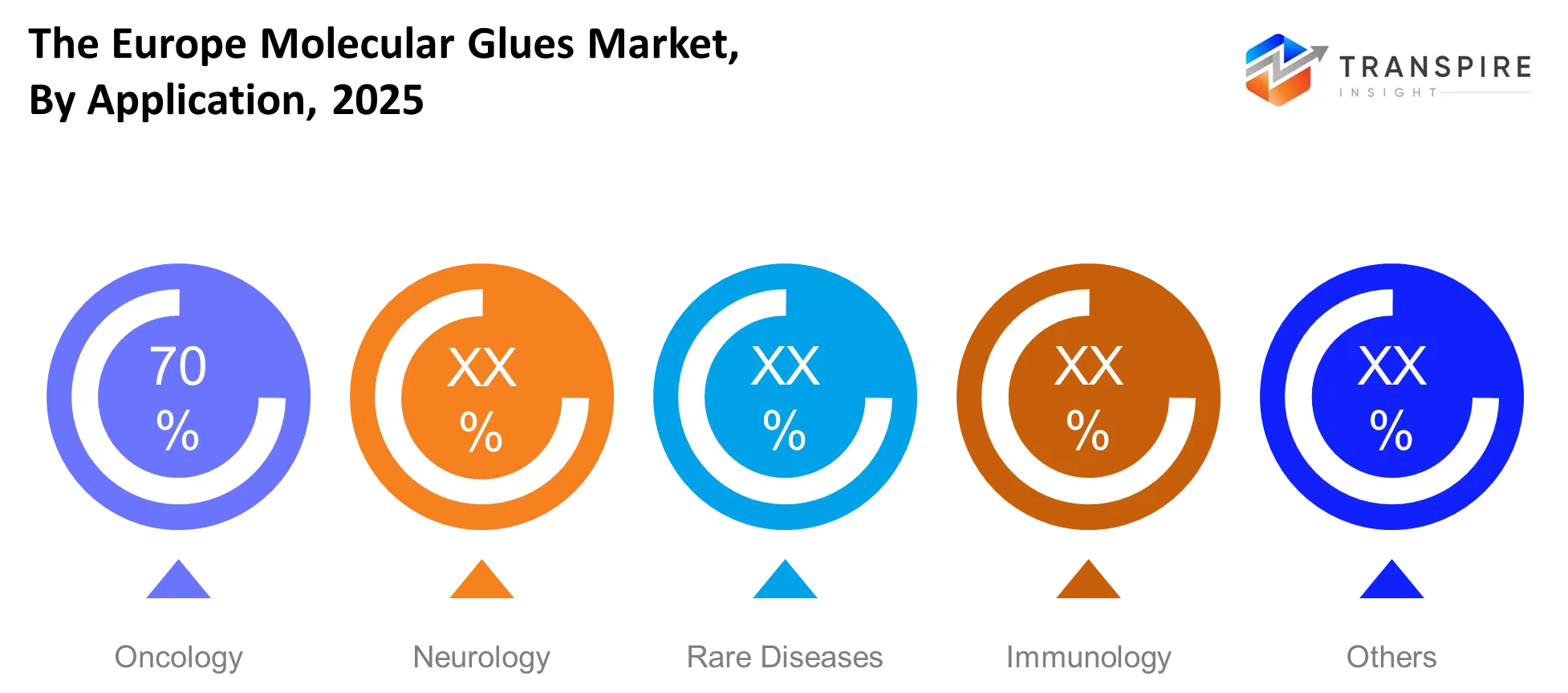
To learn more about this report, Download Free Sample Report
By End-User
The end-user segment of the market designates pharmaceutical companies as its main component because pharmaceutical companies require extensive clinical development capabilities and regulatory knowledge and financial investments to develop their molecular glue technologies into commercial products. Major drug manufacturers continue expanding partnerships with biotechnology firms to strengthen protein degradation pipelines and reduce internal discovery timelines. Biotech firms represent the fastest-growing end-user category because venture capital investments and their development of specialized computational drug discovery platforms. Research institutes maintain an important position by contributing early-stage biological validation and protein interaction studies, although limited funding capacity restricts large-scale clinical advancement.
Organizations with smaller sizes encounter difficulties which stem from the need to finance late-stage clinical trials and navigate complex regulatory requirements. The market will move towards development models which enable academic research to work together with pharmaceutical companies in commercializing their inventions. Buyers and investors are increasingly prioritizing organizations capable of integrating AI-driven discovery systems with scalable clinical development infrastructure and long-term intellectual property strategies.
By Technology
The current market presence of PROTAC technology remains strong because pharmaceutical companies invest in research for targeted protein degradation while multiple clinical trials proceed with various development programs. However molecular glue degraders establish stronger market position because their simple molecular designs enable better cell absorption and their product development process requires less effort to create usable products. Pharmaceutical developers increasingly prefer molecular glue technologies because these methods enable targeted degradation with less need for chemical changes compared to traditional bifunctional degraders. The current state of other developing technologies remains unknown because they have not achieved clinical testing success and their manufacturing processes cannot yet operate at full capacity.
The current technological landscape shows competition between AI-driven molecular modeling technologies and efficient screening systems and tools for predicting protein interactions which enhance candidate discovery processes. The upcoming technological advancements will decrease discovery expenses while enabling more accurate treatment methods for both oncology and neurodegenerative diseases. Manufacturers and investors will focus on proprietary degradation platforms which contain proven biological datasets while buyers will make technology assessments based on selectivity and scalability and capabilities to create distinct clinical advantages.
What are the Key Use Cases Driving the Europe Molecular Glues Market?
The main reason oncology uses molecular glues is because these substances enable targeted degradation of cancer proteins which standard treatments cannot reach. Pharmaceutical companies generate most demand through hematological cancer and solid tumor drug development programs which concentrate on precision treatment methods.
Biotechnology companies and academic research institutions are choosing to focus their efforts on developing applications for both neurology and rare diseases. Advanced protein interaction analysis methods allow scientists to study neurodegenerative diseases such as Parkinson's disease and Huntington's disease through research methods which traditional drug discovery methods have not achieved any success.
The field of medicine is developing new applications to treat autoimmune diseases through genomic-driven personalized protein degradation treatments. Research programs at European biotech centers are testing molecular glues for their potential to control inflammatory pathways while developing combination therapies that help treat advanced cancer resistance.
|
Report Metrics |
Details |
|
Market size value in 2025 |
USD 0.9 Billion |
|
Market size value in 2026 |
USD 1.02 Billion |
|
Revenue forecast in 2033 |
USD 2.45 Billion |
|
Growth rate |
CAGR of 13.34% from 2026 to 2033 |
|
Base year |
2025 |
|
Historical data |
2021 - 2024 |
|
Forecast period |
2026 - 2033 |
|
Report coverage |
Revenue forecast, competitive landscape, growth factors, and trends |
|
Regional scope |
Europe (Germany, United Kingdom, France, Italy, Spain and Rest of Europe) |
|
Key company profiled |
Bristol Myers Squibb, Amgen, Novartis, Roche, Pfizer, Merck, AbbVie, GSK, AstraZeneca, Sanofi, Takeda, Boehringer Ingelheim, Nurix Therapeutics, C4 Therapeutics, Arvinas |
|
Customization scope |
Free report customization (country, regional & segment scope). Avail customized purchase options to meet your exact research needs. |
|
Report Segmentation |
By Type (Small Molecule Glues, Protein Degraders, Targeted Protein Degradation Agents, Others), By Application (Oncology, Neurology, Rare Diseases, Immunology, Others), By End-User (Pharma Companies, Biotech Firms, Research Institutes, Others), By Technology (PROTAC, Molecular Glue Degraders, Others) |
Which Regions are Driving the Europe Molecular Glues Market Growth?
The molecular glues market in Western Europe reaches its highest point because Germany, Switzerland, and the United Kingdom maintain their pharmaceutical industry base while funding biotechnology research through established financing systems. The European Medicines Agency has established clear regulatory guidelines which enable quicker collaboration among research teams developing targeted protein degradation therapies at their initial clinical testing stages. The research centers of universities and genomic research centers together with contract development organizations create research ecosystems that enable both large pharmaceutical companies and specialized biotech companies to conduct their research activities.
North America remains the second-largest contributor, but market behavior differs from Western Europe because commercialization strength outweighs academic concentration. The United States generates steady revenue through strong venture capital activity and its established oncology drug markets and ongoing licensing transactions between biotech firms and pharmaceutical companies. Developers in protein degradation research use their large healthcare spending capacity to fund expensive late-stage clinical programs which carry high risk of failure. The institutional biotechnology investors together with the global pharmaceutical groups maintain their long-term investment strategy because the existing intellectual property protections and regulatory pathways provide them with stable investment conditions.
Who are the Key Players in the Europe Molecular Glues Market and How Do They Compete?
The competitive landscape of the Europe Molecular Glues Market remains moderately fragmented because large pharmaceutical companies compete alongside specialized biotechnology firms focused on targeted protein degradation platforms. The main competition exists between different parties who develop discovery technology and protein interaction datasets while they attempt to develop candidates into clinical validation quicker than their competitors. Established pharmaceutical groups maintain their market presence through licensing agreements and pipeline acquisitions while smaller biotech firms use AI-based molecular modeling and niche degradation technologies to disrupt the industry. The proof of clinical concept has emerged as the primary factor that distinguishes competitors because investors and pharmaceutical partners now favor validated therapeutic mechanisms over general discovery statements.
Bristol Myers Squibb focuses on technology-driven expansion through targeted protein degradation partnerships and oncology pipeline integration. The company achieves competitive advantage through its extensive clinical development infrastructure which enables it to test molecular glue candidates together with its existing cancer treatment portfolio. Novartis uses computational biology and precision medicine research to establish its unique position across European research hubs. The company achieves speedier access to new degradation methods through strategic partnerships with biotech innovators while it decreases its initial research risk.
Monte Rosa Therapeutics operates an AI-driven molecular glue discovery platform which enables users to detect specific protein degradation pathways through more efficient screening processes. The company expands through research collaborations and proprietary protein interaction datasets that improve target validation accuracy.
Company List
- Bristol Myers Squibb
- Amgen
- Novartis
- Roche
- Pfizer
- Merck
- AbbVie
- GSK
- AstraZeneca
- Sanofi
- Takeda
- Boehringer Ingelheim
- Nurix Therapeutics
- C4 Therapeutics
- Arvinas
Recent Development News
In April 2026, European Pharma Firms Increase AI Investment in Drug Discovery Platforms: Major European pharmaceutical companies expanded investments in AI-based discovery technologies during 2026 to accelerate development timelines for complex therapeutics such as molecular glues and protein degraders. The trend is being driven by the need to lower R&D costs and improve precision targeting of previously “undruggable” proteins.
Source: https://www.reuters.com
In March 2026, Molecular Glue Biotech f5 Therapeutics Shuts Down After Funding Pressures: Protein degradation specialist f5 Therapeutics announced its closure in March 2026 following prolonged financing challenges affecting early-stage molecular glue developers. The shutdown reflects increasing investor scrutiny and tougher capital conditions within Europe’s targeted protein degradation ecosystem.
Source: https://www.fiercebiotech.com
What Strategic Insights Define the Future of the Europe Molecular Glues Market?
The European Molecular Glues Market is developing its operations into specialized treatment methods which use artificial intelligence to create precise medical solutions that target specific proteins instead of using general medication approaches. The next five to seven years will see companies gain competitive advantages through their exclusive ownership of protein interaction databases and their computational biology systems and their ability to complete clinical trials at a quicker pace. The pharmaceutical industry will see major companies increase their acquisition efforts because their in-house discovery processes cannot compete with the rapid development abilities of specialized biotech companies.
The market faces an unrecognized threat because most companies focus their projects on only a few established degradation targets. The increasing number of companies entering the same oncology research area will result in licensing competition and intellectual property conflicts which will decrease commercialization chances while increasing development expenses. Neurodegenerative disease research is creating new possibilities which include AI-based molecular glue programs that treat protein aggregation disorders in Western Europe. Market participants should prioritize strategic partnerships with computational biology firms and academic protein research centers to secure differentiated discovery capabilities before platform consolidation accelerates across the sector.
Europe Molecular Glues Market Report Segmentation
By Type
- Small Molecule Glues
- Protein Degraders
- Targeted Protein Degradation Agents
- Others
By Application
- Oncology
- Neurology
- Rare Diseases
- Immunology
- Others
By End-User
- Pharma Companies
- Biotech Firms
- Research Institutes
- Others
By Technology
- PROTAC
- Molecular Glue Degraders
- Others
Frequently Asked Questions
Find quick answers to common questions.
The Approximate Europe Molecular Glues Market size for the Market will be USD 2.45 Billion in 2033.
The key Segments of the Europe Molecular Glues Market are By Type (Small Molecule Glues, Protein Degraders, Targeted Protein Degradation Agents, Others), By Application (Oncology, Neurology, Rare Diseases, Immunology, Others), By End-User (Pharma Companies, Biotech Firms, Research Institutes, Others), By Technology (PROTAC, Molecular Glue Degraders, Others).
Major players in the Europe Molecular Glues Market are Bristol Myers Squibb, Amgen, Novartis, Roche, Pfizer, Merck, AbbVie, GSK, AstraZeneca, Sanofi, Takeda, Boehringer Ingelheim, Nurix Therapeutics, C4 Therapeutics, Arvinas.
The Current Market size of the Europe Molecular Glues Market is USD 0.9 Billion in 2025.
The Europe Molecular Glues Market CAGR is 13.34%.
- Bristol Myers Squibb
- Amgen
- Novartis
- Roche
- Pfizer
- Merck
- AbbVie
- GSK
- AstraZeneca
- Sanofi
- Takeda
- Boehringer Ingelheim
- Nurix Therapeutics
- C4 Therapeutics
- Arvinas
Recently Published Reports
-
Apr 2026
Cord Blood Banking Services Market
Cord Blood Banking Services Market Size, Share & Analysis Report By Type of Service (Collection, Processing, Storage), By Bank Type (Private Banks, Public Banks, and Hybrid Banks), By Component (Cord Blood, and Cord Tissue), By End User (Hospitals, Research Institutions, Biotechnology Companies, and Others) and Geography (North America, Europe, Asia-Pacific, Middle East and Africa, South and Central America), 2021 - 2031
-
Apr 2026
ELISA Processors Market
ELISA Processors Market Size, Share & Analysis Report By Type (Optical Filter ELISA Analyzer, and Optical Grating ELISA Analyzers), By Mode (Automated ELISA Analyzers, and Semi-Automated ELISA Analyzers), By Applications (Immunology, Vaccine development, Drug Monitoring, and Others), By End Users (Biotechnology Companies, Pharmaceutical Companies, Contract Research Organization, and Diagnostic Laboratories) and Geography (North America, Europe, Asia-Pacific, Middle East and Africa, South and Central America), 2021 - 2031
-
Apr 2026
Microscope Slide Scanner Market
Microscope Slide Scanner Market Size, Share & Analysis Report By Type (Portable Microscope Slide Scanner, and Desktop Microscope Slide Scanner), By Application (Biological Research, Medicine, Veterinary, and Other) and Geography (North America, Europe, Asia-Pacific, Middle East and Africa, South and Central America), 2021 - 2031
-
Apr 2026
Microwave Cookware Market
Microwave Cookware Market Size, Share & Analysis Report By Material Type (Plastic, Glass, Ceramic, Silicone, and Metal), By Application (Cooking, Reheating, and Defrosting), By End User (Household, Commercial (Restaurants, Hotels, and Cafes), and Food Service Industry), By Sales Channel (Online Retail, Offline Retail (Supermarkets, Hypermarkets, Specialty Stores), and Direct Sales (Company Outlets)) and Geography (North America, Europe, Asia-Pacific, Middle East and Africa, South and Central America), 2021 - 2031