
South Korea Sickle Cell Disease Treatment Market Size & Forecast:
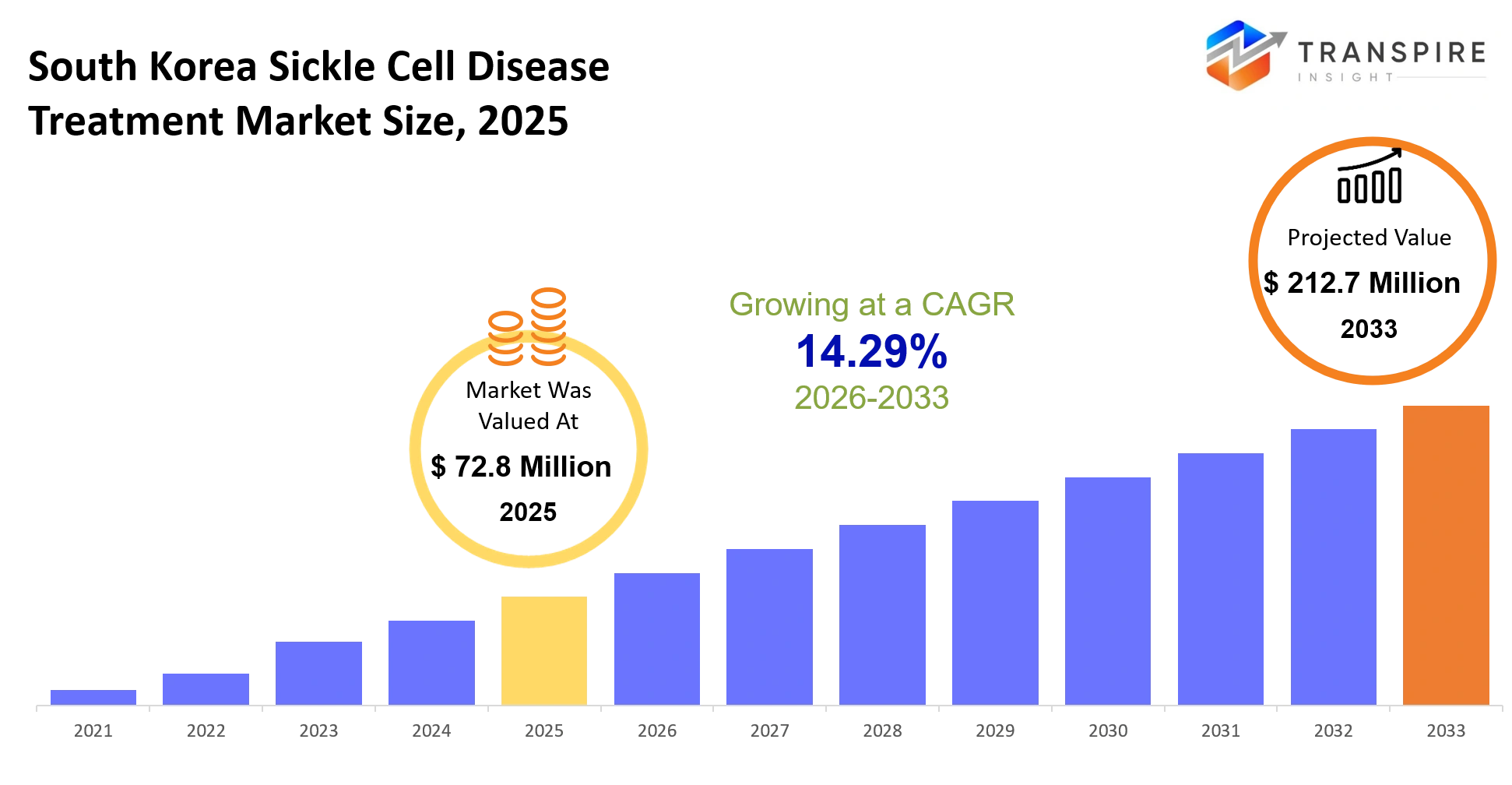
- South Korea Sickle Cell Disease Treatment Market Size 2025: USD 72.8 Million
- South Korea Sickle Cell Disease Treatment Market Size 2033: USD 212.7 Million
- South Korea Sickle Cell Disease Treatment Market CAGR: 14.29%
- South Korea Sickle Cell Disease Treatment Market Segments: By Treatment Type (Hydroxyurea, Blood Transfusion, Gene Therapy, Stem Cell Transplant, Others); By End User (Hospitals, Specialty Clinics, Others); By Distribution (Hospital Pharmacies, Retail Pharmacies, Others)
To learn more about this report,  Download Free Sample Report
South Korea Sickle Cell Disease Treatment Market Summary
The South Korea Sickle Cell Disease Treatment Market was valued at USD 72.8 Million in 2025. It is forecast to reach USD 212.7 Million by 2033. That is a CAGR of 14.29% over the period.
The South Korea Sickle Cell Disease (SCD) Treatment Market seems to back the diagnosis, the long-term monitoring, and the control of complications tied to a rare but kinda intricate blood disorder. In reality, this market helps healthcare providers lower the frequency of painful vaso-occlusive crises, limit the risk of organ harm, and lift the patient experience via pharmacological options, transfusion support, and newer disease-modifying treatments. Over the last five years , the market has sort of changed shape , shifting away from mostly supportive care toward targeted therapies, and even more gene-based treatment directions, which lines up with wider precision medicine momentum.
One big reason for that switch has been the worldwide speed-up of rare disease research, plus regulatory encouragement for fresh therapies, this kind of thing opens access routes and pushes spending into more specialized approaches. With stronger interventions showing up more often, clinicians are learning to start earlier and act more proactively on disease management. That movement is ramping up treatment intensity for each patient, broadening the care pathway value, and it’s also creating new revenue angles across hospitals , specialty clinics, and pharmaceutical suppliers.
Key Market Insights
- Seoul Capital Area kinda dominates the South Korea Sickle Cell Disease Treatment Market, and accounts for around XX% market share in 2025 , mostly because there are lots of specialist hospitals there and it’s more concentrated.
- Then there is Busan and Gyeongsang—these areas look like the second-largest regional cluster, supported by more advanced tertiary healthcare infrastructure, so patients get managed quicker.
- Daegu plus the other major metro centers are still the fastest movers all the way through 2030 , this seems driven by wider access to rare disease care not just in one place.
- On the therapy side, disease-modifying therapies rule the South Korea Sickle Cell Disease Treatment Market, with an estimated XX% share in 2025 .
- Supportive care along with blood transfusion services take the second spot, mainly because established clinical usage is already in place, and clinicians rely on it routinely.
- Gene based and advanced cell therapies are kinda the fastest growing segment during the forecast period, supported by innovation and regulatory progress, and you can see it in how quickly things are moving.
- Vaso-occlusive crisis management is taking the largest application share at approximately XX% in 2025, which sort of reflects how widely treatments are being used.
- Long term disease management and complication prevention are also the fastest growing application areas through 2030.
- Hospitals and specialty treatment centers are leading the market with an estimated XX% share, mostly because multidisciplinary care is needed, and it is hard to set up the same way elsewhere.
- Meanwhile, academic medical centers and rare disease clinics are showing the fastest growth, as advanced therapies start moving into real clinical practice, and overall it feels pretty steady.
What are the Key Drivers, Restraints, and Opportunities in the South Korea Sickle Cell Disease Treatment Market?
The main force pushing the South Korea Sickle Cell Disease Treatment Market forward is this wider global pivot toward advanced disease-modifying and curative therapies for rare inherited illnesses. It’s been sparked by real momentum in gene therapy, gene editing, and more focused biologic treatments, plus regulatory rules that are gradually more supportive of orphan drug development. As these newer options move from trial phases into commercialization, clinicians start getting access to approaches that tackle the root condition, not just the day to day symptoms. In practice, this can boost the treatment value per patient, help enable premium pricing structures, and also open fresh revenue channels for pharma companies already operating in the area.
At the same time, the biggest obstacle still comes down to a smaller local patient population, paired with the very high cost of the advanced therapies. This kind of limitation is kind of structural, because sickle cell disease is relatively uncommon in South Korea when you compare it with places like Africa or North America. When the patient pool is smaller, the commercial pull for big local investment becomes weaker, and it’s harder to reach the usual economies of scale in how treatment gets delivered. So reimbursement talks, specialists know how development, and therapy adoption can end up moving slowly, which then limits market growth, and can push back the timing of revenue realization.
A big opportunity kinda sits in taking up next-generation gene and cell therapies, it feels like that in a way. For instance, global money going into CRISPR based gene-editing platforms is opening up pathways toward treatments that could be potentially curative. And as South Korea keeps building its precision medicine ecosystem along with more advanced biopharmaceutical capabilities, the market might get advantages from earlier access to breakthrough therapies, plus clinical research partnerships that are more specialized and treatment centers that are designed for long term growth.
What Has the Impact of Artificial Intelligence Been on the South Korea Sickle Cell Disease Treatment Market?
Artificial intelligence, plus more advanced digital tech, is starting to alter the South Korea Sickle Cell Disease Treatment Market in a few important ways. It’s not just about better tools, it’s about changing how clinicians decide what to do , how they watch patients over time, and how fast research teams can move. Hospitals and healthcare providers are leaning on AI-enabled clinical support systems so they can automate the review of lab findings, electronic health records , and even genetic information that’s tied to sickle cell disease care. In practice, these systems make it easier for medical teams to spot higher-risk patients sooner and they also help smooth out treatment planning. That means less admin work and, in theory , better care coordination too.
Alongside that, machine learning models are boosting predictive power throughout the whole treatment ecosystem. Researchers are using predictive analytics to gauge, more or less, the odds of vaso-occlusive crises, the threat of hospitalization, and how well different treatments could pan out for each person. Because of that, the care teams can jump in earlier, sort of fine tune which treatment to pick, and reduce the count of preventable complications. On the drug side too, AI platforms can make drug discovery and trial setup faster by nudging toward promising therapeutic targets , and by improving the patient enrollment approach.
On the operations side, digital health platforms back remote patient monitoring and ongoing disease management. That helps healthcare providers support adherence more consistently , and it can also reduce the need for emergency visits. If this is done well, it should support stronger clinical outcomes and more efficient use of hospital resources. Still, there’s a limit that keeps coming back: the domestic patient population is relatively small. So it becomes harder to gather big, high-quality datasets that are needed to train and verify advanced AI models, especially if they’re supposed to stay accurate across different patient groups.
Key Market Trends
- Since 2021, clinicians have been giving more space to disease-modifying therapies than supportive care alone, like there’s this general move toward improving long-term outcomes, instead of just managing symptoms.
- Between 2022 and 2025, global approvals of new sickle cell options kind of sped up curiosity among South Korean providers for advanced care pathways , so the conversation moved faster.
- Pharmaceutical groups like Pfizer and Novartis also pushed harder into rare disease portfolios, which made the competitive focus more centered on specialized hematology treatments.
- Since 2020, precision medicine programs have strengthened the way genetic testing is folded into treatment planning and patient grouping processes , even when workflows get a bit complicated.
- More hospital networks have sort of drifted toward multidisciplinary care models, blending hematology, genetic counseling, and long-term disease surveillance services in a more coordinated fashion, almost like everything is being stitched together.
- And between 2021 and 2025, investment activity increasingly pointed toward gene editing and cell based therapies, because stakeholders were trying to figure out how realistic potentially curative strategies could be, in the end.
- Regulatory agencies around the world also began speeding up orphan drug review pathways , which in turn pushed manufacturers to move newer innovative therapies into more global markets, quickly.
- After 2020, digital health platforms saw broader adoption , so remote monitoring programs expanded too, and those helped treatment adherence along with follow up management.
- Between 2022 to 2025, clinical research collaborations kept growing across Asia, and this kinda improved access to international trial networks, but also revealed new therapeutic candidates more steadily.
- At the same time healthcare providers are looking at lifetime clinical value rather than just near term treatment costs, and that sort of supports the thought around high value advanced therapies, even when budgets feel tight.
South Korea Sickle Cell Disease Treatment Market Segmentation
By Treatment Type :
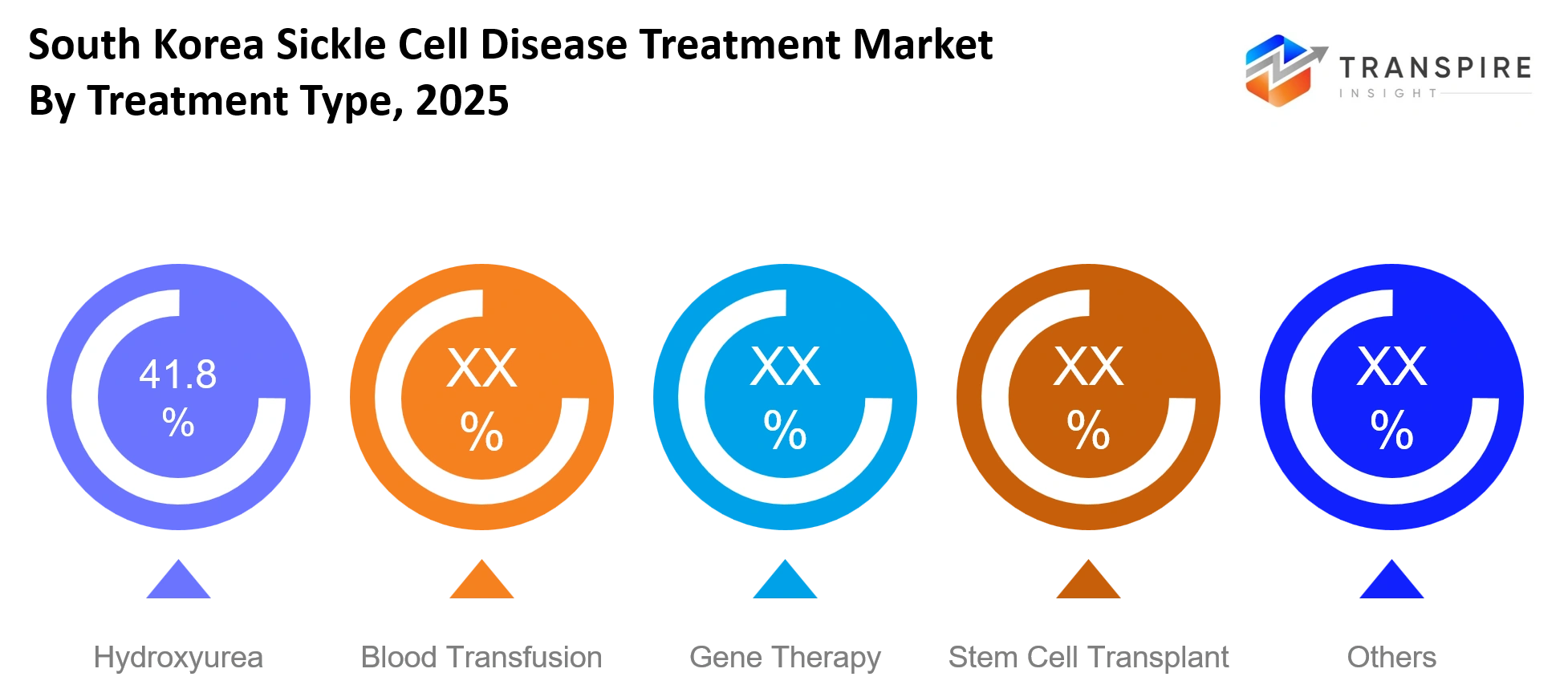
Hydroxyurea is still seen as an important treatment choice in the South Korea Sickle Cell Disease Treatment Market since it helps lessen the number of painful episodes and other issues tied to the condition. Blood transfusion therapy is also very common, especially when doctors are trying to manage intense symptoms and also reduce complications in patients who need steady medical supervision. Together these methods keep playing a big role in day to day clinical disease management.
More recently, gene therapy and stem cell transplant have been getting a lot of notice, mainly because ongoing medical advances open the door to longer term disease control, and in some cases, curative style outcomes. With gene therapy the idea is to correct or tweak the genetic problem at the root, while stem cell transplant is meant to swap out the damaged blood forming cells with healthier ones. The “Others” bucket usually covers supportive medications and extra therapeutic options, kind of like additional measures that help handle symptoms, make patients feel more comfortable, and generally back up better treatment results.
To learn more about this report, Download Free Sample Report
By End User :
Hospitals account for a major share in treatment delivery because advanced diagnostic services, blood transfusion facilities, specialist consultations and inpatient care are usually available inside hospital environments. Complex procedures and long term disease monitoring are often handled through hospital based healthcare systems, so hospitals become sort of a central place to go for care.
Specialty clinics matter too, they provide more focused help for blood disorders and related conditions. These sites typically back up ongoing patient management, follow up assessments, and personalized treatment planning. Then the “Others” segment covers research institutions, community healthcare centers, and other care facilities, which help with patient support screening, and disease management services across different healthcare settings.
By Distribution :
Hospital pharmacies kinda work as a leading distribution channel, since a lot of sickle cell disease treatments are prescribed and then given right in hospital environments. There’s also access to specialized meds, close physician supervision , plus coordinated treatment programs that really back up why hospital pharmacies stay strong in this market. This kind of distribution is extra important for advanced therapies and for treatments that need careful monitoring, like, you can’t really just wing it.
Retail pharmacies bring a more convenient way to get the prescribed medicines for ongoing disease management and supportive care. They improve treatment continuity because medicines are easier to reach for patients even when they are outside the hospital setting. As for the “Others” segment, it covers alternative distribution networks, specialty dispensing services , and more emerging healthcare delivery models. These help widen access to treatment options too and boost medication availability across different patient groups.
What are the Key Use Cases Driving the South Korea Sickle Cell Disease Treatment Market?
The main use case in the South Korea Sickle Cell Disease Treatment Market seems mostly tied to crisis handling and longer term control of severe anemia spells, particularly in hospital-led hematology departments. The reason behind all this is basically to cut down on how often people end up being hospitalized, and to avoid organ damage, by keeping a steady level of clinical intervention and ongoing observation.
Then there are expanding applications that look more like post-crisis rehabilitation and preventive support programs, usually managed through specialty clinics and hospital pharmacies. These scenarios mostly aim at helping patients stay steadier between acute episodes, relying on structured therapy pathways and, you know, regular check ups through tertiary care facilities.
And for emerging use cases, things start getting more gene centered, with corrective therapies, plus personalized treatment planning that uses genomic screening tools. Academic medical centers and research hospitals are starting to fold these methods into clinical trials, so it’s creating early routes toward more targeted and maybe even curative interventions, even if it’s still very much in development.
|
Report Metrics |
Details |
|
Market size value in 2025 |
USD 72.8 Million |
|
Market size value in 2026 |
USD 83.5 Million |
|
Revenue forecast in 2033 |
USD 212.7 Million |
|
Growth rate |
CAGR of 14.29% from 2026 to 2033 |
|
Base year |
2025 |
|
Historical data |
2021 - 2024 |
|
Forecast period |
2026 - 2033 |
|
Report coverage |
Revenue forecast, competitive landscape, growth factors, and trends |
|
Country scope |
South Korea |
|
Key company profiled |
Novartis, Pfizer, Bristol Myers Squibb, Vertex Pharmaceuticals, Bluebird Bio, CRISPR Therapeutics, Agios Pharmaceuticals, Emmaus Life Sciences, GSK, Roche, Sanofi, Takeda, Eli Lilly, Bayer, Merck |
|
Customization scope |
Free report customization (country, regional & segment scope). Avail customized purchase options to meet your exact research needs. |
|
Report Segmentation |
By Treatment Type (Hydroxyurea, Blood Transfusion, Gene Therapy, Stem Cell Transplant, Others); By End User (Hospitals, Specialty Clinics, Others); By Distribution (Hospital Pharmacies, Retail Pharmacies, Others) |
Which Regions are Driving the South Korea Sickle Cell Disease Treatment Market Growth?
Seoul Capital Region seems to lead the South Korea Sickle Cell Disease Treatment Market, mainly because it has a heavy cluster of tertiary hospitals advanced diagnostic facilities, and a pretty solid rare disease research base. People here also get an early push from precision medicine policies, which basically support more advanced hematology care. With government funded hospital networks in Seoul in place, patients can reach specialty drugs faster and they can join clinical trials more easily. Plus, there’s this dense web of academic medical institutions and pharmaceutical collaborations that helps keep the region in front, even when competition shows up.
Busan and the nearby southeastern provinces act more like a steady secondary region, with healthcare delivery that stays consistent year after year. Instead of going big in one sudden leap like Seoul, this area tends to grow by expanding hospitals step by step, and by running long term workforce healthcare coverage programs for shipowners and industrial employees. Regional medical centers keep rolling out standard therapies, including transfusion based care. Because of that, patient management keeps moving forward with less dependence on experimental treatment options or unusual pathways.
Daegu, along with nearby inland provinces, shows up as the fastest growing area. This is tied to new rare disease screening programs, and also to upgraded hospital infrastructure over the last few years. Since 2023, fresh investments in regional medical hubs have improved access to hematology specialists, plus diagnostic capabilities that used to be harder to reach. Government supported healthcare decentralization has made it easier for treatment to spread beyond the biggest metro areas. For market entrants and investors, this kind of momentum suggests wider geographic penetration chances, and it also points to rising demand for advanced therapies between 2026 and 2033.
Who are the Key Players in the South Korea Sickle Cell Disease Treatment Market and How Do They Compete?
The South Korea Sickle Cell Disease Treatment Market shows a somewhat consolidated competitive setup, in the sense that international pharmaceutical champions tend to lead the advanced therapy development, while local healthcare providers handle distribution and the clinical delivery side. What really drives competition is technology leadership across gene therapy, biologics and rare disease medicines, not so much price rivalry. The established players hold their ground with solid intellectual property portfolios and by getting early access to clinical trial networks. Meanwhile, newer biotech companies keep pushing things forward, they’re bringing next generation curative methods that kind of challenge the usual treatment routes.
Pfizer leans into broad hematology portfolios, and it keeps strengthening its role via major clinical trial spending plus collaborations with South Korean academic hospitals. Its edge comes from long standing global regulatory know-how and diversified drug pipelines that support both acute management and longer term disease control. Novartis stands out by relying on advanced cell and gene therapy platforms, especially for rare disease innovation. It also grows by working with regional research centers, to speed up therapy uptake and to improve patient access across Asia.
Vertex Pharmaceuticals really leans into a competitive advantage by using CRISPR-based gene editing research, like it is at the heart of curative treatment development and all that. Their approach seems driven by big R&D spending and then strategic licensing agreements, so pipeline depth gets thicker over time, more or less. Bluebird Bio on the other hand, centers on gene therapy commercialization for hemoglobin disorders, riding on early clinical trial wins and later regulatory milestones. They also keep moving forward by partnering with healthcare systems, to strengthen the treatment delivery infrastructure, and support that whole process. Meanwhile Bristol Myers Squibb concentrates on biologics and targeted therapies, and they stand out thanks to solid cardiovascular and hematology know-how, plus they extend their reach through collaborative research programs and global market expansion efforts.
Company List
- Novartis
- Pfizer
- Bristol Myers Squibb
- Vertex Pharmaceuticals
- Bluebird Bio
- CRISPR Therapeutics
- Agios Pharmaceuticals
- Emmaus Life Sciences
- GSK
- Roche
- Sanofi
- Takeda
- Eli Lilly
- Bayer
- Merck
Recent Development News
In January 2026, Minaris Advanced Therapies and Genetix Biotherapeutics expanded manufacturing capacity through an extended production partnership for LYFGENIA (lovotibeglogene autotemcel). The collaboration increases commercial-scale output of a gene therapy used to treat sickle cell disease, strengthening supply chain capacity and improving patient treatment throughput in the growing gene therapy market. Source https://minaris.com/m
In May 2026, SK pharmteco entered a strategic partnership with Axle Informatics and the U.S. National Institutes of Health to advance viral vector–based gene therapy development for rare diseases, including hemoglobinopathy-related programs relevant to sickle cell disease. The collaboration strengthens Korea-linked manufacturing and translational infrastructure supporting next-generation gene therapy development pipelines. Source https://www.skpharmteco.com/
What Strategic Insights Define the Future of the South Korea Sickle Cell Disease Treatment Market?
South Korea’s Sickle Cell Disease Treatment Market is kind of moving, structurally, toward precision led and maybe curative care models. This shift gets extra momentum from quick progress in gene therapy, genomic screening, and more tailored hematology protocols. In the next 5 to 7 years, the treatment journey is likely to drift away from just handling symptoms in episodes, and instead toward longer term disease modification. That change is being pulled along by wider access to high value biologics, plus cell based interventions. As a result, clinical decisions will look different, and the value will start to cluster around specialized treatment centers, and research linked hospitals too.
One quieter risk, though, comes from relying too much on advanced therapies imported from abroad. That can create global pricing pressure and also supply chain stress. If there are delays in international regulatory approvals or in ramping up manufacturing scale, domestic adoption could end up slower even if clinical demand stays strong.
There’s also a real emerging chance here: linking national rare disease registries with AI enabled diagnostic platforms. The idea is that this should improve early identification, and help with patient stratification. If this works well, it could expand the number of patients who can actually be treated, especially since many are still underdiagnosed today. Market players may want to focus on partnerships with academic hospitals, and put more money into real world evidence generation, because that tends to support reimbursement discussions and also helps advanced therapies get adopted faster.
South Korea Sickle Cell Disease Treatment Market Report Segmentation
By Component
- Software Platforms
- Analytics Tools
- Mobile Applications
- Cloud Services
By Application
- Inventory Management
- Supplier Management
- Purchase Order Management
- Expense Tracking
By Deployment
- Cloud-based
- On-premise
- Hybrid Systems
By End User
- Restaurants
- Hotel Chains
- Cafes
- Catering Services
Frequently Asked Questions
Find quick answers to common questions.
The expected South Korea Sickle Cell Disease Treatment Market size is USD 212.7 Million in 2033.
Key segments for the South Korea Sickle Cell Disease Treatment Market are By Treatment Type (Hydroxyurea, Blood Transfusion, Gene Therapy, Stem Cell Transplant, Others); By End User (Hospitals, Specialty Clinics, Others); By Distribution (Hospital Pharmacies, Retail Pharmacies, Others).
Major South Korea Sickle Cell Disease Treatment Market players are Novartis, Pfizer, Bristol Myers Squibb, Vertex Pharmaceuticals, Bluebird Bio, CRISPR Therapeutics, Agios Pharmaceuticals, Emmaus Life Sciences, GSK, Roche, Sanofi, Takeda, Eli Lilly, Bayer, Merck.
The South Korea Sickle Cell Disease Treatment Market size is USD 72.8 Million in 2025.
The South Korea Sickle Cell Disease Treatment Market CAGR is 14.29% from 2026 to 2033.
- Novartis
- Pfizer
- Bristol Myers Squibb
- Vertex Pharmaceuticals
- Bluebird Bio
- CRISPR Therapeutics
- Agios Pharmaceuticals
- Emmaus Life Sciences
- GSK
- Roche
- Sanofi
- Takeda
- Eli Lilly
- Bayer
- Merck
About the Authors

Pankaj Ghogare Patil
I am Pankaj Ghogare Patil, a Senior Research Analyst at Transpire Insight, specializing in the Pharmaceutical, Chemicals & Materials, Healthcare IT, and Biotechnology industry. My expertise lies in conducting comprehensive market research, analyzing industry trends, evaluating competitive landscapes, and translating complex data into actionable insights. At Transpire Insight, I closely follow emerging technologies, regulatory developments, and market innovations to create accurate, well-researched, and informative content that helps businesses and professionals make informed decisions. I am committed to producing credible, evidence-based articles that reflect industry best practices while making technical topics accessible and valuable for a broad audience.

Chakradhar Khansole
Chakradhar serves as the Research Director at Transpire Insight, bringing over 8 years of experience in technology, innovation, and strategic market intelligence. He specializes in transforming complex market data into actionable business insights that enable organizations to make informed, growth-oriented decisions. Recognized for his strategic vision and analytical expertise, Chakradhar leads high-impact research initiatives, delivering comprehensive market assessments, competitive intelligence, and forward-looking industry analysis.
Recently Published Reports
-
Jul 2026
Alopecia Treatment Market
Alopecia Treatment Market Size, Share & Analysis Report By Disease Type (Alopecia Areata, Cicatricial Alopecia, Traction Alopecia, Alopecia Totalis, Androgenetic Alopecia, Alopecia Universalis, and Other Disease Types), By Treatment Type (Topical Treatments, Oral Medications, Injectable Therapies, and Hair Transplantation), By Gender (Male, and Female), By Distribution Channel (Hospitals and Clinics, Retail Pharmacies, and Online Retailers), and Geography (North America, Europe, Asia-Pacific, Middle East and Africa, South and Central America), 2021 - 2031
-
Jul 2026
Medical Ultrasound Probe Market
Medical Ultrasound Probe Market Size, Share & Analysis Report By Type (Linear Type, Convex Type, Endocavitary Probe, Phased Array/Cardiac Probe, Transesophageal (TEE) Probe, and Others), By Application (Ophthalmology, Cardiology, Musculoskeletal, Oncology, Obstetrics & Gynecology, General Imaging, and Others), By End User (Hospitals & Clinics, Diagnostic Centers, Ambulatory Surgical Centers, and Others), and Geography (North America, Europe, Asia-Pacific, Middle East and Africa, South and Central America), 2021 – 2031
-
May 2026
Biosimilars Market
Biosimilars Market By Product Type (Monoclonal Antibodies, Recombinant Hormones, Erythropoietin, G-CSF, Others), By Indication (Oncology, Autoimmune Diseases, Blood Disorders, Diabetes, Others), By Manufacturing Type (In-House Manufacturing, Contract Manufacturing), By Distribution Channel (Hospital Pharmacies, Retail Pharmacies, Online Pharmacies), By Industry Analysis, Size, Share, Growth, Trends, and Forecasts 2021-2033
-
Apr 2026
Gastrointestinal Endoscopy Market
Gastrointestinal Endoscopy Market By Type (Rigid Gastrointestinal Endoscope, Flexible Gastrointestinal Endoscopes, Disposable Gastrointestinal Endoscope), By Procedure Type (Colonoscopy, Gastroscopy, Duodenoscopy, Enteroscopy, Flexible Sigmoidoscopy, Others), By Application (Diagnosis, Treatment), By End-Users (Hospitals, Ambulatory Surgical Centers, Specialty Clinics, Laboratories, Others), By Industry Analysis, Size, Share, Growth, Trends, and Forecasts 2021-2033