
South Korea Immunosuppressive Drugs Market Size & Forecast:
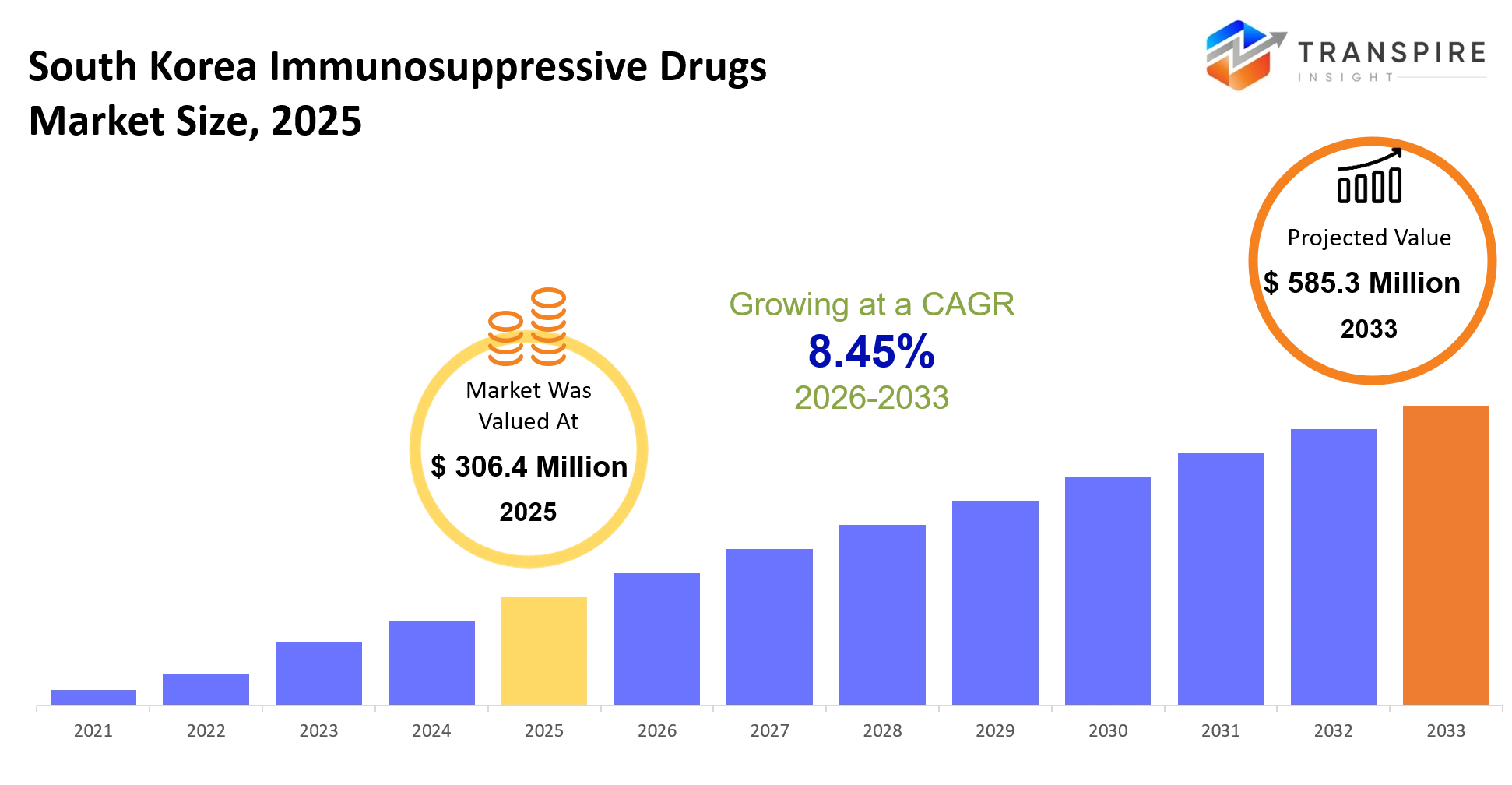
- South Korea Immunosuppressive Drugs Market Size 2025: USD 306.4 Million
- South Korea Immunosuppressive Drugs Market Size 2033: USD 585.3 Million
- South Korea Immunosuppressive Drugs Market CAGR: 8.45%
- South Korea Immunosuppressive Drugs Market Segments: By Drug Type (Calcineurin Inhibitors, Corticosteroids, mTOR Inhibitors, Monoclonal Antibodies, Others); By Application (Organ Transplantation, Autoimmune Diseases, Others); By Distribution Channel (Hospital Pharmacies, Retail Pharmacies, Online Pharmacies, Others); By End User (Hospitals, Clinics, Others)
To learn more about this report,  Download Free Sample Report
South Korea Immunosuppressive Drugs Market Summary
The South Korea Immunosuppressive Drugs Market was valued at USD 306.4 Million in 2025. It is forecast to reach USD 585.3 Million by 2033. That is a CAGR of 8.45% over the period.
South Korea immunosuppressive drugs market basically lets clinicians keep immune responses under long term control, especially for patients going through organ transplantation, and also for folks managing long lasting autoimmune conditions like rheumatoid arthritis, lupus, and inflammatory bowel disease. In practical terms, these therapies prevent organ rejection and hold back inflammatory damage that would otherwise keep nudging transplanted tissue toward progressive failure, or sometimes disability, depending on the case.
Over the last five years, the market seems to have kinda moved away from an intense dependence on older calcineurin inhibitors and steroids, and more toward biologics, targeted small molecule therapies, and biosimilars.That change is mostly tied to clinicians preferring precision therapies, plus the improved safety profiles that many of these options show. Another kind of trigger has been the post-pandemic normalization of healthcare systems, which raised elective transplant procedures. At the same time it highlighted some weak spots in imported drug supply chains, problems that were more visible during earlier disruptions. So, manufacturers and hospitals have moved faster with diversification and local sourcing.
Because of that, patient access has grown, reimbursement coverage has become more stable, and overall revenue growth stayed steady, mainly because long term maintenance therapy adoption keeps expanding across the care pathway.
Key Market Insights
- Seoul Capital Region really kind of dominates the South Korea Immunosuppressive Drugs Market with close to 45% share, mostly because of advanced transplant centers and a big hospital density kind of setup.
- Meanwhile calcineurin inhibitors hold the lead in the South Korea Immunosuppressive Drugs Market at about 38% share, largely from how widely theyre used after transplants.
- Corticosteroids still stay in the No.2 position, and they are broadly used for autoimmune disease management plus they support long-term immunosuppressive treatment too, in practice.
- Biologics are moving the fastest and are expected to land around a 7–9% CAGR through 2032, mainly due to newer targeted immune modulation advancements.
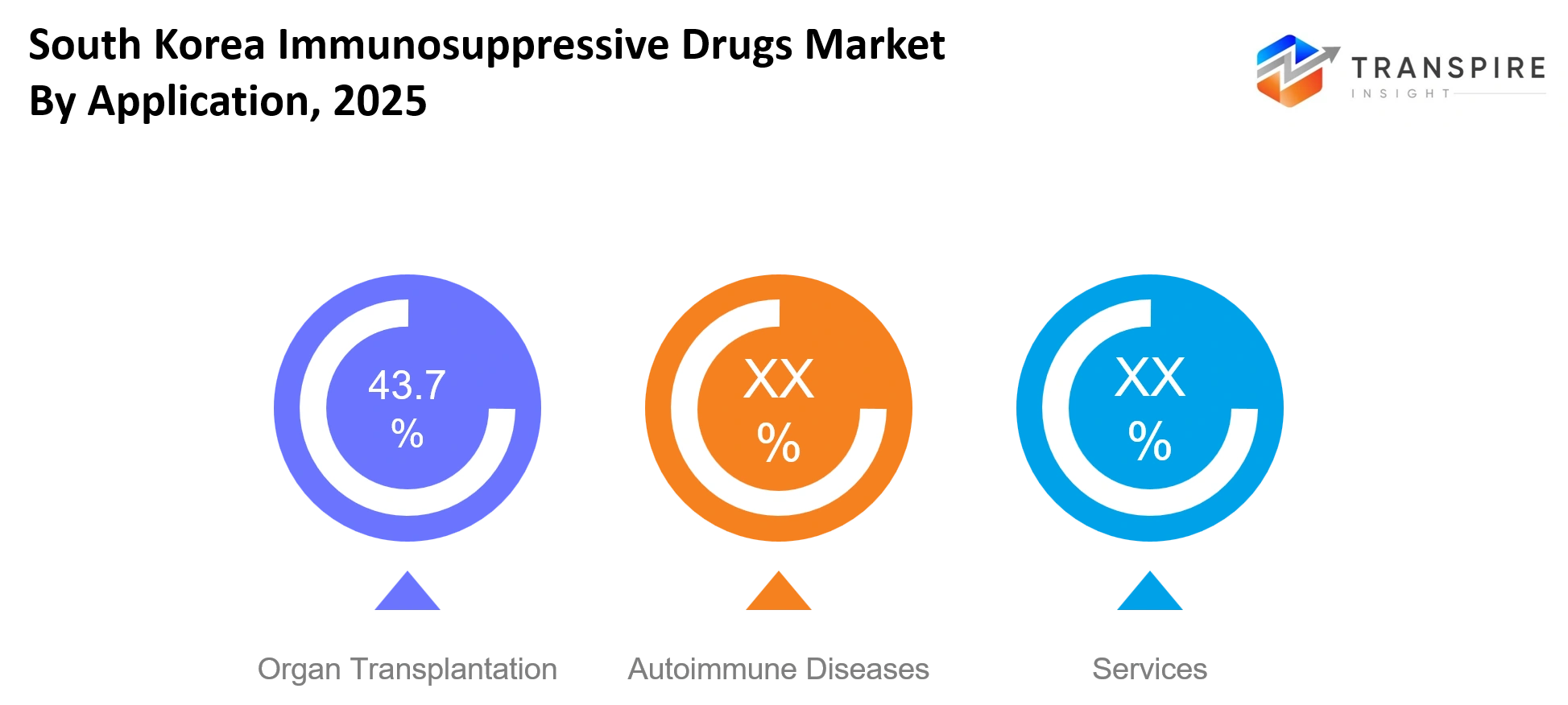
- On the application side, organ transplantation stays the top category, taking roughly 42% share in the South Korea Immunosuppressive Drugs Market.
- And for growth, autoimmune disorders things like rheumatoid arthritis, and lupus—are projected to be the fastest-growing application segment during 2026–2032, even with all the competitive pressure.
- Graft versus host disease management is showing this growing demand, kind of, it is supported by the rising number of hematopoietic stem cell transplant procedures that keep going up
- Hospitals still dominate the end user share at nearly 55% , largely because transplant procedures get centralized and specialized immunology departments sit in house
- Specialty clinics are the fastest-growing end user group, pushed along by outpatient biologics administration and this broader expansion around long term disease management
- Meanwhile research institutes are also seeing stronger interest , especially for advanced immunosuppressive drug trials and the whole precision medicine development push
What are the Key Drivers, Restraints, and Opportunities in the South Korea Immunosuppressive Drugs Market?
The South Korea Immunosuppressive Drugs Market is mostly pushed by the higher volume of organ transplant procedures, plus wider clinical take up of biologic based immunotherapy. More cases of end stage renal and liver diseases, , teamed with better surgical outcomes in big tertiary hospitals has sped up the need for post transplant drug dependency. Also, national healthcare reimbursement help and early diagnosis programs have kept prescription numbers fairly steady. That is really what keeps recurring pharmaceutical revenue climbing across transplant care pathways in the South Korea Immunosuppressive Drugs Market.
That said, there is a real structural brake, mainly from long term safety worries and the heavy day to day therapy burden linked to chronic immunosuppressive therapy. Many patients wind up on lifelong dosing, and that kind of thing increases the odds of infections, metabolic issues, and drug–drug interactions, like seriously. So physicians often prescribe more cautiously, and switching away from the usual regimens toward newer biologic agents gets slowed down. On top of that, tight regulatory approval timelines for new immunosuppressive compounds can delay commercialization, so near term revenue growth stays muted even if clinical need is really there, and the momentum feels kind of stuck.
A meaningful opening seems to be showing up, through precision medicine and newer biologics aiming at specific immune pathways. In South Korean hospitals, especially around Seoul, they are more and more joining global clinical trials, for monoclonal antibodies as well as cell based therapies that can lessen the broad or systemic toxicity. Like, there are real moves in AI supported transplant monitoring systems, plus biomarker led dosing strategies that help clinicians create more tailored treatment plans. So basically, when biotechnology innovation meets digital health infrastructure in this way, it puts the South Korea Immunosuppressive Drugs Market into a next phase, driven by efficiency. growth is becoming the theme, kind of.
What Has the Impact of Artificial Intelligence Been on the South Korea Immunosuppressive Drugs Market?
Artificial intelligence plus advanced digital technologies are sort of reshaping how operational efficiency runs, and also how clinical decisions get made inside the South Korea Immunosuppressive Drugs Market, especially via hospital analytics platforms, and more and more precision dosing systems. Big tertiary care centers in South Korea increasingly lean on AI powered clinical decision support tools, to fine tune immunosuppressant dosage using patient biomarkers, transplant category, and also older response records. This tends to lower the risk of adverse events, while supporting better long term graft survival results. At the same time, automated hospital pharmacy setups are now helping with inventory forecasting and drug utilization tracking, which boosts stock accuracy and cuts down wastage, even with those very expensive biologics.
Machine learning is also being used to anticipate post transplant problems, like rejection episodes and infection risk. The idea is that this kind of forecasting can drive earlier therapeutic intervention, before things get worse. These predictive systems pull from electronic health records alongside lab movement patterns, so clinicians can improve treatment timing and refine drug switching plans. As a downstream effect, hospitals often describe better medication adherence efficiency, plus smoother, more stable patient management cycles. It does not always look direct, but it indirectly supports revenue stability across advanced immunosuppressive therapies.
That said, AI adoption in this whole area is still limited by the lack of high quality, standardized clinical datasets across institutions. Data fragmentation between public and private hospitals makes it harder to train models with strong accuracy, and it also slows down large scale rollout of predictive systems. On top of that, the integration costs needed for AI enabled hospital infrastructure are still high. Because of this, adoption stays mostly around major medical centers in Seoul, and nationwide scalability moves slowly, even though the technological potential is clearly strong.
Key Market Trends
- After 2023, hospital use of biologic immunosuppressants kinda jumped a lot, and it started to shrink the reliance on old, corticosteroid-only care plans,, at least in many centers.
- In Seoul, transplant centers have been moving toward AI-assisted dosing more since 2024, which they say makes personalized regimens more accurate. It also seems to help post op recovery, a bit more consistently.
- Then in 2025, procurement habits changed. Long term hospital contracts gained ground, replacing the more piecemeal buying of immunosuppressive drug stock, that used to happen across smaller channels.
- Also in 2024, Novartis widened its renal transplant therapy collaborations. That strengthened hospital linked distribution routes across South Korea, like, more stable pathways.
- Regulators tightened pharmacovigilance reporting in 2023, so manufacturers of immunosuppressive drugs faced higher compliance expenses, and it wasn’t exactly small.
- By 2025, biologics manufacturing partnerships grew as Roche and Korean hospitals co developed targeted immune modulation therapies, sort of together from development stages through delivery.
- Meanwhile, outpatient specialty clinics increased their share of immunosuppressant administration after 2024, which reduced the “hospital only” dependency for chronic autoimmune patients.
- AI driven transplant monitoring systems also cut the time for acute rejection detection, noticeably since 2024. That improvement supported earlier intervention, and it showed up in more places nationwide.
- Finally, supply chain digitization accelerated in 2025, making real time tracking possible for high cost immunosuppressive biologics across major hospital networks.
South Korea Immunosuppressive Drugs Market Segmentation
By Drug Type:
Calcineurin inhibitors basically hold a leading spot in the South Korea Immunosuppressive Drugs Market because they get strong use in post transplant care, plus there’s this ongoing need for long term graft protection. The same drugs keep backing stable immune suppression results across kidney and liver transplant work, and those procedures are still pretty high at major hospitals.
Monoclonal antibodies meanwhile are moving in faster as treatment plans keep changing toward targeted immune control and less overall systemic side effects, at least compared with older approaches. Corticosteroids still sit in a fairly steady role, especially for short term therapy. At the same time mTOR inhibitors are getting gradual acceptance in patients who need alternative regimens when traditional options show limitations.
By Application:
Organ transplantation remains the main application area in the South Korea Immunosuppressive Drugs Market, mainly fueled by more cases of kidney and liver failure and also better surgical success rates. Hospitals keep using structured immunosuppressive regimens to help prevent rejection, and to maintain long term transplant stability.
Autoimmune diseases are also expanding as a key growth area, driven by more diagnoses of rheumatoid arthritis and lupus across urban healthcare systems. Treatment protocols are shifting toward long run disease control, and other uses like graft versus host disease are getting more attention in specialized treatment centers.
To learn more about this report, Download Free Sample Report
By Distribution Channel:
Hospital pharmacies kind of dominate the distribution side in the South Korea Immunosuppressive Drugs Market, mostly because transplant procedures are centralized and there are strict post-operative monitoring rules, you know drug tracking is taken very seriously. As a result high cost biologics and immunosuppressants tend to be dispensed inside hospital systems first , so the usage stays controlled and patient safety is protected in a more direct way.
Retail pharmacies are growing bit by bit, particularly as maintenance therapies stay stable and patients are moved toward outpatient care models over time. Online pharmacies are getting some limited interest too, mainly for repeat prescriptions, but the whole regulatory control framework and prescription sensitivity are still there, so fast digital expansion doesn’t really happen easily in this segment.
By End User:
Hospitals also remain the dominant end user in the South Korea Immunosuppressive Drugs Market, helped by advanced transplant infrastructure and the presence of specialized immunology departments. In practice the most complex immunosuppressive regimens are started and managed within tertiary care hospital environments.
Clinics are slowly becoming more important, as they act like follow up centers for long term autoimmune disease management. Other end users, like research institutes , are taking part more often in clinical trials and drug evaluation studies, which kinda supports a gradual improvement in treatment protocols and also more personalized immunosuppressive therapy approaches overall.
What are the Key Use Cases Driving the South Korea Immunosuppressive Drugs Market?
Organ transplantation is still kind of the main thing pushing the South Korea Immunosuppressive Drugs Market, and it mostly shows up in kidney, as well as liver transplant, procedures. The demand right after surgery for continuous immune control is high, and that basically keeps long term therapy going in large tertiary hospitals, so overall this becomes the strongest, and also the most steady demand base.
More broadened use is showing up in autoimmune disease management, in particular rheumatoid arthritis and lupus, where specialty clinics, and hospital outpatient departments more often depend on long duration immunosuppressive treatment. Plus, post transplant monitoring and follow up care keeps increasing, so drug consumption keeps moving along even beyond the usual surgical setting.
Newer use cases are starting to appear too, such as graft versus host disease handling, and early stage cell therapy support inside transplant medicine. In addition, clinical trials in advanced hospitals are exploring more precise dosing strategies and AI supported treatment adjustment, which might gradually open immunosuppressive drug use into more personal, and even prevention learning care models, over time.
|
Report Metrics |
Details |
|
Market size value in 2025 |
USD 306.4 Million |
|
Market size value in 2026 |
USD 331.8 Million |
|
Revenue forecast in 2033 |
USD 585.3 Million |
|
Growth rate |
CAGR of 8.45% from 2026 to 2033 |
|
Base year |
2025 |
|
Historical data |
2021 - 2024 |
|
Forecast period |
2026 - 2033 |
|
Report coverage |
Revenue forecast, competitive landscape, growth factors, and trends |
|
Country scope |
South Korea |
|
Key company profiled |
Novartis, Roche, Pfizer, AbbVie, Bristol Myers Squibb, Sanofi, Astellas, Takeda, Amgen, Eli Lilly, Merck, Teva, Viatris, Dr Reddy's, Celltrion |
|
Customization scope |
Free report customization (country, regional & segment scope). Avail customized purchase options to meet your exact research needs. |
|
Report Segmentation |
By Drug Type (Calcineurin Inhibitors, Corticosteroids, mTOR Inhibitors, Monoclonal Antibodies, Others); By Application (Organ Transplantation, Autoimmune Diseases, Others); By Distribution Channel (Hospital Pharmacies, Retail Pharmacies, Online Pharmacies, Others); By End User (Hospitals, Clinics, Others) |
Which Regions are Driving the South Korea Immunosuppressive Drugs Market Growth?
Seoul Capital Region actually leads the South Korea Immunosuppressive Drugs Market, mostly because there’s this dense clustering of tertiary hospitals plus advanced transplant centers. There’s also strong regulatory oversight, and the approval routes for hospital-based therapies tend to be faster so biologics get adopted earlier. On top of that, the area has established biotech clusters, along with really close links between pharmaceutical companies and academic research institutes. That kind of mixed ecosystem, it basically keeps fueling continuous innovation and high treatment volumes, all kind of at once.
Busan–Ulsan–Gyeongnam is sort of the steadier second region. It’s driven by a large industrial workforce and an aging population that keeps expanding, which in turn pushes long-term immunosuppressive care needs. Compared with the capital area, growth here feels less like cutting-edge clinical research, and more like steady hospital expansion, plus predictable healthcare funding. Regional medical centers have improved chronic disease management programs too, so drug consumption patterns stay reliable. Because of this, the region becomes a consistent revenue contributor for national demand, even when other places fluctuate a bit.
Then you have the southern provinces, like Jeolla, and some portions of Chungcheong too, including parts of Chungcheong. Those areas are showing the fastest growth right now, mainly because recent government investment backs healthcare decentralization. New hospital upgrades, plus better access to specialists, has increased transplant referrals and it’s boosted autoimmune disease diagnosis rates. Also, expansion of regional medical infrastructure since 2024 has reduced patient migration toward Seoul for treatment, and that matters a lot. As a result, for 2026 to 2033, there are strong entry opportunities for pharmaceutical companies that want broader coverage across the South Korea Immunosuppressive Drugs Market.
Who are the Key Players in the South Korea Immunosuppressive Drugs Market and How Do They Compete?
The South Korea Immunosuppressive Drugs Market has a moderately consolidated competitive set up, where big global pharma players keep an edge via hospital contracts and biologics collections. The fight is not so much about pricing , it is more about clinical efficacy, safety profiles and how well treatments get folded into transplant care pathways. Multinational companies stay ahead thanks to long term physician ties and regulatory know-how, while progress in biologics and targeted immune therapies is slowly reworking how share gets distributed. New firms struggle because entry is hard, with strict approval criteria and then complicated post transplant treatment expectations.
Novartis is really centered on transplant immunosuppression leadership, leaning on a solid calcineurin inhibitor lineup plus supporting adjunct medicines. This is backed by close partnerships at the hospital level especially across tertiary care centers. The overall approach seems to stress clinical dependability and long run graft survival metrics , which then reinforces prescribing loyalty among transplant specialists. Growth also comes from ongoing lifecycle upgrades, and co-developed clinical protocols with key hospitals in South Korea.
Roche kind of differentiates via biologics innovation, especially monoclonal antibody platforms that aim at selective immune pathways, with less systemic toxicity than before. Meanwhile Astellas Pharma keeps a solid footing in transplant focused therapies, using a Japan–Korea regional synergy and those well rooted nephrology networks. Pfizer is pushing forward through a more diversified immunology pipeline, and it also leans into global clinical trial integration, which really strengthens its footprint in autoimmune uses. Together these firms keep the competition moving, it’s innovation led differentiation mixed with hospital collaborations, plus a broader move toward next generation immunosuppressive solutions across Korea.
Company List
- Novartis
- Roche
- Pfizer
- AbbVie
- Bristol Myers Squibb
- Sanofi
- Astellas
- Takeda
- Amgen
- Eli Lilly
- Merck
- Teva
- Viatris
- Dr Reddy's
- Celltrion
Recent Development News
In April 2026, JW Pharmaceutical signed an exclusive licensing agreement with Gan & Lee Pharmaceuticals to commercialize a GLP-1 receptor agonist in South Korea. The collaboration strengthens JW Pharmaceutical’s immunology and metabolic disease portfolio, expanding its role in biologic drug commercialization in the domestic market.
Source https://www.streetinsider.com/
In March 2026, Alteogen signed a $549 million licensing deal with Biogen to develop subcutaneous formulations of biologic drugs using its ALT-B4 platform. The agreement is expected to improve patient-friendly delivery of immunology therapies, including treatments that often require immunosuppressive management in chronic diseases. South https://pulse.mk.co.kr/
What Strategic Insights Define the Future of the South Korea Immunosuppressive Drugs Market?
The South Korea Immunosuppressive Drugs Market is kind of moving, structurally, toward precision led and biologics first therapy models over the next 5 to 7 years, mostly because transplant volumes are rising and digital hospital systems are being stitched in. In practice the treatment pathways will lean more and more on biomarker guided dosing and AI supported post transplant monitoring, so it should trim that trial and error prescribing, and likely make long term patient outcomes more stable. In other words this shift usually helps players with solid biologics pipelines and data connected clinical ecosystems, not just those that depend on older immunosuppressants alone.
There is also a risk that is easy to overlook, like therapeutic concentration. If hospitals and insurers get too comfortable with a relatively small set of expensive biologics, it can put them under pricing pressure, and reimbursement tightening too, especially if budget constraints get worse. At the same time, there’s an emerging opportunity in outpatient based immunosuppressive management, enabled by remote monitoring tools, specifically in secondary cities where transplant follow up care is slowly becoming more decentralized.
So market participants should really focus on connecting with hospital data platforms, and they should invest in adaptive clinical support systems, to hold onto long term prescribing influence. Companies that line up their drug development with real world patient monitoring infrastructure will likely be in a better spot to keep capturing sustained demand in the evolving South Korea Immunosuppressive Drugs Market.
South Korea Immunosuppressive Drugs Market Report Segmentation
By Drug Type
- Calcineurin Inhibitors
- Corticosteroids
- mTOR Inhibitors
- Monoclonal Antibodies
By Application
- Organ Transplantation
- Autoimmune Diseases
By Distribution Channel
- Hospital Pharmacies
- Retail Pharmacies
- Online Pharmacies
By End User
- Hospitals
- Clinics
Frequently Asked Questions
Find quick answers to common questions.
The expected South Korea Immunosuppressive Drugs Market size is USD 585.3 Million in 2033.
Key segments for the South Korea Immunosuppressive Drugs Market are By Drug Type (Calcineurin Inhibitors, Corticosteroids, mTOR Inhibitors, Monoclonal Antibodies, Others); By Application (Organ Transplantation, Autoimmune Diseases, Others); By Distribution Channel (Hospital Pharmacies, Retail Pharmacies, Online Pharmacies, Others); By End User (Hospitals, Clinics, Others).
Major South Korea Immunosuppressive Drugs Market players are Novartis, Roche, Pfizer, AbbVie, Bristol Myers Squibb, Sanofi, Astellas, Takeda, Amgen, Eli Lilly, Merck, Teva, Viatris, Dr Reddy's, Celltrion.
The South Korea Immunosuppressive Drugs Market size is USD 306.4 Million in 2025.
The South Korea Immunosuppressive Drugs Market CAGR is 8.45% from 2026 to 2033.
- Novartis
- Roche
- Pfizer
- AbbVie
- Bristol Myers Squibb
- Sanofi
- Astellas
- Takeda
- Amgen
- Eli Lilly
- Merck
- Teva
- Viatris
- Dr Reddy's
- Celltrion
About the Authors

Pankaj Ghogare Patil
I am Pankaj Ghogare Patil, a Senior Research Analyst at Transpire Insight, specializing in the Pharmaceutical, Chemicals & Materials, Healthcare IT, and Biotechnology industry. My expertise lies in conducting comprehensive market research, analyzing industry trends, evaluating competitive landscapes, and translating complex data into actionable insights. At Transpire Insight, I closely follow emerging technologies, regulatory developments, and market innovations to create accurate, well-researched, and informative content that helps businesses and professionals make informed decisions. I am committed to producing credible, evidence-based articles that reflect industry best practices while making technical topics accessible and valuable for a broad audience.

Chakradhar Khansole
Chakradhar serves as the Research Director at Transpire Insight, bringing over 8 years of experience in technology, innovation, and strategic market intelligence. He specializes in transforming complex market data into actionable business insights that enable organizations to make informed, growth-oriented decisions. Recognized for his strategic vision and analytical expertise, Chakradhar leads high-impact research initiatives, delivering comprehensive market assessments, competitive intelligence, and forward-looking industry analysis.
Recently Published Reports
-
Jul 2026
Alopecia Treatment Market
Alopecia Treatment Market Size, Share & Analysis Report By Disease Type (Alopecia Areata, Cicatricial Alopecia, Traction Alopecia, Alopecia Totalis, Androgenetic Alopecia, Alopecia Universalis, and Other Disease Types), By Treatment Type (Topical Treatments, Oral Medications, Injectable Therapies, and Hair Transplantation), By Gender (Male, and Female), By Distribution Channel (Hospitals and Clinics, Retail Pharmacies, and Online Retailers), and Geography (North America, Europe, Asia-Pacific, Middle East and Africa, South and Central America), 2021 - 2031
-
Jul 2026
Medical Ultrasound Probe Market
Medical Ultrasound Probe Market Size, Share & Analysis Report By Type (Linear Type, Convex Type, Endocavitary Probe, Phased Array/Cardiac Probe, Transesophageal (TEE) Probe, and Others), By Application (Ophthalmology, Cardiology, Musculoskeletal, Oncology, Obstetrics & Gynecology, General Imaging, and Others), By End User (Hospitals & Clinics, Diagnostic Centers, Ambulatory Surgical Centers, and Others), and Geography (North America, Europe, Asia-Pacific, Middle East and Africa, South and Central America), 2021 – 2031
-
May 2026
Biosimilars Market
Biosimilars Market By Product Type (Monoclonal Antibodies, Recombinant Hormones, Erythropoietin, G-CSF, Others), By Indication (Oncology, Autoimmune Diseases, Blood Disorders, Diabetes, Others), By Manufacturing Type (In-House Manufacturing, Contract Manufacturing), By Distribution Channel (Hospital Pharmacies, Retail Pharmacies, Online Pharmacies), By Industry Analysis, Size, Share, Growth, Trends, and Forecasts 2021-2033
-
Apr 2026
Gastrointestinal Endoscopy Market
Gastrointestinal Endoscopy Market By Type (Rigid Gastrointestinal Endoscope, Flexible Gastrointestinal Endoscopes, Disposable Gastrointestinal Endoscope), By Procedure Type (Colonoscopy, Gastroscopy, Duodenoscopy, Enteroscopy, Flexible Sigmoidoscopy, Others), By Application (Diagnosis, Treatment), By End-Users (Hospitals, Ambulatory Surgical Centers, Specialty Clinics, Laboratories, Others), By Industry Analysis, Size, Share, Growth, Trends, and Forecasts 2021-2033